Fahrzeugbau: Tesla stellt sein millionstes Elektroauto her
Als erster Hersteller der Welt hat Tesla diesen Meilenstein erreicht. (Tesla, Technologie)
Quelle: Golem

Als erster Hersteller der Welt hat Tesla diesen Meilenstein erreicht. (Tesla, Technologie)
Quelle: Golem

Zuletzt aufgerufene Podcast, Alben oder Wiedergabelisten: Nutzer der Spotify-App sollen ihre Inhalte künftig besser wiederfinden – und neue dazu. (Spotify, Android)
Quelle: Golem
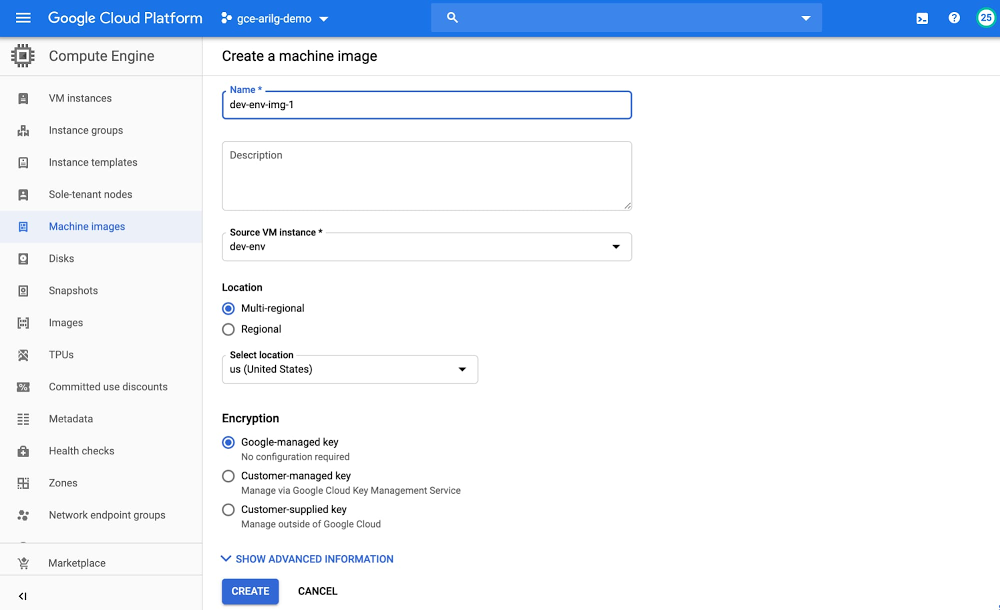
Today, we’re pleased to introduce machine images, a new type of Compute Engine resource that contains all the information you need to create, backup or restore a virtual machine, reducing the amount of time you spend managing your environment.If you administer applications that run on Compute Engine, you probably spend a lot of time creating images that you can use to create new instances. But even though Compute Engine features like custom images capture necessary information like disk data, you still need to manually capture instance configuration and metadata to create a new virtual machine. Machine images eliminates these extra steps and streamlines your operations. How are machine images different from images?Custom images capture the contents of a single disk, for example, a boot disk, which can be used to create new instances that are preconfigured with the apps that you need, so that you don’t have to configure public images from scratch. Machine images are a more comprehensive resource that can contain multiple disks, as well as all of the information required to capture and create a new instance, including:Instance properties (machine type, labels, volume mapping, network tags)Data of all attached disks (one or multiple)Instance metadataPermissions, including the service account used to create the instanceTogether, the additional information contained in a machine image not only simplifies image creation, but it also lays the foundation for a number of advanced capabilities. A better backup solutionBacking up an instance requires more than just disk data. To recreate an instance you need instance properties like the machine type, network tags, labels, and more. Capturing this information is easier with machine images. When you create a machine image from an instance, it stores the instance information and disk data into a single resource. When it comes time to restore the instance, all you need to do is provide the machine image and a new instance name. Machine images can be created whether the source instance is running or stopped. In addition to storing complete instance properties and data, machine images use the same differential disk backup technology that powers incremental snapshots, giving you fast, reliable and cost-effective instance backups. On top of existing incremental snapshots, machine images guarantee crash-consistency across all the attached disks at a given point in time. Compute Engine lets specify the storage location for your machine image disk data.This may help you meet availability or compliance goals. For example, choosing a multi-region such as ‘US’ ensures that the data is safe in multiple copies across multiple zones. Similarly, you can choose a single region to restrict the disk data to a particular region.Machine image as golden imageImagine that you’ve created and configured an instance as part of your web application, and you want to use it as the basis of other instances. With machine images, you can capture your web application exactly as you want it and save it as a golden machine image. You can then use that machine image to launch as many instances as you need, configured in the exact same way as your source instance. You can also share the machine image with other projects. If you need to change the properties of your new VMs, you can define new instance properties using machine images’ override functionality.For replication use cases, we recommend creating a machine image from a stopped instance, which guarantees system integrity and performs OS generalization (i.e., Windows Sysprep). To learn more about best practices for creating machine images for replication purposes, including Windows VMs, visit the documentation.Getting started with machine imagesYou can start using machine images via the Cloud Console, gcloud or the API. Let’s look at how to create a machine image from an instance from the console. First, visit the new ‘Machine images’ option from the left navigation bar in the Compute Engine console. Then select “Create a machine image” from the menu. In this case, we’re creating a machine image of an application server.To create an instance from a machine image, you can either create it directly from the Machine images page, or from the instance creation page by selecting the “New VM instance from machine image” option from the left menu.Get started with machine images today by visiting Compute Engine Cloud Console. The new machine images make it easy to create new instances at the heart of your scalability, backup and disaster recovery strategy. To learn more about machine images, including pricing information, visit the documentation.
Quelle: Google Cloud Platform
Amazon Managed Blockchain ist ein vollständig verwalteter Service, mit dem Sie mit nur ein paar Klicks ein skalierbares Blockchain-Netzwerk einrichten und verwalten. Amazon Managed Blockchain eliminiert den Overhead, der zur Erstellung eines Netzwerks benötigt wird. Der Dienst skaliert automatisch auf die Anforderungen von Tausenden von Anwendungen mit Millionen von Transaktionen. Sobald Ihr Netzwerk einmal läuft, kann das Blockchain-Netzwerk einfach mit Amazon Managed Blockchain verwaltet und gepflegt werden. Ihre Zertifikate werden damit verwaltet und Sie können einfach neue Mitglieder ins Netzwerk einladen.
Quelle: aws.amazon.com
AWS RoboMaker, ein Service, der die Ausführung von Simulationen im Cloud-Umfang vereinfacht, unterstützt jetzt das GUI-Streaming für Roboter- und Simulationsanwendungen. Diese neue Funktion ermöglicht Entwicklern das Streamen ihrer eigenen GUI-fähigen Tools über die AWS RoboMaker-Konsole. Beispiel: Ein Entwickler kann die Benutzeroberfläche einer mobilen Anwendung streamen, die den Roboter konfiguriert und steuert, wenn der Simulationsauftrag ausgeführt wird. Entwickler können von dieser neuen Funktion profitieren, indem sie einfach ihre eigenen GUI-fähigen Tools als Teil ihrer Roboter- und/oder Simulationsanwendungen im Paket vertreiben und GUI-Streaming für die Anwendungen aktivieren.
Quelle: aws.amazon.com
Sie können jetzt Anfragen an Ihre Webanwendungen von VPN, Tor-Knoten, Proxys und Rechenzentren erkennen und blockieren, indem Sie die neue Liste anonymer IP-Adressen für AWS Managed Rules verwenden. Diese neue Gruppe mit verwalteten Regeln hilft Ihnen beim Blockieren von Benutzern, die versuchen, ihre Identität zu verschleiern oder geografische Einschränkungen zu umgehen. Die Gruppe mit verwalteten Regeln kann auch helfen, bösartigen Datenverkehr zu blockieren, der von Bots hinter diesen anonymen Netzwerken stammt.
Quelle: aws.amazon.com
Android-Benutzer können jetzt ihre AWS-Ressourcen über die neue mobile AWS-Konsolen-Anwendung überwachen und darauf zugreifen.
Quelle: aws.amazon.com
AWS Config unterstützt jetzt die Datenaggregation in mehreren Konten und mehreren Regionen sowie die fortgeschrittene Abfrage in der AWS-Region Europa (Stockholm). Mit dieser Funktion können Sie die Ressourcenkonfiguration und Regeleinhaltungsdaten von AWS Config in einem einzelnen Account bzw. einer einzelnen Region aggregieren und abfragen. Damit werden die erforderliche Zeit und die Ressourcen für einen unternehmensweiten Überblick über Ihren Ressourcenbestand und Compliance-Status reduziert. Die Datenaggregationsfunktion ist auch mit AWS Organizations integriert, damit Sie diese Daten zentral für jedes Konto in Ihrer Organisation abrufen können.
Quelle: aws.amazon.com

We’re shifting again! The OpenShift Commons Gathering/Amsterdam will be rescheduled to align with the soon-to-be announced new dates for CNCF/Kubecon/EU
KubeCon + CloudNativeCon Europe (originally set for March 30 to April 2, 2020) has been postponed to instead be held in July or August 2020. The CNCF is finalizing the date and will announce it shortly. We expect that by mid-summer, there will be more clarity on the effectiveness of control measures to enable safe travel to industry events.
We are looking forward to still delivering all of our sessions and workshops, including the OpenShift 4.Kubernetes Release Updates and Road Map with Clayton Coleman, and all of our engineering project leads will still be delivering their “State of” Deep Dive talks. We’re working with our case study speakers and other guest speakers to ensure they can adjust their schedules (and vacation plans) to share their talks as well.
We will provide updates on the OpenShift Commons Gathering here. We will re-open registration once the dust settles and dates are confirmed. If you’ve purchased a ticket to the March 30 Gathering and any of the associated workshops, you will receive a full refund.
The full agenda will still be here.
Stay Tuned and Connected for More Information
Thank you for your enthusiasm for and participation in the OpenShift Commons community. We couldn’t do this without the ongoing support of our members, sponsors, speakers and staff.
Join OpenShift Commons and get on the mailing lists and slack channels to stay in touch and up to date.
Please Note: CNCF is regularly updating their site with latest Novel Coronavirus Updates here: https://events.linuxfoundation.org/kubecon-cloudnativecon-europe/attend/novel-coronavirus-update/
The post Important OpenShift Commons Gathering Amsterdam 2020 Update: Shifts again! appeared first on Red Hat OpenShift Blog.
Quelle: OpenShift

Es geht um Wasser, Verkehr und Naturschutz: Gegen den Bau von Teslas Gigafactory in Grünheide sind mehrere Hundert Einwände erhoben worden. Nicht nur Bewohner aus der Umgebung haben etwas gegen die Pläne. (Gigafactory Berlin, Technologie)
Quelle: Golem






