Sicherheit: Tesla-Bordcomputer mit Nutzerdaten auf Ebay aufgetaucht
Die Mediensteuereinheiten aus Teslas beinhalten zahlreiche persönliche Daten. Das wird zum Problem, wenn sie auf Ebay entdeckt werden. (Tesla, Technologie)
Quelle: Golem

Die Mediensteuereinheiten aus Teslas beinhalten zahlreiche persönliche Daten. Das wird zum Problem, wenn sie auf Ebay entdeckt werden. (Tesla, Technologie)
Quelle: Golem

Oculus arbeitet an einem leichteren VR-Headset, auch Display und Controller sollen Anpassungen erhalten. (Oculus, OLED)
Quelle: Golem

Die Nasa will mit dem Film um neue Talente für die Raumfahrt-Projekte der kommenden Jahrzehnte werben. (ISS, Nasa)
Quelle: Golem
medium.com – In this article, I will walk you thru the deployment of Keycloak, a user authentication and authorization tool and how to integrate this to any Kubernetes Web application without touching a single li…
Quelle: news.kubernauts.io
itnext.io – The fleet controller is a set of Kubernetes controllers tracking all related fleet resource types and can run on any standard Kubernetes cluster. The only API exposed by the Fleet manager is the Kube…
Quelle: news.kubernauts.io
medium.com – From the output of docker stats you can see that the Spring Boot app is using more than 3 CPUs during startup! And here is the startup duration — only 12 seconds: 2019–03–18 20:33:45.682 INFO 1 — — […
Quelle: news.kubernauts.io
medium.com – Get ready for some personal and definitely opinionated opinions! AWS comes with many components that cover different areas of concerns. But, most are not general purpose and cheap enough to be applie…
Quelle: news.kubernauts.io
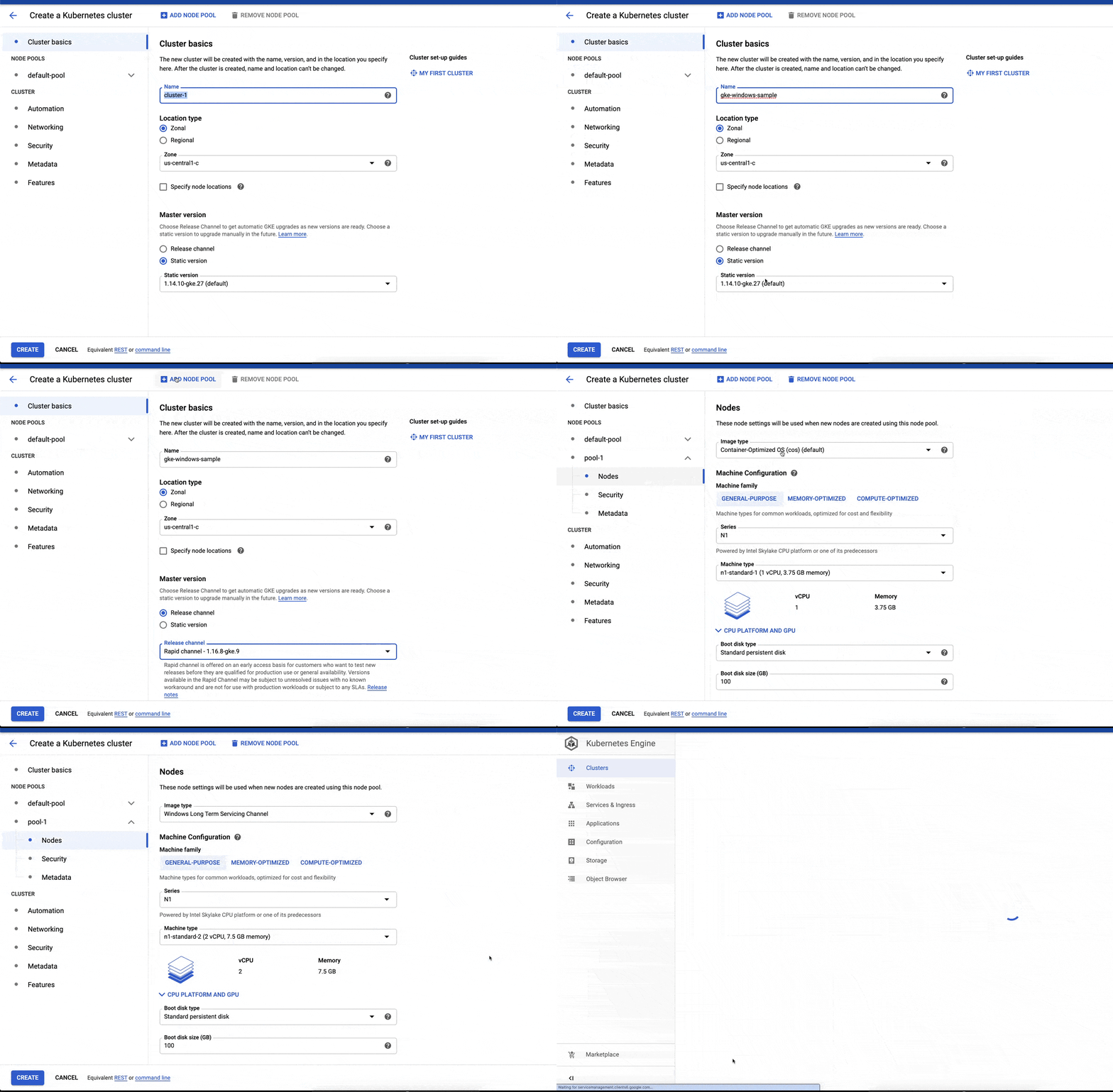
As organizations look to modernize their Windows Server applications to achieve improved scalability and smoother operations, migrating them into Windows containers has become a leading solution. And orchestrating these containers with Kubernetes has become the industry norm, just as it has with Linux. We launched the preview of Windows Server container support in Google Kubernetes Engine (GKE) earlier this year, and today, it’s generally available for production use. Running your Windows apps in containers on Kubernetes can provide significant cost savings, as well as improved reliability, scalability, and security—things that are especially important in times of uncertainty. Since we launched the preview, many customers have kicked the tires on our Windows Server containers. Thanks to their feedback, we’ve added features like support for private clusters and regional clusters, choice of Long-Term Servicing Channel (LTSC) and Semi-Annual Channel (SAC) versions, integration with Active Directory using group Managed Service Account (gMSA) and much more. This release also includes integration with the Google Cloud Console to simplify creating new GKE clusters or updating existing clusters with Windows Server node pools like in the graphic below.Improving the end-to-end experience with partner solutionsWhen you modernize your applications, you also want to incorporate them into an end-to-end DevOps management experience that works with your existing tooling and workflows. To that end, we’ve worked with several partners to make sure that your build, test, deploy, config and monitoring apps work well with Windows containers. Here are some use cases and partner solutions that we’ve tested to support Windows containers in GKE:Here are a few solutions from our technology ecosystem ISV partners tested to work with Windows containers in GKE:Aqua: Aqua’s security platform can be deployed directly on a GKE cluster and allows users of Windows applications to scan images and ensure only trusted images are deployed to production, all while preventing container related attacks in real time. More here.Chef: Chef’s application delivery solution Habitat can easily and efficiently package and deploy any Windows application—both modern and legacy—into GKE. More here.CircleCI: CircleCI’s orb supports deployment to Windows containers running on GKE, allowing you to deploy applications in minutes from your CI/CD pipeline. More here.CloudBees: Speed up your software delivery using CloudBees Core pipelines to test and create Windows-based apps managed on GKE. More here. Codefresh: Codefresh provides native support for connecting to GKE clusters, so you can create a deployment pipeline to serve Windows applications on the cluster. More here.Datadog: By deploying the Datadog Agent on your Windows node pool, you can monitor all your containerized Windows applications running on a GKE cluster. More here.GitLab: Execute a CI/CD pipeline with Windows runners on GitLab (both dotcom and self-hosted) to automatically deploy Windows apps on GKE. More hereJFrog: JFrog Artifactory serves as a Kubernetes registry that provides full traceability of all your orchestrated Windows apps. More here.New Relic: The New Relic Kubernetes solution for GKE lets you fully observe metrics, events, logs and traces for the Windows workloads running in your Kubernetes clusters. More here.We hope you will kick-start your modernization journey using Windows Server containers. You can find detailed documentation on our website. Our partners are eager to help you with any questions related to the published solutions. You can also reach out to the GCP sales team. If you are new to GKE, the Google Kubernetes Engine page and the Coursera course on Architecting with GKE are good places to start. Please don’t hesitate to reach out to us at gke-windows@google.com if you have any feedback or need help unblocking your use case.
Quelle: Google Cloud Platform
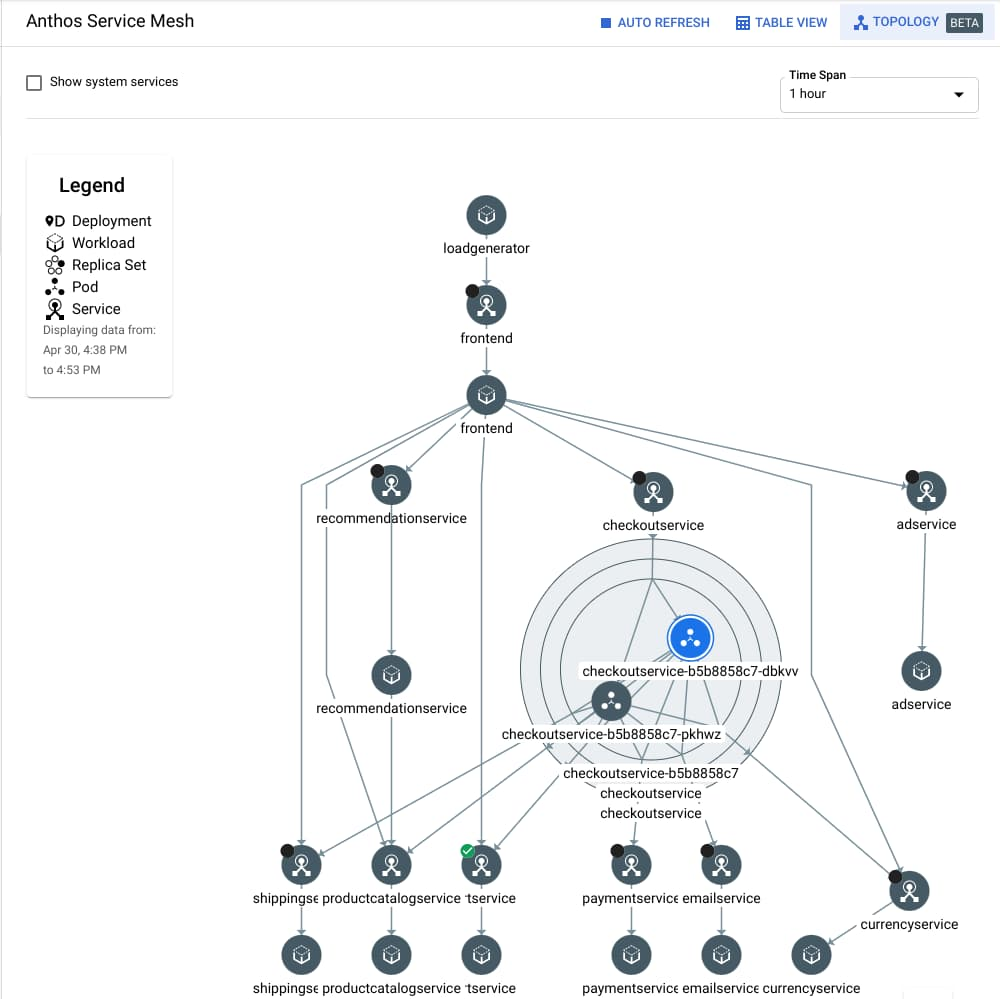
Two weeks ago, we announced many new advancements we are making to Anthos, including new capabilities that let you better run and manage loosely coupled microservices anywhere you need them. Today, we’re diving deeper into this world of services, and how we have been helping customers on their journey to this model. At a high level, the main benefit of a service-based architecture is the speed with which it lets you roll out changes with minimum disruption. With their smaller, independent components, microservices-based architectures enable faster development and deployment, increased choice of technologies, and more autonomous teams, so you can quickly roll out new and upgraded products to your customers. But as your usage of microservices increases, you often face additional challenges and you may need to adopt more modern deployment and management practices. With Anthos Service Mesh, you can: Better understand what is happening with your services Set policies to control those servicesSecure the communication between services All of this is done without changes to your application code. Let’s take a deeper look at how Anthos Service Mesh works, and how you can use it to adopt a more efficient service-based architecture. Better monitoring and SLOsMany of you come to us for help implementing Site Reliability Engineering (SRE) principles in your organization. Anthos Service Mesh can help you do this, beginning with monitoring, so they can see which services are communicating, how much traffic is being sent, and response times and error rates. Simply having this initial baseline information is a major improvement for many customers’ operations. For example, the topology graph below shows the connections between services. The focus on the checkout service even shows the pods comprising the service.Click to enlargeOnce you have monitoring in place, you can use Anthos Service Mesh to implement service level objectives (SLOs). Setting SLOs (for example, 99% availability over a one week rolling window) and having alerts on those SLOs lets your staff be proactive and catch issues before your customers become aware of them. You can send alerts (i.e., email, page, and UI warnings) to the team when your SLOs are not being met or you’ve exceeded your error budgets. This is an indicator that deployments should be frozen or slowed until stability and reliability are under control. This “cartservice” screenshot below shows the golden signals associated with this service, its health, and links to the infrastructure on which it’s running.Through monitoring, SLOs and alerts, your team will have much more information about—and control over—the health and well-being of your services, which in turn makes your products more reliable and performant for your customers. For example, co-location provider and Google Cloud partner Equinix uses Anthos and Anthos Service Mesh to give their customers visibility into their environments, so they can make better deployment decisions. “At Equinix, giving our customers the best performance is our top priority. With Anthos and network insights from Equinix Cloud Exchange Fabric, we can build a service mesh that gives access to rich information about the performance of our customers’ applications,” said Yun Freund, SVP, Platform Architecture and Engineering. “This provides us with metrics we can use to recommend where customers should run their workloads for the best end-to-end user experience.”Security with policies, encryption and authenticationFor many of you, particularly those in regulated industries like financial services and healthcare, there can be no compromises when it comes to security. Anthos Service Mesh lets you reduce the risk of data breaches by setting policies that ensure that any and all communications to and from your workloads are encrypted, mutually authenticated and authorized. This also helps protect against insider threats.But implementing, maintaining and updating strict policies using traditional rules and IP based parameters can be difficult. It’s even harder to enforce those policies while your deployments are scaling up and down—especially if they’re based on technologies like containers and serverless that span hybrid and multi-cloud environments. Anthos Service Mesh lets you implement context-aware application security using parameters such as identity, the service in question, as well as the context of the incoming request. You can also do all of this without depending on network primitives such as IP addresses. In this way, Anthos Service Mesh can help you adopt defense-in-depth and zero trust security strategies, on your way to implementing best practices such as BeyondCorp and BeyondProd.Anthos Service Mesh also provides Mesh CA, a fully-managed certificate authority to issue certificates for your microservices, enabling a “zero trust” security posture based on mTLS. Mesh CA is now generally available for workloads running on Anthos GKE.Traffic managementFinally, you can deploy Anthos Service Mesh to help you achieve safer, more controlled release processes, as well as gain more control over how traffic flows between your services. Anthos Service Mesh contains a number of traffic capabilities to allow you to fine tune the traffic in your mesh. For example, you can use the built-in canary capabilities to route a small percentage of traffic to new versions before rolling them out for all your users. Or you can take advantage of various load-balancing capabilities or location-based routing to control traffic. Other policies such as retries to enhance reliability, or even fault injection to test resilience, can help you roll out new products, while ensuring your customers have the best possible experience. In the second half of this year Anthos Service Mesh will also integrate with Traffic Director, a managed configuration and traffic control plane for your service mesh. Traffic Director powers the traffic management fundamentals of the service mesh (like service discovery, endpoint registration, health checking and load balancing) and enables powerful DevOps use cases like blue/green deployments and circuit breaking while still using declarative, open-source Istio APIs. Managed by GoogleWhile Anthos Service Mesh is based on the open-source Istio service mesh, it is offered as a managed service. You get all the benefits of service mesh without having to monitor, manage and upgrade the underlying software.Included as part of the managed offering, you get service mesh dashboards that give you all of the monitoring and SLO capabilities above, as well as telemetry, logging and tracing into a single tool. All these capabilities are generally available (GA) and fully supported. They give your application teams a set of out-of–the-box, powerful operations dashboards without having to depend on multiple open-source projects that you would in turn have to commit to deploy and maintain. And because all these Anthos Service Mesh components, including Traffic Director, Mesh CA and the Anthos Services telemetry dashboards, are managed services, you don’t need to worry about installing, upgrading or maintaining these components—Google’s SREs are on the job.What’s next for Anthos Service Mesh? The next frontier for Anthos Service Mesh is to make it easier for you to join virtual machines to the mesh, and not just containers. We are actively working on making it easy to add new and existing VMs to your mesh, so you can use all of the features listed above with your VM-based workloads. Later this week, we are hosting a webinar where you will be able to learn how the newest Anthos features will help you to build resilient applications and enable you to follow SRE and security best practices no matter where your applications run. You can register for this webinar on May 8, 2020 here.
Quelle: Google Cloud Platform
At Google Cloud, we’re committed to being transparent about when governments request our enterprise customers’ data. Today, to continue our company-wide efforts to build trust through transparency, Google published its semi-annual Requests for user information transparency report. This version of the report represents an important step forward. For the first time, it breaks out the number of government requests we received for Google Cloud Platform and G Suite Enterprise Cloud customer data. Last October, we committed to publish this information in early 2020, and future transparency reports will continue to include it.Let’s take a look at some of the data and takeaways from the report before looking at how we’re working to improve your control over, and visibility into, your data. Key Transparency Report takeaways for customers Now that we’re breaking out information on the government requests for data we received, we have four initial observations. These observations are based on the total number of government requests for user information (81,785) across all of Google we received from July 2019 to December 2019. First, the number of requests targeting enterprises (282) represents a very small percentage (0.3%) of the overall number of requests we received. Second, for requests relating to G Suite Enterprise Cloud customers, we produced data in a very small number of cases (152). In each case, we reviewed the requests to ensure they were consistent with our policies and practices outlined below, and applicable law. Third, we didn’t produce any Google Cloud Platform Enterprise Cloud customer data in response to government requests. Finally, with regard to public sector customers, we didn’t identify any requests that appeared to be from a national government seeking information about another national government. If we were to receive such a request in the future, we would redirect the requesting government to the customer and object to the request if necessary.Moving forward, we trust that this enterprise-focused information will help address questions about how often governments are coming to Google to request access to enterprise customer data. Advocacy in support of customer controlBreaking out Google Cloud Platform and G Suite Enterprise Cloud customer data in our transparency report is part of our larger commitment to advancing customers’ control of their data in the cloud. We also advocate extensively, and litigate when necessary, to protect the interests of our enterprise customers. We continue to advocate for five global principles for governments to follow when making requests for enterprise data stored in the cloud: Approach enterprises directly Promote transparencyProtect customer rights Support strong security Streamline government rules for compelled production On the litigation side, in the United States Court of Appeals for the Second Circuit, our legal challenge to protect a customer’s right to know when its data is accessed has progressed. We recently filed our reply brief to counter the government’s arguments on secrecy and notice.Improving technical controls in our cloudWe believe that customers should have the strongest levels of control over data stored in the cloud. To support that mission, we’ve developed industry-leading product capabilities that enhance your control over your data and provide expanded visibility into when and how your data is accessed. Some of our recent product updates in these areas include: External Key Manager, which is now generally available, lets customers encrypt data with encryption keys that are stored and managed in a third-party key management system that is run outside Google.Key Access Justifications (alpha for GCE/PD and Big Query) provides customers with a justification every time their externally hosted keys are needed to decrypt data and gives them the opportunity to approve or deny such requests. These products provide unprecedented levels of control over data in the cloud, and we’ll continue to update them based on customer needs. We are committed to building trust through transparency, and to helping to ensure our customers’ control over their data through legal and technical means. To learn more about our efforts, check out our whitepaper, “Government requests for customer data: controlling access to your data in Google Cloud.”
Quelle: Google Cloud Platform






