Antisemitismus: Facebook untersagt Holocaust-Leugnung weltweit
Mark Zuckerberg will der Zunahme des Antisemitismus und von Fake-News Einhalt gebieten. (Facebook, Soziales Netz)
Quelle: Golem

Mark Zuckerberg will der Zunahme des Antisemitismus und von Fake-News Einhalt gebieten. (Facebook, Soziales Netz)
Quelle: Golem
A product’s launch stage signals important information to the user about its production-worthiness, supportability, polish, and price. Google Cloud Platform (GCP) products have traditionally traveled through four launch stages—Early Access, Alpha, Beta and General Availability—and today, we are simplifying those down to just two: Preview and General Availability. Going forward, all new GCP products will launch in Preview or General Availability (GA). At Preview, products or features are ready for you to test and evaluate. In addition, we’ll typically announce GA pricing for a product at the Preview stage, helping you to make informed decisions. At General Availability products are stable and ready for production use. These new simplified product launch stages roll out immediately. We hope these changes give you the confidence and predictability you need to run your business on Google Cloud.
Quelle: Google Cloud Platform
Editor’s note: An earlier version of this feature originally appeared on Next TVand TV Technology.From the explosion of new programming to the launch of high-profile streaming services, 2020 was on track to be a transformational year in media and entertainment. But at the same time, the industry fully expected many of its foundational elements—windowing strategies, live events, production standards—to stay the same.All that changed with COVID-19. Suddenly, the future came early to the industry, with many facing difficult challenges like accelerating and evolving direct-to-consumer business models while at the same time keeping workers and productions physically distanced.As media companies transition from short-term response to long-term planning, many are contemplating how different the industry might look in the months and years to come.All this is the topic of our new guide,Accelerated Media Evolution In The Time Of COVID, and the focus of ourMedia OnAir events, where we’ll share insights from our work with leading media companies. For these organizations and others, we recommend keeping new audience behaviors top of mind and focusing on driving three key changes.1. Scale new monetization channels and engage audiences through data As audiences were stuck at home during the early stages of the pandemic, linear viewing saw a temporary increase in consumption—driven by specific formats such as news. But that consumption returned to pre-lockdown levels as restrictions were lifted in certain regions.By contrast, many streaming subscription services saw consistent increased adoption. Nine percent of U.S. households took up a new SVOD service in Q2 2020.1 The surge in streaming consumption seems to be more resilient than its linear counterpart, as U.S. time spent with streaming services in June 2020 was roughly 50 percent above its 2019 level.2In contrast to the Pay TV bundle, today’s streaming audiences have access to much more choice and freedom in their entertainment options. These viewers have shown both a preference to stack multiple services and a higher propensity to churn. As the pandemic affects discretionary spending across the world, audiences will look to save on entertainment costs, making SVOD services more attractive than traditional Pay TV bundles, as well as driving an increased adoption of AVOD services. As a result, media organizations need to reassess how to streamline existing broadcast operations and costs. They must invest in building technology platforms that can handle unpredictable streaming demand seamlessly, while also deriving deeper audience insights from their data in order to drive audience engagement, retention, and monetization. For example, leading British broadcaster ITV built a video analytics solution on Google Cloud so they could better monitor events on their VOD service, ITV Hub.2. Produce new content remotely and maximize the value of library contentWhile distribution channels may change, content still remains the industry’s crown jewel. Content breadth, exclusivity, and original content are the top three reasons that audiences adopt streaming services, and maximizing the value of both library and new content has never been more critical.Content production has also been disrupted by the pandemic. Physical productions have paused across the world, only slowly starting to resume once again. And for content that has made it through the complex post-production process, the global shuttering of theatrical exhibition has forced many blockbuster titles to debut on streaming services—radically altering windowing strategies and the economic models that come with it. Media companies have resorted to boundless creative strategies to keep content production lines open. Formats that can be created remotely such as animation are experiencing a boom, and live events such as news and sports have established new remote working processes in record time.Content production has been on the rise for years, but the temporary halt in production has been a silver lining for media companies; this pause has presented an opportunity to step back and implement more digital, collaborative, streamlined, and global production and management processes, supported by the cloud. Media companies like ViacomCBS have also accelerated the digitization and enrichment of their extensive back catalogs and archives, to help fill the content gap. 3. Reimagine the workplace for the future of productivityFinally, the biggest challenge many companies and industries face has been the shift to remote work. Innovative companies like Yahoo Finance, for example, utilized our video conferencing solution to keep their broadcast team’s content flowing and audiences engaged. 150 of Yahoo Finance’s editors, reporters, and anchors used Google Meet to deliver news and video streams on air from locations across the U.S. and London to tens of millions of viewers live, transitioning to a 100 percent remote broadcast model overnight. As the industry navigates a new working norm, many media company offices will require thoughtful consideration of which tasks can be automated or done remotely, and exactly how much real estate is required to maintain operations. Decisions are likely to be different by functions. Post-production staff, visual effects artists, and video editors can utilize virtual workstations and editing applications to complete their work remotely, while central teams such as finance, sales, and marketing can utilize video conferencing services like Meet to stay connected no matter where they are. But some essential personnel—lightweight studio production teams and on- prem playout teams—will need to still come into the office.Continued innovation in the face of unprecedented changeMany media and entertainment companies are choosing Google Cloud operations modernization—all to thrive and remain relevant within this new era. For example, Major League Baseball adopted Anthos as the vehicle to run their applications anywhere, utilized BigQuery to upgrade their Statcast platform, and launched new fan friendly initiatives like Film Room using our machine learning technologies—all in the service of becoming more agile and delivering more innovative fan experiences in a competitive media ecosystem. This year has been one of unexpected and accelerated change for all, but the ingenuity, innovation, and determination of media companies to continue delivering critical news, information, and entertainment to audiences across the world has been extraordinary. Google Cloud is committed to bringing forward technologies that the media industry needs and to partner with our customers to help them continue to innovate in the face of unprecedented challenges. To learn more, read our guide,Accelerated Media Evolution In The Time Of COVID, or join us at one of ourMedia OnAir events.Sources:1. Kantar, Amazon tops Disney, Netflix with surge in video service (August 2020)2. Nielsen; The Hollywood Reporter, The Quarantine TV Ratings Spike Is Over (June 2020)
Quelle: Google Cloud Platform
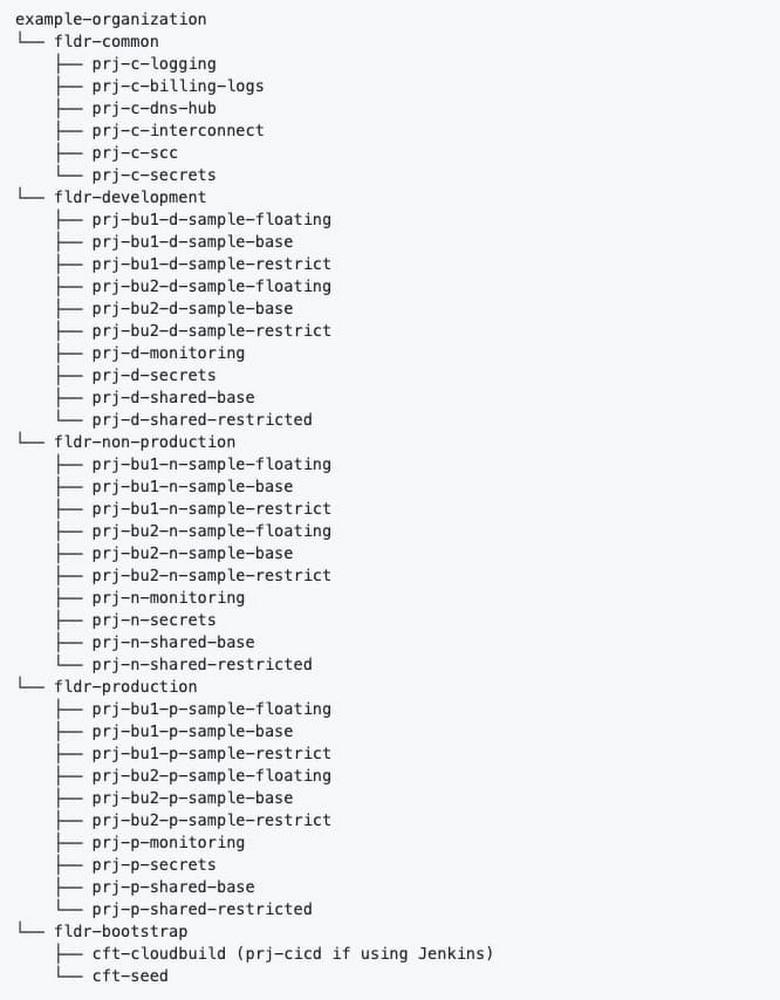
Last year, we released the Cloud Foundation Toolkit, open source templates that help you quickly build a strong cloud foundation according to best practices. These modules are available for both the Terraform infrastructure-as-code framework, as well as our own Cloud Deployment Manager.This blog post will detail building a secure cloud foundation using the Cloud Foundation Toolkit Terraform example foundation. From there, we will explore how to deploy a microservices demo application onto the foundation using Terraform. After reading this content, we hope you learn how to accomplish the following: Reduce the time required to build out an enterprise cloud foundation to less than one day following Google best practicesUse your cloud foundation by deploying a demo Google Kubernetes Engine (GKE) workload onto the foundation using TerraformDeploy a GKE cluster at the highest level of security based on Google expert recommendations (IAP with TCP forwarding bastion host)Getting startedTo get started with using the Cloud Foundation Toolkit, first you need to understand Terraform and Linux command line basics. Then, you will need to make sure you have the following prerequisites.Prerequisites:A GCP OrganizationA GCP Billing AccountAbility to create Cloud Identity / G Suite groupsLinux command line access with the following installed and configured:Google Cloud SDKTerraformGitBuilding out a cloud foundationFirst, you will need to clone the Terraform example foundation repository.Git clonehttps://github.com/terraform-google-modules/terraform-example-foundation.gitThis repo contains several distinct Terraform projects each within their own directory that must be applied separately, but in sequence. Each of these Terraform projects are to be layered on top of each other, running in the following order. 0-bootstrap: The purpose of this step is to bootstrap a GCP organization, creating all the required resources & permissions to start using the Cloud Foundation Toolkit (CFT). This step also configures Cloud Build & Cloud Source Repositories for foundations code in subsequent stages.1-org: The purpose of this step is to set up top level shared folders, monitoring & networking projects, organization-level logging, and set baseline security settings through organizational policy.2-environments: The purpose of this step is to set up environments, such as development (“dev”) and production (“prod”) environments, within the GCP organization.3-networks: The purpose of this step is to set up shared VPCs with default DNS, NAT, Private Service networking, and baseline firewall rules. 4-projects: The purpose of this step is to set up folder structure and projects for applications, which are connected as service projects to the shared VPC created in the previous stage. You will need to follow the instructions on the Terraform example foundation repository’s README.md files in order to apply each directory in sequence. The successful completion of each step is required before you can move on to the next step in the sequence.After you have successfully completed all of the foundational steps in sequence, your organization’s structure should look similar to the diagram below:You can validate that your organization structure was created correctly by visiting the Manage Project & Folders page within GCPDeploy first workload: Microservices demo applicationNow that you have a solid cloud foundation, you can deploy your first workload. This blog post will provide instructions on how to deploy the Online Boutique microservices demo application on a GKE private cluster. The demo application is a web-based e-commerce app. This diagram shows the service architecture of the Online Boutique e-commerce application (Image source)Creating the private cluster (safer access with IAP Bastion Host) via TerraformFor restricted access to the control plane of your GKE cluster, it is highly recommended to use IAP with TCP forwarding to access a Bastion host (GCE Virtual Machine) within a private, authorized IP range. The instructions to do so have been copied here for your convenience, referencing the Safer Cluster Access with IAP Bastion Host repository— additional context and minor adjustments have been made in preparation for installing a microservices demo, outlined in the next section. Please follow these steps to automate the creation of a hardened Private Cluster through a bastion host utilizing IAP without an external IP address:Choose a project that was created in the foundation (or create your own project using one of the 4-projects modules) to contain your GKE cluster. For this step, we recommend that you keep Terraform files in a new folder and configure a new, separate Terraform backend. See this article for more information about managing Terraform state. You will be using the network set up in step 3-networks above.Enable optional firewall rules in your shared VPC by modifying your 3-networks/envs/dev/main.tf and adding the following: optional_fw_rules_enabled = truenat_enabled = trueEnsure that you have enabled the following APIs enabled in your project, by adding activate_apis = [“container.googleapis.com”, “iap.googleapis.com”]Take note of the network project id in this step (for example in order to attach the cluster to `dev` environment base Shared VPC, `terraform output dev_base_host_project_id`).Clone the terraform-google-kubernetes-engine repo by running git clone https://github.com/bharathkkb/example-foundations-safer-clusterCreate a terraform.tfvars to provide values for project_id, network_project_id, bastion_members. Optionally override any variables if necessary (if attaching to a different SVPC other than the `dev` environment base Shared VPC, parameters like network_name, subnet_name, ip_range_pods_name, ip_range_services_name may need to be overridden).Run terraform init to get the plugins, then terraform apply to apply the build. By default, global access isn’t enabled for the control plane’s private endpoint upon creation of a private cluster. It is important to make the cluster private, preventing nodes from being exposed to the Internet— in this example, we select a private endpoint for the control plane while providing a CIDR block of the bastion host subnet. This way, the control plane is reachable only by whitelisted CIDRs, by nodes within your cluster’s VPC, and by Google’s internal production jobs that manage your control plane. Now that you have deployed a private, safer GKE cluster with no client access to the public endpoint while creating a bastion host GCE VM in the same network (which you will use to access the cluster’s control plane), please continue to the next section to deploy a microservices application. Deploy the Online Boutique onto your GKE clusterOnline Boutique consists of a 10-tier microservices application. The following instructions utilize pre-built container images in order to quickly deploy the release manifest directly to an existing cluster. Please follow these steps in continuation from the initial Safer Cluster steps: 1. SSH to the Bastion Host while port forwarding to the bastion host through an IAP tunnel. The command with the right parameters will be displayed by running terraform output bastion_ssh_command.gcloud beta compute ssh $BASTION_VM_NAME –tunnel-through-iap –project $PROJECT_ID –zone $ZONE — -L8888:127.0.0.1:8888Note: Make sure this is running in the background for the following steps. You can now run kubectl commands through the proxy. An example command will be displayed as the Terraform output bastion_kubectl_command2. Clone the microservices-demo repo by running git clone https://github.com/GoogleCloudPlatform/microservices-demo.gitChange your directory to /microservices-demo/release/3. Generate a kubeconfig file with the appropriate credentials and endpoint information to access the cluster. The command with the right parameters will be displayed by running terraform output get_credentials_command gcloud container clusters get-credentials –project $PROJECT_ID –region $REGION –internal-ip safer-cluster-iap-bastion4. Deploy the app. A number of services shown within the “kubernetes-manifests” folder will be created automatically: HTTPS_PROXY=localhost:8888 kubectl apply -f ./release/kubernetes-manifests.yaml5. Make sure that the pods are in a ready state, which means that each pod has RUNNING status and 1/1 readiness for each service.HTTPS_PROXY=localhost:8888 kubectl get pods6. Find the IP address of your application, then visit the application to confirm installation.HTTPS_PROXY=localhost:8888 kubectl get service/frontend-external7. If the setup worked correctly, you should be able to navigate to the external IP address and view your demo Online Boutique application. It looks like this:Congrats, you have deployed a microservices demo app using Terraform!Next stepsNow that you know how to deploy a workload onto your secure Google Cloud foundation, you can continue to leverage Terraform, or your preferred method, to deploy your own workloads. Be sure to watch/star your favorite Cloud Foundation Toolkit repos and provide feedback by raising issues in their respective repositories.
Quelle: Google Cloud Platform

Trotz jahrelanger Glasfaser-Förderung sind noch nicht viele Schulen in Deutschland breitbandig angebunden. (Glasfaser, DSL)
Quelle: Golem

Die Entwickler von Baldur’s Gate 3 haben auf Basis von Schwarmdaten den typischen Avatar nachgebaut – er ist erstaunlich solide. (Baldur's Gate, Rollenspiel)
Quelle: Golem

Das von Bosch und Daimler entwickelte Automated Valet Parking soll erstmals in der Praxis zum Einsatz kommen. (Autonomes Fahren, Internet)
Quelle: Golem

In zwei Messungen schneidet ein Open-RAN-Mobilfunknetzwerk bei LTE schlecht ab. Unklar ist, ob es an der Technik oder an der schlechten Abdeckung liegt. (Long Term Evolution, Netzwerk)
Quelle: Golem

Im Upload ist das Koaxialnetz bisher nicht sehr leistungsfähig. Harmonic will das TV-Kabelnetz-Problem jetzt gelöst haben. (Kabelnetz, Set-Top-Box)
Quelle: Golem

70 Prozent aller je gebauten Porsche existieren noch. Aber was passiert, wenn es keine fossilen Brennstoffe mehr gibt? eFuels könnten es richten. (Porsche, Technologie)
Quelle: Golem






