Microsoft: Windows 10 Version 1903 läuft ab
Systeme mit dem Update von 2019 werden automatisch mit dem Patch 1909 beliefert. Microsoft empfiehlt aber das aktuelle Windows 10 20H1. (Windows 10, Microsoft)
Quelle: Golem

Systeme mit dem Update von 2019 werden automatisch mit dem Patch 1909 beliefert. Microsoft empfiehlt aber das aktuelle Windows 10 20H1. (Windows 10, Microsoft)
Quelle: Golem

Das neue Knowledge Panel, das Informationen des Gesundheitsministeriums bei der Google-Suche prominent anzeigt, sei ein Angriff auf die Pressefreiheit. (Google, Suchmaschine)
Quelle: Golem

Deutschland soll Treiber bei “nachhaltiger und vertrauenswürdiger Mikroelektronik” werden. Das soll auch der technischen Souveränität dienen. (Bundesregierung, Technologie)
Quelle: Golem

Mit acht Zen-2-Kernen und flotter Vega-Grafikeinheit: Die Ryzen Embedded V2000 werden vorerst für IoT und Mini-PCs eingesetzt. (AMD Zen, AMD)
Quelle: Golem

Wer bei Tesla in der Giga Factory Brandenburg arbeitet, sollte bereit sein, Tätigkeiten zu wechseln. Ausbilden will Tesla im großen Stil. (Gigafactory Berlin)
Quelle: Golem

Der Arbeitsplatzabbau in der Autoindustrie ist brutal. Gleichzeitig wird bestehendes Personal für IT umgeschult oder IT-Fachkräfte eingestellt. Wir haben nachgefragt, wie Hersteller und Zulieferer vorgehen. Eine Analyse von Peter Ilg (Auto, Elektroauto)
Quelle: Golem

Leica hat eine lichtstarke Schwarz-Weiß-Kamera in Form der Q2 Monochrom vorgestellt, die auch in 4K filmt. Erstmals ist ein Autofokus an Bord. (Leica, OLED)
Quelle: Golem
It’s often said that success is more about the journey than it is about your destination. But for a modern tech organization, just the opposite is true. Every technology journey gets judged by its outcome: Does it contribute something of value to the business?The emergence of cloud-based managed services didn’t change the importance of this question for IT organizations. But the cloud has challenged IT to rethink which technology choices truly create business value—and which ones today aren’t as compelling as they used to be.Database systems are a great example of how this process is playing out for many IT organizations. The care and feeding of an on-premises database is one of the most expensive, demanding, and unforgiving IT functions. A typical enterprise will dedicate a small army of database administrators, along with a good part of its server, storage, network, and disaster recovery infrastructure, to keep business-critical data stores available and secure.Modern database systems, including MongoDB, have been a big step forward—giving businesses a more flexible, scalable, and developer-friendly alternative to legacy relational databases. But there’s an even bigger payoff with a solution such as MongoDB Atlas: a fully managed, database-as-a-service (DBaaS) offering. It’s an approach that gives businesses all of the advantages of a modern, scalable, highly available database, while freeing IT to focus on high-value activities.Forbes and MongoDB Atlas: rising to the challenge of record-setting growthForbes is one example of what’s possible when a tech organization executes a growth strategy that integrates a DBaaS solution with a cloud-native application architecture—in this case, migrating from self-managed MongoDB to MongoDB Atlas running on Google Cloud. Forbes was one of the first media brands to launch a web presence, and its team was already contending with a long run of record-breaking growth. In May 2020 alone, the company attracted more than 120 million unique visitors to Forbes.com. At the same time, however, Forbes was tasked with driving an aggressive growth and innovation strategy that included seven new online newsletters and an array of new services for both readers and journalists.Forbes’ decision to migrate from its on-premises MongoDB deployment to MongoDB Atlas database running on Google Cloud was crucial to hitting its business technology goals. By adopting a cloud-native architecture, Forbes could also implement an intermediate abstraction layer that placed a stable API on top of the database. This allowed more freedom and flexibility to work with changing data structures while minimizing the risk of breaking the services that use the data. In addition, by pairing MongoDB Atlas with Google Cloud, Forbes could build its digital products on a reliable and highly scalable infrastructure—one that can seamlessly handle both upward and downward spikes in traffic, without the cost and complexity of overprovisioning.And by adopting a fully managed DBaaS, Forbes got out from under the immense burden of managing, scaling, and securing an on-premises system. Resources the company had devoted to running database systems and infrastructure were now free to focus entirely on delivering high-value projects that drove growth and elevated the Forbes reader experience. “We did not want to be in the database management business,” said Forbes CTO Vadim Supitskiy. “We were now abstracted enough to focus solely on value delivery.”Forbes’ decision to run MongoDB Atlas on Google Cloud yielded other important benefits. The company’s application architecture, for example, relied on Kubernetes to orchestrate more than 50 microservices, which made Google Kubernetes Engine (GKE) a key source of IT value. Forbes unlocked additional value via integrations with other pieces of the Google Cloud software ecosystem, including its AI and machine learning capabilities; and with serverless applications built on App Engine that dramatically improved developer productivity and efficiency.For Forbes, the move to MongoDB Atlas on Google Cloud is already showing results: Release cycles for services have accelerated anywhere from 2x-10x, while total cost of ownership for its database system has dropped by 25%. And the company’s newly launched newsletters drove a 92% increase in overall newsletter subscriptions during 2020—a critical metric for any brand, and one that can be hard to push upward in a highly competitive industry.An example like Forbes provides a good starting point for understanding how MongoDB Atlas and Google Cloud can create value for your IT organization when assessing DBaaS offerings on various cloud platforms.Sizing up your database-as-a-service options: 4 key questions1. Who is managing a database service, and how will they add value to an offering? Look around online, and you’ll find a number of vendors with cloud offerings that look, at first glance, very similar to MongoDB Atlas. Some of these actually use MongoDB, but they may or may not offer the latest version with the most complete capabilities. Other vendors don’t actually use MongoDB but rather attempt to emulate it—and their efforts may fall short in unpredictable ways.What’s unique about MongoDB Atlas is the fact that it’s built, supported, and maintained by the core MongoDB engineering team. There’s tremendous value in getting database support directly from MongoDB engineers and consulting services from engineers with multiple years of MongoDB experience.MongoDB Atlas also holds a significant technology edge over third-party managed database services based on MongoDB. Compared to these competing offerings, for example, only MongoDB Atlas supports all MongoDB features with full application compatibility, or access to the latest MongoDB version, or even the most complete JSON data type support.2. Will a database service support a true cloud-native app strategy? In theory, moving your database to the cloud opens the doors to massive gains in performance, scalability, and innovation potential. In practice, not every managed database is equal in terms of being engineered and optimized as a cloud-native application.Keeping this in mind, there are five key areas where you should expect any cloud database, including MongoDB Atlas, to offer a clear advantage over legacy database systems:Efficiency, including automated deployments and provisioning, setup and maintenance, and version upgrades.Performance, with on-demand scaling and real-time performance insights.Mission-critical reliability, including distributed fault tolerance and backup options.Security, with controls and features that meet current protocols and compliance standards.Productivity, with drivers, integrations, and native tools that keep developers focused and engaged.3. Does a database service maximize your freedom and flexibility? Every cloud provider wants your business, but the reality is that many companies want the ability to deploy databases, services, and data stores across multi-cloud and hybrid cloud environments. MongoDB Atlas offers true multi-cloud capabilities, with easy portability between clouds. MongoDB also supports public cloud, private cloud, on-premises, and hybrid deployments with MongoDB Enterprise Advanced. This degree of multi-cloud support also means that MongoDB Atlas is available across a total of more than 70 public-cloud global regions—a high-value capability for companies with specialized data security, governance, or compliance requirements.4. How dependent is your business on your ability to provide a high-quality customer experience—anywhere, at any time? Adopting a truly global database infrastructure isn’t just about data security or disaster recovery. It’s also a major piece of the puzzle for businesses focused on global growth, especially in regions where digital businesses often create less-than-stellar customer experiences due to performance and latency issues.MongoDB Atlas addresses these types of performance issues with its use of global clusters—in essence, a cluster that includes different zones around the world to handle both reads and writes. By combining MongoDB Atlas with Google Cloud’s virtual private cloud capabilities, it becomes possible to build applications that offer in-region latency experiences for audiences almost anywhere in the world. And that’s an advantage with game-changing potential for any business aiming to build a loyal and satisfied global customer base.The goal: Getting the most from your cloud choicesThere’s tremendous value in migrating to a database service that frees up IT for projects that drive innovation and growth, and MongoDB Atlas meets that need. But questions like the ones above address the bigger challenge: choosing a DBaaS offering that truly taps into the full potential the cloud has to offer, and that leaves nothing off the table in terms of performance, growth, freedom, and flexibility. This is a much stricter and more difficult standard for any cloud application to meet, and it’s the reason why MongoDB Atlas and Google Cloud offer some important and unique advantages.Learn more about MongoDB Atlas on Google Cloud.Watch Vadim Supitskiy, Forbes’ CTO chat with Lena Smart, MongoDB CISO about how Forbes set digital innovation standards with MongoDB and Google Cloud.Related ArticleAnnouncing MongoDB Atlas free tier on GCPThe free tier offers a no-cost sandbox environment for MongoDB Atlas on GCP so you can test any potential MongoDB workloads and decide to…Read Article
Quelle: Google Cloud Platform
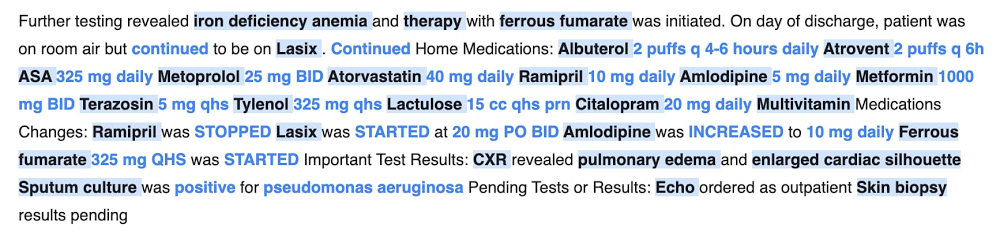
COVID-19 shined a light on the heroic efforts of front-line healthcare workers. But it also highlighted some of the challenges around managing healthcare data and interpreting unstructured digital text. For healthcare professionals, the process of reviewing and writing medical documents is incredibly labor-intensive. And the lack of intelligent, easy-to-use tools to assist with the unique requirements of medical documentation creates data capturing errors, a diminished patient-doctor experience, and physician burnout. Today, we are excited to launch in public preview a suite of fully-managed AI tools designed to help with these challenges: Healthcare Natural Language API and AutoML Entity Extraction for Healthcare. These tools assist healthcare professionals with the review and analysis of medical documents in a repeatable, scalable way. We hope this technology will help reduce workforce burnout and increase healthcare productivity, both in the back-office and in clinical practice. Healthcare Natural Language API enables auto summarization of medical insightsA significant pain point in the healthcare industry is that mission-critical medical knowledge is often stored in unstructured digital text—that is, content lacking metadata that can’t be mapped into standard database fields. For example, social determinants of health like substance abuse or physical activity, and follow-up recommendations such as medication amounts or behavior suggestions, often reside within the unstructured text of a medical record. The main path to accessing such information is a manual review of the medical document by the healthcare professional. With the Healthcare Natural Language API, enterprise customers can now better coordinate valuable medical insights that are captured in unstructured text, such as vaccinations or medications, that may be overlooked as patients move through their healthcare journeys. This solution can drive measurable outcomes by lowering the likelihood of redundant bloodwork or other tests, reducing operational spending, and improving the patient-doctor experience.How does it work? The Healthcare Natural Language API identifies medical insights in documents, automatically extracting knowledge about medical procedures, medications, body vitals, or medical conditions. By using machine learning, the API identifies clinically relevant attributes based on the surrounding context. For example, it discerns medications prescribed in the past from medications prescribed for the future and it picks up the likelihood of a specific symptom or diagnosis, as captured in language nuances. It can also distinguish medical insights that pertain to the patient from information that pertain to a patient’s relative.To facilitate analysis of medical insights at scale, the Healthcare Natural Language API automatically normalizes medical information against an industry-standard knowledge graph such as Medical Subject Headings (MeSH) or International Classification of Diseases (ICD). Human language is rich in concepts—often with overlapping meaning—yet analysis necessitates standardized data inputs. For example, the medical condition diabetes is commonly referred to as diabetes mellitus, while croup is also called laryngotracheobronchitis in specialist terms. With the Healthcare Natural Language API, similar medical information gets normalized into a standardized medical knowledge graph.Finally, the Healthcare Natural Language API enriches health applications that rely on the interpretation of unstructured digital text. For example, telehealth companies can deploy the Healthcare Natural Language API to identify the most relevant symptoms, pre-existing conditions, and medications from a doctor-patient transcribed conversation. Pharmaceutical and biotechnology customers may employ the Healthcare Natural Language API to optimize clinical trials by increasing the accuracy of patients matched against granular inclusion/exclusion protocol criteria. The Healthcare Natural Language API technology can also drive operational efficiencies in document-review workflows like Healthcare Effectiveness Data and Information Set (HEDIS) quality reporting or Hierarchical Condition Category (HCC) risk adjustment.AutoML Entity Extraction for Healthcare facilitates custom information extraction In addition to the Healthcare Natural Language API, we are launching AutoML Entity Extraction for Healthcare—an easy-to-use AI development platform that broadens access to AI across users with various technical backgrounds. AutoML Entity Extraction for Healthcare complements the coverage of insights available through the Healthcare Natural Language API.Healthcare professionals may not have the technical expertise on-hand to build their own tools for extracting information from digital documents. With AutoML Entity Extraction for Healthcare, we’ve made this much easier to do via a low-code interface, letting healthcare professionals build information extraction tools for gene mutations and socioeconomic factors, for example. AutoML Entity Extraction for Healthcare enriches digital health applications such as telemedicine, drug discovery, or clinical trials for rare diseases.To help customers get started with AutoML Entity Extraction for Healthcare, we are open-sourcing a set of annotation guidelines for medical text. We hope the community will contribute to the refinement and expansion of these guidelines to mirror the ever-evolving nature of healthcare.Accelerating impact through partnersTo help deliver these solutions to providers, payers, and life science companies nationwide, Google Cloud is partnering with a number of key solutions providers. SADA, a Google Cloud solutions provider, believes the new tools will be able to help healthcare customers implement medical analysis projects in days, not weeks. “The richest information about the health of a patient is typically not found within the structured fields of a medical record system. Instead, it is contained within the lengthy free-text notes that a clinician either types or dictates into the medical record in the course of care,” says Michael Ames, Sr. Director Healthcare and Life Sciences at SADA. “I’m very excited for the opportunities this suite of Healthcare Natural Language AI tools from Google Cloud will create.”What’s nextLearn more about getting started with the Healthcare Natural Language API, which is free-of-charge for the next 30 days, until December 10th, 2020. To get started with the public preview of AutoML Entity Extraction for Healthcare, see our step-by-step guide and check out our website, or contact sales for more information.Related ArticleRead Article
Quelle: Google Cloud Platform
If you are a financial entity in the European Union (EU), the new draft regulation from the European Commission on Digital Operational Resilience for the Financial Sector (DORA) is likely top of mind. DORA aims to consolidate and upgrade existing Information and Communications Technology (ICT) risk management requirements, and is also introducing a new framework for direct oversight of critical ICT service providers by financial regulators in the EU. Where the criteria are met, this would apply to cloud service providers like Google Cloud. It’s important to know that DORA is still in draft and is going through the legislative process. As of today, DORA doesn’t create any new requirements for financial entities or ICT service providers. Google Cloud is following the proposed regulation and is contributing to the collaborative dialogue that is shaping it to help DORA achieve the European Commission’s priorities.Enhancing the digital resilience of the European financial systemDORA addresses a number of important topics for financial entities using ICT services, with the objective of enhancing the digital resilience of the European financial system from incident reporting to operational resilience testing and third party risk management.Resilience and security are at the core of Google Cloud’s operations. We firmly believe that migration to the public cloud can help financial entities improve their operational resilience and security posture. These benefits have come into full view during the COVID-19 pandemic — our technology and infrastructure have continued to support our customers without shortfalls. At the same time, the oversight framework for critical third-party providers under DORA could create a genuine opportunity to enhance understanding, transparency, and trust among ICT service providers, financial entities, and financial regulators, and ultimately stimulate innovation in the financial sector in Europe. Google Cloud already supports our customers in many of the areas addressed in DORA: Incident reporting: To protect our customers’ data, Google Cloud runs an industry-leading information security operation that combines stringent processes, a world-class team, and multi-layered information security and privacy infrastructure. Our Data incident response whitepaper outlines Google Cloud approach to managing and responding to data incidents. Operational resilience and testing: Our global infrastructure, baseline controls, and security features offer strong tools that customers can use to achieve resilience on our services. We are also committed to open source standards. These solutions help customers control the availability of their workloads and run them wherever they want without being dependent on or locked into a single cloud provider. We also recognize that resilience must be tested. Google Cloud conducts our own rigorous testing, including penetration testing and disaster recovery testing, and empowers our customers to perform their own penetration testing. We also provide information about how customers can use our services in their disaster recovery planning in our Disaster Recovery Planning Guide. Third-party risk: We recognize that financial entities must consider outsourcing and third-party risk management requirements when using cloud services. Google Cloud’s contracts for financial entities in the EU address the contractual requirements in the EBA outsourcing guidelines and the EIOPA cloud outsourcing guidelines. We pay close attention as laws and regulatory expectations continue to evolve. Policy engagement on the new frameworkAs the conversation around DORA progresses, we will continue to lend our view and technology expertise to policymakers and industry in a transparent manner, in particular advocating for the following:Harmonization and deduplication of requirements, including between DORA and existing frameworks like the European Supervisory Authorities’ Outsourcing Guidelines and the NIS Directive.Requirements that are proportionate and fit-for-purpose, especially those that recognize the technological and operational realities of evolving ICT services in the cloud context.Technology neutrality and innovation, which we believe is always encouraged by open ecosystems and the free flow of data.An approach that would be consistent with a multi-tenant cloud environment and respect the security and integrity of our services for all customers, whether they are subject to DORA or not. We are committed to being a constructive voice as we engage with stakeholders on the proposal. Open dialogue and sharing expertise and best practices will be key to DORA’s effectiveness.
Quelle: Google Cloud Platform






