One Gx1 Pro: 7-Zoll-Mini-Laptop mit Gamepad kann gekauft werden
Das Handheld verwendet Intels Tiger Lake und dessen integrierte Iris-XE-GPU. Trotz des winzigen Formates gibt es hier USB-C und USB-A. (Mini-Notebook, Notebook)
Quelle: Golem

Das Handheld verwendet Intels Tiger Lake und dessen integrierte Iris-XE-GPU. Trotz des winzigen Formates gibt es hier USB-C und USB-A. (Mini-Notebook, Notebook)
Quelle: Golem

Ausgediente elektrische Geräte haben nichts im Hausmüll verloren. Verbraucher sollen es deshalb künftig einfacher haben, Elektroschrott loszuwerden. (Elektronikschrott, GreenIT)
Quelle: Golem
medium.com – In 2019 I published a blog: Kubernetes Storage Performance Comparison. My goal was to evaluate the most common storage solutions available for Kubernetes and perform basic performance testing. I had…
Quelle: news.kubernauts.io
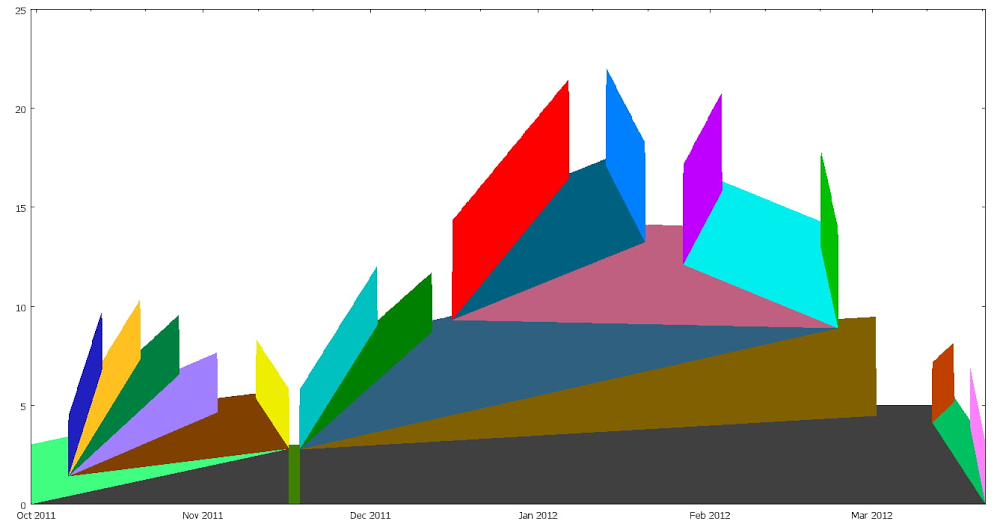
As humans, we look to nature for inspiration, and much of our appreciation of beauty comes from natural forms. Who among us hasn’t lain on a hillside, looking for familiar shapes in the clouds?As engineers, many of our interactions take place with a built environment that is entirely separate from nature. Still, we have deep connections with nature, and we might find images in unexpected places—even in the midst of a grim outage. To celebrate this, we are pleased to share with you a selection of images from Google’s ‘Museum of Borgmon Abstract Art.’Borgmon, as you’ll recall from Chapter 10 of the SRE Book, is a system for alerting based on time-series data. For over a decade, it has provided Google SRE teams insight into system behavior and trends. It has also brought art and joy amidst our travails. To wit, consider these images that we have found in our very monitoring systems:Fig. 1: Three-dimensional booksThese bring us delight:Fig. 2: A skein of yarn unravelsand, with the aid of our imagination, even some amusement:Fig. 3: Can you spot the elephant in the room ^W graph?Fig. 4: A tapestry formed of per-task request ratesand—with a little added flourish—invent some creatures. With this, we present to you… the Borgmonster:Fig. 5: The BorgmonsterWe like this alot.You can see our gallery online at sre.google/mobaa.When you come back to earth, read more about monitoring and observability in the Monitoring Distributed Systems chapter of the SRE Book and in the Monitoring chapter of the SRE Workbook. Then, ask yourself: What do the shapes, color palettes, and patterns of your monitoring say to you? Share them with @googlesre on Twitter using #SREArt.Visit sre.google to learn more about SRE and industry-leading practices for service reliability.
Quelle: Google Cloud Platform

Das Digitale-Dienste-Gesetz will die Pflichten der IT-Konzerne neu regeln. Für große Anbieter wie Facebook oder Youtube gelten künftig höhere Auflagen. (EU-Kommission, Google)
Quelle: Golem

Mit Gesetzen will Verdi Amazon gesetzlich beschränken, um den stationären Einzelhandel zu stärken. Kritisiert wird, dass dies nichts mit den Aufgaben einer Gewerkschaft zu tun hat. (Amazon, Wirtschaft)
Quelle: Golem

Die aktuelle Version des Firefox-Browsers erweitert außerdem die Webrender-Nutzung und ist die letzte mit Flash-Support. (Firefox, Browser)
Quelle: Golem

Der Hollywoodstar Vin Diesel tritt in der TV-Serie zu Ark 2 auf und ist an der Produktion des Spiels beteiligt – für ihn keine Premiere. (Games)
Quelle: Golem

Der Versorgungskonzern EnBW wird als Telekommunikationskonzern immer mächtiger. Seine Tochter Plusnet übernimmt einen großen Teil des bundesweiten Glasfaser-Netzes von Gasline. (Glasfaser, Internet)
Quelle: Golem
Join us on December 16, 2020, 11am PT / 2pm ET to learn more about Automating CI/CD pipelines with GitHub Actions and Google Cloud.Serverless computing hides away infrastructure allowing for developers to focus on building great applications. Google Cloud Platform offers 3 serverless compute platforms—Cloud Functions, App Engine, and Cloud Run—with the benefits of zero server management, no up-front provisioning, auto-scaling, and only paying for the resources used. Serverless applications are quick and easy to spin up, but a system for continuous integration and continuous delivery (CI/CD) is key for long-term operability. However, CI/CD systems tend to be known for their complexity, so GitHub Actions aim to reduce the overhead by abstracting away the test infrastructure and creating a developer-centric CI/CD system. You can get started quickly by adding a configuration file to your repo to automate your builds, testing, and deployments. Google wants to meet you on GitHub and provides Google Cloud Platform integrated GitHub actions.Let’s walk through how to deploy to Google Cloud Platform’s serverless options using the integrated GitHub actions. Learn more about Google’s serverless hosting options orGoogle Cloud Platform full range of hosting options to find which platform is right for you.Cloud FunctionsCloud Functions is Google Cloud’s Function-as-a-Service platform that allows users to create single-purpose, stand-alone functions that respond to events and HTTP requests. Cloud Functions are great for pieces of code like sending notification emails, performing database sanitization and maintenance, integrating with webhooks, and processing background tasks.Use the google-github-actions/deploy-cloud-functions to deploy an HTTP function by specifying the function name and runtime:Or deploy a background function that can be triggered by events, such as Pub/Sub messages, Firebase events, or changes in a Cloud Storage bucket, by specifying trigger type and resource:A function triggered when a new object is created in Cloud Storage would be deployed with inputs like:Learn more about specifying event triggers.App EngineApp Engine is the original serverless platform for hosting modern web applications. App Engine allows you to deploy from source by selecting a runtime from a set of popular programming languages.Deploy your source code with the google-github-actions/deploy-appengine action by specifying a service account key with permissions to deploy and the path to App Engine app’s settings file, app.yaml which sits next to your application to define the service for the deployment.The project ID is also set to ensure deployment to the correct project, since service accounts can be given permissions to separate projects.Cloud RunCloud Run hosts stateless containers with any choice of language, library, or binary. Cloud Run is a great choice for REST API backends, lightweight data processing, and automated services like webhooks and scheduled tasks.Use the google-github-actions/deploy-cloudrun action to deploy a container image hosted in Google Container Registry or Artifact Registry to Cloud Run to create a new service or a revision.Need to build your image too? Use the built-in Docker tool to build and push your image or utilize the setup-gcloud action (below) to submit a Cloud Build using the gcloud CLI tool.Setup Cloud SDKThe Cloud SDK, also known as the gcloud CLI tool, is commonly used to interact with Google Cloud Platform. Use the setup-gcloud action to add the gcloud CLI tool to the path to interact with many Google Cloud services. This action can be used to authenticate other Google Cloud Platform actions by utilizing export_default_credentials. This exports the path to Default Application Credentials as the environment variable GOOGLE_APPLICATION_CREDENTIALS for services to be automatically authenticated in later steps. The credentials input in the other actions, then can be omitted.Try it for yourself!Google and GitHub are excited to make it easier for you to set up CI/CD pipelines. Try Google Cloud GitHub actions today:Explore Google’s GitHub actions and give us feedback on your experience.Try out one of the example workflows.If you need control of your test environment, try setting up GitHub Actions self-hosted runners on Google Cloud.Join us on December 16, 2020, 11am PT / 2pm ET to learn more about Automating CI/CD pipelines with GitHub Actions and Google Cloud. Save your seat!Related ArticleCloud Build brings advanced CI/CD capabilities to GitHubTighter integration between Cloud Build and GitHub opens up advanced CI/CD workflows for DevOps shops.Read Article
Quelle: Google Cloud Platform






