Homekit-kompatibel: Smart-Home-Rollos von Eve per Smartphone steuerbar
Eve und Coulisse wollen Rollos für Fenster im Smart Home mit Homekit-Unterstützung öffnen und schließen. (Smart Home, Ikea)
Quelle: Golem

Eve und Coulisse wollen Rollos für Fenster im Smart Home mit Homekit-Unterstützung öffnen und schließen. (Smart Home, Ikea)
Quelle: Golem

Das Unternehmen iRobot plant ein Update, damit die Saugroboter Roomba i7 und s9 wieder geradeaus fahren, nicht mit Möbeln kollidieren und sich nicht im Kreis zu drehen. (iRobot, Technologie)
Quelle: Golem

Vor 25 Jahren startete die Military-Science-Fiction-Serie Space 2063 in Deutschland. Es wurde nur eine Staffel produziert. Sie ist auch ihres bitteren Endes wegen unvergessen. Von Peter Osteried (Science-Fiction)
Quelle: Golem

Die Turbulenzen um die Gamestop-Aktie beginnen offenbar von Neuem, Gründe dafür sind nicht erkennbar. (Gamestop, Börse)
Quelle: Golem

Disney hat neue Starttermine für eine Star-Wars-Serie und zwei Marvel-Serien auf Disney+ bekanntgegeben. (Disney+, Disney)
Quelle: Golem

In the years since Google invented Kubernetes, it has completely revolutionized IT operations, becoming the de facto standard for organizations looking for advanced container orchestration. Organizations that need the highest levels of reliability, security, and scalability for their applications choose Google Kubernetes Engine (GKE). In the second quarter of 2020 alone, more than 100,000 companies used our application modernization platforms and services—including GKE—to build and run their applications. Until now, Kubernetes still involved a fair bit of manual assembly and tinkering to optimize it for your needs. Today, we’re introducing GKE Autopilot, a revolutionary mode of operations for managed Kubernetes that lets you focus on your software, while GKE Autopilot manages the infrastructure.For many businesses, the flexibility and power that Kubernetes and GKE offers is ideal, giving them a high level of control over most aspects of their cluster configurations. For others though, this level of control and choices can be overwhelming or unnecessary for their workloads’ requirements, as they just want a simple way to build a more secure and consistent development platform. Autopilot can help, allowing businesses to embrace Kubernetes and simplifying operations by managing the cluster infrastructure, control plane, and nodes.With its optimized, ready-for-production cluster, Autopilot offers a strong security posture and ops-friendly configuration, reducing the need to learn the nitty-gritty details of cluster configuration. By managing the cluster infrastructure, Autopilot also helps reduce Day-2 operational and maintenance costs, while improving resource utilization. Autopilot is a hands-off fully managed Kubernetes experience that allows you to focus more on your workloads and less on managing cluster infrastructure. One GKE, two modes of operationWith the launch of Autopilot, GKE users can now choose from two different modes of operation, each with their own level of control over their GKE clusters and the relative responsibilities related to GKE. GKE already offers an industry-leading level of automation that makes setting up and operating a Kubernetes cluster easier and more cost effective than do-it-yourself and other managed offerings; Autopilot represents a significant leap forward. In addition to the fully managed control plane that GKE has always provided, using the Autopilot mode of operation automatically applies industry best practices and can eliminate all node management operations, maximizing your cluster efficiency and helping to provide a stronger security posture.GKE AutopilotGKE has always been about simplifying Kubernetes, while still giving you control. Perhaps you still want to customize your Kubernetes cluster configurations or manually provision and manage the cluster’s node infrastructure. If so, you can continue to use GKE with the current mode of operation in GKE, referred to as Standard, which provides the same configuration flexibility that GKE offers today.GKE StandardLeave the management to GKE Early access customers have found that choosing Autopilot has the potential to dramatically improve the performance, security, and resilience of their Kubernetes environments, while reducing the overall operational load required for managing Autopilot clusters. Here are some of the benefits they are excited about. Optimize for production like a Kubernetes expert With Autopilot, GKE creates clusters based on battle-tested and hardened best practices learned from Google SRE and engineering experience. These optimized configurations are ready for production, helping reduce the GKE learning curve. GKE also automatically provisions cluster infrastructure based on your workload specifications and can take care of managing and maintaining the node infrastructure. “Reducing the complexity while getting the most out of Kubernetes is key for us and GKE Autopilot does exactly that!” – Mario Kleinsasser, team leader at Strabag InternationalEnjoy a stronger security posture from the get-go GKE already does a lot to help secure your cluster—from hardening the lowest level of hardware, through the virtualization, operating system, Kubernetes, and container layers. With Autopilot, GKE helps secure the cluster infrastructure based on years of experience running the GKE fleet. Autopilot implements GKE hardening guidelines and security best practices, utilizing GCP unique security features like Shielded GKE Nodes and Workload Identity. In addition, Autopilot blocks certain features deemed as less safe such as External IP Services or legacy authorization, disabling CAP_NET_RAW and restricting specific cipher suite usage. By locking down individual Kubernetes nodes, Autopilot further helps reduce the cluster’s attack surface, and minimizes ongoing security configuration mistakes.Use Google as your SRE for both nodes and the control plane Google SRE already handles cluster management for GKE; with Autopilot, Google SREs manage your nodes as well, including provisioning, maintenance, and lifecycle management. Because Autopilot nodes are locked down, sysadmin-level modifications that could result in nodes being unsupportable can be prevented. Autopilot also supports maintenance windows and a pod disruption budget for maintenance flexibility. In addition to GKE’s SLA on hosts and the control plane, Autopilot also includes an SLA on Pods—a first.“GKE Autopilot is the real serverless K8s platform that we’ve been waiting for. Developers can focus on their workloads, and leave the management of underlying infrastructure to Google SREs.” – Boris Simandoff, VP Engineering, at Via Transportation, Inc. Pay for the optimized resources you useWith Autopilot, we provision and scale the underlying compute infrastructure based on your workload specifications and dynamic load, helping to provide highly efficient resource optimization. Autopilot dynamically adjusts compute resources, so there’s no need to figure out what size and shape nodes you should configure for your workloads. With Autopilot, you pay only for the pods you use and you’re billed per second for vCPU, memory and disk resource requests. No more worries about unused capacity!Welcoming the GKE partner ecosystemWe designed Autopilot to be broadly compatible with how GKE has always worked, as well as with partner solutions. Out of the gate, Autopilot supports logging and monitoring from DataDog and CI/CD from GitLab. Both work just as they do in GKE today—no need to configure things differently or use sidecars. Our goal is full partner compatibility, and many more integrations are expected in the coming months.Join the Kubernetes revolutionWe’re proud of the dramatic efficiency that GKE brings to running complex, distributed applications, and GKE Autopilot represents the next big leap forward in terms of management and operations. Autopilot is generally available today1; we encourage you to see the difference that it brings to your Kubernetes environment. Get started today with the free tier. To learn more about GKE Autopilot, tune into this week’s episode of the Kubernetes Podcast with GKE Autopilot Product Manager Yochay Kiriaty.Save the date: Build the future with Google Kubernetes Engine online event is on March 11th. Join us to learn what’s new in the world of containers and Kubernetes at Google Cloud, get access to exclusive demos and hear from experts. See you there!1. You can currently access Autopilot from the command line interface, and we are gradually rolling it out to the Google Cloud Console for all GCP regions. If you don’t see the Autopilot option in Cloud Console yet, use the CLI or try again later.Related ArticleLooking ahead as GKE, the original managed Kubernetes, turns 5Happy birthday, GKE. As we look ahead, we wanted to share five ways we’re continuing our work to make GKE the best place to run Kubernetes.Read Article
Quelle: Google Cloud Platform
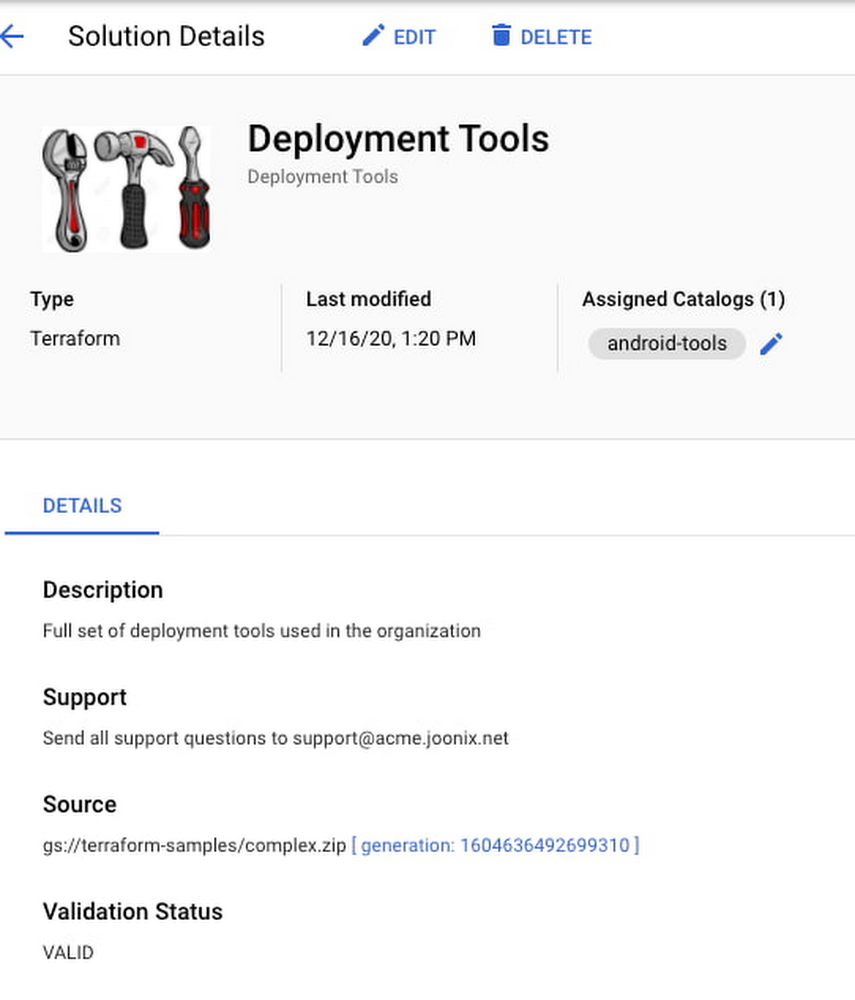
In April 2019, we announced that Private Catalog was generally available to all Google Cloud Marketplace customers, giving cloud administrators, developers, and procurement managers within an organization a single, centralized home for apps and solutions that are approved for everyone’s internal use. Private Catalog makes teams more productive by making Google Cloud services, third-party and internal solutions easier to find and use, and limits risk by letting admins grant clear visibility and deployment controls. Since making Private Catalog generally available, we’ve been working closely with multiple Enterprise customers and are pleased to announce enhancements to our admin experience, along with support for Terraform.Deploy your infrastructure using TerraformEngineers increasingly use Terraform as their preferred technology for building and deploying solutions that can scale across clouds, and Terraform support has been one of our most oft-requested features.With this update to Private Catalog, you can ingest and deploy Terraform configurations. Further, you can deploy your infrastructure using Terraform without having to install Terraform. Stay tuned for additional features this year to enhance the Terraform experience.Easier-to-manage products With Private Catalog, the products you create traditionally must live under a single catalog. This made it easy to manage your products at the catalog level but made it difficult if you wanted to include the same product in multiple catalogs, or get a list of all the products in your organization.With the latest version of Private Catalog, products and catalogs are now separate; you can now manage products outside of a catalog, bulk-add products to multiple catalogs, and gain a clear, concise view of all the products in their organizations, along with which catalogs they’re shared to. Private Catalog also features a revamped Admin UX that makes it easy to view lists of products and catalogs.Simple delegate managementBefore the current update, you had to add Private Catalog IAM permissions at the Organization level. We heard feedback that you wanted the flexibility to add permissions at different levels of the GCP resource hierarchy. Now, you can now add Catalog IAM permissions at the folder and project levels, which eliminates the need for a Cloud Admin at the Org level to manage Catalog Admin permissions. With this federated model, complex enterprises can easily manage separate catalogs and permissions anywhere in the GCP hierarchy and enable admins to manage individual catalogs at different folders or projects. No more losing track of who’s an Org Admin, and restricting Catalog Admins’ permissions. Of course, you can also choose to maintain the existing centralized model if you choose.View shared catalogs with easeAnother customer pain point has been around catalog sharing. Cloud admins share catalogs with the GCP Org, Folder or Project to provide visibility of the solutions to their end users, but Private Catalog didn’t show the sharing metadata. With this release, sharing controls and information are displayed prominently in the Catalog list, with improved governance controls, and you can easily unshare the catalog.Click to enlargeBulk-edit products When you shared products across many catalogs, you’ve traditionally had to recreate them in each catalog and manage each catalog separately. With this release, products are managed independently from catalogs, so you can easily bulk-assign them to catalogs and manage the product in a single place.Begin your move to Private Catalog todayThis is our largest update to Private Catalogs since its launch in April. To take advantage of the many new capabilities, you will need to migrate to it, which will move your products into a single Google Cloud project. We’re working hard to make the migration process painless and simple. For existing Private Catalog customers, when you’re ready to migrate, please fill out this short, six-question form. We will then contact you directly to schedule your migration and get you up and running on the newest version. New customers can visit the Private Catalog page to sign up or learn more about the feature here. Please note that all new Private Catalog customers will need to select a project when you first start up.We hope the new functionality will help you ensure compliance and governance within your organization, and we welcome any feedback you may have. Try out Private Catalog on Google Cloud Marketplace today.Related ArticleImprove enterprise IT procurement with Private Catalog, now in betaWith Private Catalog, now in beta, you can control which GCP apps are available throughout your organization.Read Article
Quelle: Google Cloud Platform
Der Amazon Connect CTR-Stream (Contact Trace Records) enthält jetzt den Trennungsgrund für Voice Calls & Tasks. Dies zeigt an, ob ein Agent oder ein Kunde die Verbindung getrennt hat, oder ob ein Telekommunikations- oder Netzwerkproblem die Trennung des Anrufs verursacht hat, oder ob eine Aufgabe von einem Agenten oder einem Fluss abgeschlossen wurde.
Quelle: aws.amazon.com
Heute kündigen wir die AWS Control Tower Region Selection an, eine neue Funktion, die Ihnen die Möglichkeit bietet, den geografischen Fußabdruck Ihrer AWS Control Tower-Ressourcen effizient zu verwalten. Sie können jetzt die zusätzlichen Regionen auswählen, die Sie mit AWS Control Tower verwalten möchten. Damit haben Sie die Möglichkeit, Compliance- und regulatorische Belange zu berücksichtigen und gleichzeitig die mit der Expansion in zusätzliche Regionen verbundenen Kosten auszugleichen.
Quelle: aws.amazon.com
Amazon RDS for Oracle unterstützt jetzt das Release Update (RU) vom Januar 2021 für Oracle Database 12.2, 18c und 19c. Das Januar 2021 Patch Set Update (PSU) für Oracle Database 12.1 wird in Kürze veröffentlicht.
Quelle: aws.amazon.com






