6 benefits of AIOps

Through real time processing of streaming data, an AIOps platform can help provide continuous insights across IT operations, including, among other things. Learn more about AIOps:
Quelle: CloudForms

Get planet-scale monitoring with Managed Service for Prometheus

Prometheus, the de facto standard for Kubernetes monitoring, works well for many basic deployments, but managing Prometheus infrastructure can become challenging at scale. As Kubernetes deployments continue to play a bigger role in enterprise IT, scaling Prometheus for a large number of metrics across a global footprint has become a pressing need for many organizations. Today, we’re excited to announce the public preview of Google Cloud Managed Service for Prometheus, a new monitoring offering designed for scale and ease of use that maintains compatibility with the open-source Prometheus ecosystem. With Google Cloud Managed Service for Prometheus, you have an alternative to taking on the toil of self-managing a Prometheus or Thanos stack in perpetuity. Instead, you can get global and globally scalable monitoring with Prometheus interfaces, letting you keep open-source ecosystem compatibility and portability.Details about Google Cloud Managed Service for Prometheus, currently in previewManaged Service for Prometheus is Google Cloud’s fully managed collection, storage, and query service for Prometheus metrics. It is built on top of Monarch, the same globally scalable data store that powers all application monitoring at Google. Managed Service for Prometheus lets you monitor and alert on your Kubernetes deployments using Prometheus without having to manually manage and operate Prometheus infrastructure at scale. The service is built as a drop-in replacement for Prometheus and eliminates the need for self-managed solutions like Thanos or Cortex.Google Cloud Managed Service for Prometheus is built on Monarch, which powers all application monitoring at GoogleAn easy to use service with open source interfacesAs a drop-in replacement for Prometheus, Managed Service for Prometheus was designed to have easy onboarding by letting you reuse your existing Prometheus configs. You can also opt to deploy managed collectors for even greater simplicity. It has hybrid- and multi-cloud compatibility, meaning you can monitor any environment where Prometheus can run.Looking beyond data collection, you can keep your existing dashboards in Grafana and PromQL-based rules and alerts without modifying any queries. This means you maintain portability with open source-compatible interfaces that proprietary managed solutions usually do not support.Managed Service for Prometheus is built on the same global and globally scalable backend that Google uses for its own metrics. Collecting over 2 trillion active time series holding 65 quadrillion points, the service can support practically any metric volume that your business produces. The system supports ad-hoc global aggregations at query time over regionally-stored raw metric data. Plus, you get 2-year data retention by default, at no extra cost. Being on the same backend as the rest of Google Cloud’s monitoring services means Managed Service for Prometheus is compatible with Cloud Monitoring. In fact, free Google Cloud platform metrics can be queried alongside your Managed Service for Prometheus metrics within Cloud Monitoring.Customers already seeing success in previewWhen we first announced the preview at Next 2021, we were joined by Bartosz Jakubski from OpenX, who described how Managed Service for Prometheus was supporting the growth of their business by offloading the management of Prometheus and Thanos. Horizon Blockchain Games is another customer that is previewing the service, and they’re already seeing benefits. “We have been running Prometheus ourselves for GKE metrics, but the ongoing maintenance took up too many development hours and we did not want to deal with scaling our metrics infrastructure with our growing business,” said Peter Kieltyka, CEO and Chief Architect. “We started using Google Cloud Managed Service for Prometheus and it just works. It can handle whatever volume we have because it’s built on the same backend that Google uses itself, and we get to keep using the same Grafana dashboards as before while keeping open standards and protocols.”How to get startedConfiguring ingestion for Managed Service for Prometheus is straightforward. Just swap out your existing Prometheus binaries with the Managed Service for Prometheus binary, and set up a new data source so you can configure Grafana to read your metrics. See Managed Service for Prometheus documentation to get started.
Quelle: Google Cloud Platform

Cart.com empowers brands with unified ecommerce platform

The ecommerce playing field has been hard to navigate for most retailers, and Cart.com is on a mission to change that. Traditionally, retailers needing to run their online store, order fulfillment, customer service, marketing, and other essential activities have had to cobble together systems to get the capabilities they need – much less having access to analytics across these functions. The result is costly, siloed ecommerce operations that are difficult to manage and scale.It’s clearly not a formula for success, yet that’s the reality facing most retailers. Cart.com, in contrast, has set out to democratize ecommerce by giving brands of all sizes the full capabilities they need to take on the world’s largest online retailers. Our end-to-end environment empowers retailers to keep more of their revenue, set up proven strategies for managing all aspects of their business, and act on valuable insights from customer data every step of the way.Together with our talented team, we’re building a unified ecommerce platform that already provides value to many leading or up and coming brands including Whataburger, GUESS, Dr. Scholl’s, Rowing Blazers, and Howler Bros. We’re excited about the opportunity ahead as we reimagine traditional approaches to online sales, fulfillment, marketing, accessing growth capital, providing a unified view of all ecommerce and marketing analytics, and other activities. Expectations for Cart.com are high, and we are building a company that can scale to $100B in revenue and beyond. Supported by the Startup Program by Google Cloud andGoogle Cloud solutions, we’re establishing a technology platform to transform all aspects of ecommerce for brands worldwide. Partner in disruptionAt Cart.com, we’re currently targeting an underserved market. Our ideal customer is beyond demonstrating product-market-fit and is now at an inflection point seeking a growth opportunity. Typically, those companies are generating between $1M and $100M in annual revenue. We’ve seen an enthusiastic response from brands and retailers as well as investors, with backing from investors in just over a year totaling $143 million in three funding rounds.Our strategy is to build an integrated ecommerce model that combines best-of-breed solutions, many of which we gain through acquisitions and then build upon to provide a streamlined and fully integrated experience for our brands. We’ve made seven acquisitions so far to round out our online store, order fulfillment, marketing services, customer service, and we have launched some integral partnerships including easy access to growth capital through our relationship with Clearco and product protection for customers on every purchase with Extend. Instead of acquiring a data company, we’re building our data platform onGoogle Cloud, across each operating function for a single-view for brands to harness actionable data. We see Google Cloud as the leader for data management, analytics, machine learning (ML) and artificial intelligence (AI).Other reasons why we’re building our business on Google Cloud include scalability, excellence, security, reach, and data analytics that are far superior to other environments.We also feel a cultural and mission alignment with Google Cloud and envision leaning into a long-term partnership of marketing, selling, and disrupting the disruptors together. Equally important to us are the investments Google Cloud is willing to make in early-stage companies like ours. The support through the Google Cloud for Startups program has been outstanding.Built on Google CloudA wide range of Google Cloud solutions provide the foundation for our platform. For instance, Cloud Pub/Sub keeps our services communicating with one another. We rely on fully managed relational databases, like Cloud SQL and Cloud Spanner, to securely handle the huge volume of brand and shopper data generated every day.Cloud Run allowed us to develop inside of containers before our Kubernetes infrastructure was ready to go. Now, we are taking advantage of all the capabilities inGoogle Kubernetes Engine.BigQuery integrates with all Google Cloud solutions and offers true data streaming natively out of the box, along withDataflow for advanced analytics. We also useContainer Registry to store and manage our Docker container images. Right now, we’re testingCloud Composer to evaluate using it for data workflow orchestration instead ofApache Airflow.The openness of the Google Cloud environment is further enabled byAnthos, which we may deploy soon to perform data integrations quickly as we acquire more companies over the next year. For example, if we acquire a company using Azure, we can easily align it with our Google Cloud ecosystem.Enabling ecommerce 2.0Recently, our team has been experimenting with Google CloudVertex AI and the fully managed services of AI deployment and ML operations. The capabilities would save us substantial time in the management of the ML lifecycle which allows us to focus more on developing proprietary AI that will transform commerce at scale.Because Google Cloud is so far ahead in data science, our teams benefit from deep Google Cloud expertise as we look to provide brands with unmatched insights into customers to improve services and revenue. We’re also planning to testRecommendations AI among other tools to deploy customer product recommendations and personalization as turnkey productized offerings. Moving forward, we will likely useBigtable to aid in serving machine learning to hundreds of thousands of brands due to its low latency and scalability.Fanatical about brand successWe know that our work with Google Cloud for Startups and use of Google Cloud solutions for best-in-class data management, analytics, ML, and AI will enable us to offer even more transformative services to brands.We also see the opportunity to use our platform and customer insights to break down barriers between brands, enabling retailers to share information and work better together when it’s in their best interests. What we’re building today on Google Cloud is fundamentally changing what’s possible for retailers of any size everywhere. As a startup, when recruiting talent or working with prospective customers, it helps to share our success with Google Cloud. We view them as an extension of the Cart.com team. It also validates our business as we continue building a more integrated, holistic approach to commerce that opens new opportunities and drives growth for brands worldwide.For more details about Cart.com’s vision for unified ecommerce, check out ourvideo.If you want to learn more about how Google Cloud can help your startup, visit our pagehere to get more information about our program, and sign up for our communications to get a look at our community activities, digital events, special offers, and more.
Quelle: Google Cloud Platform

Get 6X read performance with Memorystore for Redis Read Replicas

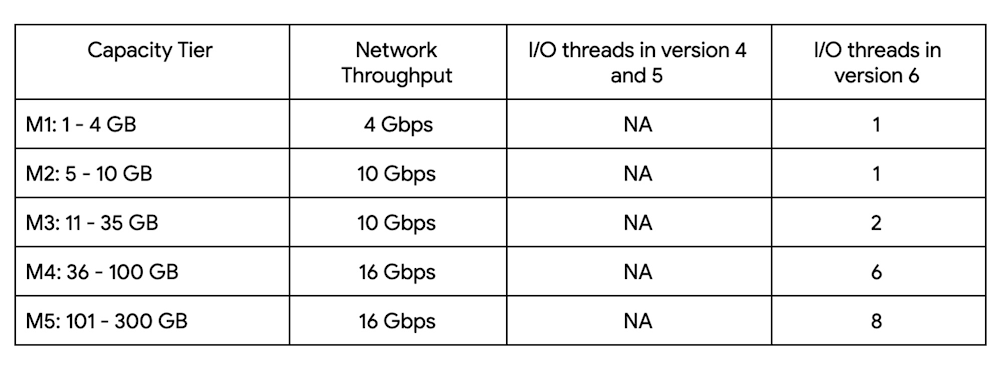
Modern applications need to process large-scale data at millisecond latency to provide experiences like instant gaming leaderboards, fast analysis of streaming data from millions of IoT sensors, or real-time threat detection of malicious websites. In-memory datastores are a critical component to deliver the scale, performance, and availability required by these modern applications. Memorystore makes it easy for developers building applications on Google Cloud to leverage the speed and powerful capabilities of the most loved in-memory store: Redis. Memorystore for Redis standard tier instances are a popular choice for applications requiring a highly available Redis instance. Standard tier provides a failover replica across zones for redundancy and provides fast failover with a 99.9% SLA. However, in some cases, your applications will require more read throughput from a standard tier instance. One of the common patterns customers use to scale read queries in Redis is leveraging read replicas.Introducing Memorystore for Redis Read ReplicasToday we are excited to announce the public preview of Memorystore for Redis Read Replicas, which allows you to seamlessly scale your application’s read requests by 6X with the click of a button.With read replicas, you can easily add up to five replicas and leverage the read endpoint to automatically load balance read queries across all the available replicas, increasing read performance linearly with each replica added. Additionally, Memorystore’s support for Redis 6 introduced multi-thread I/O, increasing performance significantly for M3 and higher configurations. Combined, you can achieve read requests of more than a million requests per second. You will benefit from this new functionality in several ways. You will be able to scale on demand with up to five read replicas and use read endpoint with any redis client to easily load balance read queries across multiple replicas. This new functionality will also improve availability with automatic distribution of replicas across multiple zones. With read replicas, you will also be able to minimize application downtime with fast failover to the replica with the least replication lag. In the future, Memorystore will also easily enable read replicas on existing standard tier instances to increase read throughput. You can learn more about how to configure and use read replicas in the Read Replicas Overview. Improving performance with Read Replicas and Redis 6With the launch of read replicas, you can easily increase the read throughput of a Memorystore instance. You can further enhance the read performance by leveraging Redis version 6 along with read replicas.To understand why combining read replicas and Redis 6 can significantly improve your application’s read performance, let’s look at the various Memorystore configurations that you can use with your applications today. Memorystore Basic and Standard offerings  provide different capacity tiers. The capacity tier determines the single node performance of a basic and standard tier instance. The table below outlines the configuration of the various capacity tiers:Up until version 5, Redis processed commands using a single thread. The processing involved reading the request, parsing the request, processing the request, and writing the response back to the socket. This approach means that all of the processing, which includes writing the response, was sequentially processed by a single vCPU regardless of the number of vCPUs available in the instance.Redis 6 introduced IO threading which allows writing the response using parallel threads. This functionality enables Redis 6 to more effectively leverage available vCPUs, thereby increasing the overall throughput compared to lower versions. Memorystore for Redis version 6 leverages IO threading and automatically configures the optimal number of IO threads to achieve the best possible performance for the various capacity tiers. We have also improved the overall network throughput for all redis versions by leveraging improvements in the Google Cloud infrastructure. Together these improvements deliver significant performance improvements and come at no additional cost to you. So what can you expect from using Redis 6? As outlined in the table, Redis version 5 and lower uses a single thread to process the write requests for all tiers while Redis 6 uses a larger number of IO threads at higher capacity tiers which provides substantially incremental throughput for higher capacity tiers.For example, using a Redis 6 standard tier instance with a capacity of 101 GB (M5), we have observed up to a 200% improvement in read/write performance compared to version 5, though the actual value you’ll see is dependent on your workload. You can get the benefits of Redis 6 by upgrading an existing instance or by deploying a new instance.By enabling read replicas on an instance using Redis 6, you can further improve the read performance. Read throughput scales linearly with the number of replicas so you can increase your read queries on an instance by up to 500% using five read replicas. By combining Redis 6 and read replicas, you can see a 10X increase in read performance compared to a version 5 standard tier instance with no read replicas.We are excited about the launch of read replicas but this is just one step in our journey to deliver the scale you need at the best price-performance. You can learn more about read replicas pricing on our Memorystore pricing page and get started using the Read Replicas Overview.
Quelle: Google Cloud Platform

How to create and safeguard your admin accounts

Setting up your new cloud infrastructure is scary. Extra scary when you realize that someone (is it gonna be you?) gets to have phenomenal cosmic power over the whole thing. Yes, I’m talking about the admin account, and today we’ll dig into why they are important, dangerous and different.When the team at pistach.io got their nuts-as-a-service business growing fruitfully, they knew they needed to think carefully about admin accounts. These people would have tremendous control over their use of Google Cloud, and they could potentially cause very big problems if any were compromised. Definitely resources that require a protective shell.Early in pistach.io’s development, an employee named Walter Nutt wanted to play a prank by changing his co-worker’s profile photo from an almond to a peanut (pretty devious, since a peanut is actually a legume). He didn’t have access to his friend’s computer, but he did have access to the company’s Cloud Storage bucket. While searching for the profile photo in question, Wally inadvertently deleted the entire contents of the bucket! As he searched for ways to restore its contents, Wally modified access to two other pistach.io buckets.  The company was ground to a halt for a week while teams worked to crack through the permissions issues.Time to rethink permissions a bit, so this couldn’t spoil their buttery smooth operations in the future.Following the resource manager guide, the team made a super admin email address that wasn’t tied to a particular individual or Workspace account, and secured it with strong multi-factor authentication. This would be their backup in case an admin account were to be compromised, so they could recover and repair.The team already uses Google Workspace, so they have an organization set up already. That creation process established initial super administrators, allowing them to create and modify all other resources inside the organization. As they looked toward using Google Cloud, the super administrators could:Give the admin role to people, for CloudAct as a point of contact for account recoveryModify or delete the organization if neededMaking admin users for the organization allows other people to then flesh out the resources and policies for pistach.io, before they go nuts and give everyone all the permissions. While that would speed things up, it would make it easy for an attacker to crack through the security shell because any account compromise could give ousize access. Yikes!Instead, the IT leads specified certain people to act as organization admins, and then gave them permissions to:Define Identity and Access Management policiesStructure the Resource HierarchyDelegate control of specific Cloud elements to others on the teamOnce those organization admins were set up, they could give management and oversight of Compute, Storage, Networking and other resource types to the relevant leads, making sure each person had just the right amount of permission for the role they needed to perform. The organization admins don’t have permissions themselves to make these resources. They just delegate. Now each person can accomplish the job they’re responsible for, but doesn’t have overly permissive access. Delegating like this keeps the entire organization safer, and limits the blast radius if someone does manage to break in.You can go through these steps yourself with this tutorial.By default the creation of an organization resource for the domain gives everyone the ability to create projects and billing accounts. Once they set up their Organization Admin at pistach.io they decided to remove some of these wide permissions and, in a nutshell, bring everything down to a much finer control. So people could get permissions for a folder or a project, but not the entire organization!Remember to take care of your admin roles, as they have the power, and responsibility, to cause serious harm if not used safely. Be safe with your Identity and Access Management. And keep your data yours! Next time we join you we’ll take a crack at creating and provisioning an app to run inside the policies and resource management frameworks created today.Related ArticleYou make the rules with authentication controls for Cloud StorageOnce you’ve got your data into Cloud Storage, it’s time for an important conversation about authentication. In this post, we’ll review so…Read Article
Quelle: Google Cloud Platform

AWS Security Hub fügt drei neue FSBP-Kontrollen und drei neue Partner hinzu

AWS Security Hub hat drei neue Kontrollen für seinen Foundational-Security-Best-Practice-Standard (FSBP) veröffentlicht, um die Cloud-Sicherheitsstatus-Verwaltung (CSPM) der Kunden zu verbessern. Diese Kontrollen führen vollautomatische Prüfungen gegen bewährte Sicherheitspraktiken für Elastic Load Balancing und AWS Systems Manager durch. Sofern Sie Security Hub so eingestellt haben, dass neue Kontrollen automatisch aktiviert werden und Sie bereits AWS-Foundational-Security-Best-Practices verwenden, sind diese Kontrollen standardmäßig aktiviert. Security Hub unterstützt jetzt 162 Sicherheitskontrollen zur automatischen Überprüfung Ihres Sicherheitsstatus in AWS.
Quelle: aws.amazon.com

AWS Amplify kündigt neue observeQuery-API für Amplify DataStore an, um den schnelleren Start von Apps mit Echtzeitdaten zu unterstützen

Mit der heutigen Version können Entwickler die neue observeQuery-API von AWS Amplify DataStore verwenden, um Apps mithilfe lokal gespeicherter Daten schneller zu öffnen und dann die App-Benutzeroberfläche ohne zusätzlichen Code mit Echtzeitdaten zu aktualisieren. DataStore bietet den Entwicklern von Frontend-Anwendungen die Möglichkeit, Echtzeit-Anwendungen mit Offlinefunktionen zu entwickeln. Dazu werden Daten auf dem Gerät (Webbrowser oder Mobilgerät) gespeichert und über eine Internetverbindung automatisch mit der Cloud und von Gerät zu Gerät synchronisiert. Mit der neuen observeQuery-API können Entwickler mit einem einzigen API-Aufruf sowohl lokal gespeicherte Daten abrufen als auch nachfolgende Datenänderungen abonnieren, die aus der Cloud synchronisiert werden.
Quelle: aws.amazon.com




