Cloud CISO Perspectives: March 2022

Two themes have been resonating for me across the security industry over the last month. The first is a topic from my personal blog that I wrote more than two years ago: Resilience is about Capabilities not Plans. Collectively, organizations have proven their ability to be resilient in light of many disruptive events like a pandemic, natural disasters, and cyber conflicts. Our resilience will only continue to be tested in existing or new ways into the future. Organizations that prioritize testing and re-testing capabilities across their people, process and technology vs. plans alone will continue to be the most resilient. The next theme is focusing on building secure products, not just security products. As an industry, we can be doing more in this area as recent weaknesses in security products have demonstrated. Security is the cornerstone of Google’s product strategy. We build secure solutions and products that strive to make security easier as well as secure-by-default choices that lead to the security outcomes we want our customers, users and employees to achieve.Below, I’ll recap the latest updates from the Google Cybersecurity Action Team, industry highlights and upcoming events. Event UpdatesMcKinsey Webinar on Security as Code: Next week, I’ll join the McKinsey team for a webinar on Security as Code to break down how the cloud can help make organizations more secure. Ensuring the safe adoption of cloud computing is becoming an increasing priority across the industry, reflecting the benefits that an organization can achieve from digital transformation. Increasingly, the cloud is viewed not as a risk to manage, but a means of managing risk in new, innovative and more substantial ways, while also improving an organization’s security posture. We’ll cover this and more during the webinar. Register here.Cloud Security Talks: Threat Detection & Response Edition: Earlier this month, we hosted our first Cloud Security Talks of 2022. The sessions covered all things security operations (SecOps) across on-premises, cloud and hybrid environments, highlighted product innovations and updates, and talked about how threat detection, investigation and response fits into our invisible security vision. Check out the on-demand sessions to learn more. Google Cybersecurity Action Team Highlights Here are the latest updates, products, services and resources from our cloud security teams this month: Security Federated workload identity with Certificate Authority Service (CA Service): To help support our customers’ implementation of zero trust strategies across all their IT environments, we announced that Google Cloud Certificate Authority (CA) Service can issue certificates for workloads reflecting their federated identities, even if the workloads are hosted on-premises or in other clouds. There’s a session in our Q4 2021 Zero Trust Security Talks on this topic that’s available on demand as well.New threat detection capabilities in Google Chronicle: The Chronicle team released the public preview of context-aware detections designed to create efficiencies for customers’ detection and response journey. Customers can use this contextualization to write better detections, prioritize existing alerts, and drive faster investigations. Community Security Analytics: As part of our efforts to help customers move toward Autonomic Security Operations, the Google Cybersecurity Action Team announced Community Security Analytics, a set of open-sourced queries and rules designed to help detect common cloud-based threats. Account Defender in reCAPTCHA Enterprise: Enterprises need tools to help fight online fraud targeting their user accounts and payments. To help, the reCAPTCHA Enterprise team introduced account defender, a new feature built into reCAPTCHA Enterprise that helps businesses determine if an action aligns or deviates from the account owner’s typical behavior.Chrome’s ongoing efforts to keep enterprises safe: For a long time Chrome has been the first line of defense to protect our employees and users against malicious URLs and content on the web. The security capabilities built into Chrome can help IT administrators strengthen their organization’s posture. Also of note, the new Chrome 2.1 CIS Benchmark covers independent recommendations on which Chrome policies to configure to help support organizations’ security and compliance needs.  Introducing Automatic Certificate Management Environment: We introduced an enhancement of Certificate Manager (in preview) which allows Google Cloud customers to acquire public certificates for their workloads that terminate TLS directly or for their cross-cloud and on-premise workloads. This provides Cloud Customers with a common certificate lifecycle management capability based on ACME without a single point of failure.Industry updatesHealthcare: In our latest healthcare security series post, Taylor Lehmann and Seth Rosenblatt from Google’s Cybersecurity Action Team discuss the value of sustainable visibility mechanisms for cybersecurity teams working in global healthcare organizations to help secure and preserve patient care and safety. U.S. Public Sector: Accelerating U.S. government security and compliance implementations: To help accelerate cloud adoption of cloud services, Google Cloud’s Public Sector Professional Services Organization (PSO) offers specialized consulting engagements. These engagements include helping customers on their journey to achieve Agency ATOs for the cloud products and services they use and developing zero trust strategies and architectures to help organizations meet requirements under the Executive Order on Improving the Nation’s Cybersecurity.Modernizing the U.S. Federal Government’s Approach to Cyber Threat Management with Autonomic Security Operations: The Google Cybersecurity Action Team released its latest whitepaper that details how Google Cloud can help drive federal agencies’ ability to meet the White House cybersecurity analytics requirements of EO 14028 and OMB M-21-31. Scaling and securing the cloud for defense applications: Read our latest blog post on how our secure cloud access solution built in partnership with Palo Alto Networks is helping Defense Innovation Unit (DIU) users access services in any commercial cloud environment, while performing the required security actions of logging, threat analysis, and session control.Fortifying Federal Networks: Google Workspace provides security based on zero trust concepts that support the business and operations of government, easy collaboration across teams regardless of location, and seamless access from any endpoint. To help federal agencies navigate implementations, our Work Safer program is available through many partners like Carahsoft. Financial Services: Cloud and the future of financial markets: Cloud Googlers participated in a fireside chat at FIA Boca 2022 to discuss the future of markets and policy, the new technologies that are already paving the way for greater speed and transparency, and how cloud can help promote greater resiliency, performance, and security in financial markets. The team also published a detailed paper on this topic.ComplianceCloud vendor due diligence services: One way we help our customers scale and accelerate their cloud assessments is by collaborating with third party risk management (TPRM) providers to provide independent due diligence services and platforms to help automate vendor risk management based on the data they collect and provide. By enabling our TPRM assessors to examine the controls present in our infrastructure and operations, they can develop independent and unbiased audit reports that can be shared directly with our customers. We currently work with industry-leading TPRM providers such as CyberGRX, TruSight, and KY3P to deliver high-quality risk assessments for our customers globally. Learn more in this blog post. Data governance in the cloud: Along with a corporate governance policy and a dedicated team of people, implementing a successful data governance program requires tooling. Google Cloud offers a comprehensive set of tools that enable organizations to manage their data securely, ensure governance, and drive data democratization.To have our Cloud CISO Perspectives post delivered every month to your inbox, sign-up for our newsletter. We’ll be back next month with more security-related updates.Related ArticleCloud CISO Perspectives: February 2022Google Cloud CISO Phil Venables shares his thoughts on the latest security updates from the Google Cybersecurity Action Team.Read Article
Quelle: Google Cloud Platform
Save big by temporarily suspending unneeded Compute Engine VMs—now GA

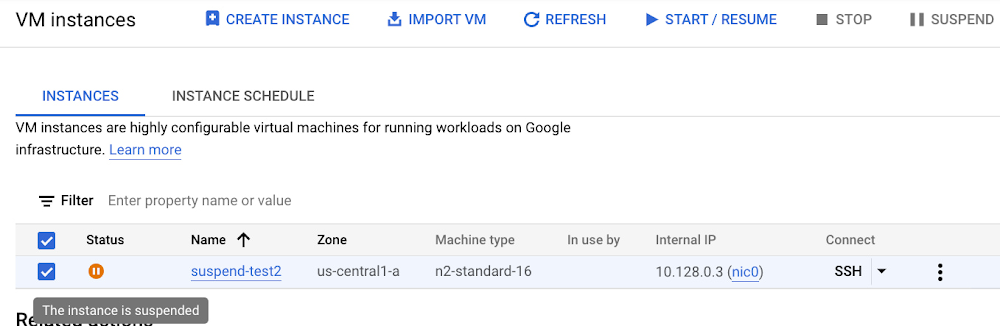
One of the best aspects of the cloud is the ability to purchase and use only what you need. This enables you to take advantage of modern and performant computing while fine tuning cost optimization.     With Suspend/Resume, Generally Available today, you have even more control over your Google Cloud resource consumption. Similar to closing the lid of your laptop, Suspending a Google Compute Engine VM will save the state of your instance to disk allowing you to pick up where you left off when you Resume it later. While your instance is in the SUSPENDED state, you no longer pay for cores or RAM, instead you only pay for the storage costs of your instance memory. Other VM running costs such as OS licensing may also be reduced. How it worksSuspending an instance sends an ACPI S3 signal to the instance’s operating system. This results in 2 significant advantages compared to similar functionalities from other cloud providers. First, this allows for broad compatibility with a wide selection of OS images without requiring you to use a cloud specific OS image or installing daemons. Undocummented and custom OS images that respond to the ACPI S3 signal may also work with Suspend. Feel free to try it out! Secondly, storage is dynamically provisioned when Suspend is requested and is separate from the instance’s boot disk. This is in contrast to implementations in other clouds that require you to ensure that you have sufficient empty space in your boot disk to save the instance state which may increase the running costs of your VM. This also ensures that your suspended instance only consumes as much storage as it needs.Use casesMany Google Cloud users have already realized huge savings from Suspending their virtual desktops or developer environments when they are not in use. For example: “Utilizing Compute Engine’s suspend and resume functionality has allowed BigCommerce to reduce operation costs of our Compute Engine-driven development environment. BigCommerce allows each engineer to customize their environment’s “working hours,” which triggers suspension at the end of each work day and resumption at the beginning of the next day. This has reduced our Virtual Machine Instance usage times from 168 hours a week to 60 hours a week per environment on average, enabling us to save thousands of dollars each month. We expect these cost-efficiency savings to only increase as our Engineering organization grows.”—Aaron Humerickhouse, Manager, Engineering at BigCommerce Another use case is to accelerate horizontal scaling by Resuming suspended instances. While Compute Engine instances have very quick creation times, booting the operating system and loading applications may take longer than you would like when urgently trying to meet a demand spike. One way to address this issue is to initialize instances with the critical applications and Suspend them. When you Resume them later, they should be productive much more quickly than instances created from scratch.  Next stepsLearn more with our Suspend/Resume documentation.Related ArticleTau T2D VMs now in GA : Independent testing validates market-leading price-performanceT2D VMs powered by 3rd Generation AMD EPYC processors (code-named Milan) are now available for the Compute Engine Tau family in preview.Read Article
Quelle: Google Cloud Platform
Federated workload identity at scale made easy with CA Service

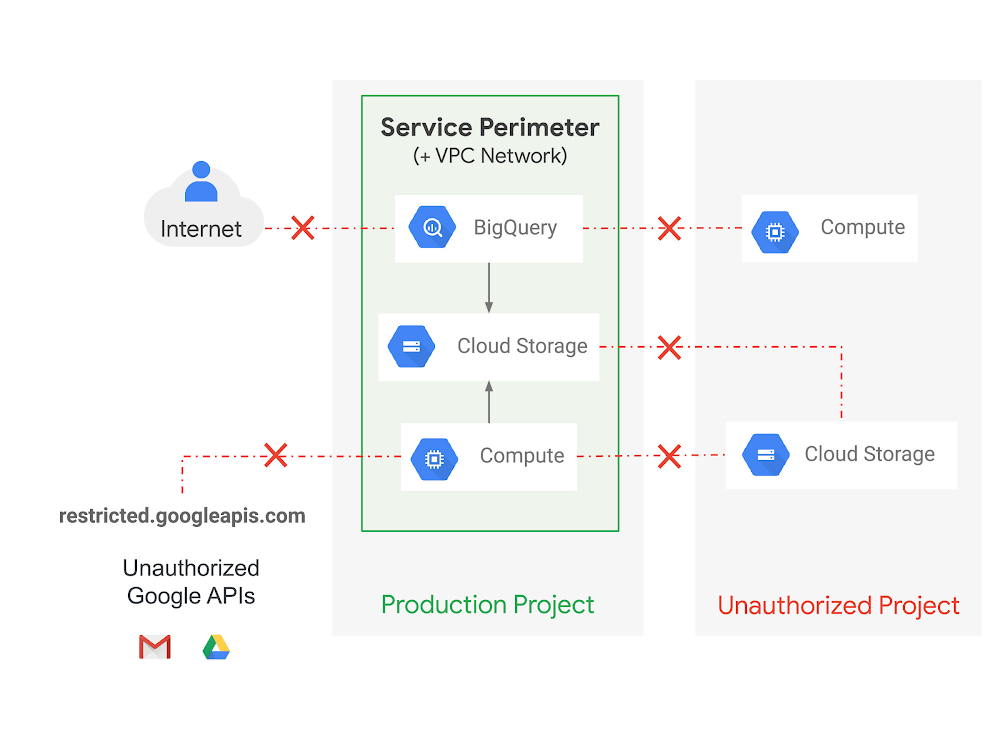
At the end of 2021, we announced the ability for Google Cloud Certificate Authority (CA) Service to issue certificates for workloads reflecting their federated identities, even if the workloads are hosted on-premises or in other clouds. We are excited to announce this capability is now generally available, advancing our work to support customers’ implementation of zero trust strategies across all their IT environments. At the core of a zero trust approach to security is the idea that trust needs to be established via multiple mechanisms and continuously verified. A zero trust approach to end user access (such as Google’s BeyondCorp model or using our BeyondCorp Enterprise product offering) establishes trust in end-users by considering identities and context. A zero trust approach to protecting workloads on cloud-native infrastructure (such as Google’s BeyondProd model) creates trust between workloads by defining and enforcing access policies based on service identities, rather than the IP addresses of the host infrastructure.Users can create credentials for service identities using Certificate Authority Service, a highly available and scalable private certificate authority that can be used to issue workload credentials (in the form of certificates) reflecting the workload’s identity. The certificates issued by the service conform to standards (RFC 5280) so you can specify name constraints limiting which domain names the CA can issue certificates to (a capability currently in preview) or you can request custom extensions in the certificate (e.g., for your unique application semantics). The new federated identity feature means that even if you manage your workload identities in other clouds or in on-premises environments with Active Directory, you can now issue a certificate from CA Service reflecting their federated identity. As a result, by using these certificates, you can avoid manually configuring access policies using IP addresses. Further, using CA Service allows you to issue certificates at scale (with the principle of least privilege) saving significant time and resources while increasing security. Based on early feedback from customers, these savings are proving to be hugely valuable.Jonathan Perry, Managing Director, Consolidated Trade Ledger, at Goldman Sachs, recently spoke about his experience with this new capability and how Google Cloud continues to democratize security for users, saying: “At Goldman Sachs, the key principle for our zero trust strategy is homogeneity and CA Service is a super important piece of this strategy. The fact that we can use the same technology to talk to on-premises workloads and get point-to-point connectivity to Google Cloud services with zero trust principles is fantastic. Building CA Service on our own would have been difficult and would not have provided the same integration with all other cloud services, like GKE or Traffic Director, that we benefit from today.”At-scale certificate issuance for federated workload identities is extremely difficult to build and manage without a capability like CA Service, and shows the value that a managed cloud service provides when moving to a zero trust approach. Jonathan discusses this in more detail during a Google Cloud Security Talks presentation, which is available on-demand if you’d like to learn more about how Goldman Sachs is applying a zero trust approach to its identities and workloads on-premises.In addition to CA Service, another Google Cloud product that’s useful in implementing the BeyondProd approach is VPC Service Controls (VPC-SC). VPC-SC enables users to define and enforce a security perimeter around multi-tenant Google Cloud services such as BigQuery. With VPC-SC, you can define a service perimeter around a set of Google Cloud services (grouped together using projects) and define zero trust access policies (for instance, based on the identity of the caller) for all the services in a project.  In the example below, there are three services (BigQuery, Cloud Storage, and Compute Engine) within the service perimeter. The perimeter provides an additional layer of protection on top of Google Cloud Identity & Access Management (IAM), which can be used to manage the identity of the workload. Access to resources outside the perimeter will be blocked, even if an attacker is using valid credentials. Moreover, the VPC-SC perimeter blocks any data flow from within the boundary to outside of the boundary, providing strong data exfiltration protection.CA Service can also be configured to run inside a VPC-SC service perimeter, further supporting zero trust principles by limiting certificate issuance to a set of service accounts coming from authenticated devices with certain attributes or limiting CA configuration to authorized networks and sets of managed devices.In a recent presentation called “Bringing BeyondProd to Life with Google Cloud,” Christian Gorke, Head of Cyber Center of Excellence, Big Data and Advanced Analytics, at Commerzbank AG, discussed how CA Service and VPC-SC are foundational capabilities for his organization to build their compliance as code framework, where every resource and access model is programmed and automated. He said: “As a financial institute in Europe, we are part of a strictly regulated environment. At the same time, we process confidential and personal data, for which we need to reduce the data exfiltration risk. Our goal is to minimize data movements outside of Commerzbank AG and between development, testing, and production environments, but even further, between organizations within Commerzbank AG itself. It is where VPC Service Controls come into play and provides us with a tool to control data flow even in the presence of insider threats – based on zero trust principles. Without a solution, we would need to invest a great deal of time and resources and still run into scalability issues. In addition, with Certificate Authority Service, we finally can minimize our certificate issuance tooling and leverage scalable security backed by HSM across all Google Cloud.”As customers look to build identity-based zero trust policies, VPC-SC and CA Service are two Google Cloud services that can help make implementing the BeyondProd principles a reality.  Getting started with CA Service is easy; the product overview documentation is a great place to begin. If you’re interested in exploring the new feature to federate a third-party identity and obtain certificates, give it a try today and see for yourself how easily you can integrate certificates within your cloud-native applications.To learn more about Google’s BeyondProd approach, we encourage you to watch the “Applying Zero Trust Principles Beyond Access with BeyondProd” session on-demand. Be sure to also check out all of the other great sessions from the zero trust Security Talks event in December, as well as the threat detection and response sessions from our Security Talks event earlier this month!Related ArticleAnnouncing general availability of Google Cloud CA ServiceGoogle Cloud CAS provides a highly scalable and available private CA to address the unprecedented growth in certificates in the digital w…Read Article
Quelle: Google Cloud Platform
Introducing our new cohort of startups for the 2022 Google Cloud Accelerator Canada

In January,  we put a call-out to startups across the country to participate in our second Google Cloud Accelerator Canada cohort. Looking at the incredible response to our inaugural program last year, it’s clear that Canadian organizations across every sector, from healthcare and education, to retail, manufacturing and public services, are leaning in on cloud technology to drive growth and innovation. Today, we’re pleased to announce a new class of groundbreaking startups for the Google Cloud Accelerator Canada. This 10-week virtual accelerator brings the best of Google’s programs, products, people and technology to startups doing interesting work in the cloud. We’re excited to offer these startups cloud mentorship and technical project support, along with deep dives and workshops on product design, customer acquisition and leadership development for cloud startup founders and leaders. We received so many great applications for this program and want to welcome the eleven startups that make up the 2022 Google Cloud Accelerator Canada class: Ad Auris (Vancouver, BC): An end-to-end audio creation platform. Used by digital publications to convert their written work into great-sounding audio, instantly.Booxi (Montreal, QC): Booxi is an appointment scheduling software designed for retailers. Their mission is to Make Commerce More Human and help retailers offer a personalized experience to every customer.Cadence (Saskatoon, SK): Cadence is a digital executor assistant, supported by Certified Executor Advisors. Their web app automates Estate Settlement tasks.f8th (Toronto, ON): f8th’s continuous authentication transparently and passively authenticates users and detects fraudsters in real-time without impacting the user experience.IRIS (Burlington, ON): IRIS is a smart cities infrastructure technology company. They help urban and rural communities extend the life of their public infrastructure.Origami XR (Toronto, ON): Origami is a spatial computing company that makes it easy to scan a physical environment using the LiDAR in your phone, and create a 3D digital twin that rivals output from professional scanning equipment.Pharmaguide (Richmond Hill, ON): PharmaGuide specializes in equipping healthcare providers with solutions to increase efficiency and improve patient outcomes. Through direct integrations with multiple health platforms, they can intelligently analyze data and flag patients that could benefit from treatment modifications.Schoolio (Toronto, ON): Schoolio OS aims to bridge teachers, parents and tutors into a single ecosystem, focusing on education transparency, inclusive curriculum and a holistic approach to success measurement.Shaddari Inc. (Montreal, QC): Shaddari Inc. is a precision medicine company that has developed an A.I. that can tell instantly whether a vaccine will be efficient against a new variant of a virus.SmartONE Solutions (Markham, ON): SmartONE creates smart communities, by connecting the smart homes in multi-family residential developments over a common network to transform community living.Tiggy (Vancouver, BC): Tiggy is a 15-minute grocery delivery service on a mission to forever change the way we buy everyday essentials.We heard from a few of the startups from our cohort about their aspirations for the program.”The Accelerator will help build all aspects of our company with growth and efficiency in mind,” said Krystian, CTO and Co-Founder of Cadence. “It’s an amazing opportunity to learn from Google’s leaders, with access to all of the Cloud Platform services that will allow us to build our product in a cost efficient, scalable and secure way.””We’re excited to access the best of Google’s programs, products, people and technology as we continue to scale globally,” said Emil Sylvester Ramos, co-Founder of IRIS. “In addition to Cloud mentorship and technical project support, we look forward to working with Google’s IoT and AI/ ML for the further development of our technology and to work with Google’s Smart Cities teams to help create safer, smarter and more resilient communities and infrastructure.””We are looking forward to building connections with many of Canada’s top startups to share ideas and continue to grow our own technical knowledge,” said Eugene Bisovka, Co-Founder, Tiggy Delivery Corp. “We’re also excited to try Google technologies that we haven’t used yet for improving our own order batching algorithm.”It’s an exciting opportunity to work with these founders and startup teams to help grow and scale their business. Programming for the Google Cloud Accelerator Canada begins April 11 and we can’t wait to get started.Related ArticleApplications are now open for the second Google Cloud Accelerator Canada CohortWe’re inviting Canadian cloud-native technology startups to apply for the second Google Cloud Accelerator Canada cohort.Read Article
Quelle: Google Cloud Platform

Contact Center AI reimagines the customer experience through full end-to-end platform expansion

Providing best-in-class customer service is crucial for the success of your business. Contact centers are a critical touch point, as they have to balance between representing your brand and prioritizing customer care. When your customers seek help and support, they expect efficient service that is accessible through modern voice and digital channels. In short, customer expectations are increasing—and that’s a problem if your contact center infrastructure and solutions are becoming outdated.  All of these factors are why today, we’re announcing Google Cloud Contact Center AI Platform, an expansion to Contact Center AI that offers an out-of-box, end-to-end solution for the contact center. It brings together the advantages of AI, cloud scalability, multi-experience capabilities, and tight integration with customer relationship management (CRM) platforms to unify sales, marketing, and support teams around data across the customer journey.Improving customer experiences from all angles Google Cloud’s Contact Center AI helps you leverage AI to scale your contact center interactions while maintaining a high level of customer satisfaction. Over the last two years, we have built a large group of partners, including the largest contact center and customer experience ISVs and our system integrator ecosystem, to bring Contact Center AI to customers. Today, we are helping enterprises across industries and geographies to cost-effectively reimagine contact center experiences. For example, Marks & Spencer reduced in-store call volume by 50%, and similarly, The Home Depot improved call containment by 185%, all while significantly increasing customer self-service engagement.Adding to our Contact Center AI capabilities, Contact Center AI Platform is purpose-built for customer relationship management, extending your ability to offer personalized customer experiences that are consistent across your brand, whether delivered through a virtual agent, a human agent, or a combination of both. It eliminates many long-running pain points, from managing data fragmentation to replacing rigid customer experience flows with more engaging, personalized, and flexible support. With this addition, Contact Center AI now lets you: Orchestrate the customer journey by creating modern experiences that can be embedded in their chosen channels with mobile/web software developer kits (SDKs), compatible with iOS and Android;Leverage CRM as a single source of insight into the customer experience, to unify content, increase personalization, and automate processing with CRM data unification;Manage multiple channels without pivoting across voice, SMS, and chat support;Predict customer needs and route calls appropriately with AI-driven routing, based on both historical CRM data and real-time interactions;Automate scheduling, schedule adherence monitoring, and manage employee scheduling preferences with Workforce Optimization (WFO) integration;Provide customers with self-service via web or mobile interfaces using Visual Interactive Voice Response (IVR).Helping you do more with contact centersThe addition of Contact Center AI Platform provides your partners the ability to integrate with Contact Center AI, so you can enjoy a more seamless experience operating your customer service center, with a complete view of the customer in a single workspace that includes real-time AI intelligence, native agent call controls, and real-time call transcription. For example, we are expanding our partnership with Salesforce to integrate Contact Center AI with Service Cloud Voice to deliver a unified Service Cloud agent console and Customer 360. “Customers are continually raising their service expectations, and our research tells us 79% of consumers believe the experience a company provides is as important as its products and services,” said Ryan Nichols, SVP & GM, Contact Center, for Salesforce Service Cloud. “Through intelligence, workflows, and a deeper understanding of the customer, Salesforce’s Service Cloud Voice paired with Google’s Contact Center AI will empower agents with a seamless experience to help them wow customers.”We are also excited to partner with UJET, an innovative and experienced Contact Center as a Service (CCaaS) provider. UJET offers secure user-centric design, scalability, and mobile-focused solution, with turnkey implementation, strong omnichannel capabilities, and best-in-class user experience, making their product a natural fit into Google’s contact center vision. To learn more about the partnership, see here.Delivering impact for customers Contact Center AI is already making a difference for our customers such as OneUnited Bank, the largest Black-owned bank in the U.S. “OneUnited Bank has been in partnership with Google Cloud and UJET, as well as a long-standing customer of Salesforce. The expansion and enhancements of Google Cloud’s Contact Center AI, along with its deeper integration with Salesforce, means better return on investment as we drive towards evolving our contact center to deliver exceptional client experiences,” said Teri Williams, President and Chief Operating Officer at OneUnited Bank.Fitbit, which boasts more than 29 million active users, is also reaping the benefits. “Fitbit relies on Google Cloud and UJET to provide support to our customers with a mobile-first approach. This collaboration, in combination with a strong Salesforce integration, has helped us modernize our entire customer support experience,” stated Cassandra Johnson, VP, Devices & Services Customer Care & Vendor Management Office, at Google.According to industry analyst Sheila McGee-Smith of McGee-Smith Analytics, “Google Cloud’s Contact Center AI is already a force in the contact center industry thanks to its early focus on AI for customer experience.” She continued, “Through their partnerships with UJET and Salesforce, as well as these expanded capabilities, Google Cloud’s Contact Center AI Platform will help define the future of customer service by powering more secure, engaging, and personalized customer experiences.”Contact Center AI Platform is supported by a host of integration partners, including Accenture, CDW, Cognizant, Deloitte, HCL, IBM, Infosys, Quantiphi, Tata Consultancy Services, and Wipro. We will also continue to partner closely with the contact center and customer experience (CX) ISVs that our customers already rely on. If you already have a contact center solution provider, you can still integrate Google Cloud’s Contact Center AI into your existing environment. To learn more about how you can leverage the power of AI to reimagine your contact center experience, visit our Contact Center AI page.Related ArticleReaching more customers with Contact Center AI: 2021 Wrap-upExplore Google Cloud’s Contact Center AI (CCAI) and its momentum in 2021Read Article
Quelle: Google Cloud Platform

Go 1.18 and Google Cloud: Go now with Google Cloud

On March 15th, the Go team announced Go 1.18 GA, the latest release of the Go programming language. The culmination of over a decade of design delivers the features our developers demanded: generics, fuzzing, and module workspaces. With this release, Go becomes the first major language to integrate fuzz testing into its core toolchain without using third-party support, further establishing Go as a preferred language for developing secure applications.Go was created at Google in 2007, designed to help developers build fast, reliable, and secure software. Unlike traditional languages, Go was built for the modern multi-core computing world. Go has emerged as a modern language for developing cloud applications, services, and infrastructure. Today Go powers several of Google’s largest products, and is used by many customers to scale their businesses. Organizations big and small love Go and the community of Go developers, known as “gophers” has grown into a global network with over 2 million users worldwide. Using the power of Go in the CloudWhen looking at the public repos, over 75% of CNCF projects including Kubernetes and Istio are written in Go and 10% of developers are writing in Go worldwide (as of May 2021). Google delivers high performance infrastructure to run key, cloud native, Open Source projects. Our modern cloud infrastructure is based on Kubernetes at its core and our strong support for Istio and Knative have formed the base of some of our leading services like Google Kubernetes Engine (GKE), our managed application platform with Anthos, Cloud Functions, and Cloud Run. Google uses Go extensively for a wide range of applications from our indexing platform that powers Google Search, to the server side optimizations that power Chrome’s 1B+ users, to the infrastructure on which Google cloud is built. Release HighlightsWith this new release of Go 1.18, Generics are the biggest change to Go since the language was created. Go developers told us that they feel that Go lacks critical features, with generics being the main missing piece. With Go 1.18, new and existing Go developers can take advantage of the productivity, performance, and maintenance benefits that generics can bring. We’ve already begun to see the new kinds of libraries and projects gophers are building with generics in its short beta period, and expect this creativity to grow as time goes on. This Go release also brings native support for fuzzing. Fuzzing is a type of vulnerability testing that throws arbitrary data at a piece of software to expose unknown errors and is emerging as a common testing scheme in enterprise development. Go is now the first major language to provide fuzzing support with no third-party integrations necessary, allowing developers to start building secure software with minimal additional cost. Go’s innovative approach to fuzzing can provide not only security for the current code but also ongoing protection as code and dependencies evolve.  With attacks on software becoming more common and complex, vulnerability detection can be a critical part of the enterprise development lifecycle, and Go’s fuzzing capabilities catch vulnerabilities earlier in the lifecycle.Build securely using Go At Google we are helping to make Open Source software secure. Open source software is a connective tissue for much of the online world. At Google, we’ve been working to raise awareness of the state of open source security and are committed to helping secure the software supply chain for organizations. Go has been designed to create secure applications, helping to minimize risk as much as possible. Go applications compile down to a single binary without local dependencies. It’s not uncommon to see an application built using only the standard library, or only a couple well-vetted Go dependencies. Go’s dependency management uses tamper-evident  transparency log, with built in tooling that helps ensure your dependencies are what you can expect. Go has native encryption, which is used across much of the internet, including key components of Google. Go even supports distroless containers, where there are zero local dependencies to worry about. Google Cloud products like Cloud Build, for CI/CDand Artifact Registry, for container management, and have direct access to Go’s vulnerability database and can provide you instant warnings about security threats. “At Google we are committed to helping to secure the online infrastructure and applications upon which the world depends. A critical aspect of this mission is being able to understand and verify the security of open source dependency chains. The 1.18 release of Go is an important step towards helping to ensure that developers are able to build secure applications, understand risk when vulnerabilities are discovered, and reduce the impact of cybersecurity attacks” said Eric Brewer, VP Infrastructure, Google FellowThis launch is a significant milestone for Go that helps developers from around the world build more performant and secure applications that run on any infrastructure. For more information on this release and how to get started with Go, please visit.
Quelle: Google Cloud Platform

Bootstrap your startup with the Google Cloud Technical Guides for Startups : A Look into the Start Series

Bootstrap your Startup with our technical guided seriesAt Google Cloud, we want to provide you with the access to all the tools you need to grow your business. Through the Google Cloud Technical Guides for Startups, leverage industry leading solutions with how-to video guides and resource handbookscurated for startups. This multi-series contains 3 chapters: Start, Build and Grow, which matches your startup’s stage of growth:The Start Series: Begin by building, deploying and managing new applications on Google Cloud from start to finish.The Build Series: Optimize and scale existing deployments to reach your target audiences.The Grow Series: Grow and attain scale with deployments on Google Cloud.Kick off with The Start SeriesThe Start Series is designed to help your startup begin building, deploying and managing new applications on Google Cloud from start to finish. The series contains 12 videos and is dedicated to those who are starting out their cloud journey with Google Cloud. From setting up your project, to choosing the right compute option, to configuring your networking to managing your databases, and understanding support and billing – the Start Series guides you at every step of the journey. Check out our website and our Google Cloud Technical Guides for Startups full playlist.Coming up next – The Build SeriesLaunch into the next part of the journey continuing from the Start Series, with the upcoming Build Series, where we will be focusing on the optimization and scaling of existing deployments to help your startups reach your target audiences.Join us by checking out the video series on theGoogle Cloud Tech channel, and subscribe to stay up to date. See you in the cloud!Related ArticleGet started, build and grow your Startup on Google CloudAnnouncing the launch of Google Cloud Technical Guides for Startups, a video series for technical enablement aimed at helping startups to…Read Article
Quelle: Google Cloud Platform

Customer Care portfolio: Flexible, scalable, robust support

Technical support is now more critical than ever. It’s crucial to keeping your business running smoothly, while rapidly adjusting to an increasingly hybrid workforce that needs to stay connected at all times. Although the scale may vary, organizations of all sizes face similar challenges. We launched the Cloud Customer Care portfolio, a significant evolution in our technical support services, to address your needs with more comprehensive, scalable, and flexible services that can help you focus on your core business and provide you the service you expect from Google Cloud – regardless of the size of your organization.A reasonably priced technical support service for an unlimited number of users, Standard Support is intended for the general needs of small- to medium-sized organizations that have workloads in development. But as your business looks to build capacity and maintain workloads in production, you’ll need rapid critical-incident response, greater flexibility, and more specialized features. That’s where our Enhanced Support can provide exceptional value.Enhanced SupportUnplanned downtime, especially during planned events, can be catastrophic. Our Enhanced Support service is designed to keep you up and running with faster response times 24/7, along with direct access to technical support cases, our Cloud Support API to optimize management, and workload-centric support for multitechnology environments.But special circumstances demand special attention. That’s why we’ve created Value-Add Services for Enhanced Support that can give you the flexibility to:Receive expert assistance with our Technical Account Advisor Service. This service includes guided onboarding and ongoing hands-on stewardship, as well as monthly, quarterly, and yearly reviews, trend analysis, optimization recommendations, and dedicated case-escalation management for critical incident response.Get ahead of key business events that drive sudden high-traffic spikes like product launches, grand openings, or data migrations with Planned Event Support. Working with your team, we cover pre-event architecture reviews and accelerated response times, all followed by comprehensive post-event reporting that details pitfalls, successes, and lessons learned.Add a layer of governance to your support experience with Assured Support. By restricting support services to personnel who meet geographical-location and attribute-based requirements, it helps you ensure compliance with local standards, maintain data integrity and sovereignty, and maximize operational efficiencies.The combination of Enhanced Support and the Technical Account Advisor Service is the ideal solution for us at Moloco. It is an inexpensive way to access the timely attention we need, when we need it. From the start, we’ve experienced noticeable improvements with response times, technical guidance, and service reviews critical to our business success. Changhoon Kim, VP of Engineering, MolocoIn short, Enhanced Support helps you optimize your cloud experience with high-quality and robust support, fast response times, and additional services for businesses of all sizes. And if you sign up for Enhanced Support now, you’ll receive a 50% discount until March 31, 2022.What’s next for customers?Existing Silver, Gold, and Role-Based Support services will end for customers on May 31, 2022. Make the move now to our new Customer Care portfolio and keep your support services running seamlessly – with added capabilities. What’s next for partners?Existing Role-Based Support services will end for partners on May 31, 2022. To help ensure services continue to run seamlessly, be sure to move your organization – or, for resellers, your customer’s organization – to our new Customer Care portfolio prior to that date. For more information on partner programs and benefits, please refer to the Partner Advantage portal.If customers and partners choose not to make the transition, current support services will automatically transition to Basic Support, a nontechnical service for admin and billing inquiries only.What’s right for you?To get started, compare support services – including Basic, Standard, Enhanced, and Premium Support – and explore our pricing calculator to find the level that’s best for your needs and budget. Once you’ve selected your service, making the switch is simple, but the process looks a little different depending on your current plan. Check out step-by-step instructions for transitioning from Role-Based Support or transitioning from Silver or Gold Support. You can also sign up through the Google Cloud Console or contact your sales rep.Questions? Concerns? Suggestions? We want to hear from you.Your input is critical to how we continue to grow and refine the entire Cloud Customer Care portfolio. That’s why we regularly assess the effectiveness of our support services and base future improvements directly on your feedback. If you have any questions regarding which service is right for you or need assistance making the move, please contact us at Cloud Customer Care Support.  Sign up for Enhanced Support through the Cloud Console or contact your sales rep, and receive a 50% discount until March 31, 2022.Related ArticleMission Critical Services: for the most demanding enterprise environmentsMission Critical Services (MCS), a new Value Add Service available for purchase by Premium Support customers, is based on Google Cloud’s …Read Article
Quelle: Google Cloud Platform

Unlock more choice with updates to Google Cloud’s infrastructure capabilities and pricing

Over the past several years, Google Cloud has made significant investments in our infrastructure product portfolio. We launched new Tau T2D VMs, which deliver 42% better price-performance vs. other leading cloud providers. We upgraded Cloud Storage to offer more flexibility to support customers’ enterprise and analytics workloads, with dual-region buckets and upcoming Turbo Replication. And we’ve delivered numerous improvements to our global network, including expansion to 29 cloud regions. However, from conversations with customers, we’ve also learned we can do more to align our capabilities and pricing with their varied workloads. So, today, we are announcing we will adjust our infrastructure product and pricing structure to give customers more choice in how they pay for what they use alongside new, flexible SKUs with new product options and capabilities. These changes are designed to help ensure better product fit for our customers’ use cases across a wider array of workloads. They are also designed to better align with how other leading cloud providers charge for similar products, so customers can more easily compare services between leading cloud providers. Some of these changes will provide new, lower-cost options and features for Google Cloud products. Other changes will raise prices on certain products. Ultimately, our goal is to provide more flexible pricing models and options for how customers are using our cloud services. Here’s an overview of what customers can expect:Which services are changing? What new services are being introduced?We are changing prices for some storage, compute, and networking products. The changes provide customers with new ways to optimize their spending based on workload type and size, or data portability needs, as well as reducing costs on some services. Specific changes include: Cloud Storage pricing changes for data mobility, including replication of data written to a dual- or multi-region storage bucket, and inter-region data accessIntroduction of a new lower-cost archive snapshot option for Persistent Disk (PD), so that compliance/archiving use cases are charged less than compute-intensive DevOps workloadsNew outbound data processing pricing for Cloud Load Balancing, in line with other leading cloud providersNew pricing for Network Topology, which will include Performance Dashboard within Network Intelligence Center at no additional charge Will customers’ bills increase? Decrease?The impact of the pricing changes depends on customers’ use cases and usage. While some customers may see an increase in their bills, we’re also introducing new options for some services to better align with usage, which could lower some customers’ bills. In fact, many customers will be able to adapt their portfolios and usage to decrease costs. We’re working directly with customers to help them understand which changes may impact them.When will the new prices go into effect?Today, we sent customers a six-month notice on the price changes, which go into effect on October 1, 2022. Customers under existing commit contracts with a floating or fixed discount will not face any changes until renewal. Our goal is to help our customers manage any impact of these changes and allow time for them to adjust or modify their implementations. What should customers do next?There are a number of things customers can do to prepare for the changes:Read through the Mandatory Service Announcement (MSA) sent on March 14.Consider what actions, if any, they may want to take based on current storage, networking, and compute needs. Many of these changes may have simple choices associated with them.Consider using the Storage Transfer Service to select the right Cloud Storage bucket locations. Storage Transfer Service will be available free-of-cost for transfers within Cloud Storage, starting April 2 until the end of the year.For those customers under contract, Google Cloud account representatives are available to discuss these changes. Please visit our pricing page and the links below for more details on our updates to storage, networking, and PD pricing, including information on how to modify your implementations if needed. If you do not have an account manager and still have questions please review our public FAQ, which will be updated regularly, as well as the resource links below. Note: This pricing analysis is valid as of February 2022.Resources:Cloud Storage Pricing Announcements Load Balancing pricing AnnouncementsNetwork Intelligence Center pricing AnnouncementsPD Pricing AnnouncementsPublic FAQRelated ArticleA year in review: Advancements in infrastructure at Google CloudA recap of the year’s infrastructure progress, from impressive Tau VMs, to industry-leading storage capabilities, to major networking leaps.Read Article
Quelle: Google Cloud Platform

Data Governance in the Cloud – part 2 – Tools

This is part 2 of the Data Governance blog series published in January. This blog focuses on technology to implement data governance in the cloud.Along with a corporate governance policy and a dedicated team of people, implementing a successful data governance program requires tooling. From securing data, retaining and reporting audits, enabling data discovery, tracking lineage, to automating monitoring and alerts, multiple technologies are integrated to manage data life cycle.Google cloud offers a comprehensive set of tools that enable organizations to manage their data securely, ensure governance, and drive data democratization. These tools fall into the following categories: Data SecurityData security encompasses securing data from the point data is generated, acquired, transmitted, stored in permanent storage, and retired at the end of its life. Multiple strategies supported by various tools are used to ensure data security, identify and fix vulnerabilities as data moves in the data pipeline.Google Cloud’s Security Command Center is a centralized vulnerability and threat reporting service. Security Command Center is a built-in security management tool for Google Cloud platform that helps organizations prevent, detect, and remediate vulnerabilities and threats. Security Command Center can identify security and compliance misconfigurations in your Google Cloud assets and provides actionable recommendations to resolve the issues.Data Encryption All data in Google cloud is encrypted by default, both in transit and rest. All VM to VM traffic, client connections to BigQuery, serverless Spark, Cloud Functions, and communication to all other services in Google cloud within a VPC as well as between peered VPCs is encrypted by default. In addition to default encryption which is provided out of the box, customers can also manage their own encryption keys in Cloud KMS. Client side encryption where customers keep full control of the encryption keys at all times is also available.Data Masking and TokenizationWhile data encryption ensures that data is stored and travels in an encrypted form, end users are still able to see the sensitive data when they query the database or read file. Several compliance regulations require de-identifying or tokenizing sensitive data. For example, GDPR recommends data pseudonymization to “reduce the risk on data subjects”. De-identified data reduces the organization’s obligations on data processing and usage. Tokenization, another data obfuscation method, provides the ability to do data processing tasks such as verifying credit card transactions, without knowing the real credit card number. Tokenization replaces the original value of the data with a unique token. The difference between tokenization and encryption is that data encrypted using keys can be deciphered using the same keys while tokens are mapped to original data in the tokenization server. Without access to the token server, data tokens prevent deciphering of the original value even if a bad actor gets access to the token.Google’s Cloud Data Loss Prevention (DLP) automatically detects, obfuscates and de-identifies sensitive information in your data using methods like data masking and tokenization. When building data pipelines or migrating data into the cloud, integrate Cloud DLP to automatically detect and de-identify or tokenize sensitive data and allow data scientists and users to build models and reports while minimizing risk of compliance violations.Fine Grained Access ControlBigQuery supports fine grained access control for your data in Google Cloud. BigQuery access control policies can be created to limit access at column and row level controls in BigQuery. The combination of column and row level access control combined with DLP allows you to create datasets that have a safe (masked or encrypted) version of the data and a clear version of the data. This promotes data democratization where the CDO can trust the guardrails of Google cloud to allow access correctly according to the user identity, accompanied by audit logs to ensure a system of record. Data can be shared across the organization to run analysis and build machine learning models while ensuring that sensitive data remains inaccessible to unauthorized users.Data Discovery, Classification and Data Sharing Ability to find data easily is crucial to enable an effective data driven organization. Data governance programs leverage data catalogs to create an enterprise repository of all metadata. These catalogs allow data stewards and data users to add custom metadata, create business glossaries, and allow data analysts and scientists to search for data to analyze across the organization. Certain data catalogs also offer users to request access within the catalog to data which can be approved or denied based on policies created by data stewards.Google cloud offers a fully managed and scalable Data Catalog to centralize metadata and support data discovery. Google’s data catalog will adhere to the same access controls the user has on the data (so users will not be able to search for data they cannot access). Further, Google’s Data Catalog is natively integrated into the GCP data fabric, without the need to manually register new datasets in the catalog – the same “search” technology that scours the web auto-indexes newly created data. In addition, Google partners with major data governance platforms e.g. Collibra, Informatica to provide unified support for your on-prem and multi-cloud data ecosystem.Data LineageData lineage allows tracing back the sources of the data, allowing data scientists to ensure their models are trained on carefully sourced data, allowing data engineers to build better dashboards from known data sources, and allows inheriting policies from data sources to derivatives (so if a sensitive data source is used to create an ML model, that ML model can be labeled sensitive as well).The ability to trace data to the source and keep a log of all changes made as the data progresses in the data pipeline provides a clear picture of the data landscape to the data owners. It makes it easier to identify data not tracked in data lineage and take corrective action to bring it under established governance and controls. When data is scattered across on-prem, cloud or multi cloud environments, a centralized lineage tracking platform gives a single view on where data originated and how data is moving across the organization. Tracking lineage is imperative to control costs, ensure compliance, reduce data duplication, and improve data quality.Google Cloud’s Data Fusion provides end to end data lineage to help governance and ensure compliance. A data lineage system for BigQuery can also be built using Cloud Audit logs, data catalog, PubSub, and Dataflow. The architecture of building such a lineage system is described here. Additionally, Google’s rich partner ecosystem includes market leaders providing data lineage capabilities for on-prem and hybrid clouds, e.g. Collibra. Open source systems, e.g. Apache Atlas can also be implemented to collect metadata and track lineage in Google Cloud.AuditingIt is important to keep all data access records for auditing purposes. Audits can be internal and external. Internal audits ensure that the organization is meeting all compliance criteria and take corrective action if needed. If an organization is operating in a regulated industry or keeping personal information, then keeping audit records is a compliance requirement.Google Cloud Audit Logs can be turned on to ensure compliance with audits in Google Cloud and answer “who did what, where, and when across Google Cloud services?”. Cloud Logging (formerly Stackdriver) aggregates all the log data from your infrastructure and applications in one place. Cloud logging automatically collects data from Google Cloud services and you can feed application logs using Cloud Logging agent, FluentD, or the Cloud logging API. Logs in Cloud logging can be forwarded to GCS for archival, to bigquery for analyses, and also streamed to Pub/Sub to share logs with external third party systems.Finally, Cloud Log Explorer allows you to easily retrieve, parse, and analyze logs and build dashboards to monitor logging data in real time.Data QualityBefore data can be embedded in the decision making process, organizations need to ensure data meets the established quality standards. These standards are created by data stewards for their data domains. Google Dataprep by Trifacta provides a friendly user interface to explore data and visualize data distribution. Business users can use Dataprep to quickly identify outliers, duplicates, and missing values before using data for analysis.GCP’s Dataplex enables Data Quality assessment through declarative rules that can be executed on Dataplex serverless infrastructure. Data owners can create rules to find duplicate records, ensure completeness, accuracy, and validity (e.g transaction date cannot be in future.) Data owners can schedule these checks using Dataplex’s scheduler or include them in a pipeline by using the APIs. Data quality metrics are stored in a BigQuery table and/or are made available in Cloud logging for further dashboarding and automation.Additionally, Google’s rich partner ecosystem includes leading data quality software providers, e.g. Informatica, and Collibra. Data quality tools are used to monitor on-prem, cloud, and multi cloud data pipelines to identify quality issues and quarantine or fix poor quality data.Analytics ExchangeOrganizations looking to democratize data, need a platform to easily share and exchange data analytics assets. The dashboard, report or a model that one team has built is often useful to other teams. In large organizations in the absence of an easy way to discover and share these assets, work is replicated leading to higher cost and lost time. Exchanging analytics assets enables teams to discover data issues improving reliability and data quality. Increasingly, organizations are also looking to exchange analytics assets with external partners. These can be used to negotiate better costs with vendors and even create a cash stream depending on the use cases.Analytics Hub enables organizations to securely share their analytics assets to share and subscribe their analytics assets. Analytics Hub is a critical tool for organizations looking to democratize data and embed data in all decision making across the organization. Compliance CertificationsBefore organizations can migrate data to the cloud, they need to ensure all compliance requirements have been met. An organization may be required to comply with these regulations because of the region they are operating in, e.g. need to comply with CCPA in California, GDPR in Europe, and LGPD in Brazil. Organizations are also subjected to regulations because of their specific industry, e.g. PCI DSS in banking, HIPAA in healthcare, or FedRAMP when working with the US federal government.Google cloud has over 100 plus compliance certifications that are specific to regions and industries. Google continues to add regulatory and compliance certifications to its portfolio. Dedicated compliance teams help customers ensure compliance as they migrate their data and onboard to Google cloud.ConclusionStart your data governance journey by exploring Dataplex: Google’s solution for centrally managing and governing data across your organization. As you look towards implementing data democratization, consider Analytics Hub to build a data analytics exchange to share your analytics assets easily. Security is built into every Google product and compliance certifications across the globe and industries ease data migrations to the cloud. If you have already started your cloud journey, ensure high quality data, secure access to sensitive data attributes by using native Google Cloud and partner products in GCP.Where to learn more: Google Data Governance leaders have captured best practices and Data Governance learnings in an O’Reilly publication: Data Governance, The Definitive GuideRelated ArticleData governance in the cloud – part 1 – People and processesThe role of data governance, why it’s important, and processes that need to be implemented to run an effective data governance programRead Article
Quelle: Google Cloud Platform




