This App Lets You Find People On Tinder Who Look Like Celebrities
Dating.ai

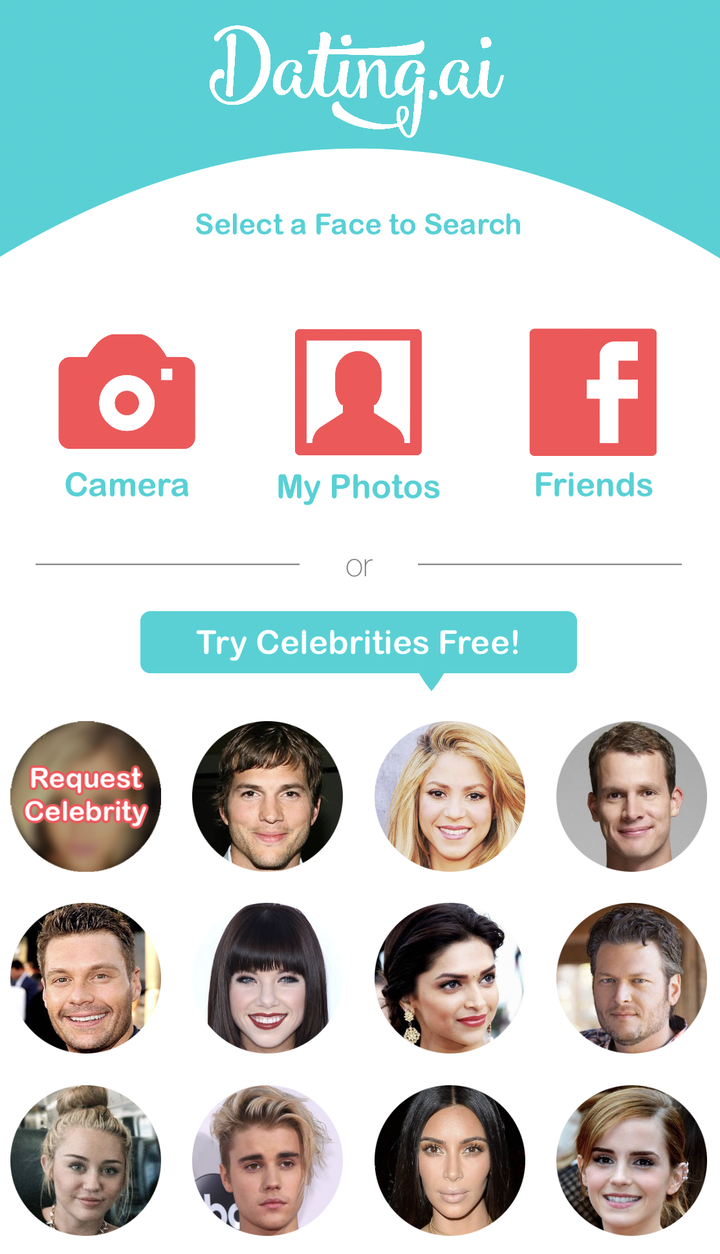
The new Dating.ai app uses facial recognition to reference a photo you upload – a celebrity, your ex, your high school crush – and scan through thousands of profile photos sourced from dating sites and apps to find people whose faces look similar. Then, you can click on photos of the face matches to see their profiles on Tinder, Match, Plenty of Fish, and other dating apps (Dating.ai wouldn’t specify every site its app references).

The result is slightly terrifying, kind of fun, and most of all a very cynical approach to helping people find romantic partners. However, the dating apps that Dating.ai depends on for its search results are not so amused, and say the app is violating their terms.

The app’s facial recognition technology works pretty well – well enough that when you try one of the suggested celebrities like Kanye West or Jennifer Lawrence, the first few matches are inevitably the same celeb (some people use celeb pics on their dating profiles, apparently). And while the rest may not look EXACTLY like the celebrity, they’re also… not totally wrong.

The same for when we tested out photos of ourselves in the BuzzFeed office: The matches weren’t dead ringers, but there was some vague approximation of uncanny similarity. I tested two different photos of myself making different expressions in different light, and both times it picked the same 35-year-old woman from Long Island who does kinda look like me as one of my top matches.

While there’s plenty of science to what kinds of ratios of faces we find “beautiful”, this app shows the shortcomings of actually applying these metrics to human desire. If you want to date someone who looks like Jennifer Lopez, it’s because she’s insanely gorgeous in a way that’s more than just the ratio of distance between her nose and ears or the spacing of her eyes.

Of course there’s a bigger issue here: the privacy of the dating app users whose profiles are being used. People who sign up for Tinder might not agree to have their faces scanned on some other random app. Heath Ahrens, the founder of Dating.ai, told me he didn’t really see this as a problem. “If you’re on a dating app, you want to be found,” he said.

The idea for the app, which has about 15,000 users, came when Ahrens and his team were looking for ways to use the facial recognition software they had developed. After they read about another app that used Tinder’s API, they got the idea to use their technology on dating apps. “When you have a bunch of single guys in the office, it goes in that direction,” he said. “You wanna try your own dog food.”

Currently, you can limit your search on Dating.ai for men or women, but you can’t search by sexual preference (“men looking for men”), for example.

“Users like innovation. When they did name your own price, our users are doing name your own face.”

A Tinder spokesperson said that Tinder doesn’t allow automated scraping of their API, and that they “contacted the developer to inform them that the app is violating our terms, and we have been told that they will address the issue.” Ahrens would not confirm that Tinder asked to stop using their API, but said, “we’ve been having very a productive conversation with them.”

A rep from Plenty of Fish (Tinder, Match, and Plenty of Fish are all owned by the same parent company, but operate separately) said that they were trying to get Dating.ai removed from the iTunes app store. “That’s news to me,” said Ahrens.

Ahrens and his business partner say that Dating.ai is acting in an affiliate capacity and compared it to the innovation of airfare booking sites. “Priceline and Expedia freaked out airlines at first,” Ahrens said. “Users like innovation. When they did name your own price, our users are doing name your own face.”

Right now, the future of Dating.ai seems unclear. Ahrens and his business partner would only say that they are looking forward to working with the dating apps; Tinder, Match, and Plenty of Fish tell a different story. For now, the app is still up in the app store and still pulling Tinder profiles. We’ll update if anything changes.

Quelle: <a href="This App Lets You Find People On Tinder Who Look Like Celebrities“>BuzzFeed
Here's Why Facebook Says It's Not Rolling Out The Rainbow LGBT Reaction Everywhere

Facebook

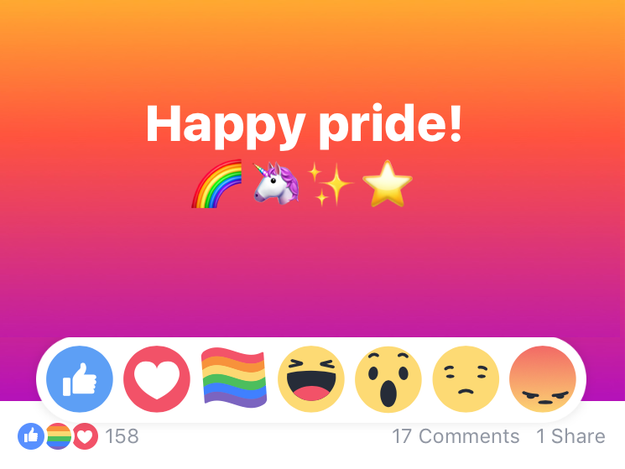
Facebook is limiting the availability of its rainbow reaction, which is meant to celebrate Pride Month, and is offering very little detail as to why. The reaction is currently unavailable in a number of locations, including countries with repressive LGBT policies such as Russia.

The rainbow reactions went live this month as part of Facebook’s pride celebration, and appear next to Facebook’s traditional “like,” “haha,” and “wow” reactions. But Facebook says it isn’t rolling them out everywhere because it is “testing” them.

Facebook’s approach to its pride-reaction rollout is drawing criticism from some who think it’s playing into the hands of repressive governments. “This is shameful,” Jillian C. York, director for international freedom of expression at the Electronic Frontier Foundation, wrote on Twitter. “Facebook isn't even ‘kowtowing’ to anti-gay states, they're doing their job for them.”

In a post on June 5 announcing the new LGBT-themed reaction, Facebook said “We believe in building a platform that supports all communities. So we’re celebrating love and diversity this Pride by giving you a special reaction to use during Pride Month.” To access the reaction, Facebook asked users to like its LGBTQ@Facebook page.

“Because this is a new experience we’ve been testing, the rainbow reaction will not be available everywhere,” the company said in a blog post.

Although Facebook runs tests all the time, this situation appears different from the typical tech tests the company might use to determine, for example, whether people like its latest Snapchat-inspired feature. Rainbow reactions aren't a feature in and of themselves, and how they're used doesn't influence whether a product is viable or not.

A Facebook spokesperson declined to say whether the test in question was technological, or whether the reaction's limited rollout was designed to take into account repressive governments with anti-LGBT policies.

In this case, Facebook said in its post that the rainbow reactions would be made available to “people in major markets with Pride celebrations.” Other specially themed Facebook reactions, like a set of Halloween reactions that appeared last year, also had a limited rollout. But while Halloween simply isn’t a holiday observed everywhere, LGBT people exist all over the world.

In Russia, which has a law prohibiting “gay propaganda” and where pride parades often get shut down by attacks, people reported being able to see the rainbow reactions but not being able to use them. On its own Facebook page, the company responded to people in other countries inquiring about the rainbow reaction with varieties of this explanation: “This isn't yet available in some areas, but we hope to roll it out in more soon.”

Presented with the criticism of its test's limitations, Facebook declined to comment beyond its initial post.

Quelle: <a href="Here's Why Facebook Says It's Not Rolling Out The Rainbow LGBT Reaction Everywhere“>BuzzFeed

Uber Will Soon Roll Out In-App Tipping In Seattle, Houston, And Minneapolis

Spencer Platt / Getty Images

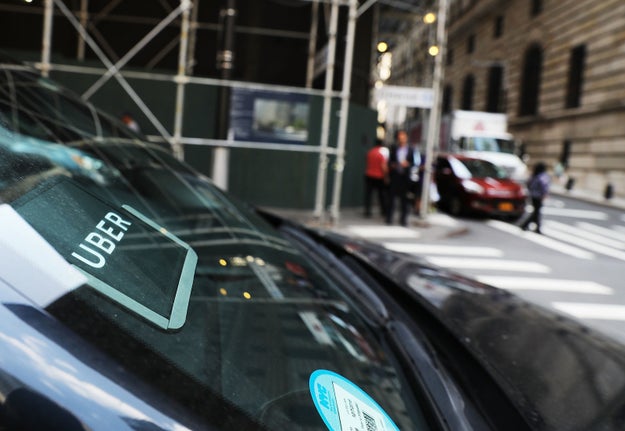
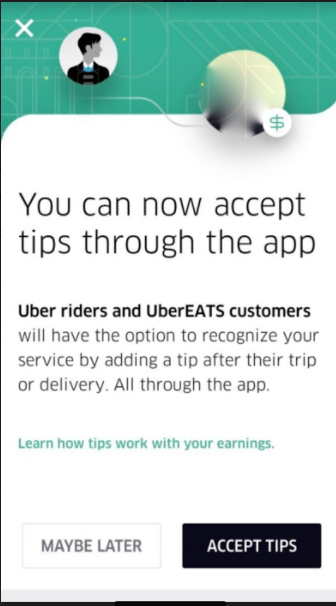
Uber said it will roll out the ability for riders to tip drivers within its app across the US by the end of July, addressing one of drivers' biggest and longest-standing complaints with the ridehail giant.

Uber drivers and their advocates have long pushed for in-app tipping. The Independent Drivers Guild, a non-union worker body backed by Uber and affiliated with the International Association of Machinists and Aerospace Workers, found in a survey last year that the lack of in-app tipping was drivers' top concern.

While Uber's app didn't allow riders to tip, the company had said riders were welcome to tip in cash. As part of a lawsuit settlement earlier this year, Uber agreed to clarify its tipping policy by allowing drivers to place signs in their cars noting that tips are not included in the app's fares.

Lyft, Uber's biggest competitor in the US, already offers the option to tip drivers through its app. Riders are prompted to rate their trips as well as add a tip after Lyft rides end. The company has attempted to highlight this distinction in national ads, poking at an Uber-like company for not allowing in-app tipping. Lyft said on Monday that drivers had amassed more than $250 million to date in tips, and announced passengers would begin seeing new prompts to encourage more tipping.

In April, regulators in New York City said they planned to begin writing a rule that would require the ride-hail giant to offer an in-app tipping option.

BuzzFeed News reported last year that in three major US markets — Denver, Detroit, and Houston — Uber drivers earned less than $13.25 an hour after expenses in late 2015. Earlier this year, the company paid the Federal Trade Commission $20 million to settle claims that it misled drivers about pay. The ride-hail giant claimed drivers in New York made more than $90,000 a year, but the agency found the median income of drivers there is $29,000 less than that.

Quelle: <a href="Uber Will Soon Roll Out In-App Tipping In Seattle, Houston, And Minneapolis“>BuzzFeed

Dildo Buyer Beware On The Wish App

Wish is the greatest shopping site of all time (according to me, a person who loves weird, cheap shit of dubious quality). It’s like a giant 99 cents store, but full of crazy things you never knew existed, and everything ships directly from China (for a deeper explanation on how an old postal law makes it so cheap for Wish to ship directly from China, read this story).

But there’s one thing weird about the app: It lets you can see customers' full, real names on their customer profiles linked to their wish lists.

Which is especially a problem because Wish sells lots and lots of adult items.

DILDO BUYERS BEWARE!!!!

NOTE: BuzzFeed is a sex-positive website! We are very happy if you enjoying these adult items, and it's great for you that you have a healthy sex life. No shaming here! Enjoy those dildos, everyone!

However, from an app design standpoint (which is what we're focusing on here), this is a bad thing.

Here's a selection of products that had reviews with customers' full names and linked to their profiles with wish lists.

There’s THIS thing that apparently goes up inside your pee hole (NSFW)

There's THIS thing that apparently goes up inside your pee hole (NSFW)

And THESE dildos, which are pretty unremarkable except for the funny Photoshopping on the image.

And THESE dildos, which are pretty unremarkable except for the funny Photoshopping on the image.

Again, no kink-shaming here! It’s just that the marketing image of this woman’s surprised face here is, well, really funny.

Again, no kink-shaming here! It's just that the marketing image of this woman's surprised face here is, well, really funny.

And this bizarre cross-section diagram of a woman’s anatomy that looks like it’s the plastic model in a 7th grade health class… it’s just… well, it’s funny, right?

And this bizarre cross-section diagram of a woman's anatomy that looks like it's the plastic model in a 7th grade health class... it's just... well, it's funny, right?

And take this $68 sex doll. Let’s say you wanted to learn more about the quality of the item.

And take this $68 sex doll. Let's say you wanted to learn more about the quality of the item.

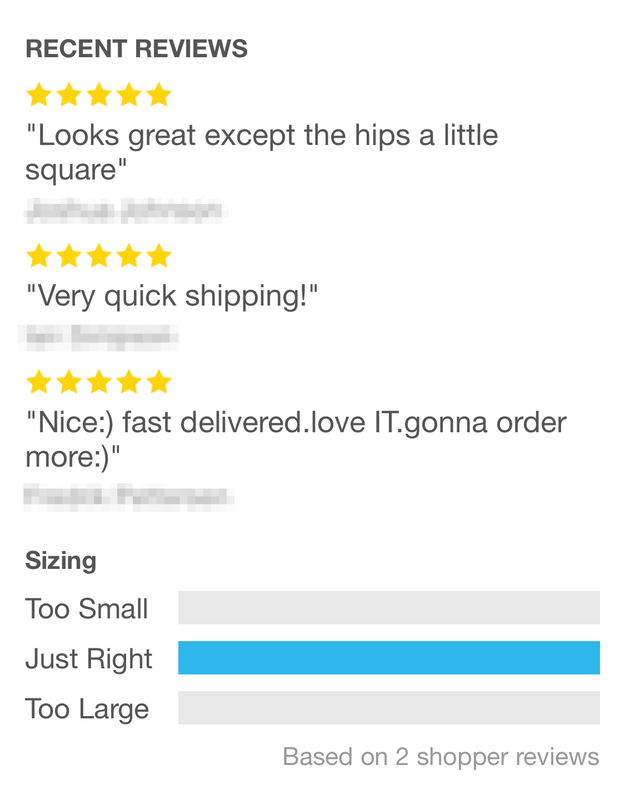
Here are the reviews for the sex doll. Check out the blurry parts – those are people’s REAL NAMES. As in their actual first and last names, not a user handle (we blurred them out). Note the first guy, who says the hips are a little square:

Here are the reviews for the sex doll. Check out the blurry parts – those are people's REAL NAMES. As in their actual first and last names, not a user handle (we blurred them out). Note the first guy, who says the hips are a little square:

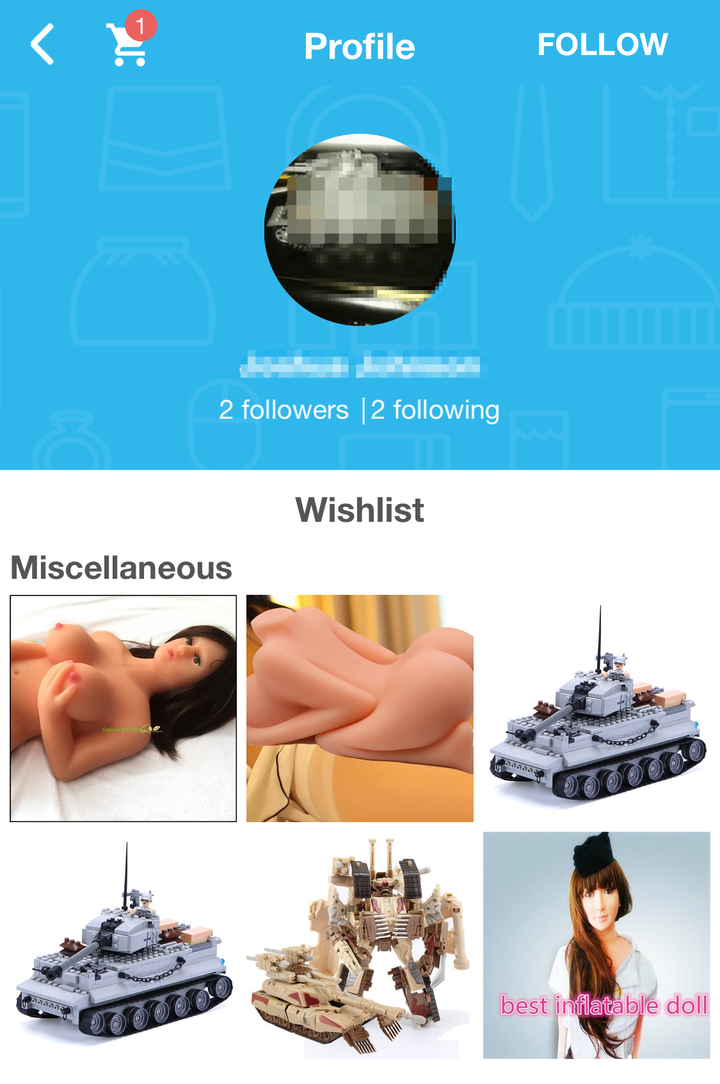
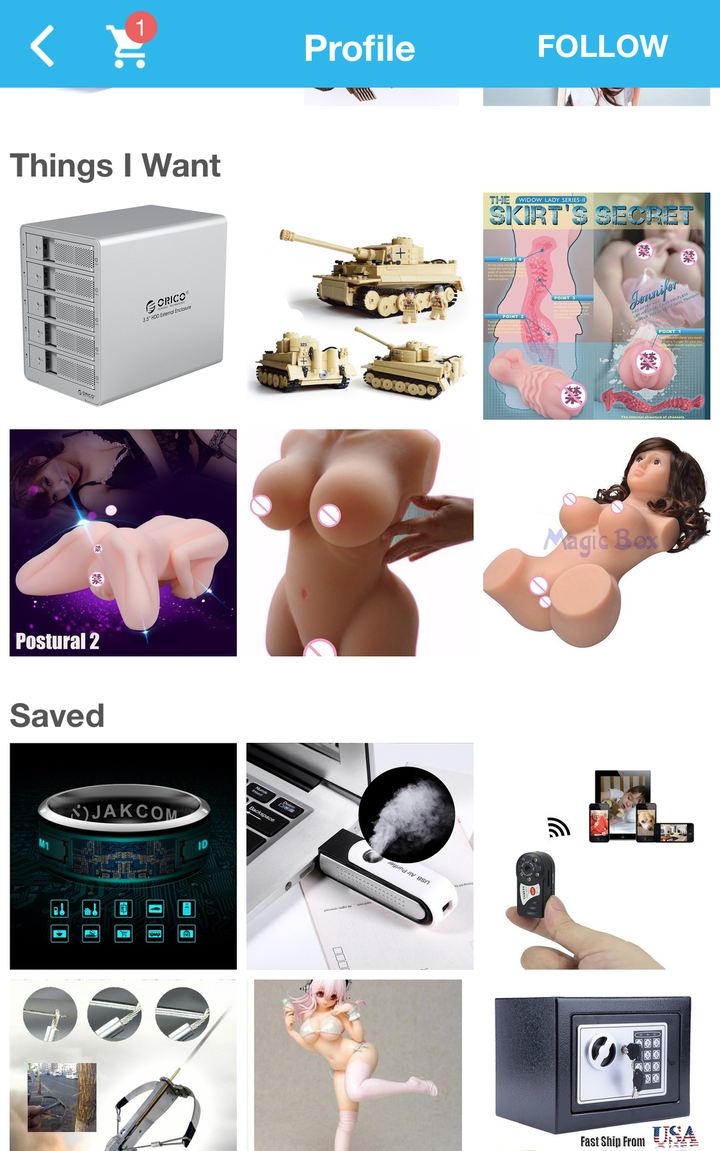
We’re curious about Mr. “hips too square” – maybe he doesn’t really know anything about sex doll sizing, or maybe he’s an expert. When we click on his name, we get to his user profile:

We're curious about Mr. "hips too square" – maybe he doesn't really know anything about sex doll sizing, or maybe he's an expert. When we click on his name, we get to his user profile:

YUP! Looks like this guy sure loves sex dolls (and tanks?) according to his Wish List. And we know this because Wish shows his full name on his profile.

YUP! Looks like this guy sure loves sex dolls (and tanks?) according to his Wish List. And we know this because Wish shows his full name on his profile.

Executives from Wish did not respond to messages, but a customer service representative told BuzzFeed News, rest assured that we are working our very best to accommodate this kind of request [private wish lists] and come up with ways to improve our customer's experience.”

It's not uncommon for e-commerce sites like Amazon to have public wish lists (after all, you might want someone to buy you a gift!). But typically there's also the option to make them private.

I suspect most users have no clue that they automatically have a public profile were you can “follow” other people, see their full names, and view their shopping lists. There's no way to change your full name in your user profile settings – however, you can change your profile photo.

Point is, if you're getting a great price on a super great sex doll, that's wonderful, and Wish is full of delightful deals. But be aware that the site isn't exactly protecting your privacy.

Quelle: <a href="Dildo Buyer Beware On The Wish App“>BuzzFeed

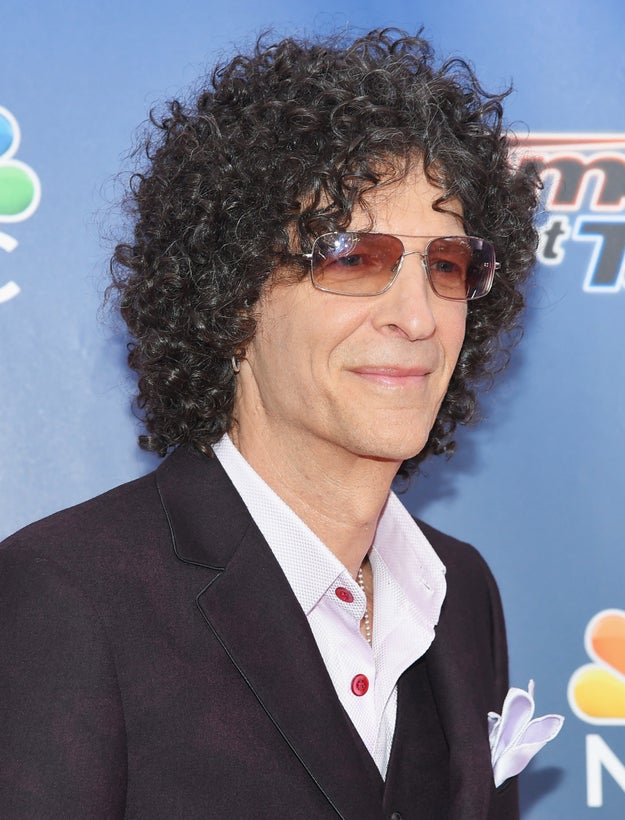
Alexa, Play Me Howard Stern

Howard Stern

Michael Loccisano / Getty Images

SiriusXM radio is now available on Amazon Alexa. The addition of the satellite radio service, long a missing piece in Alexa's streaming music offerings, means you can finally listen to the Yacht Rock station (highly recommended FYI) by hollering at a speaker in your kitchen.

It's the latest shot in the, uh, speaker wars. It comes shortly after Apple announced its own voice-controlled home speaker, the HomePod. Apple emphasized the HomePod's audio performance, suggesting that audiophiles would prefer its speaker over the Amazon Echo or Google Home.

But there's a lot more to audio than just the way it sounds, right? Adding a big radio partner like SiriusXM makes the Echo a lot more than just a weather and Tide-refill ordering machine. It's something to listen to. Amazon really hit 'em with the Hein, you might say.

SiriusXM subscribers (sorry, you have to be a paying customer still) can now say “Alexa play me Howard Stern on SiriusXM” or “Alexa play me Tom Petty Radio on SiriusXM” instead of tuning to those channels in their cars, or wherever. Convenient!

But one thing they WON'T be saying is “Alexa play me Classic College on SiriusXM,” because SiriusXM got rid of THE BEST STATION EVER.

Imagine this: a station that was just indie rock from like 1987-1999.

It was basically all Pavement with an occasional Dinosaur Jr or Liz Phair break. It was great. Unfortunately, Sirius canceled the station in 2015.

What I'm saying here, is that if you're a SiriusXM subscriber with an Echo, please say “Alexa please mail a letter to Sirius Radio telling them to bring back Classic College.” I'm pretty sure that's how it works?

BABA BOOEY TO YOU ALL

Quelle: <a href="Alexa, Play Me Howard Stern“>BuzzFeed

Drivers Who Say Ride Hail Startup Juno Intentionally Misled Them Are Suing The Company

Bloomberg / Getty Images

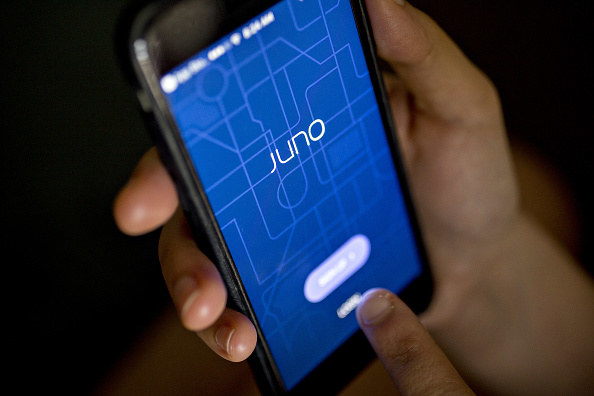
Drivers for Juno, the two-year-old, “socially responsible” ride-hail startup, filed a class action lawsuit earlier this month against the company and its new owner, Gett. The drivers allege that Juno misled its drivers by promising them equity, a program which was immediately suspended after a rival company acquired Juno for $200 million earlier this year.

“To lure the drivers, Juno offered a very appealing carrot. The promise of equity ownership,” reads the complaint, which was filed by the Law Offices of Mohammed Gangat in New York federal court on June 9. “Once Juno, [CEO] Mr. [Talmon] Marco and the investors had a $200 million offer in sight, they swiftly and resolutely turned their back on Driving Partners.”

According to the complaint, Juno’s strategy for breaking into the New York market was to poach Lyft and Uber’s licensed and experienced drivers by offering them better pay, fairer treatment, and a small equity stake in the company. For Juno's drivers, of whom the lawsuit estimates there are around 20,000,, that offer was compelling enough to sign on. Many drivers who signed on with Juno, the complaint says, accepted “$100 in shares of Juno instead of $100 cash as a sign-up bonus.”

This deal was also compelling to customers who, the complaint alleges, were drawn to the idea of using an app that was “owned by the drivers itself and not a handful of founders and investors.”

In the app store, Juno describes itself as a “new approach to ride sharing.” “Juno treats drivers better. Drivers treat riders better. Happy drivers, happy riders,” the copy says.

But when Juno told drivers via email in April that Gett had acquired it, most found out their payout would be between just a hundred to a few hundred dollars, despite having allegedly worked 50 to 60 hour weeks on Juno in hopes of earning additional shares in the company. In addition to the stock options some drivers received when they signed up, they were also eligible to earn more equity as long as they drove more than 120 hours per month. “Juno even went so far as to promise that equity would be treated the same in terms of dilution and distribution rights in the event Juno was ever sold or conducted an initial public offering,” the complaint alleges.

“The drivers were understandably outraged,” at having been “duped” by Juno’s “blatant falsehoods,” the suit says. “Plaintiffs were victims of the classic “bait and switch” scheme – promised equity and then paid off at pennies on the dollar when all other shareholders/investors made out handsomely.”

Juno presented itself as a contrast to other ride-hail companies like Uber and Lyft, which have become renowned for classifying drivers as contractors, low pay, errors that cost drivers, and general manipulation of their workers.

But now, Juno is accused of misleading drivers, and enticing them with false promises of big earnings — an accusation Uber has also faced. In fact, Uber agreed at the beginning of the year to pay $20 million to settle a suit brought by the FTC in which the agency accused Uber of misleading drivers about possible earnings.

When ride-hail drivers for other on-demand economy companies have filed class action lawsuits against Lyft and Uber, the majority of those cases were forced into arbitration because the workers had agreed to arbitration when they initially signed their contracts. Juno drivers also signed to arbitration agreements, but an attorney with one of the firms representing the drivers said his team would be challenging the enforceability of that agreement.

Mohammed Razzak and Mohammad Islam, two of the named plaintiffs in the suit, are suing Juno for “intentional misrepresentation.” In addition, as a class, the drivers are bringing a shareholder derivative claim against the company, for selling itself to Gett without appropriately considering what would be best for the shareholder drivers. Also included in the complaint is a securities fraud claim, which the plaintiffs bring against Juno for offering drivers stock options via a program that didn’t have approval from the Securities and Exchange Commission. Prior to its acquisition, Juno told drivers that it was under scrutiny from the SEC; it’s possible the drivers’ shares would have been void regardless of Gett’s acquisition.

“We are very disappointed in Juno and Gett for the way they have treated us and all of the other drivers,” said Mohammad Siddique, a third named plaintiff in the suit, in an email statement. “We were mislead by the company into thinking we are shareholders, and we worked very hard to help build the company. We thought we were taking part in the American Dream. We need this to be corrected and we need justice.”

Juno’s CEO, Talmon Marco, did not immediately respond to request for comment on this story.

Quelle: <a href="Drivers Who Say Ride Hail Startup Juno Intentionally Misled Them Are Suing The Company“>BuzzFeed

There's A War Going On Behind Amazon's "Add To Cart" Button

AP/Richard Drew

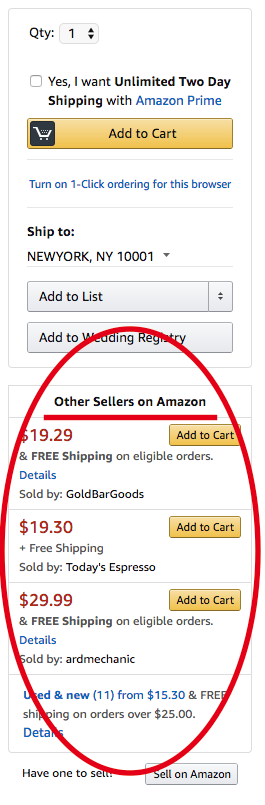
Behind the scenes on what may appear to be a simple product page on Amazon is a bustle of sellers all scrambling to win your business. They're fighting over a small yellow box that is emerging as one of the most important battlegrounds in online shopping.

To the average user, who lands on a product page, it's all pretty straightforward. On the left, photos of the item — lets say, a cell phone charger. To the right, there's the “Add to Cart” button. Pretty simple, right?

But dozens of sellers may all be offering that same charger, and only one is chosen by Amazon's systems to get the sale when you hit Add to Cart. The others are relegated further down the page, and the vast majority of Amazon users never bother to look at them.

Amazon

That yellow button, known as the “buy box”, is ultra-prime real estate. For online sellers, winning the race for the buy box is similar to landing the first result on a Google search or, in the brick and mortar world, being displayed in the most visible, highly-trafficked sections of supermarket aisles.

Amazon sellers compete tooth and nail to please the algorithms that determine who sits in the buy box. It's a privilege they earn — and it's not for sale.

“The majority of the sales that occur on Amazon goes to the seller who is in the Buy box, about 85 to 90-plus percent,” said Phillip D'Orazio, president of the Palmetto Digital Marketing Group, which manages Amazon accounts for clients.

Other sellers are listed on the product page, but since customers rarely click through to see their offers, missing out on being the “Add to Cart” vendor, even for a few hours, can mean a serious loss in sales, said D'Orazio.

Unlike other marketplaces like eBay or Alibaba, Amazon pits sellers against each other to win a turn in the Buy box. The exact details of how its systems make the choice are kept secret, but the company tells sellers they can increase their chances by keeping prices low, updating their inventory, offering multiple shipping methods, and offering fast, reliable service. Sellers who have been on the marketplace longer and offer shipping from Amazon's own warehouses also get preference.

That means the Buy box doesn't always feature the cheapest option. Instead, it's a balance of price, service, and Amazon's evaluation of the seller.

“In a lot of ways the Buy box is a slowed down stock exchange,” said Juozas Kaziukenas, founder and CEO of Marketplace Pulse, which collects and analyzes e-commerce marketplace data. “You have a flow of customers who are willing to buy a particular product and they’re willing to pay whatever the market price is, but then there are hundreds of sellers who want to have a sale.”

The idea is such an exchange drives down prices and drives up customer service so that consumers get the best purchasing experience, Kaziukenas told BuzzFeed News. “The Buy box encapsulates the notion that customers are willing to pay market price, but as opposed to setting it by hand let's make the market decide.”

Much like the behind-the-scenes tweaks used by marketers to land the top Google result, Amazon sellers do intensive data analysis, using specialized software that helps land them in the buy box.

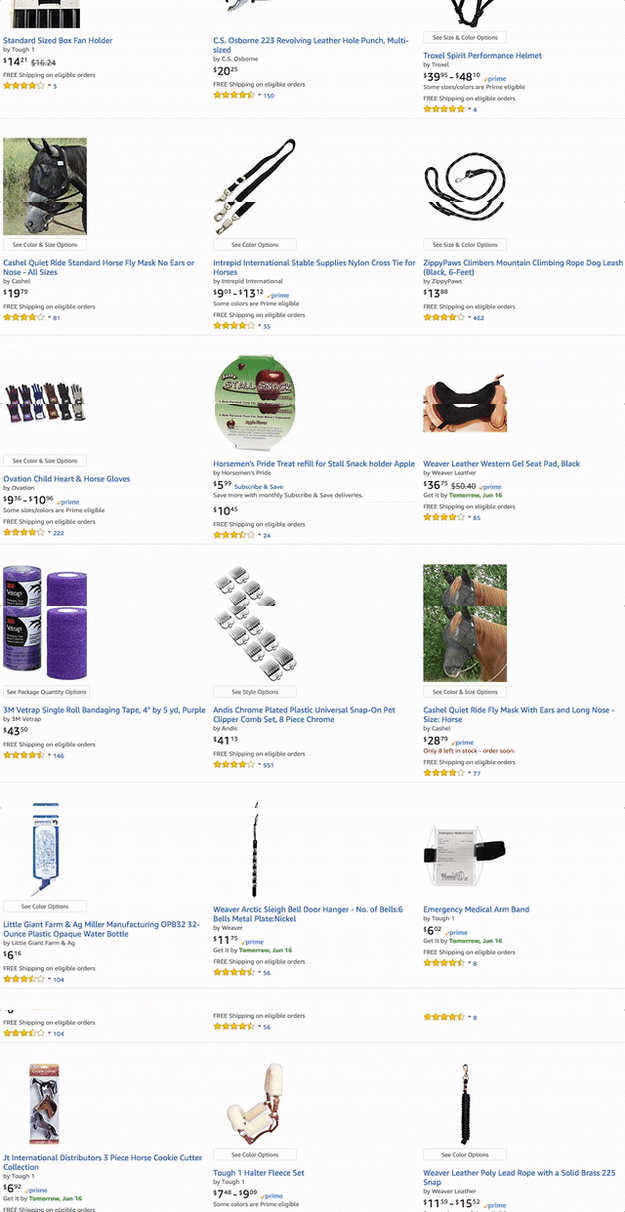
“I would tell you that we’re really a data company,” said Alexander Lans, the owner of One Stop Equine Shop which sells its horse riding gear on Amazon as OSO1O. “That's what we are for all intents and purposes. In 2017, most companies are data companies.”

Lans, who has been selling products on Amazon since 2011, told BuzzFeed News that while the company is staffed by horse enthusiasts, its selection of products and whether to sell them on their own site or over Amazon is based completely on data.

“Part of our strategy to win the Buy box is we have a portfolio of products that we’ve structured over time where we have the right products at the right place at the right time,” he said. Lans sells a mix of stable, year-round products, along with ones whose sales move according to seasonal demand. This way, he said, the company builds up a track record of consistent sales and positive customer ratings.

Amazon.com / Via amazon.com

Amazon's buy box algorithms prioritize vendors who pay to house their products in its warehouses, giving the company more control over the shipping process. Lans sends some of his products to Amazon to fulfill and ship, offering many products over Amazon Prime.

Amazon.com / Via amazon.com

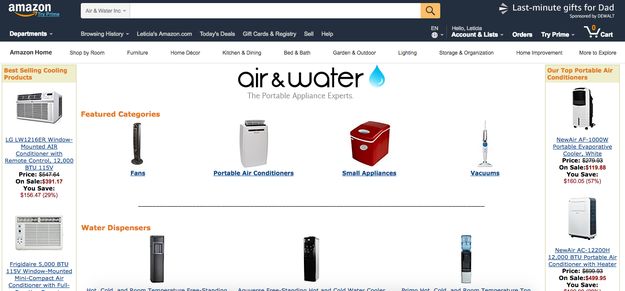
Luke Peters, the owner of Air-N-Water.com which has sold its products on Amazon for 13 years, said that he only stores some of his smaller products at an Amazon distribution center to manage his costs. The rest he ships from the company's own 100,000 square foot warehouse.

“If a product is like, the size of a toaster oven or a microwave then you can ship [through Amazon]. If it’s bigger than that, it starts getting too expensive to do,” he said.

Peters, like other sellers, also uses a software called ChannelAdvisor to help keep his prices competitive. While Amazon has a price management tool built into its seller accounts, repricing software has the added advantage of adjusting prices according to shipment costs and other variables, Peters said.

A difference of $0.50 or, sometimes, just a penny can influence your share of Buy box sales, he said.

“Obviously you have to be competitive,” said Peters. “I think a good number to hit is to be under 2% of the best price. You don't always have to win the best price to win equal share of Buy box but if you’re within 1-2% you're going to get an equal share.”

Amazon.com / Via amazon.com

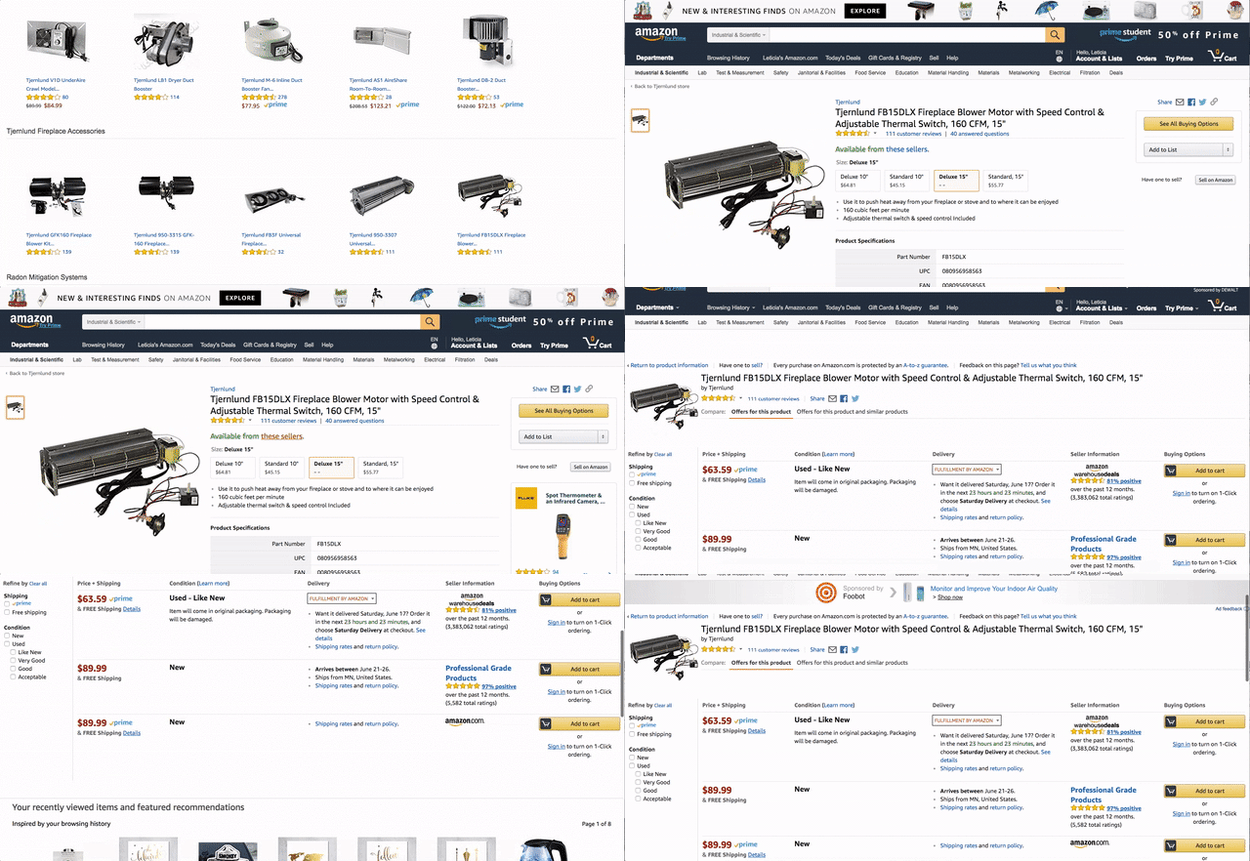
“You have to learn to play the algorithim game rather than just using common sense,” Andrew Tjernlund, who sells gas and electric appliance parts on Amazon under Tjernlund Products Inc., told BuzzFeed News. “Even if they think Amazon is gaming the system, it’s based on real data,” he said.

Marketplace Pulse's Kaziukenas believes in the data. “The Buy box is much smarter than it appears,” he said. “It’s trying to do things beyond the price and trying to help customers. Customers probably should not try to outsmart that. There's a reason why Amazon did not pick another seller.”

Quelle: <a href="There's A War Going On Behind Amazon's "Add To Cart" Button“>BuzzFeed

A Mobile Billboard Is Driving Around Seattle Urging Amazon To Cut Ad Ties With Breitbart

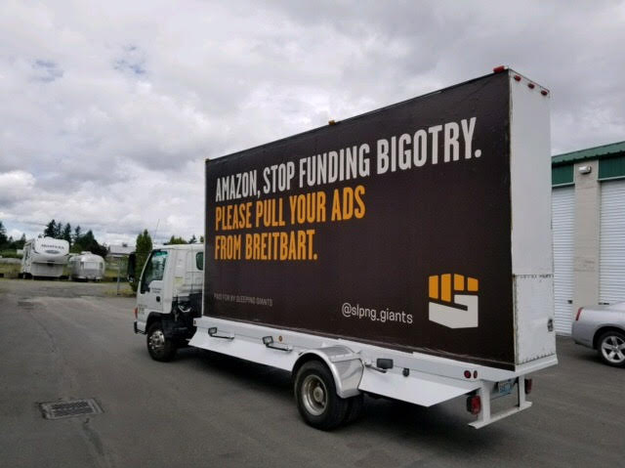
Starting today, a mobile billboard bearing the words “Amazon, Stop Funding Bigotry. Please Pull Your Ads From Breitbart” will begin driving around Amazon's Seattle headquarters in an effort to get the e-commerce giant to join an online ad boycott of the pro-Trump news site.

The ad campaign is funded by the anonymous marketing collective Sleeping Giants. Since the 2016 election, the group has been waging a campaign against Breitbart on Facebook and Twitter. The group's main concern centers around the programmatic advertising market , which uses software and algorithms, not humans, to purchase digital ads. Sleeping Giants believes this makes it easy for companies to advertise on controversial sites without knowing it. So far, Sleeping Giants has convinced 2,250 companies to sever their ad relationship with Breitbart — the advocacy campaign has been largely credited as the reason for a reported 90% drop in brands advertising on Breitbart's website. A viral petition on the activism site sumofus.org titled “Amazon: Stop Investing in Hate” also amassed over 589,000 signatures this spring.

But despite this pressure, Sleeping Giants has one big hold-out: Amazon. “We haven't heard from anybody in eight months of calls and emails,” an anonymous Sleeping Giants founder told BuzzFeed News. “We've even spoken to people who have shows on Amazon's streaming service and they've approached people at the Amazon about the Breitbart situation and still we've heard nothing.”

The pressure is also coming from inside Amazon. In April, BuzzFeed News reported that a petition opposing Amazon's continued advertising on Breitbart had amassed 564 employee signatures. Attached were testimonials from concerned employees about the company running ads on a company that “regularly publishes hateful and bigoted content.” The petition was met with mostly silence from Amazon, though SVP Jeff Blackburn told employees at a March all-hands meeting that “we have our eyes on it.” While Amazon doesn’t have a direct relationship with Breitbart, the company does select the exchanges through which it buys ads, and presumably has some say in how they are targeted.

Sleeping Giants said that Amazon's silence is the reason for the billboards. “The crux of the problem is that they're so unresponsive,” the Sleeping Giants founder said. “If they aren't going to pull them it is their choice but they owe customers a reason.”

Though Sleeping Giants understands that convincing the commerce giant to pull ads is an uphill battle, the group feels the billboards will raise more awareness for people who don't spend most of their time online.

“This is a first for us — taking the cause onto the actual streets,” a Sleeping Giants member said. “It's one thing to hammer away at things on Twitter and Facebook but it's another to get it out into the real world and let them know the problem we have.”

Quelle: <a href="A Mobile Billboard Is Driving Around Seattle Urging Amazon To Cut Ad Ties With Breitbart“>BuzzFeed

Alex Jones Just Released A Father's Day Video To Sandy Hook Parents — But Didn't Apologize

Alex Jones Just Released A Father's Day Video To Sandy Hook Parents — But Didn't Apologize

youtube.com

Shortly before his controversial interview with NBC's Megyn Kelly was due to air on Sunday, pro-Trump media figure and conspiracy theorist Alex Jones released a video statement to the parents of children who lost their lives in the Sandy Hook massacre.

The one-minute video features Jones speaking directly to camera and offering his “sincere condolences” to the victims' parents.

“Parents should never have to bury their own children,” Jones says in the video.

However, he did not apologize for repeatedly claiming the massacre was staged and the children killed were actors.

Instead, Jones used the video to invite the parents of those killed to contact him to “open a dialogue…instead of letting the MSM [mainstream media] misrepresent things and really try to drive this nation apart.”

Sandy Hook has become the major focus of the controversy surrounding Kelly's decision to interview Jones and give him a platform for his views. Jones has for years repeatedly made claims that the shooting, in which 20 children and six adults died, is a “total hoax.”

The NBC network television station in Connecticut will not air the interview, citing the concerns of its staff, viewers, and the families of Sandy Hook Elementary School victims.

Jones' public position on Sandy Hook has been inconsistent since the tragedy. In January of 2013 — not long after the shooting — he said on air that “in the last month and a half, I have not come out and said this was clearly a staged event. Unfortunately, evidence is beginning to come out that points more and more in that direction.”

The fallout from the comment caused Jones to take a slightly different tack. When pressured, Jones often notes that his quotes were taken out of context, saying instead that he believed the tragedy happened but that it was staged.

By 2015, as the Guardian pointed out, Jones' rhetoric shifted considerably. “Sandy Hook is synthetic, completely fake, with actors; in my view, manufactured,” Jones said. “I couldn’t believe it at first. I knew they had actors there, clearly, but I thought they killed some real kids, and it just shows how bold they are, that they clearly used actors.”

A number of the parents of Sandy Hook victims directly blame Jones' rhetoric for a rash of death threats, harassment, and psychological trauma that has been inflicted on them by trolls and conspiracy theorists.

Just this month, a Florida woman was arrested and convicted of sending death threats to the parent of a Sandy Hook victim. In a Washington Post op-ed, Nelba L. Márquez-Greene, who lost her 6 year-old daughter, Anna Grace, wrote that “I cannot begin to describe the pain of experiencing death threats and harassment on top of mourning the loss of a beloved family member. Five years after the Sandy Hook shooting, we receive emails weekly suggesting that our daughter did not die.”

Jones has attempted to run away from his past remarks. This April, at a press conference outside an Austin courthouse, Jones told reporters that his Sandy Hook statements were him “playing Devil's Advocate,” despite numerous public quotes that contradict that argument. In the teaser trailer for Kelly's interview, Jones appeared to make the same case.

Using a common tactic, in which he plays the victim, Jones spent the week deflecting the blame on Megyn Kelly. Earlier this week, he called for NBC to pull the interview suggesting it was unfairly edited to make him look like a monster. Jones alleged that the interview air date — Father's Day — was also unfair to the families of Sandy Hook victims. Jones argues — and a leaked pre-interview between Jones and Kelly appears to back this up — that NBC told him the interview would air in July, not June.

Which makes Jones' decision to release a video statement on Father's Day all the more audacious and — to those who've lost loved ones — profoundly insensitive. “On a weekend that honors dads, showcasing Jones — a man who has denied that our children were murdered — shows a breathtaking lack of sensitivity,” Márquez-Greene wrote in the Washington Post.

LINK: Alex Jones Scoops Megyn Kelly And Proves The Media Isn’t Ready For The Trolls

Quelle: <a href="Alex Jones Just Released A Father's Day Video To Sandy Hook Parents — But Didn't Apologize“>BuzzFeed

People Get High To Help This Startup Make A Weed Breathalyzer

Eskymaks / Getty Images

Getting people to enroll in scientific studies is usually a long and difficult process. Not so for Hound Labs, which is working on a breathalyzer that shows whether you’ve smoked weed in the last few hours.

Earlier this year, when the Bay Area startup wanted to get pot smokers high to test the accuracy of its device, staff put up posters and asked friends for referrals. “After two days, we had so many people calling that we didn’t need more,” CEO Mike Lynn told BuzzFeed News. “Maybe in retrospect we shouldn’t have been surprised.”

In another clinical trial, people get stoned and drive a car around a controlled driving course — all in the name of science. (No word on whether the brave volunteers get Taco Bell afterwards.)

The Hound Labs staff, along with a handful of other companies and groups, is tackling a thorny and salient problem: As more states legalize marijuana for both recreational and medicinal use, more stoned drivers are hitting the road, according to an April report for the Governors Highway Safety Association. Of the drivers who died in car crashes and were tested for drugs in 2015, more than one-third had some form of marijuana in their systems. And since Colorado and Washington legalized recreational marijuana, there’s been an increase in reports of deaths and driving cases that involve the drug.

But it’s difficult for cops to check how recently, and to what extent, they’ve smoked marijuana, since the body metabolizes the drug much differently and less predictably than it does alcohol, and in a urine test, THC, the component of cannabis that gets people high, can show up about a month after use. So in the absence of objective, quantifiable evidence, risky drivers can get charges dismissed — and sober drivers can be falsely accused of being high.

“The challenge with marijuana is the drug doesn’t work like alcohol does. You may not get a level that’s a .08 equivalent,” said J.T. Griffin, chief government affairs officer for Mothers Against Drunk Driving, referring to the national blood alcohol concentration limit. “And that really is what research needs to look at, and what research needs to develop. How do we best determine scientifically what marijuana impairment looks like?”

Juanmonino / Getty Images

Hound Labs raised $8 million last month from Benchmark, the powerhouse Silicon Valley venture capital firm. Lynn says it plans to start selling breathalyzers by the end of the year, initially to law enforcement agencies and, perhaps in the future, to employers for worker drug-screening tests. Other companies and scientists at work on breathalyzers of their own include Cannabix in Vancouver, Canada, and a Washington State University research team.

Sound lit? Scientists aren’t so sure. These groups “have been putting out a lot of promotional material about their products, but they haven’t put out any scientific data for any of us to look at and say whether it’s working or not working,” said Marilyn Huestis, a former chief of chemistry and drug metabolism at the National Institute on Drug Abuse and a consultant to Cannabix.

What’s more, scientists and lawmakers disagree over how much THC it takes to impair someone’s driving. Eighteen states have some kind of law about driving under the influence of marijuana. Some allow drivers to have limited levels of THC while others have zero-tolerance approaches. And the rules are as inconsistent as the rules about marijuana itself: Medicinal marijuana is allowed in Washington, D.C., and 29 states, and recreational use in eight plus D.C., as of April.

Hound Labs

“Yes, there’s marijuana around,” said Jim Hedlund, an independent traffic safety consultant who co-authored the report for the Governors Highway Safety Association. “Is it impairing? For some drivers, it certainly is — but you cannot conclude just from its presence that it’s impairing.”

Drunk people tend to “weave and swerve and not be able to walk a straight line,” Lynn said. “With marijuana, what often happens is, it’s the inability or decreased ability to make judgment calls,” like deciding what to do when a kid suddenly stops in a crosswalk up ahead.

The way your body eliminates alcohol is pretty straightforward: the more you drink, the more it shows up in your blood and breath, the more it affects your brain, and the effect wears off over time. But whereas alcohol dissolves in water, THC concentrations tend to quickly decrease as the drug works its way through the body and the feeling of a high increases. In habitual smokers, THC can remain in the body in low amounts long after the euphoria.

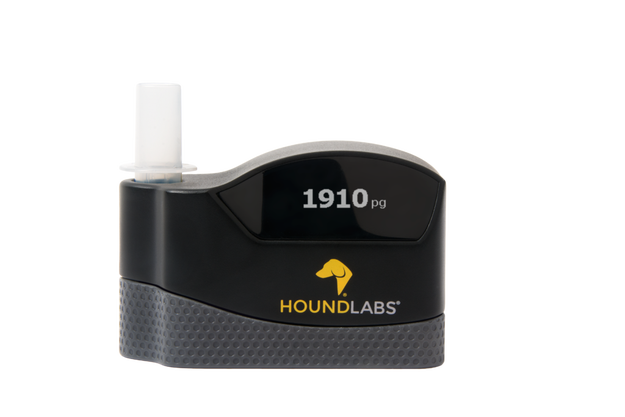
That biological process poses a challenge for Hound Labs. Its device scans for traces of THC in breath, but “so little of it exists in breath and it goes away so quickly,” said Lynn, an emergency room physician, reserve deputy sheriff, and former venture capitalist. “To ID people who have it in their breath for a couple hours, you have to have technology that allows you to measure it in parts per trillion” — in other words, very, very small amounts. He likened it to “taking eight or nine Olympic-sized swimming pools, filling them with sand, then telling someone to go find 200 green THC particles of sand mixed in.” The THC remains detectable in breath for about two hours after being smoked, Lynn says.

Lynn’s team has built a disposable cartridge that slots into a handheld loading dock, and filled the cartridge with a proprietary mix of chemicals that find, bond to, and expand THC molecules to make them countable. So far, he said, the tool seems to work whether people are smoking blunts or bongs, or munching extra-special brownies. Lynn says his team has had early success, though their studies are ongoing and no data have been published.

For one study, volunteers light up inside designated smoking facilities at a local hospital. They test out the accuracy of Hound’s prototype device compared to a chemistry-analysis laboratory technique that’s considered the gold standard. This data helps Hound figure out how breath THC levels correlate to impairment — as Lynn put it: “If you smoke 10 joints a day, what does that do to your levels versus someone who smokes one joint a month?” For the driving study, which started last month and does not involve UCSF, volunteers drive an obstacle course sober, then get baked and navigate the course again — under supervision, of course, and while being filmed.

“If you smoke 10 joints a day, what does that do to your levels versus someone who smokes one joint a month?”

One advantage of a breathalyzer is that police officers are already used to administering breathalyzer tests on suspected drunk drivers, Lynn says. (Hound’s device is designed to pick up on alcohol in addition to marijuana.) And Lynn says that Hound’s tool would cost roughly the same as an alcohol breathalyzer: around $500 to $1,000 for the main device, and $15 to $20 for each disposable cartridge.

THC levels could also be measured in saliva, which, like breath, is much easier to get than a blood or urine sample from a pulled-over, disoriented driver. In fact, there are already a handful of saliva-based THC tests on the market, such as from the German company Drager. But there isn’t enough evidence yet to support their widespread adoption, scientists say.

Any marijuana-screening test must clear an extremely high bar of accuracy, said Huestis, the toxicology consultant. The cannabis plant contains dozens of cannabinoids in addition to THC, including ones that don’t produce a high, so a device must be able to tell them apart, not to mention nail the timeframe in which someone is actually under the drug’s influence.

And Huestis argues that that laws can never set one universal impairment level, because research has shown that people metabolize marijuana differently based on a number of factors, including how habitual a smoker is. Instead, she says, officers should make arrests and press charges based on a field sobriety test and a biological test that shows which drugs are in their system.

“We have all the data we need to know there’s not one number that is going to separate and identify all impaired people from non-impaired people,” she said.

LINK: This Firefighter Took A Doctor’s Advice To Use Medical Marijuana — Now He Could Be Fired

LINK: Smoking Pot Can Get You Kicked Off Transplant Lists — Even In States Where It’s Legal

Quelle: <a href="People Get High To Help This Startup Make A Weed Breathalyzer“>BuzzFeed