You’re Going To Die Someday. Who Do You Trust With All Your Passwords?

Jay Wennington / Unsplash / Via unsplash.com

When you die, you won’t just leave behind your 401k, your belongings, and your life insurance. You’ll leave your Facebook photos, the embarrassing emails you wouldn't want anyone but your best friend to read, and the meme tweets you might not want to survive you, too.

Whether or not you want to control what happens to your digital afterlife is up to you, but if you don’t make any plans, it might make it harder on friends and family to wrap up ties when you’re gone. So set aside some time to prepare for the worst case scenario — it’s much easier than you might think.

Start with a will, the most important preparation you can do. You can write one for free online, and it can take as little as 15 minutes.

“For a single person, it’s going to take them 15 to 20 minutes to prepare their simple will,” said Brent Pope, founder of DoYourOwnWill.com and a former military lawyer. Pope’s website starts with a quick questionnaire and then automatically compiles a document that can be downloaded as a PDF. LegalZoom and RocketLawyer offer similar services, but require paid membership (although each service offers a limited 30-day and week long free membership trial, respectively).

You’ll name someone to take care of your “estate” (or, everything you own, including stock, money in your bank account, and belongings). That person’s called an executor* and, according to Pope, you should pick someone you trust to handle a serious matter and “can be as non-emotional about the process as possible.” They’ll file all sorts of important paperwork and need to keep a level head. If you store important documents or info on a hard drive or other location, you’ll want to note that in your letter of instruction to your executor.

Then, you’ll decide where the things in your estate will go and who gets them. If you have kids, you’ll name a guardian* for your children. Easy.

*You should, of course, talk to your named executor or guardian to make sure they’re comfortable with the role. If you die and they refuse the role, your estate will be passed on to the state.

Raw Pixel / Unsplash / Via unsplash.com

But you can’t just print out a form on a website: You have to sign the will.

“People save it on their desktop or print out their wills and don’t sign them. It needs to be a wet pen to a piece of paper. If you take the time to write it, take the time to sign it,” Pope advised. When you sign it, you’ll also need the dates and signatures of two witnesses who are at least 18 years old and won't receive any benefits from the will. Every state is different, but in many places wills do *not* actually need to be notarized — that’s the process to certify that the person signing the document is actually you, by showing some form of identification or comparing fingerprints.

Additionally, be sure to check on each of the assets named — some can be affected outside of your will. Say, for example, you'd designated someone (also called a “beneficiary”) to inherit your 401k or life insurance policy, which is something you can do when you sign up for either. If you decide to leave everything in your will to someone else (perhaps because you wrote a will after the fact and forgot you had already chosen a beneficiary), the 401k or life insurance policy won’t respect your will. It’ll pass the assets to the beneficiary, no matter if it’s a crazy ex-spouse or someone else equally undesirable.

Keep in mind, you’ll need to revisit and update your will after big life events: when you get married, have kids, get divorced, or get a big job promotion and increase your income levels in a serious way.

OK — now your will’s out of the way. Move on to the second most important thing: the passwords to your accounts.

This is where it gets a little tricky. Security features like two-factor authentication and software like password managers protect your accounts while you’re alive, but they make it incredibly difficult for your trustees to gain access to accounts.

Password managers** are GREAT and everyone should use them. They help you create long, randomized passwords that are hard to guess and then encrypt the passwords, making it incredibly difficult for hackers to break the code. Most managers just require you to remember one password: your master password (which should be equally long and random). But you can use your manager’s “Emergency Access” feature (both LastPass and Dashlane offer it) to give a trusted person access to your account without knowing your master password. You decide how much time should pass before they’re given access, so you can decline access if needed.

XKCD / Via xkcd.com

So that solves the problem of your passwords, but what about two-factor authentication?

If you use SMS to receive codes that allow you to sign in to your online accounts, it may be incredibly difficult for your executor or trustee to get them. There are two ways to get around this:

- Instead of using SMS, you can get a security key, which is a physical gadget that can be plugged into a computer’s USB port and acts as a second factor authenticator for Google, Facebook, Dropbox accounts, and many more. Keep that key wherever your will is stored.

- For accounts that don’t allow security keys, create backup codes if you can, and print them out or store them in your password manager. Because you’ll need to use these codes occasionally yourself, make sure you generate a new set of codes every year and update wherever you’re storing them.

**LastPass and Dashlane are fantastic free options with premium upgrades. 1Password, which only offers a paid version, is a better option for families ($60/year for 5 people).

Google has its own way of managing its users’ deaths. It’s called the Inactive Account Manager.

It's petty self explanatory: You can set a “timeout period” after which Google will treat your account as inactive. Once it’s deemed inactive, you’ll get a text or email — and Google will notify trusted contacts whom you’ve designated. You can decide whether or not the account should self-destruct and even set an auto-response in Gmail. You can also elect to automatically share all or some of your Google data — photos, documents, emails — with someone after the timeout period.

Facebook also has a plan for sudden passings.

Friends and family can report the death to Facebook with a memorialization request (proof of death is optional, but the company does require a date of death). The profile will then say “Remembering” So And So, but no one will be able to take over your account if you haven’t set what’s called a “Legacy Contact.”

After the profile is memorialized, you won’t show up in places like birthday reminders, People You Know, or ads.
Nicole Nguyen / BuzzFeed News

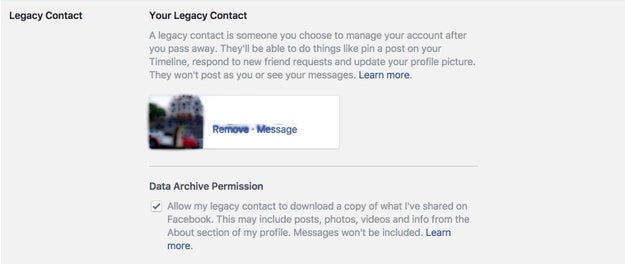
Choose someone to take over your Facebook account when you die, or delete the account entirely.

This anointed person is a “Legacy Contact.” You can only choose one (so choose wisely) and only someone who currently has a Facebook account (no social media resistors allowed). They’ll have power over your public digital legacy (hence the name): the ability to change your profile picture and cover photo, write a post on the timeline, and respond to new friend requests.

Plus, they can look at all of the photos/videos you’ve uploaded, wall posts, events you’ve attended, and friends/randos you’ve friended over the years. What they can’t see are your DMs. Family members with court orders, however, can request additional information from Facebook, but it’s not guaranteed that the company will grant it.

Access this setting by going to facebook.com/settings, clicking on the Security tab, and then going to where it says Legacy Contact. Here, you can also set up an annual reminder to review your legacy contact or request account deletion.

If you don’t set a trusted contact or elect to destroy your account, all of your shared content will remain on Facebook with no one to manage it.

For other social media accounts, it’s not as straightforward.

On Instagram, someone will need to report the death with proof, like a link to an obituary, news article, or death certificate. A memorialization freezes the account: Photos or videos already shared will remain visible, and nothing can be added or changed, though users can weirdly continue to send direct messages to the deceased. Immediate family members can also request a removal of an account from Instagram.

Twitter’s policy is similar to Instagram’s, and so is LinkedIn’s. The service will deactivate or remove an an account, but only if an immediate family member is requesting.

On Snapchat, there is zero guidance on what happens to your account when you die. You can give someone your Snapchat username and password, and instruct them to delete your account when you pass — but that’s putting a lot of trust in someone.

When all of this is done, you — and your trusted friends and family — will be in great shape.

It’s pretty grim, thinking about death. That’s why so many people avoid The Will, the paper that’s a physical reminder that you will one day perish. But if you don’t prepare for the inevitable, your loved ones will face a mountain of complicated paperwork and logistics right as they’re coping with your loss.

If you have plane tickets, for example, they’ll need to cancel them and try to get them refunded. Or if you have credit cards, they’ll need to freeze those accounts. They’ll need to file taxes on your behalf, too. Grieving, as it turns out, is a lot of work for those closest to you.

Pope of DoYourOwnWill put it this way: “Think of yourself as doing a favor for those you’re leaving behind.” So, take a deep breath, spend a day or two putting a plan in motion for the unthinkable, and go ENJOY your life without having to worry about what happens after it.

This week, we’re talking about preparing for and surviving the worst things imaginable. See more Disaster Week content here.
This week, we're talking about preparing for and surviving the worst things imaginable. See more Disaster Week content here.

Quelle: <a href="You’re Going To Die Someday. Who Do You Trust With All Your Passwords?“>BuzzFeed


Trump Plays With A Drone And Meets With Emerging Tech Leaders

Pool / Getty Images

President Donald Trump met with a disparate group of startup founders, venture capitalists and public company executives on Thursday in a gathering that was meant to showcase how his administration will promote emerging technologies and entrepreneurship. In the final event of the White House’s “tech week,” the president cradled a four-propeller flying robot, engaged in a demonstration on 5G internet, and discussed how the government can better regulate and encourage investments in drones, web-connected devices, and 5G internet.

Fresh from an invigorating 70-minute speech in Cedar Rapids, Iowa, the night before, the president promised that his administration would give the US-based entrepreneurs assembled in the East Room “the competitive advantage” that they needed.

There have been “too many years of excessive government regulation,” said Trump. “We have had some regulation that has been so bad, so out of line, that it has really hurt our country.”

While Trump met with the leaders of Apple, Amazon, and other tech behemoths on Monday to discuss topics such as immigration and modernizing government infrastructure, Thursday’s gathering — organized by the Office of Science and Technology Policy and the US deputy chief technology officer, Michael Kratsios — was intended to be more forward-looking. “[There will be] technological revolutions that could improve every aspect of our lives and create vast new wealth for american workers and families and open up new frontiers in science, medicine and communication,” Trump said.

The attendees of Thursday’s meeting had convened earlier in the day in three separate discussions — one on commercial drones, one on web-connected devices and 5G internet, and a third on financing emerging tech. After closed-door discussions, attendees met with the president for about an hour before he departed — to tweet that he didn’t tape former FBI director James Comey, and to watch over the unveiling of the much-anticipated Senate health care bill.

No drones were flown in the White House.

Participants from the drone industry included Airspace CEO Jaz Banga, PrecisionHawk’s Michael Chasen, AirMap CEO Ben Marcus, and Kespry CEO George Mathew, who showed off one of his company’s robots and an accompanying video to the president. No drones were flown in the White House.

A notable pair of absentees from the drone discussion were Amazon, and Google's parent company Alphabet — two firms that have spent heavily on drone delivery research and development. While both companies were invited, neither sent a representative to Thursday’s emerging tech summit, two people in position to know told BuzzFeed News. Amazon CEO Jeff Bezos and Alphabet Chairman Eric Schmidt did attend Monday’s American Technology Council meeting.

One person familiar with the companies’ thinking, but who declined to be named, said that with so many events in Washington some firms did not send people to Thursday’s OSTP meeting because it felt like “too many senior execs are being pulled away from their day jobs.”

Spokespeople for Amazon and Google did not return a request for comment.

While venture capital firms including Lightspeed Ventures and New Enterprise Associates attended today’s event at the White House, a number of other prominent names from Silicon Valley did not. Sequoia Capital, Accel, Kleiner Perkins and Y Combinator all skipped out on the event despite getting invites. Spokespeople for all four firms declined comment, though one person close to Accel noted that the firm had “scheduling conflicts” for the day. Kleiner sent chairman John Doerr to Monday’s meeting with Trump and other tech CEOs.

Getty Images

Also in attendance was 500 Startup’s chief operating officer Aman Verjee, who came to the White House despite his colleague’s vocal opposition to the Trump administration. 500 Startups founder Dave McClure, who went on a much-publicized, profanity-laced rant following Trump’s election, explained to BuzzFeed News that the company decided “it would be best to have someone in contact with the administration, even if we generally oppose most of their policies.”

500 Startups “talked it over a lot before we committed,” McClure said in a text message. ”Definitely some strong opinions.”

AT&T Randall Stephenson, who arrived late to the meeting, also gave Trump a demonstration on the advantage of 5G Internet using a small city model complete with lights. Joined by executives from other companies including T-Mobile, Sprint and Verizon, Stephenson preached the importance of government support for wireless infrastructure.

And despite heavily criticizing a proposed merger between AT&T and Time Warner just months ago, Trump commended Stephenson’s work, saying that “most companies would have disappeared” under the regulatory environment of his White House predecessor.

Trump also praised Jeff Immelt, who recently announced that he was stepping down as CEO of General Electric after 16 years.

“That’s a long time,” Trump said. “I’ve done deals with that company when you were there.”

Quelle: <a href="Trump Plays With A Drone And Meets With Emerging Tech Leaders“>BuzzFeed
Uber Employees Are Circulating A Petition To Reinstate Travis Kalanick

Uber employees are circulating a petition to reinstate Travis Kalanick as chief executive, two days after his resigned following months of scrutiny.

Managers are sending the petition to employees, according to sources at the company and a screenshot provided to BuzzFeed News. “Uber is TK and TK is Uber,” the note reads, referring to Kalanick's internal nickname.

“TK, no matter his flaws (everyone has them) was one of the best leaders I have seen,” the email continues.

The email also said employees should contact Uber board members Arianna Huffington and Garrett Camp, as well as former member Bill Gurley, to let them know they are unhappy that Kalanick resigned.

“A lot of people are extremely loyal to and in the cult of personality he had,” one engineer told BuzzFeed News.

Another employee told BuzzFeed News the petition was “ridiculous,” and that “TK knew there were cultural problems and ignored it.” Asked if this employee would sign the petition, the person said “hell no.”

Kalanick's resignation came one week after he said he would take a leave of absence and return as “Travis 2.0 to become the leader that this company needs and that you deserve.”

An Uber spokesman did not immediately return a request for comment.

Quelle: <a href="Uber Employees Are Circulating A Petition To Reinstate Travis Kalanick“>BuzzFeed

Profile Picture Robbery Is So Bad In India That Facebook Is Letting People Block Screenshots

That shiny blue shield isn’t going to stop creepy exes, though.

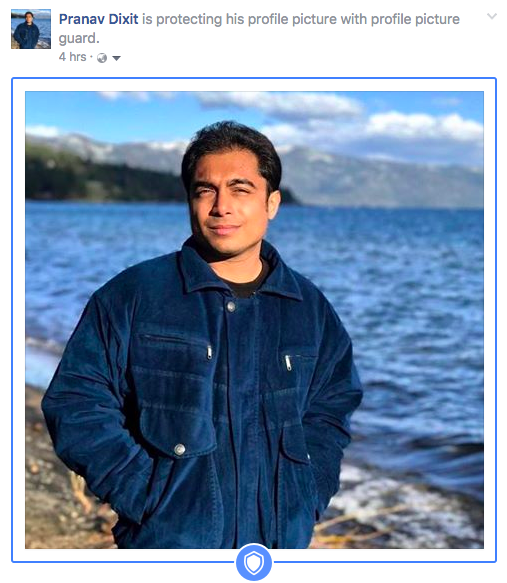
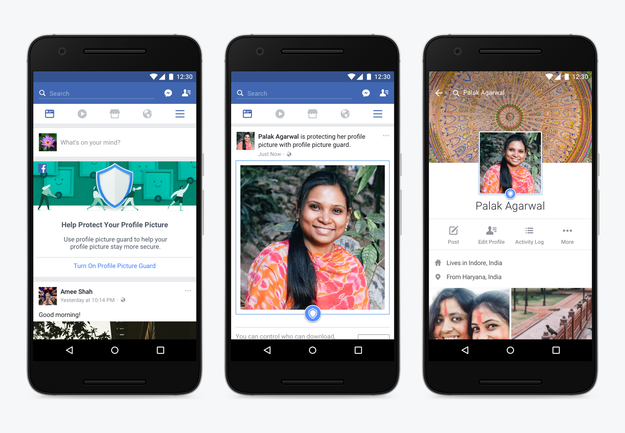
Facebook is rolling out a brand new feature called “profile picture guard” for users in India. Here’s what it looks like when you activate it.

Facebook is rolling out a brand new feature called “profile picture guard” for users in India. Here’s what it looks like when you activate it.

My Facebook profile

In a blog post published on Wednesday, Facebook said it came up with the feature after the company’s research found that some women in India didn’t share profile pictures with faces because they were concerned they might be misused.

In a blog post published on Wednesday, Facebook said it came up with the feature after the company’s research found that some women in India didn't share profile pictures with faces because they were concerned they might be misused.

Facebook

• Other people will no longer be able to download, share or send your profile picture in a message on Facebook
• People you’re not friends with on Facebook won’t be able to tag anyone, including themselves, in your profile picture
• Where possible, we’ll prevent others from taking a screenshot of your profile picture on Facebook, which is currently available only on Android devices
• We’ll display a blue border and shield around your profile picture as a visual cue of protection

The world's largest social network said it may expand the “profile picture guard” to other countries, depending on its experience with the feature in India.

This is what happens when someone with the latest version of the Facebook app on an Android phone tries to sneak-shot your profile picture if you have this feature enabled:

This is what happens when someone with the latest version of the Facebook app on an Android phone tries to sneak-shot your profile picture if you have this feature enabled:

~However~ we tested this with multiple Android phones and found that some people were able to take screenshots of profile pictures, blue shield be damned. A Facebook spokesperson told BuzzFeed News that this was because it was rolling out the feature in phases, and that it should work for everyone in India within a few weeks.

BuzzFeed News

View Entire List ›

Quelle: <a href="Profile Picture Robbery Is So Bad In India That Facebook Is Letting People Block Screenshots“>BuzzFeed

Companies Are Lending Cash To IVF Patients, But There’s No “Guarantee Or Your Money Back”

Kjekol / Getty Images

Susan, 33, and her husband of two years don’t feel ready to have kids quite yet, so she’s thinking about freezing her eggs. So far Susan, who declined to share her last name and who makes more than $100,000 a year at a San Francisco tech startup, has gotten medical advice and lab tests through a new startup, Future Family. If she decides to freeze her eggs — a procedure worth at least $16,000 by one estimate — Future Family would lend her the cash for that, too.

Future Family, which officially launches on Thursday, aims to make the complicated, expensive, and emotionally fraught world of fertility treatments “accessible and affordable,” in the words of CEO Claire Tomkins, a former SolarCity executive. “We think of it as modern insurance for a woman,” she told BuzzFeed News. Future Family is one of several companies capitalizing on the high cost of — and demand for — fertility treatment.

But these plans aren’t without risks. They require a significant financial commitment, potentially over several years. And while egg-freezing is often marketed as a way to stop the biological clock, the odds that IVF will actually work — and that the investment will pay off — are low.

Future Family’s nurses dispense concierge-style advice about tests and procedures by text, email, and phone, and schedule hormone tests to give patients a snapshot of their fertility status. And for those who can’t afford the five- or six-figure costs of egg-freezing and IVF, Future Family offers subscription plans in which it pays for those services upfront, and customers pay them back on a monthly basis.

Liz Weston, a columnist and certified financial planner at the personal finance site NerdWallet, said that Future Family’s financial plans could be a good deal, but that customers should pay attention to the fine print.

“Even though IVF is much, much better than it used to be, it could be this is all money down the drain.”

“This is expensive, it could go a long time, the failure rate is still high,” said Weston, who reviewed the standard customer contract at BuzzFeed News’ request. “Even though IVF is much, much better than it used to be, it could be this is all money down the drain.”
Because most insurance plans don’t cover these services, fertility patients tend to have high incomes to begin with. In one survey by FertilityIQ, an online advice resource for patients, 42% reported yearly earnings between $100,000 and $199,999. But not everyone has necessarily saved enough to comfortably afford IVF, which costs around $20,000 on average, according to FertilityIQ. In a 2015 Prosper-commissioned survey of 213 US women, 84% said they had financial concerns about their treatments, and nearly half said that those concerns affected how much treatment they pursued.

Many patients ask their parents for loans, or stick everything on a credit card. FertilityIQ cofounder Jake Anderson-Bialis routinely hears of patients taking on second jobs and mortgages, and selling their cars and houses to pay for treatment. Some go to the extreme measures of crowdfunding their treatments online, and illegally paying strangers for IVF medications that stimulate the ovaries into making eggs.

“People empty their bank account to do this,” Anderson-Bialis said. “People do not have this kind of money necessarily lying around. But those who do not have it, where do they turn?”

Future Family’s standard IVF plan, which covers one cycle, is $250 a month, with no down payment. Customers can sign up for a minimum of 5 years and a maximum of 10 years, making the total cost at least $15,000. That would be cheaper than the national average cost of $20,000. The top-tier plan, which covers one cycle as well as egg storage, costs as much as $33,000 ($275 a month for up to 10 years).

But research shows that only about 30% of patients succeed the first time around. So patients can take out a second or third subscription to cover multiple cycles, at an equal or potentially cheaper price, Tomkins said.
Meanwhile, Future Family’s top-tier egg-freezing plan costs as much as $21,000, at $175 a month for up to 10 years of storage. FertilityIQ’s Anderson-Bialis estimates that, nationwide, egg retrieval and freezing costs average $16,000, while storage costs about $3,700 a year for five years.

Midosemsem / Getty Images

If doctors determine that a procedure can’t be performed on a patient for medical reasons then they can cancel — for a $500 fee, plus the cost of “all expenses incurred by Future Family” up to that point, according to the contract. Otherwise, a customer is on the hook for all the payments, even if, for example, an IVF cycle succeeds one year into an eight-year plan.


Customers’ payments cover an “implied” interest rate of 7–12%, according to Future Family. Tomkins said the rates are “based on what we see in the market today.” NerdWallet analysts said they seem typical. To Anderson-Bialis, however, they aren’t “especially compelling.” Patients of his, who take out loans elsewhere, usually report interest rates of 5–10%, he said.

If a customer falls behind, they are charged a late fee that, for a standard IVF plan, would amount to an extra $30 per month. Upon examining this policy as described in Future Family’s contract, NerdWallet analysts found it “really confusing.” In response to BuzzFeed News’ questions, Tomkins said that the company was rewriting the clause to make it clearer.

There are other limitations too. Customers are required to choose a medical provider from a list provided by Future Family, or pay an unspecified fee to go elsewhere. As Weston put it, “Are you going to be able to use the doctors that you want to accomplish this?”

Tomkins says the company partners with dozens of clinics nationwide, mostly in New York, California, Washington state, Massachusetts, Illinois, and Utah. It does not make commission on patient referrals, but aims to steer patients to clinics known for delivering a good experience, she said. Future Family said it would only charge patients a fee in “the rare case” that a clinic charged more than what was covered by the plan, and that the amount of the fee “would depend on that specific clinic’s pricing.”

“People empty their bank account to do this.”

Tomkins, a former product marketing director at SolarCity, was inspired to cofound the company after her own grueling attempt to conceive, which involved six IVF cycles and several miscarriages. Today she has a 2-year-old daughter. Her cofounder, Eve Blossom, is an entrepreneur who founded the online fashion boutique We’ve, while their medical advisor is the director of fertility preservation and third-party reproduction at Stanford University’s medical school. A spokesperson said that Future Family has raised an undisclosed amount of venture capital.

Future Family isn’t the only company with fertility-specific financing programs: As these treatments become more mainstream, a growing number of financial programs have emerged to fund them. Clinics, such as IntegraMed Fertility, offer loans to pay for their services. Two years ago, Prosper, a peer-to-peer lending service, purchased, for $21 million, a lender with loans for fertility and other non-insurance-covered medical procedures. And in 2014, LendingClub spent $140 million on a similar acquisition. Its fertility loans range from $2,000 to $50,000, while Prosper’s go as high as $100,000.

Sameer Gulati, LendingClub’s chief operating officer, said the popularity of that business has grown. “The question of ‘Can I afford this?’ is an easier answer now because it’s more prominently available and the payment options are more flexible,” he said.

Susan, the 33-year-old who is one of Future Family’s first customers, isn’t yet at the point where she’s committed to freezing her eggs. But she’s found the advice from Future Family’s nurse to be helpful, and the blood tests she’s had suggest that she has at least a few more years in which to conceive.

Meanwhile, Susan and her husband are still grappling with how a family would change the lifestyle they’ve grown used to — one that allows them to travel whenever they want. “I think it’s more about emotional preparedness than anything, because obviously, once you have children, it’s a lifetime, it’s a change forever,” she said.

LINK: These Tech Companies Have The Most Generous Fertility Benefits, Poll Says

Quelle: <a href="Companies Are Lending Cash To IVF Patients, But There’s No “Guarantee Or Your Money Back”“>BuzzFeed

Uber CEO Travis Kalanick Just Resigned

Money Sharma / AFP / Getty Images

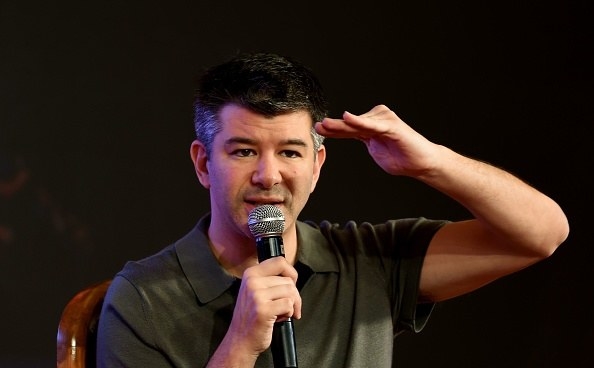
Uber's Travis Kalanick has resigned as chief executive, the company confirmed late Tuesday.

Kalanick has faced months of scrutiny following an employee's allegations of sexual harassment and discrimination that led to an internal investigation into workplace culture at the company, as well as the termination of 20 executives.

Last week, Kalanick, who recently suffered a personal tragedy when his mother died in a boating accident, announced he would be taking a leave of absence from his role as CEO of Uber.

But Tuesday, Kalanick said he would be resigning as CEO, heeding a letter from top investors demanding an immediate change in leadership, according to the New York Times.

In a statement, Uber's board said Kalanick would retain his seat. “This is a bold decision and a sign of his devotion and love for Uber,” the statement said. “By stepping away, he's taking the time to heal from his personal tragedy while giving the company room to fully embrace this new chapter in Uber's history. We look forward to continuing to serve with him on the board.”

The decision comes as Uber struggles to move past a series of damaging scandals and persistent questions about the company's leadership and workplace culture. Earlier this year, a former Uber engineer, Susan Fowler, published a viral blog post about her experience at the company, including details of sexual harassment and discrimination. Other employees echoed her concern, prompting both an internal investigation into Uber's company culture and an outside probe led former attorney general Eric Holder into how the startup could improve life for its employees.

But as of last week some employees who spoke with BuzzFeed News felt the focus on culture shift came too late, and they weren't optimistic about the potential for change at the company.

In an email sent to employees Tuesday night and obtained by BuzzFeed News, Kalanick wrote that he loves “Uber more than anything in the world.”

“At this difficult moment in my personal life, I have accepted a group of investors' request to step aside, so that Uber can go back to building rather than be distracted with another fight,” the email reads. “I will continue to serve on the board, and will be available in any and all ways to help Uber become everything we've dreamed it would be.”

In addition to internal issues, Uber has faced external charges this year. The startup is currently being sued by rival Waymo, a subsidiary of Google, for allegedly stealing its self-driving technology. Former Uber employee Anthony Levandowski, who previously worked on autonomous driving technology at Waymo, has hired both civil and criminal defense lawyers to defend against allegations that he wrongfully downloaded more than 14,000 documents from his former employer. Levandowski is not named as a defendant in the suit.

Meanwhile, Uber is also the subject of a federal probe over its use of software geofencing to avoid regulatory oversight, and recently agreed to pay back New York City drivers millions of dollars it owed due to a mistake it made in calculating state taxes.

This is a developing story. Check back for updates and follow BuzzFeed News on Twitter.‏

For Some Uber Employees, Focus On Cultural Shift Comes Too Late

An Uber Without A CEO Isn't Going Public Anytime Soon

An Early Investor Says Uber Has Uber Has An Opportunity To “Reset The Culture”

Uber Women To CEO Travis Kalanick: We Have A Systemic Problem

Quelle: <a href="Uber CEO Travis Kalanick Just Resigned“>BuzzFeed

Far-Right Activists Are Stealing Tricks From YouTubers And It's Going To Get People Hurt

Far-Right Activists Are Stealing Tricks From YouTubers And It's Going To Get People Hurt

Sian Butcher / BuzzFeed / Via Lauren Southern / YouTube

Last month, a Canadian woman started streaming live on Periscope from a tiny boat on the Mediterranean Sea off the coast of Italy. In a grainy, four-minute video, she tells her Twitter followers about her mission: She's joined by Italian, Austrian, and French right-wing supporters who want to disrupt a ship that rescues refugees stranded at sea.

“If the politicians won’t stop the boats, then we’ll stop the boats,” says Lauren Southern, a 22-year-old journalist turned activist, who has become popular among far-right online communities in recent months.

Southern’s livestream hit 1,000 active viewers as she and the European members of Generation Identity, a far-right youth group, approached a ship called the Aquarius, a 250-foot-long vessel operated by a charity called SOS Méditerranée and Médecins Sans Frontières (also known as Doctors Without Borders), which has been working to save refugees and migrants who make perilous journeys across the Mediterranean to Europe. Southern and her crew set off flares and unfurled a large red banner that read “NO WAY FOR HUMAN TRAFFICKING.” They were all detained by the Italian coastguard for civil disobedience.

“We’re able to come out and sit in front of them with our flag, with our flares, with everything,” Southern told BuzzFeed News in an interview in London. “We wanted that picture of defiance so that we could fundraise for bigger projects.”

The stunt worked. She made international headlines, which immediately put Generation Identity’s Defend Europe project on the map. As of June, the crowdfunded campaign to stop organizations like MSF, which they believe are “a part of the international human traffic ring and the migrant business,” has raised over $60,000. Southern said she wanted to act as a bridge between European far-right groups behind the project and the far-right communities in the United States that have been emboldened by Donald Trump’s presidential victory. By all accounts, Southern’s stunt was a success: thousands of views, thousands of tweets, dozens of 4chan threads, and coverage in the mainstream media.

Southern periscoping from the Mediterranean Sea last month.

Lauren Southern / Periscope

Southern is part of a sprawling new universe of far-right internet personalities who have aligned themselves with a “new right” or “alt-right” or “new far-right” political youth movement in the US. That group is now at the forefront of trying to make connections with other far-right factions abroad by taking their trolling offline and out into the real world.

“I don’t think the alt-right would call me alt-right. They call me alt-lite usually. I just consider myself a nationalist or a traditionalist,” she said. “Even though [Trump] has not worked out — he’s bombed Syria — he was still the chaos that we wanted to prove our power.”

Southern’s protest on the Mediterranean Sea is one of several recent far-right real-life stunts: In May, white nationalist and alt-right founder Richard Spencer led a protest against the removal of a Confederate monument in Charlottesville, Virginia; on Saturday night, Jack Posobiec, a far-right writer and internet personality, hijacked a New York production of Julius Caesar starring a Donald Trump stand-in.

“We have a movement going on here,” Southern said.

Southern moves around a lot. She was recently in France, then Italy and London, and is traveling next to California, where she will deliver a speech called “Return of Traditional Women” at California Polytechnic State University.

Nailing down exactly what it is that Southern does is also tricky. She uses the term journalist, but acknowledges she’s not a traditional one. “A Hunter S. Thompson kind of thing, you know?” she said during a recent interview.

In another life, Southern said, she’d be working as an intelligence officer in the Canadian military. After spending two years studying political science at the University of the Fraser Valley, she dropped out of school. But a chance meeting with Ezra Levant, the founder of Rebel Media, at a conference changed everything. Southern said he asked her to make a few YouTube videos for his startup and she quickly dived headfirst into video production full-time.

In a short time, Southern has become one of the most recognizable faces of the new American far-right’s Upside Down media. She’s got about the same Twitter following as Mike Cernovich. She’s good friends with Milo Yiannopoulos. She used to make videos for Rebel Media — Canada’s answer to Breitbart — that regularly pulled in millions of views on YouTube and Facebook. Three months ago, she quit her job and set up a Patreon account, and has since doing speaking engagements and raising donations.

She has around 300,000 followers on Twitter, 60,000 followers on Instagram, another 10,000 more just on her Periscope, a YouTube channel with 200,000 subscribers, and a public Facebook page with 95,000 likes. All of that is propped up by her Patreon page with around 600 patrons that asks for about $5,000 a month.

“We were pretending to be journalists from different organizations… they were so happy to give us all the information.”

Southern said she found her niche in 2015 while working for Rebel Media and making videos with Yiannopoulos. She gained a lot of attention for disrupting several SlutWalk protests, ridiculing attendees, and quickly publishing highlight reels to Rebel Media’s YouTube channel and Facebook page. Southern said the experience was revelatory. It was there that she figured out exactly how her social media accounts could come together around one event for maximum impact.

“It can be confused for activism — we're going up there and we're protesting what's happening, right? But we also learned a ton about how these feminist protesters react to people who disagree with them,” she said. “They attacked us, they ripped up our signs, they shoved us. We got it all on film, and we got to see what it's like, being in the protest and disagreeing with them.”

Since then, she’s adopted that playbook for her stunts on the road — show up with a camera, antagonize people, build it up on social media as a live event that her fans can follow at home, and then release a summary of the whole thing on YouTube the next day. Her videos are slick. The one about her time in Italy is titled “HAVE I LOST MY MIND?” and it opens with 20 seconds of her riding around a boat full of flares with dubstep playing in the background.

Southern describes her work as “gonzo” — in Italy, she said, she called up NGOs in the area and tricked them into giving her and the members of Generation Identity information about when MSF would carry out missions to pick up refugees.

“We were pretending to be journalists from different organizations just asking for information on these boats, and they were so happy to give us all the information,” she said. “At one point I accidentally said ‘migrants’ instead of ‘refugees,’ though, and I think they started to clue in.”

But a spokesperson for MSF told BuzzFeed News Southern’s description of events made no sense. “All of that information is publicly available on maritime sites,” the spokesperson said. “We have nothing else to say on the matter, as we do not wish to engage in a media war with far-right activists.”

A still from Southern's video about her MSF protest in Italy.

Lauren Southern / YouTube

The night Southern went live on Periscope, far-right social media lit up with chatter about what she was doing. This was easily her most ambitious stunt yet, but it wasn’t so different from her usual schtick. Instead of taking a sign that reads “‘Rape culture’ and Harry Potter… both fantasy” to a protest against sexual assault, she took a “no human trafficking” sign out on a boat and planted it directly in the path of the MSF ship.

Her antics have made her especially popular on 4chan’s politics community, /pol/. In the days leading up to, and after, her stunt in Italy, 4chan had so many simultaneous threads about her that users were complaining about it. At first, though, 4chan’s community was worried she wasn’t a true white nationalist. Then, as it became clear that she was serious, a few users attempted to get people to rally around Defend Europe’s crowdfunding. “Got dayum, I’m starting to love this Canadian blonde shitposting jewess,” one user wrote.

By the end of the whole stunt, the 4chan community — always suspicious of women attempting to court their favor — had completely bought into her project. “Help defend Europe and win a date with Lauren Southern,” one huge thread about her work with Generation Identity was titled.

“4chan is drawn to things where they're like, maybe we can troll this journalist out of writing this story, maybe we can actually find these boats and actually make a difference here, maybe we can actually find this flag,” Southern said. “Whether it be through simply trolling some journalist into oblivion until they delete their Twitter account or finding a ship.”

By “find this flag,” she is referencing the 4chan community’s months-long feud with Shia LaBeouf. LaBeouf first set up a 24-hour livestream in New York City to protest the inauguration of Donald Trump. The plan was have it going for all four years of Trump's term. But 4chan members ended up trashing LaBeouf’s art exhibit, harassing the actor and his supporters to the point where the original livestream was shut down. The exhibit, titled He Will Not Divide Us, moved three more times, but was disrupted by 4chan each time.

In the last six months, Southern has been seeking out things users on Reddit, 4chan, or Twitter can latch on to from the comfort of their computer screens. She’s been to the Deploraball in Washington, DC, in January, the Battle for Berkeley in April, the recent election protests in France in May, and most recently she had “piss or some sort of poison” thrown at her at an anti-sharia protest in New York.

Since the election of President Trump, a new community of influencers has emerged. However, people like Southern, Tim “Baked Alaska” Treadstone (a former BuzzFeed employee), Richard Spencer, Cassandra Fairbanks, and Mike Cernovich are now struggling with a cycle that has plagued new media personalities for nearly a decade now. They accumulate tremendous amounts of online power, go to war against the mainstream media they see as old and out of touch, then usually, as a community, implode with infighting as they struggle to figure out how to make an impact with their newfound fame.

Former Breitbart editor Milo Yiannopoulos had already been permanently banned from Twitter for harassing Ghostbusters star Leslie Jones, but was still writing for Breitbart and ended up securing a major book deal with Simon & Schuster. But after a clip surfaced of Yiannopoulos saying relationships “between younger boys and older men … can be hugely positive experiences,” he lost his job at Breitbart, as well as his book deal. Now he’s running a Facebook page where his videos struggle to crack a million views. Alex Jones, the infamous host of Infowars, turned out to be a ratings disaster for Megyn Kelly when she made the controversial decision to air an interview with him for NBC News on Father’s Day.

Southern and other new far-right influencers like her have been able to reach a huge number of young people in a fairly short time. But because of what they’re using social media to say, no platform will really let them make money off it. YouTube has demonetized Southern’s channel and she said it isn't running ads on her videos anymore.

“I spent a long time really not wanting to do Patreon and just wanting to do it on my own. And you know what, I would have done that, but YouTube also fucked us over with the advertising,” she said.

Since then, she has cobbled together other social media services like Facebook and Twitter, opened them up for donations, and turned the real world into her monetization platform. Every week, there’s a new He Will Not Divide Us-type event for her followers.

She also believes that by taking her work out into the world, she’s separating herself from people in the far-right who aren’t real activists.

“I know for a fact there are a lot of people that want to make money [with the far-right],” she said. “And they're happy to sit in their basement making videos all day or their studio making videos all day, just so that they can get as much money as they can from this right-wing outrage.”

“It's kind of like, you know in Kevin Spacey's House of Cards when he talks to the screen?”

Another Rebel Media alum who recently made headlines by taking his far-right trolling offline is Jack Posobiec. Posobiec and a Rebel Media journalist named Laura Loomer attended a controversial modern production of Shakespeare’s Julius Caesar featuring a Donald Trump lookalike in the title role. Loomer — with Periscope livestreaming from the phone in her hand — rushed the stage as Posobiec sat in the audience screaming “Goebbels would be proud.” Posobiec calls this type of stunt “breaking the fourth wall.”

“It's kind of like, you know in Kevin Spacey's House of Cards when he talks to the screen? Like, directly talks to the audience?” Posobiec told BuzzFeed News. “That's kind of how I view it, but in a social media mode.”

Posobiec left Rebel Media last month and has recently published a book. He has a Patreon account, but he hasn’t switched to Southern’s crowdfunded model. Loomer, Posobiec’s partner in the Julius Caesar stunt, is currently crowdfunding her legal defense fund against charges of trespassing and civil disobedience. Posobiec said that for him these instances of “breaking the fourth wall” are about pushing his message.

“I could have jumped up at a movie theater or any random — take your pick of place here in New York. It wouldn't have had the same effect because it wouldn't have had the context of the Shakespeare play, the ‘Trump assassination play’ moniker,” he said. “And so it's that context that's key to all of these things. It's about pushing back on that other message they've got there. They've got their narrative, we've got our counter-narrative, essentially.”

A still from a Twitter video Posobiec shot from the audience of a New York-based Shakespeare in the Park production of Julius Caesar.

Jack Posobiec / Twitter

Quelle: <a href="Far-Right Activists Are Stealing Tricks From YouTubers And It's Going To Get People Hurt“>BuzzFeed

Uber Knew That The Engineer At The Heart Of The Self-Driving Lawsuit Had Downloaded Google Information As Early As Last Year

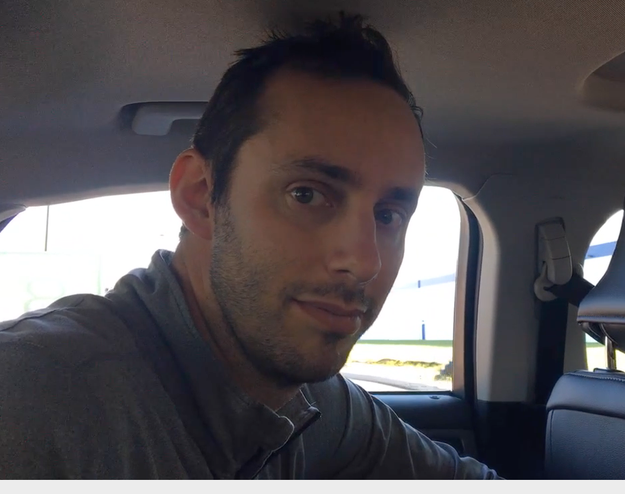
Anthony Levandowski

BuzzFeed News

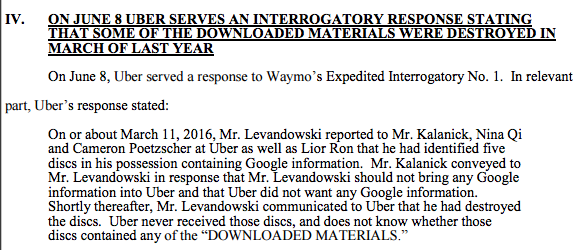
Uber knew as early as March 2016 that the former head of its self-driving program had downloaded information before leaving Google's autonomous vehicle unit, according to a court filing made public Wednesday.

However, the ride-hail giant — which is facing a bitter trade secrets lawsuit over allegations its ex-employee's actions — told the engineer not to bring Google information to Uber.

Google's autonomous vehicle unit was spun off into a new company called Waymo, under its parent company Alphabet, in December.

Waymo sued Uber in February, alleging that its former employee Anthony Levandowski stole self-driving car trade secrets and brought them to Uber. Court documents now show Levandowski told Uber employees – including former chief executive Travis Kalanick, who resigned earlier this week – that he had five discs containing Google information. But Kalanick told him that Uber didn't want the Google information, and advised against bringing the discs to Uber, according to court documents.

A magistrate judge also ruled Wednesday that Uber must provide the court with documents related to its acquisition of Otto, Levandowski's self-driving truck start-up. Uber acquired the company in the summer of 2016. The company was incorporated before Levandowski left Google in January of that year for the new venture. In court, Waymo alleged was a ruse designed so Uber could take Waymo's proprietary information.

Uber fired Levandowski in May. Levandowski has pleaded the Fifth Amendment and for months refused to comply with Uber's investigation into Waymo's claims, should the case become a criminal matter. His termination came after Uber first demoted Levandowski on April 27, citing the need to remove him from leadership over work involving LiDAR – the technology at hand in the lawsuit – pending a trial.

Uber has for months argued that its self-driving car technology is “fundamentally different” from Waymo’s, and that it does not possess the company's files. But its lawyers have also said that they “don’t have any basis for disputing” whether or not Levandowski stole the secrets at issue in the case. The magistrate judge ruled earlier this month that Uber must hand over a due diligence report related to Levandowski's startup Otto, which Uber acquired. But Uber disputed that decision. The judge ordered on Wednesday night that the company must produce the documents, which could offer further details as to how much Uber knew about Levandowski's alleged actions.

The revelation that Uber executives knew as early as March 2016 that Levandowski possessed Google information – despite leaving Google on January 27, 2016 – comes as part of a Waymo request for the court to hold Uber in contempt. On May 15, US District Judge William Alsup ordered Uber to return any driverless car documents its employees allegedly stolen from Google's Waymo by May 31.

That deadline quietly came and passed as Uber faced numerous other scandals, including the release of a blistering report into its workplace culture. So Waymo has asked the court to determine whether Uber should be held in contempt of that order because “the compliance deadline came and went without the return of a single one of the misappropriated files.”

Quelle: <a href="Uber Knew That The Engineer At The Heart Of The Self-Driving Lawsuit Had Downloaded Google Information As Early As Last Year“>BuzzFeed

We Get It Facebook, You Want Us To Post More

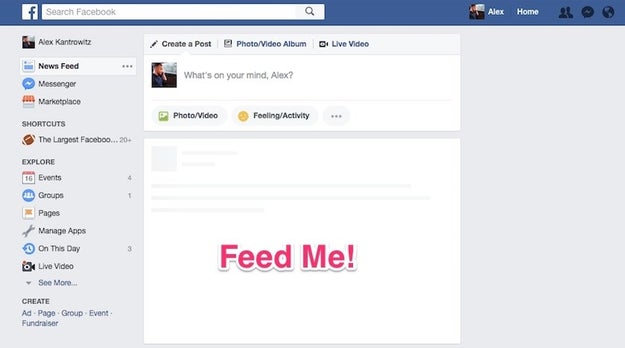
This is Facebook.

It only works if you share stuff inside it.

No sharing, no Facebook

Yes sharing, happy Facebook

So Facebook really wants us post stuff.

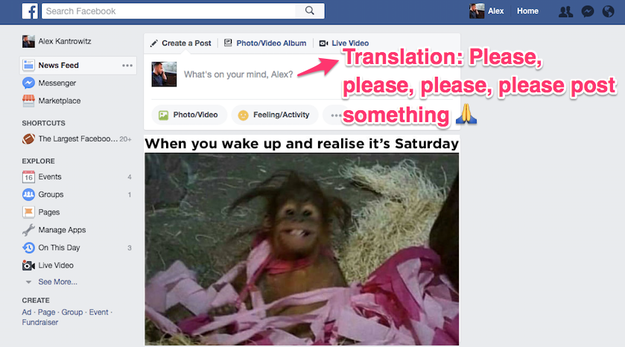
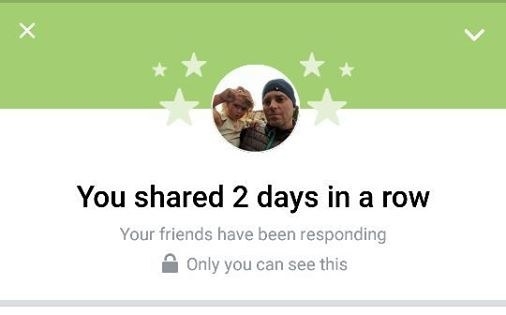
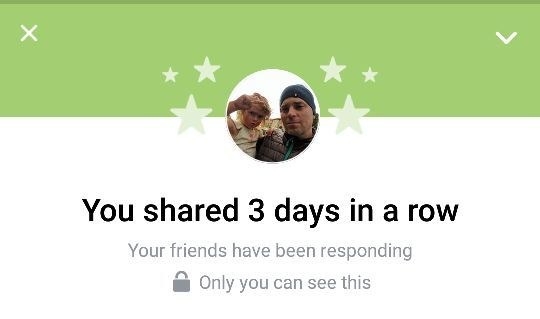
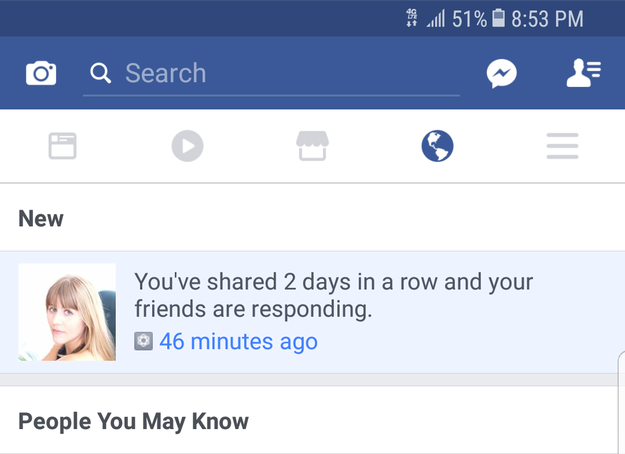
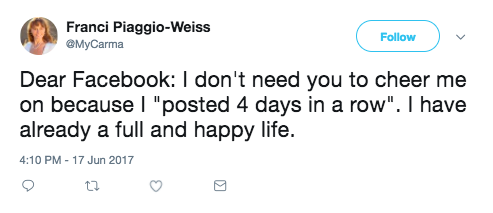
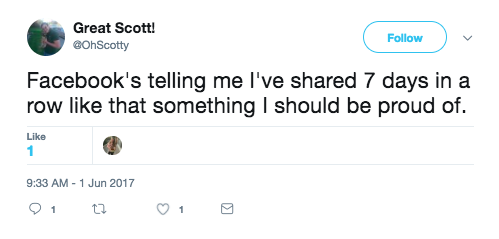
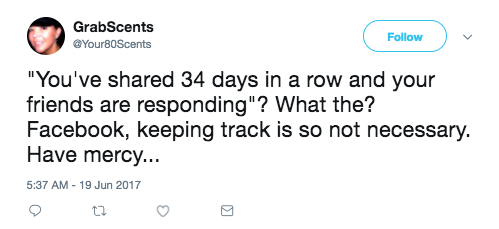
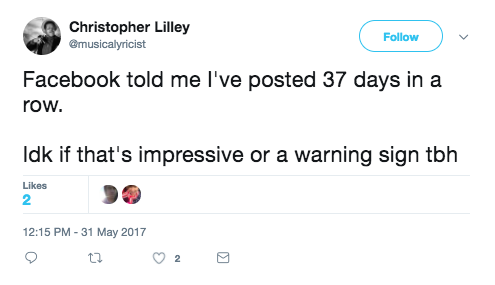
And it started doing this new thing where it tells you how many days in a row you've shared.

To encourage you to feed its feed

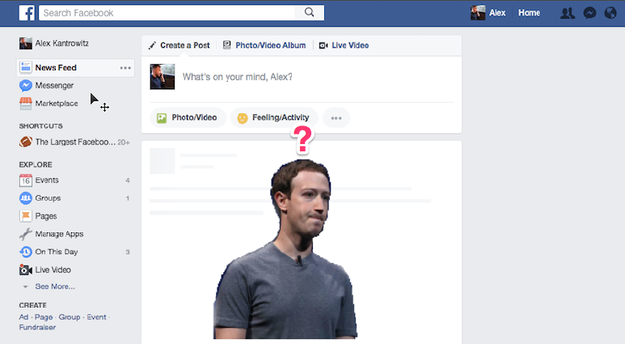
Okay, Facebook. We get it.

Okay, Facebook. We get it.

Thanks for the reminder, I guess?

Lord. Have. Mercy.

People are certainly, uhhh, responding.

Facebook is also letting our friends know when we post — probably so they engage and make us feel better about posting, so we post more.

Yeeeesh

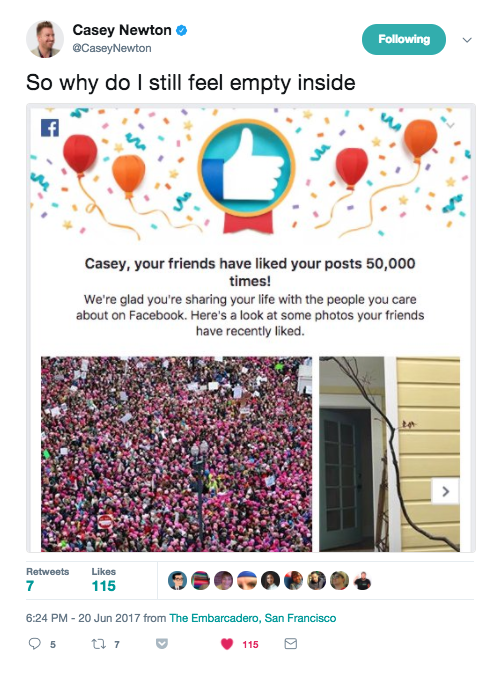
Other Facebook products, like Messenger, use a similar approach.

Feels good, doesn't it?

“We’re always looking for ways to help people share and connect on Facebook. Notifications are one of the ways we do this,” a Facebook spokesperson told BuzzFeed News.

Giphy / Via giphy.com

Quelle: <a href="We Get It Facebook, You Want Us To Post More“>BuzzFeed

Andreessen Horowitz Is Digging Deeper Into Biotech

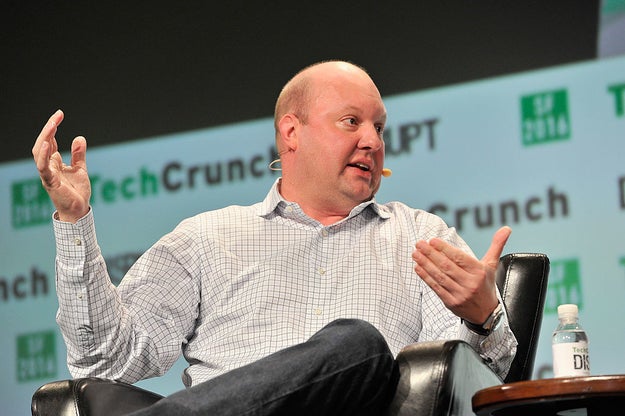
Marc Andreessen

Steve Jennings / Getty Images for TechCrunch

In late 2015, Andreessen Horowitz announced that it would put $200 million into startups that blended computer science with biology. Now, the Silicon Valley venture capital firm is adding another investor to help it dig deeper into the growing field.

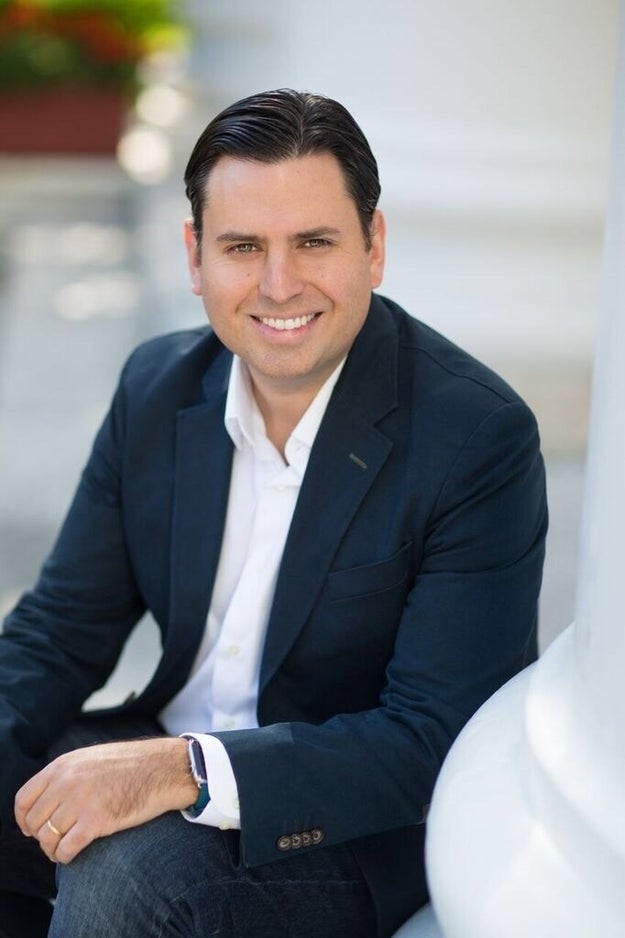
Jorge Conde, former chief strategy officer at Syros Pharmaceuticals, will join in September as a general partner to make investments through the Bio Fund, the firm announced Wednesday. He joins Vijay Pande, the general partner who, since launching the fund, has backed companies in cancer diagnostics, drug discovery, food waste, and health data analytics.

Jorge Conde

Courtesy / Andreessen Horowitz

Whereas Pande was a chemical biologist at Stanford University, Conde’s specialty is in the business of biotechnology, specifically genetics. Before joining Syros, a Boston biotech firm that’s developing drugs that target the genome, Conde cofounded Knome. The human genome interpretation company was acquired in 2015.

“One of the things that’s become clear is that this century is very much the biology century,” Conde told BuzzFeed News, citing the potential of the gene-editing technology CRISPR. Another area of interest: synthetic biology, a broad term for the emerging field of constructing new genes and organisms from scratch.

“My view of the world is that because we are in this sort of area of emerging biology as a technology in and of itself,” he said. “I think there’s going to be a wide range of opportunities that are very exciting for us to pursue.”

Pande said he’d started looking around for a new partner about a year ago. He and Conde said they have invested in two yet-to-be-named companies.

Since the Bio Fund was announced, it’s made a couple seed investments, like in the health data analytics startup Cardiogram and the drug discovery startup TwoXar, as well as bigger investments in Freenome, which is working on a blood-based early cancer detection test, and Apeel Sciences, whose proprietary coating is designed to extend the shelf life of produce.

Andreessen (which also invests in BuzzFeed) is among a growing number of venture capital firms that are betting on health tech — a category that includes fitness-tracking wearables, technology that makes health care services more efficient, and FDA-compliant drugs and diagnostics.

Quelle: <a href="Andreessen Horowitz Is Digging Deeper Into Biotech“>BuzzFeed