Companies In Europe Are Being Hit By A Massive Ransomware Attack

Businesses in several European countries reported falling victim to a massive ransomware attack on Tuesday.

A screenshot posted by digital security firm Symantec showed a screen with red text reading, “If you see this text, then your files are no longer accessible, because they have been encrypted,” and demanding 300 Bitcoin (roughly $700,000) in ransom.

A spokesperson for the security firm told BuzzFeed News the ransomware, known as Petya, is associated with a Bitcoin account which has so far received nine payments. The Symantec spokesperson said that the ransomware functions using the same vulnerabilities as a virus which struck worldwide in May.

Companies in the UK, France, Denmark, and Ukraine reported on Twitter that they had been targeted in Tuesday's attack. The Ukrainian energy national energy distributor and an airport in Kiev were among those affected.

The attacks come in the wake of May's major ransomware attack, WannaCry, which particularly affected the British National Health Service.

WannaCry infected more than 100,000 organizations in at least 150 countries, according to cybersecurity companies who are observing its spread across the globe.

This is a developing story. Check back for updates and follow BuzzFeed News on Twitter.

LINK: If You Have Windows, Update It Right Now To Keep This Massive Hack Out

LINK: Did The NHS Leave Hospitals Vulnerable To A Massive Ransomware Attack?

LINK: The NHS Is Starting To Recover From The Huge Ransomware Attack

Quelle: <a href="Companies In Europe Are Being Hit By A Massive Ransomware Attack“>BuzzFeed

The EU Just Fined Google $2.7 Billion For Giving A Leg-Up To Its Own Shopping Service

Sean Gallup / Getty Images

The European Union fined Google $2.7 billion on Wednesday for giving a leg-up to to its own shopping comparison service at the top of search results. The fine is the largest penalty given against any company in the world to date.

The EU says that Google displayed search results from its own comparison shopping service called Google Shopping at the top, while systematically demoting results from rival comparison shopping services. Google now has 90 days to stop the practice or face penalty payments of up to 5% of the average daily worldwide turnover of its parent company, Alphabet, which was nearly $90 billion in 2016.

“Google has come up with many innovative products and services that have made a difference to our lives,” said EU commissioner in charge of competition policy Margrethe Vestager in an EU press release. “That's a good thing. But Google's strategy for its comparison shopping service wasn't just about attracting customers by making its product better than those of its rivals. Instead, Google abused its market dominance as a search engine by promoting its own comparison shopping service in its search results, and demoting those of competitors.”

BuzzFeed News has reached out to Google for comment.

This is a developing story. Check back for updates and follow BuzzFeed News on Twitter.

Quelle: <a href="The EU Just Fined Google .7 Billion For Giving A Leg-Up To Its Own Shopping Service“>BuzzFeed

Uber Exec Accused Of Ignoring Complaints: "I Take All Concerns Raised To Me Extremely Seriously"

Justin Sullivan / Getty Images

Uber's chief technology officer, whom an ex-employee publicly accused of ignoring her complaints, told his team on Sunday night in an email obtained by BuzzFeed News, “I take all concerns raised to me extremely seriously.”

After ex-Uber engineer Susan Fowler published a blog post in February alleging a culture of systemic sexual harassment and discrimination at Uber, the company launched two internal investigations. One, led by former attorney general Eric Holder, investigated the company's workplace environment, and the other was focused on Fowler's claims and led by the law firm Perkins Coie. Though Fowler does not name Uber CTO Thuan Pham directly in her blog, she wrote that she reported her concerns to Uber's CTO but that he didn't act on her complaints.

“Less than a week after this absurd meeting, my manager scheduled a 1:1 with me, and told me we needed to have a difficult conversation. He told me I was on very thin ice for reporting his manager to HR. California is an at-will employment state, he said, which means we can fire you if you ever do this again. I told him that was illegal, and he replied that he had been a manager for a long time, he knew what was illegal, and threatening to fire me for reporting things to HR was not illegal. I reported his threat immediately after the meeting to both HR and to the CTO: they both admitted that this was illegal, but none of them did anything. (I was told much later that they didn't do anything because the manager who threatened me “was a high performer”).” — Susan Fowler

Some Uber employees have wondered how Pham was able to emerge unscathed after the Holder investigation, despite Fowler pinpointing him in her blog post. The Information reported on Friday that the investigation into Fowler's claims “turned up evidence that helped Mr. Pham keep his job.” Fowler declined to comment to BuzzFeed News.

As part of the fallout from the internal investigations, Uber's board said it voted unanimously to adopt all recommendations from Holder's report. Uber said earlier this month that it had fired 20 people for issues ranging from discrimination and harassment to bullying. The company said it intends to rewrite its cultural values and implement dozens of changes recommended by Holder's law firm as it seeks to improve its culture. Amidst the fallout from the investigations, Uber CEO Travis Kalanick resigned last week; the ride-hail giant's board is now searching for a new top executive.

Uber declined to comment on Pham's email.

Here's the email Pham sent to engineering staff:

Subject: Moving forward together

Hi everyone,

The last few months have been difficult for everyone at Uber. We've all faced questions from friends and family about our values, our team, and our work environment.

While we need to be respectful about discussing matters that affect people's privacy and not impact the confidentiality of our HR complaint process, I want to explain how I personally have been involved in the investigations.

Perkins Coie spent nearly four months deeply investigating claims. Like some of you, I was interviewed and provided many documents and emails to Perkins. I firmly believe and applaud Bobbie Wilson, the partner at Perkins Coie, when she stood in front of the entire company declaring that the investigation simply followed all the facts, and spared no one from the accountability of wrongdoing.

I hope you are reassured by what Ms. Wilson said on stage, and believe in the integrity of the investigation and its outcome.

I hope that you are also reassured when Liane followed by saying that Uber acted on all of Perkins' recommendations, quickly and definitively.

I take all concerns raised to me extremely seriously, no matter someone's tenure, level or performance. Without fail–and as we should all do–I have referred and will continue to refer all allegations of wrongdoing to the HR team for investigation, and to take disciplinary actions as appropriate.

If you have any questions or concerns, please let me know and I'll be happy to meet and talk about it. My door is always open.

As we move forward, we will not forget the experiences of the last difficult months. I pledge my continuing and uncompromising commitment to you individually and to us as a team. My experience teaches me that when we build software, it lasts but only for a few years. When we build an individual's talents we create something that can last a lifetime and can change the world. Let's do this together.

Thank you.

/Thuan

Quelle: <a href="Uber Exec Accused Of Ignoring Complaints: "I Take All Concerns Raised To Me Extremely Seriously"“>BuzzFeed

Apple's iOS 11 Public Beta Is Out Now

View Video ›

Facebook: video.php

The public beta of iOS 11 — the software that powers Apple's iPhone and iPad — went live today, ahead of a wide release this fall. It's full of new features, including a new GIF-esque Loop mode in pictures, person-to-person Apple Pay within iMessage, a new male voice for Siri, photos that take up less space on your device, a redesigned Control Center, and a Do Not Disturb While Driving mode.

The biggest changes, though, are coming to the iPad. A new Files app that organizes local and cloud files, drag-and-drop capabilities, a new built-in document scanner, and the ability to instantly create a note from the lock screen are just some of the bevy of tablet-centric improvements on their way.

We got our hands on the public beta, and here are some of our favorite updates in action.

Note: You can sign up to participate in Apple's iOS 11 public beta here. But before you do, be sure to back up your device.* Public betas are intended for early adopters and can sometimes be a little rough around the edges.

*Plug the iPhone into your computer and open iTunes. Under Backups, select This computer, then click Back Up Now. Or, you can go into Settings > Apple ID > iCloud > turn iCloud Backup to on.

Quelle: <a href="Apple's iOS 11 Public Beta Is Out Now“>BuzzFeed

Can Uber Convince Silicon Valley's Best To Be Its CEO?

Travis Kalanick

Getty Images

As Uber looks for a new leader, the presence of former CEO Travis Kalanick on its board could prove to be one of its biggest challenges.

The ride-hail giant’s board began searching for a new chief executive after Kalanick resigned last week. Candidates for the top post are likely to ask Uber for a fuller version of former attorney general Eric Holder’s internal investigation into the company’s culture and full transparency around its litany of legal battles, including a federal investigation into a software tool that was used to evade authorities in places where the company's service was restricted, the handling of a rape victim in India’s medical records, and a trade-secrets lawsuit with a major self-driving car rival. And the board will also have to explain how much latitude a new CEO would get, given that Kalanick will remain on the board, and is part of the search committee.

“Great candidates will be attracted to this position, even if there are some challenges. The biggest would be what role Travis is going to play going forward,” said David Finke, co-leader of the global technology practice at the executive search firm Russell Reynolds Associates. “Having a visionary and hard-charging founder on the board is always hard, but having one that was just ousted from the CEO role can make for a very difficult situation.”

“Really what you're trying to figure out is how helpful or disruptive is this former founder/CEO going to be.”

“It's really important to see, to what degree or not, would you have alignment with Travis's view of where the company is going, strategy elements, highest priorities around where the company is spending its time, energy and money,” one prominent startup CEO told BuzzFeed. “Really what you're trying to figure out is how helpful or disruptive is this former founder/CEO going to be in my efforts to get the company to a better place.”

Some employees are already campaigning for Kalanick’s return. Finke said that outcry could make a CEO candidate “question whether it’s possible to end the drama and galvanize and focus the organization on the way forward.”

“If Travis remains involved in the company on a regular basis and maintains a controlling share of the company and an active board seat, it’s unlikely they’re going to be able to bring in the CEO who can make the kind of changes one would want to see here,” said Mercedes Chatfield-Taylor, a managing partner at the executive search firm Caldwell Partners.

While Uber searches for a new chief executive, the company is being run by a 14-person committee of top executives. Before Kalanick resigned, several investors raised concerns as to whether Uber could move past its scandals with Kalanick at the helm of the company, according to Bloomberg.

The ride-hail giant’s board described Kalanick’s decision to step away as “taking the time to heal from his personal tragedy while giving the company room to fully embrace this new chapter in Uber's history.” It’s unclear what that new chapter will look like without Kalanick, who shaped the company into a global juggernaut with a nearly $70 billion valuation, and the departures of more than a dozen other key executives earlier this year.

The company’s next CEO — and other top leaders who arrive to fill Uber’s various leadership holes — will face many challenges. For one, Uber has spent the majority of 2017 accruing an endless stream of bad headlines. On top of the internal investigation into allegations of systemic sexism at Uber, its self-driving program is facing a bitter trade secrets lawsuit from Waymo, the autonomous vehicle unit of Google’s parent company Alphabet.

“You'd certainly want to see Eric Holder's full report.”

“There’s risk here,” said Micah Alpern, a principal at the management consulting firm AT Kearney, citing the Waymo lawsuit and Uber’s cultural challenges. “[As a CEO candidate], I'd want to know where we stand on this lawsuit. Are these things that we were in the wrong about that we’re going to have to settle on? Is the organization really willing to change? Do I have the full support of the board to change how the organization works going forward?”

Crucial to determining what sort of changes need to be made to Uber would be a review of all the material gathered by former attorney general Eric Holder during his inquiry into the company’s workplace culture. Uber’s board received a more detailed version of the report than what was made public, with Bloomberg reporting that some members worried that “Kalanick’s role in some of those incidents would continue to inflict damage on Uber.”

“You'd certainly want to see Eric Holder's full report,” the startup CEO told BuzzFeed.

While Rachel Holt, the head of Uber’s US and Canada business (and one of the executives running the company during this leadership void) said in a damage-control press call in March that Uber has “grown faster in the first 10 weeks of 2017 than the first 10 weeks of 2016,” third-party data show that Uber has lost some business to Lyft this year. According to the consumer spending analytics company TXN, about 88% of market spending on the ride-hail services went to Uber in the week of Jan. 4, 2017, compared to Lyft’s 13%. By the week of June 12, Uber’s share dropped to 78%, and Lyft’s increased to 22%. The company’s next CEO will be responsible for restoring the company’s public image.

Question is, who's willing to take on such a burden? Speculative lists of possible CEO contenders currently include the likes of former eBay CEO John Donahoe, YouTube CEO Susan Wojcicki, former Twitter COO Adam Bain, Thomas Staggs — the former chief operating officer of Disney — and David Cush, former CEO of Virgin America.

“Any finalist candidate worth one’s salt will sign an NDA and expect full and transparent disclosure of all issues — good, bad and ugly,” said Finke, the Russell Reynolds Associates headhunter. “No one should be expected to accept a role like this without having a good look at all the skeletons in the closet.”

William Alden contributed reporting for this story.

Quelle: <a href="Can Uber Convince Silicon Valley's Best To Be Its CEO?“>BuzzFeed

Here's How To Get Magic Harry Potter Effects On Your News Feed

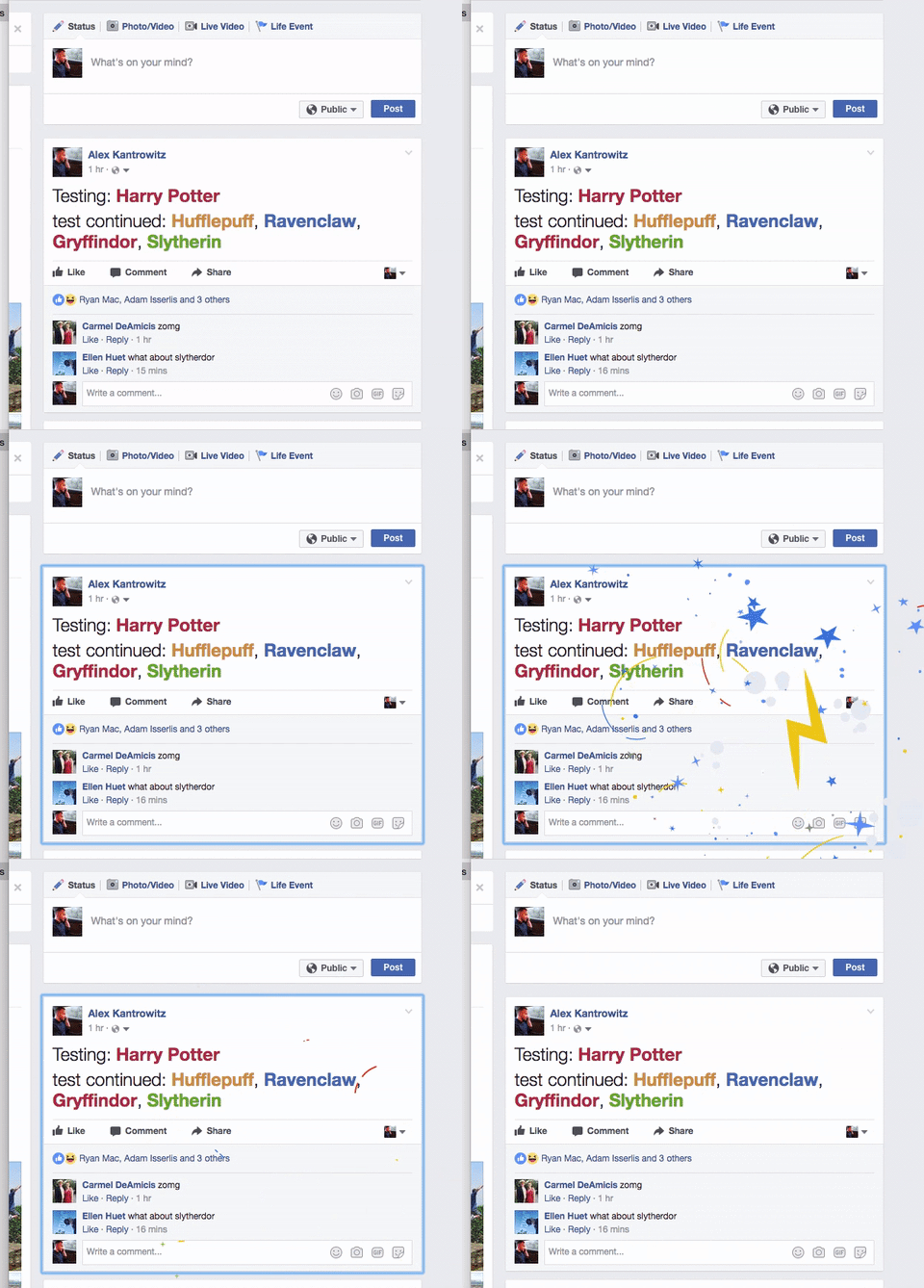
If you type “Harry Potter” on Facebook today, you're in for a surprise.

It works if you write “Harry Potter” on your timeline, or if you write it in a comment, and it's like magic — wand, lighting bolts, the whole deal.

popkey.co / Via giphy.com

The special effects also work when you post the names of Hogwarts houses on Facebook.

The Harry Potter series turns 20 this month, which appears to be why Facebook is rolling out the fun.

giphy.com

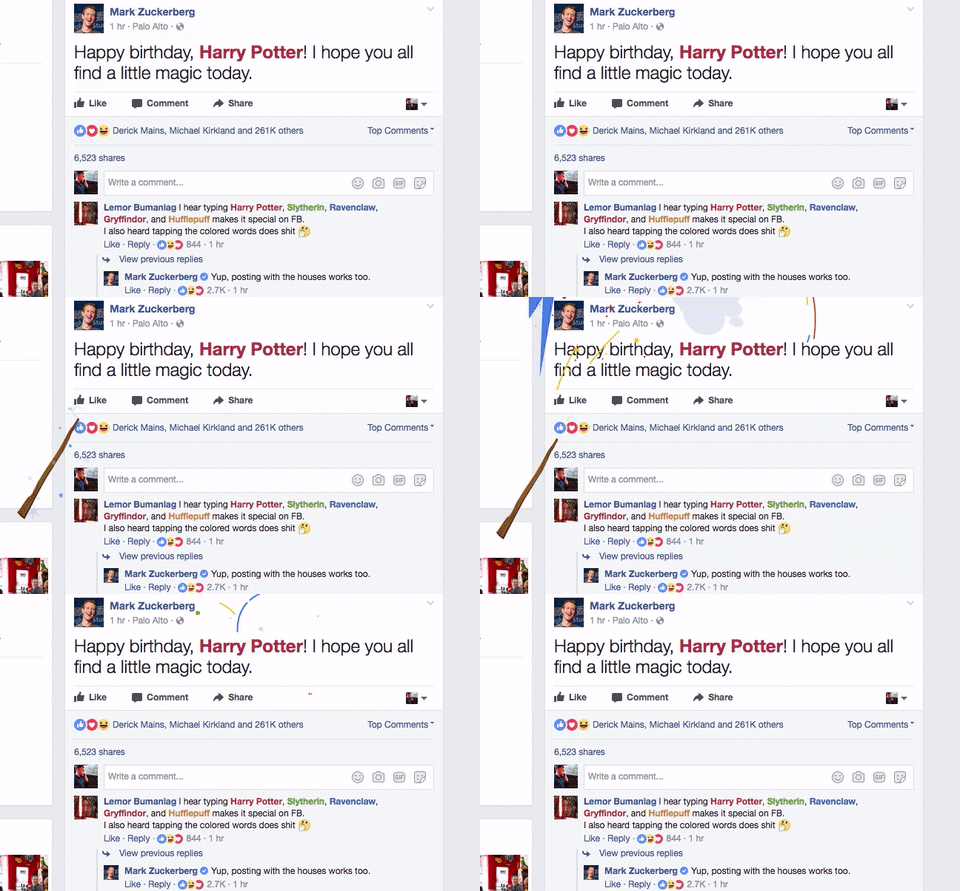
Even Mark Zuckerberg got in on the celebration.

View Video ›

Facebook: zuck

Zucky Potter is a pretty good nickname, amirite?

Alex Kantrowitz/ Facebook

Happy 20th birthday, Harry Potter. One year until we can hang out in a bar together.

giphy.com

Quelle: <a href="Here's How To Get Magic Harry Potter Effects On Your News Feed“>BuzzFeed

Amazon’s New Echo Show Is Very Cool And A Little Creepy

Amazon’s New Echo Show Is Very Cool And A Little Creepy

Amazon

I plod into the kitchen on a Sunday morning and tell the new Alexa to turn on CNN. Its screen lights up, and it shows a video about Russia as I microwave bacon and worry if there will be a nuclear war.

The Echo Show is Amazon’s new $230 device with a built-in camera and touchscreen, powered by the AI-assistant, Alexa. In the top right-hand corner of its little 7-inch screen, I see a person-shaped icon. I tap it and the display changes; now it's telling me which of my contacts have been recently active. I wonder if it is also telling them that I am active now too.

This thing, Alexa, that's been living with me, listening to me, is now looking at me as well. It can see that I'm awake and about now, talking to it. If the original Echo, and Echo Dot, were all about device interactions, this new Echo Show seems to be largely designed to help you interact with other people. Once you connect it to your phone’s address book, it looks up which of your contacts also have Echo Show devices, so you can place video calls. (It already does this for voice calls with the Echo.) And to facilitate these conversations, it has a “Recently Active” feature that tells you who from your Drop In contacts (see below) has been up and about, and interacting with their Echo Show. So, conceivably, it could have told other people that I'm active, but at this point I only have one Drop In contact with an Echo Show. And because she works for Amazon PR, and we only talked to test the device, it would kind of weird for her to call me first thing in the morning, on a Sunday.

I dismiss the thought. The Echo Show makes me dismiss a lot of thoughts.

It has this wild new feature called Drop In. Drop In lets you give people permission to automatically connect with your device. Here’s how it works. Let’s say my father has activated Drop In for me on his Echo Show. All I have to do is say, “Alexa, drop in on Dad.” It then turns on the microphone and camera on my father’s device and starts broadcasting that to me. For the several seconds of the call, my father’s video screen would appear fogged over. But then there he’ll be. And to be clear: This happens even if he doesn’t answer. Unless he declines the call, audibly or by tapping on the screen, it goes through. It just starts. Hello, you look nice today.

Honestly, I haven’t figured out what to think about this yet. But, it’s here.

I love making calls with Alexa. Video calling, both Drop Ins and garden-variety video chats where one party initiates a call and the other accepts it, are the Echo Show’s killer feature for now. Because I only have one other contact with an Echo Show (again, the nice woman who works for Amazon), I only made a handful of video calls. But they are all amazing. (Eventually, these video calls will also work with the Alexa smartphone app, in addition to the Echo Show.)

Long ago, when we imagined the future, we often imagined video calls. And although they’ve been around forever, doing one from a mobile phone, or a desktop computer, never felt quite as futuristic as this pulsing thing in my kitchen that’s always watching me, and always listening, ready to do what I tell it.

It’s Facetime without the phonebook. You can use it without tapping any icons. Without pulling a device out of your pocket. Without having to hold it in your hands, or prop it up. I command it to make calls for me, and it does.

And during calls, the sound booms out of it. If you’re used to placing video calls on a phone, or a tablet, this is an entirely other experience. The other person’s presence fills the room. (Or at least their voice does; the screen is tiny.)

I don’t like the way Alexa makes me look. If you place it on a countertop, or table, or desk, it peers up at you from below. It’s not a flattering angle. It makes me think about my neck and chin. It makes me wish I was thinner.

But mostly, it is easy and delightful. This is why we let these things into our homes. They make little tasks — turning on the lights, placing a call, playing music — easier than to do than they are on a phone. My three year-old can reliably use it to place calls to her grandparents on their Echo.

Brave new world.

Okay, so, shopping is pretty great on the Echo Show. It’s nice to be able to see the thing you are about to buy. I buy a lot of stuff.
Mat Honan

There’s this great karaoke-like thing the Echo Show can do. Play a song, and it shows the lyrics, verse by verse. It doesn’t do it for every song, but it seems to do it for most.

Sometimes I wonder if anyone at Amazon has figured out that children exist, often in the same household as their parents. My six year-old wanders into the kitchen and asks Alexa to play California Girls. Instead, it plays California Gurls.

Sex on the beach
We don't mind sand in our stilettos
We freak
In my jeep

“Alexa, stop!” Jesus, Alexa.

It’s long bothered me that there’s no way to ban Alexa from playing songs with explicit lyrics. (It will restrict content from YouTube.) The screen makes it worse, especially for eager young readers.

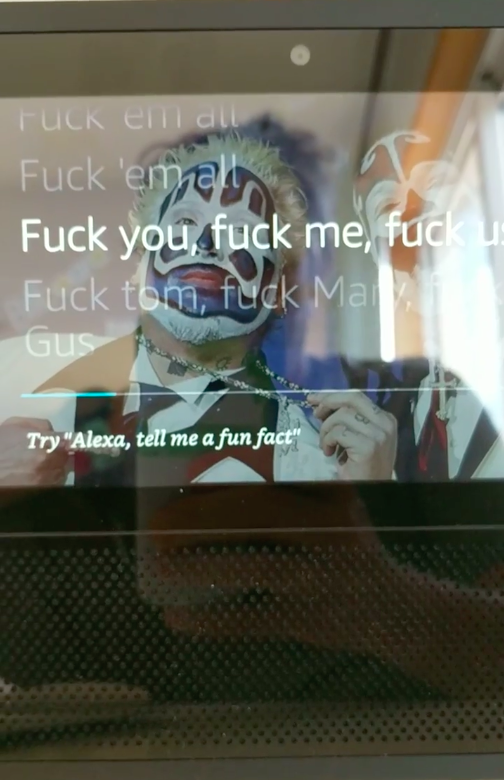
I ask Alexa to play Insane Clown Posse, just to see. It turns out, it may play fuck, but it spells it f**k. That aversion to spelling out profanity was something that changed during the time I have been testing the device. Originally, it spelled every f-bomb that came up.

It makes me think Alexa is learning.

Sometimes, I vaguely worry about my children growing up with an AI that is always listening to them, and now sees them too.

Clearly, Amazon is capable of facial recognition. Prime Photos — the unlimited photo storage app Amazon offers Prime members — can already tell my children’s faces from other people’s, for example. Will Alexa start to see them, to really see them, as individuals, and tailor what it shows on the display based on what it knows about them?
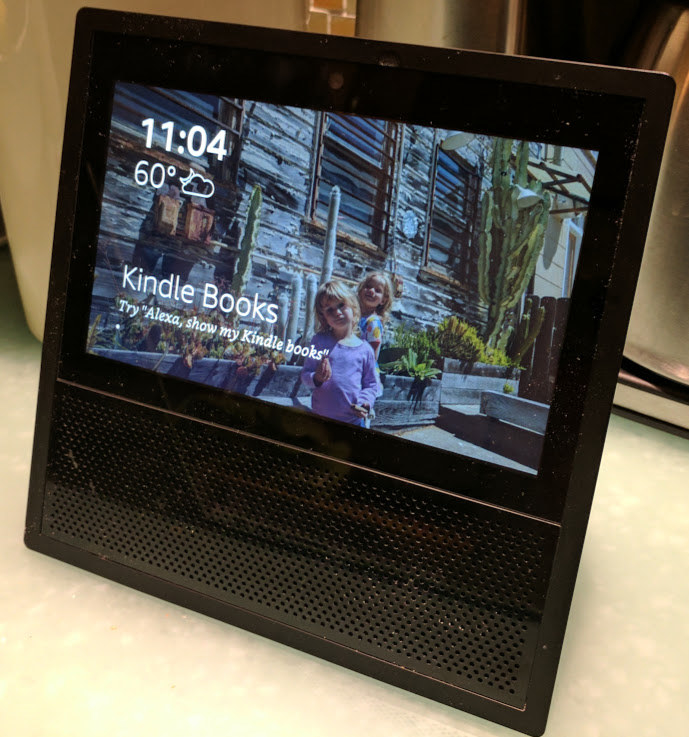

And what about that camera? You have to place a lot of trust in Amazon to let it send an internet-connected camera into your home. Amazon says no video is stored on the device, or in the cloud. (But like the Echo, it does store your audio queries online, and gives you options to delete them.) Amazon also says it won’t release customer information to the government without a valid and binding legal demand.

But, come on now. Even the former director of the FBI puts tape over the camera on his computer.

According to Amazon, when you press the button on the top of the device, it turns off power to the microphones, so it can’t pick up audio. I asked if it did the same thing with the camera, and what other security precautions it had to keep unauthorized people from looking in, but an Amazon spokesperson wouldn’t give me any further details.

I think about all this in my kitchen, looking at my reflection in Alexa’s screen. I worry someone might be watching me. I overtly pick my nose, and walk away.

Okay, so, the screen is really small, but it's bright and vivid, and it's a great experience for watching video. It works best with Prime Video, and is fantastic for streaming Amazon shows like Man in the High Castle. YouTube is also pretty great. The Echo Show is better at finding general types of YouTube videos (“Alexa, show me YouTube videos of surfing”) than specific ones.

You probably don't want to watch a movie on that 7-inch screen, but for casual playback, or stuff like CNN video clips, it's ace.

I try to get Alexa to help me with a pizza dough recipe, but it is pretty useless. I just want to see the measurements, but every few minutes, the Allrecipes skill stops and the screen resets back to the home screen. So I keep having to pull up the recipe again. And again. And again. It's a multiple-step process every time. The screen can only show a few recipe options at a time. The thin-crust pizza dough I want is not displayed in the first set of recipe options, so I have to call up recipes, then scroll across the touchscreen with my finger and pick the right one, then open it. Every time. And every time, before I can read all the ingredients and their ratios, they vanish. Shit.

1 teaspoon active dry yeast
1/4 teaspoon white sugar
3/4 cup lukewarm water
2 cups all-purpose flour, divided
1/2 teaspoon salt

It strikes me that the Echo Show is treating text and images similarly to the way Echo treats sound. Both devices are meant to deliver information to you on demand, right now, right here, right in front of you. Yet a screen lets that information be resident; it can stick around. Sound is by nature ephemeral. You can play it again, or transcribe it, but you can’t keep the words hanging there in the air.

Recipes, even easy ones, are exactly the kind of thing that want resident information, rather than ephemera. Text and images have a sense of permanence that sound does not. It makes me wish I could force the screen to keep whatever is on there, on there. But as far as I could tell, there’s no way to do this.

My wife and I are drunk in the kitchen on a Saturday night. We’re talking about this new Alexa. I like it. My wife doesn't. She doesn’t like the screen. She wishes the screen was always off. You can turn it off, so it just shows a clock, but as soon as you say its wake word and ask it to do something, the Echo Show comes back on again and stays on.

Across the bottom of the screen, Alexa scrolls through prompts. Most of these are calls to action meant to encourage you to fiddle with it.

Some of these are suggestions for thing for you to do with your device. (“Alexa, set an alarm for 6:00 am.” Or: ”Alexa, how many calories are in an egg?”) Some are notifications from Skills (which are basically third party apps). It also has “trending topics.” These are just annoying. Mastiff Wins Ugliest Dog Competition. Or: Harry Potter Released Twenty Years Ago.

The prompts are what bother my wife.

“It is an output that asks for inputs,” she says. “We have too many of those already.”

I do keep wondering about this thing watching me. In the Alexa app, it says that Drop In uses interactions with Alexa and motion sensors on the Echo Show to let contacts with permission know whether you’re available. I also know it goes to sleep after a while if it doesn’t detect anyone in the room.

I take it downstairs to our garage, plug it in, shut the door, and turn off all the lights. I sit there looking at it, trying to be still. Trying to hide. I wait for the screen to go to sleep, and wonder how long it will take.

Maybe I should have hidden better.

Quelle: <a href="Amazon’s New Echo Show Is Very Cool And A Little Creepy“>BuzzFeed
A Consumer Group Is Asking The FTC To Investigate Celebs For Shady Instagram Ads

In March 2017, the FTC sent “educational” letters to 46 celebrities who it believed weren’t properly disclosing ads on Instagram. Since receiving their letters, all but one celebrity continued to post ads that are not FTC compliant, according to the advocacy group Public Citizen. Today, the group is sending a new letter to the FTC asking it to do something it’s never done before: crack down on individual celebrities — not just brands — doing shady Instagram ads.

“The only way to get people to follow the rules is enforcement action,” Kristen Strader, campaign coordinator for Public Citizen’s Commercial Alert, told BuzzFeed News. “Without consequences, influencers and advertisers have no incentive to follow FTC policy and be honest with consumers.”

The group also wants the FTC to do an broad investigation into the current state of influencer marketing, including working with Instagram to come up a better solution than the new “paid partnership with” feature.

It’s unclear if the FTC will take Public Citizen’s advice and start an investigation or any other enforcement actions. The FTC has no comment on the letter.

Historically, the FTC has only ever gone after brands and advertising agencies over undisclosed social media ads. It’s never actually filed lawsuits or done any enforcement over individual people. In fact, it’s really rare that the FTC does anything at all. Since 2011, the FTC actually brought action only five times, and each time it was about the brand or advertisers, never the individuals. Sending “educational” letters to celebrities was something completely new.

Why the change? Perhaps it’s because the amount of deceptive influencer marketing on Instagram has increased a lot, and the government is finally dropping the hammer. As BuzzFeed news reported, a recent study showed that out of the top 50 most popular celebrities on Instagram, the majority did ads — and of those ads, 93% did not comply with the FTC’s guidelines. Sending those 90 letters this spring indicates a different direction for the FTC: Instead of filing costly and time-consuming legal action once a someone acts badly, tell people how to follow the rules and have popular influencers set an example.

From May 1 to June 12, Public Citizen tracked the 46 celebrities who received the warning letters. In those six weeks, all but two of them (basketball player Allen Iverson and NFL player James Harrison) posted more ads. Most posted just a few ads, but some posted a shitload. Fashion blogger Rachel Parcell, model Tiona Fernan, and model/pro basketball player Valentina Vignali all posted more than 30 undisclosed ads each. All together, 412 ads were posted, and 79% of those were not properly disclosed.

One of the confusing things Rachel Parcell does is to tag brands in a photo — are we to assume she is just letting fans know where she purchased it? Or that she got it free? Or that she was paid? We have no idea. And in this photo, it seems like it’s very possible that her vacation was also a gift — notice how she hashtags the hotel:

instagram.com

The types of ads in these posts aren’t as straightforward as someone holding up a bag of diet tea and forgetting to say “#ad”. Free gifts or long-term deals like a celebrity creating their own product line for a brand are particularly thorny. In the report that looked at undisclosed ads of the top 50 Instagrammers, it was these kinds of tangled relationships that were the most common offenders.

For example, Scott Disick posted about riding a private plane company called Jet Luxe Life that often gives free rides to celebrities in exchange for them posting about it on Instagram. He simply says “thanks @jetluxlife” – what is the average person supposed to assume this means? That he enjoyed the flight he paid for himself, or that he got a free ride, or he got a free ride AND payment for posting? It’s not clear at all, and that’s the problem.

Instagram: @letthelordbewithyou

Another one of these celebrities on Public Citizen’s list is Zendaya, who also posted about Jet Lux. In what I can only imagine is an admirably passive aggressive move, Zendaya doesn’t show herself on a luxurious plane — rather, she’s huddled in her sweats on the couch, without even showing her face. Not exactly the kind of photo that Jet Lux probably expected when giving a beautiful starlet a free ride.

Instagram: @zendaya

Another confusing example that is cited in the letter to the FTC is Jennifer Lopez posting her outfit from the Met Gala. It’s hard for the average person to guess what’s going on here. Was she paid money by Valentino to post this? Was she just loaned a free outfit? Did she actually buy it herself and just wants to tell people who the designer is? Is she a spokesperson for the fashion brand? Unless you work work in fashion PR, you’re probably confused.

Instagram: @jlo

Some celebrities are doing more obvious ads where they do make some effort to say it’s an ad — but their disclosure still fails to meet the FTC’s guidelines, which say that terms such as “partner” aren’t clear, and that the disclosure should be in the first 3 lines of the caption so that it doesn’t get cut off in the […] when you’re scrolling through your feed. For example, Real Housewives of Beverly Hills star and TV actress Lisa Rinna uses the hashtag #teamipartner” at the end of her post, but that doesn’t meet FTC standards. Public Citizen’s stance here is that by now, both Lisa Rinna and the diet drink company know the rules, they’re just willfully ignoring them.

Instagram: @lisarinna

Only one person actually properly disclosed 100% of her ads since receiving the FTC letter: Real Housewives of New Jersey star Caroline Manzo.

Caroline Manzo, we salute you.

Instagram: @carolinemanzo

Quelle: <a href="A Consumer Group Is Asking The FTC To Investigate Celebs For Shady Instagram Ads“>BuzzFeed

Here's How To Use Snapchat's Map To Go On A Mini World Vacation

Here's How To Use Snapchat's Map To Go On A Mini World Vacation

Now you can see snaps from strangers all over the world.

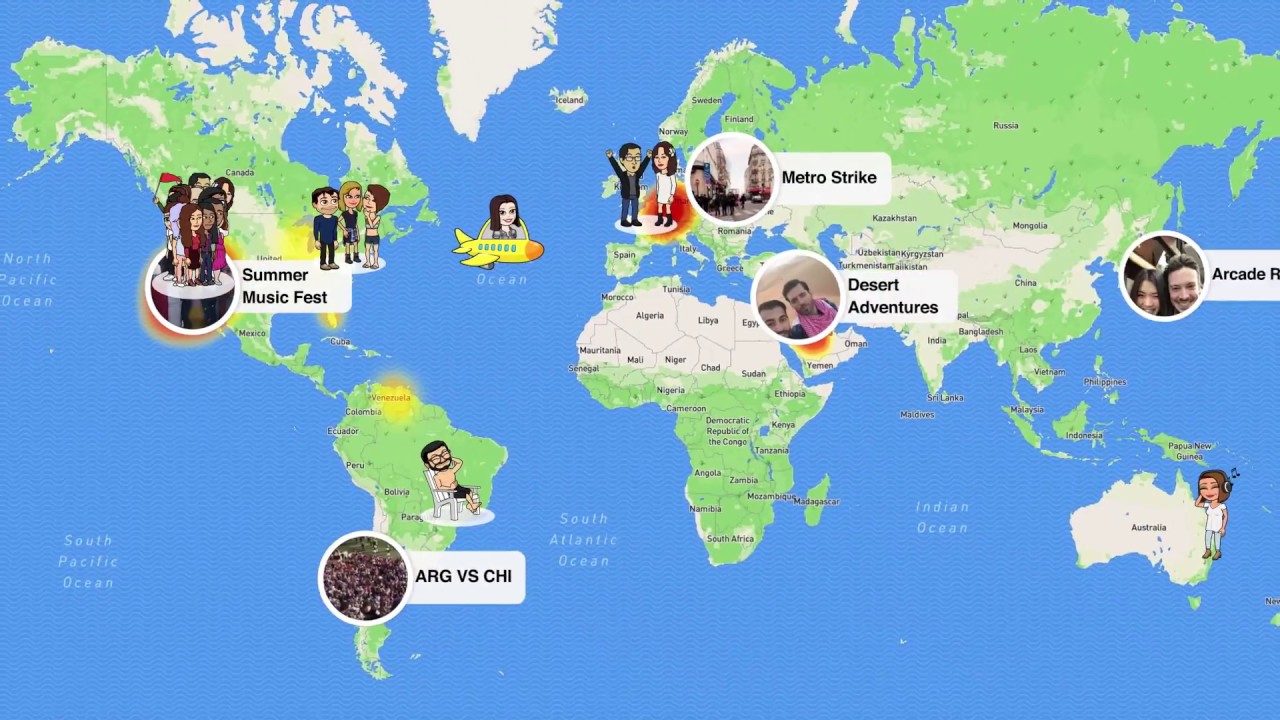
Snapchat just launched its new Map feature this week, which lets you see snaps from strangers around the world.

Here's how to access it: in camera mode, pinch to zoom out – this magically opens the map (I know, right? Pinch-to-zoom-out isn't really an intuitive way to access this feature.)

youtube.com

It's truly magical. There's nothing else quite like this that lets you check out specific locations around the globe and peek in on the everyday lives of normal people. Snooping around to see what people in the Arctic circle were up to, then what teens in Saudi Arabia are doing, is transcendently heartwarming in an “I love humanity!!!!” kind of way.

After you open the map, tap on the glowing blue orbs to see snaps. When there’s a lot of snaps in one area, it glows red.

After you open the map, tap on the glowing blue orbs to see snaps. When there's a lot of snaps in one area, it glows red.

Obviously, in places that are less densely populated, or in parts of the world with fewer smartphones, there are fewer glowing blue orbs. But this will probably grow more and more, as people update their apps and turn on the feature.


View Entire List ›

Quelle: <a href="Here's How To Use Snapchat's Map To Go On A Mini World Vacation“>BuzzFeed

Macedonian Publishers Are Panicking After Facebook Killed Their US Political Pages

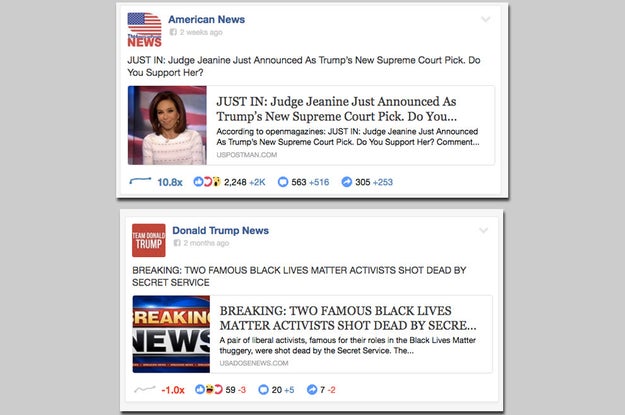
Two false posts from Facebook pages that the social network removed due to terms-of-service violations.

BuzzFeed News

The town of Veles, Macedonia, achieved international fame last fall after a BuzzFeed News story reported on a large cluster of pro-Trump websites that often published fake news and that were being run by teenagers and young men. Soon camera crews from major media outlets such as Britain’s Channel 4, ABC’s Nightline, as well as reporters from Wired magazine and NBC News arrived to write about the “fake-news teens.”

But now panic has set in for some of the young publishers of Veles. Over the past two months, more than 30 Facebook pages they use to drive traffic to their websites have been removed due to what the social network said were multiple terms-of-service violations. Most of the killed pages were focused on US politics, but several publishers told BuzzFeed News they also lost large and lucrative pages about horses, motorcycles, muscle cars, and snowmobiles.

“They live from that [sic] fan pages,” wrote one Macedonian who reached out on behalf of several friends who lost their pages. “Now they got nothing.” (Like the three other Macedonian publishers who spoke to BuzzFeed News, he asked that his name not be used in order to prevent his pages and websites from suffering additional consequences from Facebook.)

“I'm in a very inappropriate situation, after spending a huge amount of money on Facebook for promoting articles and Page likes,” said a Macedonian publisher who lost a page with more than 1.3 million fans. “In end all have got is unpublished page.”

Another publisher estimated he spent roughly $100,000 on Facebook ads over the years to attract new fans for his four pages, which cumulatively had over 1.5 million likes. He and others assumed that being allowed to pay for Facebook ads for their pages meant they were operating in the clear.

A Facebook spokesperson told BuzzFeed News that a publisher who buys ads to promote posts or a page is not immune from the rules of the platform. The spokesperson also said there is not a specific effort to target Macedonian publishers.

“These instances are part of our ongoing, global effort to detect and stop spam activity on our platform, and not isolated to Macedonia,” they said.

The removal of roughly three dozen pages owned by Macedonian publishers is a result of Facebook’s push to rid its platform of spammers, fake news publishers, and others who violate its terms of service. But it’s also a reminder that no one really “owns” a Facebook page, in spite of how much money they might spend growing it. And while Facebook did not specifically target Macedonian publishers, the removals may have been in part a result of a strategy executed by a small group of American publishers who told BuzzFeed News they grew tired of having their content stolen by Macedonians.

“Macedonians refused to stop stealing my material,” said Christopher Blair, who goes by the online handle Busta Troll and runs TheLastLineOfDefense.org, which frequently saw its stories copied word for word by multiple sites run out of Macedonia. “My friends and I handled it. Most lost their pages, some lost their blogs.”

Veles, Macedonia

Rašo / Via commons.wikimedia.org

The automated message from Facebook received by some Macedonians after their pages were removed informed them, “Your Page has been unpublished for causing people to like or engage with it unintentionally in a misleading way.” BuzzFeed News has documented the fake news, fake accounts, and other dubious approaches used by some US political pages run by Macedonians. But the publishers who spoke to BuzzFeed News insisted they were following Facebook’s rules on at least some of the removed pages. One said he personally wrote all of the content on his website about muscle cars and was in line with Facebook’s terms of service.

“All the way I was trying to be correct with all the posts … I’m not just a kid trying to get some instant money posting everything,” he said, acknowledging that some in Macedonia steal content and publish false information.

One publisher who recently lost five Facebook pages, two of which were about US politics, told BuzzFeed News he may have had some questionable content on his political pages but that his muscle car pages were clean.

“On my political [page] maybe there were some fake news, but you have to understand us, we are not doing that because we are [interested] in the politics — only for the money,” he said.

The Facebook spokesperson said the topic of a page is not a factor in its review process. “We don’t make our policy decisions about spam based on the topic of Pages. If a Page is in violation of Facebook policies, it’s in violation — no matter the topic.”

Though the page removals largely happened in May and June, the seeds for the Macedonian crackdown were planted months ago. Thousands of miles away in rural Maine, Blair and some of his collaborators on websites and Facebook pages were executing a simple strategy aimed at shutting down Macedonian publishers. They repeatedly reported Macedonian-run pages to Facebook for stealing content. As previously reported by BuzzFeed News, many Macedonian-run politics websites made a habit of copying and pasting any new articles published on Blair's site, which is filled with fake articles he says are meant to troll American conservatives.

America’s Last Line Of Defense / Via thelastlineofdefense.org

Blair said he and others initially tried to work with some Macedonians to enable them to license rather steal his content. But when they refused, he decided to take them out by reporting them for copyright infringement.

“I tried to make deals to license with the requirement that they mark it satire, they kept just stealing,” Blair said in an interview via Facebook Messenger. He also called this reporter an “asshole” for including his website in stories about fake news.

“Assholes like Craig Silverman at BuzzFeed blamed me for the spread of fake news because of a bunch of kids in Macedonia who thought they were invincible,” he said. “You were wrong. Macedonian kids were responsible for their actions, not me. They've been handled.”

Blair said it took months of consistently reporting the pages and websites for Facebook and web-hosting companies to take action. Then, in early June, he received word from a Macedonian he knows that a slew of pages were down.

“Today when I woke up, I was informed by one of my Macedonian ‘contacts’ that 22 pages had gone down from Facebook,” he wrote in a post on GOPocalypse.org about his effort to take down the Macedonians. “That right there is what you can call a successful campaign.”

Alan James Whitmore, the name used on Facebook by a publisher who runs several conservative Facebook pages and who is also a liberal troll who works with Blair, told BuzzFeed News he was involved in the reporting effort as well.

“So yeah, I can confirm that liberal trolls reporting original, copyrighted material to Facebook and to webhosts as plagiarism most likely had something to do with the collapse of the fake news economy in Veles,” he said. (Whitmore added that “there isn't a liberal troll on the planet who would fully cooperate with BuzzFeed on a story right now” and then blocked this reporter on Facebook.)

The Macedonian publishers who spoke to BuzzFeed News said they don’t know who Blair is and had not heard of his site. They said they decided to go public about their page removals in the hope that Facebook might bring them back. However unlikely that seems, one publisher said the company previously brought pages of his back from the dead — only to kill them again.

He said several pages were killed on the same day in May and “Two of them were back later that day … Computer mistake and FB said they are sorry for their mistake,” he said. “One month later those two pages were unpublished again.”

He acknowledged that in the past he had broken Facebook’s terms of service by spamming groups and using fake accounts. But he said he’d cleaned up his act and launched new pages, which were subsequently taken down. “When I was spamming to groups I know that it was not good, but I needed that money,” he said.

Meanwhile, as the bottom is falling out for at least some Macedonian publishers, Western media continue to descend on Veles.

“Just want to tell you that CNN are in our towns and make story about political websites,” one publisher told BuzzFeed News via Facebook Messenger yesterday. “They think that we are connected with Russians! WTF are they crazy.”

Quelle: <a href="Macedonian Publishers Are Panicking After Facebook Killed Their US Political Pages“>BuzzFeed