Millions Of Verizon Customers’ Account PINs Leaked — Here’s Why You Should Still Have One

Scott Olson / Getty Images

If you're a Verizon customer who's called customer service in the past six months, it's probably a good idea to update your PIN, or the four-digit billing password that protects your account from people trying to impersonate you over the phone.

An Israel-based company called Nice Systems, a Verizon partner, reportedly exposed as many as 14 million records of subscriber calls on an unprotected Amazon S3 storage server, downloadable by anyone with the server's web address. The records show the subscriber's name, phone number, and account PIN. Security firm UpGuard detailed exactly what data was vulnerable in a recent blog post.

Verizon claims that no loss or theft of customer information occurred. In a statement emailed to BuzzFeed News, a Verizon spokesperson said the leaked dataset included the information of approximately 6 million subscribers. “Verizon is committed to the security and privacy of our customers. We regret the incident and apologize to our customers,” the statement said.

Why is that bad?

That last bit of data — the security PIN — is especially sensitive information, as it would grant anyone with the four digit number access to your Verizon account. Verizon representatives use this account code (which, BTW, is different than the code you use to access your smartphone) to verify a customer's identity during a customer service call.

With this PIN, hackers can more easily gain access to online accounts (email, social media, banking, etc.) protected by two-factor authentication, which requires a code typically provided by text message in addition to a password.

Hackers would be able to call cell providers, impersonate the user, and change the SIM card on record to their own (which is what happened to Black Lives Matter activist DeRay Mckesson, when his Twitter account was hacked last year). This method of attack essentially reroutes the security code to another device, allowing hackers to bypass two-factor authentication for any account with it enabled.

If I'm a Verizon customer, what should I do?

The first thing you should do is change your account PIN, just in case. You can never be too careful with your online privacy. Call customer service at (800) 922-0204, visit a retail store with government identification, or go to vzw.com/PIN. Note that the code *can't* be the last four digits of your Social Security number or cell number.

If you've reused that same PIN for other accounts, make sure you update those, too. It's best to keep all of your PINs unique. Those who have trouble remembering all of their PINs can store them safely in a password manager like Last Pass and Dashlane.

How can I protect my account in case of a future security breach revealing PIN numbers?

PIN codes are a still a good way to protect your account, despite the breach. Update your cell provider PIN periodically (every year or so) and don't re-use PINs.

Secondly — and most importantly — if you use two-factor authentication, stay away from using text message-based authentication when you can. Both Google and Facebook (and the previously mentioned password managers!), for example, allow you to use the Google Authenticator app, which generates random codes, or a security key, which is a physical device that can be inserted into a computer's USB port or an Android phone's USB-C ports. iOS users will need the Google Authenticator app in addition to the security key.

These two methods require a hacker to physically have access to your phone or security key, making it much more secure than SMS (text message), which can be intercepted.

What if I'm a customer of another cell provider?

You should still add a PIN — or update it if you haven't in a while.

T-Mobile

You can request to use a “customer care password,” which is an additional password required to gain access to your T-Mobile account over the phone.

T-Mobile will text you a PIN number, then prompt you to provide that PIN number to a representative before creating the customer care password.

To enable this feature, call customer service at (877) 746-0909.

Sprint

You're good! Sprint already requests that customers set a PIN, along with security questions, when they sign up.

AT&T

You can add extra security from the myAT&T app or the AT&T mobile site.

Go to Menu > Profile > Login Information. Scroll down and tap Manage wireless passcode, then check Extra security.

Extra security requires an additional passcode when you attempt to get online access to the account, discuss the account in any retail store, or call AT&T's customer service line.

Cyberspace is dark and full of terrors. Stay safe out there!

Cyberspace is dark and full of terrors. Stay safe out there!

hbo.com

Quelle: <a href="Millions Of Verizon Customers’ Account PINs Leaked — Here’s Why You Should Still Have One“>BuzzFeed

Facebook Is Coming For Meetup, And Meetup Is Ready To Fight

Facebook Is Coming For Meetup, And Meetup Is Ready To Fight

Facebook

When Facebook held its first Communities Summit in Chicago last month, Meetup CEO Scott Heiferman watched attentively from his New York City office. His browser trained on Facebook's live video stream, Heiferman watched as Facebook CEO Mark Zuckerberg told an enthusiastic crowd of his plan to get 1 billion people involved in “meaningful communities” on Facebook. He watched as Zuckerberg explained how the company would go about doing this, rolling out new features designed to bolster Facebook-hosted communities online and off. And he watched as Zuckerberg touted a Facebook group event called “Mommy Meetup” as evidence of the company's ability to bring people closer together in the real world. Then, he shut it off and suited up for battle.

Heiferman sledgehammering an iPad to encourage people to spent time offline.

youtube.com

Meetup, a scrappy tech company that helps people meet online and then get together offline, is in for what may be the fight of its life. Building “supportive community” — long Meetup’s core mission — is now the first bullet point in Zuckerberg's latest manifesto outlining the future of the company. And Facebook is running hard at it — both with its June Communities Summit and the “Give people the power to build community and bring the world closer together” mission introduced there. After not coming up against a true competitor in its 15-year history, Meetup is now facing off against a determined and formidable challenger armed with a massive network of active users, a vast repository of knowledge about those users' interests, the technological acumen to recommend appropriate groups, and the financial wherewithal to offer event-organizing capabilities free of charge.

Heiferman is aware of companies like Vine, Timehop, and Snapchat who’ve competed with Facebook and suffered severe damage. (Remember Meerkat? The livestreaming app’s creators pulled it from the App Store months after the debut of Facebook Live.) But the tenacious Meetup CEO is not the type to lie down without a fight. And indeed, he and his team have a plan.

Two weeks before Facebook’s Communities Summit, on the 10th floor of Meetup's downtown Manhattan headquarters, Heiferman sat across from an investor considering putting millions of dollars into his company and outlined where Meetup is going. He started by rattling off a series of impressive stats. More than 20,000 meetings a day take place via Meetup, organized via any number of its 300,000 paid groups, whose members total nearly 40 million people, Heiferman said. The company, he emphasized, had real growth potential, 10x potential. And after discussing the product’s past and present, he turned to its future to explain why.

As the investor looked on, Heiferman played an internal video that showed the product Meetup was working toward, one conceived before Zuckerberg’s manifesto, that could be its bulwark against Facebook’s incursion. The video showed a concept for “self-driving Meetups,” as they’re known inside the company. These meetups are formed initially by computers, not humans, allowing for smaller, smarter groups that better fit people’s interests, as opposed to the broader, less tailored groups that exist on Meetup today. Illustrating what Meetup is after, the video showed a person looking for a running group, but instead of a joining an umbrella New York runners group, this person answered a few questions from Meetup, telling it she was specifically interested in an women-only group, made up of intermediate runners, that meets up at a specific entrance of Brooklyn’s Prospect Park every Wednesday. Then, instead of waiting for a human to form this group (and it’s hard to imagine an organizer creating something this specific), Meetup’s software did it on its own. After a critical mass of people told Meetup they were interested in the same type of group, the platform put them in touch and, in the next frame, they were off running.

Heiferman watched this video with the look of someone who know he was onto something. More tailored Meetups, he told BuzzFeed News, would give the company a way to serve far more people. “The accuracy, the precision, the specificity — we know plain as day that traditional methods of [organizing] groups and events through apps isn’t going to give people what they want,” he said. “If there’s a meetup that has the right people, the right time, the right place, the right purpose, naturally people are going to go.”

Facebook, of course, has the technical wherewithal to mimic those features too. And it’s unknown whether the investor in the room, who declined to be named, was put off by concerns about Facebook. But Jeremy Liew, an early Snapchat investor and partner at Lightspeed Venture Partners, told BuzzFeed News he wouldn’t shy away from companies competing with Facebook. “If they are showing strong engagement, retention, and growth with a competitive product, then I would definitely want to dig in and learn more,” he said. “If I could see a unique insight that was driving new habits and a scalable, repeatable path to growth, then I would definitely consider an investment.”

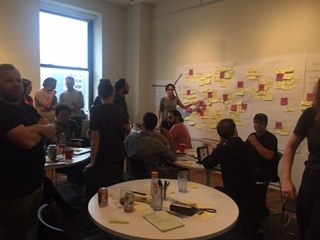
Right after the investor meeting, Heiferman took an elevator a few floors down to a design sprint in which his team was in the midst of bringing the product in the video to life, separating into teams to work on specific bits of it codenamed “Ask,” “Spark,” and “Deliver.” Fiona Spruill, Meetup’s VP of product, said the product would be “absolutely key” to fending off Facebook’s challenge, and that Meetup was in good position because it’s focused only on getting people to interact offline, as opposed to starting at the screen. “We want to have the shortest jumping-off point from online to great in-real-life experience.”

The design sprint

Heiferman bristles at the notion that smaller companies can’t fend off bigger competitors. In an email following his discussion with BuzzFeed News, he shared a handful of links to articles written by skeptical reporters who seemed unable to conceive a tech giant could lose a battle. “Of course, Google's biggest problem may well be (cue soundtrack from ‘Jaws’) Microsoft,” one Newsweek article about search argued. “Bill Gates is constitutionally unable to countenance the idea that a cheeky Silicon Valley start-up can claim even the mildest role as an Internet gateway.”

“It wasn't that long ago that people thought it would only be Microsoft. And then they thought it would only be Google,” Heiferman said.

Still, for Heiferman and Meetup, squaring off against Facebook won't be easy. Zuckerberg at the summit made clear that getting people to meet offline is important to Facebook. “Online communities strengthen physical communities by helping people come together online as well as offline, even across great distances,” he told the audience. And as Facebook’s history suggests, when Zuck comes for your bread and butter, it can be difficult, and sometimes impossible, to hold on to it. The convenience of doing everything inside one app with all your friends can be hard to resist, even for the most ardent of brand loyalists.

“Facebook is an all-in-one platform. People already use it, are familiar with it, and it's free,” Lauren Kent, an admin of Moms of Beverly, the Facebook group that hosted the moms meetup highlighted by Zuckerberg, told BuzzFeed News. Kent, a former Meetup member, said she chose to use Facebook “simply because it's a free platform whereas Meetup is not. Also, almost 2 billion people already use Facebook.”

Still, Meetup is growing even in the face of Facebook’s challenge, adding millions of new members each year. And perhaps, the combination of its characteristic tenacity, a new product that imagines organizing in a brand-new way, and possibly a little cash will put Meetup in position to hold its own. Despite the odds, and admitting that Meetup has a real competitor for the first time in its history, Heiferman thinks the company is in position to thrive.

“There’s a giant body pile of all the apps that have said they’re going to be the new Meetup,” Heiferman said. “The fact that Facebook will also be doing stuff that operates in some similar veins, fine. They’ll create good in the world with it. And I’m honestly happy to see that. But our purpose is not to keep people glued to the screen — our purpose is to get people away from the screen and sparking communities that change people’s lives.”

Quelle: <a href="Facebook Is Coming For Meetup, And Meetup Is Ready To Fight“>BuzzFeed

Not Even The FTC Knows What Exactly #Spon Looks Like

The FTC recently went after 47 celebrities and brands for violating its rules on sponsored Instagrams. But many of them weren’t even actually ads.

We tend to think of Instagram ads as those really obvious ones for diet teas or teeth whiteners. But this list shows there’s a much broader definition of an ad, at least according to the FTC, which considers any “material relationship” with a product to be a brand.

This could be that you are getting paid to post it, or that you got free merch, or you’re a part owner of a brand or have some other financial stake. There's a lot of gray area.

BuzzFeed attempted to fact-check these by reaching out to the brands to ask if the celebrity was actually paid or got a freebie. What we found is that there were lots of different kinds of ads — sometimes the celeb was part owner of a brand, or got free stuff. Or maybe it was an ad, but they didn't disclose it the right way — either they made no attempt to disclose it at all, or they tried but didn't get it quite right.

This just goes to show that if the FTC can't tell from looking at an Instagram if something is an ad or not – and if when a media outlet called up the brand to ask we still couldn't find an answer – how the heck are normal people supposed to know when something is an ad??


View Entire List ›

Quelle: <a href="Not Even The FTC Knows What Exactly #Spon Looks Like“>BuzzFeed

Why Silicon Valley Is Censoring Itself As It Expands In India

Aaron Fernandez for BuzzFeed News

For a Bollywood movie, Gaurav Dhingra's Angry Indian Goddesses was decidedly un-Bollywood. There were no song-and-dance sequences, no lavish weddings, and no bankable superstars whisking away leading ladies. Instead, there was swearing, lots of sexual innuendo, and a lesbian engagement.

Or at least there was — until India’s Central Board of Film Certification had its way with the film. The government agency stripped Dhingra’s feminist drama of its sexual innuendos and replaced all the “fucks” with loud bleeps.

Dhingra was furious. He and Pan Nalin, the film’s director, protested the film’s censorship on primetime talk shows and social media. And shortly after the movie hit theaters in December 2016, they posted uncensored clips of everything that had been cut from the official release on the film’s Facebook page.

It was right around then that Netflix came calling. Netflix wanted to buy global streaming rights to the uncensored “international version” of Angry Indian Goddesses. It would stream in more than a hundred countries  — expletives and all. Dhingra and Nalin were ecstatic. They signed the deal.

Then, days before the film went live on Netflix in India in April, the streaming service called again. It had changed its mind. “We were told that India streaming has been delayed because they needed to stream the same version which was theatrically released in India,” Nalin told BuzzFeed News. He did not divulge any more details, but sources familiar with the deal say that the next few days were fraught with tension. “[The filmmakers] were counting on Netflix as a place where people could finally watch their film as they intended it to be watched,” said the source. “But Netflix refused to budge.” In the end, the filmmakers gave in. Angry Indian Goddesses made its “fuck”-free debut on Indian Netflix in April even as the rest of the world saw it uncut.

But “after many, many hours on the phone with the producers,” according to sources familiar with the situation, Netflix changed its mind yet again. At the end of June, it replaced the censored version of the movie with the international version in India. “Fans reached out to us [about the movie] and we are listening,” a Netflix spokesperson told BuzzFeed News. “What happened with Angry Indian Goddesses was a miss.”

Netflix may have relented, but it’s an exception among Silicon Valley companies, which often censor their products in India. In the world’s largest democracy, Amazon Prime Video cuts most nudity and profanity from its content, Google bans retailers from buying ads for erotica, Amazon and Flipkart refuse to sell adult products, and Tinder positions itself as a brand that parents approve of. Selling adult products, watching nudity online, and casual dating aren’t illegal in India. But Silicon Valley is playing it extra safe, and its attempts to not offend some Indians are alienating others.

“Western companies trying to expand in India are being overcautious because of the huge investments they are making in the country,” Prithwiraj Mukherjee, professor of marketing at the Indian Institute of Management, Bangalore, told BuzzFeed News. “They don’t want to risk offending anyone’s sentiments in a diverse country like India.”

The country is a crucial market for Silicon Valley: There are now more internet users in India than there are people in the United States — and millions more will come online in the next few years. But as American tech companies pour billions into the country, they’re fumbling as they attempt to appeal to India’s already-online, Snapchat-savvy, English-speaking, Beyoncé-listening, urban millennials, while also trying to win over the country’s comparatively conservative millions.

Amazon Prime Video launched in India in December 2016, and was immediately blasted by angry Indian customers on Twitter for proactively censoring many TV shows and movies, including its own productions like Transparent. Worse, the censorship was arbitrary. Some nudity, like a sex scene a couple of minutes into the pilot of Transparent, was blurred out. In another instance, Amazon chopped one episode of its car show, The Grand Tour, in half to remove a plotline involving a car made of animal carcasses with a windshield of cow innards, presumably to avoid offending religious Hindus, who consider cows sacred. But most of Californication, a series well-known for its gratuitous nudity, survived Amazon’s airbrushing.

“It’s just ridiculous,” José Covaco, a popular Indian comedian who has been a vocal critic of Amazon Prime Video censorship, told BuzzFeed News. “I am an adult that pays Amazon to watch this stuff.”

Amazon has also managed to piss off India’s indie filmmakers, like director Qaushiq Mukherjee. Mukherjee’s controversial cult film Gandu (“Asshole”), which features explicit frontal nudity and was banned from Indian theaters in 2011, does stream on Indian Netflix. (Despite its flip-flop over Angry Indian Goddesses, Netflix stands apart from Amazon Prime because it promised not to censor its content in India.) But Mukherjee doesn’t really have other options for his film. “I would never consider Amazon Prime [because of censorship],” Mukherjee told BuzzFeed News. “I haven’t even watched stuff on Amazon for that reason.”

Nobody wants bad PR or government ire in an important market over a little nudity or a dead cow.

Amazon’s proactive censorship has no legal basis in India. Last year, India’s Ministry of Information and Broadcasting explicitly clarified that the country’s government has no power to censor content on the internet, nor is it planning to frame any regulations to do so.

Despite this, Amazon doesn’t seem to have any plans to pull back its censorship in India. At an Amazon event held in New Delhi in April, Nitesh Kripalani, Amazon’s head of Prime Video in India, told BuzzFeed News that the reason Amazon censors content in India is because it has a “responsibility to balance customer preferences and Indian cultural sensibilities.” Amazon did not respond to BuzzFeed News’ questions on the topic despite multiple requests.

“I don’t think these companies want to risk drawing negative attention to themselves,” said Mukherjee.

There’s precedent for this. Large companies have, at times, abruptly found themselves the target of the wrath of angry Indians for unwitting missteps. In January, Indians were outraged when they found out that Amazon Canada was selling doormats with an Indian flag design (touching things with one’s feet is considered disrespectful in India). Amazon did, eventually, remove the doormats, but not before India’s external affairs minister angrily tweeted about rescinding visas issued to Amazon officials in India.

Twitter: @SushmaSwaraj

Twitter: @SushmaSwaraj

And in April, thousands of furious Indians left Snapchat one-star ratings in the App Store because of disrespectful comments about India that the company’s CEO had allegedly made.

That’s why companies expanding in India err on the side of caution — nobody wants bad PR or government ire in an important market over a little nudity or a dead cow.

“Silicon Valley companies entering India really, really do not want to spend time and money battling frivolous controversies that could needlessly hurt their brands,” said a person who works at Amazon Prime Video in India who did not wish to be named. “We just don’t want to take any risks.”

For a site that sells pasties and penis pumps, Lovetreats.in looks remarkably tasteful — a cross between Etsy and a gift guide in a glossy magazine. The Bangalore-based startup is one of half a dozen that launched in the country in the last few years to cash in on urban India’s newfound taste for sex toys. Business has been great. Lovetreats has grown nearly 30% every month for the last year and a half, its cofounder Balaji T.V. told BuzzFeed News. But here’s what’s holding him back: He’s not allowed to register as a seller on two of India’s largest e-commerce platforms — Amazon and Flipkart — to sell his products.

Indian regulations do not allow massive e-commerce websites with multiple sellers, like Amazon and Flipkart, to own their own inventory, which means that all online retail business in the country is driven entirely through third-party sellers. According to a press release, Amazon doubled the number of sellers on its platform in India since July 2016, to 200,000. But popular Indian adult product startups like Lovetreats and MasalaToys aren’t allowed on Amazon — which is ironic for a company whose vision statement once said that it wanted to be a place where people could come to “find and discover anything they might want to buy online.”

Amazon’s policies for sellers in India explicitly state that “‘adult-only’ items that are primarily sold through adult-only novelty stores and erotic boutiques are not permitted,” without specifying the reason for the ban. In contrast, Amazon’s policies for selling adult products in the United States are clear and granular, separating items into toys and games, bondage gear, fetish wear, sensual products, and “sexual furniture” like sex swings, ramps, and cushions. A casual search for “vibrators” on Amazon US throws up more than a hundred pages of results. Flipkart, which operates only in India, doesn’t list any policies for adult products on its site, but searching for adult products doesn’t show any results.

“I could see my business growing eight to ten times if I could sell on Amazon India and Flipkart,” said the cofounder of a popular Indian adult products website, who requested anonymity.

“For companies like Amazon, the sex toys market in India is a small, high-risk one.”

Flipkart did not respond to BuzzFeed News’ requests for comment. An Amazon spokesperson responded to BuzzFeed News’ questions around its policy with a single sentence: “Sellers are prohibited from selling these products on Amazon.in.” The spokesperson did not respond to a follow-up question: “Why?”

The sellers that BuzzFeed News spoke to all said that large e-commerce companies, especially Western companies like Amazon that are pumping in money to expand in India, don’t want to risk violating the country’s obscenity laws, which prohibit graphic imagery on packaging and marketing materials.

Companies have been sued over sex toys; in 2015, for instance, a lawyer in New Delhi took Indian e-commerce startup Snapdeal to court for selling vibrators on its platform. But the case was thrown out. There is no law in India that explicitly forbids anyone from buying or selling sex toys, as long as the packaging isn’t graphic.

“For companies like Amazon, the sex toys market in India is a small, high-risk one,” said a seller who did not wish to be named. “When we sell these things on our own websites, we are extremely careful [about] not violating India’s obscenity laws. You’ll never find anything objectionable in our packaging and presentation. But I think a brand like Amazon wouldn’t want to get in trouble with a rogue seller on its platform.”

Still, big e-commerce sites seem to recognize the appetite for adult products in India. Multiple sellers told BuzzFeed News that both Amazon and Flipkart had reached out to them to explore the possibility of selling some of the “softer stuff,” as one seller put it. “They said that we could try selling handcuffs, but no vibrators, blow-up dolls, or anything hardcore,” this seller told BuzzFeed News. “But eventually, the discussions fizzled out. I guess they chickened out.” Amazon and Flipkart did not respond to requests for comment about this.

Being banned from India’s largest e-commerce platforms isn’t the only thing that hamstrings adult product sellers. They are also banned from buying keywords and display ads from Google, the world’s largest advertising company.

India is one of 19 countries where Google doesn’t sell adult ads, according to Google’s advertising policies page. Google told BuzzFeed News that it is simply complying with India’s obscenity laws. “Based on an assessment of prevailing legal and regulatory requirements, at present, we do not allow adult products or toys to be advertised in India,” a Google spokesperson said.

But sellers of adult products argue that this policy shouldn’t prevent them from advertising things like lingerie and scented candles on Google. In one instance, a seller who did not wish to be named told BuzzFeed News that he fought a losing battle with Google’s sales reps for nearly eight months before giving up. “They told me that even though my ad was for lingerie, the website that it linked back to sold hardcore stuff, so they couldn’t let me buy ads,” he said. Google did not respond to BuzzFeed News’ requests for comment on this.

Admittedly, some Western tech companies don’t censor or restrict their products proactively in India. But they still struggle when confronting conservative Indian mindsets.

Daljeet Singh Virdi is a middle-aged Airbnb host in the Indian city of Pune. He has offered a bright, airy bedroom in his spacious apartment on the platform for over a year. It’s good for business travelers, says Virdi, and solo adventurers, and married couples. The “married” bit is crucial.

“If you look like a young couple, I ask that you prove to me that you’re married,” Virdi told BuzzFeed News. “You can either show me a marriage certificate, or maybe a common address [as] proof to show that you live with each other in the same house.”

Dozens of listings that BuzzFeed News viewed on Airbnb India in the last month had a “married couples only” policy. “Most requests I used to get were from couples who weren’t married to each other,” said Kaniska Bhattacharya, an Airbnb host from Kolkata who has listed his property on the platform for nearly a year. “You can call me conservative, but look, me and my family are really not into letting unmarried couples live with each other.”

Dozens of listings that BuzzFeed News viewed on Airbnb India in the last month had a “married couples only” policy.

Quelle: <a href="Why Silicon Valley Is Censoring Itself As It Expands In India“>BuzzFeed
This Rural Canadian Community Is Scared Amazon Will Cut Them Off

David Ryder / Getty Images

Think you're obsessed with Amazon Prime? People living in Iqaluit, Canada actually depend on it.

Canada's CBC News reports that people in Iqaluit, which is the capital of the extremely remote Nunavut territory, say that Amazon Prime's goods and food staples are far more affordable than what they can buy anywhere else.

Iqaluit is on an island, accessible by daily jets from Montreal and Ottawa, both roughly 1,200 miles away. Travel by boat is tenuous because of sea ice, and many residents use snowmobiles to get around.

People living in the 7,700-person town say Prime does more for them than even the Canadian government assistance program Nutrition North. The company's subscription service gives people access to free two-day shipping on eligible goods in Amazon's online store as well as to streaming video via Amazon Prime video. It costs $79 USD per year.

Goods at Iqaluit stores are often extremely expensive due to the cost of shipping items to the remote region. According to CBC News, a box of 180 diapers costs $70 off the shelf; the same thing is only $35 on Amazon Prime. Prime allows residents to save a fair amount of money.

Though many people in Iqaluit say that Prime makes their lives better, there is still a large swath of the population that can't afford the service, Wade Thorhaug of Qayuqtuvik Society, Iqaluit's sole soup kitchen, told the CBC.

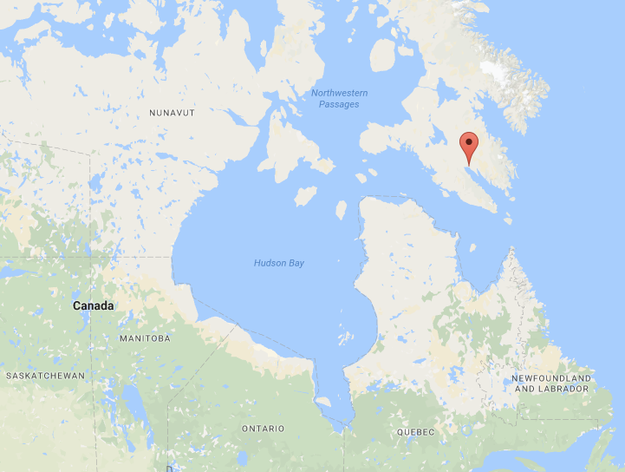
Here's where Iqaluit is:

Google Maps / Via google.com

Residents of Iqaluit say they live in fear that Amazon will cut off free shipping to their town because of how expensive it is, as it did in 2015 with much of the rest of the territory.

Much like when Wal-Mart leaves rural communities, the loss of Amazon Prime could be devastating, residents said, because of how much more they would have to spend on basic necessities like deodorant and groceries.

CBC news compared the prices of groceries in Iqaluit to those on the mainland in a June 24 article:

  • $6.90 for one kilogram of carrots in Iqaluit that was $2.25 on the mainland.
  • $13.70 for a five kilogram bag of flour, $5.00 on the mainland
  • $6.05 for a tube of toothpaste, $2.61 on the mainland

But residents are hoping that Iqaluit's high volume of orders per person will persuade Amazon to continue offering free shipping to the town. CBC reported that Iqaluit's post office is one of the busiest in the country, processing 88,500 packages, or 12 per Iqaluit resident, in the first five months of 2017.

According to Amazon, here's what qualifies as “postal codes that are difficult to serve” in Canada:

  • Towns far from a shipper's hub

  • Towns that are infrequently served by shippers

  • Canada Post Air Stage Locations (where mail must be airlifted at certain times of the year)

Only standard shipping is available in these remote locations, and Amazon said on its site to “please allow an additional 2-5 days for delivery to these locations.”

Amazon did not respond to requests to comment.

Amazon Is Lowering The Price Of Prime For People On Government Assistance

Quelle: <a href="This Rural Canadian Community Is Scared Amazon Will Cut Them Off“>BuzzFeed

Twitter Hires A New CFO After An Eight-Month Search

Josh Edelson / AFP / Getty Images

Eight months after starting its search for a new chief financial officer, Twitter has finally hired one.

The man picked for the job, Ned Segal, most recently worked for Intuit as senior vice president of finance. Before that he spent a long time at Goldman Sachs.

Segal's hiring frees Twitter Chief Operating Officer Anthony Noto from the burden of holding two C-level jobs inside the company. Noto, a critical player inside Twitter, became both its CFO and COO when he took over Adam Bain's COO role after Bain left the company in November 2016. While serving as COO, Noto continued to hold the CFO job as Twitter looked for a replacement.

Now Noto will simply be the COO, leaving Twitter CEO Jack Dorsey as the only member of the company's C-Suite to hold two jobs. Dorsey is also the CEO of Square.

In a release Twitter sent announcing his hiring, Segal said, “I’ve long admired Twitter’s impact in the world, and I’m committed to helping the Company build on its recent momentum, allocate resources against its greatest priorities, and continue toward its goal of GAAP profitability and beyond.”

After years of financial struggle, Twitter is having a good start to 2017. Its stock is up approximately 14% on the year, and it's looking solid next to Snap Inc., a competitor that recently went public and fell below its IPO price Monday. Now all Segal needs to do is help keep those numbers up.

s stock is up approximately 14% on the year, and it's looking solid next to Snap Inc., a competitor that recently went public and fell below its IPO price Monday. Now all Segal needs to do is help keep those numbers up.

Quelle: <a href="Twitter Hires A New CFO After An Eight-Month Search“>BuzzFeed

Did Amazon's Alexa Really Call The Cops During A Domestic Dispute?

New Mexico authorities say Amazon’s virtual assistant contacted police. One problem: The company says Alexa can’t make 911 calls.

Amazon

Police in New Mexico say an Alexa virtual assistant device contacted authorities during a domestic dispute earlier this month, but Amazon said on Monday that its devices are not capable of calling 911.

Eduardo Barros, 28, got into an argument while house-sitting with his girlfriend and her daughter on July 2 in Tijeras, about 15 miles east of Albuquerque, ABC News reported.

The argument became violent — Barros threatened to shoot the woman, whose name is being withheld, before hitting her in the face with a handgun, authorities said in a statement released on Monday.

At some point following the alleged attack, the Bernalillo County Sheriff's office was alerted to the domestic violence dispute. Per the statement, the office received a 911 call for service around 10 p.m.

Here's how the police statement said that the call was made: “Barros asked the victim, 'Did you call the sheriff?' This question, based on the victim's statements, prompted a smart home device known as 'Alexa' [sic] to contact law enforcement. In the 911 recording the victim can be heard yelling, 'Alexa, call 911.'” The device would have been Amazon's Echo or Echo Dot speakers, which can be controlled through the virtual assistant Alexa, which responds when users say its name followed by a command, for example, “Alexa, play country music.” Alexa can also be connected to a number of devices.

“The unexpected use of this new technology to help contact emergency services has possibly helped save a life,” Bernalillo County Sheriff Manuel Gonzales III said in the statement. “This amazing technology definitely helped save a mother and her child from a very violent situation.”

However, according to Amazon, the virtual assistant is not capable of dialing 911. “Alexa calling and messaging does not support 911 calls,” a company representative told BuzzFeed News. The phrase “call the sheriff” would not trigger a call to emergency services via Alexa, the representative said. Apple's voice-controlled assistant Siri supports 911 calling via iPhones, whereas the Google Home smart speaker does not.

Eduardo Barros

Bernalillo County Sheriff’s Office / Via Facebook: BCSDP

When authorities arrived at the scene, officers were able to remove the woman and her daughter, but Barros refused to leave the residence. He was taken into custody following a six-hour standoff with the Bernalillo County Sheriff's crisis negotiation team and a SWAT team, per the police statement.

Barros appeared in Bernalillo County Metropolitan Court in Albuquerque on July 5. ABC News reported that he has been charged with possession of a firearm or destructive device by a felon, aggravated battery against a household member, aggravated assault against a household member, and false imprisonment.


View Entire List ›

Quelle: <a href="Did Amazon's Alexa Really Call The Cops During A Domestic Dispute?“>BuzzFeed

Donald Trump Blocked These People On Twitter. Now They're Suing Him.

Seven individuals blocked by Donald Trump's personal Twitter account are suing the president and his communications staff because they say it's unconstitutional for the president to exercise “viewpoint-based blocking.”

The Knight First Amendment Institute filed the lawsuit on behalf of the plaintiffs on Tuesday morning in New York's Southern District, about one month after the organization issued an open letter calling for the president to unblock users who'd replied to the president's tweets with harsh criticisms. The original open letter suggested that a suit was pending if Trump and his team did not comply. The White House never responded to the letter.

In a formal complaint issued by Knight Institute lawyers Jameel Jaffer, Katherine Fallow, and Alex Abdo, they argue that as president, Trump's personal “account is a public forum under the First Amendment.” As evidence, the attorneys note that the Trump White House has previously acknowledged that Trump's tweets are “official statements,” and that Trump and his communications staff “use the account to make formal announcements, defend the President’s official actions, report on meetings with foreign leaders, and promote the administration’s positions.”

Most notably, the complaint quotes the recent Packingham v. North Carolina Supreme Court case, which noted in its ruling that social media accounts were “perhaps the most powerful mechanisms available to a private citizen to make his or her voice heard.” The Knight Institute attorneys argue in their complaint that a ban on interacting with @realDonaldTrump silences that citizen's voice and also deprives other accounts “of their right to read the speech of the dissenters who have been blocked.”

Represented in the suit are seven individuals, all of whom were blocked after criticizing Trump. While a majority appear to be Trump critics, a few claim to be joining the suit for less partisan reasons. “I’m troubled that the president can create a space on Twitter — where there are millions of people — that he can manipulate to give the impression that more agree with him than actually do,” Philip Cohen, a university professor, said in a statement about the suit.

When contacted, Twitter declined to comment on the lawsuit. Still, the complaint highlights the peculiar and uncharted territory of a presidency whose messaging is conducted largely across social media. Trump's @realDonaldTrump account, while used for official statements, is still a personal Twitter account. @POTUS remains the official account of the 45th president. On his personal account, Trump is theoretically able to control who he blocks and follows, as well as whether to make his account public or private (at the time of writing, his account remains unprotected and accessible to those he hasn't blocked).

But since taking office, Trump and his staff have been criticized for not subjecting his personal Twitter account to the usual levels of transparency normally affixed to White House communications. Trump has, for example, deleted a number of tweets with typos, which critics say is a violation of the Presidential Records Act. In June, an Illinois Congressman introduced the “Covfefe Act” — a tongue-in-cheek nod to Trump's infamous typo tweet — which aimed to make all Trump tweets subject to the Presidential Records Act and cataloguing in the National Archives.

Still, the First Amendment argument is a murky one. The suit alleges that “those who are blocked from the account are impeded in their ability to learn information that is shared only through that account” — however, users could still set up a new account to see Trump's tweets, or log out of the blocked account and go to Trump's profile. Similarly, the nature of a Trump tweet — each one is obsessively covered across the internet, and in print and cable news, as retweeted and quote retweeted — makes it highly unlikely that even a blocked user would never see a controversial 140-character presidential missive.

But for vocal opponents of Trump and his policies, Twitter has become ground zero for the resistance. In June, one active tweeter recently blocked by Trump told BuzzFeed News that engaging with a Trump tweet was a form of catharsis, and a chance to “fight back” during what he calls a “particularly depressing time” in politics. Similarly, duking it out in the President's mentions virtually guarantees vast exposure in the form of likes, retweets, and impressions, which, for many, is proof that their message has been heard. And though they could create another account or log out, one of the defendants in the suit suggests that, when it comes to the leader of the free world, that option is not sufficient.

“If I protest something that the president says or does, I want to do it under my own name,” Holly Figueroa, an organizer and party to the lawsuit, said, “not hiding in the shadows.”

Quelle: <a href="Donald Trump Blocked These People On Twitter. Now They're Suing Him.“>BuzzFeed

I’m Sick Of How Commercial Prime Day Has Become

Last night, we covered the mantle place in bright blue packing tape, hung our mustard yellow stockings, and we sang our carols to the UPS man. This morning, we awoke to another blessed Amazon Prime Day. But it sure as hell isn’t the Prime Day I once knew and loved. This formerly sacred day has been savaged by the corporations and their unrelenting greed. Apparently, it’s all about the Benjamins for them. Frankly, I'm DISGUSTED.

The usual gang of vultures — Walmart, eBay, Best Buy, Kohls, and a bunch of other retailers who probably think they merit mention in this column — seem to have decided that Prime Day shouldn’t simply be celebrated by browsing Amazon all day in your cubicle and hoping the boss won’t notice. No, they decided it’s about sales. About making money. About the “bottom line.” As if Prime Day was simply some consumerist holiday with no real meaning.

It's time we end this War on Prime Day.

Regular readers of this column know I love history, so here’s a healthy dose of it: Past experience tells us that anything good will be taken over by the corporations. These leeches will do whatever it takes to insert themselves into the zeitgeist. Remember Christmas? What if I told you it was once about something other than Starbucks. Remember the Super Bowl? What if I told you it was once about a football game. How would you feel? Not good, right?

Can’t we simply celebrate Prime Day as it was meant to be observed: clicking through an endless stream of algorithmically recommended discount Amazon products, as opposed to spending the whole day shopping and buying stuff from other retailers? I’d ask Jeff Bezos for comment. But frankly the Great Founder’s special day is now too depressing for me to speak about aloud. Plus I’m pretty sure he wouldn’t respond. And no, I don’t want to talk about my feelings.

A story: my nephew Timothy is a good kid. But he simply didn’t have the $99 it takes to become a Prime member. That’s okay, he’s 8. So Timmy Boy sent out an email to our family asking for some help. I personally like the young man, so I committed $5. My sister Dorthy added in $20. Aunt Winnie contributed $15. Anyway, we raised the money. And now Timmy Two Days gets shipping for free. Our family rarely comes together like this, and we only have Amazon to thank for it.

Which brings me back to the devils who think they can turn Prime Day commercial. Into something “non-Amazon.” I have a message for you: I’ll see you in hell.

First they came for Cyber Monday, and I said nothing.

Then they came for Toyotathon, and I said nothing.

Then they came for Prime Day, and I’m drawing the fucking line.

Quelle: <a href="I’m Sick Of How Commercial Prime Day Has Become“>BuzzFeed

You'll Never Have To Leave Facebook's New Campus If You Work There

You'll Never Have To Leave Facebook's New Campus If You Work There

On Friday, Facebook revealed its plans to build a new 59-acre campus across the street from its current headquarters in Menlo Park, CA.

The description of the new office, dubbed “Willow Campus,” sounds like a nearly complete town: It'll have apartments, local transportation, multiple parks, office space, a grocery store, and a pharmacy.

In addition to 1.75 million square feet of office space, there will be 1.6 million square feet of residential space and 125,000 square feet of retail and mixed-use space. Maybe you'll never leave if you work there? Maybe your manager will be your landlord?

Facebook said there will be 1,500 units of housing on the campus, 225 of which will be offered at below market rates, something the Bay Area desperately needs. The company said the residential housing will be for “local workers” as well as Facebook employees.

In its blog post, Facebook said its office park would bring “long-needed community services” to its home city. It also decried local government's “failure to invest in transportation infrastructure.” The company emphasized its own investment in local highway infrastructure and an affordable housing fund as efforts to mitigate the adverse effects of its growing business.

Facebook HQ — 430,000 square feet of office space designed by famed architect Frank Gehry — opened in Menlo Park in 2011. It's called MPK20. There's currently no housing there, according to a Facebook spokesperson.

The social network is positioning the plans as a big boon for its neighbors.

It published a video “Facebook and the Community” in the announcement and titled its blog post “Investing in Menlo Park and the Community.”

View Video ›

Facebook: video.php

Here are a few views of the new Facebook campus' planned layout:

Here’s where the train and bus station will be.

Here's where the train and bus station will be.

There will be seven parks in total, according to Facebook:

There will be seven parks in total, according to Facebook:

Facebook said it hopes to finish the retail, housing, and office space by 2021. And that's just Phase 1 of the development.

The company said the first step towards the campus will be submitting its plans to the city of Menlo Park this month. In its blog post about the new plans, Facebook said it expects the review process to take about two years.

Quelle: <a href="You'll Never Have To Leave Facebook's New Campus If You Work There“>BuzzFeed