Egg-Freezing And IVF Are Tech’s Hottest Perk

Monkeybusinessimages / Getty Images

When Upeka Bee applied to the startup Gusto this spring, she had recently turned 33, and was thinking about freezing her eggs. The engineer didn’t feel ready to have children yet, so she was prepared to shell out at least $15,000 of her own savings for the procedure.

To her surprise, Gusto informed her during the hiring process that it subsidizes up to $20,000 in fertility treatments. That perk, among other factors, helped Gusto stand out next to the four other companies who’d also offered Bee a job. It indicated that it was “a place that would be open to hearing my needs, a place I felt like I could belong and the values kind of matched,” Bee told BuzzFeed News.

In 2014, tech corporations like Apple and Facebook made headlines — and drew some criticism — for subsidizing egg-freezing and IVF. Three years later, the benefit is becoming more common in workplaces in Silicon Valley and beyond, surveys show. At a moment when the way Silicon Valley treats women is under scrutiny, even smaller startups are increasing fertility benefits as part of an attempt to hire and retain women, LGBT people, and other employees who want to start families. At the same time, a cottage industry has sprung up to help employers make egg-freezing and IVF more accessible to their employees.

One of them, a Y Combinator startup called Carrot, aims to simplify the process of offering fertility benefits for workplaces with anywhere from 200 to 2,000 employees. The clients it’s disclosed are all in tech: Gusto, which provides human resources software; the startup accelerator 500 Startups; and Peter Thiel’s venture capital firm Founders Fund, which also invests in Carrot.

“We’ve had companies call us and say, ‘We’re really trying to recruit this candidate and she’s asking about fertility benefits and can we set up our fertility benefits program?’” CEO and cofounder Tammy Sun told BuzzFeed News. “Even the fact that employees or candidates are asking for this as part of recruiting conversations or compensation negotiations is really important and a dramatic shift. It represents an acceleration in how the world views this type of benefit and this part of health care.”

Nadezhda1906 / Getty Images

Two years ago at age 34, Sun decided to freeze her eggs. None of the cost was covered by Evernote, her then-employer, Sun ended up paying $30,000 out of pocket. The experience gave her the idea to cofound Carrot with infertility doctor Asima Ahmad in early 2016.

Carrot teams up with an employer that wants to subsidize the out-of-pocket fertility costs for each of its employees up to a certain amount — say, $5,000 or $50,000. (The average national cost of IVF is about $23,000 per cycle, while egg freezing averages about $17,000, according to FertilityIQ, an information resource for patients.) Carrot then oversees that program, which means giving employees virtual access to on-staff nurses and doctors, and helping them get appointments at fertility clinics it partners with. (Carrot does not get paid by clinics for referrals.)

“In recruiting conversations, we would get the question, ‘Would you ever consider putting in fertility benefits? I’m 30 years old, I’m just starting here, I’m not sure if I want to have kids, when I want to have kids,’” said Katie Evans-Reber, Gusto’s head of human resources. In August, the 400-person San Francisco startup became the first company in California to extend fertility coverage to LGBT employees and their partners.

Asked whether the policy had improved retention or recruitment rates, Evans-Reber said metrics like that weren’t Gusto’s standards for success. “I think a lot of the ancillary benefits of this is that we are more attractive to women, we are more attractive to a diverse population, and our culture is one of close family ties,” she said.

“It felt like just a pure benefit to all employees.”

Not everyone thinks egg-freezing and IVF are such an unequivocal good — especially in an industry that has not historically been kind to women. In particular, critics have argued that covering egg-freezing and IVF effectively chains women to their desks through their childbearing years. “It essentially tells women that the only way they can succeed in the corporate America ‘mold’ is by not having a family,” one female tech CEO wrote.

But Emily Chiu, a 500 Startups partner who recently froze her embryos and eggs with Carrot’s help, thinks that argument is “ridiculous.”

“It felt like just a pure benefit to all employees,” she told BuzzFeed News. “I know I’m not the only one who’s used it. We have men who have gone through this process at our company. We have folks who are trans and gay who were excited when it happened. It just feels really inclusive.”

500 Startups started offering fertility benefits and Carrot’s services in December. About 30% of its US staff have used it so far, according to the accelerator. “We felt like it was something we should be offering and something that could improve the lives of some of our staff members,” said Monica Matison, 500 Startups’ head of human resources, by e-mail through a spokesperson. Meanwhile, Founders Fund offers each of its 35 employees up to $25,000 in fertility benefits, a spokesperson said.

It’s too early to tell how far these benefits will spread among small and growing companies, said Jake Anderson-Bialis, cofounder of FertilityIQ. But there’s a reason why the biggest companies have been the first to cover IVF and egg-freezing: They can afford to.

“You could easily screw this up if you did it improperly,” he said. “If you encourage a lot of your employees to go do IVF and those employees end up having high-risk multiple births — three or four — that may cost a company a million dollars.” A company like Carrot can help employees keep their medical risks and costs to a minimum, he said.

Sun said her goal is to make fertility coverage as typical as medical, dental, and vision insurance. Even over the last two to three years, she’s seen the conversation move in that direction. “A lot of the taboo around infertility is beginning to change in a positive way,” she said.

LINK: There’s A New Way To Pay For IVF, But No Guarantee It’ll Pay Off

LINK: These Tech Companies Have The Most Generous Fertility Benefits, Poll Says

Quelle: <a href="Egg-Freezing And IVF Are Tech’s Hottest Perk“>BuzzFeed

Tinder's New Look Puts Even More Emphasis On Your Profile Pics

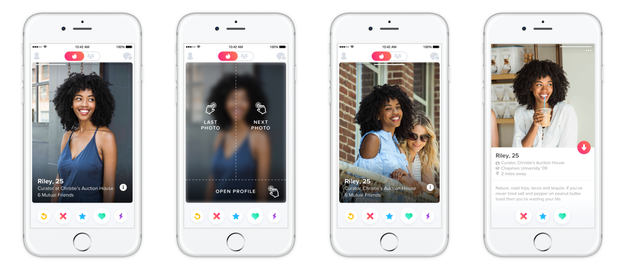
Get ready to start tapping through Tinder photos the same way you move through Snapchat Stories.

The widely used dating app is introducing a redesign today, one that brings Snapchat-like tapping gestures into its swiping screen and lets you flip through someone's photos without diving into their profile page. (You can still make a decision on a potential mate without tapping through all their photos.)

The redesign, while minor, will place even more emphasis on photos inside Tinder, an app that pioneered online dating's now-standard swipe right for “yes,” left for “nah” construct. The information people write about themselves in their profiles will be seemingly less visible in this iteration of Tinder.

“If you’ve ever tried Snapchat or Instagram Stories, you’ll be familiar with that tapping format,” Tinder's chief product officer Brian Norgard told BuzzFeed News in an interview. “The entire industry is taking inspiration from that.”

Norgard said that he didn't expect to see a decrease in profile visits from the new design, arguing people will need to visit profiles in order to get context to write a message. But he also admitted bios were never the core of Tinder.

So yes, add Tinder to the growing list of companies modeling parts of their product after Snapchat. No word yet on whether it plans to introduce Stories.

Quelle: <a href="Tinder's New Look Puts Even More Emphasis On Your Profile Pics“>BuzzFeed

I Can't Stop Laughing At These Tweets About A Drowned Security Robot

I Can't Stop Laughing At These Tweets About A Drowned Security Robot

On Monday, product manager Bilal Farooqi tweeted a photo of a robot in a Washington, D.C. office complex that apparently drowned itself in a fountain.

The robot in question seems to be a Knightscope security robot, which is designed to patrol an area and alert authorities if it detects prohibited activity.

A promotional video for the robot depicts it identifying a break-in and helping a woman in a parking lot make an emergency call. It looks a lot like the despondent robot in Farooqi's tweet, which appears to have been found floating on its side in a fountain.

youtube.com

This wouldn't be the first time a Knightscope Security Bot has encountered difficulties on the job. Local news outlets in Palo Alto, CA reported that one of the Knightscope robots patrolling the Stanford Shopping Center ran over a toddler in July 2016. Farooqi and Knightscope did not immediately respond to a request for comment.

To a lot of people on Twitter, the drowned android bore a striking similarity to Marvin, the depressed robot in Douglas Adams' famed novel The Hitchhiker's Guide To The Galaxy.

youtube.com

But it's not just Marvin. There's are a lot of depressed robots out there.

In related news, a robot named Hitchbot that was trying to hitchhike across the United States was found decapitated in Philadelphia in 2015.

Quelle: <a href="I Can't Stop Laughing At These Tweets About A Drowned Security Robot“>BuzzFeed

Amazon Could Get Into Meal Kits, And It's Crushing Blue Apron

Scott Eisen / Getty Images

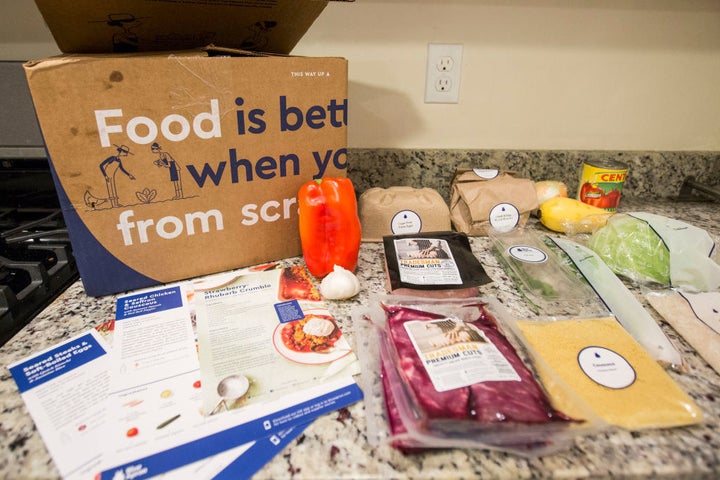
Investors think the meal-kit delivery service Blue Apron has a very dangerous enemy: Amazon.

Shares of the newly public meal-kit company dived again on Monday morning following news that Amazon had applied to trademark the phrase “We do the prep. You be the chef,” suggesting that the e-commerce giant is planning to launch its own prepared meal-kit service.

Blue Apron's stock fell about 11% to $6.55 as of noon on Monday, down 35% from its initial public offering price of $10. The IPO had originally been projected to be priced between $15 and $17, but fell as concerns mounted about Blue Apron's high marketing spending, and due to pressure from Amazon's plan to buy Whole Foods.

The trademark application is for “prepared food kits composed of meat, poultry, fish, seafood, fruit and/or and vegetables and also including sauces or seasonings, ready for cooking and assembly as a meal” as well as frozen meals. While the filing doesn't mention delivery specifically, it is listed under, among other things, “retail store services and online retail store services in the field of fresh and prepared foods and dry goods.”

Yahoo Finance/BuzzFeed

The British newspaper The Times first reported the trademark application on Sunday.

Amazon and Blue Apron did not immediately respond to requests for comment.

Amazon is planning to acquire Whole Foods for almost $14 billion, a move that put the fear of Bezos into much of the retail and grocery sector. The merger was announced while Blue Apron was preparing to go public, and may have contributed to the meal-kit company's bankers lowering their estimate for its share value until the day they began to trade.

While Amazon has said little about how it would operate Whole Foods, many analysts have speculated that some kind of meal-kit delivery service — using Amazon's existing logistics expertise and built-in network of Amazon Prime customers — would be a natural integration between the two.

Not all patents and trademarks registered by technology companies turn into actual services, but Blue Apron has been a skittish stock since it went public late last month — it fell over 10% last week after a brokerage firm put out a research report pegging its value at only $2 a day. Amazon shares were up by less than 1% by mid-Monday.

A Single Share Of Blue Apron Now Costs Less Than A Single Blue Apron Meal

Blue Apron Shares Rose 0.00% On First Day Of Trading

Blue Apron Goes Public On Thursday, But It’s Not Looking Pretty

Quelle: <a href="Amazon Could Get Into Meal Kits, And It's Crushing Blue Apron“>BuzzFeed

Here Are The New Emojis Coming To Your iPhone

Today is World Emoji Day — no, it's not a bank holiday, sorry — and Apple decided to commemorate the occasion by revealing the next batch of emojis that will be coming to your iPhone in the coming months.

The new class of emoji are determined each year by the Unicode Consortium, the technical organization that governs the evolution of emojis and handles new proposals. It's a long process — many of these current emoji were approved back in November. Anyone can submit proposals and a number of the new emojis came from proposals written by people like Rayouf Alhumedhi, a 15-year-old student in Berlin, Germany who came up with the headscarf emoji.

A hearty welcome to the Class of 2017, which includes:

Vomiting Face — truly an emoji for our times:

Vomiting Face — truly an emoji for our times:

Exploding Head:

Exploding Head:

Zombie:

Zombie:

Breastfeeding:

Breastfeeding:

Meditation Dude:

Meditation Dude:

…Elf?

...Elf?

T-Rexxxxxxxx:

T-Rexxxxxxxx:

Regal Zebra:

Regal Zebra:

This guy:

This guy:

Zany Face:

Zany Face:

And, of course, Alhumedhi’s Woman With Headscarf:

And, of course, Alhumedhi's Woman With Headscarf:

Not pictured (because they're deadbeats and didn't come to photo day): Sandwich, Genie, and Coconut.

Quelle: <a href="Here Are The New Emojis Coming To Your iPhone“>BuzzFeed

How Normal Is Your Slack Chatting Behavior?

True or false: Only monsters would use @channel on a whim.

Hello, fellow computer humans! Let’s discuss office productivity software, shall we?

Hello, fellow computer humans! Let's discuss office productivity software, shall we?

This is Slack. It's a chat program that people use at work, but also sometimes for other stuff. And it's kind of confusing HOW people use it, especially since you might only use it at work and therefore it's totally tied to your one specific office culture. So let's find out how we all are using it, and then you'll know if you're the one freak!

E! Television / Slack


View Entire List ›

Quelle: <a href="How Normal Is Your Slack Chatting Behavior?“>BuzzFeed

Virtual Reality Is Medical Training's Next Frontier

Courtesy Bioflight

There's a baby boy on a stretcher in a children's hospital emergency room. His mother is standing nearby, begging the doctors to do something, as her baby lies there. He is drooling and shaking; his diaper is soaked; he is making a disturbing snoring noise. An EMT comes in and says, “Doctor, this is a one-year-old male found by the mother at home, having a seizure. The seizure's been lasting about seven minutes. Blood glucose on scene was 90.” The EMT leaves.

A nurse exclaims to the doctor, “You have to do something! He is seizing! He is seizing!”

“Are you just going to let him die?” the mother wails.

The doctor has just a few seconds to make a decision. Should she put an oxygen mask on the baby? Give the baby Ativan or another anti-seizure medication? Quickly, she has to makes her choice, or the baby is going to die.

Well, not actually. This was a virtual reality simulation designed by doctors at Children's Hospital Los Angeles in conjunction with Oculus's VR for Good program and the companies AiSolve and Bioflight, intended to help medical students and residents get training in the kinds of low frequency, high stakes situations that children's ER doctors encounter — situations that are particularly expensive and logistically complicated to teach.

According to Dr. Joshua Sherman of CHLA and the USC Keck School of Medicine, VR helps solve several problems for medical training programs: expense, accessibility, and verisimilitude. (Sherman also helped develop the training.) Hands-on training for medical students and residents is time-consuming and expensive — mannequins run upwards of $50,000, plus maintenance and tech support — and also requires a room full of actual people to play the doctors and nurses. The other type of training currently used is screen-based training, but that doesn't closely mimic a real-life situation. VR manages to replicate the atmosphere of an emergency room situation while also being accessible — a trainee can easily do it on his or her own time. Besides the simulated nature of the experience, the main drawbacks right now are lack of voice control and inability to have more than one person in the experience at the same time. There's also currently only two training modules, so the applications are limited.

Sherman’s first VR experience was the Oculus Dream Deck — which puts users at the top of a very tall building. Sherman, who is afraid of heights, felt his heart rate go up and his palms get sweaty. “I knew it was not real but I couldn't get myself to jump,” he said. “When I felt that physiologic response and how similar it was to the real world, I immediately thought, why can't we use this to simulate the response on resuscitations? We can train people who we can't train in real life, up to an extent, so then when they face it in real life, it still will be very stressful but they will be able to select the correct items and protocols under pressure.”

I'm not a doctor, nor am I training to be one, but when I tried the simulation (or as it's officially called, the “VR Pediatric Resuscitation Module 1: Status Epilepticus”), I found myself getting anxious about choosing the right protocol for this fake baby. Though I was guided through it by Clay Park VR founder and former Oculus developer relations specialist Shauna Heller, who produced the project, it was still nerve-wracking to be inside this emergency room, responsible for saving the life of an infant.

Sherman said that's entirely the point. “We compared the physiology of stress in real-life emergency situations to that of people going through VR — their heart rate, breathing rate, and salivary cortisol, which is a stress hormone. The preliminary data shows that the heart rates definitely correlate between the real world and VR world.”

Much like a video game, the simulations have different levels that students can progress through; the more advanced levels have more distractions. Marie Lafortune, a chief resident at CHLA, said she'd never used VR before and isn't good at video games, but quickly took to the medical simulation, which she described as a complement to mannequin and screen-based training. “It can be more challenging to think straight in highly stressful situations,” she said. “Virtual reality puts you in that situation. And there's also a virtual reality parent there that's triggering some emotional responses. She's like, 'My baby, do something to help my baby.' Inside you, you're hearing this parent and you are in a way almost distracted by them and you need to refocus. So you get to experience that stress and practice putting into action some of the medicine that you know or that you're learning.”

Several other medical-related VR experiences exist — a neurosurgeon at UCLA uses it to interpret MRI scans, for example, and there's another group using it to help train people on doing colonoscopies, as well as people using it for psychological reasons like anxiety reduction and pain relief — but this seems to be the first specifically dedicated to children's emergency medicine. Oculus financed the entire project through its VR for Good initiative.

Though a spokesperson declined to give specific budget numbers, she told BuzzFeed News via email that the cost of the project was less than the cost of a year of medical simulation training at CHLA. With additional funding, Sherman envisions a future where medical schools and hospitals can have a library of VR training modules for different scenarios. “A trainee — a medical student, resident, or EMT — could go to their computer in their staff lounge or at home and decide, 'Today I want to practice how to take care of someone having a heart attack.' The next day, they could practice a seizure,” he said. “I want this to be available internationally, in places where they don't have funds for mannequins.”

Also on his wish list for the future is voice control — right now, the “doctor” can only respond to what's happening in the room by using hand controls — and team play, which would help people practice communication and teamwork. But that's all up in the air until the team can get more funding. Sherman has applied for federal grants and has approached different organizations, like epilepsy foundations, about helping to fund the VR training, but so far nothing has come through. He also recently presented at the National Board of Medical Examiners, which he said is potentially interested in using VR as an assessment tool.

“People want more research and more proof that it works before they throw down that kind of money to develop it,” he said. “We're working on that and that getting it out there. Spreading it might spark interest with people who might want to fund more.”

Quelle: <a href="Virtual Reality Is Medical Training's Next Frontier“>BuzzFeed

The Woman Hired To Fix GitHub’s Troubled Culture Is Leaving, And Employees Are Worried

A top executive’s departure from Github has reignited an internal debate over company culture and contributed to mounting concerns about the startup’s commitment to improving diversity and inclusion.

Nicole Sanchez, the executive tapped to oversee GitHub's diversity and inclusion efforts in the aftermath of a 2014 sexual harassment scandal, resigned as GitHub's vice president of social impact earlier this month; today will be her last day.

“It's been a rewarding three years working with GitHub: I am proud of what we've been able to accomplish as a company, including key improvements in diversity metrics,” Sanchez said in an email statement. “I believe in the Social Impact team at GitHub and I'm excited for the work to continue.”

In a statement, a company spokesperson said, “We have worked very hard to make GitHub more diverse and inclusive internally, on our platform, and in our community.” But while GitHub says it remains “firmly committed” to the work of Sanchez’s social impact team, conversations with almost a dozen current and former GitHub employees, as well as a review of internal communications obtained by BuzzFeed News, suggests her departure has reignited an internal debate over company culture and cast some doubt on GitHub’s ability to repair what one former employee called an “entrenched culture” that favors white male employees and is resistant to change.

Following a 2014 sexual harassment scandal, then-CEO Tom Preston-Werner resigned, and GitHub has made a highly public renewed commitment to diversity and inclusion. In 2015, Sanchez left her private consultancy to join GitHub full-time, bringing with her two employees for her social impact team, which she would expand to a staff of 11. The team was tasked with improving diversity and inclusion practices and strengthening the company’s commitment to community. But some employees worry the company’s resolve has faltered in recent months, as financial pressure has escalated and the social impact team lost some of its initial support.

GitHub is a code repository widely used by engineers throughout the tech industry as a resource for sharing and learning. One current employee who spoke with BuzzFeed News anonymously explained his concern over Sanchez’s resignation. “I probably wouldn’t have applied for this job if [the social impact] team didn’t exist,” he said. “There are a lot of people who care deeply about the future of social impact as it affects us internally, and how GitHub impacts the world.”

Three years ago, former GitHub engineer Julie Ann Horvath went public with allegations of sexual harassment and discrimination at the company; these included being verbally attacked and threatened by then-CEO Tom Preston-Werner’s wife, insulted on anonymous social networking app Secret, and having her personal life discussed in company chat rooms. Ultimately, her allegations led to an internal investigation and, while Preston-Werner wasn't implicated in any harassment, he ultimately resigned. Since then, GitHub has worked to rehabilitate its image, prioritizing diversity hiring and introducing more traditional management that ended the company’s notorious bossless, flat management structure.

Sanchez joined GitHub full-time in 2015, just two months before GitHub raised $250 million in venture capital in a Series B round led by Sequoia, giving the company a $2 billion valuation. She ultimately hired 11 people, including technical director Danilo Campos, who joined the company with enthusiasm, despite being openly critical of how GitHub investor Marc Andreessen initially supported Preston-Werner during the 2014 scandal.

(Andreessen blocked Campos on Twitter shortly thereafter.)

The team hit the grounding running: In July 2015, the company proudly announced the beginning of the ConnectHome initiative, an effort to use technology to bring low-income families online for free. In December of that year, Campos was profiled by the San Francisco Chronicle for his work in public housing, which he described as an opportunity to diversify the talent pipeline for the entire tech industry.

But at the same time, tensions inside GitHub were mounting. In February 2016, Business Insider published a story on what it called the “full-blown culture war” at the company, which referenced both Sanchez's and Campos's strident approaches to diversity as a source of conflict among employees. Though Github said there was no fallout for the team over that article, internal communications reviewed by BuzzFeed News suggest that GitHub’s board of directors increased its scrutiny of GitHub’s social impact team following its publication.

Spending at GitHub, especially around headcount, drastically increased throughout 2016, Bloomberg reported. In October, the company brought on Tesla alum Mike Taylor as CFO to help rein in spending and generally get the house in order. That December, the social impact team learned its budget would not be increased for 2017, despite projected companywide growth.

The budgeting decision came around the same time that some employees started to notice a shift in focus inside the company. One GitHub employee said the social impact team was “going well in terms of progress,” but seemed to have “slammed into a wall” around the end of 2016. “Suddenly it really seems like the executive team, and particularly [CEO Chris Wanstrath] was a whole lot less into hearing … from Nicole in terms of strategy, and how to handle complicated situations,” this person told BuzzFeed News.

“They’ve hired so many activists in tech and participate in diversity theater, and yet I get calls from people suffering at the hands of management and poor company values.”

A second person who worked at the company echoed that statement. “In terms of companywide programs like diversity and inclusion training, it felt like there was lots of momentum at the beginning, and it sort of fizzled out,” said the former employee. “These initiatives, which were really top-notch, were broadcast less and less as time went on.”

Julie Ann Horvath said she, too, had a sense that things inside GitHub weren’t as rosy as they appeared externally. At least three GitHub employees reached out to Horvath privately to share their concerns about the company’s culture, she told BuzzFeed News. At least one of those interactions took place in spring of this year, BuzzFeed News confirmed. “They’ve hired so many activists in tech and participate in diversity theater, and yet I get calls from people suffering at the hands of management and poor company values,” Horvath said. “They’re obviously putting something out into the public that’s disconnected with what people there have been experiencing.”

In an email statement, a GitHub spokesperson said the company is “proud of the strong relationships our team has built with communities and organizations around the world” and remains “firmly committed to being the most inclusive company we can be and that our employees and community deserve.”

These mounting concerns about the social impact team’s waning influence at GitHub were kept mostly quiet until last month, when tensions hit a boiling point and put in motion a series of events that would end in Sanchez’s resignation.

At the end of June, a member of Github’s finance team posted a plan for a new equity grant program on GitHub’s internal message board. The plan, according to the announcement, was meant to “reward high-performing Hubbers with an increased stake in the company,” according to screenshots of the announcement reviewed by BuzzFeed News. Here’s an excerpt:

We plan for this to be an annual program tied to the year-end performance review process. Each year, the available pool of merit-based stock options will be determined based on company performance in the prior year. Generally speaking, not every Hubber will receive a merit-based grant. When the company’s performance is strong, we will likely be able to award more Hubbers with merit-based grants, but the reverse is true when company performance doesn’t hit target. For FY17, GitHub reached 88% of our revenue target. Each Hubber’s eligibility and/or number of options will depend on their role, scope of impact, and performance.

This news unsettled GitHub employees, more than 50 of whom left comments on the announcement about the new stock option program.

“I feel this is antithetical to the values we purport to have as a company,” said one female engineer. “When collaboration is one of our top listed values, yet we put a compensation system in place that actively encourages competition versus collaboration there seems to be a huge disconnect.” A second employee echoed her concerns, saying, “This system seems at odds with the growth that GitHub has achieved so far. … It feels like a step back.”

“I feel this is antithetical to the values we purport to have as a company.”

Multiple comments mentioned the folly of tying equity rewards to GitHub’s problematic performance review system. One manager in particular wrote, “in the most recent feedback cycle, I submitted performance ratings for my team only to find out later that one of them was lowered without my knowledge or consultation. How can I make the case to my reports that their opportunity for equity is fair when I can't guarantee that their performance ratings are reflective of my opinion as their manager?”

While the majority of employees who commented on the proposed equity plan appeared to oppose it, a few others were supportive. Such differences of opinion inspired some arguments between employees, something that seems to have fueled Wanstrath’s frustration the next day, when he said in a post on Github’s internal message board he was “deeply disturbed by the way that much of this discussion has been handled.”

For Wanstrath, the new plan would bring order to equity granting at Github, which he said had previously been distributed in an “ad hoc” and “chaotic” manner, and said that CFO Mike Taylor had been brought on in part to resolve that issue. While conversation and even disagreement is needed, Wanstrath wrote, “this is not how we will disagree at GitHub.”

“There's been a lot of thought, hard work, and years of experience put into this new system. It's not perfect and not everyone will agree with it. But I believe in it, I support it, I know we will improve on it, and I am not going to turn back,” he wrote.

Several GitHub employees who spoke with BuzzFeed News said Wanstrath’s unusually stern tone surprised them, as did his determination to roll out the equity grant program despite employee consternation. Wanstrath declined to be interviewed for this story, but in a statement, a spokesperson for GitHub said, “Performance-based equity compensation programs are standard and widely utilized to incentivize and reward employees. We're focused on designing and implementing our program in a way that is consistent with our company values.”

On the same day Wanstrath posted his response to employee comments, Sanchez shared a list of concerns about the situation in a public Slack channel, screenshots of which were reviewed by BuzzFeed News. She told employees she was worried the new equity program would “replicate the same systems of disparity that exist outside” Github, and afraid that she was “watching factions splinter this company in ways that may be irreparable.” On the following Monday, Sanchez tendered her resignation.

In a statement on her decision to leave GitHub, Sanchez said she is “looking forward to returning as CEO of my firm, Vaya Consulting, where I will work with companies and leaders like GitHub (and Chris) who are ready to take meaningful action on bringing their cultures to the next level.”

But employees who spoke with BuzzFeed News said the timing of her departure seemed significant. “She was our voice and that voice must have been losing influence,” said one anonymous employee. “I think she’s getting out before her hands are more tied than they already are and all the work social impact does takes a step backward.”

Wanstrath announced the news of Sanchez’s departure that Tuesday in GitHub’s internal message board, where over three dozen employees left comments. “Incredibly saddened to read this,” said one. Another asked whether Wanstrath planned to fill Sanchez’s vacancy. Wanstrath didn’t immediately reply. Meanwhile, nearly 150 employees joined a new, private Slack channel called “Save Social Impact.”

“All everyone in the channel really wants to know is if the social impact team will be disbanded with Nicole’s departure,” a GitHub employee who is a member of the channel told BuzzFeed News. “That’s pretty much our only demand: keep social impact as a high priority.”

Some of that message seems to have gotten through. Last week, GitHub announced that it’s putting the merit-based equity plan on temporary hold, and it started organizing roundtable conversations with employees to discuss details and concerns. On Thursday, the executive team reiterated its commitment to the social impact team internally, and announced an interim leader. GitHub declined to share who that would be.

“It was only after I started navigating the larger culture that I saw things hadn't changed.”

Sanchez’s departure from GitHub comes at a moment of crisis for a tech industry grappling with several high-profile sexual harassment and discrimination scandals. Earlier this year, ex-Uber engineer Susan Fowler wrote a blog post about her experience at the company, a move that sparked two investigations into patterns of harassment and discrimination at Uber, the termination of at least 20 employees, and the ultimate resignation of CEO Travis Kalanick. More recently, a number of prominent venture capitalists in Silicon Valley have been accused of sexually harassing female founders seeking funding for their startups; three — Justin Caldbeck of Binary Capital, Dave McClure of 500 Startups, and most recently Frank Artale of Ignition Partners — have since resigned.

As the tech industry embarks on an effort to change its ways, for some who worked at GitHub, Sanchez’s tenure will serve as an example of how hard it is to shift a company’s culture.

One former GitHub engineer who says she was let go from the company in October said the initial team she was hired to work on was “diverse and great,” but over time she realized that the “old guard” was still very present inside GitHub. “It was only after I started navigating the larger culture that I saw things hadn't changed,” she said. “There’s still a bro culture. Women are treated exceptionally differently.”

Earlier this month, former GitHub engineer and prominent diversity activist Coraline Ehmke published a blog post about her experience at GitHub, including her eventual termination. Multiple sources said her overarching assessment of GitHub rang true. “Even though the executives had been talking about changing things and had hired people nominally to change things … there was a lot of resistance at ground level, because most of the people who were there are cis gender white guys who don't see a problem,” Ehmke, who is a prominent trans activist, told BuzzFeed News. “They weren't actually interested in change, they are interested in attaching my name to their PR campaign to talk about how they were changing the culture.”

Horvath said she hopes the episode helps the executive team at GitHub focus on practical solutions. “Women and women of color deserve a lot better,” Horvath said. “GitHub needs to stop trying to innovate on everything, and put proven structures in place to prevent things like this. Focus more on your people than your image.”

Quelle: <a href="The Woman Hired To Fix GitHub’s Troubled Culture Is Leaving, And Employees Are Worried“>BuzzFeed


This Doctor Says Gwyneth Paltrow’s Goop Promotes Bullshit. Goop Just Clapped Back

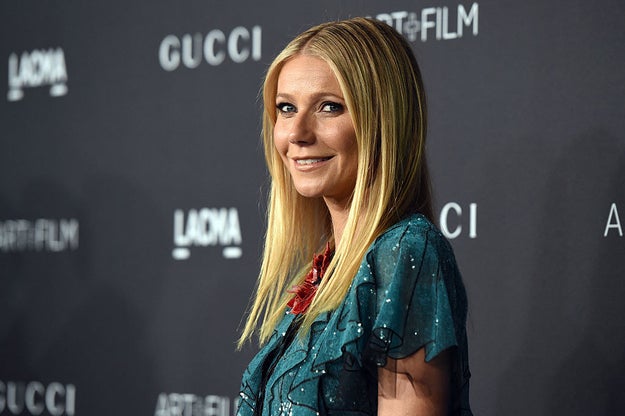
Jason Merritt / Getty Images for LACMA

Medical experts have long slammed Goop, Gwyneth Paltrow’s e-commerce wellness empire, for endorsing non-scientific and potentially dangerous products — from sex dust to silver nanoparticles — and pseudoscience personalities.

But on Thursday, Goop for the first time singled out one of its most vocal critics, obstetrician-gynecologist Jen Gunter, who routinely takes the site to task on her Twitter and blog. In particular, it defended the vaginal jade eggs that Gunter lambasted earlier this year.

“Since her first post, she has been taking advantage of the attention and issuing attacks to build her personal platform — ridiculing the women who might read our site in the process,” the company wrote in a blog post.

The post was called the “first in a series,” a sign Goop is taking a newly aggressive approach to its detractors. “When they go low, we go high,” Paltrow tweeted.

“I feel like I’ve fallen through the looking glass,” Gunter, a San Francisco doctor who has been writing about Goop since 2015, told BuzzFeed News by phone. When she first read the post on a train through England, where she is on vacation, she said she found it so “ludicrous” that she laughed.

“It’s just odd I have to defend myself against a website that passes on the idea that bras cause cancer or that people should listen to someone who talks to a spirit for their health care,” she said. “So I’m absolutely flabbergasted that they chose me as the center of their ire.”

No matter how much heat it draws, Goop continues to rise. Within the last year, it’s raised $20 million, hosted its first health and wellness summit in Los Angeles last month, and begun selling its own branded line of dietary supplements in the spring.

Gunter has dissected many of Goop’s products, but one of her most viral takedowns concerned its $66 jade eggs, which are designed to be inserted into the vagina. In January, Goop published a Q&A with Shiva Rose, a “beauty guru/healer/inspiration/friend,” who praised the eggs for their ability to “help cultivate sexual energy, increase orgasm, balance the cycle, stimulate key reflexology around vaginal walls … intensify feminine energy, and invigorate our life force.”

Jen Gunter

Via drjengunter.wordpress.com

Gunter wasn’t buying it. “I read the post on GOOP and all I can tell you is it is the biggest load of garbage I have read on your site since vaginal steaming,” she wrote, referring to another Paltrow-endorsed practice. A woman could harm her pelvic floor muscles by using it, she warned, and get infected by bacteria.

Goop called Gunter’s post “mocking” and emblematic of media coverage of Goop that “suggests that women are lemmings.” “As women, we chafe at the idea that we are not intelligent enough to read something and take what serves us, and leave what does not,” it wrote. “We simply want information; we want autonomy over our health.”

Gunter disagreed that criticizing Goop is anti-feminist. “Writing things that are not scientifically based for women is the exact opposite of feminism,” she said. “You’re disempowering women. Giving them bad information hurts them.”

Goop also argued that the ideas it promotes should not be rejected just because they are outside mainstream Western medicine. “Studies and beliefs that we held sacred even in the last decade have since been proven to be unequivocally false, and sometimes even harmful,” it wrote.

Gunter says this is an oversimplification. “Of course science is changing, but that doesn’t mean you should doubt what is biologically plausible and what we know currently,” she told BuzzFeed News. For example, homeopathy — the Goop-endorsed belief that a disease can be cured by a substance that produces similar symptoms in healthy people — “is not biologically plausible,” she said. “We don’t need to wait for any more science to tell us homeopathy doesn’t work.”

Goop’s post included letters from two doctors who write for its website. One was Aviva Romm, an integrative physician, midwife, and herbalist. Another was Steven Gundry, who believes that certain proteins in grains and beans cause disease, and who called out Gunter for criticizing his research and “throwing F-bombs.” A Goop spokesperson told BuzzFeed News, “The purpose of the letter is to stand behind our doctors, and stand behind the readers who tell us that advice and guidance from these doctors has had a positive impact on their lives.”

But Gunter said she didn’t understand Gundry’s letter, since she’s never written about him aside from one seven-word mention of his work. “I was shocked to see Gundry mansplaining science to me,” she said. “I have four board certifications. I was a doctor when I was 23.”

“It’s just odd I have to defend myself against a website that passes on the idea that bras cause cancer.”

She also questioned why Goop singled her out of all its other critics, from Stephen Colbert to Jezebel. “I’m just a chick with a blog,” she said.

Timothy Caulfield, author of Is Gwyneth Paltrow Wrong About Everything?: When Celebrity Culture and Science Clash, praised Gunter for holding Goop accountable.

“She writes in a way that is relevant to health care providers, to patients and to the public,” Caulfield, a health law and policy professor at the University of Alberta, told BuzzFeed News. “She doesn’t pull any punches, but she also makes sure what she says is evidence-informed. I think we need more and more voices like Jen to combat the noise on pop culture around health, which is often dominated by science-free celebrities.”

Quelle: <a href="This Doctor Says Gwyneth Paltrow’s Goop Promotes Bullshit. Goop Just Clapped Back“>BuzzFeed

Leaked Documents Suggest Secretive Billionaire Trump Donors Are Milo’s Patrons

Photo illustration by BuzzFeed News; Getty Images

Secretive hedge fund billionaire Robert Mercer and his family launched themselves into the top rank of American power through a series of spectacularly successful cash investments in politics: in Breitbart News, the far-right media outlet; in Cambridge Analytica, the controversial political data firm; and, of course, in Donald Trump, the President of the United States.

To those ventures — and a host of others — newly uncovered evidence strongly suggests an addition: Milo Yiannopoulos, the anti–political correctness crusader and conservative provocateur.

Leaked documents, including a promissory note and emails, as well as conversations with several people familiar with the matter, strongly imply that the Mercers funded Yiannopoulos following his resignation from Breitbart News after video surfaced in which he appeared to condone pedophilia. Together, they suggest that the financiers of the new conservative politics aren’t simply interested in protecting their money, but in winning a brutal new culture war waged largely online.

More than that, the documents point to a relationship that Yiannopoulos seems to regard as a kind of personal patronage, expecting from the family not just financial but legal support, after the British citizen’s visa status became tenuous post-Breitbart.

“Rebekah Mercer loves Milo,” said a source familiar with both Yiannopoulos and the Mercers, of the eldest Mercer daughter, who runs the family’s foundation and served on the executive committee of the Trump transition team. “They always stood behind him, and their support never wavered.”

The Mercer family declined requests for comment.

Yiannopoulos resigned from Breitbart News in a press conference February 21. Less than a week later, in an email entitled “Entity” and addressed to a handful of staffers, his lawyer, and Breitbart editor in chief Alex Marlow, Yiannopoulos mentioned the Mercers as funders of his new venture:

“We must aggressively start researching what kind of entity we set up that can be invested with my IP, run my core operations and accept Series A funding (Mercers plus potentially others).”

The same day, in an email entitled “NDAs” addressed to his attorney, Marlow and others, Yiannopoulos wrote, “I have 21 and 22 year olds working in proximity to and even potentially communicating directly with the Mercers, outside the cover of Breitbart or GS contracts…I can’t wait any longer to issue NDAs, even if they’re not perfect and have to be replaced later.” [GS refers to Glittering Steel, a Mercer-funded production company that shares an address with Breitbart News.]

Marlow responded, “agree, urgent.”

A source familiar with Yiannopoulos’ operation confirmed that some of his staffers are under 22. Indeed, the age and inexperience of his staff appeared to be a source of concern for Yiannopoulos vis a vis his benefactors.

In an all-caps, underlined and bolded email sent to members of his staff later the 27th, Yiannopoulos wrote, “IF YOU HAVE CALLS WITH INVESTORS, I NEED TO BE ON THEM OR I NEED A DEBRIEF EMAIL AS SOON AS YOU HANG UP AND MY PERMISSION NEEDS TO BE SOUGHT AHEAD OF TIME, BEFORE YOU MAKE THESE CALLS. YOU DON’T KNOW WHO ANY OF THESE PEOPLE ARE AND THIS WILL CAUSE ME COLOSSAL PROBLEMS WITH THE MERCERS IF IT CONTINUES.”

The next day, in an email exchange with current Milo Inc. CEO Alexander Macris about the logistics of the new business, Yiannopoulos discussed the costs of office space and housing for his staff in the context of the Mercers:

“ONE LARGER HOUSE NEARBY PAID FOR BY BUSINESS FOR ALL THE STAFF THAT DOUBLES AS OFFICE AND STUDIO (MERCERS ARE COMFORTABLE WITH THIS MODEL — THEY DO IT AT BREITBART LONDON)”

And later in the exchange, referring to an early editorial budget, Yiannopoulos wrote,

“One thing this does not include is SECURITY but my sense is that the Mercers will not be hugely sensitive to cost there.”

Yiannopoulos appeared to move quickly from planning to funding. On March 2nd, in an email entitled “Next mtg with mom and dad,” Yiannopoulos asked an assistant to set up dates to “present the budget to investors” with Marlow “then suggest those dates to the Mercers.”

Two days later, in an email to his lawyer entitled “Mercer loan paperwork,” Yiannopoulos attached a copy of a $50,000 promissory note naming him as the “Maker” and Robert L. Mercer as the “Payee.” The unsigned note lists Mercer’s address as 149 Harbor Road, Head of the Harbor, New York, which is the address of the Mercer estate, known as Owl’s Nest.

Asked by email whether the Mercers funded Milo Inc., Macris responded, “We pitched the Mercers back in March, but we didn't secure a deal with them.”

When asked to clarify if the Mercers had funded Milo Inc. or Yiannopoulos directly at any point after his resignation from Breitbart, Macris responded, “My company has not done a deal with the Mercers and I am not their spokesperson.”

Florida business records show that paperwork was filed for Milo Entertainment, Inc.’s incorporation on April 17, and list Yiannopoulos, not Macris, as the company’s CEO. According to Macris, he assumed the role on May 1.

Yiannopoulos did not respond to multiple requests for comment.

$50,000 is far less than the $12 million Yiannopoulos told Vanity Fair in April that he had raised for Milo Inc. It’s unclear if the $12 million figure is accurate and, if so, how much of it comes from the Mercers. (An early budget shared with BuzzFeed estimates the business’ annual payroll to be $1,179,000.)

Regardless, Yiannopoulos clearly understood the Mercers’ support to be more than financial. In the February 27 exchange, Macris asked Yiannopoulos about his immigration status: “Do you presently have a visa permitting you to work in the US? If so, will it still be valid if you are not with Breitbart? . . . It is a virtual certainty that if you don’t have a visa you’ll be targeted by the enemy.”

“I AM ON AN O-1B,” Yiannopoulos responded, referring to a special kind of nonimmigrant visa that requires an American sponsor, which had been Breitbart. “I HAVE 57 DAYS LEFT TO FILE A PETITION TO MOVE 0-1B TO NEW SPONSOR IF IT COMES TO IT THE MERCERS WILL PUT ME ON THE BOOKS AT ONE OF THEIR OTHER COMPANIES TO TAKE CARE OF THIS BUT IDEALLY THE NEW BUSINESS WILL DO THIS”

Macris was right to worry. On March 14, the Department of Homeland Security sent Yiannopoulos a Notice of Intent to Revoke his visa, citing his departure from Breitbart as the reason. In a March 23 email entitled “URGENT re visa” Yiannopoulos coordinated the paperwork for his response to DHS.

According to Macris, Milo Inc. sponsored Yiannopoulos’ new visa. “I handled this personally (I am an attorney) in conjunction with an immigration specialist I retained,” he told BuzzFeed News.

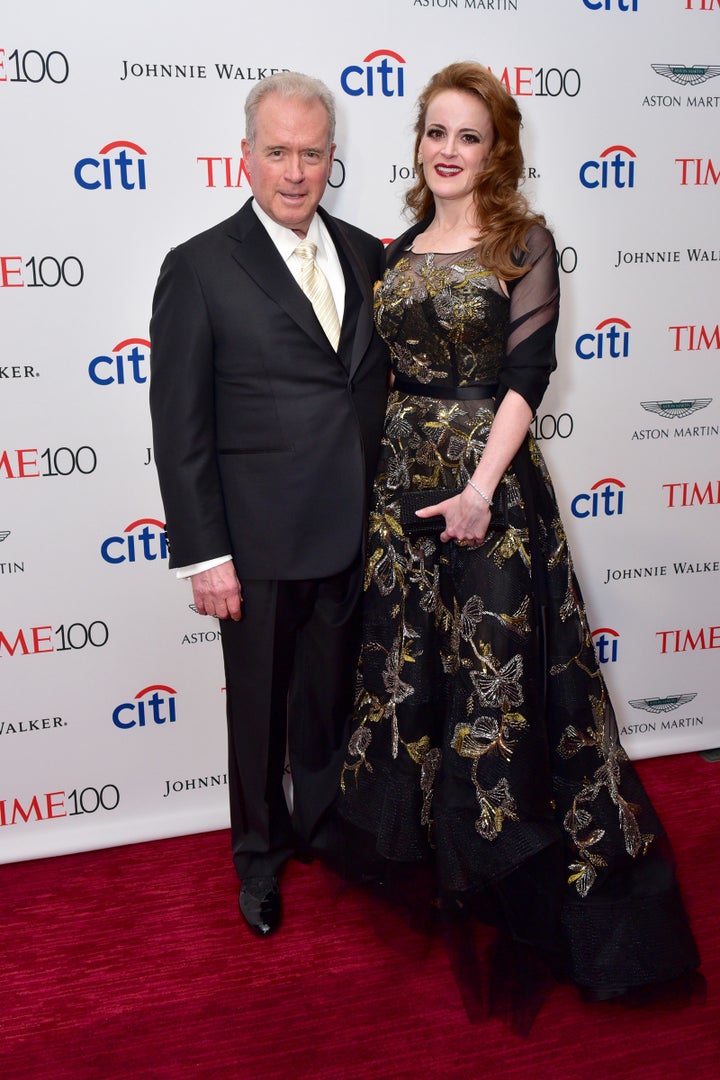
Robert Mercer and Rebekah Mercer attend the 2017 TIME 100 Gala at Jazz at Lincoln Center on April 25, 2017 in New York City.

Sean Zanni / Getty Images

So what might the Mercers hope to accomplish by serving as Yiannopoulos’ patrons? According to a source close to the situation — who confirmed an earlier report that the Mercers funded Yiannopoulos’ “Dangerous Faggot” college tour — the family sees the British shock-meister as a way to capture the attention of a generation that grew up on the internet and represents the future of the kind of anti-establishment Republican politics that swept Donald Trump to power:

“The Mercers want to do whatever they can to bring this new style of conservatism to a younger generation. Milo did that for Breitbart with their money and they see no reason to change that.”

And what is Yiannopoulos doing with his new funding? Milo Inc., per a press release, is “a fully tooled-up talent factory and management company dedicated to the destruction of political correctness and the progressive left.” According to reports, the company will produce and publish Yiannopoulos's various media and touring projects.

One of its first events came last week, when Yiannopoulos hosted a party for the release of his controversial new book, Dangerous, published on his own imprint after Simon and Schuster dropped the title. (Yiannopoulos has sued the publisher.) Video from the event showed a range of hired talent: “jihadi strippers” who peeled off chadors to reveal g-strings; midgets wearing yarmulkes, intended to mock the Jewish journalist Ben Shapiro; and a Hillary Clinton impersonator who could be plunged in a dunk tank.

Quelle: <a href="Leaked Documents Suggest Secretive Billionaire Trump Donors Are Milo’s Patrons“>BuzzFeed