YouTube Is Rolling Out Counter-Extremism Features Today

YouTube Is Rolling Out Counter-Extremism Features Today

youtube.com

Today YouTube is rolling out a new feature to combat people who use its platform to promote extremist views.

In the past, YouTube has taken a reactive approach to content that violates its terms of service: After human users or the site's algorithm flag offending videos, YouTube deletes the videos and blocks the accounts responsible.

Now rather than simply removing content and banning bad actors, YouTube will take preemptive measures. When someone searches for extremist content on YouTube, the site will show them a playlist of videos that argue against extremism. NGOs that specialize in creating anti-extremist content will curate the video playlist.

The technique, dubbed the Redirect Method, “uses curated video content to redirect people away from violent extremist propaganda and steer them toward video content that confronts extremist messages and debunks its mythology,” according to a YouTube blog announcing the feature. The Redirect Method's dedicated website says that the technique uses Google AdWords in conjunction with the curated content.

For now, the feature focuses on English-language videos about Islamic extremism, specifically the videos that ISIS uses to recruit new members. YouTube said it's partnered with NGOs like Moonshot CVE to further research how best to counter extremism and to create new video content.

YouTube said it will measure the success of the program “by how much the content is engaged.” A pilot of the program conducted in August and September 2015 saw 320,000 people watch 500,000 minutes of 116 curated anti-extremism videos. According to YouTube, any institution is welcome to copy its methodology.

Google’s findings from its pilot program:

Google's findings from its pilot program:

YouTube

YouTube said the types of video that are most effective are not always overtly anti-ISIS: “We focused our survey on videos that were objective in appearance rather than materials that appeared specifically designed to counter ISIS. We used keyword searches to identify 'hidden' counter-argument content — that is, videos that are not necessarily well-known, and often not designed explicitly to refute ISIS.”

Three categories of video fit the bill in the pilot program: citizen journalism and documentary footage, religious debate between clerics and other religious figures, and videos featuring ISIS defectors.

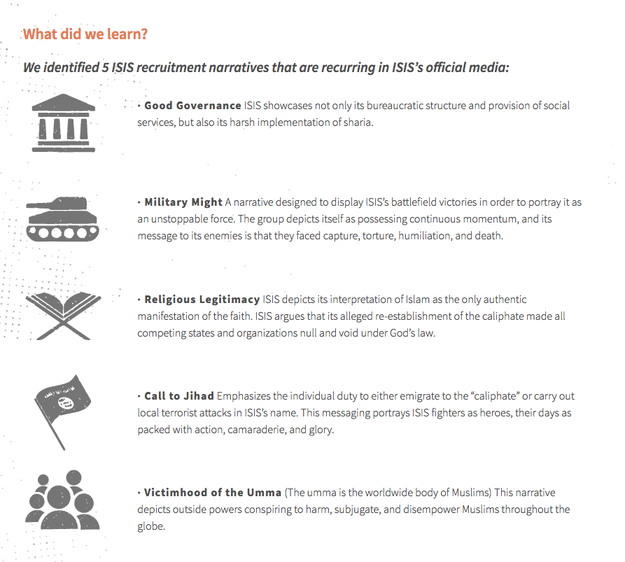
YouTube and its NGO partners identified five features that appear in many ISIS recruiting videos:

“Good governance, military might, religious legitimacy, call to jihad, and victimhood of the umma (the umma is the worldwide body of Muslims).”

YouTube

The program's next steps, according to YouTube's blog post, will focus on curbing Islamic extremism in Europe's many languages:

  • “Expanding the new YouTube product functionality to a wider set of search queries in other languages beyond English.”
  • “Using machine learning to dynamically update the search query terms.”
  • “Working with expert NGOs on developing new video content designed to counter violent extremist messaging at different parts of the radicalization funnel.”
  • “Collaborating with Jigsaw to expand the “Redirect Method” in Europe.”

British Prime Minister Theresa May has increasingly called for tech companies like Facebook and Google to do more to combat Islamic extremism in Europe.

France has backed her statements. May and France's President Emmanuel Macron agreed in May to develop a forum on fighting terrorism that will help tech companies develop better methods for rooting out recruitment efforts on their platforms.

Quelle: <a href="YouTube Is Rolling Out Counter-Extremism Features Today“>BuzzFeed

Scenes From A Thrilling Afternoon On Amazon's New Social Network, Spark

On Tuesday, Amazon introduced a new social network called Spark.

Spark is an Instagram competitor, with a commerce-y twist!

Amazon says Spark “makes it easy to discover—and shop—stories and ideas from a community that likes what you like.” The idea is to make it easier to move from talking about products in a social feed, to buying them.

We here at BuzzFeed News are always interested in what's hot and new in the social space, so we took Spark for a spin yesterday.

Inside Spark, we found lots of great stuff. There were some wonderful fashion tips:

Along with stunning home appliance photography:

Look at this pan. Wow.

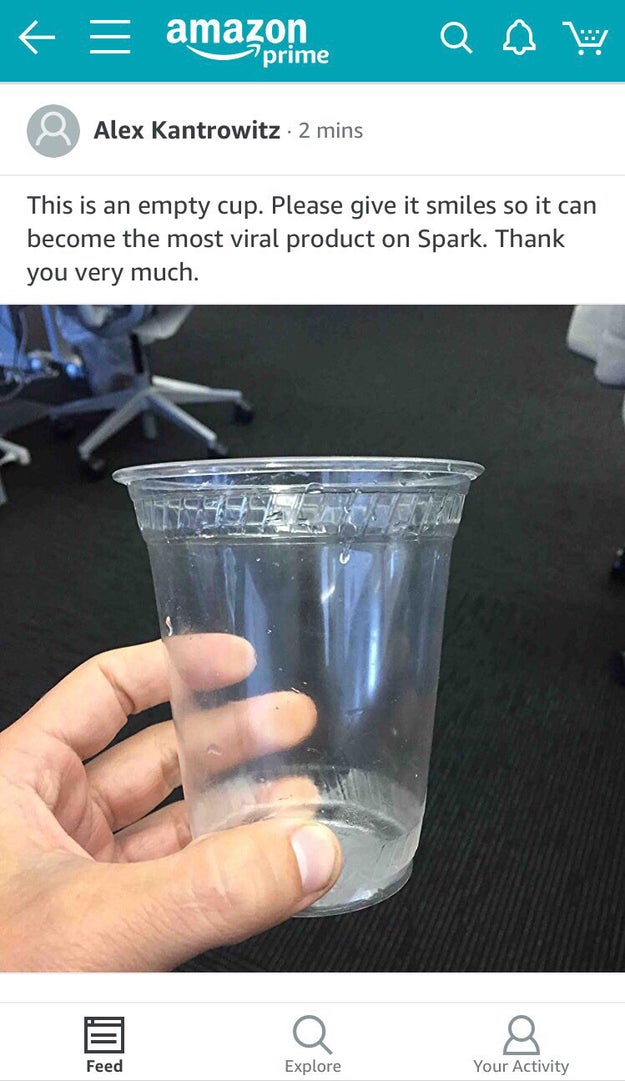
Spark also has polls to help you make tricky purchase decisions. Check out this jaw-dropping functionality:

The social network is filled with thought-provoking questions.

The social network is filled with thought-provoking questions.

Like Instagram, Spark even has its own influencers. Meet Diego L.

Looking good, Diego L.

As Diego L. demonstrates, Spark has a good amount of sponsored content, like any top tier social network.

People discover amazing things when brands pay them to do it. And now you can be part of that discovery.

Here's a picture of a chair on Spark:

And here's a picture of a fan:

Here's a picture of a coffee mug on a boat on Spark.

And some shoeboxes.

And some shoeboxes.

There are some genuinely good pictures on Spark. Like this dog in a kitchen.

And this travel photo that is nice but doesn't really fit in.

Hey Jeff Bezos, I really like your new social network. Did I mention you look ripped lately? Please don't hurt me.

Quelle: <a href="Scenes From A Thrilling Afternoon On Amazon's New Social Network, Spark“>BuzzFeed

The Department Of Justice Just Shut Down The Biggest Illegal Drugs Marketplace In Internet History

Chip Somodevilla / Getty Images

Digital marketplace AlphaBay was, at its height, host to hundreds of thousands of listings for illegal drugs, making it 10 times the size of the infamous Silk Road marketplace.

Now, the largest darknet marketplace in history is no more.

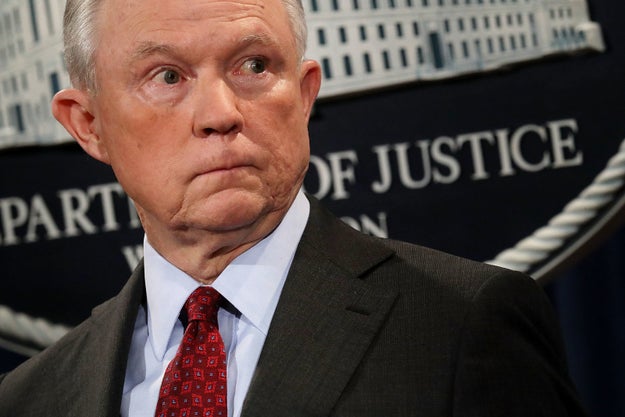
The Department of Justice announced the shutdown and seizure of AlphaBay on Thursday, the culmination of a joint operation with a half dozen other nations that Attorney General Jeff Sessions called “one of the most important criminal investigations of this year.”

Hosted on the darknet — a hidden network of sites only accessible through software that anonymizes traffic — AlphaBay facilitated the sale, in addition to drugs, of fake IDs, malware, hacking tools, firearms, and toxic chemicals. These purchases were all made with cryptocurrencies such as bitcoin and ethereum. According to a DOJ press release, the site was also used to launder hundreds of millions of dollars in profits from sales made on AlphaBay.

AlphaBay creator Alexandre Cazes was indicted on June 1 in the Eastern District of California on racketeering, narcotics, money laundering, and other charges related to the creation and administration of the marketplace. A civil forfeiture filed against Cazes' assets includes documentation which estimated his net worth at over $23 million dollars. Those assets included luxury cars, millions of dollars in cryptocurrency, and real estate in Cyprus and Thailand, where he was arrested by Thai authorities on behalf of the US government on July 5. Authorities were able to seize millions of dollars of Cazes' cryptocurrency holdings, according to the DOJ.

On July 12, Cazes, who was Canadian, was found dead in the Bangkok prison where he was awaiting extradition, in an apparent suicide.

Cazes' isn't the only death linked to AlphaBay. Per DOJ materials, numerous overdose deaths around the country have been linked to opioids purchased on the marketplace.

“Transnational organized crime poses a serious threat to our national and economic security,” said FBI Acting Director Andrew McCabe. “Whether they operate in broad daylight or on the dark net, we will never stop working to find and stop these criminal syndicates.”

Quelle: <a href="The Department Of Justice Just Shut Down The Biggest Illegal Drugs Marketplace In Internet History“>BuzzFeed

Twitter Touts Progress Combatting Abuse, But Repeat Victims Remain Frustrated

Ariel Davis / BuzzFeed News

It’s been just over seven months since Twitter pledged to move faster to combat the systemic abuse problem that has plagued it for a decade, and the company claims to have made dramatic improvements in that time.

In Thursday blog post by Ed Ho, Twitter’s General Manager of the Consumer Product and Engineering groups, the company says that users are “experiencing significantly less abuse on Twitter today than they were six months ago.” The company also touted for the first time statistics about its progress on combating abuse. According to Ho, Twitter is “taking action on 10x the number of abusive accounts every day compared to the same time last year” and has limited account functionality and suspended “thousands more abusive accounts each day” compared to the same time last year.

Twitter claims this uptick in account suspensions and limitations is changing the behavior of its most contentious users. According to Ho, 65% of limited accounts are only suspended once for rules violations; After Twitter limits or suspends accounts for a brief time (and explains why), these users “generate 25% fewer abuse reports.”

Lastly, the company says that its seen evidence that its biggest anti-abuse feature — customized muting and algorithmic filtering tools — is “having a positive impact.” According to Ho, “blocks after @mentions from people you don’t follow are down 40%.”

Despite the victory lap, Twitter concedes that “there is still much work to be done” — an admission borne out by the experiences of many users still suffering from harassment on the platform.

Ho says that Twitter’s “new systems have removed twice the number” of abusive accounts in the last four months alone, and notes that the company's human-led safety and support teams continue “to review content daily and improve how we enforce our policies.” Still, a concerning number of users have found Twitter’s “new systems” to be remarkably like the old ones when it comes to dismissing valid harassment reports. Earlier this week, BuzzFeed News reported that Twitter’s inconsistent enforcement of harassment reports has led frustrated victims of abuse to look to a third party — often the media — to intervene.

In a quick Twitter search of the last seven months, BuzzFeed News found 27 examples of seemingly clear examples of harassment that when reported to Twitter were dismissed as not being in violation of the social network's rules forbidding abuse. BuzzFeed News also solicited users on Twitter for examples of clear harassment that were dismissed by the company. In mere hours, that call yielded 89 direct messages from users claiming to have received at least one improper dismissal of a harassment report (over half of the respondents cited multiple examples). Many of the examples provided to BuzzFeed News appeared to be explicit violations of Twitter’s rules, including one account with 899 tweets all targeted at a female sportswriter. That account remains active today.

Asked to explain its dismissal of what appear to be obvious violations of its rules, Twitter declined to comment, citing its policy on individual account privacy. Asked to explain why, after inquiries from the media, Twitter took action on a number of reports it initially dismissed, a company spokesperson offered a statement noting Twitter has been “working hard to communicate with our users more transparently about safety.”

That may be so, but for some Twitter users there's a profound lack of clarity around the company's harassment policies and their enforcement. “There's no way to appeal to them and tell them why they got the decision not to remove tweets wrong,” one user told BuzzFeed News of her experience with abuse reports. “So people who are threatened basically have no choice but to go to someone with a bigger platform.”

Quelle: <a href="Twitter Touts Progress Combatting Abuse, But Repeat Victims Remain Frustrated“>BuzzFeed

This Glorious Twitter Bot Keeps Tabs On Trump And White House Twitter Accounts

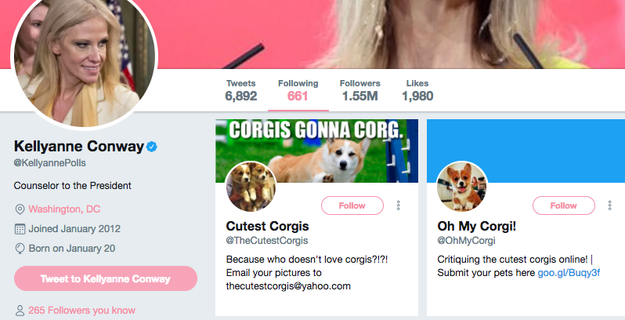
This past Tuesday evening, as the White House wound down after another tumultuous day, Counselor to the President, Kellyanne Conway was looking at Corgis on the internet.

Just after 8:30 P.M., Conway followed two corgi-related novelty Twitter accounts in rapid succession. First, it was <a href="https://twitter.com/TheCutestCorgis">TheCutestCorgis</a> (bio: "Because who doesn't love corgis?!?!") followed by OhMyCorgi, a powerhouse cute pet account with over 685,000 followers.

Normally this sort of peculiar detail might go unnoticed by even the most watchful of social media eyes. But thanks to a new Twitter bot now you, too, can keep tabs on the social media nuances of the Trump family and certain members of the White House as well.

The bot — @TrumpsAlert — claims to track “Trump family follow and unfollows” with the aim of trying to “figure out what is going on inside the White House.” It was created by James O'Malley, a freelance writer currently serving as GizmodoUK's editor. O'Malley got the idea after seeing a tweet claiming Donald Trump had unfollowed Kellyanne Conway, which triggered a rash of speculation about trouble in the West Wing.

“It reminded me of how North Korea is tracked by the west – by observing photos and messages coming from state television, analysts try to figure out who is in and out of favor,” O'Malley told BuzzFeed News over Twitter. “Given that the Trump Administration is essentially the same thing – Royal Court politics – I figured that watching the inner circle’s Twitter accounts could help us understand the Kremlinology of what is going on in the White House.”

While @TrumpsAlert probably won't generate any stunning revelations, the account does offer an interesting glimpse into the social media lives of Trump and those in his orbit.

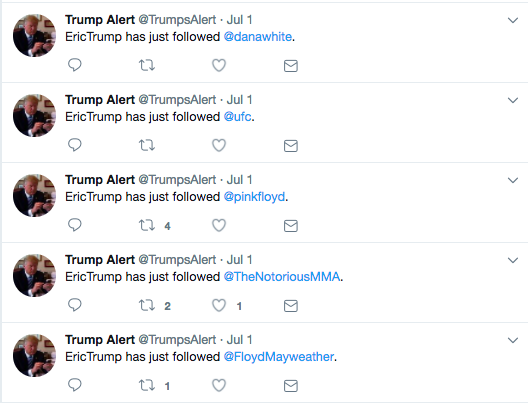
For example, here the bot shows us Eric Trump’s July 1 dive down an MMA and professional boxing rabbit hole:

For example, here the bot shows us Eric Trump's July 1 dive down an MMA and professional boxing rabbit hole:

Or, when Don Jr. followed fellow Seth Rich conspiracy tweeter Kim Dotcom (who faces potential extradition to the U.S. for copyright infringement and money laundering charges).

Or, when Don Jr. followed fellow Seth Rich conspiracy tweeter Kim Dotcom (who faces potential extradition to the U.S. for copyright infringement and money laundering charges).

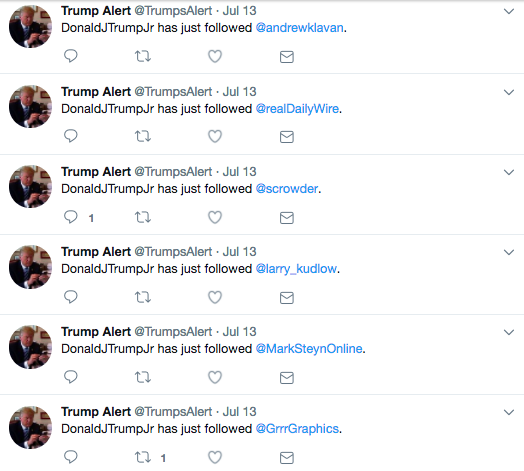
In general, the bot does an excellent job chronicling Don Jr.’s beefed up conservative media Twitter list (which may have had something to do with a noticeable uptick in his tweeting in defense of his father).

In general, the bot does an excellent job chronicling Don Jr.'s beefed up conservative media Twitter list (which may have had something to do with a noticeable uptick in his tweeting in defense of his father).

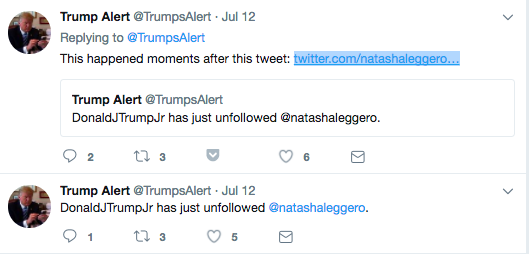
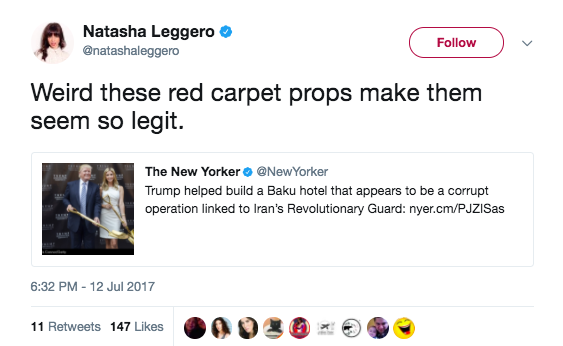
The bot also catches some great Twitter beef that might have fallen off the radar. Including Don Jr. unfollowing comedian Natasha Leggero after she tweeted mocking a photo President Trump and Ivanka.

The bot also catches some great Twitter beef that might have fallen off the radar. Including Don Jr. unfollowing comedian Natasha Leggero after she tweeted mocking a photo President Trump and Ivanka.

Here’s Leggero’s tweet:

Here's Leggero's tweet:

Thanks to @TrumpsAlert, we learned that Kellyanne Conway didn’t follow Deputy Press Secretary Sarah Huckabee Sanders until July 5th.

Here's How To Use The New Snapchat Tinted Brush And Continuous Recording Features

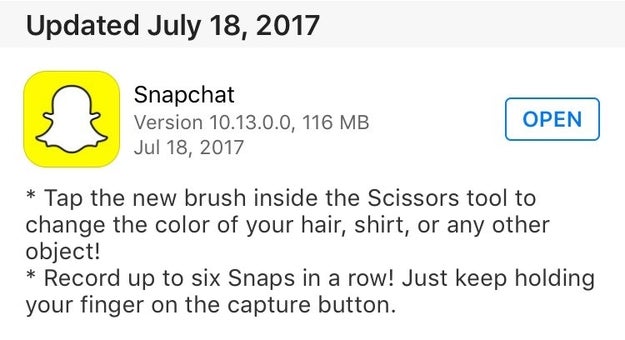
Snapchat updated its app on Tuesday with two new features: a tinted brush (accessible through the scissors icon) and continuous video capture.

Tinted brush is available for iOS and Android; continuous video is available for iOS.

Apple

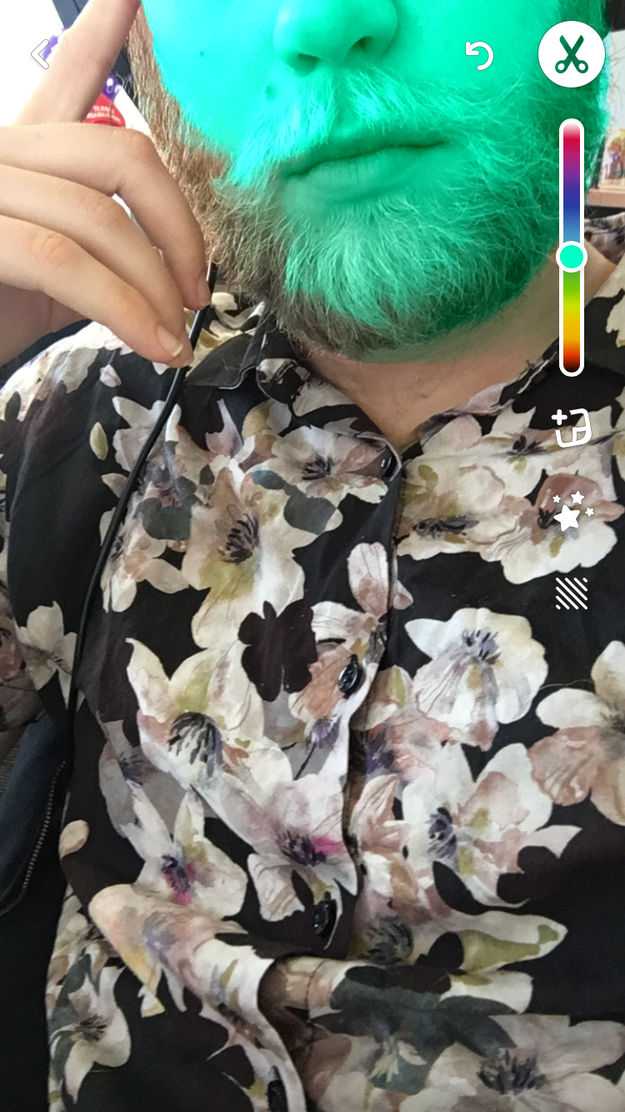
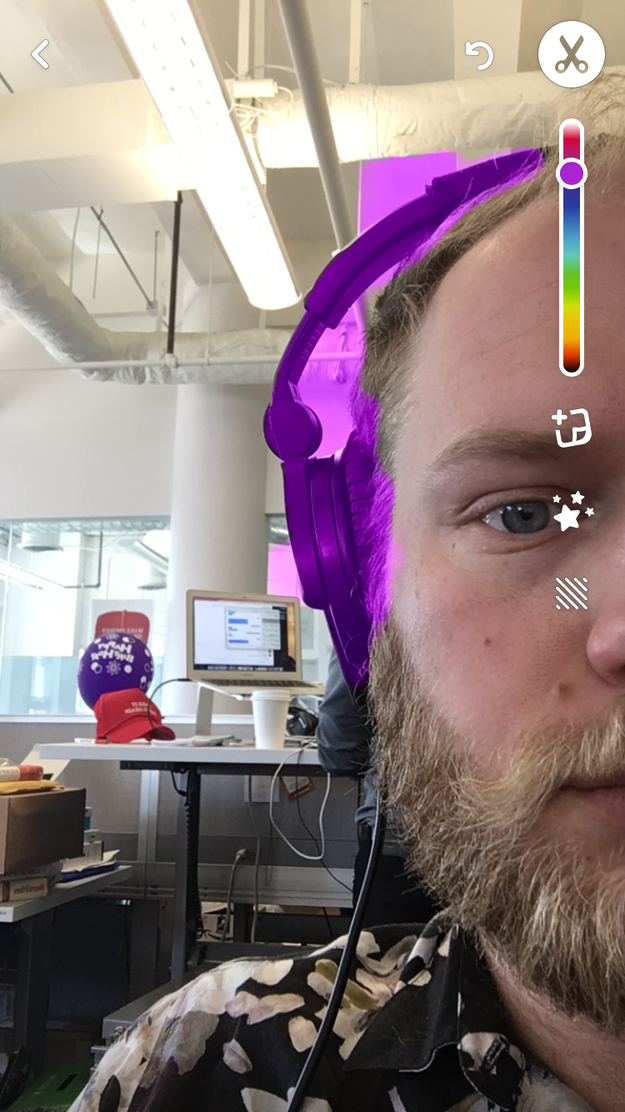
The instructions for the tinted brush say “Outline an object to change its color!” It basically just adds a transparent swatch of color over the something — but it's not SUPER-easy to use.

I tried to change my headphones purple, but ended up with a purple ceiling.

As for continuous recording…I couldn't figure it out. I kept pressing the record button, but each of the dozen times I tried it, the video would stop after 10 seconds.

After trying to use the new feature on three different colleagues' Snapchat accounts, I was finally able to get it working on one of them. If you're having trouble accessing the feature, Snap advises that you should try posting at least one video to your Story first to get the Multi Snaps feature to appear.

To continuously record, hold your finger on the record button, and Snapchat will capture up to six 10-second videos, which will then display as thumbnails at the bottom of your screen. You can edit them in the normal Snapchat way with stickers and filters, then send them all or just a few to friends or post them to your Story.

The company said continuous recording should be available to iOS users on version 10.13 or later.

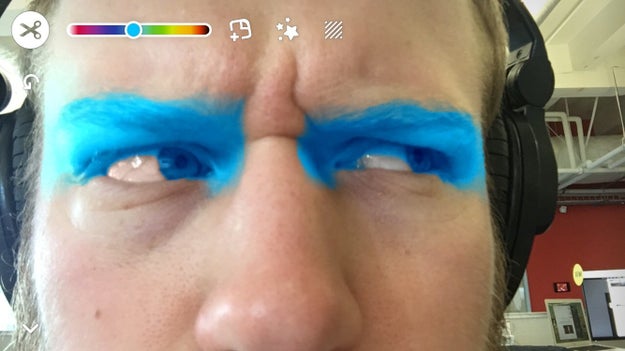
Here is me, confused about the new feature, wearing blue eyeshadow:

Here is what the new feature looks like after you've recorded your Snaps continuously:

In other Snap news, you can now buy Snap Spectacles on Amazon, though they won't be in stock until July 25th.

Previously, the gadgets were only available in the United States at boutique vending machines called Snapbots, which you can locate using Snap's website. Snapbots and Spectacles arrived in Europe in June, though Spectacles are available online for customers in Austria, Belgium, Denmark, Germany, Spain, Finland, France, Ireland, Italy, Netherlands, Norway, Switzerland, Sweden, or the UK.

Quelle: <a href="Here's How To Use The New Snapchat Tinted Brush And Continuous Recording Features“>BuzzFeed

Airbnb, Uber, And Ola May Start Using Aadhaar, India’s Controversial Biometric Identity System

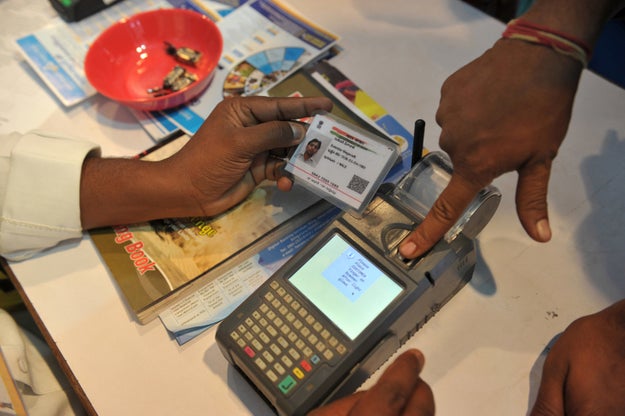
An Indian visitor gives a thumb impression to withdraw money from his bank account with his Aadhaar card in January 2017.

Noah Seelam / AFP / Getty Images

Airbnb, the ride-hailing giant Uber, and its Indian rival Ola are exploring the option of adding Aadhaar, India’s controversial biometric identity system, to their products and services in the country, BuzzFeed News has learned. Uber and Ola are considering using Aadhaar to verify the identities of drivers, while Airbnb is exploring using the system to authenticate Indian hosts, sources at all three companies told BuzzFeed News. They spoke under the condition of anonymity because they were not authorized to speak on the matter.

India’s Aadhaar system is a centralized, government-sanctioned database containing fingerprints, iris scans, and demographic information, such as the names, dates of birth, genders, addresses, mobile numbers, of nearly 90% of India’s 1.3 billion people. It’s the first national ID database of this scale anywhere in the world. But it’s attracted scrutiny from critics who say it enables the government and private companies to mass surveil India’s residents and poses a serious threat to privacy, especially since India does not have any privacy or data protection laws.

Aadhaar’s creator Nandan Nilekani, an Indian billionaire and former CEO of IT services giant Infosys, has called it a “turbocharged version of the Social Security number”, a definition that critics disagree with because the Aadhaar number is intrinsically and permanently linked to fingerprints and iris scans unlike the Social Security number.

In February, Microsoft became the first Western company to announce that it would plug Skype Lite, a stripped down version of Skype, into the Aadhaar database, drawing criticism from India’s privacy activists.

Companies can use Aadhaar in two ways. The first one lets them use someone’s fingerprint or iris scans, or their 12-digit Aadhaar number, which is further validated with a one-time password sent to their mobile number to verify their identity. This is how Microsoft uses Aadhaar in Skype Lite. The second way lets them use a person’s Aadhaar-verified identity to download their demographic information from the Aadhaar database. Doing this saves companies time and money by eliminating cumbersome paperwork.

Airbnb is considering using Aadhaar to verify hosts’ identities on its platform in India and is currently testing it “with a limited universe of hosts,” an Airbnb spokesperson told BuzzFeed News. The spokesperson said no final decisions have been made. During the test, these hosts in India will have a choice as to whether they want to provide Aadhaar as their method of verification. “Identity verification is important to the safety and security of our community. We are exploring a number of different ways for our community in India to verify they are who they say they are, including potentially using Aadhaar,” the spokesperson said. This means that Airbnb will not actually collect users’ demographic information using their Aadhaar. The company will simply use their Aadhaar number to validate their identities against the Aadhaar database.

Ola and Uber are planning to use Aadhaar to verify drivers’ identities and collect their demographic data, since they want to have this information on file.

Ola and Uber are planning to use Aadhaar to verify drivers’ identities and collect their demographic data, since they want to have this information on file, sources told BuzzFeed News. According to sources at Ola, the company plans to make Aadhaar authentication mandatory for all new drivers who sign up for the platform starting on Wednesday. Sources also told BuzzFeed News that Ola’s existing drivers will need to start visiting Ola’s driver onboarding centers starting next week to scan their fingerprints and re-authenticate themselves using the Aadhaar system. Ola will terminate drivers who fail to do this by a yet-to-be-decided deadline, sources told BuzzFeed News.

Ola decided to validate its drivers’ identities after an Ola driver kidnapped a passenger for ransom in New Delhi on July 7, sources familiar with the matter said. According to reports, the driver signed up to drive for Ola using forged ID documents, making it hard for police to track him down. Ola hopes that mandating drivers to authenticate using their fingerprints would prevent this from happening again, said a source.

Ola did not respond to BuzzFeed News’ requests for comment.

A top Uber executive told BuzzFeed News in May that the company was “seriously looking” at onboarding drivers using Aadhaar. At that time, the executive said that Uber would not make Aadhaar authentication mandatory for its drivers in India. But it’s unclear how Uber’s plans for Aadhaar implementation in India have developed since then. Uber declined to respond to BuzzFeed News’ follow-up questions.

Validating identities and doing background checks for drivers has been an important part both Uber and Ola’s onboarding processes after media reports that Uber had done neither for a driver who raped a passenger in New Delhi in December 2014. The subsequent backlash forced both companies to step up driver verification standards. Both companies now require drivers in India to submit half a dozen documents, including a driver's license and proof of address when they sign up to drive. Drivers are also subject to additional verification by local authorities to ensure they have no criminal records.

Using Aadhaar would help these companies speed up the identification process. But experts say that Aadhaar isn’t foolproof. “Aadhaar itself isn’t [robust] as proof of someone’s identity,” said Kiran Jonnalagadda, co-founder of the Internet Freedom Foundation, a volunteer-driven organization in Bangalore that works on online privacy and encryption issues in India. That’s because demographic data in the Aadhaar database is often only as good as the documents someone provides when signing up for an Aadhaar number in the first place. If you didn’t have existing documentation to validate your date of birth, name, or addresses — and millions of Indians don’t — placeholders and estimates are used to fill in those details against your Aadhaar number in the database. That makes Aadhaar a system that’s “fairly forgiving of the quality of documents,” said Jonnalagadda. In 2015, for instance, a man was able to get an Aadhaar card for his dog.

India’s Aadhaar project kicked off in 2009 and was envisioned as a voluntary identity system meant to crack down on identity fraud in the country’s notoriously corrupt welfare system. But over the years, an Aadhaar number has become effectively mandatory to access an increasing number of government services, such as getting subsidized foodgrain and paying taxes, as well as private services, such as signing up for cellphone service or opening a bank account. Critics say that Aadhaar enables the government to create a holistic profile of an individual because it is linked to databases owned by both the government and private companies. For example, Jio, India’s newest mobile carrier, has been using Aadhaar to quickly sign up new customers (and download their demographic data) using just their fingerprints.

“I think it’s problematic that such an extensive ecosystem is being built around Aadhaar, whether by Indian startups or Western companies, while a comprehensive privacy law remains non-existent in India,” said Anja Kovacs, director of the Internet Democracy Product, an organization that works on issues of free speech, democracy, and social justice on the internet in India.

Kovacs says that companies using Aadhaar to download people’s demographic data is particularly problematic because these new, privately controlled databases are full of sensitive information that could be compromised or stolen. Unlike the European Union that places companies under stringent data protection standards, there is no law in India that mandates companies from notifying customers about any privacy breaches. Earlier this month, the personal details of an undisclosed number of Jio customers were leaked onto the internet. Aadhaar numbers were not part of the data dump, but the leak showed that Jio’s databases are susceptible to hackers.

“The data we have given to the government is now spread across a number of private entities without any strong privacy protections being in place,” Kovacs told BuzzFeed News.

Uber and Ola did not respond to questions about whether they had systems in place to protect drivers’ demographic information.

On Wednesday, a panel of nine Indian Supreme Court judges will hear to decide if Indians have a fundamental right to privacy. The move was prompted by 20 pleas in the Supreme Court challenging the constitutional validity of Aadhaar.

Quelle: <a href="Airbnb, Uber, And Ola May Start Using Aadhaar, India’s Controversial Biometric Identity System“>BuzzFeed

Google Is Making Its Own Version Of Facebook's News Feed

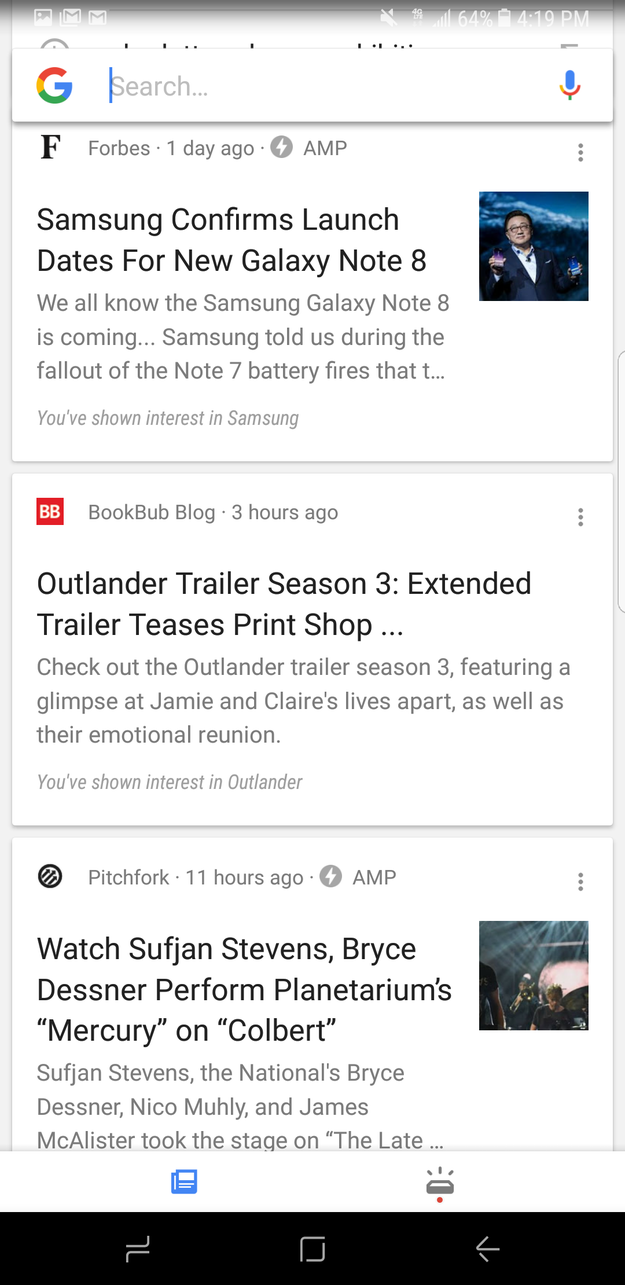
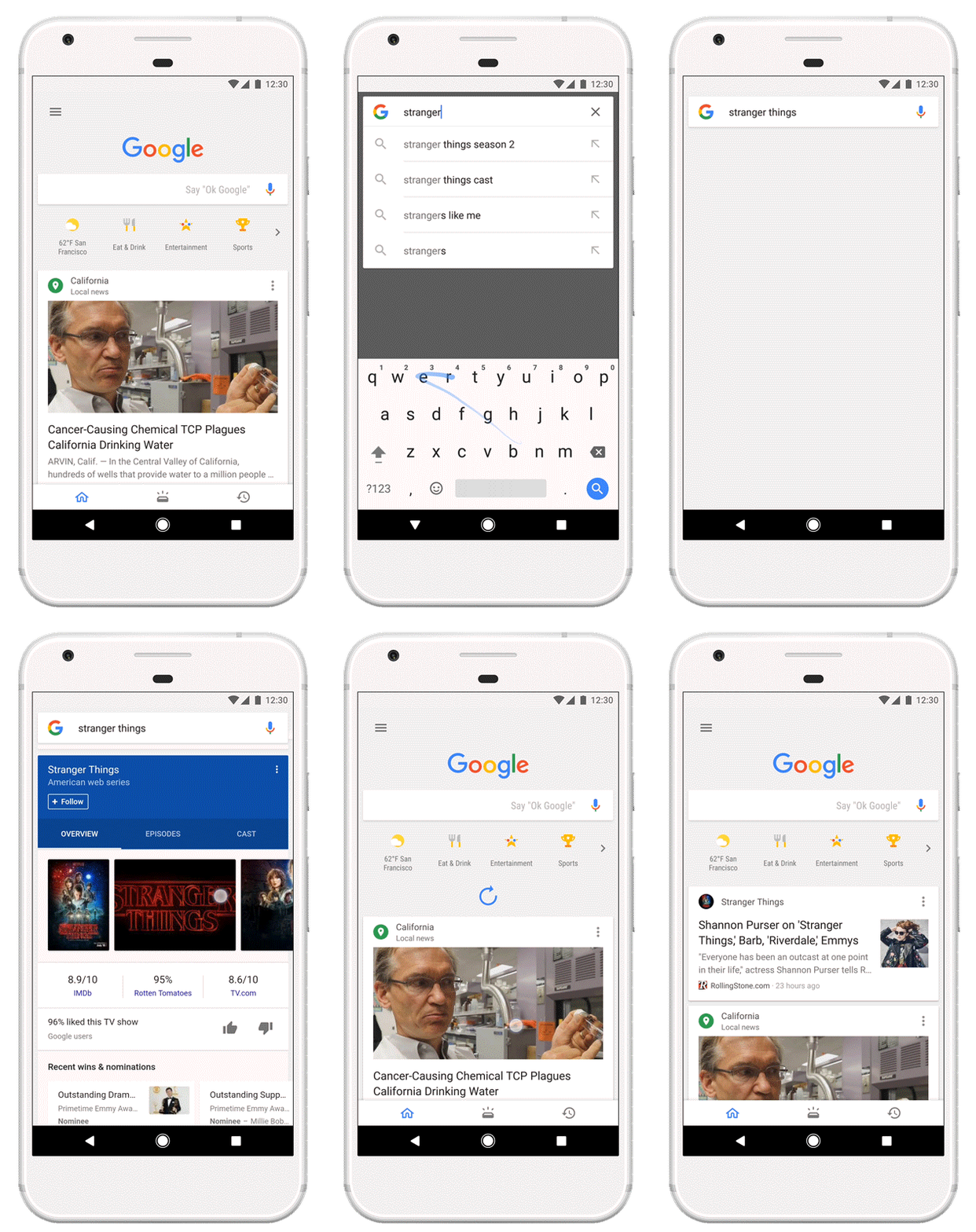
Google is making some changes to Android and its iOS app today that will make it look a lot more like Facebook's News Feed.

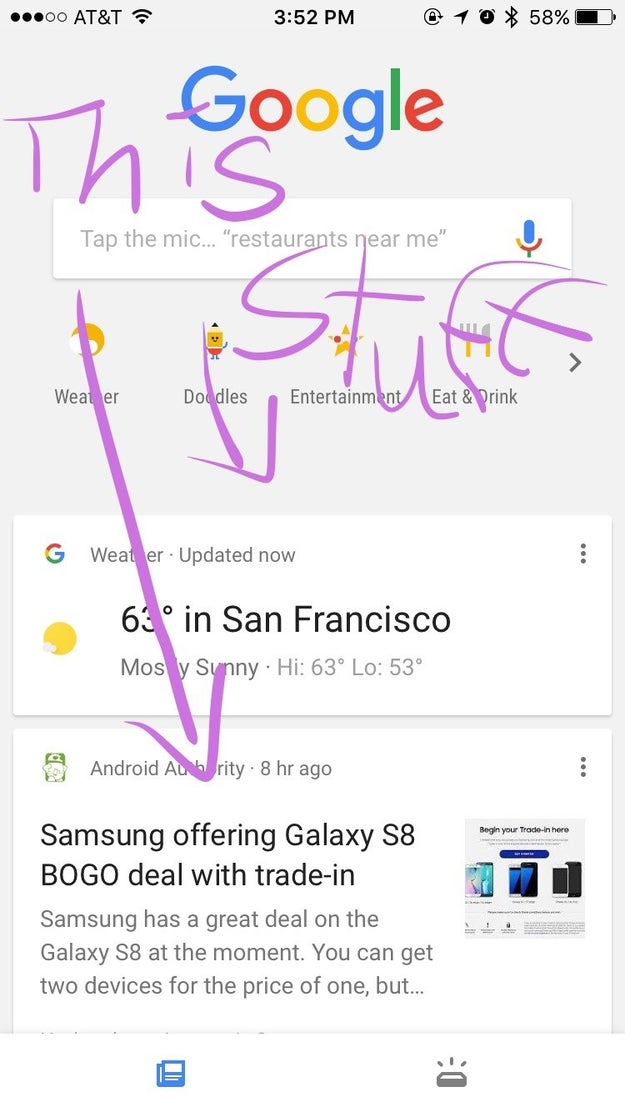
In Google's iOS app, you'll see the updates in its feed, which appears just below the search bar:

If you have an Android, you'll see these changes in the feed that pops up when you click on the Google Search bar.

(And if you have one of Google's Pixel phones, you'll see them when you swipe left from your home screen.)

Google debuted the feed in December 2016, and now it's updating it with trending news topics, a follow button, and more machine learning integration.

Google's feed will still be based on your search history, but there will be a new button to follow “movies, sports teams, your favorite bands or music artists, famous people, and more” that you're interested in. The feed will also adapt to your behavior across all the Google app, according to Google, to “reflect your interest level in a topic.”

The feed will surface “content that's most relevant to you,” according to Google, and that may not always be the newest content. For example, during the press conference, one Google product manager demonstrated that her feed brought up an article about photography in Japan written in early 2016 because she was about to take a trip there.

Google didn't explain how the search engine determines whether you're seriously or casually interested in something, attributing it to “an algorithmic decision.” The algorithm also pulls from all the Google apps you use, like Gmail, YouTube, and Calendar.

“Google should be working in the background, even when you're not searching,” Gomes said, “to further your interests and turn your queries into actual knowledge.”

How is this different from your Facebook feed? “It's about what you're interested in, not what your friends are,” Gomes said.

Google is rolling out these updates in the US in English today for iOS and Android. They'll roll out globally in a few weeks, the company said. Google declined to comment on whether there would be ads in the feed in the future.

Google's algorithm will also recommend links to news articles trending locally and around the world. According to the company, the news will be “from a variety of perspectives.”

This feature seems aimed directly at addressing concerns that the search algorithm sometimes highlights misinformation and that fake news may have swayed the 2016 election. You'll also be able to fact check the content based on Google's own partnerships with fact checking organizations.

Google said the recommendations were “to help get a more holistic understanding about the topics in your feed.” There will also be headers at the top of each card allowing you to search for the topic with a tap.

You won't be able to follow publishers at the rollout, though, according to Google, but you can follow individual journalists.

And don't worry, content related to your porn searches won't pop up in your feed.

A Google product manager said the feed is trained to stay away from “sensitive topics” like suicide, illness, or pornography.

Quelle: <a href="Google Is Making Its Own Version Of Facebook's News Feed“>BuzzFeed

Twitter Is Still Dismissing Harassment Reports And Frustrating Victims

Ariel Davis / BuzzFeed News

On July 3, Maggie H. opened up her Twitter mentions and found her face photoshopped into the crosshairs of a gunsight. The image was a screengrab of her Twitter profile page, taken by a user she had blocked. It showed her face directly in the center of a target above a caption that read, “@[username redacted] BTFO by cantbeatkevin kill #390 #noscope” (BTFO is shorthand for “blown the fuck out”).<br /></p><p>Harassment on Twitter was nothing new for Maggie, but this latest threat unnerved her. One day before receiving the photoshopped target image, Maggie had argued with a Twitter troll account by the name of @LowIQCrazyMika. After a contentious back-and -forth, @LowIQCrazyMika tweeted that they’d found Maggie’s Facebook account. A subsequent tweet named the small, rural town in which Maggie lives: “Youre [sic] speaking like the child of an insestual relationship from the remote woods of [town name redacted].”</p><p>Maggie accused the account of stalking her and filed an abuse report to Twitter. Shortly after that, she received the photoshop of her inside the target from a different user. The tweet was retweeted by <b>LowIQCrazyMika. Maggie filed an abuse report for this tweet as well.

Four days after filing the first report, Maggie received a form email from Twitter. It said @LowIQCrazyMika had not violated Twitter’s rules by alluding to her location.

“I'm scared and there's no accountability.”

“I'm scared and there's no accountability,” Maggie told BuzzFeed News. “I even sent Twitter support a copy of my license with an explanation that tweeting that I live in a small town is akin to giving away my exact location, and they're not doing anything.” On July 7, BuzzFeed News contacted Twitter about Maggie’s harassment reports. Twitter declined comment, citing its policy of not commenting on individual accounts. But soon after the tweet with Maggie’s face inside a gun target disappeared, the account that broadcast it was suspended, and Maggie received an email from Twitter noting the company had taken action.

Though the suspension ultimately granted Maggie some peace of mind, her process of getting justice is one of many examples that show a frustrating pattern for victims — one in which Twitter is slow or unresponsive to harassment reports until they’re picked up by the media.

After a decade-long failure to effectively address harassment on its platform, Twitter has finally begun making efforts to curb its abuse problem. Last November it rolled out a keyword filter and a mute tool for conversation threads, as well as a “hateful conduct” report option. In February, the company made changes to its timeline and search designed to hide “potentially abusive or low-quality” tweets, and added a policy update intended to crack down on abusive accounts from repeat offenders. Just last week, Twitter rolled out a few more muting tools for users, including the ability to mute new (formerly known as egg) accounts, as well as accounts that don't follow you.

And yet targeted harassment of the sort Maggie experienced continues. That may be because Twitter’s recent abuse prevention controls are a largely cosmetic solution to a systemic problem. And Twitter’s inconsistent enforcement of harassment reports suggest that perhaps the company’s algorithmic moderation systems simply aren’t as effective as the company would like to think. It’s in these situations that Maggie — and others — have looked for a third party to intervene.

“Twitter isn't taking this problem seriously at all,” Maggie told BuzzFeed News after her troll’s account was suspended. “Can you please help me hold them accountable?” she wrote.

There are no shortage of examples of this pattern. In late June, a BuzzFeed engineer stumbled across a tweet that read “if BuzzFeed headquarters was destroyed in an explosion and every one that worked there was all of a sudden dead, that’d be a good thing.” Five days after reporting the tweet, the engineer received a form email from Twitter stating that the tweet didn’t violate the company’s terms of service. When a BuzzFeed News reporter asked Twitter why this was the case, the tweet was flagged as a violation and removed. Twitter did not explain why the tweet was initially dismissed as not in violation of Twitter’s terms of service.

Twitter has long been criticized for being slow to respond to incidents of abuse on its platform unless they go viral or are flagged by reporters or celebrities. In August of 2016, Twitter told software engineer Kelly Ellis that a string of 70 tweets calling her a “psychotic man hating ‘feminist’” and wishing that she’d be raped did not violate company rules forbidding “targeted abuse or harassment of others.” Shortly after BuzzFeed News published a report on the tweets, however, they were taken down. There were also multiple other instances of tweets being removed only after reports from BuzzFeed News and other outlets.

Given Twitter’s size and the volume of tweets it broadcasts — estimates are old but one report from an app developer in early 2016 clocked over 303 million tweets per day — the social network could never review each and every suspicious tweet with a human eye. But Twitter’s history of opaque protocols for addressing abuse casts its inaction in a different light. In September, a BuzzFeed News survey of over 2,700 users found that 90% of respondents said that Twitter didn’t do anything when they reported abuse. As one victim of serial harassment told BuzzFeed News following the survey, “It only adds to the humiliation when you pour your heart out and you get an automated message saying, ‘We don’t consider this offensive enough.’”

But even with a sharper focus on abuse in 2017, a concerning number of reports of clear-cut harassment still seem to slip through the cracks and return a form email telling the victims that their case did not rise to a level Twitter considers to be a violation of its terms of service. In a cursory search over the last seven months, BuzzFeed News turned up 27 examples of clear rules violations — including the unauthorized publishing of personal information (such as addresses and screenshots of apartment buildings) of journalists, threats of physical violence, and extensive, targeted harassment — that were met with a “did not violate” response from the social network. Similarly, during an open call on Twitter for examples of clear harassment that were dismissed by the company, this writer received 89 direct messages from users alleging that they received at least one improper dismissal of their harassment claim. In more than half of these cases, the users provided BuzzFeed News with a screenshot of the form email they received from the company.

In a number of examples provided to BuzzFeed News, the harassment that was dismissed by Twitter was hardly subtle. One female sportswriter provided seven dismissed harassment reports from Twitter. One account she reported has only posted 78 tweets — all directed at the sportswriter in order to troll her. Another of the accounts she reported uses her likeness in its profile picture. Each and every tweet from the account that BuzzFeed News viewed mocks her or those close to her, including crass tweets about family members transitioning, and harassing tweets about children.

Twitter’s hateful conduct policy explicitly states that “we also do not allow accounts whose primary purpose is inciting harm towards others.” Despite her report to Twitter and a request from BuzzFeed News for Twitter to explain why the account is not in violation of Twitter’s rules, however, the account is still up. All of the accounts the sportswriter reported and shared with BuzzFeed News are still active.

Numerous other accounts reported for serial harassment are still active. @Trap4Von, for example, persists despite a number of abusive tweets including statements like, “i'll follow you home an [sic] leave my children inside of you.” Twitter’s hateful conduct policy explicitly forbids “violent threats,” noting that “you may not promote violence against or directly attack or threaten other people.”

Twitter did not respond to the 27 explicit examples of harassment on which BuzzFeed News requested comment. The company did, however, provide a statement via a spokesperson:

Twitter has undertaken a number of updates, through both our technology and human review, to reduce abusive content and give people tools to have more control over their experience on Twitter. We've also been working hard to communicate with our users more transparently about safety. We are firmly committed to continuing to improve our tools and processes, and regularly share updates at @TwitterSafety. We urge anyone who is experiencing or witnessing abuse on Twitter to report potential violations through our tools so we can evaluate as quickly as possible and remove any content that violates Twitter user rules.

But despite Twitter’s renewed commitment to anti-abuse tools, repeat victims of harassment are frustrated that Twitter’s harassment workflow often requires a cheat code of media involvement.

“There's no way to appeal to them and tell them why they got the decision not to remove tweets wrong, so people who are threatened basically have no choice but to go to someone with a bigger platform,” Maggie told BuzzFeed News.

Kelly Ellis — the software engineer — echoed Maggie’s frustration. “I often feel like, how are other users supposed to escalate stuff,” she said in a recent email. As a victim of continued harassment, Ellis has looked not only to the media, but to Twitter employees.

“I will even sometimes DM people I know there,” Ellis said. “One case that happens pretty frequently is if someone is harassing me with multiple accounts and all the reports will come back as Twitter saying it's not abusive. But then I talk to a friend at Twitter who says it definitely is and helps get it taken care of for me. There's some disconnect going on internally there with their training, I think.”

Just last month a Twitter engineer apologized in a string of tweets for harassment reports falling through the cracks of the company’s reporting system. The apology came after writer Sady Doyle posted a tweet about a troll with the handle @misogyny who’d once tweeted a threatening picture of a gun at Doyle. In her June tweet, Doyle posted screenshots showing that the troll had created a new account and bragged he’d “beat[en] the case” against him. Doyle then posted a screenshot of her plea to Twitter to ban the user alongside Twitter’s response — a form letter saying the account did not violate Twitter rules.

Doyle’s tweet was retweeted over 6,200 times. Shortly thereafter, Twitter reversed its ruling and suspended the user. On Twitter, Doyle’s followers lamented the company’s fickle enforcement. “Basically nothing is worth a ban, unless you get enough people tweeting about it,” one user replied.

The Twitter engineer followed with a sincere apology. “That's often because an employee spots it and internally escalates it. I hate seeing things like this; we have to do better. Sorry.”

Doyle tweeted back that she earnestly appreciated the escalation, but that — like many others — she was troubled by the need to have assistance from a third party.

“When this stuff happens to me, I have a platform, so it's easy to publicize — but other people aren't that lucky.”

Quelle: <a href="Twitter Is Still Dismissing Harassment Reports And Frustrating Victims“>BuzzFeed

Some Uber Employees Are Getting A Raise

Justin Sullivan / Getty Images

It's a good day for some Uber employees, between three and four thousand of whom learned they'll be getting a pay bump.

At an all-hands meeting held Tuesday morning, employees across Uber's tech team — that's product, engineering and design — learned they'll be seeing a small increase in their annual salaries, sources familiar with the situation tell BuzzFeed News.
These employees will receive either a 5% increase in their total salary, or be bumped to the middle of their pay band, whichever is higher. The total increase will also reflect how long individual employees have worked at Uber.

Uber declined to comment on this story.

BuzzFeed News first learned that Uber would be making adjustments to employee compensation this week from Uber head of HR Liane Hornsey, who was interviewed for a BuzzFeed News story on Uber employee mental health.
Hornsey told BuzzFeed News that, in conversations with employees, compensation emerged as one of their top nine concerns.

In the BuzzFeed News story published Monday, employees discuss how compensation packages at Uber are lower than competitors when it comes to salary, and aggressively weighted towards equity. This system, known colloquially as golden handcuffs, incentivizes employees to stay on at a company, even if they'd rather leave and work somewhere else.
Previously, The Information reported that Uber uses an algorithm to keep labor costs down by estimating the lowest salary a new employee is likely to accept.

This announcement comes after a very tough year for Uber, in which a female engineer's viral blog post on workplace culture launched two internal investigations at Uber and CEO Travis Kalanick resigned his post. An executive team of 14 individuals is currently searching for his replacement.

Quelle: <a href="Some Uber Employees Are Getting A Raise“>BuzzFeed