Uber Is Trying To Improve How Five-Star Ratings Impact Drivers

Uber's trying to make its five-star rating system a little more fair.

The rating system, which uses customer feedback to determine driver performance, is a pain point for many drivers, who run the risk of getting kicked off the platform if their scores fall too low.

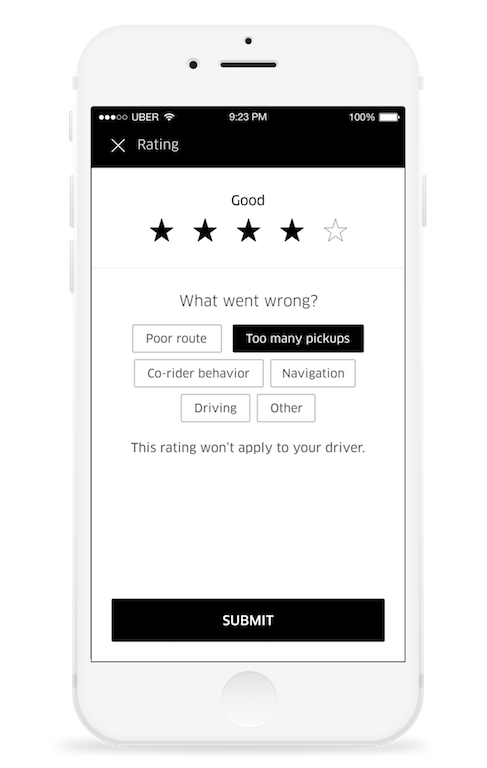
But starting today, Uber is rolling out a new interface aimed at preventing experiences that are outside the driver's control, such as software glitches or traffic, from impacting their overall rating.

If a passenger gives a driver a rating of four or fewer stars, the app will prompt the passenger to say what they didn't like about their ride. If the reason they choose wasn't the driver's fault, the low rating won't be counted toward the driver's overall score.

The update is part of Uber's 180 Days of Change, a project dedicated to improving the Uber experience for drivers. The campaign kicked off in June with the news that Uber passengers would be able to tip their drivers through the app for the first time. Today's announcement comes with a host of other updates, including a phone hotline for drivers that's now available 24/7 and the ability for drivers to correct their own fares in case of an error.

There's one update that Uber passengers might not be thrilled about: Uber is going to start charging for returning lost items. Drivers will get paid $15 from riders in exchange for delivering wallets, iPhones, and other lost belongings to their rightful owners.

These changes follow a tumultuous six months for Uber during which CEO Travis Kalanick resigned, the company underwent two internal investigations regarding harassment, discrimination, and workplace culture, and at least 20 employees were terminated. Uber is also currently fighting a major lawsuit from Alphabet over allegedly stolen intellectual property.

The company has publicly vowed to make itself a better, safer place for its employees, and it's also committed to treating drivers better, too. After all, it was just this year that 200,000 Uber users deleted the app from their phones in protest of its perceived mistreatment of taxi drivers.

In a letter to drivers, US general manager Rachel Holt and head of driver experience Aaron Schildkrout said the company has “reviewed and revised” over 100 policies to make them more “driver friendly.” More updates, they wrote, are set to roll out next month.

Quelle: <a href="Uber Is Trying To Improve How Five-Star Ratings Impact Drivers“>BuzzFeed

Major Advertisers Pulled Their Ads From YouTube, But It Didn't Hurt Alphabet's Earnings

Major Advertisers Pulled Their Ads From YouTube, But It Didn't Hurt Alphabet's Earnings

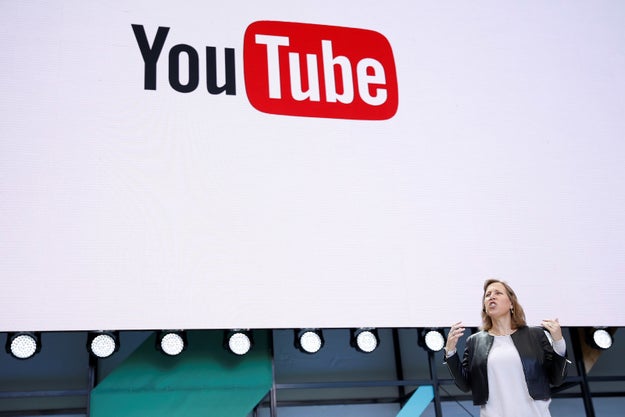
YouTube CEO Susan Wojcicki speaks during the annual Google I/O developers conference on May 17, 2017

Stephen Lam / Reuters

Several major advertisers revolted against YouTube in March, saying they would pause or even cancel their YouTube advertising because the company was placing ads on obscene or hateful videos whose content was decidedly brand-unfriendly. But all those pulled ads appear to have had little effect on the revenue of YouTube's parent company, Alphabet.

The company said today that its second-quarter revenue, which is largely made up of ads placed on Google, YouTube, and all over the internet, was $26 billion. That's up 21% from the second quarter of last year and above what analysts had expected for the year.

For advertising specifically, revenue grew from $19.1 billion to $22.7 billion, an 18% jump. “Advertising revenues benefited from the strong performance which was led in particular by tremendous results in mobile search with a strong contribution from YouTube,” Alphabet's chief financial officer Ruth Porat said on a call with analysts.

In March, towards the end of Alphabet's first quarter, advertisers and major newspapers seemed to agree that Google and YouTube had a serious problem. Many news outlets worked to dig up ads placed next to racist or offensive content and reported on the subsequent advertiser pullback.

JPMorgan Chase, AT&T, Johnson & Johnson, Lyft were some of the big brands that said they were pulling ads. A Lyft ad had shown up in a YouTube video made by the skinhead group Keystone United; AT&T said that it was “concerned that our ads may have appeared alongside YouTube content promoting terrorism and hate.”

In response Google said it would hire new staff to more effectively flag content and make sure advertisers' dollars were only spent to show up on YouTube content that was only, at worst, offensive aesthetically, not morally. YouTube also instituted a new policy that ads would not be placed on YouTube creators' channels until they got 10,000 views across their videos. YouTube said the policy “allows us to confirm if a channel is following our community guidelines and advertiser policies” and “gives us enough information to determine the validity of a channel.”

Analysts at Citi said that YouTube “could still face monetization headwinds related to the 'hate speech videos' issue that started in late March” — but that data wasn't in Alphabet's earnings, or at least there was not a big enough change in YouTube advertising revenue to share. Instead, Porat said that “the biggest contributors to growth again this quarter were mobile search and YouTube,” and Google chief executive Sundar Pichai touted YouTube's massive viewership, specifically “1.5 billion monthly viewers” and people watching “on average 60 minutes a day on their phones and tablets.”

Alphabet's first quarter ended in March, so it's also possible that the company was able to convince some big advertisers to start buying again as the second quarter started or that it was able to boost buying from other brands.

The bulk of Alphabet's advertising revenue comes from people clicking on ads, largely from search. The number of “paid clicks” grew 61% over the past year and 15% from the first quarter of this year, surpassing analyst expectations, while the amount paid per click fell (thanks to the increase in ad inventory) by 23%, in line with analyst expectations.

Quelle: <a href="Major Advertisers Pulled Their Ads From YouTube, But It Didn't Hurt Alphabet's Earnings“>BuzzFeed

Media Companies Lose Out As Advertisers Promote Their Stories on Facebook

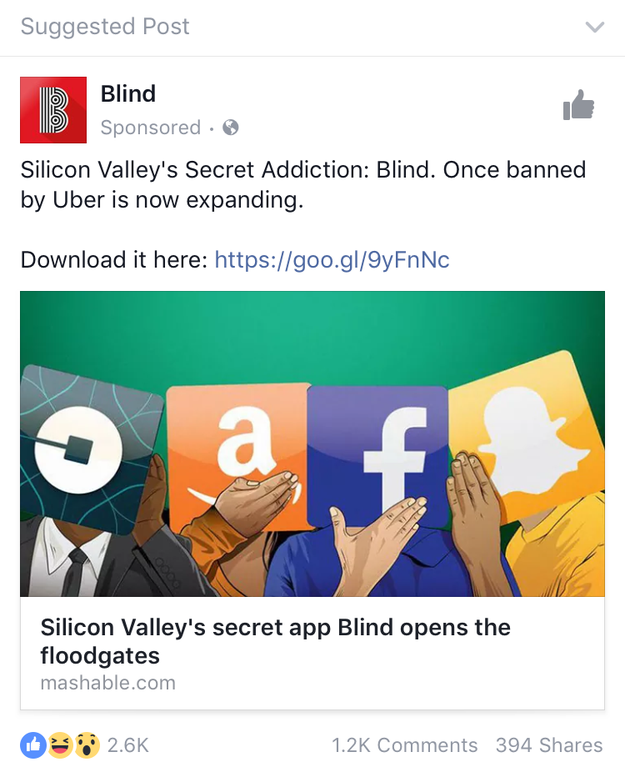
When the workplace gossip app Blind expanded its product’s availability earlier this summer, it got the word out via an age-old tactic: advertising. But instead of running a traditional ad campaign, the company took a route gaining favor among advertisers big and small: It paid Facebook to promote a favorable review of its service.

Blind spent thousands of dollars promoting a Mashable article headlined “Silicon Valley's secret app Blind opens the floodgates.” The post drove more than 11,000 visits to its app download page, according to publicly available analytics. The campaign worked out nicely for Blind — and for Facebook, a master at making money off of other people’s content. But Mashable, which sells advertising to companies like Blind, didn’t see a dime. Neither did any other traditional publisher.

For publishers scrambling to compete with Facebook for advertising dollars, Blind’s Facebook-boosting strategy highlights yet another point of struggle. And advertisers are embracing the practice, steering ad dollars to Facebook that might otherwise have gone to publishers for whom they have long been a key revenue stream. Mattress company Casper, for instance, repurposed a BBC story as a Facebook ad promoting its product; a local plumbing company in Texas used a Dallas Morning News article about a water main break to promote its service; Facebook itself recently promoted an Ad Age article to hype its video offering.

The BBC, Ad Age, and the Dallas Morning News did not immediately respond to requests for comment. A spokesperson for the New York Times declined comment on the issue of Facebook boosting.

For advertisers looking for social media momentum, Facebook boosting is an easy way to market their products without paying someone to create an advertisement. And even better, they can convey their message with a shareable news article that doesn't appear to be an advertisement — because it isn't.

Promoting positive coverage on Facebook isn’t a particularly new strategy, but it seems to be gaining steam of late. Blind head of US operations Alex Shin told BuzzFeed News that a number of the startups he’s in contact with are employing the tactic, and he expects more companies to follow. “It’s probably the best form of awareness building, community building, and user acquisition there is,” he said.

“We’ve gotten calls, like, ‘Hey, we need your money, guys.’”

One advertiser that spends millions of dollars a year promoting articles on Facebook told BuzzFeed News that some media companies are so worried by the practice they’ve begun to complain. “We’ve gotten calls, like, ‘Hey, we need your money, guys,’” the advertiser said. “There’s no question these publishers have an issue. I don’t know what choice they have frankly.”

Indeed, with 2 billion users and ad targeting tools that enable advertisers to send their message to just the right demographic, Facebook is particularly alluring for advertisers who want to make sure the stories they like reach the people they most want to see them.

“You can’t just rely on the reach of a publisher who gives you a good review. You now have to take that review and promote it to 10 times or 20 times of the publisher’s audience,” Jason Stein, CEO of the ad agency Laundry Service, told BuzzFeed News. “Why wouldn’t you do that? It’s such a powerful piece of content to promote to people.”

The practice could be particularly painful to publishers with native ad shops (BuzzFeed included), which create content for advertisers, since advertisers may decide they can get by on free editorial coverage, using Facebook as a delivery mechanism.

Eric Perko, head of media at the advertising agency Muhtayzik Hoffer, told BuzzFeed News these types of ad buys are particularly effective because they resonate with people scrolling through social feeds. “It’s content that people want to read and it comes from a credible source,” Perko said. “At the end of the day that results in a more impactful impression against your target audience than trying to interrupt them [with a normal ad].”

Mashable's chief strategy officer, Adam Ostrow, said he's not particularly concerned about Facebook boosting undermining Mashable's ad revenues. Ad buys like Blind’s, he told BuzzFeed News, differ from the typical, preplanned campaigns Mashable runs; they’re a relative drop in the bucket. “We’re not worried about this particular segment of the market,” Ostrow said.

Still, now that people live in social streams, and advertisers are desperate to get a toehold inside them, the practice is likely to continue to draw attention and dollars. “What advertising professionals need is more and more and more content,” Jeff Melton, chief strategy officer at marketing company A Big Agency, told BuzzFeed News. “For less money per asset, you can create more credible, more persuasive content from your PR entity versus working with your lead creative shop.”

Quelle: <a href="Media Companies Lose Out As Advertisers Promote Their Stories on Facebook“>BuzzFeed

R.I.P. MS Paint (1985-2017)

Bad news for fans of crudely drawn Sonic fan art: MS Paint, the software that came pre-installed on Windows computers and gave you a way to waste time in the school library, won't be around much longer.

As part of the Windows 10 update, Microsoft will stop updating Paint. It’s not officially DEAD yet, but it is on the list of programs that will be “deprecated.” This means that it's not in active development, and could be removed in future updates. For now, you can still use it, and it's not going to be automatically removed from your machine or anything.

Microsoft did not immediately respond to a request for comment.

For those of us who grew up using it, MS Paint was a way to make shitty drawings; something we’d fool around with back in the mid-nineties but haven’t thought about much lately. But for professional designers, MS Paint was often the first tool they used to do the work that eventually became their passion and career. We asked BuzzFeed’s designers — people from across our editorial, technical, advertising, and design teams — to tell us what they remember about MS Paint.

What stands out in my mind thinking back to my childhood playing in MS Paint: This was the first time I remember I was allowed to make a complete mess any time I wanted. I take this for granted now when I turn on my computer to draw and paint. But as a kid then, it was a huge deal and there was no comparable experience. Spray paint can, paint can, paint brush. Instant cleanup. Complete freedom! –Nathan Pyle writer/illustrator

When I was 11 years old, I used Paint to design costumes for my pet bird, Ace Ventura, Pet Parakeet, who was unable to wear these costumes in real life, as he was a bird. This work later became the content for my first website, Ace's Cyber Perch. Today, 17 years later and working as a digital product designer, I attribute my success to the skills I learned in those early days, armed with none other than MS Paint. Please enjoy these attached remnants of the past. I hope they finally get the spotlight they deserve. Rest In Peace, MS Paint, you will be missed. Lindsey Maratta, product designer


What that I remember most is this: open blank paint doc. Scribble a line all over the page, so the line overlaps with itself. Use the paint bucket tool to FILL THAT BABY IN until there's not a blank space on the page. I mean, what is “white space” anyway? It was probably the first thing I ever “designed.” (I'm a graphic designer now.) –Angie Foster, designer on brand team

MS and I grew up together. Once I got out of high school and starting hanging out with Photoshop, we drifted apart, but sometimes when I went home to visit my parents we would catch up. Things would usually end in an argument, with one of us yelling something like, “But, like how do you add a layer?” and storming out frustrated. I like to think of the happier times though. I learned a lot from MS, and I have to wonder, would I be a completely different man if I had spent all that time playing SkiFree instead? –Ryan Pattie, designer

I used to make AIM Buddy Icons with MS Paint. I was the best at it in my junior high, which was pretty cool for my medium-level of popularity. Caylee Betts, product design manager

Ah, MS Paint. From the first time I watched a friend paint bucket what looked like a crochet grid to zoom out and see a perfectly formed curve, I knew you were too pure for this world. Rest in peace, sweet prince.” Dennis Huynh, design director

Quelle: <a href="R.I.P. MS Paint (1985-2017)“>BuzzFeed

No Driverless Cars On India's Roads, Says Country's Transport Minister

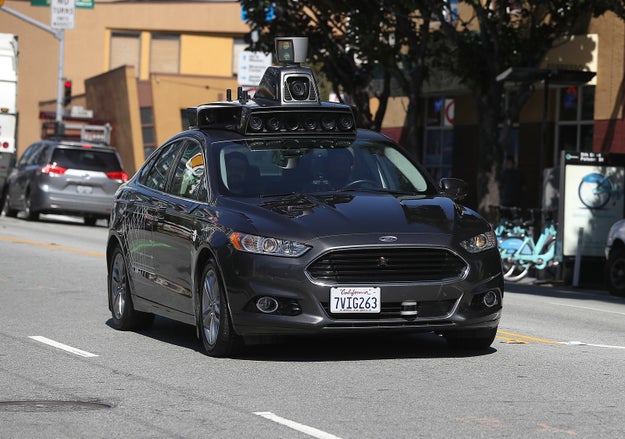
An Uber self-driving car drives down 5th Street in San Francisco, California.

Justin Sullivan / Getty Images

India will not allow driverless cars on its roads, the country’s federal transport minister, Nitin Gadkari, told reporters on Monday.

“How can we allow such vehicles when we already have a huge number of unemployed people” Gadkari asked.

Silicon Valley tech firms are aggressively testing autonomous vehicles in the United States. Last year, a self-driving truck from Otto, a startup that was acquired by Uber, drove a trailer of 2,000 cases of Budweiser more than 120 miles across Colorado. Uber’s rival Waymo, owned by Alphabet, is testing self-driving trucks too. Meanwhile, Uber, Waymo, GM, Apple and others are testing self driving cars in places like San Francisco, Scottsdale, Arizona and Pittsburgh, Pennsylvania.

But the technology is far from ready to go mainstream, and Silicon Valley executives have repeatedly said that India will be one of the last countries to get autonomous vehicles thanks to the country’s poor public infrastructure and erratic traffic conditions.

That hasn’t stopped Indian technology companies from working on autonomous vehicle tech, however. India’s $133 billion Tata Group has reportedly been testing drivers vehicles outside Bangalore since 2014.

BuzzFeed News has reached out to Uber and the Tata Group for comment.

Quelle: <a href="No Driverless Cars On India's Roads, Says Country's Transport Minister“>BuzzFeed

Donald Trump Has Your Full Attention. Can Anyone Else Be Heard?

When Americans elected Donald Trump in November, they created a dramatic shortage in a valuable global commodity: attention.

The sheer attention Trump absorbs — on Twitter, on television, in culture, and in the anxious dreams of American citizens and the country’s allies and enemies — draws away the lifeblood of everything from the launch of new apps to new social movements. Attention is the currency not just of American attention-seekers from Kim Kardashian to Amazon, but also of the other great geniuses of attention-seeking over the last decade: terror groups like ISIS, and opponents of the postwar social order like Julian Assange.

Trump hoards attention. He dominates it. Quantitatively, he is discussed on Twitter 10 times as much as the entire Kardashian family combined. Even the people just in Trump's proximity or carrying out his message dominate our attention — neatly evidenced by the stratospheric attention paid to Sean Spicer's resignation and television-friendly Anthony Scaramucci's entrance as White House communications director. Over in old media, Trump has been on the cover of the New York Daily News every third day since his election. And it’s not just in the United States: He’s already been on the cover of German weekly Der Spiegel five times this year.

“It's just harder for most products and people to get a word in edgewise,” said Stu Loeser, Mayor Mike Bloomberg's former press secretary, who now advises a range of businesses on media strategy. Loeser said the media context reminded him a bit of the months after the September 11th terror attacks. “Stories that might be fun in a different environment may come off as frivolous today.”

BuzzFeed News reporters and editors on six continents have examined how attention-hungry subjects are responding to this new shortage of their favorite commodity. We found that Trump’s dominance is not fully global. While he has captivated North America and Europe to varying degrees, a few places have entirely resisted the narrative: such as Brazil, captivated by its own crisis, and India, focused on its own battles.

But in the US — and the many parts of the world whose politics have long existed at least in part in relation to Washington — savvy attention merchants are responding dynamically to a disrupted market.

Some are shouting louder. American politicians curse more now. Global aid groups say they are relying on increasingly unorthodox stunts such as the “Famine Food Truck” the aid group Oxfam has been driving around Washington, DC, in an attempt to call attention to what it describes as the worst humanitarian disaster since the end of World War II: a food crisis spanning South Sudan, Somalia, Nigeria, and Yemen causing extreme hunger for 30 million people.

“A crisis of this magnitude would usually warrant significant media attention, and we’ve tried a number of tactics with only sporadic results,” said Laura Rusu, media manager at Oxfam America.

Others are streaming in Trump’s wake — most literally, the media figures and companies who are gaining a following by racing to reply to Trump’s tweets.

This is, perhaps, most visible in continental European politics, where German Chancellor Angela Merkel’s blunt hostility to the US president has solidified her support, and where newly elected French President Emmanuel Macron held an impromptu press conference immediately after Trump announced that he was pulling out of the Paris climate agreement. Macron spoke in French and English (a big deal in France), and days later launched a website called “Make Our Planet Great Again,” inviting US-based engineers, scientists, and entrepreneurs working on climate change to move to France.

Macron has continued trolling Trump, describing their intense handshake as a “moment of truth.”

Closer to the center of the storm, Washington lobbying firms have shifted from drawing up crisis plans for responding to Trump tweets to trying to figure out how to fit their clients into his “America First” paradigm, lobbyists told BuzzFeed News.

“We understand the importance of centering the message around America and the American worker and economy and putting America first, and we're advising clients to consider that,” said John Murray, partner at Monument Policy Group, who previously worked for former House majority leader Eric Cantor.

BuzzFeed News; Getty Images

Indeed, everyone is looking for a Trump connection, however thin.

Brooke Hammerling, a longtime Silicon Valley PR person, said that if she’s pitching a sleep product, she might look “to people feeling stressed about [the] political climate. If a fitness product, the writer might look at it as being fit is a good escape from the stress of the day and news.”

“It does have the feeling right now that things there is heavier stuff people are focused on than product launches — so it's harder to break through,” she said.

Some approaches are blunter. Airbnb Director of Public Affairs Nick Papas recently framed a pitch on the company collecting state taxes in Wisconsin and Michigan as “News Unrelated to Senate Testimony.”

“Trump dominates the conversation, which becomes a self-fulfilling prophecy since everyone believes that the only way to get attention is to talk about Trump, so they talk about Trump,” President Obama’s former communications director, Dan Pfeiffer, said ruefully. “Rinse, repeat.”

But none of these strategies can completely work. The reality is that everything that is not Donald Trump is simply getting less attention. The defining American social movement of the last few years, Black Lives Matter, has struggled to find its feet in a Trump world in which a continued drumbeat of well-documented police shootings no longer dominates social media. The startling dashcam footage of a police officer opening fire on Philando Castile, for instance, would likely have dominated headlines last year; this June, Trump tweets about a Georgia election and North Korea dominated headlines.

In Silicon Valley, whose product launch cycle has for two decades been grist for the global attention machine, Eric Feng, a former CTO at Hulu, launched his new app Packagd, which shares product unboxing videos, on the day of former FBI director James Comey’s testimony to Congress.

“The reality is that we just don’t really matter,” he said, taking small solace in the fact that the Comey testimony ended a few hours before his company’s launch. “What we can hope for is the soft spots in the news cycle and if something happens you just tighten the seatbelt and hope it works out.”

BuzzFeed News; Getty Images

And god forbid you’re trying to sell a book these days.

Christine Hyung-Oak Lee, whose memoir Tell Me Everything You Don’t Remember was published in February, recalled interview requests from mainstream news outlets that never turned into stories.

“They were doing Trump coverage,” she said, adding that “the publishing industry is very forgiving of book sales right now.”

“With this administration and the news swings on a daily and hourly basis, it’s been a little more problematic for nonfiction books in particular,” said Marie Coolman, senior director of publicity and communications at book publisher Bloomsbury, who added that she thinks some fiction titles are winning out as “a respite from the news.”

Of course, not everyone on the global stage is looking for attention. For some domestic and global players, this distraction is a nice environment in which to get things done.

“The news cycle is so fast and so overloaded that the silver lining is that some of the negative narratives tend to dissipate much more quickly than before,” said Matthew Hiltzik, a veteran New York corporate and crisis communications consultant. “There are certain clients who prefer not being covered and so that helps!”

Indeed, for those who don’t want attention, this is something of a golden age.

The media and political glare on Trump has given rogue actors abroad an opportunity to pursue their aims without attracting too much attention. During the years when Mahmoud Ahmadinejad was Iran’s president Iran was an international pariah, with the UN and EU as well as the US rushing to heap on sanctions. With soft-spoken cleric Hassan Rouhani now Iran's president, Tehran often goes to lengths to sound like the adult in the room. Meanwhile, Iran continues to fire off ballistic missiles, train and arm gunmen across the region, and confront US allies.

When Obama was president, Iranian censors struggled to suppress all of his peaceful overtures and public addresses to Iran. Now, whenever Trump or even Sean Spicer is about to give a press conference, Iran state television goes live to Washington.

“Iran can say, 'America really has a bad guy in charge. Look, he's under investigation,'” a former US intelligence operations officer who was based for years in the Middle East and remains active in the region, said. “In the States, we just arrested some Hezbollah operatives affiliated with Imad Mugniyah's old component. Nobody paid attention.”

“Trump is the best distraction,” he said. ●

Quelle: <a href="Donald Trump Has Your Full Attention. Can Anyone Else Be Heard?“>BuzzFeed

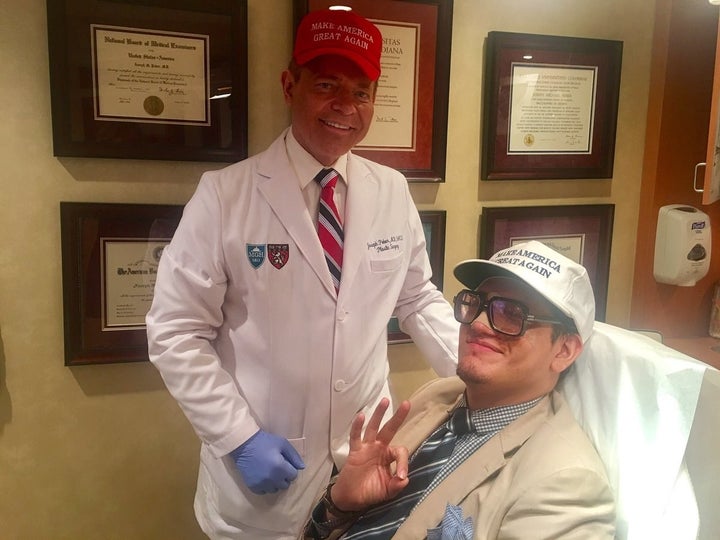
Meet Park Avenue’s "Dr. Redpill," The Trump Internet’s New Favorite Plastic Surgeon

Dr. Joseph Pober and Jovanni Valle.

Laura Loomer

Dr. Joseph Pober claims the sparkling résumé you'd expect of a Park Avenue plastic surgeon: valedictorian of his class at Columbia, Harvard Medical School, a prestigious residency, and 20 years in a thriving private practice a few short blocks from the Met.

But he possesses a rarer distinction still: Pober has recently rebranded himself on social media as “Dr. Redpill,” and he’s now the toast of the pro-Trump internet.

The 63-year-old surgeon once lauded by Hamptons Magazine as “New York's Top Park Avenue Plastic Surgeon” has lately been treating some of Trump Twitter’s most notorious figures, while making time to pose pre-op in a #MAGA hat, and appear on Sean Hannity's and Bill Mitchell's radio shows.

Er, why?

Ever since video of the white nationalist Richard Spencer being sucker punched by a masked man on Inauguration Day went viral, the entire spectrum of the pro-Trump media — from hardcore alt-right blogs to Fox News — has fretted about the threat of political violence against Trump supporters. And when a prominent pro-Trumper had his nose broken and face cut in an apparently politically motivated Manhattan bar fight after the launch of conservative rabble-rouser Milo Yiannopoulos’ book earlier this month, the pro-Trump media finally had a grisly example of violence against a Trump supporter who wasn’t a neo-Nazi.

“I see no reason not to be the pro-Trump plastic surgeon. I’m proud to be an American.”

And Pober soon had a Trump-internet-famous patient. Jovanni Valle, the victim, had in June stormed the stage of the now-infamous Public Theater production of Julius Caesar. His fellow showstopper, conservative activist Laura Loomer, immediately began tweeting photos of the bloody aftermath, and attempting to crowdsource his medical bills. A follower put Loomer in touch with Megin Klunck-DeCarlo, who runs Pober’s New Jersey medical spa, and convinced the doctor to arrange a consultation.

Pober was horrified by Valle’s story.

“Political hate crimes should never be tolerated,” he told BuzzFeed News. “If there is anything that can be done to frustrate that development in America, every effort should be made. [Otherwise], it will escalate.”

Instagram: @jovivaltv_official

Moved, Pober offered to perform the necessary reconstruction gratis — operations for which, all told, he would normally charge up to $30,000. Last week, Pober repaired Valle’s broken nose, sutured a cut on his cheek, and drained a hematoma in his lip — “black, coagulated blood,” Pober told Bill Mitchell. In an Instagram during a recent checkup, Valle called him “an American hero.”

“He’s taking a stance and sending a message against people who think it’s okay to destroy someone…over a disagreement in politics,” Loomer said.

During that initial consultation, talk naturally turned to politics. Loomer and Valle found themselves astonished at the degree to which Pober — a Republican and a Trump supporter — was aware of, as Loomer put it, “all this political violence against the right.” They suggested a nickname: Dr. Redpill, for the Matrix-referencing term popularized by the men’s rights movement — and later adopted by much of the conservative internet — which refers to politically incorrect epiphanies about feminist and liberal control of Western culture. And so a new Instagram account and a fledgling Twitter hashtag were born.

“I see no reason not to be the pro-Trump plastic surgeon,” Pober said. “I’m proud to be an American.”

Many of the most popular “redpills” — Jews control the world, the West is under existential threat from Muslim immigration — repeat age-old, highly offensive tropes about minority groups. Pober and Loomer, who is Jewish, insist that the nickname means no such thing.

“My understanding of redpilled is simply to be able to think for one’s self without the fear of violent repercussion,” Pober said.

Loomer added, “I was simply making a reference to the redpill, the truth serum, being awake and aware of reality. It was very innocent – no underlying conspiracy. As a Jew, I don’t think I’d be giving someone a name if it had an anti-Semitic overtone.”

In the next month, Loomer plans to undergo a rhinoplasty, Pober’s self-described speciality. (Loomer described as “absurd” and “sexist” online rumors that she was paying for the $15,000 operation with money from her two crowdsourced legal defense funds related to the Julius Caesar incident.)

“I think having a beautiful nose for whatever reason is a fantastic thing,” Pober said.

Pober, who has appeared on Oprah and CBS, said he would not be performing Loomer’s nose job for free, and that his recent rebranding was in no way “a business opportunity.” He said he would be open to making financial accommodations in the future for cases like Valle’s when “medically necessary,” as well as for “burn victims.”

“I want to help as many people as I possibly can,” Pober said. “America isn’t a country where you can’t get health care. Everyone has health care in America.”

Quelle: <a href="Meet Park Avenue’s "Dr. Redpill," The Trump Internet’s New Favorite Plastic Surgeon“>BuzzFeed

You Should Really Update Your iPhone Right Now

The latest software update patches a security vulnerability that would allow an attacker to hack your phone using the device’s Wi-Fi chip.

Apple released a new iOS update for iPhone, iPad, and iPod touch on July 19 – and if you haven’t yet, you should download and install it now.

Apple released a new iOS update for iPhone, iPad, and iPod touch on July 19 – and if you haven't yet, you should download and install it now.

There's a serious vulnerability related to the devices' Wi-Fi chip, and the new update, iOS 10.3.3, offers a patch for this specific attack.

Lucy Nicholson / Reuters

Nicole Nguyen / BuzzFeed News

Before installing any software update, you should back up your iOS device.

Before installing any software update, you should back up your iOS device.

In rare cases, software updates may cause cause data loss – or even “brick” your phone (meaning it won't respond if you try to turn it on or connect it to a computer). You can *never* be too careful!

You can back up your precious memories via iCloud (Settings > tap on your name at the top > iCloud > scroll down to iCloud Backup to “on”).

If you don't have enough space on your iCloud account, connect your iPhone to your computer and back up via iTunes. There may be a pop up asking you if you Trust This Computer (say yes) and a prompt to enter your passcode. Once the device is connected, click the name of the device in iTunes > Summary. In the Backups section, select This computer on the left and then Back Up Now on the right.

You can verify the back up was successful by going to iTunes preferences > clicking Devices. All of your backups should be listed there.

Bravo / Via bravotv.com

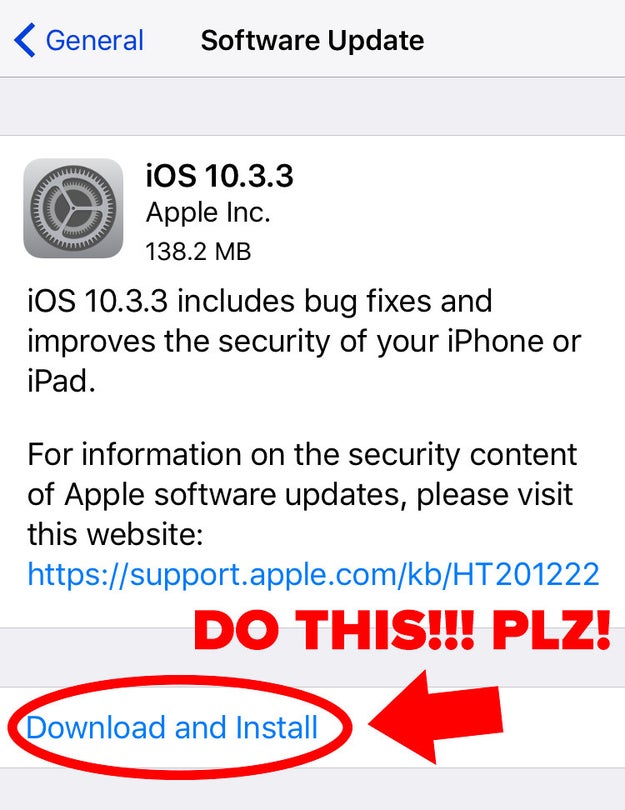
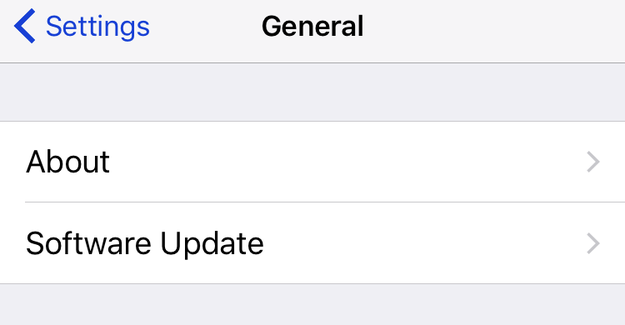
The easiest way to update your iPhone is wirelessly. Go to the Settings app > General > Software Update.

The easiest way to update your iPhone is wirelessly. Go to the Settings app &gt; General &gt; Software Update.

Make sure you're connected to a secure, fast Wi-Fi network. Then hit “Download and Install” when you're ready.

You can also update using iTunes. Connect your device to your computer, open iTunes > Summary > then Check for Update. Make sure you have the latest version of iTunes.


View Entire List ›

Quelle: <a href="You Should Really Update Your iPhone Right Now“>BuzzFeed

There's Trouble Inside Nairobi's Biggest Tech Start-Up

Young tech entrepreneurs listen to a lecture an innovation center in Nairobi.

Bloomberg / Getty Images

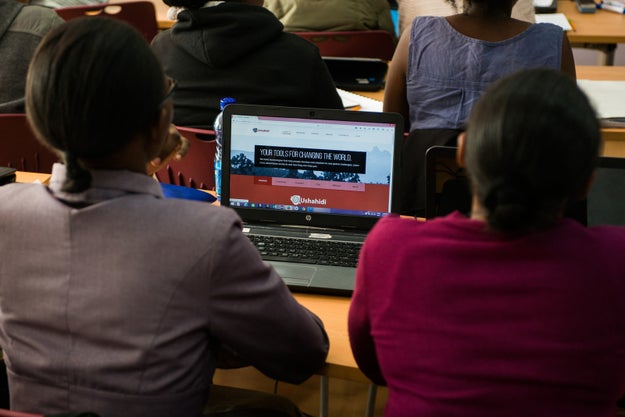
NAIROBI — One of Kenya’s best-known startups has spent the last two and a half months trying to quietly handle allegations of sexual harassment from a former employee against its executive director.

Daudi Were, one of the country's first bloggers and the executive director of Nairobi-based nonprofit software company Ushahidi, has been accused of sexually harassing an employee during a company retreat on Jan. 19. In an exclusive interview with BuzzFeed News, Angela Kabari, who has since resigned from the company, recounted how Were led her away from her coworkers and suggested that she have sex with one of her female colleagues.

Kabari, 31, said she recorded the events of that night, and allowed BuzzFeed News to listen to the clip.

But Were, who said he has listened to the recording, told BuzzFeed News he believes the clip has been edited. He could not specify what had been removed, but said that an unedited version of the recording would better support his account of what happened.

Were acknowledged that he made the “inappropriate comments,” but said they didn’t amount to sexual harassment.

“I would not call them sexual in the same way that saying ‘fuck off’ is not sexual,” he said.

The incident took place on Jan. 19. Kabari reported it three and a half months later, on May 4. Then, on July 18, the company told her the board found “a reasonable basis for a finding of gross misconduct on the part of the Respondent” and had issued him a notice to “show cause” — in other words, the board is allowing Were to make a case for why he shouldn’t be fired. The company has put him on compulsory leave and no further disciplinary action has been taken. The board also rejected a second sexual harassment allegation she brought against Were.

And then, in a move that made Kabari question whether her case was being taken seriously, the company added that Kabari had also violated her contract and the organization’s rules — which call for “mindful and respectful” communication between employees — by using phrases like “fuck off” liberally in the workplace.

Ushahidi, which means “testimony” in Swahili, was initially established to give people the tools to map out reports of violence following the Kenyan presidential elections in 2007. It has since been hailed as a tech company committed to empowering local communities through the flow of open information.

Several of Ushahidi’s board members, including cofounders Erik Hersman and Juliana Rotich, did not respond to multiple BuzzFeed News requests for comment, instead directing inquiries to statements put out by the company regarding the investigation and the timeline of events.
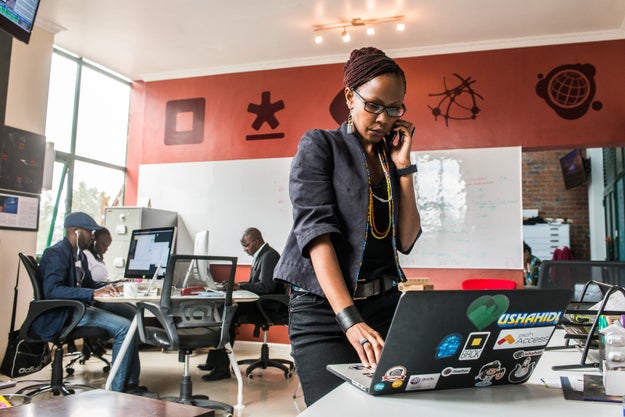
Juliana Rotich is a cofounder and board member of Ushahidi. Kabari said she filed a complaint against Were to Rotich.

Bloomberg / Getty Images

Kabari told BuzzFeed News in a phone interview that Ushahidi held a company retreat from Jan. 13–19 at a country club in Nyeri County, two and a half hours’ drive north of Nairobi. Many Ushahidi employees work remotely and across multiple time zones, she said, so the retreat was a way to build camaraderie.

Kabari described what took place on the final night of the retreat. Around 2:30 a.m. on Jan. 19, while a group of Ushahidi workers were gathered around a bonfire and drinking, she said Were told her he had lost the earpiece to his hearing aid, and asked her to help him look for it.

However, Were told BuzzFeed News that he had only asked the hotel staff for help finding his earpiece, and that he did not ask Kabari for help; he said she offered.

When he told Kabari that he would pay her half the cost of the earpiece if they found it (about 250 British pounds, she recalled him saying), she said she began to record the conversation with the intention of replaying it for him the following morning as a joke.

Kabari at one point asked Were to retrace his steps to help them locate the missing earpiece, the recording indicates.

After jokingly referring to Kabari as Nancy Drew — this was when she told him to “fuck off” — Were invited her into his hotel room to continue looking for the earpiece, but she declined.

Then he told her, “You’ve got two choices. You can hang out with me, or [your roommate] can make you come. Which is better?”

“Neither. Neither,” she said.

“Is she that bad?” Were asked.

Kabari reiterated that she was “opting out of both” options.

“You know, to be honest, I didn’t see much tongue with her, so I hear you,” he said, and then added, “This is the most chafu search you’ve ever been on.” (“Chafu” is Swahili for “dirty.”)

Earlier, Were had asked Kabari where her hotel key was. She said her roommate at the retreat — a female colleague who asked not to be named in the story — had it in their room.

“Oh shit, I can’t believe…sorry, my bad. I messed up,” Were said. “My hearing aids are upstairs in the room we were in. The best way you can help me is by going to sleep right now.”

“Goodnight. You’re crazy. Goodbye,” Kabari said, and reminded him that he was still without his earpiece.

“You know the best way you can help me is by shagging [your roommate].”

“How will that help anyone?” Kabari asked.

“You get to come,” Were said.

“Yeah, [my roommate] is asleep,” she said, and told Were to go to sleep.

Were told BuzzFeed News that he “made inappropriate comments out of frustration,” but insisted that his comments were not of sexual nature.

Kabari said she eventually walked away from Were. The following day, she returned home and told her boyfriend what happened. He urged her to speak out, but she wanted to let it go and just forget about it. She said she couldn’t.

“I started avoiding the office, and when I came home from work, I would have a blinding headache,” Kabari told BuzzFeed News in the weeks following the incident.

Her headaches were soon joined by stomach aches and diarrhea. She said her doctor attributed the symptoms to stress and burnout. When she started seeing a therapist in the middle of February, she said it was then that she realized her encounter with Were was at the root of her anxiety.

She decided, then, to bring it up at work, but she didn’t know how.

“My supervisor reports to Daudi,” Kabari said. “Daudi also works alongside the administrative and operations officer in HR. He is the executive director, and also serves on the board. I did not know who the hell I should go to with my story.”

After speaking with an attorney, Kabari said she submitted a complaint to the board through one of its members, Ushahidi cofounder Juliana Rotich, on May 4. She included the audio recording of the incident.

Bloomberg / Getty Images

Given the tight-knit, interdependent nature of Nairobi’s tech ecosystem, choosing to come forward with allegations of sexual harassment is not without its risks. Most startups in Nairobi work out of a handful of the city’s coworking spaces; they belong to the same tech- and entrepreneur-focused WhatsApp groups, and frequently run into each other at hackathons and conferences.

Over the next two months, Kabari’s attorney, Were’s attorney, and Ushahidi’s attorney argued over the terms of the investigation, and scheduled and rescheduled a date for the internal hearing, during which Kabari and Were would share their testimonies of what happened at the retreat.

By the end of June, Kabari was ready to give up. She said she was left feeling demoralized thinking about how much time and energy had gone into writing letters to attorneys over the past two months, and seeing little action taken in the investigation. On June 28, she resigned from her position at Ushahidi, but continued to fight her case.

All parties — Kabari, Were, both their attorneys, the Ushahidi board and the company’s attorney — eventually met for an internal hearing on July 5. That same day, the board informed her that they had placed Were on compulsory leave.

Kabari said she was grilled by Were’s attorney during the hearing, which lasted two and a half hours.

“His attorney asked why I used ‘fuck’ in my conversation with Daudi,” Kabari said. The attorney argued that every time Kabari said ‘fuck,’ she was initiating a sexual conversation and therefore couldn’t hold anything Daudi said against him.

“The board sat there in silence the entire time,” she recalled. “It was like being in a courtroom without a judge. It felt like a legal show.”

On July 9, local blog TechMoran reported on the incident, in the first public mention of it. Ushahidi released its first statement addressing the issue the following day, saying it was “taking this claim seriously and will strive to seek a fair and just conclusion to the matter in accordance with the Law as soon as is reasonably possible.”

Several people in Nairobi’s tech world have spoken out since, including Ory Okolloh, one of the original founders of Ushahidi, who left the company in 2010.

In a Medium post published on July 11, Okolloh called Ushahidi’s response to Kabari’s complaint unacceptable.

“The idea that either individuals or organizations are ‘too big to fail’ or that the tech and start-up sector is somehow different is wrong,” Okolloh wrote.

In a 27-page report of the investigation obtained by BuzzFeed News, board members noted that according to the company’s guidelines, being found guilty of gross misconduct leads to summary dismissal, or dismissal without notice. But Kabari continues to await the board’s final decision on whether or not Were will continue to be employed by Ushahidi.

On Thursday, Kabari published her side of the story in a Medium post.

Kabari told BuzzFeed News that one of the most troubling things about the whole ordeal is the precedent it sets, and the message it sends to women who have been harassed in the workplace.

“If the board had extended to me … a fraction of the compassion they’ve given to him, this wouldn’t be happening,” she said.

Quelle: <a href="There's Trouble Inside Nairobi's Biggest Tech Start-Up“>BuzzFeed
Now You Can Visit The International Space Station In Google Street View

Now You Can Visit The International Space Station In Google Street View

You can now walk the streets of space!

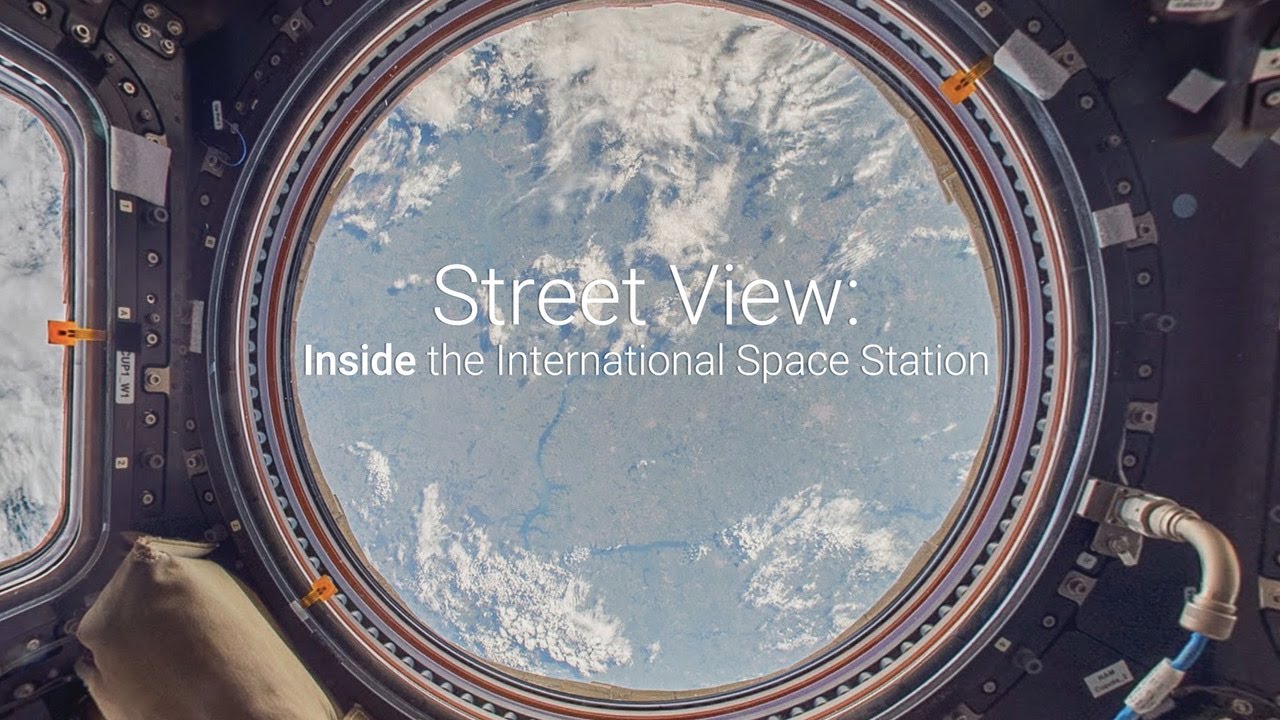
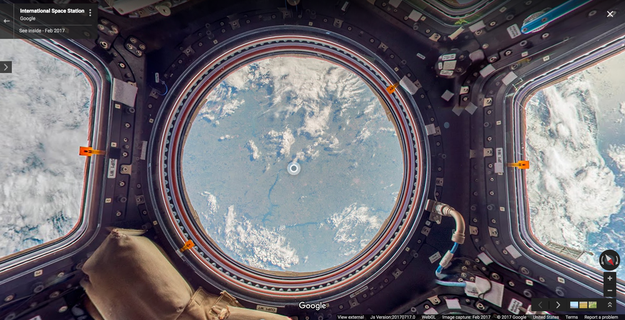
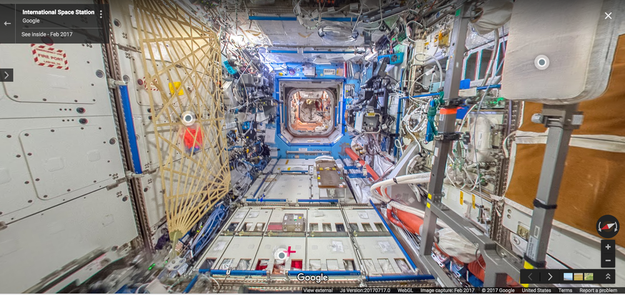
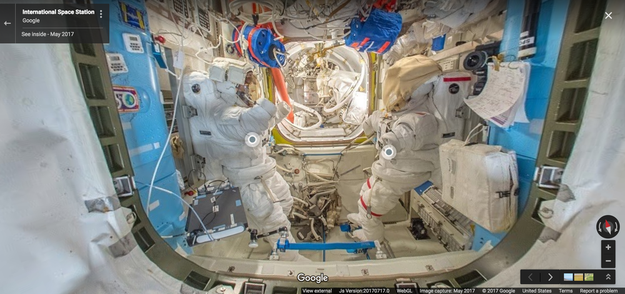
Google Street View has partnered with the European Space Agency to create a walk-through of the International Space Station.

BuzzFeed News

Street View already lets you visit and explore the Great Barrier Reef, the plains of the Serengeti, or the storefront of that nail salon you pulled up on Google Maps. This interactive view of the ISS is the first Street View of anything beyond earth. The ISS has been continuously occupied by humans for 16 years.

NASA told BuzzFeed News that the newly released walk-through covers the entire habitable portion of the ISS and the interiors of two commercial spacecraft, Orbital ATK's Cygnus and SpaceX's Dragon.

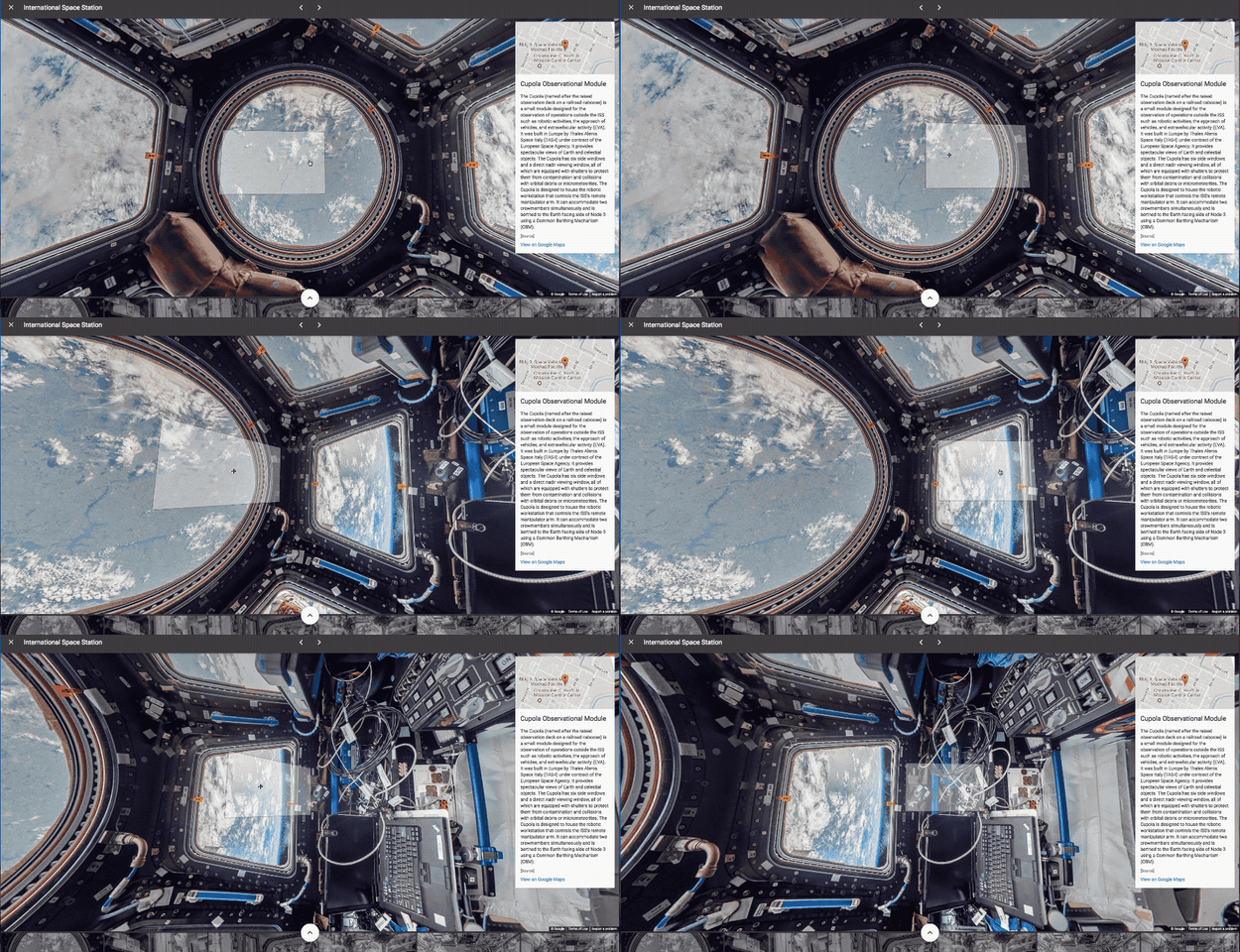
Here’s the Earth, but from space:

Here's the Earth, but from space:

Google

Google

Google

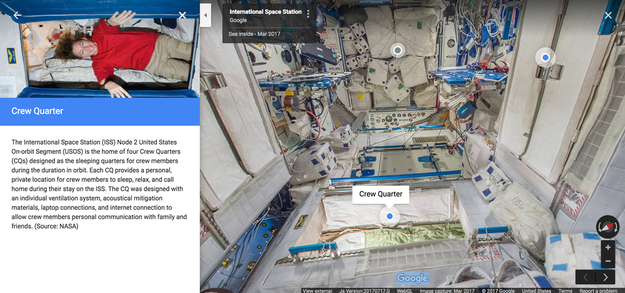
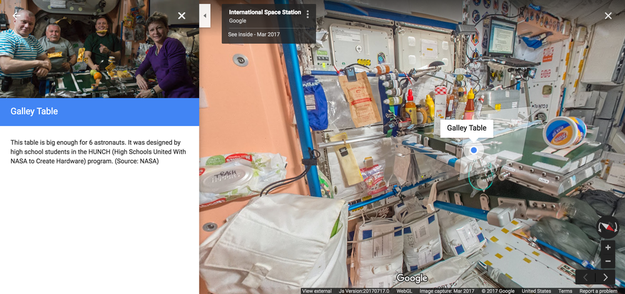
There are fun little annotations that help explain life on the ISS.

Like where do astronauts sleep?

Google

And where do they eat?

Google

Google and the ESA made a video about the process of creating the simulation.

youtube.com

Instead of the usual camera-equipped car, Thomas Pesquet, an ESA astronaut who lived aboard the ISS from January to June 2017, captured the images used in the “Street View” of the ISS. Cue inspiring music.

Fun fact: Pesquet's mission was led by Peggy Whitson, who, at 56, is the oldest woman to fly in space, and the first woman to lead two expeditions to the station, according to Google's blog post.

Quelle: <a href="Now You Can Visit The International Space Station In Google Street View“>BuzzFeed