Google Has Fired The Employee Who Wrote An "Anti-Diversity Manifesto"

Google has fired James Damore, the software engineer who wrote a manifesto against the company’s diversity policies that went viral within the company over the weekend.

Google has fired James Damore, the software engineer who wrote a manifesto against the company's diversity policies that went viral within the company over the weekend.

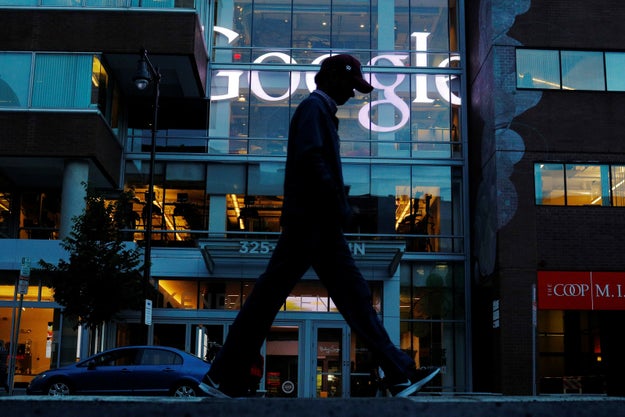
Brian Snyder / Reuters

Damore was fired for “perpetuating gender stereotypes,” he told Bloomberg on Monday night. Damore later confirmed his dismissal to BuzzFeed News.

“Google has super flexible (illegal) policies that they can twist to fire anyone they want,” he said.

Google did not respond to a request for comment.

On Saturday, a lengthy memo titled “Google's Ideological Echo Chamber” written by Damore spread quickly among employees before being leaked to the press.

The document argued in favor of a biological basis for the difference in the number of men and women in the tech industry based on pseudoscientific statistics and assertions such as women suffering from “neuroticism” more than men. Damore's LinkedIn profile says he has received advanced degrees in biology.

Damore argued that the company should not offer programs for racial minorities or women and that “ideological diversity,” — including more conservative viewpoints like Damore's — was more important than hiring more people of underrepresented racial minorities or women. Damore wrote that politically conservative Google employees faced discrimination.

“We need to stop assuming that gender gaps imply sexism,” he wrote. “I’m simply stating that the distribution of preferences and abilities of men and women differ in part due to biological causes and that these differences may explain why we don’t see equal representation of women in tech and leadership.”

Google executives said on Sunday that they do not “endorse, promote or encourage” the author's viewpoint. Google CEO Sundar Pichai said that Damore had violated the company's code of conduct.

Silicon Valley, and Google in particular, has faced increasing scrutiny for its treatment of women. The search giant is currently under investigation by the US Department of Labor for gender discrimination in the workplace.

One department official testified in court that the federal agency has found “systemic compensation disparities against women pretty much across the entire workforce.” Google has denied the allegations.

An “Anti-Diversity Manifesto” Is Going Viral Inside Google, Employees Say

Quelle: <a href="Google Has Fired The Employee Who Wrote An "Anti-Diversity Manifesto"“>BuzzFeed

Apple Just Launched A "Shot On iPhone" Instagram Account

Apple just launched an official Instagram account dedicated to iPhone photography, and it's looking for iPhone photographers to feature.

Instagram: @apple

The description of the Apple account reads, “Welcome to @apple. Tag #ShotOniPhone to take part,” indicating that Apple is searching for photos on Instagram to post on its account. Instagram users around the world have been already been posting photos using the hashtag.

iTunes, Apple Music, iBooks, Planet of the Apps, Carpool Karaoke, and Beats headphones already have Instagram accounts. The new Instagram account appears to source images from iPhone photographers around the world.

The account's first posts all bear the hashtag #ShotOniPhone, which is also the tagline of a prominent iPhone marketing campaign.

Instagram: @apple

Each post is a collection of several photos with personal remarks from their photographers.

The account's following is growing rapidly. At 10 a.m. Pacific Standard Time, it had 70,000 followers. By 2:30 p.m., it had 188,000.

Instagram: @apple

Here are some more of the posts:

Instagram: @apple

Instagram: @apple

Instagram: @apple

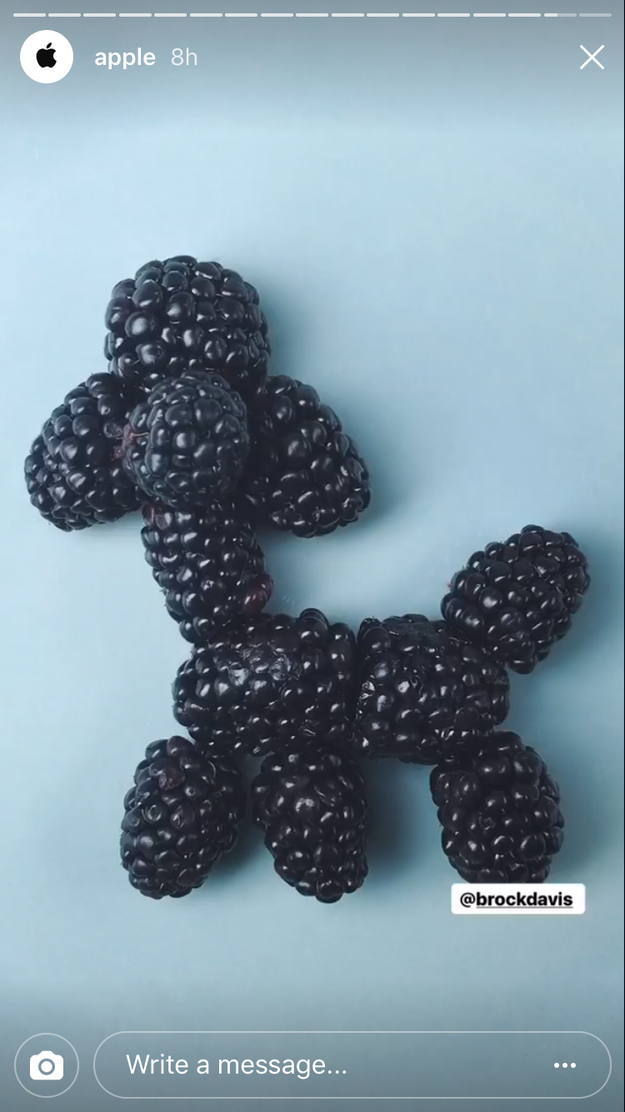
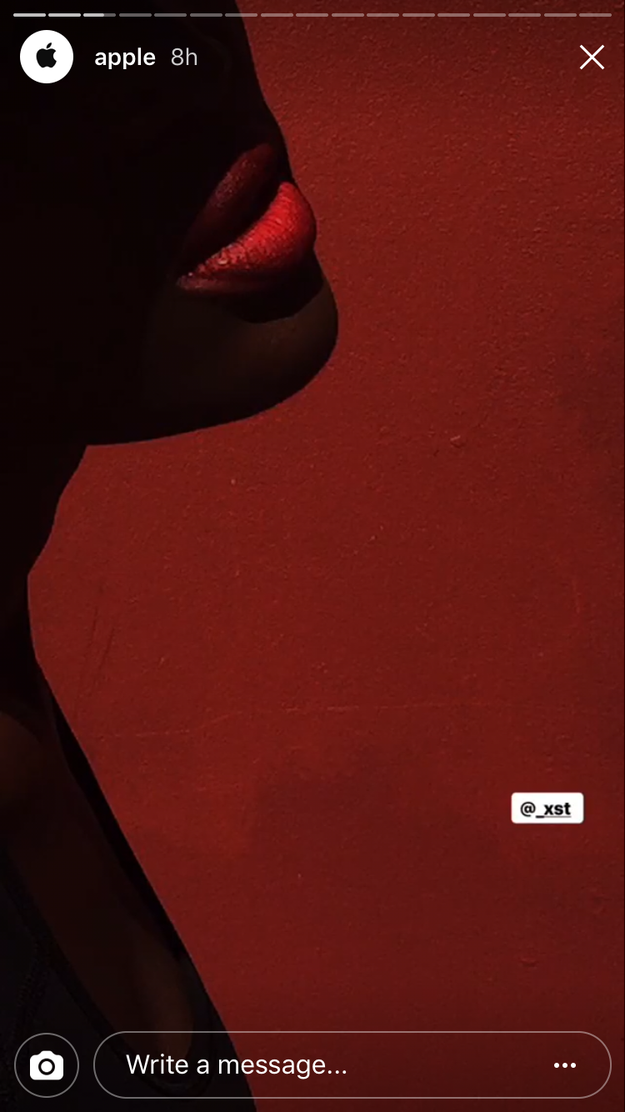
Apple's new account is also posting Instagram Stories:

Apple

The account's stories currently show Instagram users' photos, which are narrated by sound clips of the photographers talking about their photo subjects and their approaches to photography.

Apple

Apple

Apple did not respond to request for comment.

11 Hacks For Taking The Best Possible iPhone Photos

Apple Is Reportedly Releasing A Cellular Version Of The Apple Watch Later This Year

Apple CEO Successfully Avoids Discussing Trump When Asked About Trump

Quelle: <a href="Apple Just Launched A "Shot On iPhone" Instagram Account“>BuzzFeed

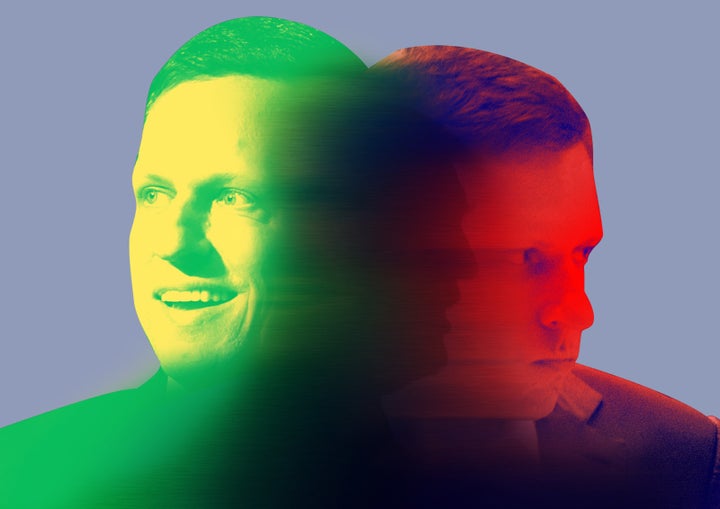
Peter Thiel Has Been Hedging His Bet On Donald Trump

Peter Thiel Has Been Hedging His Bet On Donald Trump

BuzzFeed News; Getty Images (3)

Donald Trump’s most prominent Silicon Valley supporter has distanced himself from the president in multiple private conversations, describing at different points this year an “incompetent” administration, and one that may well end in “disaster.”

Peter Thiel’s unguarded remarks have surprised associates, some of whom are still reeling from his full-throated endorsement of Trump at the Republican National Convention. And while the investor stands by the president in public — “I support President Trump in his ongoing fight,” he said in a statement to BuzzFeed News — his private doubts underscore the fragility of the president's backing from even his most public allies. Thiel’s comments may sting in particular in the White House as they they come amid a series of hasty and embarrassed departures from the Trump train, as conservative voices from the Wall Street Journal’s editorial page to the floor of the US Senate have begun to distance themselves from the administration.

Thiel’s views remain private — but various disparaging comments were recounted to BuzzFeed News by three separate sources, and others who subsequently confirmed those accounts. These people requested anonymity for fear of damaging personal relationships and possible retribution.

While Thiel told Trump that he is off to a “terrific start” at a White House event in June, his previous statements to friends and associates did not reflect that sentiment. In half a dozen private conversations with friends that were described to BuzzFeed News dating from spring 2016 to as recently as May, Thiel, who served on the Presidential Transition Team Executive Committee, has criticized Trump and his administration and developed increasingly pessimistic feelings about the president.

The sources who talked with BuzzFeed News spent time with Thiel in private group settings before and after the election at his homes in Los Angeles, San Francisco, and Hawaii, engaging in candid discussions on the PayPal cofounder’s politics and his backing of Trump. At one event with friends in January 2017, Thiel said of Trump’s presidency that “there is a 50% chance this whole thing ends in disaster,” according to two people who were in attendance. In other conversations, he questioned the president’s ability to be reelected.

Thiel, through a spokesperson, did not deny any of the quotes attributed to him by his friends and associates when approached by BuzzFeed News.

“The night he won the election, I said President Trump would face an awesomely difficult task,” Thiel said in a statement. “Today it's clear that resistance to change in Washington, D.C. has been even fiercer than I anticipated. We still need change. I support President Trump in his ongoing fight to achieve it.”

Within the White House, Thiel has been one of the few outsiders to crack Trump’s inner circle, which values one characteristic above all else: loyalty. The investor, whose book Zero to One reportedly became essential reading for Trump campaign staffers, gained that trust after a well-received Republican National Convention speech. Following Trump's election to the presidency, Thiel helped select political appointees for the new administration and as of August, was still advising the president on technology policy matters. During a December 2016 meeting of technology executives in New York City, Trump wrung Thiel’s hand and called him “a very special guy.”

“He got just about the biggest applause at the Republican National Convention,” Trump said as cameras snapped away in a room that included Apple CEO Tim Cook and Facebook Chief Operating Officer Sheryl Sandberg. “He’s ahead of the curve, and I want to thank him.”
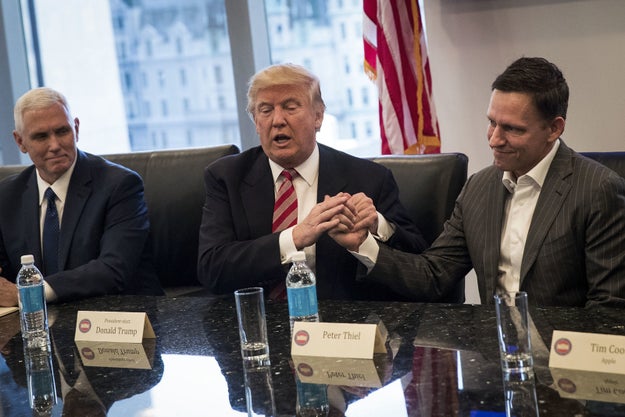
President Donald Trump shakes the hand of billionaire venture capitalist and transition team member Peter Thiel during a meeting with technology executives at Trump Tower in December.

Drew Angerer / Getty Images

Thiel’s views on Trump began to evolve during spring 2016, according to people close to him. In one private event at his home in San Francisco, he was cautious not to fully endorse Trump, but positioned him as a better option than Bernie Sanders, who he considered far too extreme, and Hillary Clinton, who he thought would be disastrous for trade and tax policy. When someone asked about Trump, however, Thiel, who had previously given $2 million to a Super PAC for then–GOP candidate Carly Fiorina, said that the bombastic Republican populist had a much better shot at winning the presidency than most pundits suggested, according to one person in attendance.

By May of that year, the billionaire investor was ready to tie himself to Trump. He was named a California delegate for the RNC that month, and by July, he was announced as a speaker at the event on the same day as the Republican candidate and his daughter Ivanka Trump. The crowd cheered Thiel’s six-minute speech, in which he declared himself proud to be gay and proud to be a Republican, garnering plenty of applause from Trump’s sons Eric and Donald Jr.

“He saw an opportunity to help somebody, who was not a sure thing, and get in on the ground floor,” said a friend of Thiel’s on his decision to speak at the RNC.

The RNC would be the first time Thiel met with Trump and his family in person. In a private dinner that summer following the event, a person who attended described Thiel as “giddy” and excited about the crowd’s reaction to his speech. This person also told BuzzFeed News that Thiel freely offered his first impressions of the Republican candidate, characterizing him as having “narcissistic tendencies.” He also suggested, in a claim that would be reiterated later, that if Trump were to be elected, there was a half probability that his presidency would end in failure.

The billionaire venture capitalist remained relatively quiet through the summer of 2016, avoiding interviews about Trump and Gawker Media, after Forbes revealed in May that Thiel had been secretly footing former professional wrestler Hulk Hogan's legal bills against the New York news organization. Gawker, which lost a landmark invasion-of-privacy lawsuit in a Florida court and was forced to pay $140 million in damages to Hogan, filed for bankruptcy and sold its assets to Univision Communications in August. Thiel said little publicly about the case.

He spent part of the summer traveling, taking advantage of his American, German, and New Zealand passports, the last of which has garnered its own controversy. Thiel’s Kiwi citizenship, which he’s held since 2011, was not revealed until the New Zealand Herald discovered in January that the government had granted him a passport under an “extraordinary circumstances” exception after he had spent 12 days in the country. “I am happy to say categorically that I have found no other country that aligns more with my view of the future than New Zealand,” Thiel wrote in his 2011 citizenship application, which was later released by the Kiwi government earlier this year after media pressure. Thiel's US$3.5 million property in Queenstown — referred to by locals as “the Plasma Screen” because of its expansive glass facade — was severely damaged in a suspected gas leak fire in August 2016, according to construction documents obtained by BuzzFeed News.

“What Trump represents isn’t crazy and it’s not going away.”

That September, Thiel penned an opinion piece for the Washington Post that highlighted Trump’s antiestablishment nature and “heretical denial of Republican dogma,” while largely ignoring the candidate’s policy initiatives. That was followed up by a $1.25 million donation — less than .05% of his $2.7 billion net worth, as estimated by Forbes — to Trump’s campaign in October. In dinners that fall in San Francisco and Los Angeles, Thiel was described by someone who attended both as “excited” and “positive” about Trump, emphasizing how good he would be for tax issues. Thiel’s boyfriend, Matt Danzeisen, also spoke about his support of Trump during at least one of these dinners, though was described as much more moderate, said that person.

Thiel’s only meaningful speaking appearance outside of the RNC came on Halloween day at Washington’s National Press Club, where he delivered a speech on Trump’s promise as a political outsider. “Trump’s agenda is about making America a normal country,” he said. Thiel also spent time addressing the candidate’s flaws, following the release of an Access Hollywood tape where Trump discussed sexually assaulting a woman. He called the comments “clearly offensive and inappropriate” and later noted in the same speech that “nobody would suggest that Donald Trump is a humble man.”

“No matter what happens in this election, what Trump represents isn’t crazy and it’s not going away,” he said.

At a gathering at his home in Los Angeles the weekend before the election, a source in attendance said Thiel reiterated that point. But in at least one private conversation, Thiel admitted he didn’t have much confidence in either candidate. Whoever wins, he said, will likely be a one-term president, according to a person familiar with the discussion, with Thiel predicting that there would be a major financial catastrophe in the next four years.

Trump’s victory was a marketing coup for Thiel. With a reputation as a renegade investor whose contrarian but prescient bets on companies like Facebook and SpaceX had paid off handsomely, Thiel — one of the few Silicon Valley elite to openly support Trump — now had a victory in the political sphere. The news media lauded his winning bet, with some speculating he might be named to the Supreme Court, a past dream of the Stanford University law degree holder.

While Thiel quickly shot down rumors of a Supreme Court appointment, he was named to Trump’s transition team. There he worked with two acolytes — Blake Masters, his Zero to One coauthor, and Trae Stephens, a former engineer at the Thiel-founded government contractor Palantir Technologies — to source and vet science and technology appointments.

One Trump campaign insider told BuzzFeed News that Thiel had his pick of cabinet positions, but never showed true interest in taking a permanent government job. Instead, he focused on adding his associates to positions of power. Thiel’s former chief of staff Michael Kratsios was named as deputy chief technology officer, while another former colleague, Kevin Harrington, joined the National Security Council as deputy assistant to the president. Justin Mikolay, an evangelist for Palantir — the Thiel-founded data-analysis company — was given a role in the Defense Department.

Thiel and his associates managed to steer clear of much of the infighting that troubled the Trump transition team in its early days. But they didn't escape unscathed. One source in a position to know told BuzzFeed News that when other transition members discovered that Stephens had not voted for Trump, he was summarily isolated from the group, souring some people’s perspectives on progress with the weeks-old administration.

“There is a 50% chance this whole thing ends in disaster.”

A spokesperson at Founders Fund, the Thiel-led venture capital outfit where Stephens is now a partner, declined to comment.

After organizing a meeting with technology leaders at Manhattan’s Trump Tower in December, where he was thanked profusely by the president-elect, Thiel spent the New Year’s holiday in Maui with about a dozen friends. While he worked for some of the time, he engaged with his close friends at meals and events, debating Trump’s merits with some of his more liberal attendees. According to two people in attendance, Thiel described the administration as a work in progress and discounted the suggestion that progress on social issues like gay marriage might be rolled back in the next four years. But these same people said Thiel tempered his enthusiasm with a caveat during one meal, remarking that “there is a 50% chance this whole thing ends in disaster.”

After about a week of relaxing in Maui, his guests, who included Y-Combinator President Sam Altman for part of the time, headed back to their jobs. Thiel readied himself to go back to New York, and later, the inauguration.

Thiel was one of the few chosen for a seat at the inauguration morning service at St. John’s Episcopal Church, and sat near the president during Trump's inauguration speech on January 20, BuzzFeed News has confirmed. In addition, on the night before the inauguration, he made an appearance at a Trump supporter event called the DeploraBall, but quickly left after being approached by reporters (including one from BuzzFeed News) inquiring about his role on Trump's transition team.

Later that month, he was back at his home in the Hollywood Hills, hosting a dinner in celebration for Hulk Hogan. While the two had never come into personal contact during the Gawker lawsuit, they met after the trial and became somewhat close. Thiel had even dressed up like the former WWE superstar during a December celebration at Trump donor Robert Mercer’s home.

The January dinner in Los Angeles was billed as a celebration of the former professional wrestler, and was also attended by Hogan’s attorney Charles Harder and other guests, who went home with goody bags of Hogan memorabilia. One guest in attendance recalled light political discussion, but nothing notable about Trump. Hogan, whose real name is Terry Bollea, would also speak about his life at Founders Fund’s San Francisco office.

“There’s some resonances between Hogan beating Gawker and Trump beating the establishment in this country,” Thiel told the New York Times’ Maureen Dowd in a preinauguration conversation, perhaps the most revealing interview the billionaire has given in the last year.

“I always have very low expectations, so I’m rarely disappointed,” he said of his role in the administration.

Even with his low expectations and his views on possible failure, Thiel hasn’t completely hidden his disappointment. At an event in May in San Francisco, he was described by one guest who was in attendance as “annoyed” with the first months of Trump’s presidency. With little policy being established by the White House, Thiel worried that the the next four years would be defined by stagnation and stressed the notion that he didn’t think Trump would be reelected.

In describing the administration, Thiel used one defining word in front of his guests: “incompetent.”●

With reporting from Nicola Harvey in Sydney.

Quelle: <a href="Peter Thiel Has Been Hedging His Bet On Donald Trump“>BuzzFeed

Apple Is Reportedly Releasing A Cellular Version Of The Apple Watch Later This Year

Issei Kato / Reuters

Apple is planning to release a cellular version of its Apple Watch smartwatch later this year, according to a report Friday from Bloomberg.

That means the Apple Watch would no longer rely solely on the iPhone to download or stream data, and would be able to connect to an LTE network. You may be able to leave your iPhone at home and receive incoming calls or texts to your watch — a capability that many cellular-enabled Android smartwatches, such as the Samsung Gear S3 and LG Watch Sport, already offer.

Bloomberg also reports that the smartwatch will be equipped with an Intel-supplied chip and that the company is in talks with AT&T, Verizon, and T-Mobile about carrying the cellular version.

Last year's model, the Apple Watch Series 2, introduced GPS, which decreased the watch's reliance on an iPhone connection. With GPS tracking turned on, however, the device's battery life is reduced from about 18 to five hours. A cellular connection would also impact battery life.

Nicole Nguyen / BuzzFeed News

To compensate for battery drain due to data use, many smartwatchmakers, such as LG, have simply increased the size of the battery. The LG Watch Sport, introduced earlier this year, is designed to work with Android devices and has cellular LTE data, built-in GPS, NFC for mobile payments, and a heart rate sensor — all features that the upcoming Apple Watch will likely have.

Nicole Nguyen / BuzzFeed News

The new Apple Watch may also ship with WatchOS 4, the latest version of the watch's software, slated for release this fall. The update includes new watch faces, a redesigned workout app with better pool integration for swimmers, the ability to exchange information with gym equipment, and deeper AirPod integration.

Apple has historically announced the latest version of the iPhone and Apple Watch during its annual September keynote.

John Gruber, who runs the Daring Fireball blog and has been known to have early information on Apple products, said he had also heard the new cellular watch model would include an “all-new form factor.”

“It’s hard to overstate just how big a deal this could be,” Gruber said. “No mention in Businessweek’s report, though, of the all-new form factor that I’ve heard is coming for this year’s new watches.”

Quelle: <a href="Apple Is Reportedly Releasing A Cellular Version Of The Apple Watch Later This Year“>BuzzFeed

As Etsy’s New Leadership Celebrates Earnings, Some Employees Demand Change

Two years after an unimpressive IPO, Etsy fired its CEO and restructured the company in hopes of increasing revenue and putting it on the path toward greater profitability. These efforts, which included laying off nearly a quarter of its staff so far this year, seem to be working, based on a positive earnings report released earlier today. But some of Etsy’s approximately 800 employees aren’t happy with the direction of the company, and around a dozen employees have drafted a public petition demanding change. Fifty people have signed it so far.

“We believe these changes represent a move away from Etsy’s mission and values, and we are feeling uncertain about what the future holds for us as Etsy employees and for Etsy’s community of creative entrepreneurs,” the employee petition reads. It was published by Etsy engineer Kiron Roy earlier this week, and is said to represent the interests of both Etsy employees and the independent artists and crafters who sell their goods on the site.

Employees supporting the petition have five main requests for Etsy’s board of directors and executive team: a plan to provide health insurance for some of the people who sell goods on Etsy, reassurance that Etsy’s 6-month parental leave policy won’t be dismantled, transparency around severance packages, and a recommitment to Etsy’s environmental sustainability goals. They also want to have an open discussion about widespread restructuring within the company, including the dissolution of specific teams and projects.

“There have been large changes at Etsy that affect every employee’s life, and there continue to be changes in the works that we have no visibility into. I don’t think we’re asking for control over every little thing that happens, but I think we feel uncertain in our day to day jobs,” Roy told BuzzFeed News. “There’s a lot of uncertainty about how long these structural changes might last and I think that the essential radio silence from the leadership team didn't do anything to help employees work through that uncertainty.”

For much of its 12-year history, Etsy has been trying to build a sustainable, responsible, socially conscious startup inside an industry known for its cutthroat capitalism. In 2012, it was officially designated as a b-corp, which means it met certain standards around diversity, environmentalism, and economic impact. In a profile last year, New York Magazine described Etsy’s Brooklyn headquarters as “an extremely cozy private welfare state.”

But, as Bloomberg reported in May, support for Etsy’s unusually anti-corporate way of doing things started to wane after the company went public in 2015. Etsy’s unimpressive stock performance caught the eye of tech investor Seth Wunder, who bought up Etsy shares and used his stake to push the company towards a more traditional management style, demanding less spending on social good issues.

In May, shortly after Wunder presented his requests to Etsy’s board, Chad Dickerson was fired as CEO and eighty employees were laid off. 150 more employees were laid off in June; at the time, new Etsy CEO Josh Silverman said the company would be “moving forward with a more nimble structure that supports our current business needs.”

“Etsy was endeavoring to change the way the world did business,” writes Jed B., one of the employees who signed the petition, “but in recent months leadership has seemed more interested in doing what everyone else is already doing.”

A spokesperson said Etsy is “aware of the petition” but doesn’t “comment publicly on internal company discussions.”

Roy said he’s had multiple one-on-one meetings with leaders inside Etsy since the petition first went public. He described those conversations as “genial,” saying, “I think they understand that this is not about us versus them.” But he says the issues raised in the petition need to be addressed with all employees.

“Many of us joined Etsy specifically because we viewed it as a company that treats its values seriously. We put our values into our filing for for initial public offering as risk factors, saying, ‘We’re going to be living up to our values, and that’s a risk you have to understand if you’re going to invest in Etsy,” Roy said. “As an engineer, I prefer to work at Etsy versus some other company where I could make more money because I believe it’s a value-led, ethical company.”

Quelle: <a href="As Etsy’s New Leadership Celebrates Earnings, Some Employees Demand Change“>BuzzFeed

Google Co-Founder Larry Page Doesn’t Seem To Know Very Much About Google

He could, however, remember that he is not a lawyer.

(AP Photo/Seth Wenig(

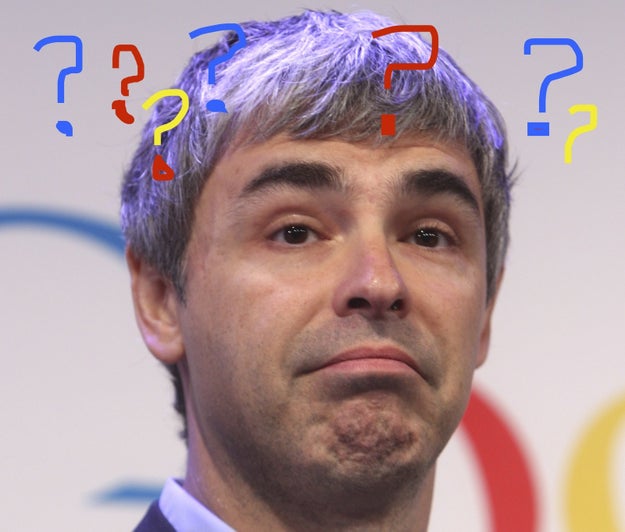
There’s a lot that Google co-founder Larry Page seemingly doesn’t know about Google.

Page, the CEO of Google’s parent company, Alphabet, displayed his apparent lack of knowledge during questioning on July 17 as part of Alphabet’s lawsuit against Uber over self-driving car technology. On Wednesday, Uber’s lawyers asked a judge to compel the executive to be questioned again, claiming that Page wasn’t adequately prepared for the July deposition.

Waymo, a self-driving car startup owned by Google’s parent company, Alphabet, is suing Uber, claiming that the ride-hail behemoth hired a former Alphabet employee who it knew had stolen trade secrets regarding a patented sensor system used in autonomous vehicles.

The two companies have been duking it out in a series of court hearings and filings since February, ahead of a trial currently scheduled for October.

The latest in that battle came today, with Uber demanding it be allowed to depose Page again. Uber says that — based on Page’s deposition, which is littered with claims that he isn’t aware of or can’t recall information about the case and his company — it’s clear the Google founder and billionaire wasn’t properly prepared by his legal team.

Both sides will have to wait and see what US District Judge William Alsup has to say about that.

Uber’s lawyer: Sir, I'd like to start by asking you some questions about the bonus that was paid to Anthony Levandowski. He received a bonus that was in excess of $120 million; is that right?

Page: I'm not familiar with the exact amount, but that sounds correct.

Uber’s lawyer: You recall it was over 100 million?

Page: I recall it was large.


View Entire List ›

Quelle: <a href="Google Co-Founder Larry Page Doesn’t Seem To Know Very Much About Google“>BuzzFeed

The Campaign Against Facebook And Google's Ad "Duopoly" Is Going Nowhere

For well over a year now, the digital advertising and publishing industries have grappled with the growing power of Google and Facebook, which suck up 98% of every new ad dollar spent online, according to some estimates. With so much growth and power concentrated in just two companies, publishers worry about the viability of their ad businesses, while advertisers bemoan their loss of leverage around ad buys.

Deeply unsettled by the idea of a Google-Facebook duopoly, both groups have done what they can to defend against it. But so far, nothing they’ve done seems to have worked. Google and Facebook both turned in mammoth financials in the first half of 2017, and are on track to account for 64.6% of ad dollars spent in the US this year, according to eMarketer.

“There have been hopes for various initiatives, but they just haven’t panned out,” David Chavern, head of the News Media Alliance — until recently the Newspaper Association of America — told BuzzFeed News in an interview.

Chavern, like his counterparts, realizes he’s losing ground fast — rapidly enough that he’s taking measures he said were unnecessary even a few short months ago. In February, Chavern told BuzzFeed News he saw little reason to seek government help in leveling the advertising playing field for the nearly 2,000 companies he represents. “I don’t know what kind of legal or legislative action could be taken,” he said. “We’re not waiting for the government to change the terms of engagement.”

Six months later, Chavern asked for the assistance. In a July 9 opinion piece in the Wall Street Journal, he asked Congress to free newspapers from anti-trust laws prohibiting them from negotiating as a unit with the two giants. “The only way publishers can address this inexorable threat is by banding together,” he said.

Independent publishers aren't the only ones unsettled by Google and Facebook’s remaking of the digital advertising landscape. TV networks, advertisers, and the ad agencies that represent them are also looking for leverage against the duopoly, but they’ve been having trouble finding any. Earlier this year, they made something of a stink over brand safety, castigating Google for showing ads for their products and services alongside videos promoting hate, racism, and violence. Blue-chip advertisers including Johnson & Johnson, Verizon, and Walmart said they would pull their advertising from YouTube as a result.

“People took it as a good chance to grind their ax with both Google and Facebook.”

For a moment, the outcry seemed to put Google and Facebook on their heels. But what seemed like a punch landed was not. Many of the advertisers who said they would boycott YouTube kept running ads on the platform — Johnson & Johnson, Verizon, and Walmart among them. Others that did boycott returned quickly, and the number of advertisers on YouTube’s preferred channels jumped 50% in May. YouTube’s ad revenue is expected to grow by 26% this year, according to eMarketer. Facebook’s is expected to grow 35%.

“People took it as a good chance to grind their ax with both Google and Facebook,” Mike Racic, head of media at the digital marketing agency iCrossing, told BuzzFeed News. “The industry in general, the TV networks, and other digital players, everyone took this moment to complain.”

The brand safety episode illustrates just how hard it is to stop the Google and Facebook freight train. Google and Facebook attained duopoly power specifically because of a super-compelling value proposition: Both platforms stand out by providing advertisers access to enormous amounts of people, and enabling them to slice and dice audiences with unparalleled precision and accuracy. Spending money with them can be formulaic for advertisers: X dollars in gets Y dollars out. Nothing else online even comes close. “There was a lot of saber rattling, a lot of alternatives, alternatives, alternatives,” Racic said. “In the digital realm, there is no other alternative.”

For a moment this winter, some in the digital ad industry hoped Snap Inc. would emerge as a legitimate alternative to Facebook and Google, one that would temper The Duopoly’s power. The young, dynamic company that famously spurned a $3 billion acquisition offer from Facebook was hurtling toward a highly anticipated IPO with a ton of momentum. Even though Snapchat’s audience was a fraction of the size of Facebook’s, and its revenue well under $1 billion, the industry was optimistic. “For advertisers, Snapchat provides an alternative to the Facebook-Google duopoly,” The Economist declared in the run-up.

Snap’s stock skyrocketed the day it hit the public markets, and investors celebrated — but only briefly. Snap’s first earnings report came in well below Wall Street expectations, and its stock cratered. The company’s shares now trade $4 below their IPO price.

Snap’s poor performance can be traced back in part to Facebook’s decision to ruthlessly copy nearly every part of its product. But the story doesn’t end there. Advertisers, some of whom have publicly criticized Facebook and Google on a range of issues from brand safety to misleading metrics, don't seem to be allocating money to competitors like Snap in a way that would facilitate the competition they claim to desire.

“Pretty much everyone will say it is much healthier to have multiple players competing with each other,” Randall Rothenberg, CEO and president of the Interactive Advertising Bureau, an industry trade group, told BuzzFeed News. “After they’ve said that, they all go and they pay into a handful of dominant players.”

With Snap struggling, advertisers are starting to name new companies for the role it was supposed to fill. “Amazon is going to be an increasingly important force and one we have to better understand,” Martin Sorrell, CEO of ad agency holding company WPP, said last month. And some are even pointing to the Verizon-owned AOL and Yahoo as possible challengers.

But if anything, dollars are moving away from challengers into the big platforms’ pockets. “We’ve moved millions of dollars going into Snapchat into Instagram Stories ads because they’re less expensive and have a much higher view-through rate,” one ad agency executive told BuzzFeed News.

As Facebook and Google continue to accrue power, everyone else is struggling to keep up. In the spring of 2017, ESPN, Yahoo, HuffPost, Vocativ, MTV News, and a number of other high-profile media companies had substantial layoffs. “What’s behind the recent media bloodbath?” asked journalism news site Poynter. It answered: “The dominance of Google and Facebook.”

“If I was a publisher running a monocultural ad business in 2020, I'd invest in non-dry-clean pants.”

This may just be the beginning, some argue. Tony Haile, founder of the digital publishing tool Chartbeat and CEO of Scroll, a publisher technology company, told BuzzFeed News that the growing dominance of Facebook and Google may cause agencies to stop buying ads elsewhere. If the two giants’ growth continues, he said, employing media buyers and media planners to buy ads outside of Facebook and Google might not make sense at a certain point.

If that point is reached, it could have a devastating effect on the digital publishing industry. “If I was a publisher running a monocultural ad business in 2020, I'd invest in non-dry-clean pants,” Haile said.

But not assuredly so. “We buy local TV and FM radio and it's practically sub-economic to do so,” Rob Norman, chief digital officer at the ad agency GroupM Worldwide, told BuzzFeed News, drawing a parallel.

And Facebook and Google do have some incentive to keep media companies in business, since that’s where the content they depend on comes from. “If there’s no interesting news and entertainment for consumers to seek out or share, [Facebook and Google] start to see that affect their businesses,” Jason Kint, CEO of trade association Digital Content Next, told BuzzFeed News.

But even outside of a worst-case scenario, the Facebook-Google duopoly stands to gain more control of the ad market overall in the coming years — particularly with people watching video online instead of on TV. The two companies have long been laying the groundwork for a big spike in online video consumption, and they’re well-prepared to take advantage of it now that it’s here.

As Facebook and Google prepare for the future, the rest of the digital advertising and publishing world is still grappling with the present, from advertisers nervous they’ll lose leverage in a consolidating market to News Media Alliance members concerned about their very existence. For more than a year, these groups have tried everything to slow the two giants’ onslaught, but they’ve lost ground, not gained. After months of protest and negotiation, this much is evident: Nothing they’ve done is working, and it’s not clear what will.

Quelle: <a href="The Campaign Against Facebook And Google's Ad "Duopoly" Is Going Nowhere“>BuzzFeed

The Alt-Right Has A Payment Processor Problem

The Alt-Right Has A Payment Processor Problem

Robert Galbraith / Reuters

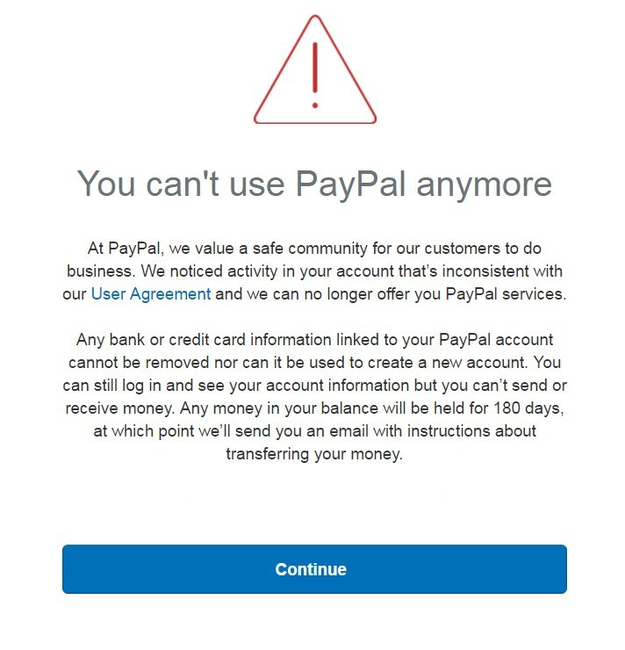
Prominent members of the so-called alt-right and other right-wing movements often rely on crowdfunding platforms and online payment processors to fund their causes (and sometimes even their bail), but lately they’ve been having trouble accessing the money donated by their supporters. Over the past five months, PayPal has banned or hobbled the accounts of several prominent people and groups that promote far-right politics. Crowdfunding platforms like GoFundMe, Patreon, and YouCaring have also cut fundraisers for alt-right–associated causes and people.

To many right-wingers, this fight over online payments is yet another battle in what they perceive as a nationwide war on their protected speech. Now some are now attempting to build their own crowdfunding and payment processing platforms that will be sympathetic to their divisive politics.

The trend began earlier this year when PayPal limited the alt-right white supremacist site Occidental Dissent’s account on May 1. The next day, PayPal limited the account of blogger Roosh V, a pickup artist associated with the men’s rights movement, whose views often align with the alt-right. On May 4, the company banned the alt-right–associated personality Kyle Chapman, known on the internet as Based Stickman. And the alt-right crowdfunded investigations site WeSearchr also found itself on PayPal’s “currently limited” list in early May, but PayPal said that hold was because of business compliance issues, not a violation of its anti-hate policies.

The loosely organized alt-right is difficult to define, especially after some have distanced themselves from the term in recent months because of its racist connotations. Not everyone involved in the recent payment processor and crowdfunding bans necessarily identifies as a member of the alt-right, but many of them promote ideologies that at least partly align with the movement.

PayPal is restricting accounts outside of the domain of the American alt-right, too. The French anti-immigration group Generation Identity told BuzzFeed News it had to refund €30,000 to its donors after PayPal limited its account on June 14. And the PayPal account of the anti-Islam site Bare Naked Islam was blocked on April 30.

“PayPal’s a shittily run company, it’s a bad user experience, and they’ve gone Left over the years. There’s an effort to no-platform us. A lot of us on the Right have had similar experiences with them,” WeSearchr’s founder, Charles Johnson, told BuzzFeed News.

PayPal wouldn’t specify why each account was banned, citing a policy of not commenting on individual accounts. It also wouldn’t specify which accounts it had flat-out banned, and which ones were only limited. But it told BuzzFeed News that it does not “allow [its] services to be used for activities that promote hate, violence or racial intolerance.”

Chapman did not respond to multiple requests for comment. Roosh V told BuzzFeed News that PayPal had frozen his account, but he was able to withdraw his funds. Hunter Wallace, the owner of Occidental Dissent, characterized PayPal’s cancellation as another example of “a coordinated attack by the Left on our community since the election” in a post on his site. He warned that he would “adapt and … become even angrier.” Wallace told BuzzFeed he was able to withdraw his funds as well but believes the suspension was permanent.

Malik Obama, the half-brother of former president Barack Obama, who’s made a name for himself in the alt-right community as a “shitlord” on Twitter, also criticized PayPal for its crackdown on certain alt-right–associated accounts, including his own. He did not immediately respond to request for comment.

Right-wingers have also encountered issues on crowdfunding platforms where they solicit donations, like GoFundMe and Patreon.

In early May, GoFundMe banned Chapman, and in late July it barred alt-right personality (and former BuzzFeed employee) Anthime Gionet, aka Baked Alaska, from fundraising. When asked about the dismissals, GoFundMe said, “We don't tolerate the promotion of hate or intolerance of any kind, and if a campaign violates GoFundMe's term 7, we'll remove it from the platform.”

On Twitter, Gionet said that the company had blackballed him with “no reason given,” calling it a “left-wing garbage site.” He said his account had only been active for 24 hours before being permanently cut off. And Chapman has started an alternative crowdfunding site, backtheright.org, but it isn’t attracting much attention: There are only 10 campaigns listed on the site and 36 registered members. The site uses Stripe as a payment processor. Stripe declined to comment, citing a company policy of not commenting on individual accounts.

Lauren Southern, a right-wing Canadian blogger and YouTuber who works with Generation Identity, said Patreon “essentially eviscerat[ed] the majority of my income” when the crowdfunding site banned her earlier this month. In a YouTube video uploaded July 21, Southern shows an email from Patreon that reads: “It appears you are currently raising funds in order to take part in activities that are likely to cause loss of life. We have therefore decided to remove your page.”

Southern was recently involved in a viral stunt obstructing a refugee search and rescue mission in the Mediterranean and had made plans to do it again on a larger scale. Jack Conte, a cofounder of Patreon, took to YouTube on July 28 to confirm and explain the decision. He said that Patreon’s trust and safety team judges accounts by their “manifest observable behavior … what a camera has seen, what an audio device has recorded.” He pointed to Southern’s video of herself directing her coconspirators to veer in front of a rescue ship and her plans for a second such excursion as evidence.

In early July, the crowdfunding site YouCaring rejected a lawyer’s attempt to raise funds for lawsuits she plans to file against Black Lives Matter activists, ostensibly on behalf of police. YouCaring said it was not a platform “for airing grievances or controversial public opinion.” The lawyer was able to set up a GoFundMe page for the suits instead.

“First you get people banned from crowdfunding sites like Patreon,” Mike Cernovich, a pro-Trump media personality, told BuzzFeed News. “After being banned, the person will seek out direct funding via PayPal. Then you get the person no-platformed from PayPal. If the person moves to Stripe or Square, you attack them at that vector as well.

“Until no-platforming became an issue, there wasn't a need for another PayPal.” Cernovich himself maintains a PayPal account under his publishing imprint Danger and Play Publishing.

Back in June, Cernovich warned about “the payment processor risk” on Twitter and called for a “Free Speech alternative to PayPal.” He told BuzzFeed News that Counter Fund, a new site that bills itself as “an ideological crowdfunding platform and self-governing political party,” may solve the new right media’s problems with crowdfunding but that the site will still need its own payment processor.

The technical, financial, and regulatory barriers to creating a new payments platform are high.

Some have already started turning to these alternative, alt-right–friendly options for crowdfunding. Wallace, the founder of Occidental Dissent, has taken to a new site, Rootbocks, to set up a fundraiser to rent a van for eight people and hotel rooms to travel to Charlottesville for the right-wing event “Unite the Right Free Speech Rally.

Praised by the alt-right for its mission statement, Rootbocks says that it “will not shut down a project simply because it is unpopular, controversial, politically incorrect, or because we receive complaints about the person and/or group that created it.” Rootbocks allows donors to pay via PayPal or directly by credit card. Baked Alaska has adopted the platform as well.

And a new, invite-only crowdfunding site called “Hatreon” that launched in June has garnered attention from Richard Spencer, the white nationalist credited with coining the term “alt-right.” Hatreon told BuzzFeed News that it currently hosts 50 campaigns supported by about 130 donors who send roughly $3,000 per month in total. The company said these numbers represent a soft launch and that its site will be available to the public soon. Cody Wilson, a cofounder, said he and others started the site after Patreon kicked right-wing content creator TV KWA off its platform at the end of May.

But some members of the alt-right think the real issue is asking for funding from supporters in the first place. Joey Gibson, a libertarian activist who organizes rallies under the nickname Patriot Prayer, has paid for sound systems, signs, permits, and transportation for right-wing rallies on the West Coast himself. He's hosted Chapman, Gionet/Baked Alaska, and others at recent demonstrations at the Evergreen State College in Olympia, Washington, and in downtown Portland. He works as a real estate agent flipping houses.

Gibson said he hoped refraining from soliciting outside funding would send a message that he wasn’t putting on these rallies for money. He did say he’s also wary of the online bans that have taken place and of fake donation pages he’s seen impersonating other right-wingers.

“I don’t want to accept money. I think it’s a cleaner way to do what I’m doing,” he told BuzzFeed News.

Quelle: <a href="The Alt-Right Has A Payment Processor Problem“>BuzzFeed

Apple CEO Successfully Avoids Discussing Trump When Asked About Trump

Nicholas Kamm / AFP / Getty Images

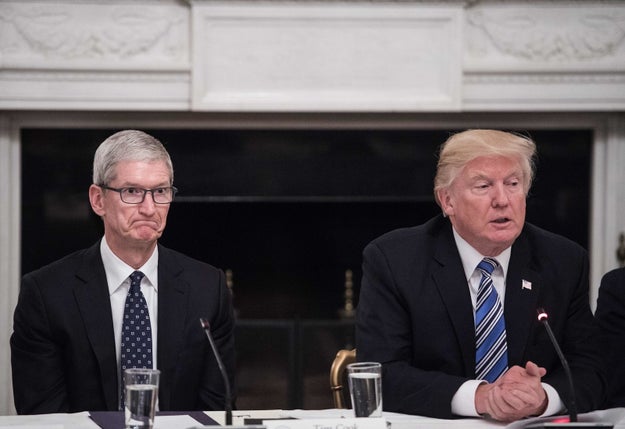
When asked by an analyst about President Donald Trump's claim that Apple had promised to build “three, big beautiful plants” in the US, Apple CEO Tim Cook managed to talk about almost everything other than Trump.

“We have created 2 million jobs in the U.S., and we're incredibly proud of that. We do view that we have a responsibility in the U.S. to increase economic activity, including increasing jobs,” Cook said during the company's Q3 2017 earnings call.

He went on to detail what Apple does economically in the US, including how the iOS platform supports the jobs of hundreds of thousands app developers. As for the manufacturing plants specifically, Cook was pointedly non-committal, neither addressing Trump's claim or specifically refuting it.

Instead, he noted that in 2016 Apple bought “$50 billion worth of goods and services from U.S.-based suppliers” including goods like high-tech glass that is then shipped to China where iPhones are manufactured by Apple partners.

He also mentioned that Apple's “Advanced Manufacturing Fund,” which will put at least $1 billion into US companies, had invested $200 million into Corning, the Kentucky-based Apple glass supplier. As for new manufacturing plants specifically, the closest Cook would get to discussing it was saying that it was “probable” that “several plants… can benefit from having some investment to grow or expand or even maybe set up shop in the U.S. for the first time.”

Trump said last week in an interview with the Wall Street Journal “he’s promised me three big plants – big, big, big.”

When pushed for followup, Trump said, according to a full transcript published today by Politico: “We’ll have to see. You can call him. But I said, Tim, unless you start building your plants in this country, I won’t consider my administration an economic success, OK? And he’s called me and he says, you know, they’re going forward, three big, beautiful plants. You’ll have to call him. I mean, maybe he won’t tell you what he tells me, but I believe he will do that. I really believe it.”

Apple declined to comment when the Wall Street Journal first published Trump's comments on Apple last week.

Apple has 80,000 US employees and claims that it supports about 2 million US jobs, including people employed at its suppliers and in the “App Store ecosystem.” While the company does some manufacturing in the US — the Mac Pro is made in Austin, Texas for example — most takes place via a vast network of international manufacturing partners.

Trump is not the first US president to push Apple executives to bring more of its manufacturing to its home country. Then-president Barack Obama asked Steve Jobs in 2011 what would have to change for Apple to make iPhones in the US.

Jobs' response, according to the New York Times: “Those jobs aren’t coming back.”

Quelle: <a href="Apple CEO Successfully Avoids Discussing Trump When Asked About Trump“>BuzzFeed