What You Should Know About Repairing Your iPhone
Flickr user Amoscato / Via flic.kr

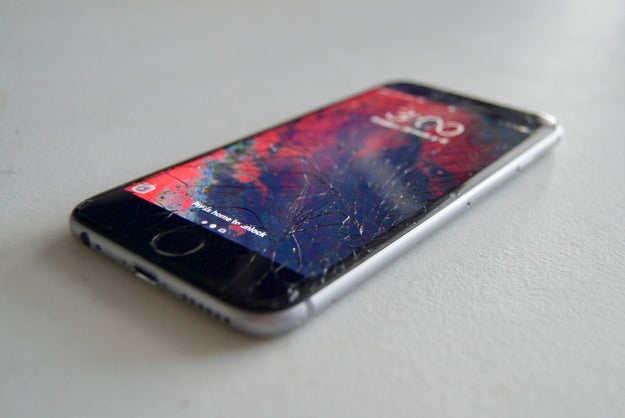
If you break your iPhone (and let’s be honest, you will eventually) and want to repair it quickly, you have a few options: Take it to the Apple Store or mail it in. But if you wanted to try to fix it yourself, you’re going to have a much harder time.

Some technologists and repair industry advocates want to change that. They’re behind a movement called the “right to repair,” and they’re pushing for laws that would compel consumer electronics makers, such as Microsoft, Samsung, and Apple, to make it easy to access repair information or buy replacement parts. But tech companies like Apple think that’s a bad idea, largely over fears that such laws would reduce the quality of repaired devices.

iPhone and Mac owners who live in major urban centers can easily rely on the Apple Store’s Genius Bar to replace their cracked screens. Those who live in rural areas, however, have a more difficult time getting their devices fixed, and often face long waits.

Apple only provides iPhone repair manuals and official replacement parts to its retail stores and authorized service providers. So in Alaska, where there’s just a single Apple retail store serving the entire state, wait times for same-day service can be up to a week.

And for those who live in Montana, North Dakota, South Dakota, Wyoming, Vermont, or West Virginia, you’d need to cross state borders to get to the nearest Apple Store that can fix a phone while you wait. These states do have authorized service providers (or ASPs), but those ASPs don’t have Apple's proprietary screen repair machine that allows for same-day service. And mail-in repairs can take up three to five business days.

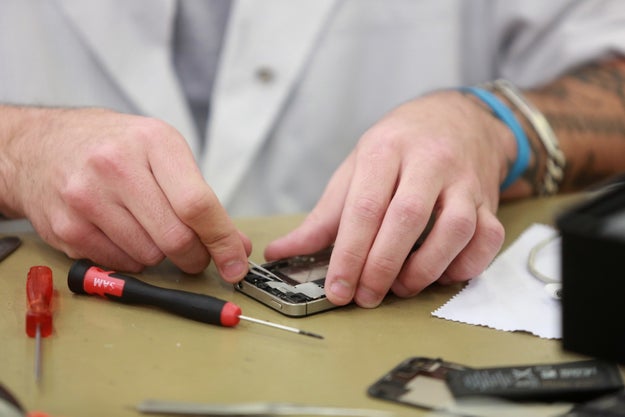
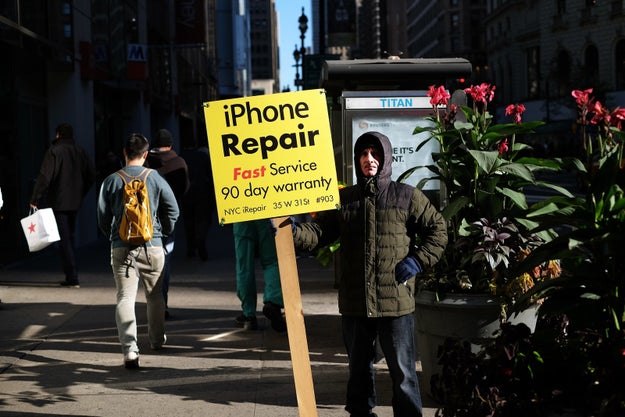
Of course, you could go to an unauthorized, or independent, shop (“Phones! Repair 4 Less”) that doesn't bear an official logo — and many iPhone customers do — but you’d risk settling for a screen that’s produced by an aftermarket supplier. In the best-case scenario, you’d get a genuine recycled part harvested from an iPhone.

This current state of product repairs—and not just for electronics—has generated much debate among consumer activists and the repair industry, enough so that some US state lawmakers have proposed bills that would require manufacturers to provide fair market access to tools, manuals, and spare parts. In March, Apple opposed such a proposal in Nebraska. Eight other states (Kansas, Minnesota, Nebraska, New York, Tennessee, Massachusetts, Illinois, and Wyoming) have also considered similar legislation.
Nicolas Tucat / AFP / Getty Images

Right to Repair legislation wants to make fixing your electronics as simple as servicing your car.

Currently, thanks to automotive right to repair laws, if your vehicle is under warranty, you can take it to a dealer. If it’s out of warranty, have the choice of taking it to a dealer or an independent repair shop. And, if something needs to be replaced, you can choose to pay a premium by buying directly from the manufacturer, or save and opt of the aftermarket product.

Kyle Wiens, the CEO of iFixit, a site that publishes its own repair manuals for electronics, and Gay Gordon-Byrne, executive director at Repair.org, a coalition that works to pass “Right to Repair” laws, support the same type of legislation for consumer electronics, as well as just about any product that can be repaired. They, and other right to repair supporters, accuse tech companies of monopolizing the repair market (worth an estimated $4 billion) and making it hard or expensive for consumers to repair devices.

”Auto repair is a thriving $18 billion industry,” said Wiens. “It’s a good example of legislation creating a free market.”

Currently, if you’re an iPhone owner in need of some maintenance, here are your options.

You can 1. go to an Apple Store, 2. go to an authorized service provider, or 3. mail in your device to Apple. A repair by Apple-certified technicians and official Apple-supplied repair parts can cost between $29 (with AppleCare+, which is an additional $129) and $149. If you need a replacement phone right away, you’d have to pay $99 with AppleCare+, or $349 without.

While Apple receives much scrutiny over the issue of right to repair, iOS and Mac hardware support is much more straightforward than what’s available to Android users, who typically rely on cell carriers or service partners for troubleshooting and repair. Unlike at an Apple store, those affiliates often do not employ technicians with deep expertise on specific Android devices.

To understand the right to repair debate as it pertains to the iPhone, you must first understand the difference between an authorized shop (or “ASP”) and an independent repair shop.

According to Apple, the company is open to anyone who wants to join the ASP program. An ASP pays Apple a fee and takes a certification exam to call itself such. These shops can buy official replacement parts for iPhones and Macs, and access comprehensive take-apart and troubleshooting information. The price for repair at an ASP is the same as what you’d find in an Apple Store. ASPs also guarantee their work for up to 90 days.

Apple has attempted to address increasing service demands by promising to deploy its proprietary screen repair machines (called the “Horizon Machine”) to hundreds of ASPs by the end of the year. Previously, providers shipped cracked iPhones to an Apple service facility to be repaired. With the new machines, select ASPs can now turn around phones within the same day, instead of taking several days.

Stephen Lam / Reuters

Independent shops, however, don’t have access to Apple-provided manuals, parts, or repair machines. They typically source replacement pieces from “aftermarket” suppliers, or Apple suppliers who sell goods under the table. There are plenty of knock-offs too, made with varying degrees of quality, by third-party manufacturers.

These unauthorized shops may also use official parts, purchased from ASPs, who buy wares directly from Apple and sell them on the open market. Some technicians also take apart new devices and re-purpose those genuine Apple parts for repair, but there’s no guarantee that the independent shop near you will have these official parts.

This is all so complicated because Apple really doesn’t want you or Technician Jane down the street to mend your phone, and two company executives explained why to BuzzFeed News.

The iPhone maker maintains that “Geniuses” at its retail stores and certified technicians at ASPs are how the company can ensure its products meet their standards. “There’s a really vibrant used market, where you can easily see that iPhones retain way more value than any other phones — when they’re fixed right, safely, and securely,” said Greg Joswiak, Apple’s VP of iOS, iPad, and iPhone marketing. A demonstration in a recent paper by researchers at Ben-Gurion University of the Negev shows how replacement screens can be hacked to log keyboard input or install malicious attacks.

In addition to security concerns, Apple says that some of its repairs are technically challenging, especially those that deal with the iPhone’s proximity sensor, which disables the screen when it detects you’re holding the phone to your ear during a call. Removing and then replacing the sensor is necessary for repairing cracked screens, the most common type of service requested.

Wiens admitted the sensor cable is “finicky and tricky to get installed correctly,” though the iFixit CEO said it is more a matter of running a quality control test after the repair, and re-installing the sensor cable if it is not implemented properly.

Even still, Wiens claims that many iPhone repairs are easy enough for most people to do on their own.

According to Wiens, the site’s repair guides help a million people a year fix their iPhones, and its instructions are written for those who have never taken apart an electronic gadget before. “As long as you have the willingness to take your time and follow the instructions, no technical expertise is required,” Wiens claims.

Many of the tools required to tinker with Apple’s proprietary hardware is sold by iFixit and plenty more options are available on Amazon. iFixit even offers a Lifetime Warranty on all of the replacement parts (including screens, speakers, and cameras) it sells, except for batteries, which have a limited lifespan.

And as of early 2017, if your iPhone needs non-screen maintenance (like a battery replacement) and you have a third-party screen, Apple will still respect your warranty if you take it in after doing repairs yourself or through an independent shop. Though, if you crack your third-party screen and want to replace it with a legitimate screen at an Apple Store, you’ll pay the out-of-warranty $149 price.

So, if you can easily get high quality replacement parts for the iPhone and repairs are easy enough to DIY: What’s with the brouhaha over letting you repair it on your own?

The short answer is: It’s still really hard to get your hands on official parts, and it would be a lot easier for independent technicians and at-home tinkerers to ensure they’re using a legitimate screen if they had the option to buy one directly from Apple.

“There’s nothing wrong with Apple authorizing third-party shops. But there ought to be authorized and independent options,” said Wiens.

Furthermore, many right to repair supporters say that the real issue is that repairability is better for the environment.

Last week, Repair.org published a report that claims US electronic standards focused on recycled plastics and energy efficiency are outdated — and that one way to move stalled environmental progress forward is by designing products for repair, reuse, and disassembly, which may help electronics last longer, and stay out of landfills.

However, Apple’s head of environmental initiatives, Lisa Jackson, says that being green isn’t just about device repair: “We agree that prolonging the life of a product is critically important. If you really want to do this right, you have to look at the whole product lifecycle.”

“Durability is about how it’s designed, the fact that [its software] can be upgraded easily, that there are authorized centers that can take care of things like display,” said Jackson.

Joswiak, reinforcing his point about the “vibrant” secondhand iPhone market, said, “They’re the highest quality and most durable devices. We do this because it’s better for the customer, for the iPhone, and for the planet.”
Jewel Samad / AFP / Getty Images

It’s a complicated debate. Manufacturers see opposing right to repair legislation as a way to protect their customers, while right to repair activists think customers should have more choice.

On the one hand, consumers want pocketable, svelte devices packed with power, and manufacturers are responding by designing hardware with the slimmest bodies possible. Often, that means using materials like glue, and techniques like soldering parts to the logic board, which render devices irreparable. And manufacturers like Apple also aim to deliver the highest quality possible to consumers, so it’s understandable why companies want to prevent subpar devices from hitting the market.

On the other hand, you own these devices, and right to repair advocates think you should be able to fix them on your own terms: either by yourself or by going to an independent shop of your choosing.

According to Repair.org’s Gordon-Byrne, the right to repair is a win for manufacturers, too: “Let people fix their stuff. There will be tremendous brand loyalty if they can keep their devices. They will be more loyal to Apple if they can. They’re going to get the best product, with the best features that lasts the longest. Why not?”

Quelle: <a href="What You Should Know About Repairing Your iPhone“>BuzzFeed
Is This An Ad? The Treasury Secretary's Wife's Instagram

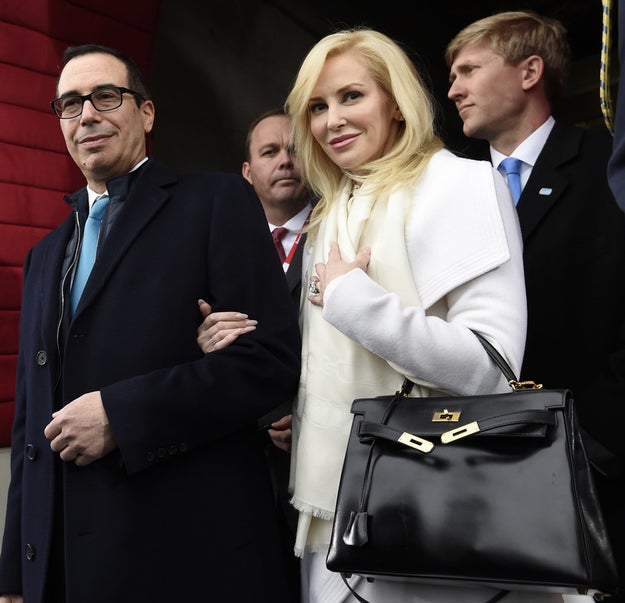
This is Louise Linton, actress, lawyer, and the wife of U.S. treasury secretary Steven Mnuchin.

This is Louise Linton, actress, lawyer, and the wife of U.S. treasury secretary Steven Mnuchin.

Linton is a 36-year-old from Scotland who has appeared in stuff like CSI:NY and Cabin Fever: Reboot. She married Mnuchin, 54, this summer.

Pool / AFP

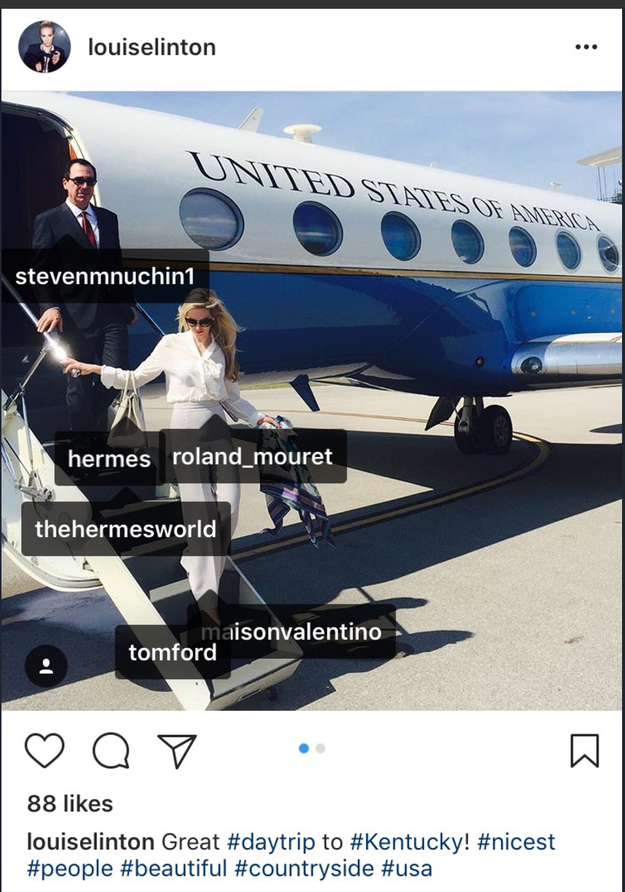
And on Monday, she posted this photo on Instagram, complete with brand #tags that are typical of #spon.

And on Monday, she posted this photo on Instagram, complete with brand #tags that are typical of #spon.

deleted Instagram

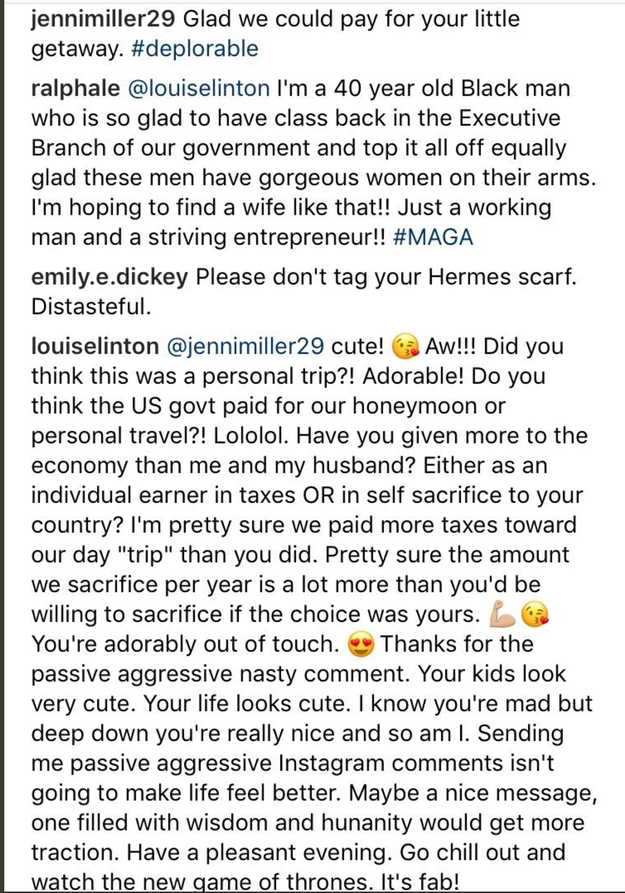
And THEN she GOT INTO IT with a commenter named Jenni who called her out for (apparently) using taxpayer money for her #daytrip.

And THEN she GOT INTO IT with a commenter named Jenni who called her out for (apparently) using taxpayer money for her #daytrip.

deleted Instagram

Sure, you could use this for a deep discussion of class war, social media, and the Trump administration.

But what I really want to know is: Was this an ad?

I mean, who tags brands in a post that's not #spon, right? Although it's not typical for the family members of high level government officials to do fashion ads, Linton isn't a typical politician's spouse – for example, she recently acted in a movie staring Charlie Sheen.

Plus, she's no stranger to fashion advertising. According to her personal website, she's the “inaugural brand ambassador” for a line of handbags called the “Linton Collection” from a Scottish brand called Dunmore. (At publishing time, Dunmore has not replied to request for clarification from BuzzFeed News on if she's still currently a brand ambassador, and if promoting these other brands on her Instagram would be a conflict.)

I'm curious: what do we assume is going on in this photo (don't cheat and scroll down).

So was this an #ad #spon #partner?

According to the New York Times, an administration spokesperson said that she was not compensated by those brands she tagged. But if there's one thing I know about the Instagram #spon game, sometimes people and brands have different definitions of what “compensated” means, especially when brands engage in the common practice of gifting thousands of dollars' worth of merchandise or travel to a celebrity in the hopes that they'll post about it.

So BuzzFeed News reached out to the luxury brands to ask if there was any “gifted” merchandise or compensation. Both Tom Ford and Valentino confirmed that there was nothing of the sort — no loaned items, freebies or anything. We will update as soon as we hear from Hermés and Roland Mouret, but I think it's safe to call it at this point: it's not an ad.

Louise Linton, you beautiful sassy creature, keep living your wild life and continue to pay for all your own stuff.

Quelle: <a href="Is This An Ad? The Treasury Secretary's Wife's Instagram“>BuzzFeed

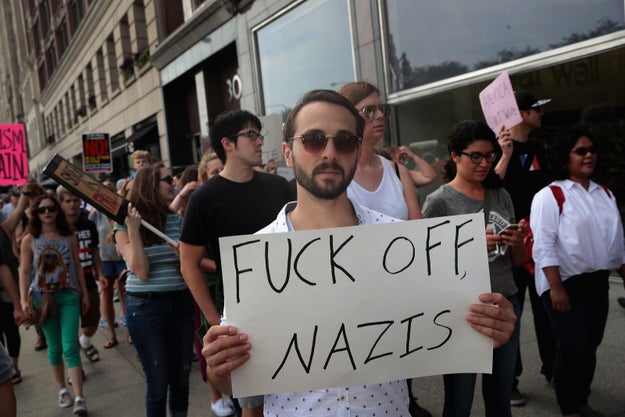
Silicon Valley's "Nazi Purge" Shows Who Really Controls Our Online Speech

Vasily Fedosenko / Reuters

The Daily Stormer’s unceremonious booting from large swathes of the internet has made plenty of headlines; tech companies, the story goes, are “joining the resistance.” Silicon Valley is conducting a “Nazi purge,” and Charlottesville is “reshaping the fight against online hate.”

But the demise of this hateful website has also raised a new debate about an old problem: Silicon Valley’s control of our online speech.

Companies like Facebook and Twitter have been making hard decisions about hate speech for a long time. These platforms, as well as web-hosting companies and other intermediaries, are not governed by the First Amendment. Instead, they must obey 47 U.S.C. § 230, known colloquially as “CDA 230.” This gives them immunity from liability for most of the content they host, and says they are free to host (or not host) whatever they want.

Those rights are important, but they also come with great responsibility. And I believe these companies are failing to live up to that responsibility.

The truth is companies get these decisions wrong a lot of the time. And because they’re not transparent about how their rules are enforced or about how much content is taken down, we only hear about the bad decisions when they make headlines. That is happening increasingly often these days, as those in media circles take more interest in the issue.

Just this summer, Facebook used its hate speech policies to censor queer artists and activists for using words like “dyke” and “fag”; Twitter booted several leftist activists, apparently for engaging in uncivil counterspeech; and YouTube’s algorithms deleted masses of videos from the Syrian civil war that activists had archived for use in war crimes investigations.

This is nothing new. Over the years, I’ve watched as Silicon Valley companies have made globally important decisions that have stirred less debate than this week’s Daily Stormer episode. Last year, when Twitter boasted that it deleted 235,000 “terrorism-related” accounts from their service, hardly anyone blinked. But in that case, as in this one, we need to ensure that these companies are accountable to their users, and that people have a path of recourse when they are wronged.

I’m not so worried about companies censoring Nazis, but I am worried about the implications it has for everyone else. I’m worried about the unelected bros of Silicon Valley being the judge and jury, and thinking that mere censorship solves the problem. I’m worried that, just like Cloudflare CEO Matthew Prince woke up one morning and decided he’d had enough of the Daily Stormer, some other CEO might wake up and do the same for Black Lives Matter or antifa. I’m worried that we’re not thinking about this problem holistically.

In the case of the Daily Stormer, companies were undoubtedly very aware of the site’s presence on their platforms and made not just a moral decision, but a business one as well. But that’s not how content moderation typically works: In most instances, companies rely on their users to report one another. The reports enter a queue that is then moderated either by humans — often low-wage workers abroad whose job requires them to look at horrible images so you don’t have to — or by algorithms. A decision is made and the content is either left up or removed.

Some platforms, like Facebook, mete out punishment to their users, temporarily suspending them for up to 30 days; others may boot users for their first or second infraction. Users are only able to appeal these corporate decisions in certain circumstances.

How comfortable you are with this kind of set up depends on your view of speech and who should police it. There are different kinds of free speech advocates — some believe that a pluralistic, democratic society is nothing without freedom of expression, and that we must protect the rights of all if we want to protect the most vulnerable. The “slippery slope” argument is popular, although it’s not always convincing.

There are others who will fight to the death for your right to be a hateful Nazi, although I’m not one of them.

Rather, my belief in the need for freedom of expression has strengthened over time as I’ve watched governments and corporations restrict the speech rights of vulnerable groups, and questioned their ability — and sometimes their intent — to get it right. I’m also deeply unconvinced that censorship, especially when decoupled from education, is an effective means of change. Finally, even if one platform bans a user, another might be there to welcome them with open arms.

Cloudflare’s CEO, fresh from making what he admits was a dangerously arbitrary decision to cut off a neo-Nazi site, says we need to have a conversation about this, with clear rules and clear frameworks. I agree. What we need is for companies to choose openness, transparency, and due process.

In practice, that means giving experts and the public greater input into speech policies and their implementation — something that, right now, companies only do behind the secrecy of a nondisclosure agreement, if at all.

It means offering users a way to consent to policies and policy changes, and being open about how rules are made and enforced. And it means ensuring that every user has the ability to appeal decisions made against them. Even assholes.

Quelle: <a href="Silicon Valley's "Nazi Purge" Shows Who Really Controls Our Online Speech“>BuzzFeed

17 Alexa Skills That Don't Need To Exist

How many fart noise generators does one smart home device have to have?

Because I'm an American patriot, I celebrated Amazon Prime Day and bought a discounted ($35 instead of $50!) Amazon Dot. The Dot is the smaller, cheaper version of the Echo. I have heard good things about the Echo, and I was excited to try it out the smart speaker life.

I start to set it up, eagerly looking for cool “skills” (Alexa lingo for apps, basically) to add to it. Obviously, add the BuzzFeed News flash briefing (start your morning with it!). But then…. I'm looking at this list and it's like last call at Club Penguin in here.

The “skills” interface seems to offer no differentiation between an official or essential skill versus some random gimmick a teenager probably made. It appears it's quite easy you make own, which means there's a lot of super amateur ones, or ones that seems tailored for one person.

I imagined my new sleek and efficient life where I was chatting happily to Alexa, telling her to fire up my Juicero, put Tide pods on my shopping list, and add dinner dates to my calendar.

That's not exactly how things went….

I Pooped. You tell it when you pooped most recently and it encourages you. I told it I pooped today and it said “good job!” I’ll admit: I loled.

I Pooped. You tell it when you pooped most recently and it encourages you. I told it I pooped today and it said "good job!" I'll admit: I loled.

A skill that just tells you how many chicken nuggets to order. I tried asking. It said….. “7.” Fair enough.

A skill that just tells you how many chicken nuggets to order. I tried asking. It said..... "7." Fair enough.

The official “Dunkirk” movie skill. It’s a choose-your-own-adventure game based on the movie. TBH it’s actually pretty cool? But also… unnecessary.

The official "Dunkirk" movie skill. It's a choose-your-own-adventure game based on the movie. TBH it's actually pretty cool? But also... unnecessary.


View Entire List ›

Quelle: <a href="17 Alexa Skills That Don't Need To Exist“>BuzzFeed

The Next Version Of Android Is Called Android Oreo

Google has finally revealed the name for Android 8.0: Oreo.

Google has finally revealed the name for Android 8.0: Oreo.

Nicole Nguyen / BuzzFeed News

The company is commemorating the announcement with an Android statue near Chelsea Market, the location of the original Nabisco factory where Oreo cookies were once made and, coincidentally, the site of Google’s New York offices.

The name of each release is the subject of much speculation and anticipation among Android superfans leading up to the unveil. Every major Android release is named after a dessert in alphabetical order (e.g., Lollipop, Marshmallow, and Nougat). “We have these microkitchens everywhere at Google, and they’ve always been full of Oreos,” Dave Burke, Android’s VP of engineering told BuzzFeed News. “I think we subliminally have been waiting to get to O.”

But, for most, what really matters is: Why should I update my phone and when can I do it?

The new software, first announced in May, is packed with small, but meaningful, updates.

Dave Burke / Google

Rather than a radical redesign, Android users should expect more incremental refinements in O—many of which affect performance under the hood, to things like battery life and speed.

App developers will be able to add picture-in-picture capability (like Netflix, shown here). That means users will be able to continue watching the video they’re streaming while using other parts of their device. At launch, only subscribers to YouTube Red ($10 for ad-free music and YouTube videos) will be able to use the feature with the YouTube app.

Two other user-friendly, time-saving features coming to Oreo are notification dots, which allow users to long press apps on the homescreen to view what’s new, and autofill, which will automatically populate logins/passwords saved to Chrome directly to apps.

The bigger improvements, though, are less visible. A new feature called “smart text selection” uses artificial intelligence to automatically select related groups of words. For example, if you tap to select one part of a home address, Android will automatically select the entire thing, as well as suggest pasting the text into the Maps app.

Google Play Protect is a new program designed to detect harmful apps, and will help make Android phones more secure. Meanwhile, Android Oreo will make app boot times and device restarting up to twice as fast.

Google

Your battery life will get better too, which is something the Android team has steadily been working to improve since the previous two releases, Marshmallow and Nougat. More battery management is in the pipeline for Android P, Q, and beyond, according to Burke.

“One of the things about Android from the very beginning is that it was very open — and so apps could do anything they wanted,” said Burke. “I think for us, we were a little too open; we weren’t managing the system enough. So we’re slowly trying to take more control and throttle things.”

Background check, for example, is a new feature that restricts how much any app can run in the background, which is a significant power suck.

In terms of release date, Google says that its Pixel and Nexus phones will see the update “soon,” while other devices will get the new software by the end of the year.

Google had initially aimed to release Android Oreo today. “The date we’re rolling out is close to what we originally planned. It’s probably a couple of days out. But we’re not way off,” said Burke. The Android O beta testing group will be updated first, and the final build is currently going out for carrier testing.

Android O will be released in stages, depending on carrier and country, and Google has been working with Essential, General Mobile, HMD Global Home of Nokia, Huawei, HTC, Kyocera, LG, Motorola, Samsung, Sharp, and Sony to launch new devices with Android 8.0.

Google

The slight delay may be because of Project Treble, a re-engineering of Android’s architecture that aims to make it easier for carriers and hardware makers to update to the latest version of Android.


“It’s a huge change for us. We literally spent most of our engineering work on it. It’s one of these things where it’ll pay out in the future, we just have to make a big investment,” said Burke.

Treble, which will ship with Android O, essentially separates the code that’s specific to a specific phone model, and the code that’s specific to Android. That easily-updateable Android layer means that phone makers won’t have to spend as much time or resources making Android updates compatible with their devices, which is a big problem (there are now two billion monthly active devices on the platform) for many non-Google hardware manufacturers who are often slow to ship updates to their users, like Samsung.

Makers of low-cost Android phones, who aren’t typically incentivized to pour engineering energy into a device that can sell for as low as $40, would have the most to gain from Project Treble. Burke said, “What we’re trying to do is reduce that cost, so that if you’re a device maker that wants to do a security update or a full dessert update, we want to make it as effortless as possible.”

But consumers won’t see this impact in O. Treble is laying the foundation for the releases that come after it. In the future, Burke hopes expensive flagship phones, like Samsung’s Galaxy, will see updates closer to Google’s initial announcement (instead of months, or sometimes years, after) and budget phones will actually update to bigger dessert releases at all.

The main challenge in implementing Treble was maintaining performance which, according to Burke, was the reason the team fell “a little bit behind.”

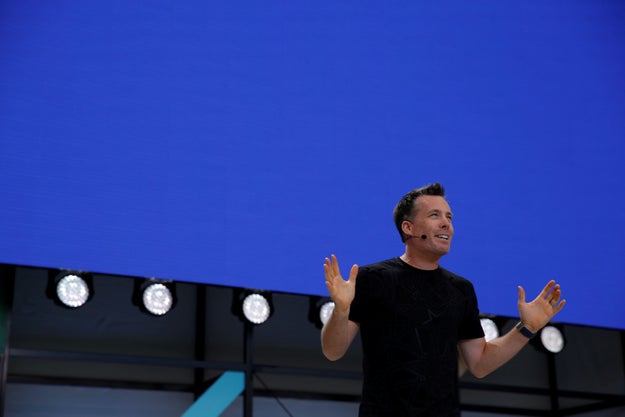
Dave Burke, VP of Engineering at Android

Stephen Lam / Reuters

“We’re actually really proud of what we did because if you have a Pixel 2016 that device has had a huge surgery, and you just don’t notice. It works the same. But it’s profoundly different inside.”

While Android Oreo, in terms of major user-facing improvements, isn’t as spectacular as previous releases, Burke sees the update as a pivotal turning point for Android: “I think of O as pivotal changes for device makers and developers — in terms of what we’re doing with Treble for device makers, and also what we’re doing with Kotlin, which is a new programming language for developers — and sort of linear on user facing features.”

In May, Google announced it will support Kotlin on Android. The programming language has cleaner, less verbose syntax for coding and some enhancements over Java, which is the language most Android developers use to build apps.

Looking ahead, Burke is most excited about the potential for artificial intelligence in phones.

Android O features some hints at AI-powered elements, like smart text select, but Burke said that even more is coming this year and in future versions of Android.

“Going forward, you’re going to see a change in the phone getting smarter and just being more intelligent, and so when we look back it’ll be a turning point … if we doing everything right,” he said.

Quelle: <a href="The Next Version Of Android Is Called Android Oreo“>BuzzFeed

Here's What Flat Earthers Think About The Eclipse

Here's What Flat Earthers Think About The Eclipse

Zak Tebbal for BuzzFeed News

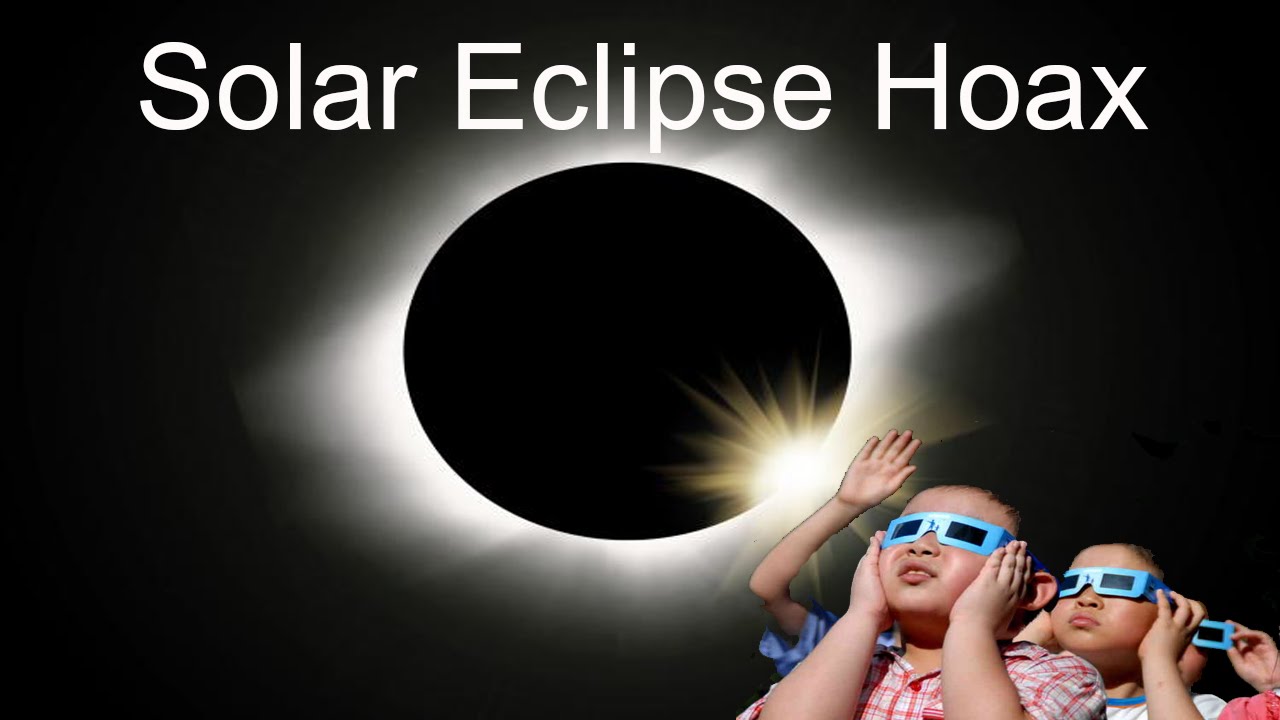
While you might think that an event like the eclipse would easily disprove the Flat Earth theory, that isn't the case at all. A solar eclipse fits well into the plan.

Plenty of people are online discussing the possibility of a Flat Earth. Many are curious about the theory and want to know more, and there's also a sizable amount of trolls who just want to debate or trick Flat Earthers. (There's a reason that the popular Facebook groups have names like “Flat Earth – no trolls”.) Reddit's /r/FlatEarth is mostly full of smart alecks pointing out flaws in the theory, and trolls on Facebook are currently trying to convince Flat Earthers not to use the eclipse glasses and stare right at the sun (don't do this).

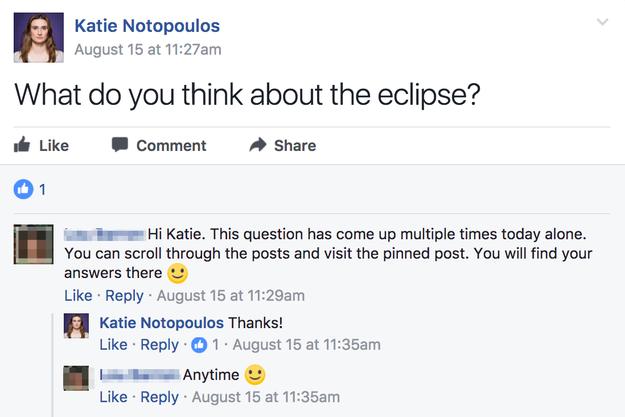
I wanted to know how Flat Earth theory addresses eclipses, so I asked in that Facebook group.

So clearly my question was bad and redundant, so I went looking through the discussion in the group as well as various YouTube videos on the subject.

Here is what I learned about it.

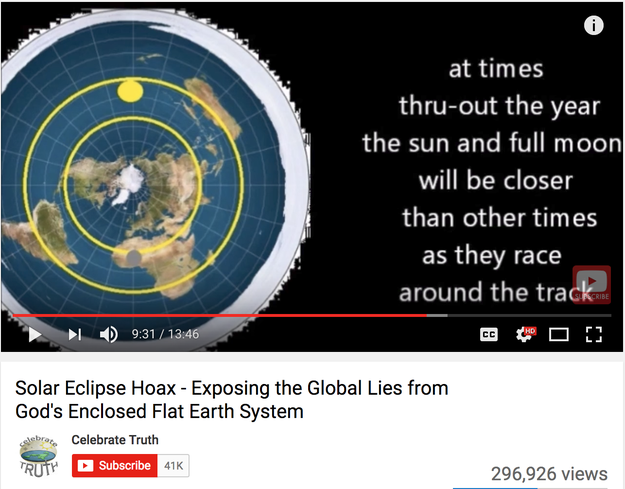
The eclipse is caused by something (probably the same size, maybe not the moon) passing in front of the sun, under a giant dome.

Flat Earth theory suggests that we're living under a giant dome/bubble that covers the entire (flat) Earth. The sun and moon travel and forth across dome ceiling, which is why we have sunset/sunrise. So an eclipse just means that something – maybe the moon, maybe another planet – passes in front of the sun during its regular travels across the dome sky. Same with lunar eclipses.

The sun and moon travel around two tracks under the dome. Occasionally, these cross paths.

The sun and moon travel around two tracks under the dome. Occasionally, these cross paths.

youtube.com

To Flat Earthers, the key is pointing out flaws with the traditional globe-centric eclipse models.

Most of the talk on Facebook and YouTube about the solar eclipse focuses on the various problems with the animations and graphics put out by “globe jockeys” like NASA and other mainstream places, like, well, BuzzFeed.

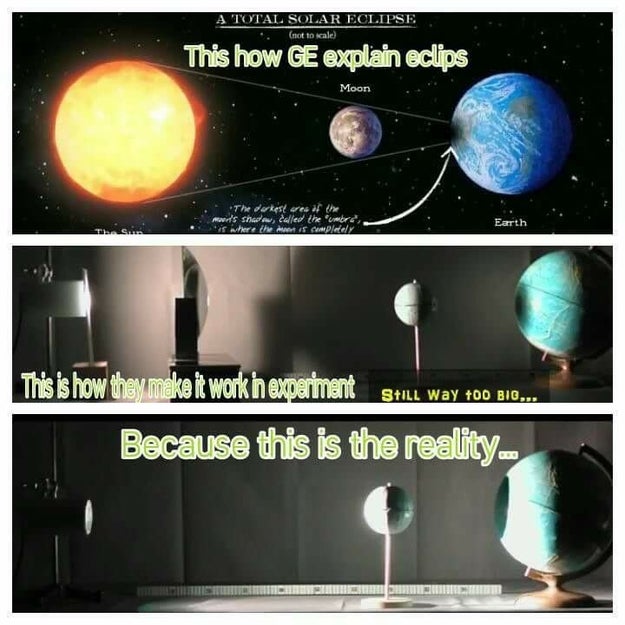
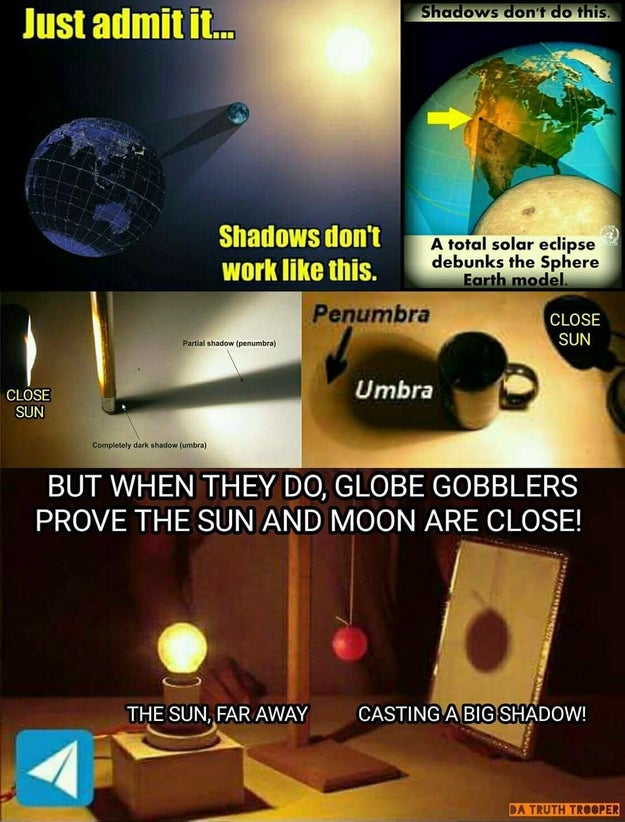
The whole thing is exposed as a lie by the shadow issue.

In a traditional globe model, the size of the shadow that gets the full eclipse (otherwise known as the “path of totality”) is small – much smaller than the size of the moon. Flat Earthers point out that this is seriously flawed – if the globe theory was true, then the shadow should be much much bigger.

This shows how the globe model wouldn’t really produce the right kind of shadow:

This shows how the globe model wouldn't really produce the right kind of shadow:

Everyone knows that if you set up a flashlight for a shadow puppet show, the farther away you go, the smaller your shadow gets.

Also, it's pretty fishy that the sun and the moon look the same size to us.

Globe theory says that eclipses “work” because it's a happy coincidence that the sun is about 400 times farther away from the earth than the moon, and the moon is about 400 times narrower than the sun, so from earth they look about the same size. But isn't there a much more simple explanation? Such as… they are two equally sized objects the same distance away?

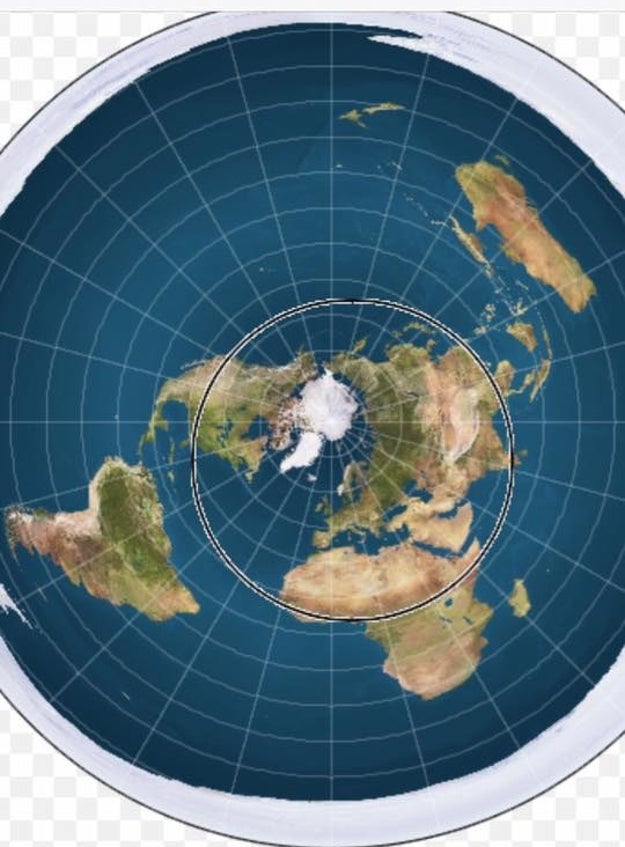
The eclipse path is explained by this simple black circle over the flat earth map.

The eclipse path is explained by this simple black circle over the flat earth map.

Also, the eclipse is caused by a dark planet called Rahu, not the moon.

youtube.com

In the Hindu tradition, Rahu is the head of a sun-eating snake (solar eclipses are caused by Rahu eating the sun, in this mythology). According to the astrology system described in a Sanskrit text called the Vedas (“Vedic astrology”), Rahu is the name of one of the planets that circle the Earth.

This means that what we're seeing in a solar eclipse is not the moon passing in between the sun and Earth, but the planet Rahu pass in front of the sun, blocking out the light. Flat Earthers don't believe a snake is eating the moon; they believe the eclipse is caused by planet named after the snake-eating deity.

Ok, look just throw out everything you know about the moon.

Forget the moon landing, obviously. For the Rahu theory, the moon isn't illuminated from reflection from the Earth or sun, it's a thin screen illuminated from behind by a rotating light source. Some people believe the moon's light source is a laser instead of the sun.

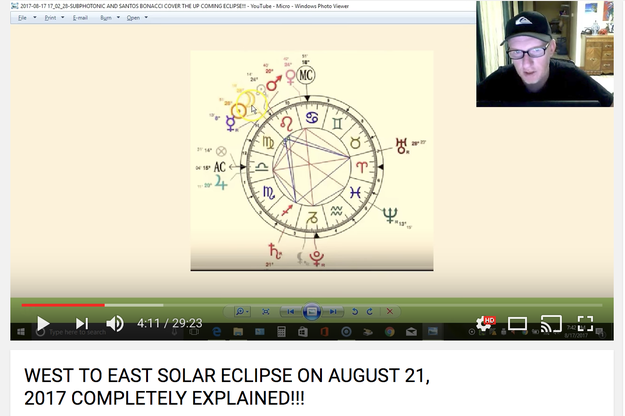
This Vedic astrology chart shows Rahu at 24 degrees, perfectly ready to block out the sun on Aug 21.

This Vedic astrology chart shows Rahu at 24 degrees, perfectly ready to block out the sun on Aug 21.

youtube.com

So there you have it. Feel free to make up your own mind.

See all of BuzzFeed’s eclipse stories here!

See all of BuzzFeed's eclipse stories here!


Quelle: <a href="Here's What Flat Earthers Think About The Eclipse“>BuzzFeed

Twitter Grapples With "Verified" White Supremacists As Other Tech Companies Crack Down On Hate Speech

Kacper Pempel / Reuters

The reaction from major tech companies to the deadly white supremacist rally in Charlottesville, Virginia, was swift.

Apple cut off white supremacists from Apple Pay. Google and GoDaddy booted a Nazi website. And Facebook, WordPress, OkCupid, and others moved to ban white supremacists or crack down on hate speech.

Meanwhile on Twitter, people who use their accounts to spread white supremacist messages haven't just been left alone, they're operating with coveted blue “verification” checkmarks, putting the social media giant in the increasingly difficult position of trying to defend the “all speech” tenant it was founded on against a user base that is demanding more accountability.

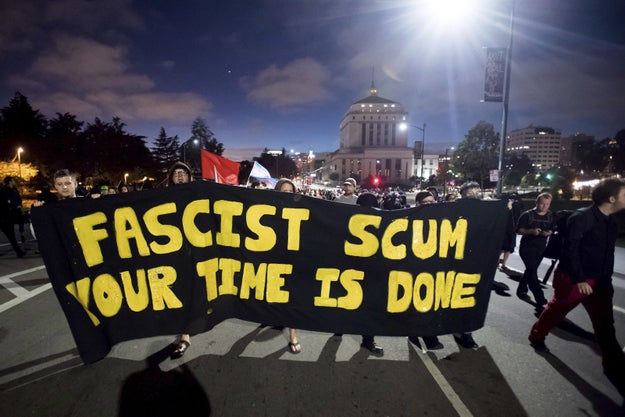
Protesters against racism march through Oakland on Aug. 12, 2017.

Noah Berger / AP

While Twitter says the checkmarks are meant to confirm that users are who they say they are on the social network, many see them as symbols of legitimacy or an indication of a user's prominence.

In the wake of the Charlottesville attack, Twitter did suspend a few accounts, but observers are questioning the company's decision to stand by the “verified” checkmarks for accounts associated with white supremacism, which in some cases rally massive troll armies and distribute everything from racist Pepe the Frog memes to Nazi imagery.

Twitter / Via Twitter: @RichardBSpencer

Twitter insists that the blue checkmark isn't an endorsement of the content an account shares and doesn't constitute special or elevated status. Instead, verification is supposed to let “people know that an account of public interest is authentic,” according to Twitter's official description.

“Typically this includes accounts maintained by users in music, acting, fashion, government, politics, religion, journalism, media, sports, business, and other key interest areas,” the company adds.

Twitter's pages about hateful conduct and online abuse don't mention anything about verification. If someone does break Twitter's rules — such as harassing another user — they face penalties that include having their account suspended.

But there's one very high profile case that significantly muddies Twitter's explanation of verification as a simple tool to tell who's who: Milo Yiannopoulos, the right-wing provocateur who lost his verified status last year.

Citing a policy of not commenting on specific accounts, Twitter has refused to say what Yiannopoulos did to lose his verification (he was later permanently banned). Yiannopoulos has also never been specific about why he thought he was unverified, but one Twitter executive suggested it was for a tweet containing the phrase: “You deserve to be harassed.”

A person familiar with the situation who spoke on the condition of anonymity told BuzzFeed News the decision to take action against Yiannopoulos was hotly debated inside Twitter at the time. Some argued the best vehicle to handle Yiannopoulos was through suspension.

“The ultimate decision was to do the verification, I think in part because, at the time, the policies, as written, made it quite difficult to suspend him,” the person said. “Because it was sort of the case of, 'We don’t want him on the platform, but he knows the rules really well.'”

In losing his verification, Yiannopoulos told BuzzFeed News that Twitter was using “a tool for establishing the identity of prominent people as an ideological weapon.”

“Obviously it also confers a sense of legitimacy,” he said.

The person familiar with the situation agreed that after its introduction, verification became more than just a way to identify if a person is who they say they are.

“That badge became literally sort of a badge of honor,” the person said. “People craved having the checkmark as a status symbol.”

As a result, in the days following Charlottesville, numerous users took to the platform — with some tweeting directly at Twitter CEO Jack Dorsey — to ask why people associated with extremism still have that “badge of honor.”

Some of the verified users spotlighted by observers used Twitter to promote the white supremacist rally in Charlottesville, and the social network remains their refuge as other major tech companies crack down on their presence.

Alt-right figures such as Tim Gionet, a former BuzzFeed employee better known by his Twitter handle @bakedalaska, tweeted promotional material for the rally. Richard Spencer, who was once temporarily banned from Twitter, shared numerous images and messages glorifying the scene. And a woman who uses the pseudonym Ayla and the Twitter handle @apurposefulwife invited people to watch her speak at the rally.

Questions have been raised about a number of other verified accounts as well, some of which weren't directly involved in Charlottesville, but routinely share racist content.

At the same time, some of these users are facing crackdowns on other platforms. After the recent violence, Paypal and web hosting company Squarespace cut off Spencer's National Policy Institute, a white nationalist think tank.

The pushback has been so widespread that on Friday Ayla wrote a blog post criticizing tech companies for “deplatforming us,” while Spencer wrote that “corporate America” was campaigning “to shut our web outlets down.”

When they needed to get their message out about the crackdown, they turned to Twitter.

Yiannopoulos said the platform is “structured to give more features and visibility to verified users.”

The person familiar with Twitter's policies said that in the past, verified accounts were prioritized by the social network's algorithms and would land higher in search results and “top tweets” sections. That prioritization actually came up during the conversation about what to do with Yiannopoulos, with some in the company arguing that “we should be under no obligation to promote someone that we feel is bad for the platform.”

Twitter did not respond to questions about whether tweets from verified accounts still get priority.

John Wihbey, a media professor at Northeastern University who has studied Twitter, told BuzzFeed News that it is widely believed verification “generates an additional layer of trust.”

Wihbey said the boost in perceived legitimacy may be waning today, (Yiannopoulos also said verification isn't what it used to be) but the perception still lingers.

“The blue checkmark is an important status symbol and it’s also a signaling that you’ve gone through some kind of vetting process,” he said.

In the wake of Charlottesville and President Trump's much-criticized remarks blaming “both sides” for the violence, many Twitter users are frustrated that the platform appears to be treating every side equally, a position at odds with other tech companies.

Twitter's approach to verification “isn't coherent in terms of the platform's overall approach to identity,” said Nicco Mele, director of Harvard's Shorenstein Center on Media, Politics and Public Policy.

“They don’t want to be gatekeepers, and yet sometimes they are gatekeepers,” he said. “Are they going to privilege truth? Or are they going to treat InfoWars the same way they’re going to treat the New York Times and BuzzFeed?”

The person familiar with Twitter's policies said that there are also differing opinions within the company, adding that “many view it as a good idea that got out of control and would be just as happy if verification didn’t exist.”

Wihbey, who said he spoke with Dorsey in the social network's early days, added that Twitter simply may not have been prepared for its evolution into a home for extremists with massive followings.

“To be honest, this whole 'herds of white nationalists and Russian bots,' it was just not foreseeable when they were founding the company and setting the rules of the game,” Wihbey said. “And once that ship is out to sea, it’s pretty hard to rebuild out in the middle of the ocean.”

But while he favors allowing people — even those with “totally repugnant” views — to have Twitter accounts, Wihbey said he doesn't think it's necessary to “help them with additional designations of credibility.”

“I think it's a problem for any hate group to be given extra designations, such as a verified account,” he said. “I'm not sure they meet the 'public interest' standard as articulated by Twitter.”

LINK: Here’s What Really Happened In Charlottesville

LINK: Apple Pay Is Cutting Off White Supremacists

LINK: Twitter’s Favorite Excuse Is Failing The Public

Quelle: <a href="Twitter Grapples With "Verified" White Supremacists As Other Tech Companies Crack Down On Hate Speech“>BuzzFeed

Ignore The Bullshit: iPhones Are Not Destroying Teenagers

Nicholas Kamm / AFP / Getty Images

Millennials may soon yearn for the days when our breakfast habits could launch a thousand thinkpieces. The oldest of us are now exiting the coveted 18-34-year demographic, meaning our days as the darlings of marketers and chin-scratchers everywhere are numbered. The youth culture industry is already moving on, shifting its attention to the post-millennial cohort, currently nicknamed “Gen Z.”

The worst example of this in recent memory was Have Smartphones Destroyed a Generation?, a particularly panicky Atlantic cover story by psychology professor, corporate consultant, and onetime millennial-whisperer Jean M. Twenge. The Atlantic has a particular affinity for this kind of trendy worrying dressed up as somber big-think remember Is Google Making Us Stupid? — and Twenge delivered it in droves here, arguing that the time today's teens spend alone with smartphones is poisoning them forever.

Twenge has been on the youth-scare beat for a while, and it’s notable that she has now turned to post-millennial fearmongering. I first encountered her work back in the mid-2000s, around the time when Twitter was launching and Time magazine was declaring us all “Person of the Year.”

Her first major foray into millennial thinkery was her 2006 book Generation Me: Why Today's Young Americans Are More Confident, Assertive, Entitled—And More Miserable Than Ever Before. Twenge expanded on the theme in 2009 with The Narcissism Epidemic: Living in the Age of Entitlement.

These books pandered to the same complaints old people have been making about young people since time immemorial, with just enough techno-scare to make them seem fresh and relevant. And they established Twenge as a go-to quote factory for cranky think-pieces on millennials, ushering in a new wave of hand wringing over our supposed shortcomings.

Why are young adults so miserable?” asked a 2006 Today Show segment on Twenge's work. “Are social norms steadily unraveling?” wondered USA Today the same year. “Too much self-esteem can be bad for your child,” warned Alternet. Many teens are “overconfident” and “have wildly unrealistic expectations,” said Fox News. A 2009 ABC story on Twenge's work was headlined “Today's Teens More Anxious, Depressed, and Paranoid Than Ever.”

Twenge's “narcissism epidemic” narrative fit perfectly with popular confusion and fears regarding social media, technology, reality TV stars, changes in parenting styles, the disintegration of 20th century social institutions, and the changing workforce. It also echoed popular criticism of the self-esteem movement, and the “participation trophy” fears that our cranky elders had already established about the generation then commonly called “Gen Y.”

But while consumer media ate up Twenge's sky-is-falling take on millennials, her peers in academia and the scientific community began to call bullshit.

Most of Twenge's assertions about millennial narcissism come from comparing answers given by them, Gen X'ers, and baby boomers on an index called the Narcissistic Personality Inventory (NPI). They're also peppered with anecdotes and dubious insights drawn from everything from the antics of Britney Spears and Paris Hilton to rising rates of plastic-surgery and school-shootings and the popularity of subprime mortgages.

There are some generational differences in the NPI. For instance, millennials are more likely than boomers at their age to agree to statements like “I am assertive,” “I like to take responsibility for making decisions,” and “I can live my life any way I want to.”

Yet Twenge takes these differences and teases out all sorts of unjustified conclusions.

Sure, millennials — primed our whole lives to value self esteem and believe in the validity of individuality while our grandparents were taught to keep their heads down and follow the mainstream — may be more likely than our predecessors to identify with statements projecting confidence. We’re more inclined to say “I am going to be a great person” than “I hope I am going to be successful.” But there’s little evidence this has negative social effects in aggregate, or that it means millennials are more prone to destructive pathological narcissism.

In fact, “trends in youth behavior support the opposite conclusion,” as Neil Howe and William Strauss noted in a 2007 Los Angeles Times op-ed. As evidence, they pointed to falling rates of crime, teen pregnancy, abortion, premarital sex, reckless driving, and drug use; rising rates of volunteerism; and research showing that millennials get along better with their parents than previous generations did.

According to Jeffrey Jensen Arnett, a psychology professor at Clark University, “evidence overwhelmingly shows that the self-esteem and self-belief of today’s emerging adults is not 'too high' by any reasonable reckoning.”

Writing in the journal Emerging Adulthood in 2013, Arnett cautioned Twenge's conclusions are also marred by her reliance on samples of college students. College students “are not representative of emerging adults more generally,” Arnett points out. “They are wealthier, whiter, and (by definition) more highly educated than their noncollege peers.”

It’s even more biased than it sounds. Twenge drew her conclusions from an even more rarified set within U.S. college students: those who attend four-year residential institutions.

But even if we take Twenge's data at face value, it's not necessarily cause for alarm — and may in fact represent good news, not a generational crisis. Most of the rise in alleged narcissism comes from girls and women, and women were, until a few decades ago, often taught that that pride and confidence were unladylike. Is it really a bad thing that fewer millennial women feel the need to downplay their own strengths?

Ultimately, “the evidence just isn't there for an epidemic of narcissism or anything else” in Twenge's thesis, declared the Chronicle of Higher Education in 2010. “Social scientists would do well to exercise a degree of caution when interpreting data. Just like with the little boy who cries wolf, people are bound to notice too many phantom epidemics.”

If only. Memories are short, and technology changes fast. If anything, today's accelerated news cycles and well-oiled outrage machine only increases the public appetite for phantom epidemics, which brings us back to this month’s smartphone freakout in The Atlantic.

Nicholas Kamm / AFP / Getty Images

Almost all of the problems with Twenge's millennial bullshit are on display in her somber analysis of Gen Z, which she defines to include those born from 1995 through 2012.

Perhaps aware that she needed a new shtick to stay at the top of the generational-guru game, Twenge is now claiming that, around 2012, data started showing that “many of the distinctive characteristics of the Millennial generation began to disappear” (she does not say what data shows this). And Gen Z isn't just psychologically far-removed from millennials, she says — they spend their time in far different ways, too.

All of this she blames on smartphones — and it's a superficially appealing idea. Elementary school kids now have their own iPhones. My best friend's three-year-old can take a selfie. It's quite possible that growing up with smartphones and social-media may produce distinct psychological and social effects.

But it's way too early to call them yet. And Twenge's data doesn't back up her attempt to do so.

Instead, she makes grave proclamations based purely on anecdotes, correlations — such as smartphone ownership rising alongside higher rates of teen depression — and selectively wielded data. For instance, she brings up a study suggesting more unhappiness among 8th graders who are heavy use social-media users, but doesn't mention that the same study found no effect for 12th graders.

Twenge “reviews only those studies that support her idea and ignores studies that suggest that screen use is NOT associated with outcomes like depression and loneliness,” objected psychologist Sarah Rose Cavanagh in Psychology Today. And “nowhere is Twenge's bias more obvious…than in some research that she actually does review but then casts aside as seemingly irrelevant to her thesis—namely, the vast counter-evidence to the 'destroyed generation' thesis contained in her headline.”

This counter-evidence includes ample data showing that Gen Z, like millennials before them, have far lower rates of smoking, unprotected sex, car accidents, alcohol use, and teen pregnancies. (“This is what a destroyed generation looks like?” asks Cavanagh.)

Today's teens also have a lower suicide rate than teens in the 1990s, and self-reported happiness levels among teens have held relatively steady since 1997. Neither fact fits the narrative of a generation more miserable than ever before. Instead, Twenge ignores all of this and starts throwing in buzzwords like “cyberbullying” and “Snapchat” to explain the non-existent spike in Gen Z suicides.

Consider one of those examples: teens today are going out unsupervised less. There are explanations for this other than teens being ruined shells of human beings — such as increased participation in extracurriculars and organized activities — that could account for this.

But more importantly, previous generations didn't have much choice but to go out if they wanted to do things like socialize with multiple friends or watch movies. Now that teens can communicate digitally or hang out together at home watching Netflix, does it really suggest a destroyed generation if they choose to do that instead of hanging out at the local movie theater?

Twenge even sees doom in teens today holding fewer part-time jobs during the school year. But at the same time, volunteering is up, as are educational demands. The minimum wage is higher, and there are tighter regulations on teen working hours. Why should we lament, as Twenge does, a 50% drop since the 1970s in 8th graders working for pay?

Twenge tells parents the best thing they can do for their kids' health and happiness is to make them put down the smartphones. I suggest it’s the parents who should close their browsers for a minute — at least long enough to stop reading panic pieces by snake-oil generational theorists. The kids, by almost all measures, are more than alright.

Quelle: <a href="Ignore The Bullshit: iPhones Are Not Destroying Teenagers“>BuzzFeed

How to Photograph The Eclipse On Your Phone

Halldor Kolbeins / AFP / Getty Images

If you want to capture a full eclipse, make your way to the “path of totality.”

The first thing you want to do is make sure you’re in the right place. Across 12 states from Oregon to South Carolina, a 70-mile-wide strip—called the “path of totality”—will experience a total solar eclipse, on Monday August 21, when the moon will almost fully block the sun.

If you’re on that path, you’ll be able to photograph the eclipse, which will look like a ring of light (the sun’s atmosphere, or corona) around the moon’s shadow. If you’re not on the path, you’ll be able to see a partial eclipse (as long you’re in the continental US, Canada, or Mexico), which will look like a big chunk is missing from the sun. This interactive NASA map shows when the eclipse is slated to start and how long it will last during the point of maximum eclipse for your location.

Hopefully, you’ve already made your travel plans. Cities on the eclipse’s path are expecting a huge influx of travelers for the event.

Pro-tip: Get to your site early (days in advance even!), and do as much preparation and set up as you can, so you can enjoy the eclipse with your own eyeballs (protected, of course, by eclipse glasses), instead of through the lens of your camera.

Get the right safety gear, for you and for your camera.

For you: When you’re taking pictures or, generally, on your smartphone, it’s easy to forget about what’s happening around you and focus just on getting a great shot. Generally, you should always be aware of your surroundings—but during the eclipse, ignoring safety protocol could mean serious, permanent eye damage.

Wherever you are, make sure you have eclipse glasses. They have especially dark lenses that protect the part of your retina that helps you see detail at the center of your vision, which is especially susceptible to the sun’s ultra bright rays.

Be careful. Lots of glasses marketed for the eclipse don’t comply with ISO 12312-2 safety standards. Make sure you grab a pair that are ISO rated.

Pascal Pavani / AFP / Getty Images

For your camera: The same goes for pointing your phone’s lens directly at the sun. “It is going to be an awful lot of light concentrated on a limited number of pixels,” said Sten Odenwald, an astronomer and Director of Citizen Science at NASA. “If you point your smartphone at the sun for a period of time, you may get a permanent blemish on the image sensor where the sun disc was fully exposed, especially on older generation phones.”

To prevent injuring your camera’s sensor, you can use what’s called a solar filter. “A simple solar filter that covers the front of the lens is all you need,” according to Todd Vorenkamp, a photographer and B&H Photo writer, who has been taking night and lunar shots for nearly 30 years. “There’s also a class called the intermediate filter, for advanced study of the sun, but those are usually very expensive and are used by scientists.”

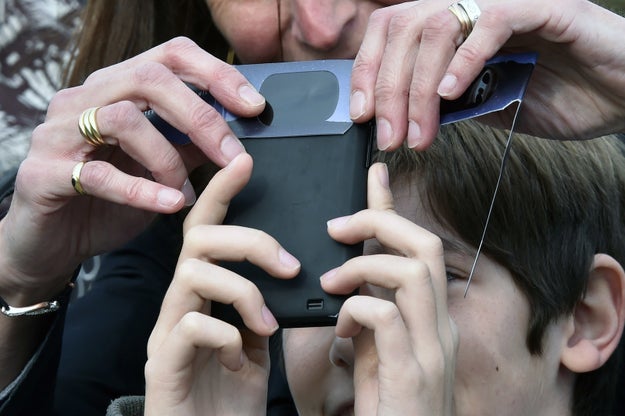
There’s a $100 eclipse-friendly lens kit designed specifically for phones, but you could also fashion your lens protector with a much cheaper filter sheet and make your own with some cardboard and tape. You could also get an additional pair of solar eclipse glasses, which is sufficient for covering most phone camera lenses.

Never look at a partially eclipsed sun without solar filters or solar glasses. For those on the path of the eclipse, the only time it is safe to look at, or point your phone at, the eclipse without protective gear is during totality (which will last less than two minutes), when the moon has completely covered the sun. The Eclipse Megamovie app (free, iOS and Android) includes an in-app camera that will tell you when the eclipse has reached totality and it’s safe to remove your solar filter, and when you need to put your solar glasses and filter back on, during the partial eclipse.

Bay Ismoyo / AFP / Getty Images

If you’re using your phone, here’s the truth: your photo isn’t going to look amazing.

As advanced as smartphone cameras have gotten, they’re still not powerful enough to capture something as far away as the sun and moon with a lot of detail.

“The sun’s very small in the sky. It doesn’t seem that way, because it’s so bright,” said Vorenkamp. “The other disadvantage with smartphones is that you don’t have a lot of control of the exposure. If you’re trying to photograph totality, your phone is going to crank up your ISO, and you’re not going to get a good shot.”

A solar filter will help your shot look less like a bright white orb and show more detail of the moon passing before the sun.

Your best chance at a decent phone shot is using a telephoto lens (with a solar filter!) and a tripod.

The key to getting a great astronomical photograph is a) zoom and b) stability. But whatever you do, don’t pinch to zoom.

“When you pinch to zoom, you’re going to lose quality,” said Erica Simas, a Seattle-based photographer and content coordinator at Moment, a company that makes mobile photography accessories. “When you use digital zoom [pinching] versus optical zoom [an external lens], it will drop your image quality. Anybody who is looking to capture the eclipse should consider having a telephoto lens for their phone.”

Those with the iPhone 7 Plus have a second lens that provides two times the optical zoom and may not need the extra accessory, but for those who don’t have a 7 Plus, Simas suggests Moment’s Tele Lens ($100) which can double the zoom on the iPhone or Google Pixel’s lenses. This telephoto lens for iPhone ($35) and this universal one for Android ($20) are also great.

But be wary of the dangers when using a telephoto lens: “The big caution is that you can’t use that telephoto on the uneclipsed sun, because you can burn out the lens on your camera,” warned NASA’s Odenwald. “Get a solar filter and put that in front of the telephoto lens, but do not put it in between the telephoto and camera lens. These filters are likely gelatin, and would melt pretty quickly.”

With a zoom lens, your phone will need to be super stable, so use a tripod and set your shutter on timer, so the tripod will have a chance to stop moving before it captures the scene — any shaking will make the image look blurry. Simas recommends the MeFoto Sidekick 360 ($30): “You can use it to screw your phone onto any tripod, so it’s really convenient if you already have one handy.”

Instagram: @filmandpixel

Also: Shoot in RAW if possible, so you can edit the full resolution file (instead of the compressed JPEG file).

When you take a photo, your camera app will probably save that image as a JPG file, which is compressed, so it doesn’t take up as much storage. According to Simas, you’ll want to shoot in RAW, so you can edit your image without losing image quality. Because you can’t shoot in RAW through your phone’s default camera app, use Manual ($4) or Moment (free) for iPhone, and Manual Camera ($2.99) for Android.

For editing, “I recommend VSCO [free, iOS and Android]. They allow you to import in RAW and edit in RAW, and make it really easy for quick post processing,” advised Simas.

Think about alternative ways of capturing the event.

Since millions of others are going to be shooting the actual eclipse event—and, for many folks, the eclipse will be too high in the sky to include anyone or thing in the foreground—think about other ways to capture the moment.

“I want to get my kids wearing glasses, and focus on their reactions when the full sun becomes a shadow,” said Ohio-based photographer Eric Ward, who will be off the path of totality. Unlike other photographers, who will attempt to get a tight shot of the eclipse, Ward is going to take photo and videos of reactions on the ground, and use a drone to capture the wider landscape.

NASA’s Odenwald also suggests using some kind of secondary lighting, like a handheld light, to illuminate people in the foreground during totality: “It’ll look like twilight, so try compositions before that low light sets in. The eclipse is going to be so high in some places, about 60 degrees above the horizon, that it will be difficult to see anything around it to help with the composition of the photo.”

Instagram: @littlecoal

The TL;DR is don’t spend a lot of time fussing with your camera. Enjoy this rare event with your own eyes — not through your phone screen.

The event will last three hours (so bring water!), but the actual eclipse, when the moon completely blocks the sun, will only last under two minutes. That’s not a lot of time to mess with settings and run out to get the perfect shot. If you can, do all the set up beforehand, and leave your video camera running or take a couple of photos, then put your camera away so you can actually enjoy it!

And remember the golden rule: There are going to be huge crowds. Respect other folks’ space.

Vorenkamp urges all photographers to follow the golden rule: “If you don’t want someone to block your view, don’t block theirs.”

See all of BuzzFeed's eclipse stories here, and buy your BuzzFeed eclipse viewing glasses here!

Quelle: <a href="How to Photograph The Eclipse On Your Phone“>BuzzFeed
The Latest Ruling In Uber Versus Waymo Is A Win For Waymo

When Alphabet’s trade secret lawsuit against Uber goes to trial this October, lawyers for the company’s self driving arm Waymo will be allowed to advise the jury of Uber’s behavior during the hearing, US District Judge William Alsup ruled on Thursday.


During a hearing Wednesday, Alsup said he was inclined to allow Waymo to tell the jury that Uber's lawyers had misled the court regarding their possession of stolen documents.

Waymo's lawyers argued at the hearing that the jury should know that the law firm representing Uber, Morrison Foerster, concealed the fact that it possessed stolen Google files, as well as the fact that the former Google engineer at the heart of the lawsuit, Anthony Levandowski, destroyed some of those files after being hired by Uber.

Judge Alsup, who on Wednesday threatened to put Uber's lead counsel Arturo González on the stand during the trial, ruled in Waymo's favor on Thursday.

The order says Waymo will be able to advise the court based on what was discussed at the hearing. “I am inclined to tell the jury this scenario, that Uber was ordered to come clean and did not come clean,” Alsup said on Thursday. Waymo's next step will be to propose wording for its jury instructions, which Alsup will have an opportunity to review before approving.

González strenuously denied that his firm concealed any stolen information from Google, saying in court, “There will never be a day, never, no matter what the Federal Circuit rules, that MoFo was hiding, or for that matter, Uber was hiding, 14,000 documents.”

Uber declined to comment on this story.

In an emailed statement, a spokesperson for Waymo said that “Uber and its attorneys and agents have refused to produce key evidence, continued to harbor Waymo’s stolen files, and obstructed discovery at every turn.”

“We welcome Alsup's decision to allow Waymo to propose instructions to the jury regarding Uber's misconduct and we look forward to trial,” the statement says.

Waymo's lawsuit alleges that Uber illegally acquired trade secrets from Waymo when it hired Levandowski, a former Waymo engineer, through the acquisition of his self-driving truck startup, Otto Trucking. The suit, filed back in February, says Uber is actively using Waymo's trade secrets in its technology. Since then, Judge Alsup has said repeatedly that Waymo's case against Uber is a strong one. Thursday's ruling is yet another reason for Waymo to feel confident in this fight.

Meanwhile, Uber's string of missteps and crises in 2017 continues. Ex-CEO and founder Travis Kalanick is locked in a public and contentious legal battle with early investors. Benchmark Capital is suing him for fraud and breach of conduct, saying he failed to handle an internal crisis over allegations of sexual harassment inside the company, concealed facts in his acquisition of Otto Trucking that led to Waymo's lawsuit, and is meddling in the selection of a new CEO.

The firm currently has no CEO or CFO, and there are a number of other top positions waiting to be filled, as long-time employees continue to leave the company.

Quelle: <a href="The Latest Ruling In Uber Versus Waymo Is A Win For Waymo“>BuzzFeed