Here's How Silicon Valley Is Racing To Bring The World Online

Here's How Silicon Valley Is Racing To Bring The World Online

youtube.com

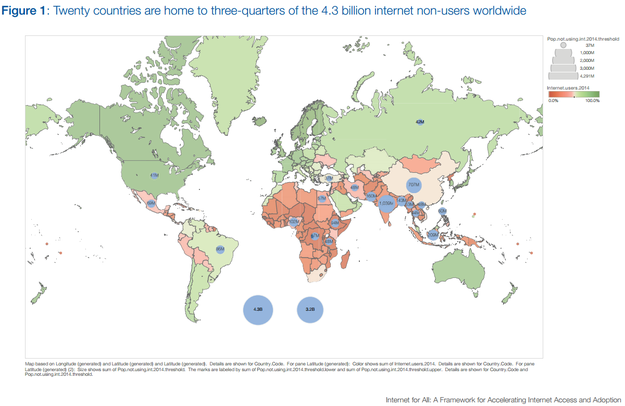
Our world seems more connected than ever. Google recently boasted that its Android mobile platform has over 2 billion users. A month later, Facebook said it had the same number of monthly active users. And yet, over 4 billion people around the world still don’t have access to the internet. Africa and South Asia are particularly affected: One of the lowest rates in the world is in the Democratic Republic of Congo, where merely 3.8% of the population has access.

But now, Google, Facebook, SpaceX, and a handful of other startups are developing ways to get the rest of the world online. These companies’ motivations aren’t purely altruistic. These costly projects serve dual purpose: as generators of good PR, as well as a gateway to billions of potential new Internet-connected customers, who (they hope) will ultimately use their services.
World Economic Forum / Via weforum.org

This kind of connectivity could have a huge impact on the lives of those who live in rural areas, and other places where it doesn’t always make sense financially for cellular providers to put up a big, expensive cell tower that services a small number of people who may not be able to afford it.

Broadband internet isn’t just about getting more people into Snapchat; it has the potential to change people’s access to jobs, education, and information. “Historically, those communities have not been seen as the highest return of investment, where you’re looking at 50 homes within a wide span of land,” explained Dr. Nicol Turner-Lee, a fellow at the Brookings Institution’s Center for Technology Innovation. Governments do, occasionally, step in to invest in digital infrastructure where private companies fail to do so, but that’s more likely to occur in wealthy, developed countries, not emerging ones.

The process by which something gets to you via the internet involves a network of cables, data centers, and cell towers. The final step in, say, streaming an episode of Game of Thrones, involves your internet service provider (companies like AT&T, Verizon, and Comcast) sending that video over fiber optic cables that eventually lead to a cell tower or to your house’s router.

It’s that last mile of internet connectivity—the part where the video travels from your ISP to you—that’s costly for areas that aren’t densely populated. But tech companies have some novel ways of solving this problem.

Elon Musk, CEO of Tesla and SpaceX, wants to blanket the Earth’s atmosphere with thousands of orbiting satellites (around 4,425, according to the original proposal), forming a global communications network that would deliver data to devices on the ground — but the first of SpaceX’s satellites aren’t slated to launch until 2019. Musk’s biggest competitor, the Virginia-based satellite company OneWeb, which aims to create a similar network that covers the entire globe with LTE connectivity, is hoping to launch in 2019, too.

Facebook also worked on a satellite designed to bring connectivity to parts of sub-Saharan Africa. In September 2016, Facebook’s new satellite went aboard SpaceX’s Falcon 9 rocket. Unfortunately, that rocket blew up, destroying the satellite with it.

Facebook

The company had another plan up its sleeve: a solar-powered, autonomous, Internet-delivering drone called Aquila, with a huge wingspan (larger than a Boeing 737’s). The plan is to deploy a fleet of high-altitude drones that would communicate with each other via laser and fly for months at a time. Aquila is designed to beam wireless signal to people within a 60-mile diameter. The project still has a long way to go to hit that 90-day goal. In June, the drone completed a one hour, 46 minute flight.

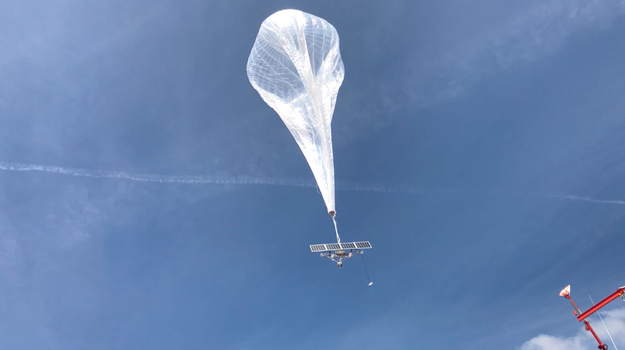
One high-altitude solution that’s much closer to its goal is Project Loon, which is a part of X, Alphabet’s “moonshot factory” (formerly known as “Google X”). Like Aquila, Loon is an airborne Internet network — except, instead of drones, it uses balloons filled with helium that float in the stratosphere. Loon’s flight record is 190 days and, while the project is still in a testing phase, its balloons have already delivered Internet connectivity to tens of thousands of people in Peru, which was devastated by floods earlier this year. In February, Loon announced it had developed machine-learning navigation algorithms that allow it to send a much smaller fleet of balloons (dozens, instead of hundreds) to specific locations, making the project much cheaper than originally planned.
Nicole Nguyen / BuzzFeed News

But the project isn’t without its setbacks. Loon has changed leadership twice within the past year. A key Loon patent involving balloon navigation was also cancelled by the US Patent and Trademark Office, after a company called Space Data filed a lawsuit claiming they had come up with the idea first.

In any case, Alphabet has invested a significant amount of resources to Loon, with two launch locations (one in Ceiba, Puerto Rico and the other in Winemucca, Nevada) equipped with “autolaunchers” that can send up to twenty balloons a day into the stratosphere, balloon recovery missions all over the world, and labs back at X headquarters in Mountain View, California. One of Loon’s labs hosts the world’s largest flatbed scanner, named “Billie Jean” for the way its panels light up, which helps engineers and scientists examine every stress and stretch on the balloon’s plastic.

But lack of physical infrastructure isn’t the only thing preventing the widespread expansion of internet access. Device affordability, literacy, and creating websites available in local languages are also key to getting the rest of the world online. Furthermore, balloons, drones, and thousands of satellites may not bridge the digital divide in the areas that need it most — areas that have more pressing problems than lack of internet. “The real challenge [for these companies] will be getting to those areas that have … no running water, no electricity, no functioning schools,” said Dr. Turner-Lee.

And while these projects all sound promising, whether or not they will work in practice, outside of their tests on a large scale, remains to be seen. Silicon Valley-backed internet access projects have been met with controversy in the past, as with Facebook’s Free Basics program in India. Government authorization and cell provider cooperation are crucial to the progress of these developments. How will local governments and telecom companies treat experimental, air-borne Google, Facebook, or SpaceX hardware floating overhead? Until Loon, Aquila, and Musk’s space internet take off widely, it’s hard to tell just how much they're going to change people's lives around the world.

Quelle: <a href="Here's How Silicon Valley Is Racing To Bring The World Online“>BuzzFeed

Uber Pulls Out Of Oakland, Citing Financial Reasons

Gensler / Via gensler.com

Uber is looking to pull out of Oakland, where it landed with much fanfare in 2015.

The news broke late Thursday, first reported by the San Francisco Business Times, that the San Francisco-based ride-hail giant is looking to sell the 300,000 square foot office building it purchased in downtown Oakland just two years ago.

“As we look to strengthen our financial position so we can better serve riders and drivers for the long term, we're exploring several options for Uptown Station, including a sale,” says a company statement. “We remain committed to serving Oakland and our broader hometown Bay Area community.”

The first hint that Uber might back out of its plan to open an office in Oakland came in March of this year, when the San Francisco Business Times first reported that the company planned to lease out most floors of the building, and reduce the number of employees working there from a few thousand to just a few hundred.

At the time, Oakland Mayor Libby Schaaf, who supported the initial deal, seemed convinced that Uber remained committed to relocating some employees to Oakland. Schaaf took heat from local community groups in Oakland who worried that Uber’s decision to move into the building would result in skyrocketing real estate prices that would push some families and small businesses out of downtown Oakland.

Schaaf’s office did not immediately respond to a request for comment from BuzzFeed News.

A lot has happened at Uber since the news that it would scale back its commitment to Oakland broke in March. Its CEO, Travis Kalanick, was forced to resign after viral allegations of sexual harassment and discrimination within the company led to two internal investigations into Uber’s toxic workplace culture. Kalanick, who remains on Uber’s board, is being personally sued by early Uber investor Benchmark Capital, which alleges fraud, breach of contract and breach of fiduciary duty, and aims to remove him. While Kalanick remains embroiled in that power struggle, the company itself is facing major challenges, in the form of a major trade secret lawsuit brought by Google’s self driving arm Waymo, privacy charges brought by the FTC, and a lawsuit brought by a passenger who says Uber improperly mishandled her medical records after she was raped by her driver.

A spokesperson for Uber said, given the company’s renewed focus on workplace culture — in June Uber’s board presented the company with a suite of recommendations on how to improve life for employees — it makes more sense to house all employees in the same place. That place will be the San Francisco Mission Bay office buildings that are part of the Golden State Warriors project in which Uber bought a stake back in March.

Had Uber moved into the historic Sears building it purchased from Lane Partners in 2015, its presence would have transformed what is currently a stretch of largely vacant storefronts and minimal street traffic. The building itself is currently under renovation, and it’s unclear as to whether Uber will continue to work on those improvements while it seeks a buyer.

Steve Snider, executive director of the Downtown Oakland Association, said he hopes the sale of the building goes through quickly, ideally to a buyer who’s interested in introducing restaurants and other retail to the ground floor.

“Along the Broadway corridor, there’s a lot of dead zones that don’t really have active storefronts,” he said. “Having something that’s so centrally located and that’s a half block of downtown Oakland, to not have an active ground floor presence sort of kills the overall vibrancy of the neighborhood.”

Quelle: <a href="Uber Pulls Out Of Oakland, Citing Financial Reasons“>BuzzFeed

Apple Is Pulling Apps By Iranian Developers From The App Store To Comply With US Sanctions

Scott Morgan / Reuters

Apple is pulling apps created by Iranian developers that are specifically designed for people in Iran from its App Stores to comply with US sanctions, The New York Times reports.

Apple does not sell its products in Iran and an Iranian version of the Apple App Store doesn’t exist, but smuggled iPhones are popular among wealthy Iranians. Iranian developers have created thousands of apps for these users and offer them on App Stores in other countries including the US App Store. For the last few weeks, Apple has been removing Iranian food delivery and shopping apps, and on Thursday, it removed Snapp, an Uber-like ride hailing app that is popular in Iran.

According to the Times, Apple sent this message to Iranian developers whose apps they removed: “Under the U.S. sanctions regulations, the App Store cannot host, distribute or do business with apps or developers connected to certain U.S. embargoed countries.”

The move prompted backlash from developers online, and lead to the creation of a #StopRemovingIranianApps on Twitter hashtag.

Twitter: @x3n0b1a

Twitter: @miladkdz

In July, Apple removed apps that allowed people in China to evade censorship to comply with Chinese regulations, sparking criticism that it was bowing to Beijing's stringent censorship.

Apple did not respond to BuzzFeed News' request for comment.

Quelle: <a href="Apple Is Pulling Apps By Iranian Developers From The App Store To Comply With US Sanctions“>BuzzFeed

You Can Now Take A Google Test About Depression

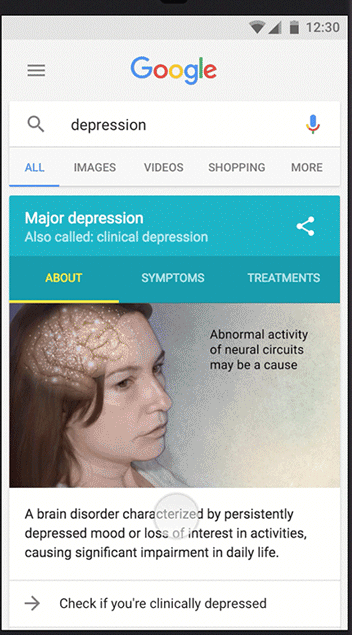
If you've ever Googled “depression” to figure out if that's the name for what you're feeling, Google has now built a questionnaire to help you just do that.

Google already had a special feature that popped up at the top of search results for “depression” or “clinical depression,” and it defined the condition and treatments for it. On Wednesday, the company announced that, for mobile search results in the United States, there will now also be a link to a built-in quiz to help people identify their symptoms and whether they should seek in-person help.

Via blog.google

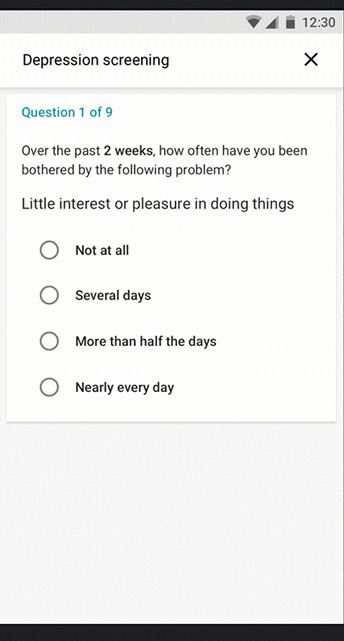
The feature is still rolling out to all users, but a sample question posted on Google's blog reads: “Over the past two weeks, how often have you been bothered by the following problem?: Little interest or pleasure in doing things.” Options include “not at all,” “several days,” “more than half the days,” and “nearly every day.”

The company teamed up with the National Alliance on Mental Health to build the test, which is known in the mental health world as a “Patient Health Questionnaire-9” — a standard way of assessing a patient's symptoms. It's intended to be the first step in making information easier to access, the groups said.

Via blog.google

“Clinical depression is a very common condition — in fact, approximately one in five Americans experience an episode in their lifetime,” Mary Giliberti, CEO of the National Alliance on Mental Health, wrote on Google's blog. “However, despite its prevalence, only about 50 percent of people who suffer from depression actually receive treatment.”

From Google's point of view, the questionnaire serves the double benefit of giving people a reason to spend even more time on search results. One in 20 searches are for health-related information, the company has said.

So in early 2015, Google introduced blocks of information about more than 400 health and medical conditions — such as the one for depression — into its mobile search results.

Search results aside, Google's parent company has also shown interest in treating depression directly. Thomas Insel, a top neuroscientist and former director of the National Institute of Mental Health, was recruited to Verily, Alphabet's experimental life-sciences team, to develop ways of using smartphone sensors to screen for signs of depression and mental illness. He left this year for a startup with a similar mission.

LINK: A Scientist Is Leaving Google For A Mental Health Startup

Quelle: <a href="You Can Now Take A Google Test About Depression“>BuzzFeed

This Fund Backed By Saudi Money Is Taking Over The Tech World

An investment fund that includes billions from the government of Saudi Arabia has gone on a buying spree since launching a few months ago, taking huge stakes in a number of major tech companies.

The SoftBank Vision Fund announced in May that it had raised $93 billion, making it the largest ever fund for investing in privately held tech startups. Much of that capital came from Saudi Arabia's sovereign wealth fund, which said it would chip in $45 billion over a five-year period. Big chunks of capital also came from an Abu Dhabi government fund, and from the SoftBank Group, the Japanese conglomerate that created the Vision Fund. (Smaller contributions came from major tech companies such as Apple and Qualcomm.)

The Vision Fund has subsequently been writing enormous checks for startups, helping the Japanese SoftBank Group and Saudi Arabia expand their influence in the tech world. It also benefits from the fact that the SoftBank Group had been making big startup investments for a little while; some of those investments are now being moved to the Vision Fund.

Seemingly overnight, the Vision Fund has become one of the biggest players in startupland.

The Vision Fund's latest head-spinning deal was announced on Thursday: $4.4 billion for WeWork, the provider of co-working spaces. (Some fine print: The capital came from both the Vision Fund and SoftBank Group itself, and $1.4 billion of the investment was previously announced.)

$4.4 billion is a huge sum for a startup investment. Other tech investors were doing spit-takes.

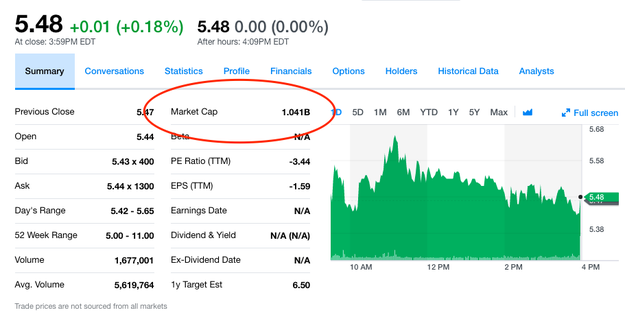
To make a flawed but possibly helpful comparison, $4.4 billion is roughly four times the size of the current market capitalization of Blue Apron.

Yahoo Finance / BuzzFeed News

(Blue Apron has had its struggles since going public, but still — four times as big as an entire company's market cap!)

The WeWork deal is only the latest example of the Vision Fund's eating the tech world. Here are some recent others:

The Vision Fund led a $114 million investment in Brain Corp, a startup developing technology to help robots navigate around obstacles.

giphy / Via media.giphy.com

It also led a $200 million investment in Plenty, an indoor farming company, calling the deal “the largest agriculture technology investment in history.”

giphy / Via media.giphy.com

And it agreed to invest a whopping $2.5 billion in the Indian e-commerce giant Flipkart, according to news reports. The deal turned the Vision Fund into Flipkart's biggest investor.

giphy / Via media.giphy.com

The Vision Fund has also been vacuuming up investments from the SoftBank Group's portfolio. For example:

It picked up a $5 billion stake in the publicly traded chip maker Nvidia.

giphy / Via media.giphy.com

And it acquired a roughly $8 billion stake in the British chip designer ARM, a company that SoftBank bought last year.

giphy / Via media.giphy.com

The Vision Fund has the right to acquire numerous other SoftBank investments, too.

These include SoftBank's big investments in the financial startup SoFi, which refinances student loans…

…and in the satellite internet company OneWeb.

giphy / Via media.giphy.com

The Vision Fund is just one way that SoftBank and Saudi Arabia have been investing in tech. On their own, both of those investors have been busy plowing capital into Silicon Valley.

SoftBank, for example, recently agreed to co-lead a $250 million investment in Slack, according to news reports.

And last year, Saudi Arabia put $3.5 billion in Uber, in one of the biggest ever startup investments.

Oh, and SoftBank reportedly has been in talks to make its own investment in Uber.

giphy / Via media.giphy.com

You can expect more headline-making deals from the Vision Fund in the future. It is aiming to raise a total of $100 billion in capital — which it intends to invest in private and public tech companies.

Quelle: <a href="This Fund Backed By Saudi Money Is Taking Over The Tech World“>BuzzFeed

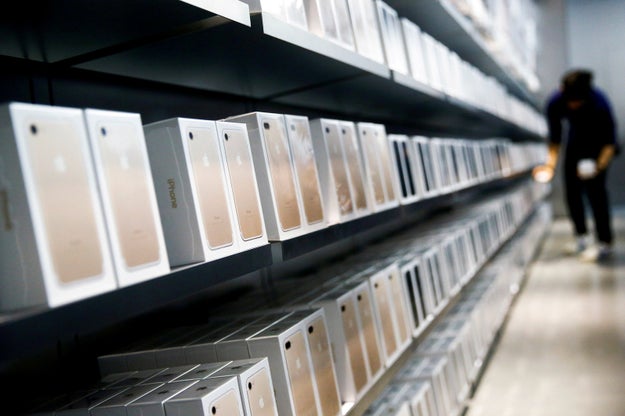
Apple Is Going To Launch Three New iPhones And A 4K Apple TV Next Month

Thomas Peter / Reuters

Apple is set to release three new versions of the iPhone and an upgraded Apple TV model at an event in September, according to sources in a position to know.

The most expensive of the three new iPhone models, priced at nearly $1,000, will feature a bezel-less, curved OLED screen, and will unlock using facial recognition, sources confirmed. The new model will charge not by plug but by induction, Bloomberg reported.

The fifth generation Apple TV, which will also launch at the September event alongside the upgraded iPhone models, will support 4K streaming for the first time, offering double the video resolution of the previous model. Apple appears to be refocusing on TV as it reportedly plans to invest $1 billion in its own original programming.

News of the 4K Apple TV was first reported by Bloomberg and independently confirmed by BuzzFeed News. The current version of the Apple TV, released in 2015, supports a resolution up to 1080P, as first reported by BuzzFeed News.

Apple declined to comment on the new models of the iPhone and Apple TV.

Bloomberg also reported that Apple will release a new version of the Apple Watch that will be able to make calls and use cellular networks.

The news comes as speculation mounts about Apple's new products in advance of the September event.

In June, Apple announced its own smart speaker, HomePod, at its annual WWDC event. The speaker, a challenge to Amazon's Alexa and Google Home, will hit shelves in December, Apple said.

John Paczkowski contributed to this report.

Quelle: <a href="Apple Is Going To Launch Three New iPhones And A 4K Apple TV Next Month“>BuzzFeed

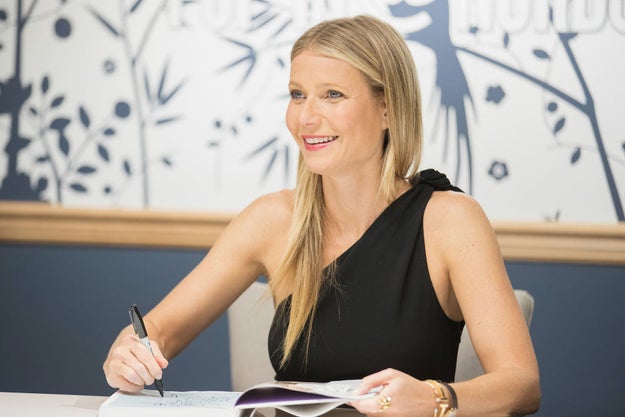
Gwyneth Paltrow’s Goop Just Got Slammed For Deceptive Advertising

Mat Hayward

Gwyneth Paltrow’s Goop routinely draws criticism for its promotion of crystals, supplements, vaginal jade eggs, and all manner of other health products. Now, a consumer watchdog group says that Goop can’t back up many of its promises about improving health — and it wants regulators to investigate what it says is deceptive advertising.

On Tuesday, Truth in Advertising said that it had catalogued more than 50 instances of the e-commerce startup claiming that its products — along with outside products it promotes on its blog and in its newsletter — could treat, cure, prevent, alleviate, or reduce the risk of ailments such as infertility, depression, psoriasis, anxiety, and even cancer. “The problem is that the company does not possess the competent and reliable scientific evidence required by law to make such claims,” the advocacy group wrote in a blog post.

Truth in Advertising says Goop made these explicit and indirect claims both on its website and at its inaugural wellness summit in June.

The group, which has previously slammed the Kardashians for their allegedly deceptive Instagram ads, brought its Goop complaints to two California district attorneys who are part of a state task force that prosecutes matters related to product safety and food, drug, and medical device labeling. Goop, founded as a newsletter by the Academy Award-winning actress in 2008, is headquartered in Los Angeles. It has raised $20 million in venture capital.

Here are a few examples of Goop’s deceptive marketing, according to and as captured by Truth in Advertising.

This crystal “eases period cramps, tempers PMS, regulates menstrual cycles, treats infertility.”

This crystal “eases period cramps, tempers PMS, regulates menstrual cycles, treats infertility.”

Truth in Advertising / Via truthinadvertising.org

One post promoted walking barefoot, a.k.a. “earthing“: “Several people in our community,” including Paltrow, “swear by earthing — also called grounding — for everything from inflammation and arthritis to insomnia and depression.”

One post promoted walking barefoot, a.k.a. "earthing": “Several people in our community,” including Paltrow, “swear by earthing — also called grounding — for everything from inflammation and arthritis to insomnia and depression.”

Truth in Advertising / Via truthinadvertising.org

Rose extract for panic attacks, among other things.

Rose extract for panic attacks, among other things.

“Cooling and moistening, it's used in traditional Chinese medicine to combat yin-deficient heat — some of the manifestations being restlessness, insomnia, hot flashes, or hyperactive states; it’s even been used traditionally to help stop panic attacks.”

Truth in Advertising / Via truthinadvertising.org

Truth in Advertising also condemned Goop for allegedly saying body stickers reduce inflammation, vitamin D3 guards against autoimmune diseases and cancer, a hair treatment treats anxiety and depression, and vaginal eggs increase hormonal balance and preventing the uterus from slipping.

The group said that it told Goop about what it saw as its problematic health claims on Aug. 11, and if Goop didn’t fix its language by Aug. 18, it would alert regulators. The day before the deadline, it said, it also provided a list of web pages with unsubstantiated claims. “Despite being handed this information, Goop to date has only made limited changes to its marketing,” the group wrote Tuesday.

A Goop spokesperson told BuzzFeed News in a statement, “Goop is dedicated to introducing unique products and offerings and encouraging constructive conversation surrounding new ideas. We are receptive to feedback and consistently seek to improve the quality of the products and information referenced on our site.”

The spokesperson said that the company “responded promptly and in good faith to the initial outreach from representatives of TINA and hoped to engage with them to address their concerns. Unfortunately, they provided limited information and made threats under arbitrary deadlines which were not reasonable under the circumstances.

“Nevertheless, while we believe that TINA’s description of our interactions is misleading and their claims unsubstantiated and unfounded, we will continue to evaluate our products and our content and make those improvements that we believe are reasonable and necessary in the interests of our community of users,” the spokesperson added.

This isn’t the first time Goop has faced criticism of its marketing. In August 2016, it said it would voluntarily stop making certain claims about its Moon Juice dietary supplements, such as “brain dust” and “action dust.” That came after an investigative unit of the advertising industry said Goop was required to verify its claims that the products could improve customers’ energy, stamina, thinking ability, and capacity for stress.

But Goop has started to respond to some of its critics. In July, it fired back at Jen Gunter, a San Francisco obstetrician-gynecologist who rails against many of Goop’s health claims — the kinds Truth in Advertising is now taking to task.

LINK: This Doctor Says Gwyneth Paltrow’s Goop Promotes Bullshit. Goop Just Clapped Back.

LINK: Advocacy Group Files FTC Complaint Over Kardashians’ Instagram Ads

Quelle: <a href="Gwyneth Paltrow’s Goop Just Got Slammed For Deceptive Advertising“>BuzzFeed

Ford Is Trying To Figure Out How To Not Get Newspaper’d

Ford CEO Jim Hackett speaks in San Francisco

Kelly Sullivan / Getty Images

Ford knows it needs to change. So much so that when it recently held a symposium on the future of urban transportation in San Francisco, the automaker didn't display a single car.

The setup may have seemed odd, but these are strange times for Ford. Ride-hailing, and the autonomous vehicles that once seemed like science fiction, are now real forces with the potential to do to Ford and its peers what the internet did to newspapers. Just as the internet made it unnecessary to pay for a paper subscription, ride-hailing services offer people a convenient and affordable alternative to car ownership. So Ford must develop a new playbook, and sometimes that means leaving the car at home.

“We get to author a lot of new technology, technology that my father never would have imagined possible, said Ford CEO Jim Hackett told the crowd at the symposium. “I am for the new technologies.” Ford named Hackett, a turnaround specialist, its CEO in May after the company’s stock dropped 40% over a three-year period.

Many experts believe the “new technologies” may well sever Ford’s relationship with its customers; In a future world where self driving cars can be summoned via smartphone, they say, the prospect of owning one’s own car, and being responsible for its upkeep, will be far less appealing than it is today. Eventually, the Wall Street Journal wrote, car ownership may become the equivalent of owning a horse: “a rare luxury.”

The end of car ownership likely wouldn’t be a fatal blow for Ford, since someone still has to make the cars, and tech companies like Apple have struggled to make their own. But it very well could make it more difficult for the company to sell its highly profitable, status symbol vehicles, and it would shift economic power into the hands of ride hailing networks like Uber and Lyft that can operate with any style of car, as long as it meets a basic standard. “If you look at any value chain, where ultimately are you deriving value? It’s at the end,” Ford’s City Solutions VP John Kwant told BuzzFeed News. “That revenue is paying for everything else previous to that, whether it’s the manufacturing, the design, the parts, the supply.”

If ride-hailing becomes that “end,” or the predominant way people access cars, Ford’s core business would be threatened. And the ride-hailing startups that have become Ford’s rivals are salivating at the possibility. “We know where the passengers are and where the demand is going,” Lyft president John Zimmer told BuzzFeed News last December, explaining why he thinks Lyft, not companies like Ford, will be the “end.” Keen to this challenge, longtime Ford competitor General Motors invested $500 million in Lyft last year.

Ford isn’t standing still. Last September, the company paid more than $65 million to acquire the shuttle service Chariot — “an extension of our value chain,” Kwant said — which picks up and drops off riders in four US cities, competing with Lyft and Uber. Ford also announced plans to invest $1 billion in Argo AI, an autonomous driving technology company. And if you walk the streets of San Francisco, you’ll see hundreds of “Ford Go Bikes” lining the streets, a bike share similar to CitiBike’s in New York except that Ford’s version is not simply a branding exercise. The company is attempting to understand how people get around in cities, which are where people are likely to phase out car ownership before those living in suburban and rural areas will.

Ford doesn’t appear ready to write off its traditional business of selling cars to consumers, either. Hackett, for instance, described a robot cars as “agents” that might be able to to go out into the world and complete tasks on our behalf (food pickup, anyone?), rather than staying parked without a human behind the wheel. “It can go somewhere and do something, it can be your delegate,” he said. That model sounds like one where ownership could persist, and Kwant said there's no reason privately owned vehicles and shared models can't operate alongside each other, with higher end vehicles still serving the shared model, like Uber Black today.

Though the symposium in San Francisco is a sign Ford knows where the future is heading, the hard part will be making the moves necessary to compete in that future word. In 2011, Ford executive Chairman Bill Ford delivered a TED talk outlining his vision for the automotive future. In it, he described an app where you push a button to summon a car that takes you where you need to go. Ford never launched that app, but Uber raised its Series A funding the same year. And six years later, Uber’s valuation is nearly $70 billion, compared to Ford’s $43 billion market cap.

Newspapers once faced a similar situation. In 2011, they saw online readers exceed print for the first time, yet they continued to devote the majority of their resources to the “paper,” which was still bringing in the cash — much like cars meant for private ownership are for Ford today. By 2012, Pew found newspapers knew they needed to change, but entrenched newspaper culture stood in the way, holding back companies that sought to prepare for the future. The newspaper companies sank, with a few notable exceptions. Ford faces a similar battle.

“It’s a journey and it’s not an easy one,” Kwant said. At the very least though, Ford showed up in the backyard of its would-be disruptors, trying to find the answers to the questions facing its business. “To ignore the fact that in urban settings fewer and fewer people are going to own vehicles,” Kwant said, “is to ignore reality.”

Quelle: <a href="Ford Is Trying To Figure Out How To Not Get Newspaper’d“>BuzzFeed

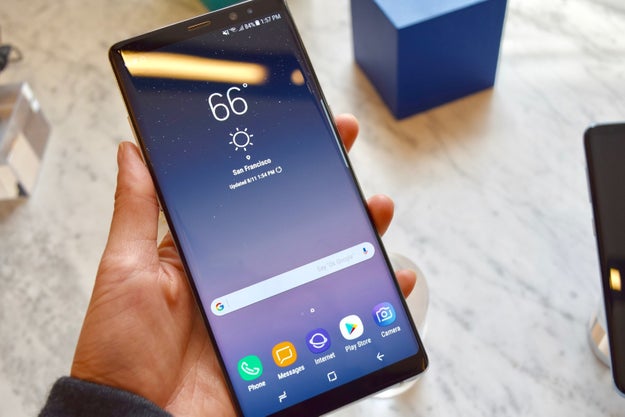
The Galaxy Note Is Back And Samsung Swears Its Battery Is Safe

Samsung’s phablet is back, with a dual-lens camera and curved “Infinity” display.

Samsung’s Note — yes, the Note that shipped with exploding batteries last year and was recalled twice before finally being discontinued — is back.

Samsung’s Note — yes, the Note that shipped with exploding batteries last year and was recalled twice before finally being discontinued — is back.

The Korean tech conglomerate debuted its newest device, the Note 8, a follow-up to last year’s Note 7, on Wednesday.

In many ways, the Note 8 is the Note 7 that never was. The newer model has the same pressure-sensitive S-Pen, the same water-resistance rating, and a similarly curved-edge screen. Its two key changes are that its battery has slightly less capacity, which poses less of an explosion risk, and it now has a dual-camera system that rivals that of the iPhone 7 Plus.

I got an early hands-on with the new Note 8 — and here’s what you need to know.

Nicole Nguyen / BuzzFeed News

Samsung really needs to get it right this time around to regain customers’ trust. While the company didn't directly address the past Note's battery problems, it says that it’s “committed to quality,” now, more than ever, with an 8-point battery safety check that includes extreme testing and x-ray inspection, plus additional testing by a third-party company, Underwriters Laboratories.

The dual-lens rear camera includes a telephoto lens for close-ups and a “portrait mode” feature that lets you change the photo’s depth of field.

The dual-lens rear camera includes a telephoto lens for close-ups and a “portrait mode” feature that lets you change the photo’s depth of field.

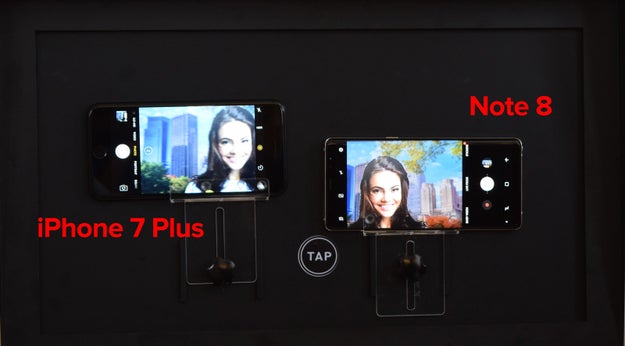
Last year, Apple introduced a dual lens camera in the iPhone 7 Plus, which offered twice the optical zoom (instead of digital zoom, which lowers a photo’s resolution) compared to iPhones without the second telephoto lens. For the Note 8, Samsung is introducing a similar concept: one 12MP wide-angle lens with f/1.7 aperture, and one 12MP telephoto lens with f/2.4 aperture.

The difference with the Note 8’s camera is that both lenses have optical image stabilization, or “OIS.” Optical image stabilization makes photos taken with shaky hands look clear. That means even if you’re zooming in at 2x with Note 8, your photos won’t look blurry. Only the iPhone 7 Plus’s wide angle lens has OIS, and Samsung claims the Note 8 is the first smartphone to have OIS in both lenses.

Nicole Nguyen / BuzzFeed News


View Entire List ›

Quelle: <a href="The Galaxy Note Is Back And Samsung Swears Its Battery Is Safe“>BuzzFeed

China Is Boosting Its Phishing Attacks — Against Vietnam

Vietnamese President Tran Dai Quang (left), with Chinese President Xi Jinping in May during an international conference near Beijing.

Kenzaburo Fukuhara / AFP / Getty Images

A Chinese government hacker group appears to be peppering Vietnamese bureaucrats with phishing emails in attempts to gain advantage in upcoming trade talks.

A country like China sending out scattershot attempts to spy on foreign government computers is commonplace, experts say. But the Chinese assault on Vietnamese officials, detailed in a report by US cybersecurity firm FireEye, offers a reminder of how cyber espionage has become an everyday tactic across the world as nations search for ways to gain economic and strategic advantage in relations of all types.

“The Chinese, like other state actors, want to know about trade negotiations and diplomats’ talking points before they have to confront them in negotiations,” said Adam Segal, an expert on Chinese policy and the director of digital and cyberspace policy at the Council on Foreign Relations, a New York City and Washington, DC, think tank. “For any southeast Asian diplomat, this is going to be a constant source of threats, both from the trade and the political strategic perspective.”

China is regarded as one of the most aggressive nations in the world when it comes to economic espionage, with several dedicated government groups and untold thousands of employees. In 2014, the US government indicted five members of China’s People’s Liberation Army for hacking crimes against US targets, including companies such as Westinghouse and US Steel.

Chinese targeting of US companies has dropped since — Chinese President Xi Jinping and then US President Barack Obama agreed in 2015 that neither country would attempt to steal private companies' business secrets.

But that doesn't mean China has decreased its efforts against other nations, as the FireEye report, shared with BuzzFeed News, makes clear.

FireEye’s report focuses on a pair of Microsoft Word documents that appear tailored as “lures” — emailed files that encourage recipients to download them in phishing attacks, but which secretly contain malware that attacks a user’s computer or network.

One of the documents concerns the Regional Comprehensive Economic Partnership, a proposed trade agreement between 16 countries along the Pacific Ocean. The other purports to be a strategic plan for the Asia-Pacific Economic Cooperation, a forum that encourages trade around the region. But they aren't the only indication of China's interest in Vietnam, Ben Read, FireEye's manager of cyber-espionage analysis, told BuzzFeed News.

“We see such a high volume of lures targeting Vietnam,” Read said. “We’re seeing multiple ones every month.”

Both the lures, as well as others Read said his team has seen, contain malware exploits of Microsoft Word, a common tactic against computers that either run pirated versions of Microsoft Office or versions that haven’t been updated.

Once deployed, the malicious software can relay back to its author what it sees on the victim’s computer, such as a profile of its files and the names of connected networks. It also can be used to load additional malware. With enough successful attacks, whoever’s behind the phishing attempt can map a comprehensive look at a foreign government’s intentions.

There’s no telling if these particular efforts were successful. FireEye found the lures after a would-be victim uploaded them to VirusTotal, a Google-owned company that allows anyone to submit potentially malicious files to be scanned for known malware, which in turn helps create an ongoing repository of new threats.

Vietnam competes with China on a number of fronts, including for oil and natural gas deposits in the South China Sea.

Vietnam is clearly aware of the threat. On Sunday, Vietnamese President Tran Dai Quang gave a speech highlighting cybersecurity, saying that his country had seen a rise in attempts to steal state secrets.

But such spying is the norm around the world, Segal said.

“If you’re of interest to the US or Russia or China in some way or shape, you’re going to be targeted, probably,” he said.

Quelle: <a href="China Is Boosting Its Phishing Attacks — Against Vietnam“>BuzzFeed