Twitter Tests Breaking News Push Notifications

Twitter wants to be a news app, having recently moved to that category from the “social networking” category in the iOS App Store. And so now it&;s doing a thing most top-tier news apps do: Pushing breaking news notifications.

After a truck crashed into the Berlin Christmas market today, for instance, Twitter pushed a breaking news alert to some of its users that linked to Twitter&039;s Moments tab, which summarizes the news in tweets. The company did a similar thing when Fidel Castro died last month.

Twitter has been sending these breaking news alerts as part of a larger test notifying users about real-time content appearing on the platform, a Twitter spokesperson confirmed. In the past, the company has also sent some users notifications about The Bachelorette, for example.

The company uses an algorithm to decide who gets notified about what topics. And remember, it&039;s a test, so there&039;s a chance it might go away. If you decide you don&039;t like Twitter pushing you these alerts, you can head into the settings section of its app and turn the notifications off.

Quelle: <a href="Twitter Tests Breaking News Push Notifications“>BuzzFeed

Goat Simulator Will Change Your Life

This morning I opened up the iOS App Store and was astounded to find a thing called “Goat Simulator” at No. 4.

U serious? Goat Simulator?

So, I downloaded the game. And at first, it seemed very, very dumb. I was just a goat walking around in a yard. That was it&;

But then, something magical happened. I found a “jump” button. Immediately upon discovering this, my goat leapt out of the yard and was free&033; Peace, other goats. Catch you never.

Freedom can be intoxicating. My goat immediately started making bad decisions, and showed a blatant disregard for traffic rules.

Then my goat found a protest. I&;m all for democracy, but this game has a head-butt button, and I wasn&039;t going to spend all day staring at it.

The signs say “No pointy food.”

Then it was time to rough up the neighbors with the loud music.

Hope that sends a message. You fucked with the wrong goat.

My goat then dragged one of the neighbors around with its tongue for good measure.

Even though my goat was largely on a terrorizing rampage, it did do some productive stuff.

Like slide down this water slide and catapult itself into the bushes.

But breaking stuff was more fun. So my goat concentrated on that.

Into the drink you go, sir.

Sorry, can I help you with something?

Yeah, didn&039;t think so.

Things change fast in goat world.

Soon enough, my goat was wearing a jet pack and jumping on a trampoline.

Some may view my goat as a villain, and they may be right. But…

…remember, this goat world is a simulation. And those aren&039;t real people getting hurt. Maybe the goat is all of us, and those people are the kinds who would like to keep us down. The goat is hope, the goat is courage, the goat is triumph.

When life gives you hurdles, jump right over them.

Don&039;t try this at home.

Quelle: <a href="Goat Simulator Will Change Your Life“>BuzzFeed

Facebook Messenger Adds Group Video Chat

Facebook Messenger is on a roll, pushing out new features in rapid succession as 2016 comes to a close.

A week after releasing a new, Snapchat-style camera, the wildly popular messaging app is introducing group video chat, its most requested feature. Group video chat on Messenger will be available globally, both on iOS and Android, and will start rolling out Monday.

Messenger&;s impressive run of new feature releases (it&039;s also experimenting with AI-powered contextual suggestions) is evidence Facebook is unwilling to simply let it ride the coattails of the 1.79 billion user core app it&039;s inherently tied to. Instead, as Messenger ships fun new features, Facebook is proving the wisdom of spinning out the app in 2014, a move initially met with user backlash.

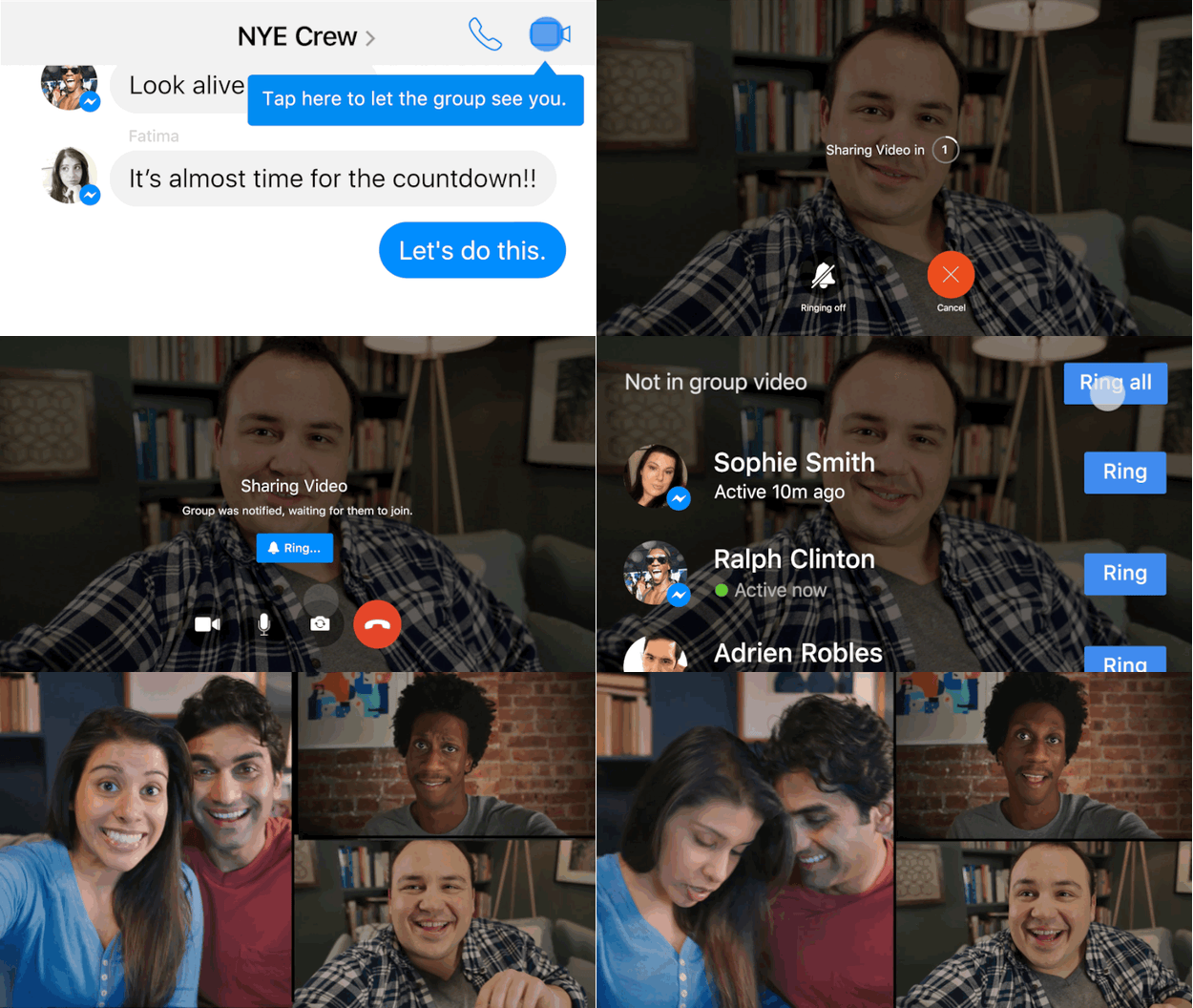
Group video chat on Messenger will support up to six videos at a time, but up to 50 people can watch and, if they so choose, join via voice, stickers and the like. A video icon will now appear at the top right of group conversations, and tapping on it will alert group members and give them the choice to join.

Group video chat is having a bit of a moment right now. Houseparty, a group video chat app by the creators of Meerkat, just raised $50 billion. And Fam, an iMessage group video app, seems to be taking off as well.

One big question about Messenger remains: how will it make money? At this point, the app is very popular — claiming over 1 billion users — but it&039;s not contributing meaningfully to Facebook&039;s bottom line. Facebook is anticipating a slowdown in ad load growth, so it may soon need to make a revenue push inside Messenger, something that lead to even more changes. But in the meantime, enjoy your video chats.

Quelle: <a href="Facebook Messenger Adds Group Video Chat“>BuzzFeed

Facebook Messenger Adds Group Video Chat

Facebook Messenger is on a roll, pushing out new features in rapid succession as 2016 comes to a close.

A week after releasing a new, Snapchat-style camera, the wildly popular messaging app is introducing group video chat, its most requested feature. Group video chat on Messenger will be available globally, both on iOS and Android, and will start rolling out Monday.

Messenger&;s impressive run of new feature releases (it&039;s also experimenting with AI-powered contextual suggestions) is evidence Facebook is unwilling to simply let it ride the coattails of the 1.79 billion user core app it&039;s inherently tied to. Instead, as Messenger ships fun new features, Facebook is proving the wisdom of spinning out the app in 2014, a move initially met with user backlash.

Group video chat on Messenger will support up to six videos at a time, but up to 50 people can watch and, if they so choose, join via voice, stickers and the like. A video icon will now appear at the top right of group conversations, and tapping on it will alert group members and give them the choice to join.

Group video chat is having a bit of a moment right now. Houseparty, a group video chat app by the creators of Meerkat, just raised $50 billion. And Fam, an iMessage group video app, seems to be taking off as well.

One big question about Messenger remains: how will it make money? At this point, the app is very popular — claiming over 1 billion users — but it&039;s not contributing meaningfully to Facebook&039;s bottom line. Facebook is anticipating a slowdown in ad load growth, so it may soon need to make a revenue push inside Messenger, something that lead to even more changes. But in the meantime, enjoy your video chats.

Quelle: <a href="Facebook Messenger Adds Group Video Chat“>BuzzFeed

Google Says It Would Not Help Build A Muslim Registry, If Asked

Drew Angerer / Getty Images

In response to questions from BuzzFeed News, Google clarified its position on President-elect Donald Trump&;s proposed Muslim registry. “In relation to the hypothetical of whether we would ever help build a &039;muslim registry&039; – we haven&039;t been asked, of course we wouldn&039;t do this and we are glad – from all that we&039;ve read – that the proposal doesn&039;t seem to be on the table,” a spokesperson for the company told BuzzFeed News.

Uber said “No,” in response to the same questions, clarifying that it would not help build or provide data for a Muslim registry. Oracle declined to respond to the same questions about a Muslim registry. The company also declined to say whether the National Security Agency was still an Oracle customer. Oracle&039;s refusal to comment comes one day after CEO Safra Catz announced that she would join the transition team for President Elect Donald Trump, while remaining at Oracle.

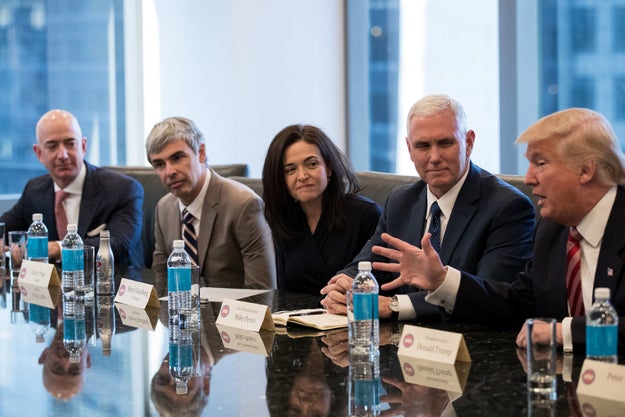
Alphabet CEO Larry Page and Catz both attended a high profile tech summit hosted at Trump Tower on Tuesday. They were joined by Facebook COO Sheryl Sandberg, Microsoft CEO Satya Nadella, Palantir CEO Alex Karp and Eric Schmidt, the chairman of Google&039;s parent Alphabet, among others. BuzzFeed News has reached out to other attendees to find out whether they would help build or provide data for a Muslim registry. Facebook and Microsoft both said that they would not help build a registry, after initially declining to comment on the record.

In 2013, Edward Snowden leaked leaked documents that described how tech companies like Google, Apple, Microsoft, and Yahoo worked with US intelligence services as part of a top secret surveillance and spying program called PRISM.

Catz went into the summit to discuss ways that Trump could better support the tech industry, Reuters reported. Her list included reducing regulations, reforming the tax code, negotiating better trade deals. Hours before the summit, Trump announced a forum of business advisors, including Uber CEO Travis Kalanick and SpaceX and Tesla CEO Elon Musk, who would meet regularly to directly advise the President. Catz&039;s name was not on the list.

During the summit, Catz brought up the subject of the cloud. According to a detailed report in Recode, Catz “characterized [the cloud] a little hyped (not a surprise from a database company)” while Page wanted to talk about infrastructure spending.

More than 1300 employees from major tech companies signed a pledge earlier this week to never help build a Muslim registry. The list of signatories includes one employee from Oracle and dozens of employees from Google.

Quelle: <a href="Google Says It Would Not Help Build A Muslim Registry, If Asked“>BuzzFeed

Governments Are Planning A Battle Over Killer Robots

Mc3 Bryan Mai / U.S. Navy

Killer robots, and whether to ban them, will be on the menu for international talks next year at the United Nations. The decision was approved on Friday by a panel that included the US and China.

The weapons under consideration, prosaically known as “lethal autonomous weapons systems,” include robots that can find a target and fire at will without a person making that decision.

Sixty-five non-profit groups united under the “Campaign to Stop Killer Robots” cause have been calling for a ban on such weapons for over three years.

The UN agreement represents a first-time handoff of the debate to governments, which include some countries who have spent billions of dollars developing such weapons.

The decision was made at the UN Convention on Certain Conventional Weapons, the group that bans or regulates the use of very new or very lethal weapons. In the past, the CCW has resolved to ban landmines, incendiaries like napalm, and blinding lasers.

Following protocol, nations agreed to form an expert group who will next year debate how killer robots could be regulated.

“It puts the power into their hand as governments,” Mary Wareham, advocacy director of the Arms Division at Human Rights Watch and coordinator of the Campaign To Stop Killer Robots, told BuzzFeed News. “Until now, it’s been a series of PowerPoints by experts and it’s governments asking them questions. And this is where they go home and go do their homework.”

Earlier this month, nine members of Congress led by Massachusetts Rep. James McGovern addressed a letter to the Secretaries of State and Defense supporting continuing the expert talks, and recommending that the US delegation support a four-week meeting next year.

“As this military technology continues to advance, we need to take a hard look at the risks it poses,” McGovern said in a statement emailed to BuzzFeed News.

Mc2 Antonio P. Turretto Ramos / U.S. Navy

Experts agree that the campaign has had swift success calling attention of the international community to a largely futuristic technology.

“If you look at the last review conference in 2011, not a single state party even mentioned autonomous weapons,” Southern Methodist University law professor Chris Jenks who spent 20 years with the US Army, then worked on international law at the Pentagon, told BuzzFeed News. “Here we are 5 years later, and it is the focus.”

But despite this success, Jenks and others believe that an outright ban on killer robots is unlikely to be the result of next year’s talks.

“I think it’s going to be a really slow process and we’re not likely to see the military powerhouses signing on to any treaty ban,” Rebecca Crootof, a lecturer at Yale Law School, told BuzzFeed News.

So far, 19 countries have called for a ban (three of those spoke at this week’s deliberations), but Crootof pointed out that the list did not include many countries — like the US, China and Russia — that have already spent billions building those weapons. The US has focused its efforts on self-driving trucks and helicopters, and drone swarms that coordinate flight among themselves.

Crootof also argues that a more reasonable approach would be to regulate how they are used, as the expert discussions could do, because of how unique this class of weapon is.

“Autonomous weapons systems are just fundamentally unlike anything else we’ve regulated before,” she said.

Others are cautiously optimistic that automated decision making, ironically, could lead to more humane warfare.

“If weapon systems can be developed which are more discriminating and more accurate than current ones, not only should they be developed, I think there is a moral imperative to do so,” Jenks said.

“I never encountered someone who felt less bad about being shot because they were shot by a human — there is being shot and there is not being shot.”

131109-N-ZZ999-176

Mcsn Hilkowski / U.S. Navy

LINK: How To Save Mankind From A New Breed Of Killer Robot

LINK: The U.S. Military Is Betting On “Smart” Drones — Lots And Lots Of Them

LINK: Drones Could Become Flying Peeping Toms, Privacy Experts Warn

Quelle: <a href="Governments Are Planning A Battle Over Killer Robots“>BuzzFeed

The Unbelievable Story Behind The Strangest Fake News Empire On The Web

BuzzFeed News; Getty

In early July, a website made to look like a real news organization published what would prove to be one of the biggest fake news hits of the US election.

WTOE5News.com was barely two weeks old when it published the hoax story, “Pope Francis Shocks World, Endorses Donald Trump for President, Releases Statement.

It improbably quoted the pope as saying that the FBI’s inability to prosecute Hillary Clinton for her emails led him to endorse Trump. The story also falsely declared that “news outlets around the world” were reporting the endorsement.

To date, the hoax has registered over 100,000 comments, shares, and reactions on Facebook, according to data from BuzzSumo. But the hoax did even better on Facebook when, in late September, the website Ending the Fed published a fake story with the exact same headline. That post has earned close to 1 million Facebook engagements and was the single biggest fake news hit of the election, according to a previous analysis by BuzzFeed News.

Ending the Fed’s copycat hoax has gone on to capture additional attention as concerns about fake news during the election have intensified. That hoax has been pointed to again and again. Yet little has been said — and is known — about the site that originated this massive fake news hit.

WTOE 5 News is no longer online, and its owner has never been identified. It has largely been overlooked as a player in the world of fake news, a flash in the ersatz pan. But a BuzzFeed News investigation has found that the site is part of one of the world’s most unique and ambitious fake news operations — a network of at least 43 websites that together have published more than 750 fake news articles.

Many of the fake stories identified by BuzzFeed News followed the exact same pattern: They falsely reported that a big celebrity was moving to a specific town or community.

None of the sites list an owner or company, and all of their domain registration records are private. Not surprisingly, the person behind one of the biggest fake news scams of all time prefers to remain hidden. To try and identify the owner, BuzzFeed News followed a trail from the fake sites to a group of now-defunct websites about topics including nurses and photos of Jennifer Love Hewitt, and eventually to a house in the small city of Atascadero, California, where a man named Justin Smithson resides.

This is the story of one of the world’s largest and most unique fake news empires, and how it gave birth to what became the iconic hoax of the 2016 election.
Steve Arrison thought his job was about get a lot easier.

Arrison is CEO of the Hot Springs Convention & Visitors Bureau for the town of Hot Springs, Arkansas. Just under 40,000 people live there, but it welcomes an estimated 3 million tourists a year. Arrison’s job is to bring in as many of those visitors as possible. In early March, a news story had the town thinking they’d landed a major VIP and tourist draw.

“Clint Eastwood is Moving to Hot Springs, Arkansas” read the headline. It was being shared like crazy by locals. Even state media was starting to call about it. But as soon as Arrison clicked the link and started reading, he realized something was off.

“I went to the web and saw that same site said Katy Perry was moving to some place in Texas, so immediately a red flag went up,” Arrison told BuzzFeed News. “A lot of people wasted a lot of time on something that was blatantly false. Information moves so quickly it takes a while for the truth to catch up to the falsehoods.”

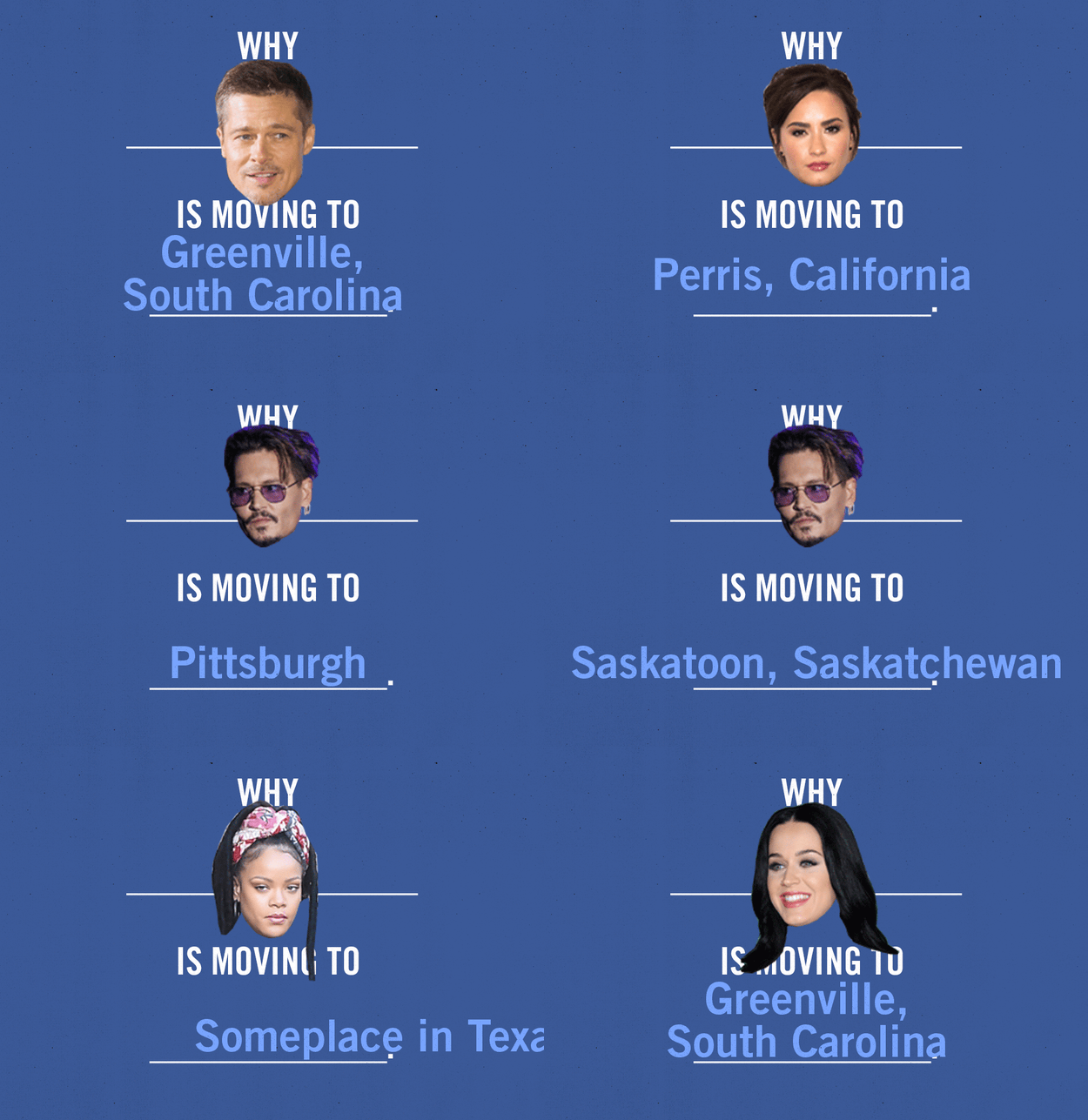
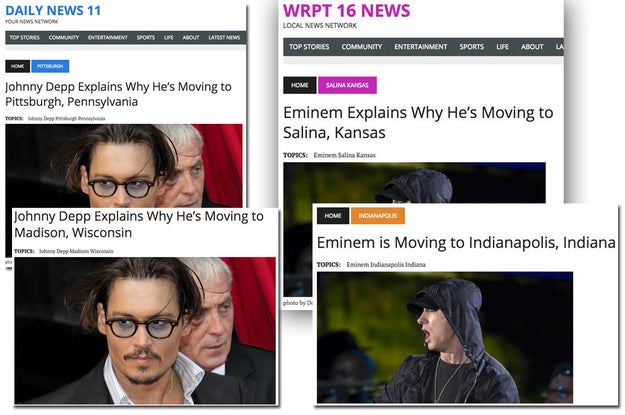
Beginning in late February, there was a sudden onslaught of news stories on Facebook that all claimed one celebrity after another was moving to an unexpected place. The stories had headlines such as “Johnny Depp Explains Why He’s Moving to Pittsburgh, Pennsylvania,” “Matthew McConaughey Explains Why He’s Moving to Greenville, South Carolina,” and “Demi Lovato Moving to Perris, California.” The list of celebrities in the hoaxes began to expand and soon Eminem, Ryan Gosling, Rihanna, Jim Carrey, Samuel L. Jackson, Justin Bieber, and Brad Pitt were moving. As the days and weeks went on, the locations also began to move farther away on the map: Vin Diesel was moving to Saskatoon, Saskatchewan. Leonardo DiCaprio was moving to Guidford, Surrey, UK.

These stories appeared on sites with legitimate-sounding news domains such as kspm33.com, mckenziepost.com, ky6news.com, and km8news.com. The design of each site was strikingly similar — often just the colors and the name were changed. The text, too, was a simple copy-and-paste effort; just the celebrity’s name and location were changed from one story to the next. It quickly proved to be an effective strategy as the stories began to spread across the internet.

One morning in early March, a staffer for venerable rumor-checking website Snopes logged on to the site’s main email account to read the tips and questions that had flowed in overnight. She saw something unusual: Roughly 25 emails that all asked about reports of different celebrities moving to different towns. The same rumor was being repeated again and again — but with different celebrities and different locations.

Kim LaCapria, a writer for Snopes, told BuzzFeed News they were initially puzzled at how “scattered” the rumors were.

“That spate of rumors was scattered across locations and individuals and basically was diffused to the point where the average social media user would be less apt to ‘see’ the rumor,” she said. “Particularly because they’re seeing it from their vantage point, and likely to think, ‘Well, who’s going to take the time to lie or make up a hoax about my tiny neighborhood?’”

The local focus ensured the hoaxes spread in targeted clusters, and meant someone in, say, Saskatoon had no idea that the same trick was being played on people in Pittsburgh.

Snopes eventually wrote a single post to warn people that no, that big celebrity was almost certainly not moving to their town. One simple clue was that the about page for each site had the exact same disclosure telling people that they were reading a “a fantasy news site.” But the stories kept coming and people kept getting fooled.

LaCapria said in an email that “the rumor was so atypically benign (clearly not a potential lie to advance any agenda or belief) that it again just sort of managed to infest tons of local areas.”

BuzzFeed News identified 342 celebrity-moving hoaxes spread across multiple, connected sites. As the scam scaled and hit more communities, local news websites began publishing debunkings to keep locals from falling for the hoaxes. News outlets in Texas, Maine, Illinois, South Carolina, British Columbia, and many other places tried to stop the stories from spreading.

Meanwhile, the growing network of fake sites began pumping out new variations. Male celebrities suddenly had very complimentary things to say about the women in specific towns. Celebrities began getting flat tires in obscure places, naming somewhat obscure locales as their favorite vacation spots, and buying homes in unexpected communities. One of the strangest variations was a series of at least 11 hoax stories claiming that Justin Bieber was building megachurches in places such as Spokane, Washington.

Another variation moved away from specific celebrities and instead falsely claimed that big film sequels were being shot in different locations: Father of the Bride III, a Harry Potter spinoff, a new Star Wars Film, a new Pretty Woman. They were all suddenly in production and coming to your town. BuzzFeed News identified 152 fake news articles claiming that major film sequels were being filmed in different locations.

The hoaxes combine two important elements that help them spread: location and name recognition. Many people saw a story about their town that also included a celebrity or major film and couldn’t help but share the link on Facebook, thereby driving traffic to sites littered with ads.

An analysis of the sites&; content, done using the BuzzSumo, found that while these hoaxes never went hugely viral, they managed to consistently generate tens of thousands of shares, comments, and reactions on Facebook, which likely led to strong traffic and revenue.

BuzzFed News began internally calling this the “local viral scam” because the fake stories went viral on a local basis but never bubbled up higher than that.

LaCapria of Snopes admitted she has grudging respect for the way this approach combined someone or something famous with different locations to spark social shares.

“It’s a very unique thing, the execution was so different,” she said. “It only works if you plug in a relevant celebrity to the area. It was really well targeted.”

It was also proving lucrative enough to keep expanding. BuzzFeed News was only able to identify the existence of one site, McenziePost.com, in February. But at the end of April there were more than 20 nearly identical fake news sites. By June at least 27 were in operation. That was also the month WTOE 5 News was registered. A few weeks later, in a departure from the template of previous fake news articles, that site published the pope endorsing Trump story. It earned over 100,000 shares, comments, and reactions on Facebook, making it the network’s fourth biggest hit on the platform, according to an analysis done using BuzzSumo.

Not long after, on July 19, yet another newly registered site published the exact same story with a twist: This time the pope endorsed Hillary Clinton. (The site that hosted it, KYPO6, it is no longer online but used the same template and language as other sites in the network.)

That story performed even better, generating over 200,000 shares, comments, and reactions on Facebook, according to BuzzSumo. (Both stories were published before the party conventions.)

A few other websites picked up the fake papal story fake story in July, but none saw significant engagement. The Clinton story, in spite of being a bigger hit on Facebook, did not inspire copycats. For the most part, those two hoaxes came and went, and the network of fake sites went back to their core focus of churning out local viral stories.

Then, as the election kicked into high gear in September, Ending the Fed published a hoax story with the exact same headline and scored a massive hit. (Ending the Fed is an anonymously run website that previously attracted attention when Facebook promoted one of its false stories as a trending topic.)

Perhaps inspired by the success of that copycat story, the papal hoax story made yet another appearance on one of the local viral fake sites, Channel16News.com, in mid-October. But it failed to gain much traction on Facebook.

Since then, the network of fake sites has continued to grow, reaching at least 44 sites. The most recently registered domain identified by BuzzFeed News, DailyNews5.com, was bought on Nov. 3. That’s a few days prior to the US election — and before alarm bells about fake news began going off in the media and among political leaders.

But rather than completely shut down the operation and move on in order to avoid attention, the sites continue to push out new hoaxes. A fake story about a new Star Wars film being shot in Roswell, New Mexico, went online just this week, according to data in BuzzSumo. Whoever is running the sites appears to be unconcerned by the outrage over fake news. Or perhaps the sites were too lucrative to shut down? We wanted answers. So BuzzFeed News decided to follow the money.

Though some are now offline, nearly all of the sites in this fake news network contained the same Google AdSense ID in their source code. This means the money earned each month from ads placed on the sites is going into a single account. That ID has also appeared on other websites over the years, from TehYouTube.com and NursingJobResources.com to JenniferLoveHewittPics.com and KimKardashianPics.com. Google does not publicly list the owners of AdSense IDs, but the aforementioned sites were publicly registered by the same person: Justin Smithson, who lived in Missouri at the time, according to historical registration data from Whoisology and DomainTools. The Justin Smithson who resided at that Missouri address now lives in Atascadero, California, according to records obtained in a LexisNexis search. (Go here to view a collection of documents linking Smithson and the network of fake sites to the AdSense ID.)
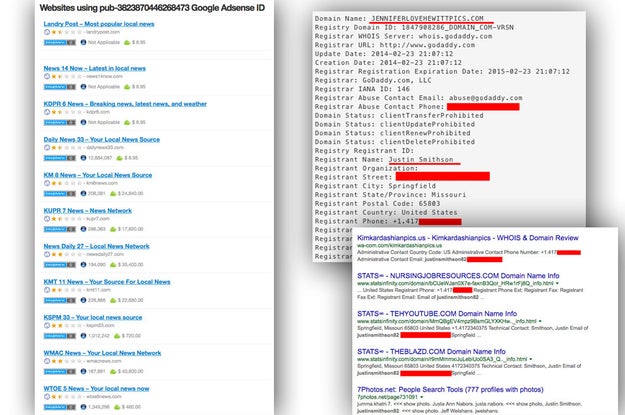
On the left is a list of some of the websites connected via a single AdSense ID. On the right is a public domain registration record for JenniferLoveHewittPics.com and other sites registered by the same Justin Smithson.

CuteStat / DomainTools / Google

Smithson is a pilot in his thirties who works for a charter airline in San Luis Obispo. Over the years he has registered and launched many websites. At some point, it appears that Smithson signed up for Google AdSense in order to place ads on his websites. As he launched new sites, Smithson continued to use that same AdSense code, leaving a trail that eventually connected him to the network of fake news sites. (There is of course a chance that Smithson registered those sites on behalf of someone else, who then added AdSense and went on to later launch the network of fake sites. Or that Smithson handed over his AdSense account to someone else.)

In addition to being an experienced webmaster, public Facebook comments from Smithson also indicate he has above-average knowledge of computers and the internet. These two public Facebook comments (which were later deleted) show him sharing details about his personal computer’s processing power, as well as information about the fast internet connection he has at home:
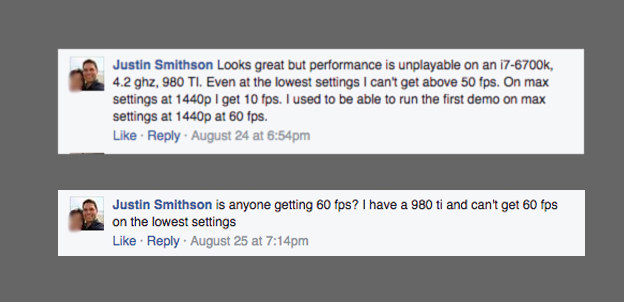
Facebook

Domain registration records also show that Smithson continues to register new domains using the same email address he used for JenniferLoveHewittPics.com and others. At the end of November, for example, he registered FoxBusiness.xyz. In September he bought AlexJones.xyz. As with the fake news sites, those domains now have their ownership information hidden.

In early October, BuzzFeed News contacted Smithson by email to request an interview about his fake news websites. “I&039;m guessing this is some kind of spam/scam but if not… You&039;ve got the wrong person,” he replied.

Smithson did not reply to subsequent emails, including one on Oct. 5 requesting a meeting at noon. On Oct. 6, BuzzFeed News visited his place of work and his Atascadero home, where we found him on the front porch with another man. When they men saw us approaching with a camera in hand, they went inside.

We called out to say we wanted to talk to Justin, and one of the men yelled from a window that there wasn’t anyone there by that name. He threatened to break our camera, so we left.

Smithson did not reply to four subsequent emails, texts, and phone calls. Nor did he reply this week when BuzzFeed News sent him detailed questions and shared the evidence that points to him as the owner of perhaps the world’s biggest fake news operation. (Aside from any state-sponsored efforts, that is.)

As of this writing, at least 20 of these websites are still online. Their stories are still being shared, and they still publish new fake news stories that fool people and earn money for that same AdSense account. LaCapria of Snopes says she still sees new variations of the local viral scam from time to time.

“It still seems to be living on — but most people have gotten past asking us if it’s true that a celebrity is moving to their town,” she said.

Quelle: <a href="The Unbelievable Story Behind The Strangest Fake News Empire On The Web“>BuzzFeed


Federal Law Now Guarantees Your Right To Leave A Bad Yelp Review

AP/Richard Vogel

Federal law now guarantees the right to leave a bad Yelp review, after President Obama signed the Consumer Review Fairness Act on Wednesday.

The law, which passed the Senate in November with bipartisan support, comes after years of legal efforts to overturn so-called “gag clauses” in contracts, which consumer advocates say are used by businesses to stifle free speech. The clauses, which have been included in the fine print of sign-up forms and purchase agreements, forbid public criticism of companies by their customers.

Such clauses are banned under the new law, which also prohibits businesses from imposing a penalty or fee on a client if they write a bad review. Consumer advocacy groups and other supporters of the law are celebrating its passing.

Yelp, whose users have been sued by companies over negative reviews, said the Act “gives Americans nationwide new guaranteed legal protections when it comes to sharing these honest, first-hand experiences.”

Paul Levy, an attorney with Public Citizen who has represented a number of consumers who have been sued over gag clauses, said businesses have used the legal fine print to “suppress truthful criticism and skew the marketplace of ideas by allowing only positive reviews and suppressing negative ones.”

“Non-disparagement clauses not only prevent consumers from expressing themselves but also deprive prospective customers of balanced and truthful information on which they can base their decisions about where to do business,” he said. “What’s worse, most consumers are unaware when they have agreed to a non-disparagement clause curtailing their First Amendment rights.”

Levy represented one of the first consumers to be sued by a company over a negative review. A company called KlearGear claimed a couple in Utah owed a debt for violating its terms of service by writing the review. The couple sued KlearGear in 2012 arguing they didn&;t owe any debt to the company and received a default judgement including over $300,000 in damages when the company never appeared in court.

In another case in 2014, a Wisconsin woman filed a lawsuit against Accessory Outlet, an online mobile retailer, after they demanded she pay $250 for violating its terms of sale. The company never appeared in court to defend its claims and the court granted the woman a default judgment in 2015, including triple the damages and attorneys fees.

California made gag clauses in contracts illegal in in 2015. Any business that violates the law will be fined up to $2,500 on its first violation and $5,000 for following violations. Consumers can receive up to $10,000 if they can prove the business acted recklessly in violating the law.

LINK: Yelp’s Warning: This Dentist Might Sue You For Posting A Negative Review

LINK: Someone Is Filing Wild Lawsuits Aimed At Negative Online Comments

LINK: Gag Clause 2.0: Companies Tell Customers To Keep Quiet If They Want To Cancel

LINK: Court Upholds The Right To Leave A Bad Yelp Review

Quelle: <a href="Federal Law Now Guarantees Your Right To Leave A Bad Yelp Review“>BuzzFeed

Trump's Election Boosted Demand For Palantir Shares, Investor Says

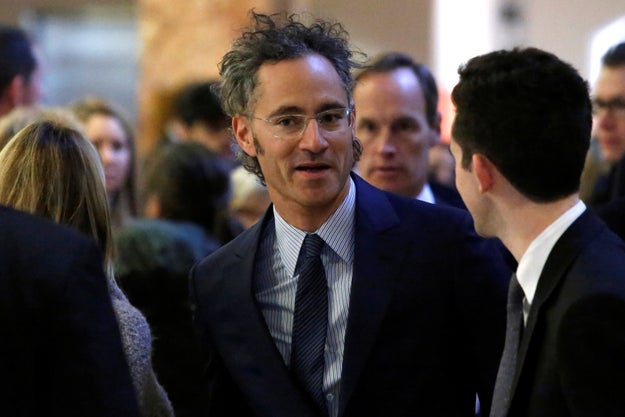
Palantir CEO Alex Karp at Trump Tower on Wednesday.

Andrew Kelly / Reuters

The market for stock in Palantir Technologies, the Silicon Valley data analysis company that does much of its business with the federal government, was in the doldrums for much of 2016. But since the election of Donald Trump — whose closest tech adviser is Palantir chairman Peter Thiel — demand seems to have picked up, one investor and middleman in that market has told BuzzFeed News.

“Since the election, we’ve seen an uptick in interest in owning Palantir shares,” said Jared Carmel, a managing partner of Manhattan Venture Partners, a boutique investment bank and fund manager that arranges trades in startup shares, and which owns a stake in Palantir.

Palantir&;s elevated stature was on display this week when its CEO, Alex Karp, joined the tech industry&039;s biggest players in a pilgrimage to Trump Tower. Others in the room were top brass from Apple, Google, Microsoft, Amazon, and Facebook — public companies each valued in the hundreds of billions of dollars. Karp&039;s Palantir, which is privately held, has a relatively small valuation of $20 billion.

Given Palantir&039;s roster of customers — which includes the FBI, the CIA, the Defense Intelligence Agency, the Securities and Exchange Commission, Immigration and Customs Enforcement, the military&039;s Special Operations Command and other federal agencies — this face time with Trump and his closes advisors was particularly notable.

Palantir, Carmel said, now appears to be in a strong position to expand its work with the federal government. Trump “is nepotism 101. Any additional contracts that I imagine they could get, they will get.”

For most of 2016, the market for Palantir stock was “dead,” Carmel said. Former employees of Palantir struggled to cash out of the stock options that formed a major part of their pay packages, BuzzFeed News reported in October. Carmel said a BuzzFeed News article in May, which revealed Palantir had lost blue-chip clients and was struggling to stem staff departures, had contributed to the market lull. But things apparently turned around, at least a little bit, in early November.

Investors including hedge funds, family offices, and venture capital funds have recently inquired about buying Palantir shares, Carmel said. Manhattan Venture Partners helps investors buy shares of tech startups that it believes have a good chance of going public soon, and it manages funds that invest in those companies.

Backing off his longtime reluctance to plan for an IPO, Karp said in October that he was “now positioning the company so we could go public. I&039;m not saying we will go public, but it&039;s a possibility.”

A Palantir spokesperson did not immediately respond to a request for comment.

It&039;s not just Manhattan Venture Partners that is getting interest in Palantir stock. This week, in a private Facebook group for Palantir alumni, one former employee said he had learned that EquityZen, a firm that arranges small sales of private company shares, was fielding investor demand for Palantir shares.

“I&039;m sure some of you guys got an email but EquityZen has some investor interest and has asked anyone that would like to sell to fill out their profile with # of shares, desired price, etc,” the former employee wrote. Contacted by BuzzFeed News, EquityZen declined to comment.

“I would post more details,” the former Palantir employee wrote, “but in case there&039;s a BuzzFeed troll (hi William), DM me if you didn&039;t get the email and I can gladly send over.”

Quelle: <a href="Trump&039;s Election Boosted Demand For Palantir Shares, Investor Says“>BuzzFeed

Microsoft: "We Wouldn’t Do Any Work To Build A Registry Of Muslim Americans”

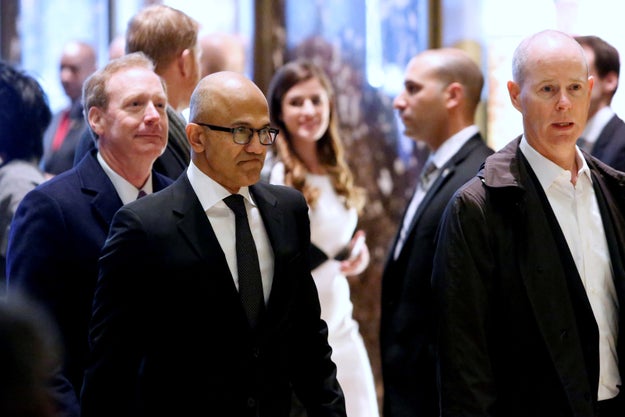
Microsoft CEO Satya Nadella enters Trump Tower

Andrew Kelly / Reuters

In response to questions from BuzzFeed News, Microsoft spokesperson Frank X. Shaw clarified his company&;s position on the use of customer data. “We’ve been clear about our values. We oppose discrimination and we wouldn’t do any work to build a registry of Muslim Americans,” said Shaw.

The company&039;s statement comes a day after its CEO, Satya Nadella, attended a tech summit hosted by President-elect Donald Trump, and at a moment many when tech leaders are under increasing pressure — from both their own employees and the public — to explain how their companies would respond to government requests from the incoming administration, including being asked to build a Muslim registry.

Microsoft initially declined to comment on hypotheticals when BuzzFeed News asked earlier this week, pointing instead to a blog post by Microsoft&039;s president and chief legal officer Brad Smith written the day after the presidential election. The company goes into more details about its principles and policies related to law enforcement and national security requests in its digital trust report.

Facebook also initially would not comment on the record about the Muslim registry, but later told BuzzFeed News: “No one has asked us to build a Muslim registry, and of course we would not do so.” This week employees from Microsoft, Facebook, and other tech companies signed a pledge not to help build a Muslim registry and fight any illegal or unethical data practices.

During his campaign, Trump repeatedly stated that he wanted to build a database of Syrian refugees and made bigoted remarks about Muslims. When asked about a Muslim registry, Trump would not deny that he wanted one, but said his priority was the database of Syrian refugees.

Microsoft has sued the government four times recently to challenge requests for information and Microsoft&039;s ability to be transparent about those requests. One lawsuit challenged a non-disclosure order attached to a National Security Letter. The case resulted in the government withdrawing the letter. In 2013, documents leaked by Edward Snowden showed that Microsoft collaborated with U.S. intelligence service to allow access to communication from users as part of as part of a top-secret program called PRISM.

Yesterday&039;s meeting, which was organized by Trump&039;s billionaire backer, venture capitalist Peter Thiel, and Trump&039;s son-in-law, Jared Kushner, covered jobs, technology&039;s impact on the economy, and possibly repatriation of offshore cash.

Quelle: <a href="Microsoft: "We Wouldn’t Do Any Work To Build A Registry Of Muslim Americans”“>BuzzFeed