Cops In Arkansas Are Trying to Solve A Murder With Amazon Echo Recordings

The Amazon Echo speaker you got for Christmas may have privacy concerns in the package — the device, whose always-listening AI is one of its key features, could record and store information you wouldn&;t want law enforcement to access.

A report today from The Information details how police in Bentonville, Arkansas, have issued a warrant for the audio records of the Amazon Echo speaker belonging to James Bates, a suspect in an ongoing murder investigation. Amazon has handed over Bates&039; purchase history and account information to law enforcement, but it has declined to release his speaker&039;s records.

In February, police arrested Bates, age 31, and charged him with the murder of Victor Collins, age 47, according to local news. According to a medical examiner, Collins was strangled in a hot tub. Bates pleaded not guilty in April and made bail shortly after, but the case will go to trial in early 2017. Both men worked for Walmart, which is headquartered in Bentonville.

The Echo speaker and its embedded virtual assistant Alexa work by continuously recording ambient conversation, even when a human isn&039;t directly interacting the speaker. That&039;s how it&039;s able to activate at the call of “Alexa.” While Amazon does not save records of ambient conversations, anything you say to the speaker after activating it is stored on Amazon&039;s servers.

Bentonville Police said that music had been streaming through the night of the murder, according to The Information, which means the speaker might have been inadvertently activated. It&039;s these recordings that police are after.

Amazon doesn&039;t seem willing to budge. In a statement, the company told BuzzFeed News, “Amazon will not release customer information without a valid and binding legal demand properly served on us.”

Police have made extensive use of cell phone records to establish a timeline for the murder, though they have been able to take some data from the Echo without Amazon&039;s help, The Information reports.

The speaker and its virtual assistant continue to grow in popularity, so Alexa will be recording more conversations in more homes and therefore posing privacy concerns in more civil and criminal cases. Amazon sold out of the Echo during the holiday season, despite increased production. And customers rave about Alexa, going so far as to propose to her.

The Bentonville police did not immediately respond to a request for comment.

Quelle: <a href="Cops In Arkansas Are Trying to Solve A Murder With Amazon Echo Recordings“>BuzzFeed

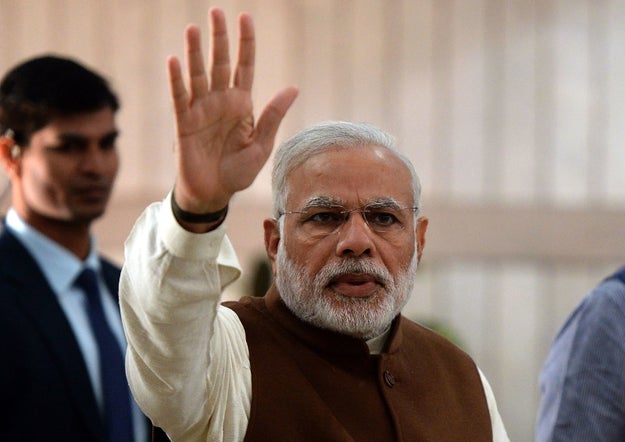
Modi's Political Party Creates Abusive Social Media Campaigns And Breeds Internet Trolls, Claims New Book

Prakash Singh / AFP / Getty Images

India’s ruling political party directly masterminded systematic social media trolling campaigns against prominent Indian journalists, political opponents, and celebrities, a new book claims.

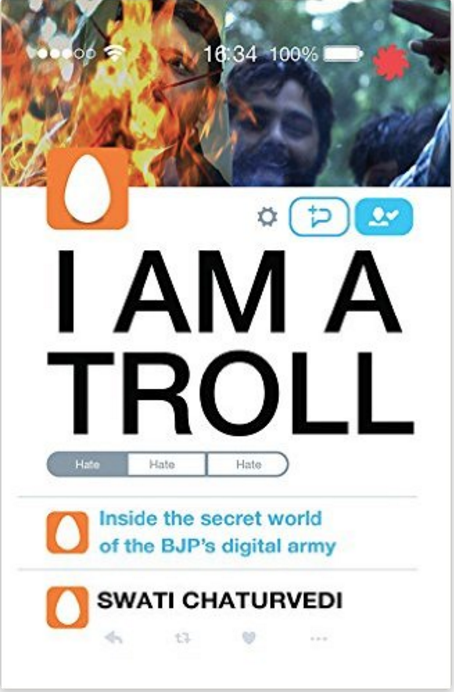
The book, titled I Am A Troll, written by journalist Swati Chaturvedi, explores the relationship between abusive social media accounts in India, and the Narendra Modi-led Bharatiya Janata Party (BJP).

Through anonymous interviews with over 30 members from the BJP&;s social media cell, the book claims that volunteers – both paid and unpaid – operating out of the cell located at the party&039;s central Delhi headquarters, work full-time to bombard Twitter with hashtags to make them trend, lob sexual abuse threats at prominent Indian liberals and journalists, and seed WhatsApp – the Facebook-owned instant messenger used by over 160 million Indians – with hate speeches and propaganda.

The book, written by Indian journalist Swati Chaturvedi, features anonymous interviews with over 30 BJP social media volunteers.

Juggernaut

Sadhavi Khosla, is a 37-year-old marketing professional who spent two years as a full-time volunteer with the cell but stepped down after she was ordered to tweet “slanderous claims” about prominent Indian journalists and Bollywood celebrities.

“It was a never-ending drip feed of hate and bigotry against the minorities, the Gandhi family, journalists on the hit list, liberals, anyone perceived as anti-Modi,” Khosla says in the book. “I simply could not follow [the] directions anymore after I saw rape threats being made against female journalists.”

“My state of mind is calm,” Khosla told BuzzFeed News when asked about her decision to speak up about her experience. “I followed my principles and my conscience.”

The BJP did not respond to BuzzFeed News&039; request for comment on the book, but Arvind Gupta, who runs the party&039;s IT cell, dismissed Khosla&039;s claims and told the Indian Express that she “supports the Congress”, the BJP&039;s opposition party. He also said that the author of the book had “vested interests” and said that the BJP “never encouraged trolling.”

Right-wing abuse on Indian social media grew substantially in the lead up to and since the 2014 Indian elections when Modi, a polarizing politician known for his close ties to Hindi supremacist group RSS, became the Prime Minister of the country. His online followers are labelled as the Internet Hindus for their abusive discourse against anyone who criticises Modi and the BJP.

In 2015, Modi drew criticism for organising a gathering of 150 social media supporters including Twitter users who had sexually abused women online.

“I know that the BJP is vindictive,” Khosla told BuzzFeed News when asked whether she feared any repercussions after deciding to speak out. “They will definitely try and harm me. I know that.”

Quelle: <a href="Modi&039;s Political Party Creates Abusive Social Media Campaigns And Breeds Internet Trolls, Claims New Book“>BuzzFeed

Here Are 10 Times Tech Failed In 2016

Here Are 10 Times Tech Failed In 2016

Gustave Courbet, “A Burial At Ornans” (1849)

Via wikiart.org

Not every startup or tech product can succeed. And for these businesses, the venture capital finally ran out this year. Or people weren’t signing up. Or the product didn’t work. There are all kinds of reasons why some of your favorite apps, websites, gadgets, and services didn’t make it to 2017. For startups especially, failure isn’t uncommon; that usually happens 20 months after their last funding round and after they’ve raised $1.3 million, according to CB Insights.

So as Silicon Valley likes to say: Fail fast, fail often, and onto the next great disruption.

Pebble / Via blog.getpebble.com

1. Pebble

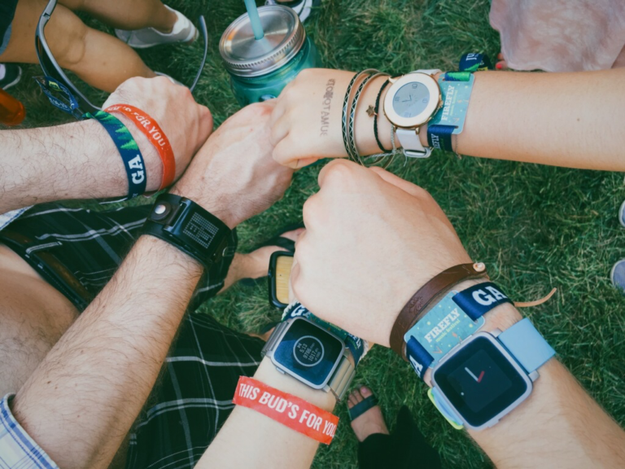
Pebble was the first company to make smartwatches mainstream by raising $10 million in 2012, and then $20 million in 2015, on Kickstarter. It sold more than 2 million watches. But it appears to have been ahead of its time. The wearable business in general didn’t take off as hoped, and Pebble struggled to raise money from investors. In December, the startup sold key parts of its business, including software and patents, to Fitbit, one of the few wearable makers still standing. One of the few solaces for early adopters: Fitbit says it won’t kill off Pebble’s services until 2018.

2. SpoonRocket

The on-demand meal and meal-kit business has been hot — take Blue Apron, which is valued at $2 billion and on track to deliver $1 billion in annual sales — but it’s also produced a few casualties. SpoonRocket, which delivered ready-made meals for about $10 under 10 minutes, got started in Y Combinator in 2013 and raised more than $13 million. But customers were left hungry when the startup shut down in May, saying that it couldn’t raise enough money to keep going.

youtube.com

3. Vine

Six seconds sounds short. But that turned out to be just long enough for some of the weirdest, funniest, most creative videos on the internet. We have Vine to thank for “eyebrows on fleek” and the eternal question “What are thoooose?” Vine’s existence as we know it, sadly, was short-lived: Twitter, which bought it for a rumored $30 million right before it officially launched in 2012, said in October it would shut it down to focus on live video instead. There is, however, a potentially happy epilogue: the service may come back to life, albeit in a different form, in 2017. Vine said this month it was working on a pared-down version of the app, Vine Camera, to be available in January.

Nicole Nguyen / BuzzFeed

4. Samsung

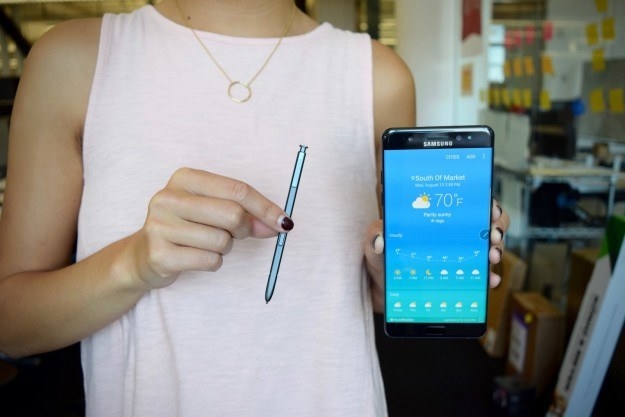
Some gadgets went up in metaphorical flames this year. Samsung’s flames, on the other hand, were literal. If you hopped on a plane this fall, you couldn’t miss the nationwide ban on the Galaxy Note7, which was at first widely heralded as one of the best smartphones ever made. That praise evaporated as customers discovered that their batteries tended to overheat and explode. Samsung then made the unprecedented decision to recall them all and permanently discontinue the gadget. But that wasn’t the end of the Korean tech giant’s terrible, horrible, no good, very bad year. It also recalled almost 3 million washing machines whose tops were blowing off and causing injuries, including — ouch — at least one broken jaw. Better luck in 2017?

Via talkshow.im

5. Talkshow

So many messaging apps tried to go up against Facebook and Snapchat in 2016, but the 800-pound gorillas (a collective 1,600-pound gorilla?) made it next to impossible for newcomers to gain traction. One example was Talkshow, developed by a former Twitter head of product, which displayed group messaging threads in public. In April, Mashable called it “the latest viral app the Internet is freaking out about.” By November, the company was calling it quits.

6. Paper

Two years ago, Facebook introduced Paper, a sleek and praised iOS app for reading articles. But Facebook went on to build Instant Articles, which let people read stories directly in the News Feed of Facebook’s original app. This summer, the company shuttered the standalone app, saying that “we’ve tried to take the best aspects of it and incorporate them” into the main app.

Scanadu / Via indiegogo.com

7. Scanadu

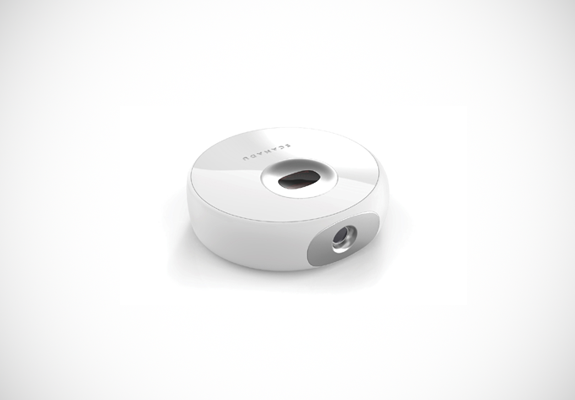
The pitch was straight out of Star Trek: a handheld “tricorder” that gave you your vital signs, from blood pressure to temperature, in seconds. Silicon Valley startup Scanadu, founded in 2010, was testing a prototype of its Scout device with the Scripps Translational Science Institute, and had raised $1.5 million from enthusiastic backers on Indiegogo. But in December, it notified customers that next year it will shut down the devices, which went from $149 to $269, to comply with federal regulations. That unexpected turn of events birthed a hashtag: .

Via web.archive.org

8. Washio

It sounded like a great idea for anyone who never learned how to do laundry, didn’t have time, or couldn’t scrounge up enough quarters. Washio launched in 2013 with backing from investors like Nas and Ashton Kutcher, and a brave, bold mission to “demolish laundry.” But despite reportedly dry-cleaning more than 1 million items, and washing and folding 21,000 tons of clothes, the business dried up and shut down in August.

Via blog.sunrise.am

9. Sunrise

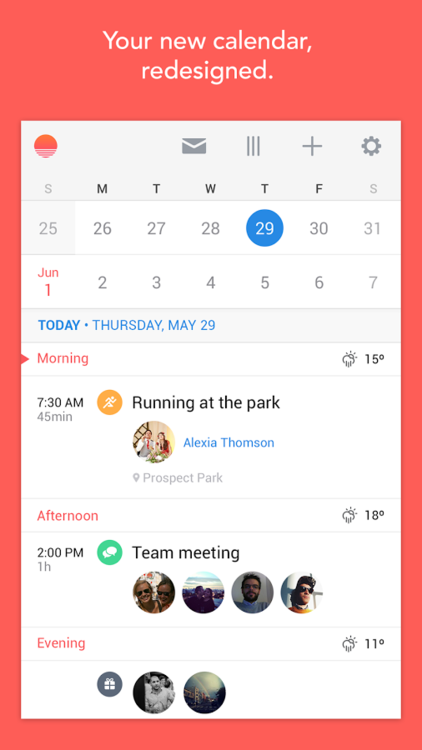
Sunrise didn’t do anything wrong. It was a popular and easy-to-use calendar app. But after Microsoft bought it for more than $100 million, it was only a matter of time before it, er … sunset. The standalone app shut down in August, and its functions folded into Outlook’s email app. If that doesn’t cut it for you, here are a bunch of alternatives that are (almost) as good.

10. Shuddle

Busy parents used San Francisco-based Shuddle, which launched in 2014, to transport their kids around town, knowing that the drivers had undergone extensive background checks and could be tracked in real time. But the service abruptly ran out of money, and closed down in April.

Quelle: <a href="Here Are 10 Times Tech Failed In 2016“>BuzzFeed

Russian Visa Center In US Target Of Apparent Hack

Kirill Kudryavtsev / AFP / Getty Images

A database containing the personal information of thousands of Americans who have applied for Russian visas in the United States appears to have been hacked over the holiday weekend.

The person who claims to have breached the computer systems of the Russian Visa Center, who goes by the name Kapustkiy, shared a screenshot of the stolen information with BuzzFeed News. The screenshot contains the names, email addresses and phone numbers of dozens of people. Kapustkiy, who said he is part of a group called New World Hackers that assisted with the breach, claims he has the information tied to thousands more, but will not publicly disclose them. “I want administrators to secure their things better and understand the consequence of a data breach,” he said in a Twitter direct message.

Kapustkiy describes himself as an ethical hacker who finds vulnerabilities in websites. He said he is 17 years old.

BuzzFeed News attempted to contact every person listed in the screenshot. Five people confirmed that they have applied for Russian visas.

John Shoreman, an attorney for the Russian Visa Center, told BuzzFeed News that the personal contact information of thousands of visa center customers was likely exposed. Run by an American company called Invista Travel Logistics, the visa center helps Americans secure necessary travel documents to Russia, including setting up appointments for applicants to meet with Russian consulate officials. Shoreman said the appointment scheduling system was likely targeted.

“The security services are saying that the visa website itself was not hacked, but the calendar may very well be the subject of a hacking,” Shoreman told BuzzFeed News. “ILS shares a calendar of appointments with the consulate office of the Russian embassy and apparently that’s where these 3,000 names came from, it came from a calendar of appointments.”

Shoreman confirmed that at least some of the customers listed in the screenshot are Russian Visa Center customers, but he does not know if all the them are. The American customers swept up in the data breach could also be customers of other organizations.

“Certainly there are customers of ILS on that screenshot, I know that for a fact,” Shoreman said. “The question is are they all customers of ILS or are they people that are either customers of the embassy or customers of other visa expeditors who also have access to the system.”

The Russian Visa Center, which operates in Washington, New York, San Francisco, Seattle, and Houston will contact all of its customers — numbering in the tens of thousands — in the next 48 hours to notify them of the data breach, Shoreman said. Customers will be advised to change their email passwords and to look out for phishing scams.

According to Shoreman, the Russian Visa Center is also in the process of notifying the FBI and the Department of Homeland Security.

When reached over the holiday weekend, a spokesperson for the Russian embassy referred BuzzFeed News to the Russian Visa Center.

On the night of the hack, Kapustkiy claims he notified Homeland Security’s Computer Emergency Readiness Team, known as US-CERT, an organization that analyzes and responds to cyber threats. Kapustkiy provided BuzzFeed News with what appears to be a screenshot of a confirmation email from US-CERT. The Department of Homeland Security did not respond to a request for comment.

Quelle: <a href="Russian Visa Center In US Target Of Apparent Hack“>BuzzFeed

Social Media Reportedly Blocked In Turkey After Horrific ISIS Video

Access to Facebook, Twitter, and YouTube has reportedly been blocked in Turkey.

The move comes after a group known as the Aleppo Province of the Islamic State reportedly posted a video Thursday showing two Turkish soldiers being burned alive near Aleppo.

Some Internet users in Turkey say they still have access to the social networks, however, and it&;s possible they&039;re using VPNs as a workaround.

Turkey&039;s government is known for restricting its citizens&039; internet access during times of crisis; it most recently throttled access to these sites earlier this week, after a Turkish police officer assassinated Russian Ambassador to Turkey Andrey Karlov in an art gallery in Ankara, claiming to want revenge for the Syrian Civil War.

In July, the UN Human Rights Council passed a non-binding resolution in opposition to the practice of limiting access to the Internet and sites like Facebook and Twitter, a move that Turkey supported at the time.

Google did not confirm reports that YouTube access has been blocked in Turkey, pointing to this site where the search giant reports service disruptions.

Facebook and Twitter did not immediately respond to requests for comment.

This is a developing story. Check back for updates and follow BuzzFeed News on Twitter.‏

Quelle: <a href="Social Media Reportedly Blocked In Turkey After Horrific ISIS Video“>BuzzFeed

Blac Chyna Is Promoting A Shady Student Loan Ripoff On Instagram

Blac Chyna Is Promoting A Shady Student Loan Ripoff On Instagram

@blacchyna / Via instagram.com

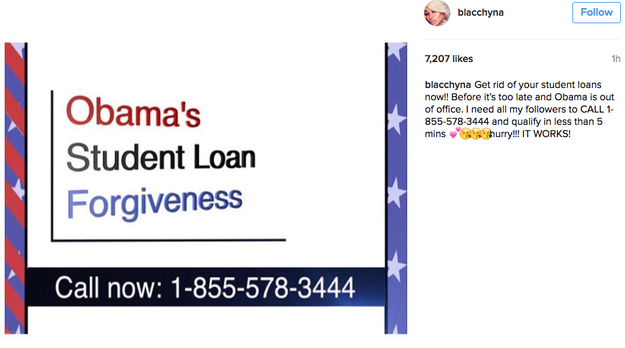
Blac Chyna is using her vast social media presence to promote a deceptive and wildly expensive student loan forgiveness scheme, telling her 10.6 million Instagram followers they can call a phone number to “get rid” of their student loans “before it&;s too late and Obama is out of office.”

It&039;ll take 5 minutes, she says. “Hurry&;&033;&033; IT WORKS&033;”

It doesn&039;t. The Student Relief Center, the company in Chyna&039;s post, is one of hundreds of fly-by-night student loan operators that use social media to target borrowers. Via Facebook and Instagram, most promise to help students have their loans wiped away.

In reality, they charge hefty fees to do what anyone can do for free: sign up for the Education Department&039;s income-based repayment options, which fix student loan payments at a percentage of monthly earnings.

By charging hundreds or thousands of dollars for doing this, the student loan relief schemes extract money from people already struggling with debt. But they can be lucrative for the people promoting them — based on typical rates, Chyna could have been paid as much as $35,000 for her post promoting the scheme, according to Mike Heller, the president and CEO of Talent Resource, a celebrity lifestyle marketing company.

As Americans grapple with more than a trillion dollars of student debt, schemes targeting borrowers looking for a way out have become widespread. “Have you seen ads offering help with your federal student loans that seem too good to be true? They probably are,” reads a warning from the Secretary of Education about student debt relief scams.

youtube.com

The fees charged to former students by the company in Blac Chyna&039;s Instagram post — which was not marked as an ad — are astronomical, and carefully disguised. When BuzzFeed News called the Student Relief Center number yesterday, a representative said the company could arrange a “graduated payment plan,” where a borrower paying off a $20,000 loan would make two payments of $385, then pay $162.99 a month for 36 months, then begin paying $113 monthly.

But what they didn&039;t say, until further prodding, was that much of that money would go to the middleman, not loan repayments. Baked into the Student Relief Center&039;s plan were well over $2,200 in fees paid to the company, including a charge of $49.99 a month for 36 months, long after any paperwork had been filed with the government.

After the three-year time period, the representative said, the $49.99 monthly fees would become “optional” — though customers would be automatically enrolled in the payments.

Student debt forgiveness schemes like the Student Relief Center have come under increasingly harsh scrutiny in recent years. They charge sky-high fees, at times in violation of state law, for services that often involve little more than submitting free forms to the government. At worst, some companies charge hundreds and even thousands of dollars and then disappear without performing any services at all.

Representatives for Blac Chyna and the Student Relief Center did not respond to a request for comment from BuzzFeed News. The reality TV star&039;s initial Instagram ad was deleted on Wednesday; another ad was posted on Thursday afternoon.

Quelle: <a href="Blac Chyna Is Promoting A Shady Student Loan Ripoff On Instagram“>BuzzFeed

BuzzFeed's Favorite Tech Things Of 2016

All the apps, hacks, habits, and products that made our lives a little better in 2016.

Here at BuzzFeed Tech, we&;re trying new stuff constantly. Companies send us products unsolicited, coworkers and friends and far-flung relatives corner us at parties to implore us to write about whatever thing they just discovered, our inboxes runneth over with PR pitches about the latest and greatest. But only a tiny fraction of that stuff ever makes it our daily routines and changes the way we live our lives. That&039;s what this list is — all the things that made us happier, safer, saner, more productive, more connected in 2016, and that can maybe make you feel the same next year.

Organizing my apps by color

Organizing my apps by color

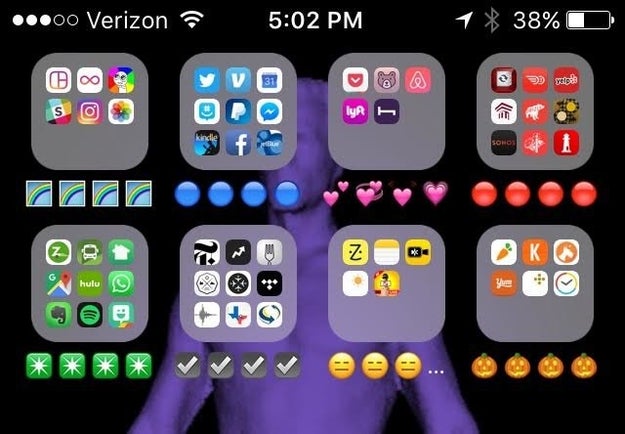
I think it&039;s really cool that, if you put your bank app and your personal savings app into a folder on your iPhone, iOS will automatically name that folder “Finance.” However, my digital life isn&039;t really easily organized into categories like “Finance,” “Health,” “News,” or “Games,” and anyway, when I&039;m looking for, say, Instagram, I don&039;t want to have to remember if that&039;s under “Social” or “Photos.” My big breakthrough this year was realizing that, actually, when I think “find Instagram” the first thing my brain thinks is: rainbow. Just like when I think “find Twitter” I think “blue,” or when I think “find Google Maps” I think “green.” And so I organized my apps into folders by color, which sounds neurotic, but is actually just intuitive. Now, Lyft, Airbnb and Pocket are all saved in a folder titled “&;&x1F495;&x1F495;&x1F495;” while Zipcar, Nextdoor and Whatsapp are in a folder titled “&;&x1F34F;&x1F34F;&x1F34F;.” Sometimes other people notice this system when they glance at my phone and look at me like I&039;m crazy, but I once met an Apple designer who does it too, so I&039;m pretty sure I&039;m right. Go ahead. Try it. — Caroline O&039;Donovan

Water-friendly phones

Water-friendly phones

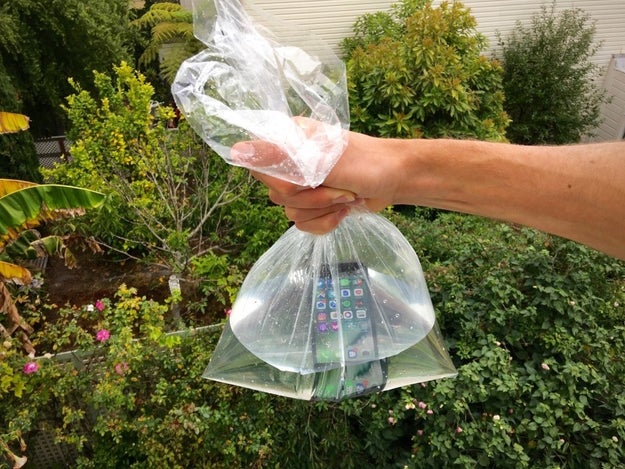
I love that the default for most flagships phones (iPhone, Galaxy S7 and flaming Note 7) except for the Pixel is that they will survive toilets, pools, river floats, etc. without bulky cases. Phones have been water resistant in Japan forever (over a decade??) and it&039;s ABOUT TIME the rest of the world catches up. — Nicole Nguyen

I traveled more this year — for work and for pleasure — than I have in any previous year of my life, which means I also took a lot more pictures than ever before. The result is a formidable, deeply disorganized library comprised of stray moments of my year. Sometimes, when I&039;m looking to kill a few minutes or if I&039;m feeling nostalgic for something, I&039;ll pad through the little patchwork of colorful thumbnails and watch the days and weeks and months rush past under my thumb. I&039;ll open a few of the best photos up and reminisce. It&039;s a nice, tidy exercise of selective memory.

Late last year though, Apple rolled out its Live Photos feature and ever since it&039;s unexpectedly changed the way I re-live all of the weird, wonderful, dumb, and mundane moments of 2016. For the uninitiated, Live Photos is a nearly-invisible feature that, when toggled, keeps your camera rolling before and after you snap the shutter on you picture, creating a little three-second video with sound; press on your photo and your photo animates almost like a gif. It&039;s one of the many throwaway bells and whistles that accompany new phone software and hardware updates — a small little Easter egg designed to make your eyes widen a touch and give you the general impression that you&039;re living just ever-so-slightly in the future.

I enabled the feature unwittingly late last year and as a result my photo library has been transformed into a hypnotizing, moving archive of every memory I&039;ve seen fit to try and capture. Now, my library is rich with new context — a photo of an acrobatic basket fisherman on Myanmar&039;s Inle Lake is forever preserved with the sound of lapping water against our skinny little engine boat. With a touch of a finger, a photo of the park in fall at sunset reveals the orange and yellow leaves shimmering in the wind. The meticulously orchestrated-but-made-to-look-candid photos of my dog are appended with the moments where she turns away from the camera to drool and scratch scratch herself indiscreetly.

There are unexpectedly poignant moments, too. A photo of my 90 year-old grandmother reflects the slow grace of her movements as she poses for a photo with her infant granddaughter at twilight at a family reunion this summer. Scrolling through moments like these, I can&039;t help but think of the power these photos would have if the loved ones in the frame were to pass away. I think about how magical and heartbreaking and necessary it might feel to watch them come to life again, if only for an instant.

Mostly though, I&039;m thankful for how messy they are. So many of my live photos from this year capture the awkward seconds before and after a posed picture or the mundanity of a seemingly insignificant moment at home. They&039;re what might have once been throwaway or easily delectable photos. But now even these dumb, haphazardly shot memories are imbued with meaning. More than anything else for me they&039;re a reminder that, unlike most of still images themselves, life is messy, weird, unexpected, and occasionally beautiful and poignant. — Charlie Warzel


View Entire List ›

Quelle: <a href="BuzzFeed&039;s Favorite Tech Things Of 2016“>BuzzFeed

It's Awkward When Airbnb Hosts Tell Guests "Don't Mention Airbnb"

Leslie Root usually stays with friends when she visits Washington D.C., but for her most recent trip, she wanted something more adult. So two weeks before she was scheduled to attend a conference, the UC Berkeley grad student rented an Airbnb in a highrise building on Connecticut Avenue.

But as soon as the place was booked, Root got a message from her host that’s probably familiar to regular users of Airbnb: The host said she wouldn’t be there for the duration of the trip, and that Root should ask at the front desk for the key when she arrived. “I’ll leave an envelope,” Root remembered her host saying in the message, “but don’t mention Airbnb.”

“It was like, ‘Ugh, god, am I really paying to do this?”

Right away, Root started to worry — why would a security guard give her keys to an apartment when the owner wasn’t home? And how could she pass herself off as an old friend of her host’s when the two had never met? Said Root, “It was like, ‘Ugh, god, am I really paying to do this?”

Hosts ask guests to hide the fact that they’re using Airbnb all the time. It happened to a woman named Lisa Reilly on a vacation to Spain, a travel blogger named Alex Garcia during a trip to Europe, and a New York entrepreneur named Siddharth Saxena whose San Francisco host explained the request for secrecy by saying, “Airbnb is controversial.” A web search turns up around a dozen listings in cities including Kobe, Hong Kong, San Diego and LA that say “don’t mention Airbnb” right in the public posting.

“These experiences are rare,” Airbnb spokesperson Nick Papas told BuzzFeed News. “And as the number of Airbnb hosts and guests continues to rise, we are working hard to help educate everyone about the benefits of home sharing.”

After almost nine years, regulators have had time to catch up with Airbnb. Strict rules around short-term renting are enforced in a handful of cities worldwide, including New York, Santa Monica and Berlin. Countless landlords and homeowners’ associations have, at this point, written rules against it into lease agreements and contracts. Clearly, for some hosts, the risk is worth it. But for their guests — who booked their stays on a slick website built by a $30 billion company whose selling point ease of use — the experience can be downright awkward.

And that’s a problem for the company. Like any startup, Airbnb is successful when it&;s seamless — and tenants who rent their apartments without permission are, to use a Silicon Valley term of art, adding friction. With listings in 190 countries and a recent influx of half a billion dollars in capital (and hundreds of millions more potentially on the way, per Reuters), Airbnb isn’t exactly hurting — but there are few other companies that, at nearly a decade old, sell a consumer experience that sometimes requires those consumers to act like it isn’t happening.

Root’s trip to D.C. ultimately went smoothly, but not all covert Airbnb guests have the same luck. A California couple’s Thanksgiving trip to the East Coast “turned into the nightmare before Christmas,” according to The New York Post, when they were booted from a building that didn’t permit the Airbnb rental they were supposed to stay in. (In the end, Airbnb paid for their hotel.)

Sherwin Belkin is a lawyer in New York City whose firm represents thousands of landlords, many of whom have played the cat-and-mouse game with tenants they suspect of secretly renting their homes to tourists. He said guests who fail to follow their host’s instructions to keep mum about Airbnb often end up “caught in this limboland” of Airbnb, with money spent but nowhere to sleep. “They come to be building and don&039;t quite adhere to the rules of &039;Let&039;s keep this on the down low.&039; They tell management, &039;Oh, I rented this apartment on Airbnb can I have the keys to go in?&039;,” Belkin told BuzzFeed News. “And then they&039;re told, &039;Well, actually, no. This is illegal.&039;”

Of course, most guests don’t get caught and most hosts don’t get evicted, but the experience of sneaking around can be uncomfortable. A programmer named Josh told BuzzFeed News that, after a new roommate skipped town and rented his room on Airbnb against building policy, Josh was forced to pretend the guest was an old friend of his from college to avoid eviction. Another tech worker, this one named Adam, was asked not to mention Airbnb to neighbors during a business trip his employer paid for, only to have his cover blown when he ran into a coworker in the hallway. In another instance, a traveling tech CEO booked a room in San Francisco, and then received this threatening note from his host: “The important thing is that my apartment does NOT allow airbnb, so if they notice, I cannot host you anymore and I will be evicted as well.” And a retirement-age couple recently booked an apartment while visiting their daughter in L.A., only to receive a video tutorial and slideshow from their host that included instructions on avoiding detection.
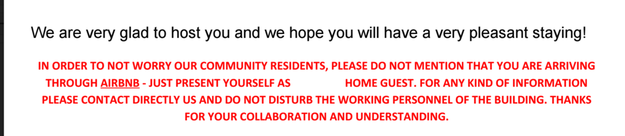
The name of the building has been redacted to protect the identity of the guests.

New York recently passed the strictest anti-Airbnb laws in the US — if the host isn’t present during the guest’s stay, the likelihood is very high that the listing is illegal, and the host could be fined up to $7,500. A judge in Toronto recently ruled that building management companies have the right to ban condo owners from renting their properties on Airbnb, while in Chicago, 900 apartment buildings already have bans in place.

In San Francisco, where Airbnb is sometimes legal, doormen are also on the lookout for secret Airbnb guests, according to `David Wasserman, a California-based landlord attorney. “If someone comes in and they say, &039;We&039;re guests of this unit&039; and through some questioning it becomes apparent that these are Airbnb guests, they turn them away,” Wasserman said.
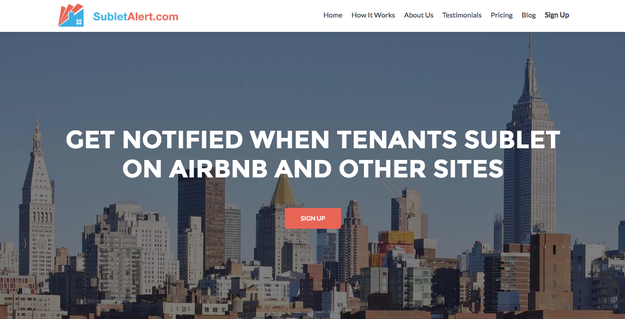
Other property managers hire interns who spend their days scanning Airbnb for illicit listings, or use one of a number of web-scraping sites with names like Sublet Spy and Sublet Alert. Some take a more direct approach. “We increasingly have our buildings under camera surveillance,” said Wasserman.

Rafat Ali, CEO of travel site Skift, is personally familiar with the “don’t mention Airbnb” phenomenon — during his two-month honeymoon, Ali rented his apartment in a Manhattan doorman building to an Airbnb guest. “I told her, say you are Rafat&039;s friend,” he said. “I think it happens often.”

“They&039;re going to have to clean up the system.”

Though common, Ali doesn&039;t think surreptitious listings are a threat to Airbnb&039;s business model, because the brand is somewhat insulated from the impact of a guest&039;s negative experience with a given host. “What percent of people who book through Airbnb hold Airbnb responsible for the experience?” Ali asked. “If I had a bad experience with Airbnb once, am I going to just stop using it because I&039;m going to blame Airbnb completely? Or am I just going to blame the one place for misrepresenting what they were?”

But, Ali said Airbnb will have to demonstrate a willingness to play by the rules if it wants to mature from a dazzlingly successful San Francisco startup into a publicly traded behemoth of the travel industry. “Professionalizing more of their services at the sacrifice of some of their inventory is the way to go,” Ali said. “They&039;re going to have to clean up the system.”

To that end, the company encourages hosts to talk to their landlords about Airbnb. It’s currently offering a pilot program through which it negotiates Airbnb-friendly lease agreements between tenants and landlords that include compromises over issues like the frequency of booking and how much of the host’s profit should go to the building’s owner. A survey by the National Multifamily Housing Council recently found that around a third of apartment firms in the U.S. would be open to working out such deals with tenants.

Airbnb has also removed thousands of illegal listings in New York and San Francisco, and built a feature that allows people who don’t even use the platform to submit complaints about neighbors they suspect are hosts.

“More and more landlords and tenants understand that home sharing can work for everyone and we&039;re eager to build on this momentum,” said Papas.
But in the meantime, one weird experience can change a customer’s feelings about traveling via Airbnb.

Heath was on a trip to San Francisco when his Airbnb hosts asked him to pretend they were away house sitting in Sonoma and to tell the neighbors, if they asked, that he was their nephew.

“They showed me the place while walking me through all of these details several times,” Heath said. “‘Okay, remember, you’re our nephew. You’re just passing through. We are in Sonoma,’ and instructed me to be quiet when I opened the front door so I didn’t rouse any suspicion.”

Heath is a self-proclaimed bad liar, and the request made him nervous, but it was too late into a short trip to cancel the booking. “It’s a terrible user experience to be told to lie,” he said. Eventually, after a yearlong break, Heath went back to using Airbnb, and he says it’s been fine so far, but “it kind of left a sour taste in my mouth about Airbnb for a while. I didn&039;t want to travel and feel like I had to abide by some weird, dark code.”

Quelle: <a href="It&039;s Awkward When Airbnb Hosts Tell Guests "Don&039;t Mention Airbnb"“>BuzzFeed
Uber Halts Self-Driving Car Program In California After Registrations Revoked

Uber Halts Self-Driving Car Program In California After Registrations Revoked

Uber

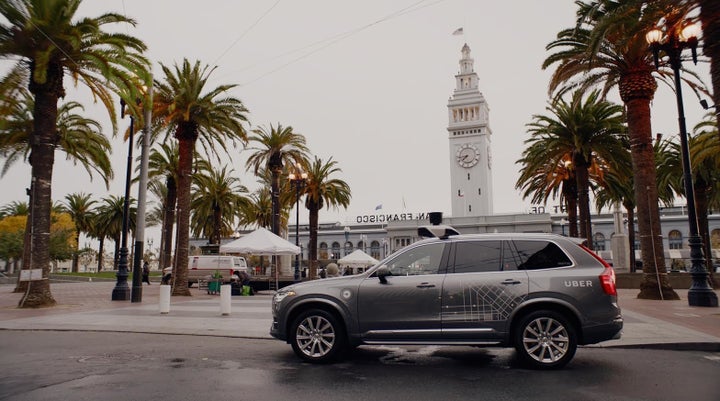
Uber has suspended its nascent self-driving vehicle program in California after the state&;s regulators revoked the company&039;s car registrations.

The ride hailing company said the move came Wednesday after California&039;s Department of Motor Vehicles “revoked the registrations for our self-driving cars.”

“We’re now looking at where we can redeploy these cars but remain 100 percent committed to California and will be redoubling our efforts to develop workable statewide rules,” the statement added.

A statement from the DMV said that the agency revoked registrations for 16 vehicles that “were improperly issued for these vehicles because they were not properly marked as test vehicles.”

California adopted testing regulations for self-driving vehicles two years ago, and the DMV&039;s statement added that “Uber is welcome to test its autonomous technology in California like everybody else, through the issuance of a testing permit that can take less than 72 hours to issue after a completed application is submitted.”

Earlier this month, the company began testing self-driving vehicles in San Francisco. The same day the program launched, the California DMV ordered the company to stop the program until it obtained a permit from the agency. The DMV also threatened Uber with legal action if it didn&039;t pull the vehicles.

One of Uber&039;s self-driving vehicles was also caught running a red light on the first day of the program.

The company is also testing autonomous vehicles — which still have a human driver onboard — in Pittsburgh.

Other companies, including Tesla and Google, have already obtained DMV permits to test self-driving vehicles in California.

View Video ›

Facebook: video.php

LINK: DMV Threatens Legal Action After Uber Rolls Out Self-Driving Cars In SF

LINK: Here’s A Video Of A Self-Driving Uber Running A Red Light


Quelle: <a href="Uber Halts Self-Driving Car Program In California After Registrations Revoked“>BuzzFeed

Apple's AirPods Aren't Worth It (Yet)

The wireless earbuds sync to iOS devices with ease – but there’s a lot of room for improvement.

When it unveiled the headphone jack-less iPhone 7, Apple announced an all-new wireless solution to go with it: cordless earbuds called AirPods that come with Siri and a slew of sensors packed inside. After an unusual month-and-a-half-long delay to “fine-tune” sound performance and battery life, the new earbuds are finally available (although there’s currently a six week wait). But you may want to hold off even longer.

I’ve been testing final production AirPods for about a week and pre-production AirPods since September. The pods don’t fall out nearly as easily as one might expect of an earbud-on-a-stick that dangles precariously from one’s ear, and I was equally impressed by the AirPods’ unique wireless technology that eliminates the fussiness of Bluetooth. But Siri-only volume control and the AirPods’ one-size-fits-all form factor aren’t ideal – and show that there’s a lot of room for improvement.

BuzzFeed News

Here’s what’s working.

Here's what's working.

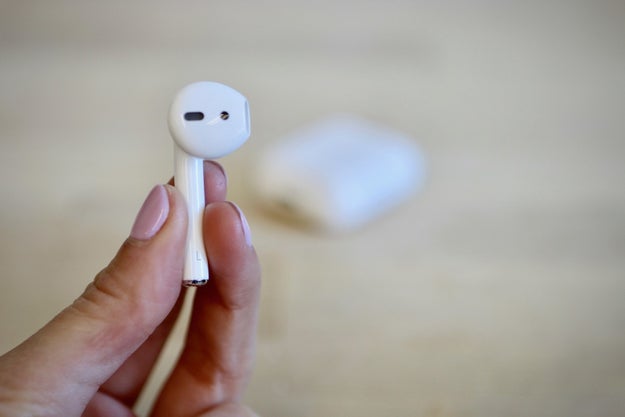
The AirPods are small, lightweight, and hyper portable.

The AirPods are small, lightweight, and hyper portable.

The main benefit of wireless earbuds is their portability. No cord means no tangled mess and no bulk. The AirPods aren’t exactly discreet (more on this later), but they are lighter than other wireless buds I’ve tried (Samsung’s Gear IconX, Bragi’s Dash and the upcoming Headphone).

The AirPods package feels as light as a pack of Tic Tacs, and its smooth, dental floss-sized case slips easily into tight pant pockets. Together, the AirPods weigh just .28 ounces, which is about the weight of a quarter, while the charging case is 1.34 ounces — so altogether about as much as a single Kit Kat bar. In your ear, you’ll feel the hard plastic-ness of the AirPod, but you won’t ever feel bogged down by its weight.

Nicole Nguyen / BuzzFeed News

They do a great job of staying in your ear.

They do a great job of staying in your ear.

I did my least favorite form of cardio for an hour to capture this treadmill timelapse. The AirPods stayed in my ears the entire time.

I really tried to get these buds to come out: I biked to work with one of them in, I headbanged to Slayer, and I tried shaking them out of my ears (even upside down&;). Nada.

Movement won’t dislodge the AirPods, but as soon as there’s some external interference, they immediately lose their mythical staying power. The stem is susceptible to getting caught on things like clothing, hair, and helmets. I took off my sweater and an AirPod went flying. I tucked my long-ish hair behind my ear and the same thing. The helmet strap didn’t remove the AirPod from my ear, but it did jostle it around, which is unnerving when you’re biking on the very crowded streets of San Francisco.

Nicole Nguyen / BuzzFeed News


View Entire List ›

Quelle: <a href="Apple&039;s AirPods Aren&039;t Worth It (Yet)“>BuzzFeed