Man Sues Uber After Driver Beat Him Up For Asking To Go To NJ
Lucy Nicholson / Reuters

An Uber rider is suing the ride-hail giant for negligence, fraud, battery, and assault after one of its drivers in Philadelphia allegedly beat him up after declining to take him home to New Jersey.

The lawsuit, filed Thursday, claims that Joseph Fusco, director of public safety at the security firm Allied Universal, requested an Uber ride from a holiday party near the University of Pennsylvania in Philadelphia on Dec. 22, 2016 at about 11pm. When his Uber driver arrived, Fusco sat in the front seat and asked to be taken home to Cherry Hill, New Jersey, about 30 minutes away. The driver then told Fusco to “get out,” the lawsuit alleges, and said, “I am not driving to New Jersey.”

The driver told Fusco to “get out,” the lawsuit alleges, and said, “I am not driving to New Jersey.”

“The Uber Driver then dragged Plaintiff out of the front seat by his coat collar and severely beat Plaintiff, breaking multiples bones on his face, knocking out teeth, and leaving him in a pool of blood on the pavement (with his body partially in the street) in the freezing cold,” the lawsuit alleges. The driver also stomped on and kicked Fusco while he was already unconscious – something the lawsuit alleges is caught on surveillance video. Two bystanders eventually found Fusco, according to the complaint, and called 911.

The lawsuit alleges Uber allowed the driver to continue working without repercussion. Uber said it does not comment on pending litigation, but a spokesperson confirmed that Fusco reported the incident to Uber on Dec. 23, and said that the company immediately and permanently banned the driver from the app. Uber also said it is talking with law enforcement to support their criminal investigation.

It’s not the first time Uber has been sued for negligence in its hiring of drivers. For example, a Los Angeles woman sued the ridehail giant in July after her Uber driver was sentenced for sexually battering her. The website WhosDrivingYou.com, run by the Taxi, Limousine & Paratransit Association – which of course has skin in the game against Uber – lists dozens of incidents reported in Uber and Lyft vehicles.

Uber claims it is a technology platform that connects riders and drivers, who are hired as independent contractors, not employees. But that defense is facing increasing opposition. in May, a federal judge in San Francisco ruled that the company can still be sued for negligence in its hiring of drivers.

Matthew Luber, Fusco’s lawyer, told BuzzFeed News that despite classifying drivers as independent contractors, Uber retains a significant amount of control over drivers. He said the company is essentially an app version of a taxi dispatcher.

“At its core, Uber is a transportation company that must ensure passengers are transported safely,” Luber said.

Quelle: <a href="Man Sues Uber After Driver Beat Him Up For Asking To Go To NJ“>BuzzFeed
Sen. Tom Cotton Slams Apple Over China Censorship And FBI Dispute

Chip Somodevilla / Getty Images

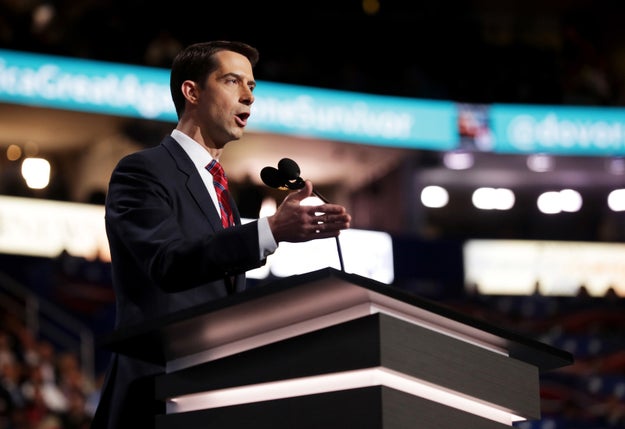
Arkansas Sen. Tom Cotton blasted Apple Thursday for participating in “Communistic censorship of an American newspaper.” Cotton&;s attack came a day after the New York Times reported that it&039;s news apps had been removed from the App Store in China, at the request of Chinese officials. Both the English and Chinese-language news apps were taken down on December 23.

Apple maintains that it is merely complying with local laws. But Sen. Cotton believes the iPhone maker could have done more to resist the government&039;s request: “it instead sought to protect its market access at the expense of liberty,” he said.

Cotton also invoked Apple&039;s controversial dispute with the FBI over an encrypted iPhone in San Bernardino last year. “Apple&039;s protestations that it&039;s merely complying with Chinese law ring hollow when, just last year, it openly challenged a U.S. court order to assist a terrorism investigation and unlock the iPhone of a dead ISIS terrorist.”

At the start of the encryption battle, Sen. Cotton, who was once believed by some to be in the running for a top cabinet position in the Trump administration was one of Apple&039;s fiercest critics. In February he said, “Apple chose to protect a dead ISIS terrorist’s privacy over the security of the American people.”

President-elect Donald Trump at the time was another outspoken critic of Apple. Trump called for a boycott of Apple products until the company compromised security tools to assist law enforcement in the investigation. He has also criticized Apple for manufacturing many of its products overseas. “We’re going to get Apple to build their damn computers and things in this country instead of in other countries,” he said last January.

Quelle: <a href="Sen. Tom Cotton Slams Apple Over China Censorship And FBI Dispute“>BuzzFeed

Here Are The Creative Ways The Obama White House Will Preserve Its Social Content

President Obama was the first US President to use Twitter, Snapchat, Facebook Live and YouTube to engage the public. Now, his White House has released its plans for what it will do with all that content he and his team created while in office.

After soliciting proposals for creative uses of the White House&;s social media data — spanning across platforms including Facebook, Twitter, and Vine and posted by Obama, the First Lady, The White House, and more — the White House today said it will rely on partners such as GIPHY, the MIT Media Lab, and the Internet Archive to preserve its posts and videos in a number of creative ways.

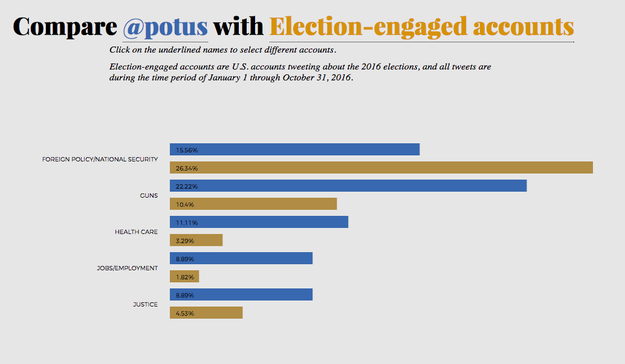
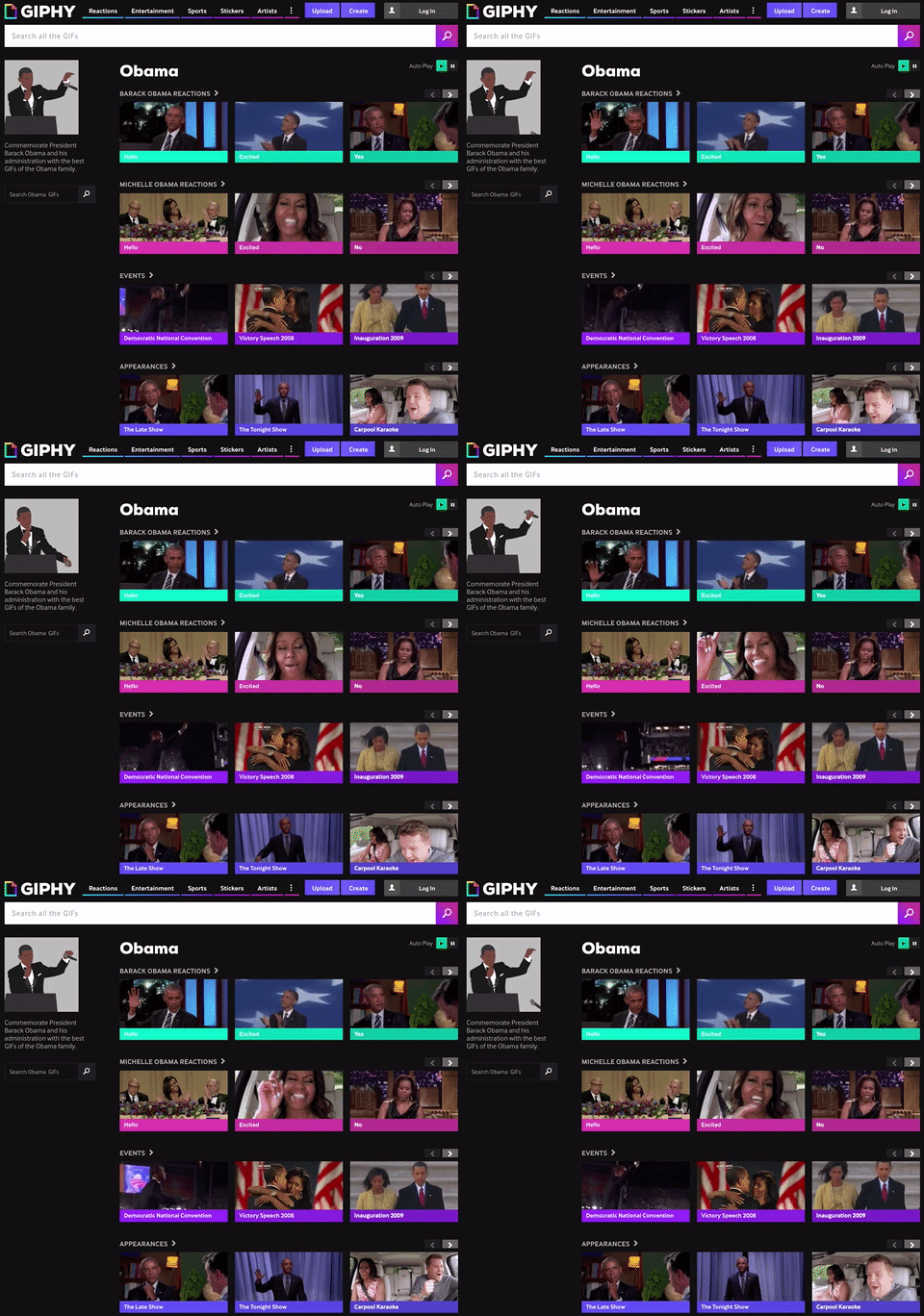
GIPHY, for example, created a page that displays the GIFs the White House shared while Obama was in office. The MIT Media Lab did an analysis of the White House&039;s Tweets to find out what topics it was discussing on Twitter from January 1, 2016 to October 3, 2016, and compared that to the topics that accounts discussing the 2016 election were tweeting about. And The Internet Archive is making its archive of Obama&039;s White House data available for download.

Until now, it was possible to scrape Twitter to get some of this data, but a comprehensive collection of the White House&039;s social data wasn&039;t easily accessible. This new effort it should make it easier to analyze the President&039;s social presence. The MIT Media Lab analysis, for instance, shows that President Obama was tweeting more about gun control and less about foreign policy and national security than other election-engaged Twitter users.

“Given that so much of the media (and social media) news cycle revolves around now and what&039;s next, it&039;s sometimes difficult to be able to look back, and in general none of us have the tools for it,” White House director of product Josh Miller told BuzzFeed News in an email. “These first tools will make it easier for citizens to conduct research, understand trends, and relive big moments, and more.”

Here are all the ways the White House is making the data available:

ArchiveSocial&039;s Search Box

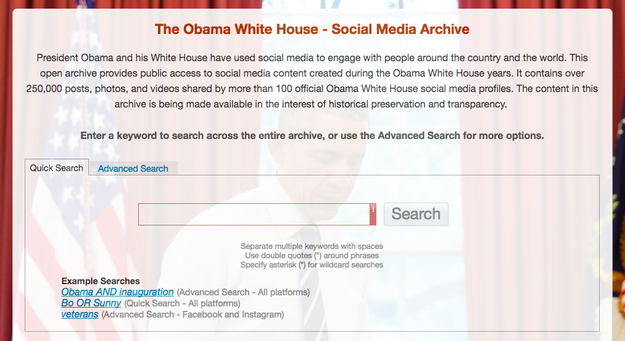
This is a searchable database that “contains over 250,000 posts, photos, and videos shared by more than 100 official Obama White House social media profiles,” according to its website.

Rhizome&039;s Multimedia Essays

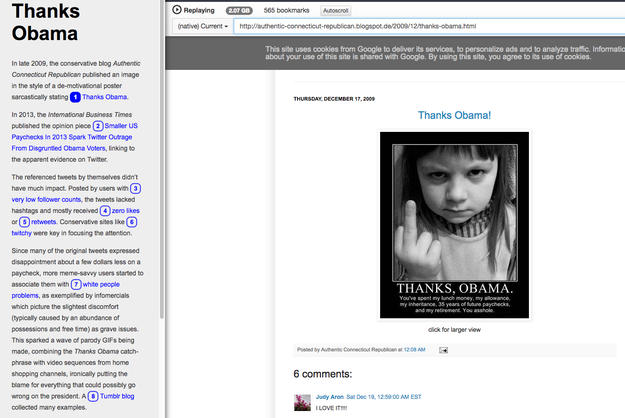
The digital art organization Rhizome is creating interactive essays filled with links that reveal how White House-related memes like Thanks Obama originated and went viral.

MIT Media Lab&039;s Electome Group&039;s Topic Analysis

The group explored “how the White House, President Obama, and the First Lady have used Twitter to communicate with the public,” according to its website.

Derek Lieu&039;s Tweet Language Analysis

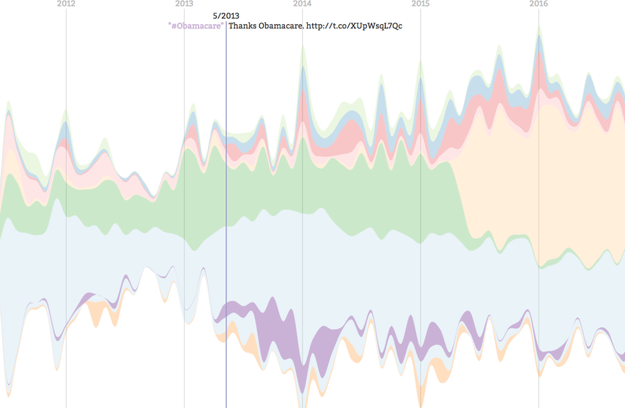
Lieu, a programmer, analyzed the language the White House used in tweets, showing when it began embracing the term “Obamacare” and began using POTUS in earnest.

GIPHY&039;s Obama Page

The GIF search engine created a page with all the GIFs the White House shared while Obama was in office. And some other content, like Vines posted by the White House and related GIFs pulled in by the GIPHY team.

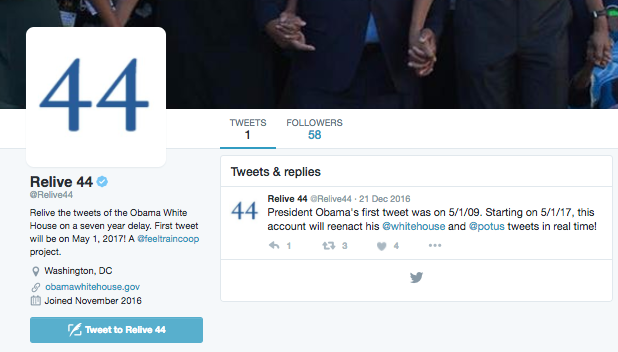
FeelTrain&039;s @Relive44 Bot

This bot will spend the next 8 years tweeting what the Obama White House tweeted over the past 8 years — in real time.

University of Texas-Austin and NYU&039;s School Projects

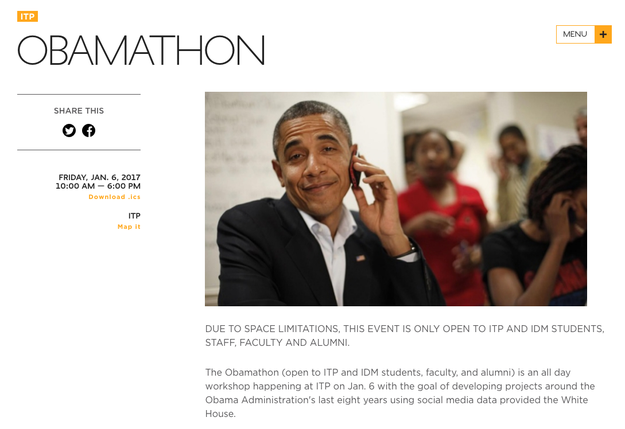
These two schools will use the data to teach. NYU&039;s Interactive Telecommunications Program is hosting an Obama-themed hackathon called the “Obamathon.” Amelia Acker, an assistant professor at UT-Austin, will put the data to use to teach topics like Metadata.

Internet Archive&039;s Archive

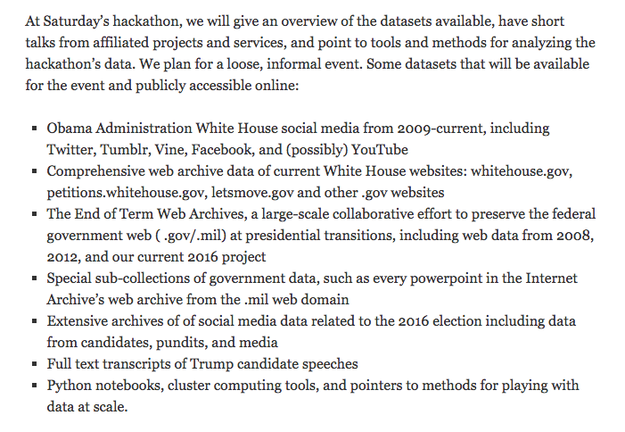
The Internet Archive will make the Obama White House&039;s data available for download on its site. It&039;s also hosting a hackathon of its own on Saturday, January 7. Here are some details from its website:

When Donald Trump is inaugurated as President on January 20, President Obama&039;s @POTUS Twitter account will be handed over to Trump. The new President will keep the account&039;s 13 million+ followers, but he will start with a fresh timeline containing no tweets.

Quelle: <a href="Here Are The Creative Ways The Obama White House Will Preserve Its Social Content“>BuzzFeed

Apple Sets New App Store Record With $3 Billion In December Sales

Apple Sets New App Store Record With $3 Billion In December Sales

Apple

The winter holidays proved to be another season of milestones for Apple&;s App Store.

Apple on Thursday said App Store purchases topped a record-breaking $3 billion for the month of December*, culminating in a New Years Day spike that saw customers spend nearly $240 million in a single day. And this too was a new record; The App Store&039;s prior biggest sales day ever was Jan. 1, 2016, when customers spent more than $144 million.

In a news release, Apple — which takes a 30% cut of apps sold through the App Store — said developers earned some $20 billion in 2016, up 40 percent from 2015. That&039;s a third of the $60 billion they&039;ve earned since the store first opened in 2008. The company attributed a portion of this uptick to in-app subscriptions which now span more than 20,000 apps, including Netflix, HBO Now, and MLB.com At Bat. App Store customers spent $2.7 billion on in-app subscriptions in 2016, up 74% from 2015, Apple said. The company takes a 30% cut of any monthly charges when a new user signs up within an iOS app. But after 12 months, that fee drops to 15%.

By 2016&039;s end, the App Store offered some 2.2 million apps in total, up over 20 percent from 2015. For the year, Pokemon Go was the most-downloaded app among them. But Super Mario Run became the fastest-downloaded app in App Store history when it debuted on December 15, with 40 million downloads in four days. Neither Apple nor Nintendo, the app&039;s developer, have disclosed how many people have made the Mario Run leap from free to freemium with the game&039;s $10 in-app purchase.

Watch Shigeru Miyamoto Play Super Mario Run One-Handed (While Eating Cake)

View Video ›

Facebook: video.php

* While Apple did not break out App Store sales for December 2015 in its last holiday sales round-up, it did say that “customers spent over $1.1 billion on apps and in-app purchases during the two weeks ending January 3.”

Quelle: <a href="Apple Sets New App Store Record With Billion In December Sales“>BuzzFeed

Uber Sent Riders A Creepy Email About NYC’s Plan To Track Their Trips

“The government wants to know where you’re headed … on every ride.”

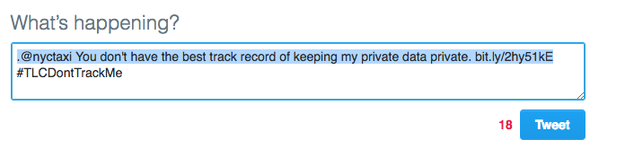
That’s the subject line of an email New York City Uber passengers received from the company today. The message goes on to warn riders that city taxi regulators want to start collecting private data about where individual Uber rides begin and end, and it encourages recipients to send an auto-generated tweet that includes the hashtag . (TLC is the Taxi and Limousine Commission, which regulates cabs and ride-hail services in New York City.)

Uber first warned riders about the proposed rules in late December.

New York City already collects data on Uber rides. But now, in order to better monitor the issue of driver fatigue, the city wants to collect even more information, recording where riders get off as well as where they get picked up.

Uber says it is happy to provide the city with information on trip duration, but that regulators asking for specific locations of drop offs is an overreach.

“Several independent privacy experts have said this policy creates ‘serious privacy risks,’” Uber’s email reads. “And that it would give the government &;and anyone else who accesses this information a comprehensive, 360-degree view into the movements and habits of individual New Yorkers.&039;”

The part about “anyone who accesses this information” is a direct reference to a data privacy blunder New York taxi regulators made a few years ago. A 2014 blog post by a former Twitter engineer (which Uber’s auto-generated tweet links to) revealed that the city failed to properly anonymize the data it collected on taxi pick ups and drop offs, making it very easy to decode. The point Uber is trying to emphasize is that this type of mistake could happen again, leaving Uber passengers vulnerable.

TLC Deputy Commissioner for Public Affairs Allan Fromberg said the error that made the anonymized data identifiable back in 2014 was immediately corrected, and that it wouldn’t have impacted any Uber data collected by the city. He also noted that yellow cabs have been required to provide their pickup and dropoff locations to the city for a decade already. On Twitter, transportation experts concurred that the city’s data request is within normal regulatory bounds.

Some people on Twitter also noted the irony of Uber framing itself as a champion of data privacy, given the ways the company has attempted to leverage its riders’ private data in the past, including threatening to monitor individual users. And just last month, the Electronic Frontier Foundation called on Uber to offer passengers a way to opt out of a controversial new feature that tracks their location for up to five minutes after a ride ends.

Uber has a well-established strategy of leveraging its user base to fight back against regulations it doesn’t want to comply with. Before ultimately pulling out of Austin, Texas, for example, Uber sent both texts and emails urging customers to vote against legislation that would require drivers to be fingerprinted. In NYC, the company added a tab to users’ Uber apps that projected how long ride wait times would be if an unfavorable law supported by Mayor Bill DeBlasio was passed. (It wasn’t.) And in India, Uber also rallied users to oppose government rules that would change how ride-hailing apps could operate in the country.

A hearing regarding the proposed rules on data collection will be held Thursday morning. At time of publishing, dozens of Twitter accounts had already tweeted Uber’s warning in an effort to resist the city’s plan to collect the information it says it needs to keep them safe.

Here&039;s the full text of Uber&039;s email:

“Today, New York City requires Uber and other companies to hand over a lot of sensitive personal passenger data, including where you&039;re picked up on every trip. Now, New York City wants more. They&039;re trying to force companies to tell them where you’re dropped off, as well.

In other words, they want to piece together the full details of every trip you ever take. Several independent privacy experts have said this policy creates &039;serious privacy risks.&039; And that it would give the government &039;and anyone else who accesses this information a comprehensive, 360-degree view into the movements and habits of individual New Yorkers.&039; Click below to send a clear message that enough is enough.

Yours is the most powerful voice in this debate. We need your help. New York City doesn’t need this data and they’ve shown in the past that they cannot prevent it from becoming public.”

Quelle: <a href="Uber Sent Riders A Creepy Email About NYC’s Plan To Track Their Trips“>BuzzFeed

Amazon Wants To Make Yoga Pants

Nicolas Asfouri / AFP / Getty Images

Amazon is looking to make and sell its own branded workout apparel.

Recode first reported that Amazon had listed several “brand manager” jobs on its site that called for people with experience in the clothing industry “to build authentic activewear private label brands.” Sources familiar with Amazon&;s plans tell BuzzFeed News that this is indeed the case.

The rise of fashionable athletic wear brands like LuluLemon, which people wear not only in the gym but everywhere, has been one of the biggest fashion trends in recent memory. Competition and product saturation may be cutting individual brands&039; market share, though.

Amazon has already developed a suite of eight other clothing brands like the high-end womenswear brand Society New York, the kids clothing line Scout & Ro, and the men&039;s shoe company Franklin and Freeman, among others. According to fashion news site WWD, these eight private labels account for 1,800 products sold on Amazon. Most recently it rolled out a brand of men&039;s shirts under the label Buttoned Down. Creating an athleisure clothing line to add to its other collections makes sense for Amazon. And because the e-commerce giant has a trove of data on customer browsing and purchasing habits, it has an advantage over many of its athleisure competitors.

Amazon also sells a number of branded consumer goods — from diapers to batteries — under the name AmazonBasics. It sells packaged foods through private-label brands, including Happy Belly, Wickedly Prime, and Mama Bear.

Amazon declined comment on its plans for a line of workout apparel.

Quelle: <a href="Amazon Wants To Make Yoga Pants“>BuzzFeed

The Department Of Labor Is Suing Google Over Equal Employment

The Department of Labor sued Google today over the search behemoth&;s failure to provide the government with data about its employees&039; compensation, among other things.

As a federal contractor, Google is required to provide compensation information to the government, but has refused to do so since 2015, according to the Office of Federal Contract Compliance Programs.

In a press release, OFCCP Acting Director Thomas M. Dowd said, “Like other federal contractors, Google has a legal obligation to provide relevant information requested in the course of a routine compliance evaluation. Despite many opportunities to produce this information voluntarily, Google has refused to do so. We filed this lawsuit so we can obtain the information we need to complete our evaluation.”

The press release specifically says Google was unwilling to provide data regarding its equal opportunity program. When Google released its 2016 diversity numbers in July, the percentage of female versus male employees had increased 1% from the previous year, for a total of 31% women. 91% of Google&039;s employees are White or Asian, while 5% are Hispanic or Black. At the time, the company said it was “still far from where we need to be.” In Silicon Valley, Google&039;s lagging employee diversity numbers are not an anomaly. Many of its fellow tech companies, from Apple to Facebook, also employ more white men than any other group.

In a statement, Google said it’s committed to diversity, and has worked to comply with the OFCCP. “However, the handful of OFCCP requests that are the subject of the complaint are overbroad in scope, or reveal confidential data, and we&039;ve made this clear to the OFCCP, to no avail,” a Google spokesperson wrote via email. “These requests include thousands of employees’ private contact information which we safeguard rigorously. We hope to continue working with OFCCP to resolve this matter.”

In addition to the DOL’s lawsuit, the Equal Employment Opportunity Commission is also investigating Google in response to reports of age discrimination. The company was also recently sued by an employee known as John Doe, whose suit alleges that the company exercises unfair control over employee information, including a rule that bars workers from writing fictional novels about their time at Google.

Google did not immediately respond to request for comment. If it fails to comply, the Department of Labor has asked that Google&039;s current government contracts be revoked, and that the company be barred from winning government contracts in the future.

You can read the full lawsuit here.

Quelle: <a href="The Department Of Labor Is Suing Google Over Equal Employment“>BuzzFeed

Google Really, Really Wants To Bring India's Small Businesses Online

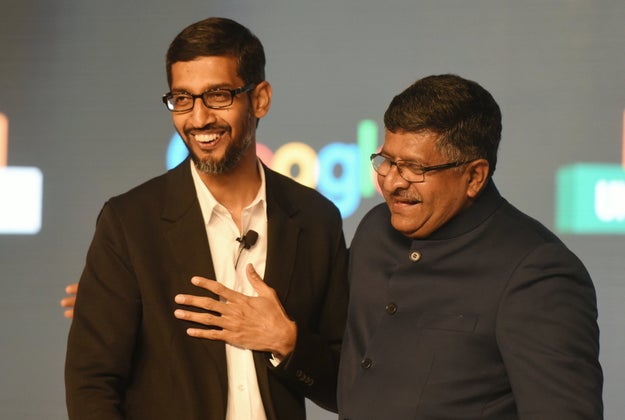
Google CEO Sundar Pichai shakes hands with Indian Union Minister for Law, Justice, and Electronics and Information Technology, Ravi Shankar Prasad at an event in New Delhi.

Dominique Faget / AFP / Getty Images

Millions more Indians are now coming online, but India&;s small businesses — including everything from decades-old mom and pop stores to neighborhood bakeries — are lagging behind. Google wants to change that.

At an event in New Delhi today, Google CEO Sundar Pichai announced a brand new program called Digital Unlocked aimed at helping India’s 51 million small and medium businesses establish an online presence.

Over the next three years, Google will hold 5,000 day-long classes in 40 Indian cities to teach business owners everything from the basics — getting their business listed on Google Maps, for instance — to advanced courses like running an online advertising campaign and measuring analytics.

Google will organize these classes in partnership with the Federation of Indian Chambers of Commerce and Industry, an Indian business lobby. The classes will be certified by the Indian School of Business, a leading business school in India.

Later this year, Google will also launch a tool called My Business Websites, which will allow any small business to easily create and manage its own mobile-friendly website using nothing more than a smartphone in up to nine Indian languages . Businesses can reach Google over phone, email, and chat if they need help.

“India has shaped how we developed products in so many ways,” said Pichai. “Today, anyone can become an entrepreneur, a developer, or a creator, but it is important that they have the right tools and skills to digitize. We believe it is important for us to invest in training and equipping these individuals and small businesses to accelerate their journey of growth.”

India is an important market for Google. Last year, the company hooked up 110 Indian railway stations with free, high-speed WiFi, developed a low-bandwidth version of YouTube called YouTube Go, and added Hindi— one of India&039;s official languages — as the only other language besides English to Google Assistant, its voice-controlled AI chatbot.

Quelle: <a href="Google Really, Really Wants To Bring India&039;s Small Businesses Online“>BuzzFeed

Faraday Future Actually Unveiled Its First Production Vehicle, The FF91

Faraday Future

With a 130 kilowatt battery, 378 miles of range per charge, and a 1,050 horsepower engine, Faraday Future’s new car, the FF91, could prove to be a true Tesla rival – if the company actually manages to ship it.

Unveiled at a splashy Tuesday evening event ahead of this week’s CES 2017 conference in Las Vegas, the FF91 is Faraday Future’s first production vehicle, one the company describes as a “new species” of car. It boasts some impressive specs: a giant 130 kilowatt battery, 378 miles of range per charge, and a 1,050 horsepower engine. Tesla’s flagship Model S, in comparison, has an up to 100 kWh battery, a 310 mile range, a total of 762 horsepower, and a 0-60 mph time of 2.8 seconds — .5 seconds more than the FF91.

The FF91 also has high-speed internet built-in, intelligent self-parking, a car-length panoramic roof that can provide shade and privacy with the touch of a button, and, most notably, the ability to create a unique profile, called an FFID. This custom experience employs facial recognition to identify drivers or passengers and unlock the car for keyless entry. In addition to your facial expression, your FFID stores seat adjustments, favored temperature settings, frequent destinations, schedule, music taste and even scent preferences.

View Video ›

Nicole Nguyen / BuzzFeed News

After showcasing a car design widely dismissed as vaporware at last year’s CES, Faraday Future’s task this week was to prove that its long-promised production vehicle is more than just a concept. And in that, it appears to have succeeded, albeit with a few hiccups.

The FF91 is positioned to be more powerful and more advanced than any other electric car on the market should Faraday manage to ship it. Production of the FF91 is slated to start in 2018 — assuming the company completes work on its three million square foot factory in Northern Las Vegas. In the meantime, Faraday is accepting $5,000 refundable deposits from those interested in reserving a car (no word yet on what the the FF91’s retail price will be).

A BuzzFeed News report published in December revealed that Faraday Future is facing lawsuits, unpaid bills, and a string of departure by top executives. In response to the findings, the company tweeted, “Skepticism and negativity only strengthens our conviction to redefine sustainable mobility. Decide for yourself on Jan 3rd,” referring to today’s event.

Construction at the company’s new billion-dollar factory was halted in November, and “Global CEO” Ding Lei, also a top executive at LeEco, stepped down from his role at Faraday last week.

Dan Schwartz, Nevada’s state treasurer, told BuzzFeed News that Faraday had agreed earlier this year to biweekly phone calls with the treasurer’s office to offer updates on the project’s financing. He said those calls broke off in mid-November. “We asked for numbers about the financing and we just got a different story each time,” Schwartz told BuzzFeed News. “I truly don’t believe they have any money.”

“Month to month, the money was never there. Funds were lower than what Faraday needed to cover operational costs and commitments to suppliers,” one former employee with knowledge of the company’s finances told BuzzFeed News.

Quelle: <a href="Faraday Future Actually Unveiled Its First Production Vehicle, The FF91“>BuzzFeed

How Donald Trump Learned About Hacking

Don Emmert / AFP / Getty Images

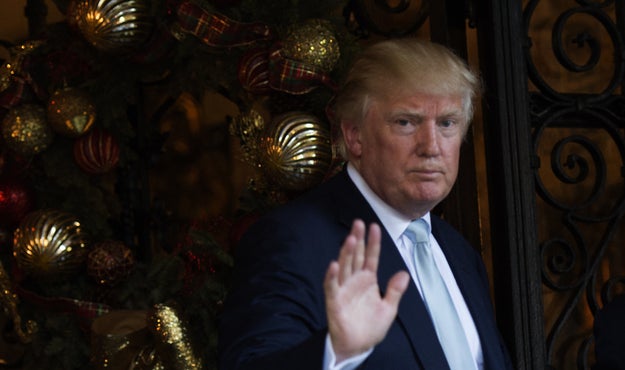
Donald Trump’s boast that “I know a lot about hacking” last weekend prompted a wave of mockery of a President-elect who seems to have skipped the computer age.

But Trump does have direct experience on hacking: His hotel chain suffered a series of recent data breaches, exposing 70,000 credit card numbers and personal information of its customers, and paid a settlement with the New York Attorney General for failing to properly notify its guests of the hacks.

What led to the settlement with New York began in May 2015, when several banks spotted hundreds of fraudulent credit card transactions. The stolen card numbers had a common thread: In each case, the last merchant where a legitimate purchase took place was the Trump Hotel Collection, a set of gilded properties that Trump’s company manages from New York to Waikiki to Panama. According to Trump’s website, they offer a” lifestyle where you can do more, experience more and live life without boundaries, limits or compromise” and are “defined by a distinctly residential atmosphere, expansive rooms, lavish spa and fitness facilities, endless views and flawless comfort.”

According to the attorney general, forensic investigators determined in June 2015 that an attacker, posing as an administrator, activated malware to capture credit card numbers in the Trump hotel payment system.

The hackers stole guests’ cards at seven hotels, including properties in New York, Miami, and Las Vegas. But even after Trump Hotel Collection knew that their systems had been compromised as early as June, the company failed to notify its customers until nearly four months later in September, a delay that violated New York law, the attorney general said.

A second hack — which Schniederman said could have been prevented if Trump hotels had implemented better security after the first cyberattack — was discovered by forensic investigators earlier this year, and targeted credit card numbers linked to five hotel properties. Trump Hotel Collection settled with Schniederman in September, paying $50,000 in penalties and agreeing to a host of data security improvements, including two-factor authentication for remote access to its computer systems, and employee training.

“It is vital in this digital age that companies take all precautions to ensure that consumer information is protected, and that if a data breach occurs, it is reported promptly to our office, in accordance with state law,” Attorney General Schneiderman said when the settlement was announced.

In a prepared statement, Trump Hotels described the hacks as an industry wide issue, rather than anything specific to Trump.

“Unfortunately, cyber criminals seeking consumer data have recently infiltrated the systems of many organizations, including almost every major hotel company” a spokesperson said.

The Trump transition team and the Trump organization did not respond to a request for comment.

But Trump, before he was denying hacks, did occasionally condemn them: In 2014 he called Russian hacking operations a “big problem.” And he praised FBI Director James Comey for his assessment that China was bombarding American organizations with cyberattacks. “I think he&;s 100% right, it&039;s a big problem, and we have that problem also with Russia. You saw that over the weekend. Russia&039;s doing the same thing,” Trump said on Fox News.

Quelle: <a href="How Donald Trump Learned About Hacking“>BuzzFeed