Spielebranche: CD Projekt dank Cyberpunk 2077 extrem profitabel
Trotz der Startschwierigkeiten von Cyberpunk 2077: Der Publisher CD Projekt hat 2020 sehr viel Geld verdient – und sehr große Pläne. (Cyberpunk 2077, Playstation 4)
Quelle: Golem

Trotz der Startschwierigkeiten von Cyberpunk 2077: Der Publisher CD Projekt hat 2020 sehr viel Geld verdient – und sehr große Pläne. (Cyberpunk 2077, Playstation 4)
Quelle: Golem

Das aktuelle Update für Windows 10 sorgt für ruckelnde Games und Bluescreens. Momentan hilft nur die Rückkehr zu einer älteren Version. (Windows 10, Microsoft)
Quelle: Golem

Eigentlich ist die Sache einfach. Das Starship von SpaceX war das technisch beste Angebot und hatte den mit Abstand niedrigsten Preis. Dennoch wurde die Wahl zur politischen Mutprobe. Eine Analyse von Frank Wunderlich-Pfeiffer (Nasa, Raumfahrt)
Quelle: Golem

Ein Software-Entwickler hat viel Geld mit Bitcoin verdient und eine Million Euro davon an die Grünen gespendet. Im Golem.de-Interview erzählt er, warum. Ein Interview von Friedhelm Greis (Bitcoin, GreenIT)
Quelle: Golem

Die Grünen bekommen Bitcoin-Gewinne und Mercedes startet mit dem EQS durch. Die Woche im Video. (Golem-Wochenrückblick, GreenIT)
Quelle: Golem
Vehicles that drive themselves using new forms of power. Traffic signals that talk to cars. Highways and city streets with zero accidents and zero congestion. From changing lifestyles to concerns about climate change, a number of trends are converging to transform yesterday’s science fiction into today’s reality. Recently, automakers along with governments and technology companies have joined in a dash toward the future of mobility.
Quelle: CloudForms
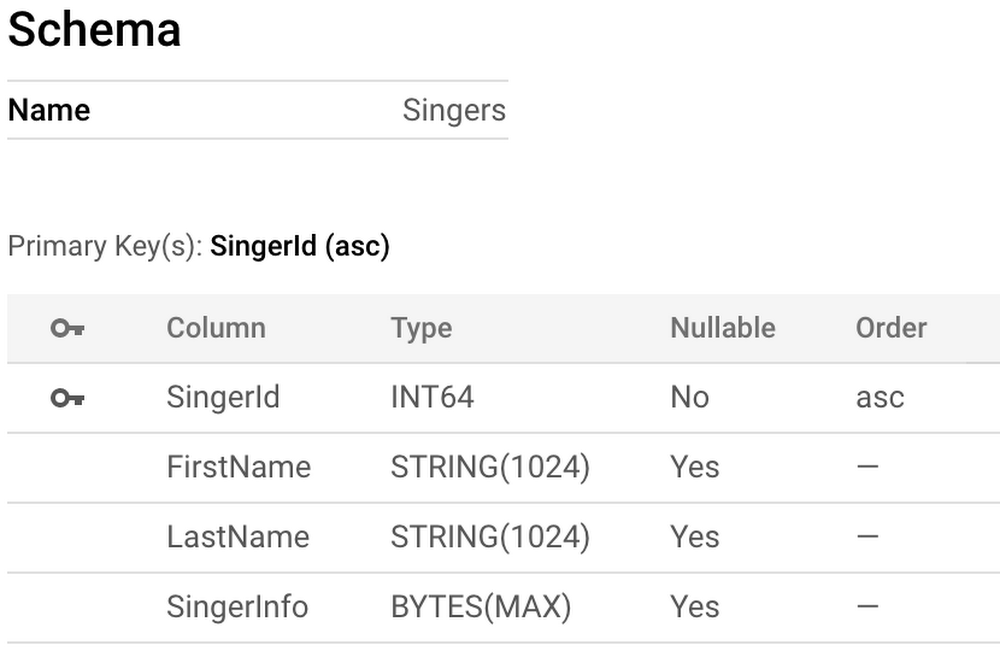
One of the cool things about Google Cloud Spanner, a horizontally scalable relational database, is that you can do an online schema update. Your database is never down for schema update operations. Cloud Spanner continues to serve data during ongoing schema updates. Imagine your application is querying data from a large table in the Cloud Spanner database and you want to add a secondary index on a column to make the data lookup more efficient. Cloud Spanner automatically starts backfilling, or populating, the index to reflect an up-to-date view of the data being indexed. Depending on the size of the dataset, load on the instance etc, it can take several minutes to many hours for that index backfill to complete. While the database continues to serve the traffic, you may want to check the progress of index backfill to plan for deploying application changes that rely on the new indexes once the backfill is complete.Here is some good news for you. Cloud Spanner now provides an ability to track the progress of index backfill. Let us dive deep to understand how you can use the index backfill progress reporting feature. Index CreationSuppose you want to speed up the queries against an example Singers table, and we realize that it is common for queries to also specify both the FirstName and LastName. The schema for the Singers table is shown below:This problem could be solved by creating a secondary index that contains the FirstName and LastName as part of the index key. Let us say you issue the following index creation statement for the index SingersByFirstLastNames through the GCP Console:This statement will trigger the index backfill operation for a non-interleaved index. The primary key for the secondary index will now contain SingerId, FirstName, and LastName. Once the schema update operation is initiated, you go back to the Indexes tab, and see a spinning wheel next to the SingerByFirstLastNames index. A few minutes go by, and you are confused as to when the SingerByFirstLastNames index will be available to use for your queries. How can you understand how much progress has been made on the creation of the secondary index?Tracking Index Backfill ProgressYou can use gcloud command line tool, REST API, or RPC API to monitor the Index Backfill progress. We are also in the process of adding support for this fieldThe next steps will be to monitor the progress of index backfill, and this will be done using the gcloud command in our example. You can view the progress of the index backfill using the OPERATION_ID. If you don’t have the OPERATION_ID, find it by using gcloud spanner operations list:Output of the “operations list” command:To track the progress of the secondary index backfill operation, use gcloud spanner operations describe:Output of the “operations describe” command when the index backfill has not completed:Here you can observe that the Index Backfill process triggered due to the Index Creation statement has progressed 64%. Once the process is completed, output of the “operations describe” command shows the progress percent as 100% as shown below.The “progress” array is where you will find information related to the progress of the index backfill operation. It contains the “startTime”, “progressPercent”, and “endTime” when available for each schema change statement. This example shows only one index creation statement for simplicity, but there can be multiple schema change statements per schema update operation. For more information on interpreting the index backfill progress for multi-statement schema change operations, please refer to the official documentation. You can then periodically track the progress made on the secondary index backfill operation by invoking the “gcloud spanner operations describe” command until the operation is complete.SummaryNew introspection feature “Index Backfill progress reporting” helps you to get visibility into the progress of the index backfill long-running operation. Similarly you can also get visibility into the progress of Backup/Restore operations as described in official documentation.ReferencesManaging Long-Running OperationsSecondary Indexes DocumentationRelated ArticleIntroducing request priorities for Cloud Spanner APIsToday we’re happy to announce that you can now specify request priorities for some Cloud Spanner APIs. By assigning a HIGH, MEDIUM, or LO…Read Article
Quelle: Google Cloud Platform

Sometimes a picture is worth a thousand words, and that’s where these cheat sheets come in handy. Cloud Developer Advocate Priyanka Vergadia has built a number of guides that help developers visually navigate critical decisions, whether it’s determining the best way to move to the cloud, or deciding on the best storage options. Below are five of her top cheat sheets in one handy location.Google Cloud migration made easyMigration to cloud is the first step to digital transformation because it offers a quick, simple path to cost savings and enhanced flexibility. Read the blog to learn about migrating on-premises or public cloud hosted infrastructure into Google Cloud, or click the image below.Click to enlargeMigrating Apache Hadoop to Dataproc: A decision treeAre you using the Apache Hadoop and Spark ecosystem and looking to simplify resource management? You may want to consider Dataproc. Read the blog post to learn four scenarios for migrating Apache Hadoop clusters to Google Cloud, or click the image below.Click to enlargeGoogle Cloud VMware Engine cheat sheetIf you’ve got VMware workloads and are considering modernizing in the cloud for increased agility and reduced total cost of ownership, VMware Engine may be the service for you. Read the blog post, or expand the image below to learn the benefits, features, and use cases for VMware Engine.Click to enlargeGoogle Cloud block storage optionsGoogle Cloud offers two options for block storage: Persistent Disks and Local SSD. This cheat sheet helps you choose the right one for your app. Read the blog, or click the image below.Click to enlargeGoogle Cloud products in 4 words or lessGoogle Cloud offers lots of products to support a wide variety of use cases. But how do you even know where to start? This list—originally kicked off by Google Cloud’s head of DevRel Greg Wilson—makes it easy to familiarize yourself with the Google Cloud ecosystem so you can quickly get up to speed, choosing the ones you want to dive in deep with documentation or other available resources. To get started, read the blog, visit the GitHub page, or click the image below.Click to enlargeLearn moreWe hope these cheat sheets help make navigating the cloud easier than ever. For more Google Cloud tips and best practices, check out our Tech blog.Related Article13 sample architectures to kickstart your Google Cloud journeyThe 13 most popular application architectures on Google Cloud, and how to get started.Read Article
Quelle: Google Cloud Platform

No-cost training opportunities remain a core part of how we help you build your cloud knowledge and showcase your cloud competencies. Since January, we’ve introduced a number of opportunities for you to grow your skills, and we wanted to bring them together into one handy resource so you don’t miss out.Join the Google Cloud 30-day challenge 2021We kicked off the new year with our new skills challenge, offering four initial cloud skills tracks: Getting Started, Data Analytics, Kubernetes (previously titled Hybrid and Multicloud), and Machine Learning (ML) and Artificial Intelligence (AI). Learn more in our blog post, or register for the skills challenge today to get 30 days free access to Google Cloud labs.Don’t know where to start with Google Cloud? We can help.Our Google Cloud OnBoard events are a great way to get an introduction from experts on the core components of Google Cloud, as well as an overview of how our tools impact the entire cloud computing landscape. Read more details or watch the training on demand.Learn how to accelerate data science workflows with LookerLooker, the modern business intelligence (BI) and analytics platform that is now a part of Google Cloud, is more than a BI reporting tool. It’s a full-fledged data application and visualization platform that allows users to curate and publish data. And it integrates with a wide range of endpoints in many different formats, ranging from CSV, JSON, and Excel files to SaaS and in-house built custom applications. Our recent blog post dives into how data analysts and data scientists can use Looker to help with data governance. And for a demonstration of real-life examples of how to use Looker to automate and productionalize data science workflows, watch this on-demand training.Earn the new ‘Optimize Costs for Google Kubernetes Engine’ Skills BadgeWe introduced a new skills badge that tests your ability to run a GKE cluster, ensuring it’s optimized to run an application with all its many microservices and that it can autoscale appropriately to handle both traffic spikes and traffic lulls (where you’ll want to save on your infrastructure costs). Learn more in this blog post or watch this on-demand training to take your first step towards learning how to optimize GKE costs and earning your skill badge.Looking aheadThis year is only getting started when it comes to learning opportunities. April alone included free AI and machine learning training for fraud detection, chatbots, and more. Check back regularly for the latest updates.Related ArticleFree AI and machine learning training for fraud detection, chatbots, and moreThese no-cost training opportunities can help you gain the latest AI and machine learning skills from Google Cloud.Read Article
Quelle: Google Cloud Platform

Geely will unter der jüngst gegründeten Marke Zeekr Premium-Elektroautos anbieten. Jetzt präsentiert das Unternehmen das erste Modell. (Elektroauto, Tesla)
Quelle: Golem






