MIG: Grüne kritisieren "Blanko-Scheck" für Scheuers Funkloch-Amt
Minister Andreas Scheuer hat 160 Millionen Euro für seine Funkloch-Behörde MIG bekommen, doch die Verträge dazu sind nicht öffentlich. (5G, Mobilfunk)
Quelle: Golem

Minister Andreas Scheuer hat 160 Millionen Euro für seine Funkloch-Behörde MIG bekommen, doch die Verträge dazu sind nicht öffentlich. (5G, Mobilfunk)
Quelle: Golem

Apple wird bunt und wir bleiben zu Hause. Die Woche im Video. (iMac, Golem-Wochenrückblick)
Quelle: Golem
Edge computing has the potential to enable more efficient, more insightful, and more cost-effective management of a range of public services. But adoption of edge computing technologies by government organizations has been a long time coming. Now, having seen the value it delivers in other sectors, is a good time for government departments to consider the advantages of edge computing for themselves.
Quelle: CloudForms
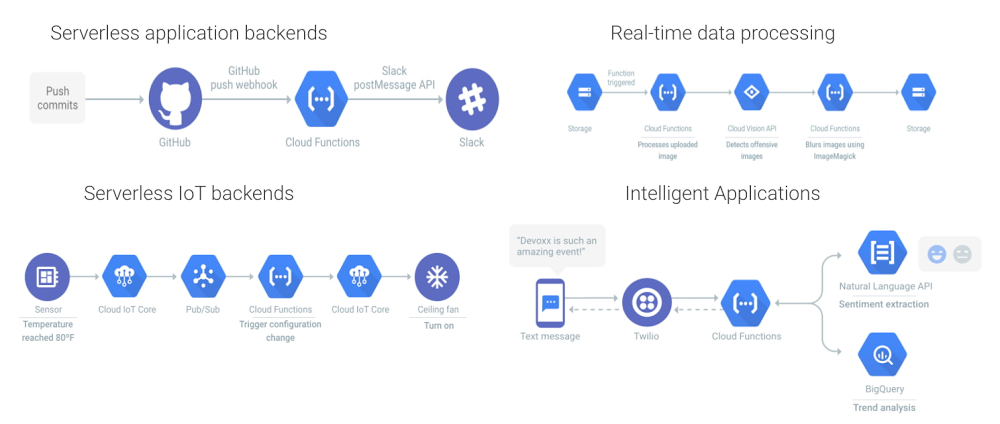
Cloud Functions, Google Cloud’s Function as a Service (FaaS) offering, is a lightweight, easy-to-use compute platform for creating single-purpose, stand-alone functions that respond to events, without having to manage a server or runtime environment. Cloud Functions is a great fit for serverless, application, mobile or IoT backends, real-time data processing systems, video, image and sentiment analysis, and even things like chatbots and virtual assistants.Today we’re bringing support for PHP, a popular general-purpose programming language, to Cloud Functions. With the Functions Framework for PHP, you can write idiomatic PHP functions to build business-critical applications and integration layers. And with Cloud Functions for PHP, now available in Preview, you can deploy functions in a fully managed PHP 7.4 environment, complete with access to resources in a private VPC network. PHP functions scale automatically based on your load. You can write HTTP functions to respond to HTTP events, and CloudEvent functions to process events sourced from external and internal services including Pub/Sub, Cloud Storage and Firestore.Click to enlargeYou can develop functions using the Functions Framework for PHP, an open source functions-as-a-service framework for writing portable PHP functions. With the Functions Framework you can develop, test, and run your functions locally and deploy them to Cloud Functions or another PHP hosting environment.Writing PHP functionsThe Functions Framework for PHP supports HTTP functions and CloudEvent functions. A HTTP function is similar to a Webhook, whereas a CloudEvent function responds to Google services, such as Pub/Sub, Cloud Storage and Firestore, using CNCF CloudEvents.Here’s an example of a very simple HTTP function:Here’s an example of a very simple CloudEvent function working with Pub/Sub:LoggingCloud functions on PHP supports logging through Cloud Logging, so information and error messages should be logged using Cloud Logging client library or using stderr, which will then be visible in the Logging UI.Using PHP librariesThe PHP Functions Framework fits comfortably with popular PHP development processes and tools. Include a composer.json file in your deployment, and those packages will be installed and the autoloader will be registered. Include a php.ini file, and your custom configuration will be loaded and extensions enabled. See dynamically loadable extensions for a complete list.Try Cloud Functions for PHP todayCloud Functions for PHP is ready for you to try today. Read the Quickstart guide, try one of our many Cloud Functions tutorials, and do it all with a Google Cloud free trial. If you want to dive a little bit deeper into the technical details, you can take a look at the PHP Functions Framework on GitHub and potentially even contribute. We’re looking forward to seeing all the PHP functions you write!Useful linksQuickstart guideCloud Functions tutorialsPHP Functions FrameworkRelated ArticleIntroducing Ruby on Google Cloud FunctionsWith Cloud Functions support for Rub Functions Framework, you can write idiomatic Ruby functions and deploy them in a fully managed Ruby …Read Article
Quelle: Google Cloud Platform
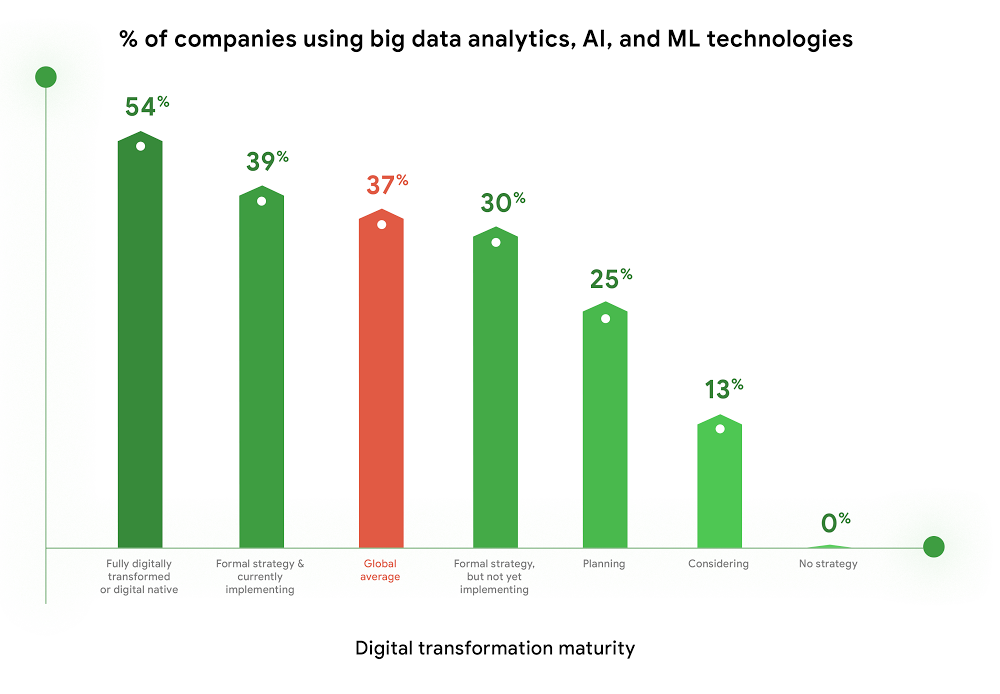
As we think about economic recovery from COVID-19—both inside Google and outside through working with Google Cloud customers—we’ve made many important observations. Among them is the recognition that the ways software developers and IT practitioners work together will shift in the post COVID-19 world. Our economic recovery today will look different than past recoveries, and on a fundamental level, the way we innovate will be different than it’s ever been before.Right now, we’re entering a new phase of cloud computing, where businesses have shifted from making tactical infrastructure decisions, to making larger IT decisions with an eye towards enabling transformation throughout the company. Data, and what we can do with that data, is key to this transformation. And how companies put data in the hands of every employee to help catalyze transformation and solve the most important and impactful opportunities in their industries is at the core. A recent Google-commissioned study by IDG highlighted the role of data analytics and intelligent solutions when it comes to helping businesses separate from their competition. The survey of 2,000 IT leaders across the globe reinforced the notion that the ability to derive insights from data will go a long way towards determining which companies win in this new era.Data analytics and intelligence were prioritized during COVID-19The results of the IDG study show a separation amongst those organizations that embrace the capabilities of today’s data analytics and AI/ML tools and those that do not. When COVID-19 hit, many organizations cancelled IT initiatives, with 55% of respondents delaying or cancelling at least one technology project. However, 32% of respondents accelerated or introduced initiatives around building out or improving the use of data analytics and intelligence. IT leaders realize how critical data is to their future success, even when resources are scarce.Digital-focused companies are faster to embrace advanced intelligence toolsFurthermore, enthusiasm for big data analytics, AI, and ML technologies is highest among companies who are further along in their digital transformation journeys. Fifty-four percent of companies who identify as “Fully digitally transformed” or “Digital native” are using or considering using these tools, vs. the global average of 37%. And, these same organizations are embracing the promise of AI more than their peers. Forty-eight percent felt that “Embedded AI across our full stack of cloud solutions will be critical” vs 39% of digital conservatives. These companies realize these digital tools enable them to be more resilient, agile, and prepared for whatever the future brings.Click to enlargeCompanies are turning to cloud to maximize insights from dataAs companies tap into the promise of data analytics and AI/ML, they are turning to cloud for help. When considering which cloud providers to work with, 78% of respondents said big data analysis is a “must have” or a “major consideration,” which placed this capability at the top of the list of consideration factors. This is not surprising, as cloud solutions address the most common pain points and barriers to innovation. Three of the respondents’ top four areas impeding innovation are addressed by cloud: Insufficient IT & developer skill sets (1st), security risks and concerns (2nd), and legacy systems and technologies (4th). Plus, cloud makes it easier to quickly launch a project, scale up or scale down, and pay for only what you use.Click to enlargeCOVID-19 changed the very nature of business, and of IT. It forced IT leaders to decide where to put their scarce resources and big data analytics and AI/ML were, understandably, at the top of the list. To learn more about the findings, download the IDG report “No turning back: How the pandemic reshaped digital business agendas.”Related ArticleRead ArticleInterested in how Google Cloud’s leading data cloud technologies help you become smarter and make better decisions?From customer segmentation to inventory management, Google Cloud’s ML and advanced analytics capabilities make it easy to maximize the insights you derive from your data. Our database solutions are easy to use from development to production, so you can build and deploy apps faster. They also ensure that your mission critical workloads run at the highest levels of availability, scale, and security. Our smart analytics solutions allow companies to democratize access to all of their business data and our unified platform makes it easy for our customers to get the most from their structured or unstructured data, regardless of where the data is stored.With our dedicated AI solutions portfolio, Google helps businesses commit to business outcomes: saving calls, improving customer experiences, helping prevent fraud, and increasing manufacturing efficiency—all in ways that make us a strategic partner on innovation, not just a technology vendor.Related ArticleRead Article
Quelle: Google Cloud Platform
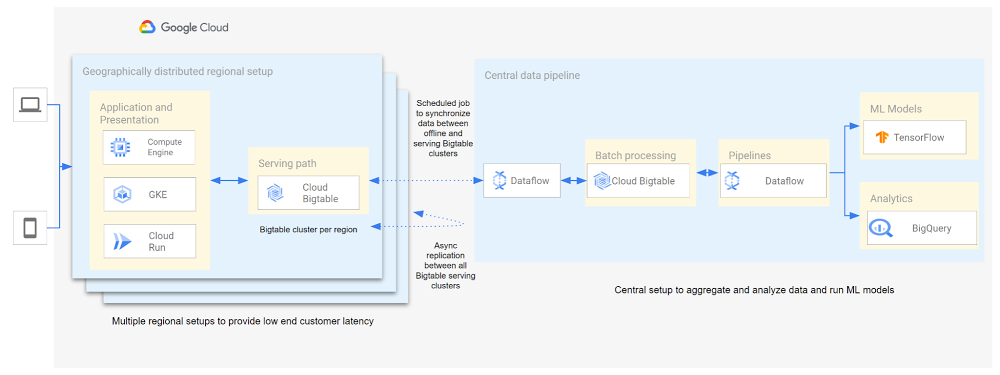
Customer expectations have shifted as a result of evolving needs. Across industries, customers expect that you treat them as individuals, and demonstrate how well you understand and serve their unique needs. This concept—personalization—is the idea that you’re delivering a tailored experience to each customer corresponding to their needs and preferences; you’re setting up a process to create individualized interactions that improves the customer’s experience. According to Salesforce, 84% of consumers say being treated like a person, not a number, is very important to winning their business. Entire industries are undergoing digital transformation to better serve their customers through personalized experiences. For example, retailers are improving engagement and conversion with personalized content, offers, and product recommendations. Advertising technology organizations are increasing the relevance and effectiveness of their ads using customer insights like their specific interests, purchasing intent, and buying behavior. Digital music services are helping their customers discover and enjoy new music, playlists, and podcasts based on their listening behavior and interests. As customers want more and more personalization, modern technology is making it possible for many more businesses to achieve this. In this post, we’ll look at some common challenges to implementing personalization capabilities and how to solve them with transformative database technologies like Google Cloud’s Bigtable. Bigtable powers core Google services such as Google Maps that supports more than a billion users, and its petabyte scale, high availability, high throughput, and price-performance advantages help you deliver personalization at scale. Challenges with personalization Data is at the heart of personalization. To deliver personalization at scale, an application needs to store, manage, and access large volumes of data (a combination of customer-specific data and anonymized aggregate data across customers) to develop a deep understanding of the behavior, needs, and preferences of each customer. Your database needs to very quickly write large volumes of data concurrently for all active customers. You need to continuously capture data on customer behavior because each step potentially informs the next, e.g., adding an item to a shopping cart can be used to trigger new recommendations for related or complementary products. Much of this data needed for personalization is semi-structured and sparse, and therefore requires a database with a flexible data model. Personalization at scale requires large volumes of data to be read in near real-time so that it can be in the critical serving path to deliver a seamless user experience, often with a total application latency of less than 100ms. This means your requests to the database need to return results with latencies of single-digit milliseconds. You need to ensure that application latencies do not degrade as you onboard more customers. Data needs to be organized efficiently and integrated with other tools so that you can run deep analytical queries and use machine learning (ML) models to develop personalized recommendations, and store the aggregates in your operational database for serving your customers. You also need the ability to run large batch reads for analytics without affecting the serving performance of your application. In addition, you need to ensure that your database costs do not explode with the popularity of your application. Your database needs to consistently deliver low total cost of ownership (TCO), and high price-performance as your data volumes and throughput needs grow. Your database needs to scale seamlessly and linearly to deliver consistent, predictable performance to all users around the world. Additionally, your database needs to be easy to manage, so that you can focus on your application instead of managing the complexity of your database.Why a NoSQL database is the right fit for personalization Every database reflects a set of engineering tradeoffs. When relational databases were designed 40 years ago, storage, compute, and memory were thousands of times more expensive than they are today. Databases were deployed on a single server to a relatively small number of concurrent users, whose access to the systems tended to be during normal business hours when users had network access. Relational databases were designed with these resources, costs, and use in mind. They work very hard to be storage and memory efficient, and assume a single server for deployments. As the costs of storage, memory, and compute decreased, and as data and workloads grew to exceed the capacity of commodity hardware, engineers began to reconsider these tradeoffs with different goals in mind. New types of databases later emerged that assumed distributed architectures so they could be easier to scale, especially with cloud infrastructure. With this approach the tradeoff in turn was to forego the sophistication of SQL and much of the data integrity and transactional capabilities developed in relational systems. These systems are commonly called NoSQL databases.Traditional relational databases assume a fixed schema that will change infrequently over time. While this predictability of data structure allows for many optimizations, it also makes it difficult and cumbersome to add new and varying data elements in your application. NoSQL databases, such as key value stores and document databases, relax the rigidity of the schema and allow for data structures to evolve much more easily over time. Flexible data models speed the pace of innovation in your application, and increase your ability to iterate on your ML models, which is essential for personalization. In addition, the scalability of systems like Cloud Bigtable allow you to deliver personalization to millions of concurrent users while you continue to evolve how you personalize experiences for your customers.How Cloud Bigtable enables personalization at scaleCloud Bigtable supports personalization at scale with its ability to handle millions of requests per second, cost-effectively store petabytes of data1, and deliver consistent single-digit millisecond latencies for reads and writes. Bigtable delivers a unique mix of high performance and low operating cost to reduce your TCO. We’ve heard from Spotify, Segment, and Algolia about how they’vebuilt personalized experiences for their customers with Bigtable. Check out this presentation to hear Peter Sobot of Spotify describe how they use Bigtable for personalization. Let’s imagine a scenario where your application takes off like a rocketship, and grows to 250 million users. Let’s assume a peak 1.75 million concurrent users of your application2, with each user sending two requests per minute to your database. This will drive 3.5 million requests per minute to your database, or approximately 58.3K requests per second. Pricing for Bigtable to run this workload will start at under $400 per day3.Bigtable scales throughput linearly with additional nodes. With separation of compute and storage, Bigtable automatically configures throughput by adjusting the association of nodes and data to provide consistent performance. When a node is experiencing heavy load, Bigtable automatically moves some of the traffic to a node with lower load to improve the overall performance. Bigtable also supports cross-region replication, with local writes in each region. This allows you to manage your data near your customers’ geographic locations, reducing network latency and bringing predictable, low-latency reads and writes to your customers in different regions around the world. Bigtable is a NoSQL database developed and operated by Google Cloud. Bigtable provides a column family data model that allows you to flexibly store varying data elements for customers associated with their behavior and preferences, store a very large number of such data elements across your customers, and quickly iterate on your application. Bigtable supports trillions of rows with millions of columns. Each row in Bigtable supports up to 256 MB of data, so that you can easily store all personalized data for a customer in a single row. Bigtable tables are sparse, and there is no storage penalty for a column that is not used in a row; you only pay for the columns that store values.BigQuery ML allows you to create and run ML models directly in BigQuery to develop personalization recommendations that you can bring back to Bigtable. You can easily pipe Bigtable data into BigQuery to run deep analytical queries and develop recommendations. These aggregates, like computed recommendations, are brought back to Bigtable so your application can serve those recommendations to users with low latency and massive scale. Bigtable integrates with the Apache Beam ecosystem and Dataflow to make it easier for you to process and analyze your data. With application profiles and replication in Bigtable, you can isolate your workloads so that batch reads do not slow down your serving workload that has a mix of reads and writes. This enables your application to perform near real-time reads at scale to develop and train machine learning models in TensorFlow for personalization. Bigtable gives you the right operational data platform to develop personalization recommendations offline or in real-time, and serve them to your customers.Click to enlargeHere’s a look at conceptual schema examples for personalization in ecommerce:Click to enlargeAnd here’s a quick overview of what personalization use cases require, and how Bigtable addresses them.Click to enlargeBigtable is fully managed to free you from the complexity of managing your database, so that you can focus on delivering a deeply personalized experience to your customers. Learn more about Bigtable.1. Storage pricing (HDD) starts at $0.026 per GB/mo (us-central1)2. Assumes application is used 24 hours a day, average user session is 5 minutes (Android app average), and daily peak is 2x the average. (250 million / (24 hours / 5 minutes) *2 = 1,736,111 peak concurrent users (us-central1 region)3. Cloud Bigtable pricing for us-central1 region. Assumes 25 TB SSD storage (100 KB per user, for 250 million users) per month, 10 compute nodes per month (with no replication), includes data backup. Bigtable pricing details.Related ArticleA primer on Cloud Bigtable cost optimizationCheck out how to understand resources that contribute to costs and how to think about cost optimization for the Cloud Bigtable database.Read Article
Quelle: Google Cloud Platform
Site reliability engineering (SRE) is an essential part of engineering at Google—it’s a mindset, and a set of practices, metrics, and prescriptive ways to ensure systems reliability. But not everyone knows the best places to start to implement SRE in their own organizations. Here are our top resources at Google Cloud for getting started.1. Do you have an SRE team yet? How to start and assess your journeyWe’re often asked what implementing SRE means in practice, since our customers face challenges quantifying their success when setting up their own SRE practices. In this post, we share a couple of checklists to be used by members of an organization responsible for any high-reliability services. These will be useful when you’re trying to move your team toward an SRE model. Implementing this model at your organization can benefit both your services and teams due to higher service reliability, lower operational cost, and higher-value work for everyone on the team.Related ArticleDo you have an SRE team yet? How to start and assess your journeyThis post shares checklists you can use when you’re trying to move your team toward an SRE model. These checklists can be useful as a for…Read Article2. SRE fundamentals: SLIs, SLAs and SLOsCore to the definition of SRE is the idea that metrics should be closely tied to business objectives. Thus, a big part of the day-to-day of SREs is establishing and monitoring these service-level metrics. At Google, we use several essential measurements—SLO, SLA and SLI—in SRE planning and practice. This post gives you an overview of what each of these acronyms are, what they mean, and how to incorporate them.Related ArticleSRE fundamentals: SLIs, SLAs and SLOsA big part of SRE is establishing and monitoring service-level metrics like SLOs, SLAs and SLIs. This post gives you an overview of what …Read Article3. How SRE teams are organized, and how to get startedYou know what SREs do and understand which best practices should be implemented at various levels of SRE maturity. Now you’re ready to take the next step by setting up your own SRE team. In this post, we’ll cover how different implementations of SRE teams establish boundaries to achieve their goals. We describe six different implementations that we’ve experienced, and what we have observed to be their most important pros and cons.Related ArticleHow SRE teams are organized, and how to get startedGetting started with SRE often starts with understanding SRE principles and how teams are organized. Find tips here on which SRE team imp…Read Article4. Meeting reliability challenges with SRE principlesThrough years of work using SRE principles, we’ve found there are a few common challenges that teams face, and some important ways to meet or avoid those challenges. Learn what we at Google think are the three top sources of production stress and how we recommend addressing them.Related ArticleMeeting reliability challenges with SRE principlesFollowing SRE principles can help you build reliable production systems. When getting started, you may encounter three common challenges….Read Article5. Transitioning a typical engineering ops team into an SRE powerhousePerpetually adding engineers to ops teams to meet customer growth doesn’t scale. Google’s SRE principles can help, bringing software engineering solutions to operational problems. In this post, we’ll take a look at how we transformed our global network ops team by abandoning traditional network engineering orthodoxy and replacing it with SRE. You’ll learn how Google’s production networking team tackled this problem and consider how you might incorporate SRE principles in your own organization.Related ArticleTransitioning a typical engineering ops team into an SRE powerhouseMoving a network operations team to an SRE-driven model took some time, but was well worth the effort, as teams can focus on reliability …Read ArticleLots more to readCan’t wait to read more about SRE? We wrote an entire book on SRE to help you get started (actually, we’ve written more than one). You can also find all our DevOps and SRE blog content or follow our columns on Customer Reliability Engineering.Related ArticleHow do you eat an elephant? Google SREs talk digital transformationIt’s not just about technology. Google Cloud SREs touch on the human and organizational side of a cloud migration.Read Article
Quelle: Google Cloud Platform

So you’ve decided to migrate your business to the cloud—good call!There are many workloads that are easy to lift and shift to the cloud, but there are also specialized workloads (such as Oracle) that are difficult to migrate to a cloud environment due to complicated licensing, hardware, and support requirements. Bare Metal Solution provides a path to modernize these applications. You first lift and shift these workloads to Bare Metal Solution so you can exit your data center and stop managing hardware; then you will be in a great position to modernize your application with Google Cloud. Bare Metal Solution enables an easier and a faster migration path while maintaining your existing investments and architecture.(Click to enlarge the Bare Metal Solution migration cheat sheet)How does it work?Bare Metal Solution provides purpose-built bare metal machines in regional extensions that are connected to Google Cloud by a managed, high-performance connection with a low-latency network fabric. Google Cloud provides and manages the core infrastructure, the network, the physical and network security, and hardware monitoring capabilities in an environment from which you can easily access all Google Cloud services. What does the Bare Metal Solution environment include?The core infrastructure includes secure, controlled-environment facilities and power. The Bare Metal Solution environment also includes provisioning and maintenance of the sole-tenancy hardware with local SAN, and smart hands support. The network, which is managed by Google Cloud, includes a low-latency Cloud Interconnect connection into your Bare Metal Solution environment. And you have access to other Google Cloud services such as private API access, management tools, support, and billing.What are you responsible for?You are only responsible for your software, applications, and data while Google Cloud handles the support, backup maintenance, monitoring, logging, and security. You can bring your own license of the specialized software such as Oracle. ConclusionNow that you know about Bare Metal Solution, you’re ready to take the next step in the direction of infrastructure modernization, no matter what specialized workloads you may have. To learn more about Bare Metal Solution, check out the documentation.Priyanka discusses Google Cloud Bare Metal SolutionFor more #GCPSketchnote, follow the GitHub repo. And for similar cloud content, follow me on twitter @pvergadia and keep an eye on thecloudgirl.devRelated Article5 cheat sheets to help you get started on your Google Cloud journeyWhether you need to determine the best way to move to the cloud, or decide on the best storage option, we’ve built a number of cheat shee…Read Article
Quelle: Google Cloud Platform

Innerdeutsch könnte bald elektrisch geflogen werden – wenn das Passagieraufkommen nicht zu hoch ist. (Flugzeug, Technologie)
Quelle: Golem

Was am 23. April 2021 neben den großen Meldungen sonst noch passiert ist, in aller Kürze. (Kurznews, Google)
Quelle: Golem






