Building a self-service microservices architecture with Cloud SQL

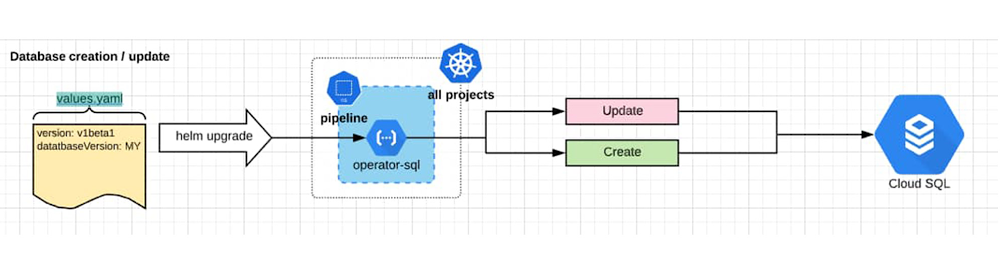
Editor’s note: We’re hearing today from Entegral, an integrated software platform that enables communication and collaboration between tens of thousands of collision repair shops, insurance providers, and other industry professionals around the world. Owned by Enterprise Holdings, the world’s largest car rental provider and operator of the Enterprise Rent-A-Car brand, Entegral builds apps that make the claims process more efficient, using the best data technology and skills available. Here’s how they’re using Google Cloud to enable their teams to build faster.When we decided to make the move from on-premises to Google Cloud, this was our opportunity to not only revamp the technologies we used internally, but to also rethink how our teams could operate. At Entegral, that meant breaking our existing monolithic system and shifting to a microservices environment powered by Cloud SQL, which we use as a managed service for MySQL and PostgreSQL. Now, our internal teams have self-service access to the resources they need to develop new applications, and my team is free to focus our energies elsewhere.  Moving to a self-service access modelOur migration to Google Cloud was pretty straightforward. All of our on-premises databases were small enough to just do a simple export of the data and import into Google Cloud, so we were up and running quickly. To support our new microservices environment, we use Google Kubernetes Engine, and Cloud SQL for both MySQL and PostgreSQL as our main database. As part of moving to managed cloud services, we wanted to find ways to improve the operational efficiency of my infrastructure team. We wanted to give other teams the ability to provision their own Cloud SQL databases, all without manual intervention from my group.Prior to this, each request from other teams fell on my team. Depending on priorities, it could take days to get teams the credentials and resources they needed, and my team was responsible for managing those databases. Now our self-service model has turned all of this into a YAML configuration that takes minutes. All the security credentials are built in and teams can even select preferred engines and versions. This has dramatically decreased the manual intervention needed from our infrastructure team. This process has been completely disaggregated, with few requests coming in directly to my team, and we’ve maintained the ability to track instances across the company.Not only has Cloud SQL allowed us to move to a fully self-service model, but its benefits as a managed service have improved costs, reliability, and security. High availability is something we simply don’t need to think about any more, as it’s trivial to set up and build into the configuration. And Cloud SQL handles all of the on-demand scaling and upgrades to ensure teams always have what they need.Adding agile application developmentFor my colleague Patrick Tsai, team lead for application development, this new model was transformational. His team no longer needs to think a sprint ahead. They have access to the tools they need so they can start building quickly. They were building a spatial view of the company’s network of body shops by bringing together metadata. This allowed for an easy and fast way to visualize and manage their networks on Google Maps. Since this application heavily uses geospatial data, they opted for Cloud SQL for PostgreSQL and the popular PostGIS extension. In a matter of minutes instead of days, they can spin up a new database instance to support a variety of different APIs for this application. To date, Patrick’s team has five different environments with 15 different Cloud SQL instances each and doesn’t need to worry about scaling, upgrading, or maintaining any of them. They can just focus on building new functionality.Redefining how we operateWe’ve been thrilled with what we’ve been able to accomplish leveraging Cloud SQL and Google Cloud. It’s also changed how we evaluate new technologies. Now that we’re in the cloud, we believe all our services should be able to deliver the same level of self-service access with a single configuration.We’re continuing to evolve what we’ve designed to be even more dynamic and offer new secure connectivity defaults. And we’re excited to continue to empower Entegral’s teams to be more agile and transform the business in ever-evolving new ways. Learn more about Entegral and about Google Cloud’s database options.Related ArticleExtensions for connectivity and new data types now available in Cloud SQL for PostgreSQLCheck out new extensions and data types in open source database PostgreSQL, and why they matter when you’re using our Cloud SQL managed s…Read Article
Quelle: Google Cloud Platform

State of no-code app-development

It’s no secret that the world is changing faster than ever. Before 2020 became, well, 2020, businesses knew that digital transformation was critical, yet few were prepared to make the pivot. The events of last year caused a forcing function, accelerating the need for change in organizations around the globe. Problem solving required a democratized approach to the tools of innovation, one in which anyone in the workforce, whether skilled in coding or not, could leverage technology to create novel solutions. The solution stacks businesses were working with needed to be rethought. Though we typically associate app creation with traditional developers who write code, hundreds of thousands of apps were built this year by non-technical “citizen developer” app creators from around the globe. This democratization occurred because industries such as retail, construction, manufacturing, hospitality, telecom, education, real estate, IT services and more all sought digital transformation through no-code development. In this post, we’ll breakdown why no-code application development has become an important part of digital transformation by examining the following areas of impact: Speed and agility Productivity and collaborationGovernance and security Speed & agility were critical In a recent surveyof app creators using Google Cloud’s no-code application platform, AppSheet, some 32% of respondents cited speed of development as one of the greatest benefits to using no-code. Faster development times mean more responsive iterations, more problems being solved, and potentially greater impact for those that need tailored line-of-business solutions. The ability to pivot quickly has been incredibly important during a time in which the way we operated frequently needed to change quickly.  How exactly does no-code technology allow for faster development cycles? First and foremost, it does exactly what the name implies—it allows people to build applications and process automations without coding and therefore opens up innovation to a wider range of employees. AppSheet, for example, abstracts coding into an intuitive, natural-language based interface that anyone can use, even if they have never written a line of code—all while still giving IT the visibility and control it needs to keep data safe.  And while every no-code platform has a different approach to facilitating speedier and more democratic app creation, app creators that choose AppSheet are able to leverage the platform’s use of Google AI and ML in two different ways. Baked-in AI and ML help app creators create prototypes quickly, facilitating things like natural language-interfaces in which users need only type their intent to surface relevant functions, and also enable implementation of rich capabilities like Optical Character Recognition (OCR), for conducting activities such as inventory management or other use cases that involve barcodes, image recognition, and similar ML-driven capabilities. Collaboration transcends locationThe ways in which we work shifted an incredible amount in 2020. Those who generally worked in offices with their teams or in schools with their students were sent home. Those who continued to work on-location filled essential roles that often required agile, on-the-go access to critical data, whether it was stored on-device or in the cloud. As communities surrounding work, school, and family life became impacted and activated in ways we’ve arguably never seen, collaboration and connection became paramount to success in 2020.This need for collaboration was no different for those trying to find digital ways in which to support the communities in which they operate. For those who use no-code, there were two key ways in which this collaboration takes place. Once an app is shared with another person, whether it be a fellow creator or an end user, collaboration becomes something different. For a creator-to-creator relationship, it means ensuring the data source in use is designed for manageability, iteration, security, and friction-free access. For an end user-to-creator interaction, the relationship is more complex: app creators typically engage with an application in a development capacity on a desktop while end users typically engage with an application on their mobile devices. This is why our approach to no-code lets app creators build one app that’s compatible across them all— desktop, tablet, etc.— with no additional development required to support a range of  major operating systems or interaction models. This allows the creator to engage with their end users in a more direct and meaningful manner that not only increases collaboration, but can also increase productivity. BHI – a construction company based out of the US – is a great example of how to collaborate with a workforce through no-code. With 90% of their employees not only deskless, but also dispersed across worksites spanning 25 states, the company needs the ability to engage with data in real time. They take collaboration one step further by leveraging a combination of no-code development and Google Workspace. This combination has allowed BHI to free up their IT spend by 10% while embracing democratized digital innovation.  Unlocking data without compromising governance and security  Governance was one of 2020’s  most discussed IT topics, and for good reason: in 2019, research indicated that “anything from 30% to 50% of enterprise spend is linked to shadow IT.“ When an IT team can set policies and provide oversight for non-technical teams within the organization, employees on the ground can problem solve quickly without creating management and governance liabilities; enterprises want to empower employees to innovate and move fast—but they cannot afford to play fast-and-loose with data security. Neither no-code technology nor the citizen developers who leverage it are meant to replace traditional development practices within an organization. Rather, the intention is to work in concert to support digital transformation by both respecting governance needs and democratizing access to the tools of innovation and optimization.Belgium-based Solvay is a great example of governance at work. As we detailed in case study, ”Francis Boulu and the [Solvay] industrial team initially started using AppSheet to collect information from production operators to streamline checklists and inspections. Using AppSheet in conjunction with Google Sheets, they were able to rapidly demonstrate and roll out applications and work them into production.” Through word of mouth across the organization, the demand for no-code technology grew, which could easily have overwhelmed any IT team’s backlog. But because Solvay selected a platform that incorporated governance into its capabilities, IT was able to provide an infrastructure that empowered individual contributors to participate in the development process while still adhering to governance requirements. To date, Solvay has created approximately 1,000 apps with no-code that are used around the globe, including those they’ve built in response to support their COVID initiatives. Looking to the future As we move past 2020, the primary change in the state of work has been broader recognition of the need to empower non-technical employees to build custom solutions and optimizations. Work culture will continue to shift and the demands for democratizing technology will increase. So too will the demands for platforms such as Google Cloud’s AppSheet. The importance of AI will continue to grow, and as the technological capabilities for these platforms continue to evolve, governance will play a more important role than ever before to ensure those that need to build applications are able. 2021 will bring about new ways to engage with no-code, ways that we believe will help creators deepen their skills and create true impact for their organizations. Analysts agree: Gartner’s October 2019 report “The Future of Apps Must Include Citizen Development,” indicated that by 2023, “the number of active citizen developers at large enterprises will be at least four times the number of professional developers.”  If you’re not already evolving your work to include custom applications with no-code, join app creators around the globe and get started now.
Quelle: Google Cloud Platform

A year of API-driven digital transformation

2020 was a challenging year for many organizations as they faced sudden changes in consumer behavior and market dynamics. The shift to digital channels is nothing new, and even in 2019, digital was already the preferred option for commerce and collaboration across many industries—but in the wake of the global pandemic, these channels became the first and only option for many businesses. Preference gave way to necessity almost overnight. According to Adobe Analytics, Black Friday 2020 shopping witnessed a growth of 22% and Cyber Monday saw 15.1% increase compared to 2019.  More importantly, this is going to be a long term shift. According to McKinsey, over 60% of customers changed their shopping behavior in 2020. With in-person and brick-and-mortar operations disrupted across much of the world, the past year’s trends mean that more than ever, a business’s ability to operate relied on its ability to insert itself into digital channels and to engage with customers in new ways. APIs are the foundational mechanisms powering these digital interactions, and hence API management becomes a more urgent competency for many companies as they navigate the impacts of COVID-19.  The role of API management platformsWe have seen many organizations that invested in API management benefiting in different ways during these challenging times. Here are some examples:Deliver innovation faster: Companies challenged with legacy systems were able to unlock valuable data and services via APIs, allowing developers to build new experiences faster. To learn more, check out this video, from Google Cloud Next ‘20: OnAir, that explains how Australian Energy is leveraging APIs to build a hub for open data.Build business ecosystems: APIs allowed organizations to collaborate and quickly integrate with partner ecosystems to transform their business models. Read this article to learn how CHAMP Cargosystems executed ecosystem strategies to help airlines navigate COVID-19 disruptions. Automate operations with AI: During periods of peak online activity, such as Black Friday and Cyber Monday, AI-powered features like traffic prediction, anomaly detection, and API monitoring helped organizations to focus on business-critical concerns and keep services online without interruption. See this video to understand how TMobile has leveraged APIs, and the process automations they enable, across diverse technology ecosystems ranging from mobile services to machine learning to the Internet of Things. Develop new revenue streams: Many businesses suffered declines in top-line revenue during 2020, but monetization of API products helped some to stay competitive by unlocking new sources of revenue. To learn more, view this on-demand webinar that includes how MTN Group, a leading multinational telecommunications company, is harnessing APIs to unlock new revenue opportunities. Google Cloud’s continued innovation in API Management To help organizations navigate 2020’s challenges, as well as adapt to trends in enterprise IT that have been unfolding for years ahead, Google Cloud launched several new capabilities throughout the year to bolster how we help our customers with API management:API Gateway helps developers securely share their serverless workloads and monitor consumption on serverless APIs. Apigee datasource for AppSheet helps citizen developers accelerate digital transformation, empowering them to harness APIs, and the more powerful datasets and functionality to which they provide access, for no-code app development. Apigee Adapter for Envoy As enterprises adopt microservices-based architectures, Apigee was first to build an adapter for Istio to expose services outside the mesh or between services running entirely within the mesh. Apigee adapter for Envoy now integrates Envoy-based services into your Apigee environment, extending Envoy’s capabilities to include API management and letting developers expose services behind Envoy as APIs.Thought leadership, best practices, and engagement with the API community We continued our engagement with the communities of developers, technical, and business leaders looking to do more with APIs. For example we launched That Digital Show, a podcast series in which we share field-tested best practices and real-world use cases to help enterprises to build and scale their API programs. We also offered our Business Innovation Roadshow, which explored how to think like a futurist to evaluate emerging business opportunities, how to discern key technology signals, and when and how to act in order to build an API-first strategy. We  launched a new series of ebooks, The Path of Most Resilience, that explores three tangible ways in which APIs help build business resilience via improved operational efficiency, accelerated innovation, and the development of richer customer experiences. We also published a range of blog posts and articles— if you missed any, you can catch up on all the API goodness here. Our thought leadership efforts also encompassed several industry-specific discussions, including:APIs for Healthcare The Digital Transformation of Healthcare, which examines how the healthcare industry is navigating these difficult times and how patients will soon benefit from new digital services.Getting Digital with Healthcare, which involves a panel of experts discussing three key pillars the healthcare industry is leveraging to help organizations enable data interoperability and provide value-based care.APIs for Marketing: The Automotive Industry, which surveys how APIs are being used for marketing and digital transformation in the automotive industry.APIs for Media and Entertainment, which looks at the digital future of movies, television and gaming.API-powered Open banking, which discusses how APIs can accelerate compliance, create connected customer experiences, and launch new productsLast but not the least, in partnership with Oxford Economics, we surveyed over 1,000 CIOs of large organizations (i.e., those with over $2 billion in revenue), from around the world and across industries, to understand their digital business ecosystem strategies—and the benefits they derive from cultivating those relationships. Check out the key findings of the survey and the role of APIs in building and scaling digital ecosystems.What’s next?We believe most of the current shifts in market dynamics will have long-term implications on consumer behavior and the way businesses operate; even before the pandemic disrupted enterprises throughout the world and increased the urgency around digital transformation, results from our Oxford Economics survey indicated that business leaders were connecting APIs to  the modern digital experience and efficiencies required to be competitive. Digital experiences across a range of form factors—in offices, stores, homes, or the field—will increasingly define how work gets done, how customers interact with businesses, and how businesses interact with one another. Interactions and automations among data and functionality in difference systems will power these experiences—and APIs will continue to power those interactions. Going into 2021, in order to reinvent and globally scale their efforts, enterprises will need to think beyond digital transformation, as which has become an issue of table stakes rather than the mark of a differentiated leader. Instead, businesses must strive to pursue digital excellence—and that means API management becomes even more important. It’s not enough to simply use APIs, though that is a prerequisite for success. Businesses need to harness their APIs to pursue new business models, such as monetizing data for an outside audience, or new partnerships, such as connecting one’s own APIs to those of social networks in order to create richer, wider-reaching customer experiences. Businesses need to learn from APIs, applying machine learning to discern trends in developer and end user behavior and further fortify digital services against attackers. And they need to extend their APIs in new directions, opening them not only to traditional developers but also the new breed of no-code application builders. To boost our customers’ efforts towards digital excellence, we look forward to launching several new capabilities in the coming year that will let customers leverage Google Cloud’s industry-leading offerings to accelerate their API programs. We’re excited to see what you build with them.
Quelle: Google Cloud Platform