Multiplayer: Microsoft erhöht Preis für Xbox Live Gold
Das für Multiplayer nötige Xbox Live Gold wird teurer. Vermutlich will Microsoft mit der Preiserhöhung ein bestimmtes Ziel erreichen. (Microsoft, Xbox One)
Quelle: Golem

Das für Multiplayer nötige Xbox Live Gold wird teurer. Vermutlich will Microsoft mit der Preiserhöhung ein bestimmtes Ziel erreichen. (Microsoft, Xbox One)
Quelle: Golem

Mit dem Infinitybook S 15 legt Tuxedo ein schlankes und schnelles Linux-Notebook mit vergleichsweise niedrigem Startpreis auf. (Linux-Notebook, Intel)
Quelle: Golem

Vodafone ist mit 100 GBit/s zurück am Peering-Knoten BCIX und feiert dies als Neuerung. Doch erst im August 2020 hatte man das Peering außer Betrieb gesetzt. (Vodafone, Kabelnetz)
Quelle: Golem
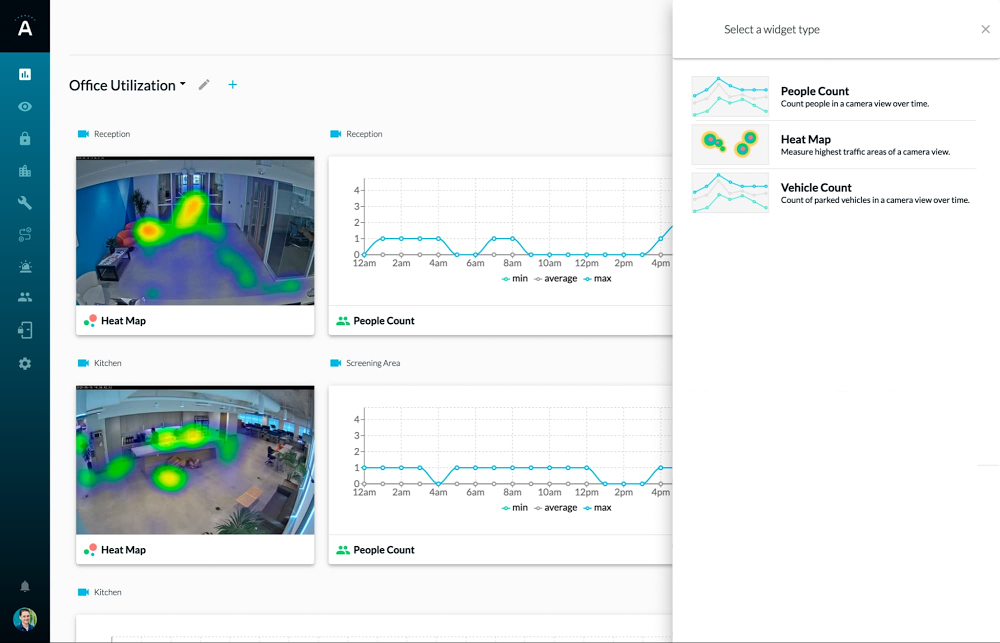
Editor’s note: Arcules, a Canon Company, delivers the next generation of cloud-based video monitoring, access control, and video analytics—all in one unified, intuitive platform. Here, we look at how they turned to Google Cloud SQL’s fully managed services so they could focus more of their engineers’ time on improving their architecture.As the leading provider of unified, intelligent security-as-a-service solutions, Arcules understands the power of cloud architecture. We help security leaders in retail, hospitality, financial and professional services use their IP cameras and access control devices from a single, unified platform in the cloud. Here, they can gather actionable insights from video analytics to help enable better decision-making. Since Arcules is built on an open platform model, organizations can use any of their existing cameras with our system; they aren’t locked into particular brands, ensuring a more scalable and flexible solution for growing businesses.As a relatively young organization, we were born on Google Cloud, where the support of open-source tools like MySQL allowed us to bootstrap very quickly. We used MySQL heavily at the time of our launch, though we’ve eventually migrated most of our data over to PostgreSQL, which works better for us from the perspective of both security and data segregation. Our data backboneGoogle Cloud SQL, the fully managed relational database service, plays a significant role in our architecture. For Arcules, convenience was the biggest factor in choosing Cloud SQL. With Google Cloud’s managed services taking care of tasks like patch management, they’re out of sight, out of mind. If we were handling it all ourselves by deploying it on Google Kubernetes Engine (GKE), for example, we’d have to manage the updates, migrations, and more. Instead of patching databases, our engineers can spend time to improve performance of our codes or features of our products or automated our infrastructure in other areas to maintain and adopt an immutable infrastructure. Because we have an immutable infrastructure involving a lot of automation, it’s important that we stay on top of keeping everything clean and reproducible. Our setup includes containerized microservices on Google Kubernetes Engine (GKE), connecting to the data through Cloud SQL Proxy sidecars. Our services are all highly available, and we use multi-region databases. Nearly everything else is fully automated from a backup and deployment perspective, so all of the microservices handle the databases directly. All five of our teams work directly with Cloud SQL, with four of them building services, and one providing ancillary support. Our data analytics platform (covering many centuries of video data) was born on PostgreSQL, and we have two main types of analytics—one for measuring overall people traffic in a location and one for heat maps in a location. Because our technology is so geographically relevant, we use the PostGIS plugin for PostgreSQL in intersections, so we can re-regress over the data. In heat mapping, we generate a colorized map over a configurable time period—such as one hour or 30 days—using data that displays where security cameras have detected people. This allows a customer to see, for example, a summary of a building’s main traffic and congestion points during that time window. This is an aggregation query that we run on demand or periodically, whichever happens first. That can be in response to a query to the database, or it can also be calculated as a summary of aggregated data over a set period of time.We also store data in Cloud SQL for user management, which tracks data starting from UI login. And we track data around management of remote video and other devices, such as when a user plugs a video camera into our video management software, or when adding access control. That is all orchestrated through Cloud SQL, so it’s very essential to our work. We’re moving to have the databases fully instrumented in the deployment pipeline, and ultimately embed site reliability engineering (SRE) practices with the teams as well.Cloud SQL lets us do what we do bestGeographical restrictions and data sovereignty issues have forced us to reexamine our architecture and perhaps deploy some databases on GKE or Compute Engine, though one thing is clear: we’ll still be deploying any database we can on Cloud SQL. The time we save having Google manage our databases is time better spent on building new solutions. We ask ourselves: how can we make our infrastructure do more for us? With Cloud SQL handling our database management tasks, we’re free to do more of what we’re really good at.Learn more about Arculesand its cloud-based services. Curious about fully managed relational database services? Check out the features of Cloud SQL.
Quelle: Google Cloud Platform
Amazon-EC2-P4d-Instances, die die höchste Leistung für Machine-Learning-Training und Hochleistungsdatenverarbeitung in der Cloud bieten, sind jetzt in der Region Europa (Irland) verfügbar.
Quelle: aws.amazon.com
AWS Training and Certification stellt einen neuen digitalen Kurs zum Selbststudium bereit: Einführung in das Design von Data Lakes in AWS. Dieser Kurs richtet sich an Lernende vom Speicher-Administrator bis zum Daten-Wissenschaftler, die herausfinden möchten, wie man einen Data Lake sicher und skalierbar aufbaut und betreibt.
Quelle: aws.amazon.com

Spritziger als der ID.4 soll der neue Volkswagen ID.4 GTX werden. Das Fahrzeug soll schon 2021 erscheinen. (Elektroauto, Wissenschaft)
Quelle: Golem

Die aktuelle WebOS-Version wird es erst einmal nur für die LG-eigenen Smart-TVs geben. (WebOS, Heimkino)
Quelle: Golem

Ein Bug im MSI-Installer in Google Chrome verhindert, dass der Browser auf frischen Windows-Systemen installiert werden kann. Ein Update steht bereit. Von Günter Born (Chrome, Google)
Quelle: Golem

Eine unsichtbar zweigeteilte NVMe-SSD, die anfallende Daten clever verteilt: Dem Fuzedrive gelingt das, allerdings mit einem Kapazitätsmalus. Ein Test von Marc Sauter (Solid State Drive, Speichermedien)
Quelle: Golem






