Geforce MX450: Nvidias erste PCIe-Gen4-Grafik ist ein Billigmodell
Die Geforce MX450 dürfte primär in kommenden Notebooks mit Intels Tiger Lake eingesetzt werden. (Nvidia Turing, Intel)
Quelle: Golem

Die Geforce MX450 dürfte primär in kommenden Notebooks mit Intels Tiger Lake eingesetzt werden. (Nvidia Turing, Intel)
Quelle: Golem

Noch mehr Leistung bei weiterhin exzellenter Ausstattung: Das Razer Blade Stealth 13 taugt etwas – außer bei den Pfeiltasten. Ein Test von Marc Sauter (Razer, Test)
Quelle: Golem

VW baut den E-Golf bis Ende 2020, auch BMW hat die Produktion des i3 hochgefahren. Grund ist der Umweltbonus von knapp 10.000 Euro. (Elektroauto, Technologie)
Quelle: Golem

Die Deutsche Bahn hat noch viel zu tun, bis alle Bahnhöfe mit kostenlosem WLAN ausgestattet sind. (Deutsche Bahn, WLAN)
Quelle: Golem
polarsquad.com – At Polar Squad, we’ve been using Amazon EKS in our client projects since early 2019. We’ve found it to provide a great way to jump into Kubernetes on AWS while being able to offload a lot of the main…
Quelle: news.kubernauts.io
appfleet.com – This is the first post of the 2 part series where we will set-up production grade Kubernetes logging for applications deployed in the cluster and the cluster itself. We will be using Elasticsearch as…
Quelle: news.kubernauts.io
medium.com – ECK is a new orchestration product based on the Kubernetes Operator pattern that lets users provision, manage, and operate Elasticsearch clusters on Kubernetes. Today I will deploy all the component …
Quelle: news.kubernauts.io
medium.com – I use iterm2 with the palenight color scheme. On top of that, I’m running zsh and oh_my_zsh with the default robby-russell theme. This theme has basic Git support but is otherwise minimal. If you’re …
Quelle: news.kubernauts.io
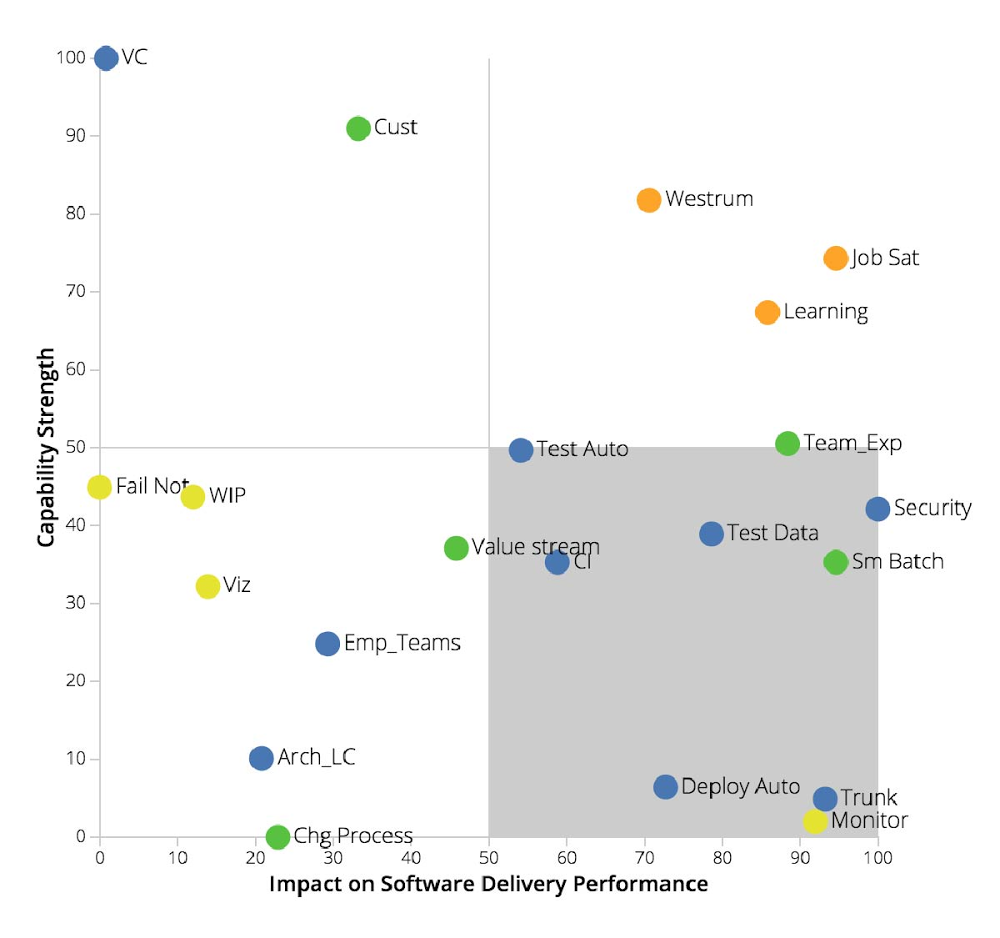
It’s been almost 10 years since Marc Andreessen coined the phrase ‘software is eating the world.’ In that time, organizations have come to realize the fundamental truth of this idea, and have started their own journeys into becoming software companies. As large enterprises embrace the journey, they are looking for advice and a proven set of practices to guide their progress. They don’t have 10 more years to figure it out.Which is why today, we’re introducing Google Cloud App Modernization Program (Google CAMP). Google CAMP is based on our experience of driving application delivery at speed and scale. Examples of this scale include deploying 12M builds and running 650M test cases daily, along with processing 2.5 exabytes of logs every month and parsing over 14 quadrillion monitoring metrics. Google CAMP also reflects learnings gained via six years of research by DevOps Research and Assessment(DORA) into practices that drive high performance. Google CAMP allows large enterprises to modernize application development and delivery and drive improvements in speed, which directly drives a business’s bottom line. DORA’s research with over 31,000 IT professionals highlights that “Elite” teams that ship code numerous times per day are 1.53 times more likely to achieve or exceed their commercial goals, including profitability, and market share.Google CAMP drives improved business results via three main components: 1) tailored modernization advice gained through a data-driven assessment; 2) concrete solutions, recommendations, and best practices for application modernization; 3) a modern, yet extensible platform for everything from writing code, to running, operating, and securing your applications.The Google CAMP approach While the need for application modernization is evident, forging a path forward can be challenging for large organizations. Common hurdles revolve around maintaining visibility and control across disparate on-prem, hybrid, and cloud environments, often resulting in a disjointed developer experience. Additionally, navigating the modernization path necessitates an understanding of how to drive continuous progress, while leveraging the right metrics to guide business and IT decisions. Finally, while changing culture is critical, it’s hard—common pitfalls include treating transformation as a one-time project or driving app modernization as a top-down effort.Google CAMP addresses these challenges in the following ways, thereby helping large enterprises successfully modernize their applications:1. Data-driven assessment and benchmarking: First and foremost, Google CAMP provides a data-driven baseline assessment. Whether you’re building a Kubernetes, serverless, or mainframe application, the Google CAMP assessment shows you where to start your application modernization journey, identify your priorities, and how to maximize your ROI. Unlike a one-size-fits-all maturity model, the Google CAMP assessment is tailored to your organization, your processes, and your teams. You can benchmark yourself against other lines of business in your company, the overall IT industry, or elite performers within your industry. Next, the Google CAMP assessment shows you where your bottlenecks are and how to make the biggest and most impactful investments. Here’s an example of a final assessment report. Below, trunk-based development and monitoring are the highest impact and lowest current capability, making them ideal targets for the organization to prioritize as part of its application modernization initiative.Before your teams take the full Google CAMP assessment and Google Cloud experts start to help you set your priorities, it is worthwhile to try our quick check assessment tool. Within a couple of minutes, you’ll get a good sense of how your organization is performing and identify some quick wins you can implement. 2. A modern, yet extensible platform: Google CAMP leverages existing GCP product offerings to help you to build, run, secure, and manage both legacy and net-new applications. Google Cloud has end-to-end tooling developed from the ground up to support modern cloud-native principles. Examples of these principles include building on a strong security foundation, providing fast feedback on changes, gradual rollouts, rapid elasticity, etc. Tools available include Cloud Code, Cloud Build, Container Registry, and Cloud Ops. For compute, customers have the choice of using Google Kubernetes Engine (GKE), Cloud Run, and Anthos. In Q2 of 2020 alone, more than 100,000 companies used these products to modernize their application development and delivery.Adopters of tools available via Google CAMP have achieved both speed and reliability, while delivering higher-quality products and services at lower cost. MediaMarktSaturn Retail Group, a German holding company and the leading consumer electronics retailer in Europe with headquarters in Ingolstadt, Germany, partnered with Google Cloud to modernize its applications. “In April and June with COVID-19 on the rise, we saw a 145% traffic increase across our digital channels. We responded to this shift by modernizing our apps and web shop using Google Cloud. This strong growth for our online business, built on top of Google Cloud, in turn made us the third largest e-commerce player in Germany,” said Johannes Wechsler, Managing Director at MediaMarktSaturn Technology. “Thanks to Cloud Run, Google Cloud’s fully managed compute platform, we are able to bring applications in the hands of our customers 8x faster than before and with a 40% cost reduction.”3. Proven practices, solutions, and recommendations: Last but not least, Google CAMP brings together a tailored set of technical, process, measurement, and cultural practices along with app modernization solutions and recommendations based on years of DORA’s scientific research along with Google’s own internal experience. These cover the entire gamut of the application lifecycle, from writing code, to running, operating, and securing applications. Examples of these practices include driving alignment between developers and operators, lean product development, and technical practices such as implementing loosely coupled architectures, continuous testing, and more. Learn more about Google CAMPModernizing applications and software development processes is one of the hardest challenges facing today’s enterprises. With Google CAMP, large organizations across all industries can modernize to generate powerful business outcomes. Here are some ways you can learn more about Google CAMP:Watch the Google Cloud Next ‘20: OnAir keynote introducing Google CAMPBefore engaging in a full Google CAMP assessment, do a quick check assessment to compare your performance with the rest of industry. With just five questions, it takes less than 2 minutes.Read more about how you can accelerate application development and delivery with Google CAMP tooling Consider how Anthos can augment your application acceleration plans.
Quelle: Google Cloud Platform
Delivering software quickly, reliably, and safely is at the heart of every digital transformation and application modernization journey. After all, an increase in speed generates powerful business outcomes. As showcased by research from DevOps Research and Assessment (DORA),software speed, stability, and availability contribute directly to organizational performance (including profitability, productivity, and customer satisfaction). Today, we are announcing new additions to our application development and delivery platform to help developers, operators, and security professionals deliver better quality software to production, faster. These new capabilities embed best practices we’ve learned at Google over the years while building applications at scale. They’re also consistent with research performed by DORA over the past six years with over 31,000 IT professionals. Let’s take a closer look at the new features and services that can help you accelerate application development and delivery today. Driving developer productivityFirst, we’ve added support for Cloud Run, our fully managed container platform, into our Cloud Code IDE plugins. Now you can write, deploy, and debug containerized applications directly from your IDEs such as VS Code and IntelliJ onto our fully managed serverless runtime. The integration comes with starter templates in various languages including Java, Node.js, Python, and Go—making it easy to get started and observe best practices. This in turn helps you rapidly explore the core benefits of Cloud Run such as automated day 2 operations, and cost-effective, automatically scaled containerized applications. Second, we built in extensive support for fast feedback as part of the local development loop. To achieve this, Cloud Code includes a new Cloud Run emulator for VS Codeand IntellIJ that runs on your local machine to let you quickly validate changes, thereby taking away the toil of iterating on and redeploying changes. Once you’ve vetted the changes locally, you can push the changes directly as an update/revision to Cloud Run right from within the IDE. With the ability to rapidly iterate on your code locally as well in the cloud, you can catch issues early and resolve any issues discovered in the live application.Third, to further enable you to start building applications quickly we’ve added built-in support for Google Cloud Buildpacks in Cloud Code. Developers should focus their effort on translating business requirements into code—not working out how to containerize that code. Today, developers spend a lot of time writing Dockerfiles and defining how a container should be built. This process is error-prone and requires skills and time that are better spent developing new functionality. Google Cloud Buildpacks pull together all the dependencies and frameworks required to run your application without a Dockerfile. These buildpacks also provide a great way for security teams to validate what runs on the platform, ensuring compliance and an enhanced security posture. Cloud Buildpacks are fully supported by Google Kubernetes Engine (GKE), Cloud Run and Anthos. The above enhancements in Cloud Code and Cloud Run streamline application development and delivery. As you build larger applications and automate increasingly complex business processes, you may need to integrate Google Cloud APIs, External APIs, and our serverless runtimes. We are announcing two new products to assist with this process. Events for Cloud Run is now available in beta. Events for Cloud Run allows you to connect Cloud Run services with events from a variety of sources, including GCP services, your own software, GitHub, etc. We are also excited to introduce Workflows in beta, to help you integrate custom actions, Google APIs and third-party APIs. This includes support for advanced features such as passing values between steps, parsing JSON responses to objects, iterating arrays, error handling and retries, and more. Workflows are serverless, so there is no infrastructure to manage and the product takes care of rapid scaling, following your business demand. Events and Workflows allow you to automate even the most complex business requirements.Securing the software supply chain Accelerated software delivery goes hand in hand with “shifting left” on security. And in an era of ubiquitous threats, securing the software supply chain is vitally important. However, you don’t want security reviews to slow you down. DORA’s research highlights how the highest performing “Elite” teams are able to conduct security reviews in days, by building security throughout the software development process. The same process can take weeks for low performers. To help you improve your security posture and employ practices implemented by Elite performers, Artifact Registry is now available in beta. With Artifact Registry, you can now manage and secure artifacts like maven and npm language packages, along with Docker images. Artifact Registry also provides greater visibility and control over the different types of artifacts that go through your software supply chain, and now supports regional repositories and creating multiple repositories per project. Enterprises can also now use VPC-SC to restrict access to the repository to callers within a security perimeter, and leverage customer-managed encryption keys to encrypt the contents of the repositories.Built-in deployment best practices When it comes time to push your code to production, automating your deployments is a game changer. That’s reflected in DORA’s research: 69% of Elite teams automate their deployments, in comparison to 17% of low performers. Automating deployments also reduces the stress of pushing changes and frees teams up for important refactoring, design, and documentation work. To help you more easily automate your deployments, Cloud Run now supports traffic splitting and gradual rollouts. Before, changes were pushed to all users in production, but now you collect feedback from a small percentage of users. This way, you can limit the “blast radius” of a problematic code change and perform a rollback if need be. We follow a similar process internally to roll out changes to google.com, Gmail, and many other services.To further drive deployment automation, we have also made it easy to set up Continuous Deployment directly from the Cloud Run user interface. Simply connect a git repository, specify the branch to watch for changes, and your code will be automatically deployed to Cloud Run when new changes are pushed. Enterprise additions to serverless servicesRecently we announced Serverless VPC access that allows serverless services to access resources in a VPC network, and now we are excited to announce that it supports Shared VPC, enabling enterprises to connect their serverless services to Shared VPC networks and any on-prem resources connected by VPN or Cloud Interconnect.Deliver better software, fasterOur goal with these releases is to give you the speed, security, and stability you need to implement application development and deliver practices employed by Elite DevOps teams. You can see all of these new features in action here. We have also incorporated the best practices as a part of our Google Cloud App Modernization Program (CAMP). To learn more about CAMP along with more about these new features, join us at the following Next OnAir sessions:Develop for Cloud Run in the IDE with Cloud CodeCloud Run: What’s New? Serverless Workflows in Google CloudEvent-driven Microservices with Cloud RunBuildpacks on Google Cloud
Quelle: Google Cloud Platform






