Bildschirme: LG zeigt transparente, faltbare und biegsame OLED-Displays
Damit ist etwa ein TV möglich, der zwischen Curved-Modus und flacher Anzeige wechselt. Auch Roll-Displays in Autos stellt sich LG vor. (LG, Display)
Quelle: Golem

Damit ist etwa ein TV möglich, der zwischen Curved-Modus und flacher Anzeige wechselt. Auch Roll-Displays in Autos stellt sich LG vor. (LG, Display)
Quelle: Golem

Die Realverfilmung des Disney-Klassikers Mulan kommt direkt zu Disney+, steht aber nicht kostenlos im Abonnement zur Verfügung. (Disney+, Disney)
Quelle: Golem

Schiller ist künftig “Apple Fellow”, eine Art Berater. Er bleibt allerdings verantwortlich für den App Store und für Apple-Events. (Apple, iPhone)
Quelle: Golem

Cookies ohne das Attribut werden damit künftig im Firefox bei Cross-Site-Requests zurückgehalten. Die Änderung soll nun getestet werden. (Firefox, Google)
Quelle: Golem
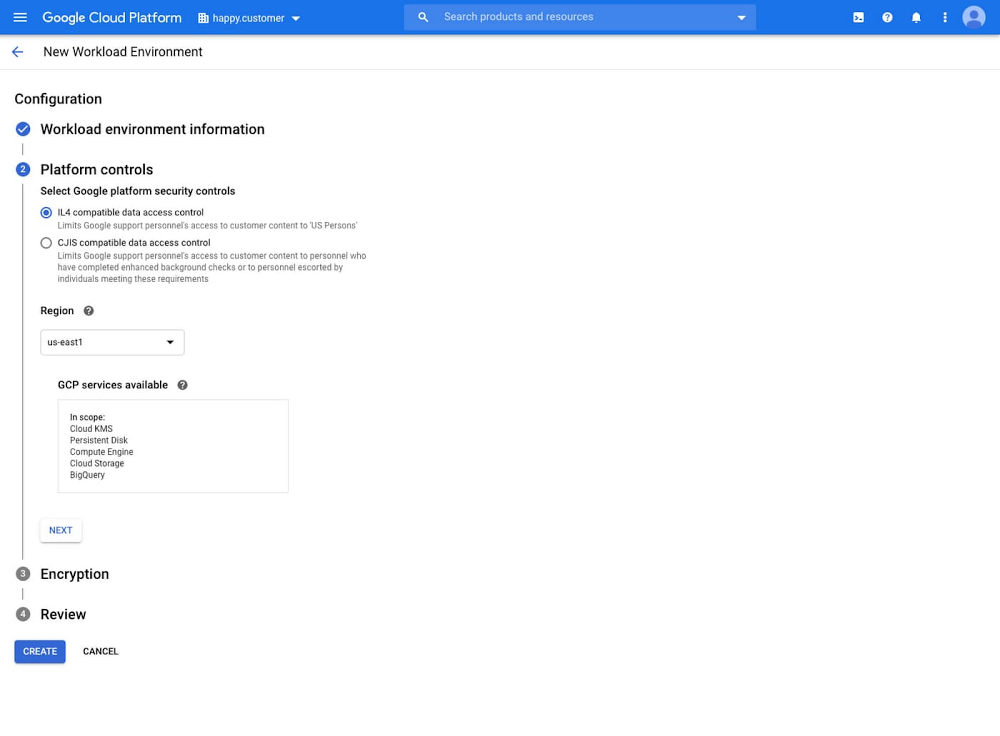
During the first few months of the COVID-19 pandemic, many organizations expected a slowdown in their digital transformation efforts. Instead, we saw many enterprises accelerate their use of cloud-based services to help them manage and address emerging priorities in the new normal, which includes a distributed workforce and new digital strategies. Today, to kick off our Google Cloud Next ‘20: OnAir Security Week, we’re sharing the latest on some unique and powerful capabilities to help you simplify security operations in your organization and make the new normal a better, safer normal. Advanced security tools to support compliance and data confidentiality More and more companies, especially those in regulated industries, want to adopt the latest cloud technologies, but they often face barriers due to strict data privacy or compliance requirements. Last month, we introduced two new capabilities that help you securely take advantage of all the cloud has to offer while also simplifying security operations. Assured Workloads for Government, now in private beta, lets those in regulated industries like the public sector configure and deploy sensitive workloads according to their security and compliance requirements—in just a few clicks. Unlike traditional “government clouds,” Assured Workloads removes the tradeoff between meeting compliance requirements and having the latest capabilities in your cloud.Configuring a new workload in Assured Workloads for GovernmentConfidential VMs, the first product in our Confidential Computing portfolio, helps you protect your sensitive data in the cloud. We already encrypt data at-rest and in-transit, but customer data must traditionally be decrypted for processing. Confidential Computing is a breakthrough technology which encrypts data in-use—while it’s being processed. Confidential VMs takes this technology to the next level by offering memory encryption so that you can further isolate your workloads in the cloud. With the beta launch of Confidential VMs, we’re the first major cloud provider to offer this level of security and isolation while giving you a simple, easy-to-use option for your newly built and “lift and shift” applications.Confidential VMs demoA cloud-based, managed CA for the DevOps and IoT world Recently, we’ve seen a surge in interest in using Public Key Infrastructure (PKI) in DevOps and IoT device management. But a fundamental problem with PKI remains: it’s hard to set up Certificate Authorities (CA), and even harder to do it reliably at scale. These issues are front and center for these growing use cases. To help, we’re announcing the beta availability of Google Cloud’s new Certificate Authority Service (CAS)—a highly scalable and available service that simplifies and automates the management and deployment of private CAs while meeting the needs of modern developers and applications. With CAS, you can offload to the cloud time-consuming tasks associated with operating a private CA, like hardware provisioning, infrastructure security, software deployment, high-availability configuration, disaster recovery, backups, and more, allowing you to stand up a private CA in minutes, rather than the months it might normally take to deploy. A single pane of glass into your security posture Protecting your users, data, and applications while staying compliant can be challenging. Add in the demands of managing a remote workforce and the complexity increases. With Cloud Security Command Center (SCC), our native posture management platform, you can prevent and detect abuse of your cloud resources, centralize security findings from Google Cloud services and partner products, and detect common misconfigurations, all in one easy-to-use platform. We recently announced a Premium tier for Security Command Center to provide even more tools to protect your cloud resources. It adds new capabilities that let you: Spot threats using Google intelligence for events in Google Cloud Platform (GCP) logs and containersSurface large sets of misconfigurations Perform automated compliance scanning and reportingReporting on CIS Benchmarks in the SCC Compliance DashboardThese features help you understand your risks on Google Cloud, verify that you’ve configured your resources properly and safely, and document it for anyone who asks. Collaborating with partners on orchestration and endpointsAs part of our mission to enable operational security and simplicity, we’re committed to working with our security partners to help you on this journey. This week we’re announcing new integrations and go-to-market activities with Palo Alto Networks on their xSOAR Marketplace. Additionally, we’re announcing an expanded partnership with Tanium, which is integrating and offering Chronicle with their endpoint security and management solution. This integrated solution, sold by Tanium, links endpoint data from Tanium with other telemetry, such as DNS and proxy data in Chronicle, to provide a broader, clearer picture of threats in the enterprise. Chronicle retains Tanium telemetry for a year by default, improving your ability to investigate incidents over long periods of time.Simplifying protection against DDoS and web attacksWe’re simplifying how you can use Google Cloud Armor to help protect your websites and applications from exploit attempts, as well as Distributed Denial of Service (DDoS) attacks. With Cloud Armor Managed Protection Plus (in Beta), you will get access to DDoS and WAF services, curated rule sets, and other services for a predictable monthly price. You can learn more about our Cloud Armor announcements here.Automating more secure deployments with blueprintsWhile these new products provide real benefits, you also need to configure cloud deployments to meet your own unique security and compliance requirements. To help, we’re publishing a comprehensive new Google Cloud security foundations blueprint that provides curated, opinionated guidance and accompanying automation to help build a secure starting point for Google Cloud deployments. It’s launching as the cornerstone of our Google Cloud security best practices resource center, a new web destination that delivers world-class security expertise from Google and our partners in the form of security blueprints, guides, whitepapers, and more.A better, safer normal together Defending your enterprise requires continuous evolution, and the events so far in 2020 have made that even more clear. With compliance automation, simpler security operations, and better protection for employees and customers we’re committed to helping you adjust and evolve to make today’s new normal a safer normal. Be sure to check out our security sessions throughout this week where we’ll be digging into the new capabilities we’re introducing, and some we’ve already launched in 2020. You can also find more information at our privacy and security home page.
Quelle: Google Cloud Platform
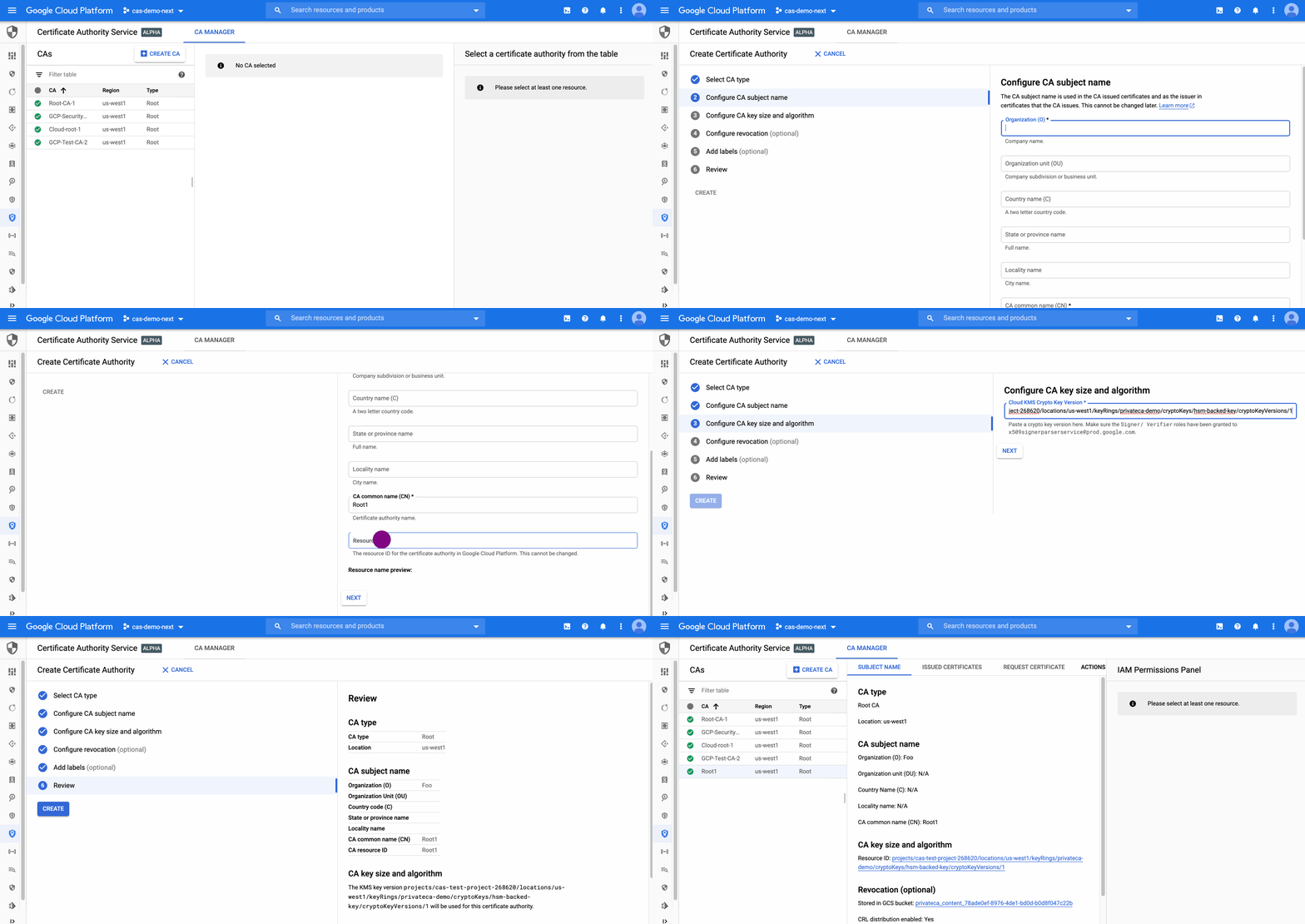
Digital certificates underpin identity and authentication for many networked devices and services. Recently, we’ve seen increased interest in using public key infrastructure (PKI) in DevOps and device management, particularly for IoT devices. But one of the most fundamental problems with PKI remains—it’s hard to set up Certificate Authorities (CA), and even harder to do it reliably at scale. To help, we’re announcing Certificate Authority Service (CAS), now in beta, from Google Cloud—a highly scalable and available service that simplifies and automates the management and deployment of private CAs while meeting the needs of modern developers and applications. To see how CAS can help, let’s look a bit deeper at the challenges surrounding certificate use. As we mentioned, private certificates are one of the most common ways to authenticate users, machines, or services over networks. Digital certificates help make many interactions more secure, including when a user connects to an enterprise-owned website over HTTPS, when a laptop tries to connect to a WiFi access point, or when a user tries to sign into their email account. These certificates are normally issued from a private Certificate Authority (CA) that is hosted on-premises, and they tend to have an expiry date that is in the distant future (i.e., long-lived) with a device/application-specific certificate enrollment process that happens infrequently.An emerging scenario for using private certificates is in DevOps environments to protect containers, microservices, VMs, and service accounts. These emerging private certificate use cases, however, have drastically different requirements. As a result, organizations with an on-premise private CA quickly realize the limitations of their existing private CAs to support these emerging scenarios: These new use cases require short-lived certificates that are renewed frequently, which in turn require high availability and scalability from the CA. Existing private CA solutions fall short. For example, a company may have to issue 10 million certificates in one year vs. 10 thousand when dealing with IoT devices.Certificate enrollment processes do not support modern APIs expected in modern applications and CI/CD toolchains, which result in longer time to market, and delays in adoption and revenue. They are incompatible with cloud providers’ built-in CAs, resulting in customers losing a single point for management and monitoring for certificates. Moreover, organizations that leapfrogged building on-premise infrastructure and were cloud native from day one—i.e., they never had to set up a private CA—started seeing a need for private certificates. Existing on-prem private CAs are not compatible with cloud platforms and can’t support the scale associated with cloud native businesses and hyperscalers. The only option these organizations have is to build their own private CA. Thus, they realize the high cost of setting up and running a private CA (infrastructure, licensing, and operations costs) in addition to the high skill set required to successfully manage a private CA, which is not tied to their core business and only lengthens their go to market timeline. Often, it’s easier and more cost effective to offload this task to a trusted provider—ideally a cloud provider.Certificate Authority Service is designed to meet both traditional and emerging needs. With CAS, you can set up a private CA in minutes, rather than the months it would take to deploy a traditional private CA.Create private CAs in minutesCAS also lets you leverage simple, descriptive RESTful APIs to fully automate the acquisition and management of certificates without being a PKI expert. You can use these APIs for integration with your existing tooling and CI/CD channels. Moreover, you can manage, automate, and integrate private CAs in whichever way is most convenient for you: via APIs, the gcloud command-line, or cloud console.CAS is an enterprise-ready service that enables you to: Store the private CA keys in a Cloud HSM that is FIPS 140-2 Level 3 validated and available in several regions across the Americas, Europe, and Asia Pacific. You can select a subordinate CA’s region independent of its root CA’s regionObtain logs and gain visibility into who did what, when, and where with Cloud Audit LogsDefine granular access controls and virtual security perimeters with Cloud IAM and VPC Service ControlsScale with confidence knowing that the service supports up to 25 queries per second (QPS) per instance (in DevOps mode), which means it can issue millions of certificates. And it comes with an enterprise-grade SLA (at GA)Have assurance that CA private keys are protected by FIPS 140-2 Level 3 validated HSMsBring your own root: This will allow CAs to chain up to an existing root running on-premise or anywhere else outside Google CloudIntegration with the certificate management ecosystemWe also understand that the most important requirement for deploying a new service at an enterprise level is compatibility, with ease-of-use being a close second. After all, security measures that are hard to use end up going unused. We worked with leading partners in the certificate lifecycle management (CLM) space to make sure CAS is integrated with their solutions: Venafi is a leading vendor in machine identity protection with more than 400 worldwide customers and 20-plus years of cybersecurity research and innovation. Venafi’s role has been cited in industry research like Gartner’s 2020 Hype Cycle for IAM and Forester’s 2020 Now Tech report on Zero Trust Solution Providers. For more information on their integration with CAS see their blog.AppViewX CERT+ is a certificate management suite that lets you automate key and certificate lifecycles across multi-cloud environments. It also protects keys, delivers compliance, allows for role-based self-servicing of PKI, and enables hyper scalability and cryptographic agility. For more information on their integration with CAS see their blog.Getting started with CASWith CAS, you can offload time-consuming tasks associated with operating a private CA, like hardware provisioning, infrastructure security, software deployment, high-availability configuration, disaster recovery, backups, and more to the cloud. This will lower your total cost of ownership (TCO) and shorten time to market for your products. CAS also simplifies licensing with pay-as-you-go pricing and zero capital expenditures (CapEx)—you pay only for what you use. During beta availability, you can use CAS at no charge; visit the sign up form to register. Pricing will go into effect once the product is generally available. For more information, check out our product videos and the CAS home page. If you have any questions, just email us at cas-support@google.com.
Quelle: Google Cloud Platform

Insider gaben bereits Hinweise, jetzt ist es offiziell: Googles Übernahme des Fitness-Unternehmens Fitbit wird ausgiebig geprüft. (Google, Datenschutz)
Quelle: Golem

Was am 04.08.2020 neben den großen Meldungen sonst noch passiert ist, in aller Kürze. (Kurznews, Apple)
Quelle: Golem

Wer die Telemetrie-Server von Microsoft per Hosts-Datei blockiert, bekommt eine Warnmeldung und kann die Datei nicht mehr speichern. (Windows 10, Microsoft)
Quelle: Golem

Apple hat den 27-Zoll-iMac mit neuem Intel-CPU der 10. Generation, T2-Chip und einer 1080p-Webcam vorgestellt. Auch einen neuen iMac Pro gibt es. (iMac, Apple)
Quelle: Golem






