Websicherheit: vBulletin-Testskript kann Dateien leaken
Ein Skript, mit dem man die Systemvoraussetzungen für die proprietäre Forensoftware testen kann, hatte mehrere Sicherheitslücken. Ein Bericht von Hanno Böck (vBulletin, PHP)
Quelle: Golem

Ein Skript, mit dem man die Systemvoraussetzungen für die proprietäre Forensoftware testen kann, hatte mehrere Sicherheitslücken. Ein Bericht von Hanno Böck (vBulletin, PHP)
Quelle: Golem

Im Rahmen eines speziellen Programms können Experten ein offenes iPhone von Apple erhalten, um Sicherheitslücken zu finden. (Apple, iPhone)
Quelle: Golem

Apple hatte zuvor beschlossen, kein Angebot für den CPU-Entwickler ARM abzugeben. (ARM, Apple)
Quelle: Golem

Anhand einer der Missionen stellen die Entwickler einige der Änderungen in der der Mafia Definitiv Edition vor. (Mafia, 2K Games)
Quelle: Golem
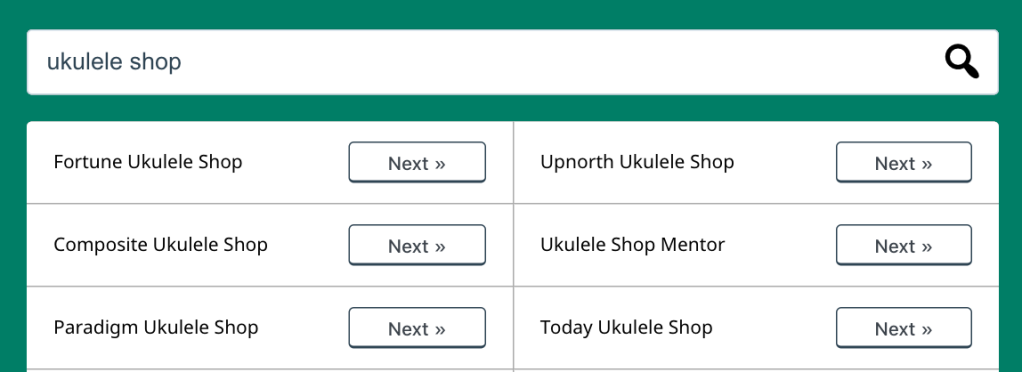
Are you starting a new online store? A brick-and-mortar salon? A freelance consultation service? The new business name generator by WordPress.com is a one-stop tool to get you started with your next big idea.
Choosing a compelling, catchy name is a crucial step in any new project. That’s why we’ve launched a powerful tool that generates dozens of creative options for your business, store, or any other venture.
The business name generator is free and easy to use. Just enter one or more keywords, and it will generate dozens of potential names for you.
When you find a name you like, you can instantly take the next step and buy a custom domain — a web address — that uses it. Ready to start a shiny new website for your business? You can do that with a few clicks, all without leaving WordPress.com.
Ready to take the business name generator for a spin?
Give it a try today
Quelle: RedHat Stack

With the continuing shift to digital, especially in the retail industry, ensuring a highly personalized shopping experience for online customers is crucial for establishing customer loyalty. In particular, product recommendations are an effective way to personalize the customer experience as they help customers discover products that match their tastes and preferences.Google has spent years delivering high-quality recommendations across our flagship products like YouTube and Google Search. Recommendations AI draws on that rich experience to give organizations a way to deliver highly personalized product recommendations to their customers at scale. Today, we are pleased to announce that Recommendations AI is now publicly available to all customers in beta.Upgrade your recommendation solution Instead of manually curating rules or managing cumbersome recommendation models in-house, you can upgrade your personalization strategy by replacing or complementing your existing solution with Recommendations AI.By putting a greater emphasis on each individual customer rather than on an item, Recommendations AI is able to piece together the history of a customer’s shopping journey and serve them with personalized product recommendations. Recommendations AI also excels at handling recommendations in scenarios with long-tail products and cold-start users and items. Its “context hungry” deep learning models use item and user metadata to draw insights across millions of items at scale and constantly iterate on those insights in real-time in a way that is impossible for manually curated rules to keep up with.Recommendations AI also delivers a simplified model management experience in a scalable managed service with an intuitive UI. This means your team no longer needs to spend months writing thousands of lines of code to train custom recommendation models while struggling to keep up with the state-of-the-art. Key updates to Recommendations AIYou can now get started with Recommendations AI with just a few clicks in the console. Once you create a Google Cloud project, you can integrate and backfill your catalog and user events data with the tools you already use, including Merchant Center, Google Tag Manager, Google Analytics 360, Cloud Storage, and BigQuery.Once the data import is complete, you can choose the model type, specify your optimization objective, and begin training your model. The initial model training and tuning takes just two-to-five days, then you can begin serving recommendations to your customers. To ensure that your setup is working like you want it to, you can preview the model’s recommendations before serving them to customers.In addition to making it easier to get started, we’ve also been collaborating with the Google Brain and Research teams to push the boundary of what’s possible for recommendation systems. As a result, our models can scale to support massive catalogs of tens of millions of items and ensure that your customers have the opportunity to discover the entire breadth of your catalog. Recommendations AI is also capable of correcting for bias with extremely popular or on-sale items, and can better handle seasonality or items with sparse data. Our model training infrastructure allows us to re-train your models daily to draw insights from changing catalogs, user behavior, or shopping trends and incorporate them into the recommendations being served.How customers are using Recommendations AIMany retailers from around the globe have realized tremendous value from Recommendations AI.Sephora, a multinational omni-channel retailer for beauty and personal-care goods with thousands of stores globally, is using product recommendations to personalize their customers’ e-commerce experience.“We wanted to deliver the same highly personalized shopping experience to our clients on our digital platforms that they receive in our physical stores,” says Jaclyn Luft, Manager, Site Personalization & Testing at Sephora. “We started working with Google Cloud to explore how we could leverage its innovative machine learning technology to provide enhanced personalization to our online customers through product recommendations.””Since implementing Recommendations AI we’ve seen impressive results with a 50% increase in CTR on our product pages and a nearly 2% increase in overall conversion rate on our homepage relative to our previous ML-driven recommendations,” Luft continues. “We are now evaluating how we can continue to test, iterate, and expand the application of Recommendations AI to power recommendations on other areas of our ecosystem, such as within the checkout flow and in our emails.” Hanes Australasia—home to many iconic Australian apparel and lifestyle brands—is another customer that’s powering personalization with Recommendations AI.“Recommendations AI delivers extremely good data execution and shows how Google Cloud can turn data into real commercial value,” says Peter Luu, Online Analytics Manager at Hanes Australasia. “When we A/B tested the recommendations from Recommendations AI against our previous manual system, we identified a double-digit uplift in revenue per session.”Luu also added, “the product is extremely easy to use—Google Cloud has provided the expertise, functionality, and performance, so we do not need to be machine learning experts to make the most of it.”Digitec Galaxus, the largest online retailer in Switzerland that offers a wide range of products to its customers from electronics to clothes, uses Recommendations AI to help their customers find products they are looking for.“At Digitec Galaxus, delivering a great online shopping experience to our customers is a top priority,” says Christian Sager, Product Owner for Personalization at Digitec Galaxus. “With Recommendations AI, we are able to provide personalized product recommendations to our customers at scale throughout our website. Recommendations AI is also a great reference to test and challenge our in-house recommendations algorithms against.”“During the pandemic, finding the product you need is more important than ever,” Sager explains. “In the past few months, we’ve noticed a strong increase in the usage of recommendations in general, with Recommendations AI performing with up to a 40% additional increase in CTR compared to the previous period. Customer needs evolved as the pandemic continued, and Recommendations AI adapted well to the changes and allowed us to keep up with our customers and their preferences.”Start using Recommendations AI today with a $600 free creditTo accompany the Recommendations AI public beta, we’re also introducing a new pricing structure, with three volume-based price tiers for predictions and a separate charge for model training and tuning. This new structure lets you determine how many models to keep active and whether to pause or unpause model training, giving you greater control over your costs. Additionally, all new Recommendations AI customers will receive a $600 credit on top of the general $300 free credit for new Google Cloud customers. This is typically sufficient to train a model and test its performance in production through a two-week A/B test. Learn more about the new pricing structure and free credit here.To get started using Recommendations AI see our step-by-step guide and check out our website, or contact sales for more information.
Quelle: Google Cloud Platform
Organizations today are changing how they run their businesses to ensure safety and efficiency. As we work closely with our customers, their top priorities include optimizing business costs, scaling for a remote workforce, and ensuring business continuity. As a result, cloud migration remains a priority and partners play a critical role.
To support your cloud migration projects, we are committed to solutions that optimize costs, scale efficiencies, and bring unmatched security and compliance. We have amazing offers, like Azure Hybrid Benefit, reserved instances, and free extended security updates to help our customers save money. Azure also delivers the lowest total cost of ownership for Windows Server and SQL Server workloads, with up to 3x better performance over AWS (GigaOm*).
We are also seeing increasing adoption of specialized workloads like the Azure VMware Solution as customers look to migrate their entire IT estate to Azure. Lastly, Azure does all of this while remaining flexible, so customers can extend their on-premises investments and leverage them as they move to the cloud. The new Azure Stack HCI preview is one example that we just announced.
Today, we’re sharing new Azure services that help accelerate migration.
Leverage new Azure infrastructure services to migrate workloads efficiently
Meeting your business and budget needs continues to be a priority. Migrate your customers’ mission and business critical workloads with confidence by taking advantage of new compute capabilities. For example, new Azure VMs, featuring Intel 2nd generation Intel Xeon Platinum (Cascade Lake) processors, for general purpose and memory intensive workloads are now available. These VMs series offer up to 20 percent greater CPU performance and better overall price-per-core performance compared to the prior generation. We also introduced a new category of VMs—currently in preview—which lowers the price of entry since it does not include a local temporary disk.
In addition, the AMD EPYC™-based Dav4 and Eav4 Azure Virtual Machine series, which provides increased scalability (up to 96vCPUs), are now generally available in additional regions. With these new VM sizes, you can benefit from a greater range in underlying processor technologies. Choose the best solution for your customers, all while increasing cost-effectiveness and achieve significant run-time acceleration.
Along with Azure Virtual Machines, innovations in block storage expand Azure capabilities even further, enabling customers to migrate more workloads and applications to the cloud in a seamless way. With shared disks (now generally available), Azure Disk Storage allows partners to easily migrate customers’ on-premises clustered applications like SQL Server Failover Cluster Instances (FCI) and enterprise applications running on on-premises Storage Area Network (SAN). Benefit from increased disk storage security with Azure Private Links integration (preview), allowing you to transfer data securely over a virtual private network (VPN). Plus, improved flexibility with the ability to increase disk performance independent of size (preview) helps you meet your workload needs and reduce costs.
One of our partners, Pure Storage, is leveraging shared disks to build their own cloud native solution, Cloud Block Store for Azure (currently in beta preview), to help their customers migrate mission-critical applications to Azure. Additionally, benefit from increased disk storage security with Azure Private Links integration, allowing you to transfer data securely over a virtual private network.
Optimizing and addressing the scalability of remote connectivity continues to be top of mind for our partners and customers. Since we announced transit capabilities with Azure Virtual WAN as the first in the public cloud back in 2018, the interest to take advantage of Azure when building branch networks has grown rapidly. To provide the flexibility that our customers need, last week we announced the ability to host third-party network virtual appliances within the Virtual WAN hubs (in preview). Barracuda is the first Virtual WAN partner to bring the advantage of this deep integration allowing customers to take advantage of the Software-Defined Wide Area Network (SDWAN) to improve performance while taking advantage of existing investments and skills.
Additionally, independent software vendors (ISVs) working on optimized and scalable applications connected to 5G networks can now use the new Los Angeles preview location of Azure Edge Zones with AT&T when building and experimenting with ultra-low latency platforms, mobile, and connected scenarios. Register for the early adopter program to take advantage of secure, high-bandwidth connectivity.
Microsoft continues to leverage partnerships to make Azure the number one choice for migrating specialized workloads and business applications. With the new generation of Azure VMware Solution, Microsoft provides a first-party service to ensure greater quality, reliability, and innovation for running VMware natively on Azure. Through Microsoft’s partnership with VMware, Azure has built a seamless integration between VMware applications with Azure. Extend or migrate existing on-premises VMware workloads to Azure without the cost, effort, or risk of re-architecting applications or retooling operations. As a result, customers can gain cloud efficiency and modernize applications over time with Azure services.
Help your customers optimize costs and migrate with confidence
Cloud migration can be a huge project, but we’re here to simplify the journey. Microsoft is continuously upgrading its migration services so you can take advantage of first-class tooling and support. New capabilities in Azure Migrate, Microsoft’s hub of tools for datacenter assessment and migration, help accelerate the journey more than ever. Discover virtual and physical servers running on your customer’s on-premises environment by using the lightweight Azure Migrate appliance, or by importing inventory information through a CSV upload. Better understand dependencies between discovered servers so you can gather machines into groups and minimize risk during migration. After, use Azure Migrate to migrate the server groups to Azure without downtime.
Kainos, a UK-based Microsoft partner, utilized Azure Migrate as the key tool for helping their customer, The Pensions Regulator (TPR), rapidly migrate to Azure from a legacy datacenter facing decommission. After using Azure Migrate to run a full discovery and assess TPR's datacenter, Kainos consolidated TPR’s server estate and migrated 300 servers to Azure. Because of the comprehensive assessment, no issues arose during the migration. Kainos was able to reduce TPR's hosting costs significantly while providing TPR with greater control in the cloud than they had with their legacy system.
For additional migration support, including guidance on migration services like Azure Migrate and more, nominate customers to the Azure Migration Program (AMP). The program provides free and subsidized Azure technical training, partner funding, and support from Microsoft's verified partners with Azure Expert MSP certification or Advanced Specializations, and the opportunity to collaborate with FastTrack for Azure engineers and Microsoft Specialists. AMP supports migration scenarios across infrastructure, data, and applications to address the breadth of customer needs.
Based on customer demand, we’re adding two new scenarios to AMP:
Migrating on-premises Virtual Desktop Infrastructure to Windows Virtual Desktop.
Migrating on-premises .NET web apps to Azure App Service/Azure SQL.
Partners find AMP to be a true accelerator in advancing their customers’ cloud journey—check out how Crayon helped accelerate Tine's datacenter migration efforts through AMP.
Learn more
Through Azure infrastructure offerings, workload partnerships, and services, migrations have gathered tremendous momentum in the past year. Check out Azure Migration Center for updated resources and direction on everything migration, and nominate your customers for AMP today.
*Price-performance claims based on data from a study commissioned by Microsoft and conducted by GigaOm in February 2020. The study compared price performance between SQL Server 2019 Enterprise Edition on Windows Server 2019 Datacenter edition in Azure E32as_v4 instance type with P30 Premium SSD Disks and the SQL Server 2019 Enterprise Edition on Windows Server 2019 Datacenter edition in AWS EC2 r5a.8xlarge instance type with General Purpose (gp2) volumes. Benchmark data is taken from a GigaOm Analytic Field Test derived from a recognized industry standard, TPC Benchmark™ E (TPC-E). The Field Test does not implement the full TPC-E benchmark and as such is not comparable to any published TPC-E benchmarks. Prices are based on publicly available US pricing in West US for SQL Server on Azure Virtual Machines and Northern California for AWS EC2 as of January 2020. The pricing incorporates three-year reservations for Azure and AWS compute pricing, and Azure Hybrid Benefit for SQL Server and Azure Hybrid Benefit for Windows Server and License Mobility for SQL Server in AWS, excluding Software Assurance costs. Actual results and prices may vary based on configuration and region.
Quelle: Azure
The pandemic continues to test business principles, models, and strategies organizations once thought to be bedrock truths of business. The COVID-19 crisis has challenged everything, from leadership principles, financial models, operations, and sales process, to technology decisions and platform strategies. Organizations have been forced to quickly adapt to maintain efficient operations in these difficult times. Technology has remained the common driver throughout this period of worldwide adaptation to change.
The cloud has surged to the center of the recent digital transformation efforts, by quickly creating new solutions securely and reliably, meeting new business challenges, and driving transformation with continuous technological innovation. In meeting the challenges posed by the global pandemic, the cloud is driving digital transformation faster than ever with more organizations adopting cloud technologies.
Microsoft stands with our partners, and we're committed to your efforts, enabling customers for successful cloud use, and harnessing the wave of innovation for organizations across the globe during this challenging time.
At Microsoft Inspire, we continue to invest in our customer’s success on Azure focusing on these four priorities:
Generating confidence in their cloud journey, providing technical guidance and skills development resources.
Focusing on processes and operations on their terms, at their pace through DevOps with GitHub.
Supporting every customer’s cloud adoption journey, delivering on business goals and deploying compliant, secure, and well-managed environments.
Enabling customers with architecture design principles that support efficient, optimized workloads.
Here is how we are approaching each priority and how you can use them to strengthen your market position and grow your business.
Technical guidance and skills development
Skilling and technical knowledge are critical success factors for cloud adoption. With the global pandemic and continued rise of remote work and remote learning practices, Microsoft continues to invest in its learning platforms—meeting the demand for digital literacies and the fast pace of digital technology platforms. Studies demonstrate that “the average life of a skill today is less than 5 years”1 and “more than half (54 percent) of all employees will require significant reskilling by 2022.”2 Now is the time for you, our partners to continue to skill up while continuing to support your customers.
Both Microsoft and Microsoft Learning Partners are moving in-person, instructor-led training to virtual instructor-led training. With free, on-demand, self-paced courses on Microsoft Learn to skill-up and certify your skills, Microsoft offers certified, role-based learning resources, enabling organizations to confidently and successfully adopt Azure. Soon, we will release Azure Database Administrator and Data Analyst certifications at the Associate level into our comprehensive portfolio of technical certifications for Azure.
Microsoft is responding to COVID-19, together with our partner ecosystem, ensuring that people across the globe can reach their learning goals and become certified in Microsoft technologies while staying safe at home. Learn more about our updated guidelines for Microsoft Training and Certification.
DevOps with GitHub to support cloud adoption processes and operations
Remote work is forcing organizations to change how they enable software developers to continue to be productive in such an environment. Effective organizations need to find ways to help their developers to continue to code and keep systems running. Software development is a team sport. Most organizations needed to ensure their developers continued collaborating efficiently, and developers needed to continue delivering value to their customers.
Microsoft recently launched Visual Studio Codespaces—powerful development environments hosted in the cloud, allowing developers working remotely to stay productive. Now, with Visual Studio Live Share, developers can continue to collaborate, co-authoring and editing on the same codebase.
50 million developers live on GitHub working on personal and professional projects. GitHub is the world's largest repository for open source code collaboration and includes many businesses codebases. Built directly into GitHub, GitHub Actions supports automating tasks in the GitHub experience, shipping code direct to Azure in a repeatable and automated process. Across Visual Studio, GitHub, and Azure, Microsoft is powering the DevOps processes and code behind development teams as they collaborate and ship software from any point on the globe.
Seamlessly supporting the cloud adoption journey
While cloud technologies are now mainstream, organizations continue to face obstacles and uncertainty with their adoption efforts. Implementing cloud best practices burdens leaders and lack of sound cloud planning, and strategy alignment not only impacts innovation and growth, but it also generates unexpected costs. A recent Gartner study confirms, “through 2024, companies that are unaware of the mistakes made in their cloud adoption will overspend by 20 to 50 percent.”3
On the other hand, organizations strategically planning for discrepancies between cloud and on-premises operating models remain ready to learn—willing to iterate as their Azure portfolio grows. By creating Azure Landing Zones (with the Microsoft Cloud Adoption Framework for Azure), organizations become more agile, gaining efficiencies and increased confidence throughout cloud adoption. Azure landing zones help customers set up their Azure environment for scale, security, governance, networking, and identity. Draw on Microsoft’s proven technical guidance, resources, and templates, to guide your customers through iteration and learning as they gain confidence and successfully adopt Azure.
Learn more about Azure Landing Zones in this session and get guidance on how to get started.
Deploying and optimizing high-quality cloud workloads
Without focusing on well-architected workloads, even well-designed cloud environments will not succeed. Organizations are looking at how to optimize costs, increase efficiencies, improve security and reliability, while maintaining performance levels, and deliver on strategic business goals.
Following industry standards and terms already commonly used by partners and customers, the Microsoft Azure Well-Architected Framework offers a set of technical best practices to improve workload quality. It includes five pillars of architectural excellence: cost optimization, operational excellence, performance efficiency, reliability, and security.
Mor Cohen-Tal, Cloud CTO at Turbonomic, one of our partners focused on Performance and Cost Optimization, reflects on how they have been helping organizations over the last year: “You can’t solve for cost without understanding performance, closing the gap between “pay for what you need” and “I have no idea what I need.” Turbonomic customers are able to correlate their application performance requirements with the availability of Azure cloud benefits, such as resilience and reliability, ultimately continuously automating those required well-architected actions, ensuring every app has the right resources, within business compliance, to perform optimally in the cloud.”
Becoming well-architected is an ongoing challenge. Market demands, business strategy adjustments, changing technology availability, and other factors require constant monitoring to ensure workloads are at operating as expected. Azure Advisor provides real-time recommendations on deployed workloads and assets, monitoring and improving workload quality aligned with the Azure Well-Architected Framework. With the Microsoft Azure Well-Architected Review, assess the quality of your customer workloads at any time, and make it a healthy practice for your organization and cloud portfolio.
Learn more about the Microsoft Azure Well-Architected Framework watching this session, reading this blog post, or taking the Learning Path Build great solutions with the Microsoft Azure Well-Architected Framework in Microsoft Learn.
Enabling partners to drive customer success
Azure Lighthouse is a native Azure management solution purpose-built for service providers to build and deliver secure managed services at scale, across multiple customer tenants profitably and efficiently.
With Azure Lighthouse, service providers can structure well-architected managed services offers with Azure native and comprehensive security and management tooling. They can securely and quickly onboard customers, leverage a single-pane of glass for cross-tenant management, monitor and manage cloud costs across all their customers, and optimize cloud infrastructure and operations. All with greater automation, security, and governance from a unified control plane.
Service Providers also have opportunities to expand their revenue with Azure Arc by extending their managed services to on-premises, multi-cloud, and edge environments. “The best part is the customer control. Not only do we access exactly what we need, but the customer maintains complete transparency into what we are accessing, where, and when. It’s significantly faster, more secure and effective, and much more convenient to service our customers now.” – Peter Chiang, Senior Project Manager, CloudRiches
Azure Lighthouse is delivering multiple enhancements today based on partner and customer feedback, including a preview for Azure Multi-Factor Authentication and Azure Privileged Identity Management support for just-in-time access. “We already had granular and secure access, but now we’re able to add security best practices of least-privileged principles, providing even more comfort and confidence for our clients.” – James Brookbanks, Azure Service Manager, Parallo
Partners can now easily activate PIM and MFA by adding type options to Role Based Access Control roles (permanent or elevation eligible) in the arm templates they use for customer onboarding. Partners can elevate access to a privileged role type for a shorter period of time, without needing a permanent level of higher access.
Find more information and comprehensive resources that support all these initiatives on Azure Partner Zone. We have a great opportunity ahead of us. Let’s continue to partner, continuing our common endeavor, helping our customers successfully use Azure to achieve their business goals.
1 LinkedIn Workplace Learning Report.
2 World Economic Forum: The Future of Jobs Report, 2018.
3 Gartner, 4 Lessons Learned From Cloud Infrastructure Adopters, June 30, 2020.
Quelle: Azure
As the world navigates through the pandemic, it’s inspiring to see companies across every industry innovate to rethink their operations, engage with customers in new ways, and keep their employees safe. When it comes to innovating in the cloud, customers tell us that they need a platform that enables them to stand up solutions quickly, be agile to respond to their dynamic environments, and do so in a cost-effective manner. Azure has them covered.
Customers today are innovating in Azure more than ever before for their applications and their analytics solutions. Here’s why.
Applications
Customers that modernize their applications, or build new ones, on Azure realize significant cost savings and performance gains. A common pattern we see is customers modernizing their .NET applications with Azure App Service and Azure SQL Database. The Clover Imaging Group, for example, successfully migrated 200 applications to Azure with Azure App Service and Azure SQL Database with minimal effort to free their development team from administrative burdens like patching and updates.
Another common pattern we see are customers developing new applications from the ground up based on cloud design principles. These applications are typically built on containers with Azure Kubernetes Service, take advantage of microservices architectures, use managed databases like Azure Cosmos DB and Azure Database for PostgreSQL and integrate AI capabilities with Azure Cognitive Services and Azure Machine Learning. This pattern is so common that by 2023 more than 70 percent of global organizations will be running more than two containerized applications in production, up from less than 20 percent in 2019.1 And, by 2022, over 50 percent of new enterprise applications developed will incorporate machine learning (ML) or artificial intelligence models.2
A great example of a customer doing this today is the Peace Parks Foundation. Combatting rhino poaching in South Africa, Peace Parks developed an application using Azure Kubernetes Service, Azure Database for PostgreSQL, Azure Functions, and custom ML models with Azure Machine Learning to detect poachers across a 96,000 hectare park. They stood up a proof of concept in three weeks and had the solution in production in a few months. With this solution, Peace Parks is saving the lives of hundreds of rhinos each year.
Analytics
Customers are also turning to Azure more than ever before for their analytics solutions. Core to achieving the agility required for today’s environment is the ability to gain fresh, continuous insights from data. Azure Synapse Analytics brings together the world of big data and data warehousing into a single service and enables immediate insights by breaking down the barriers between operational and analytical systems through Azure Synapse Link. It is deeply integrated with Power BI, the undisputed leader in business intelligence, and Azure Machine Learning, which enables developers and data scientists of all skill levels to build, manage and deploy ML models responsibly at scale.
This combination offers unmatched value and performance. According to another recent Forrester Consulting Total Economic Impact™ study, customers using Azure Analytics with Power BI realize a 271 percent ROI over three years with a nine-month payback period. A fantastic example of a customer using these services today is Walgreens. Walgreens migrated their entire on-premises data warehouse for inventory management to Azure Synapse Analytics in just three months. With this solution, they were able to gain three times the performance at a third of the cost.
“With Azure Synapse, we were able to create a platform that is streamlined, scalable, elastic, and cost effective, enabling my business users to make the right decisions for the fast-paced market.” – Anne Cruz, IT Manager for Supply Chain and Merchandising, Walgreens
Get started today
There has never been a better time to innovate and invent with purpose with Azure for your applications and analytics. Get started today.
1 Gartner, 3 Critical Mistakes That I&O Leaders Must Avoid With Containers, Jeffrey Hewitt, August 2, 2019
2 Gartner, Machine Learning Alters the Role of the Developer, Van Baker & Jim Hare, October 31, 2019
Quelle: Azure

Vor der EU-Kommission beschwert sich Slack über ungleichen Wettbewerb, da Microsoft Teams mit seiner Office-Software verbindet und installiert. (Slack, Microsoft)
Quelle: Golem






