Amazon Aurora mit PostgreSQL-Kompatibilität unterstützt die Amazon Aurora Global Database

Die Amazon Aurora Global Database ist jetzt für die PostgreSQL-kompatible Version von Amazon Aurora verfügbar. Die Aurora Global Database wurde für Anwendungen mit globaler Präsenz entwickelt, sodass eine einzelne Aurora-Datenbank mehrere AWS-Regionen mit bis zu fünf sekundären Regionen umfassen kann. Die schnelle Replikation ermöglicht globale Lesevorgänge mit geringer Latenz und eine schnelle Notfallwiederherstellung nach regionalen Ausfällen.
Quelle: aws.amazon.com

The Block Editor is Now Supported on the WordPress Native Apps

Part of what helps WordPress power 35% of the web is language: WordPress is fully translated into 68 languages. Pair that with the WordPress native apps, which make WordPress available across devices, and you have a globally accessible tool.

Today we’re announcing app updates that bring the new Block editor to mobile devices, so on-the-go publishing is even easier for that 35%.

At Automattic, we speak 88 different languages, so we thought: why not use some of them to tell you about the editor updates? Instead of a few screenshots and bullet points, here are some of the people who build the editor and apps sharing their favorite tools and tricks for the mobile Block editor. To make it more accessible, we’ve also included English translations. 

(And for those who want more detail — yes, there are still screenshots and bullet points!)

Rafael, Brazilian Portuguese

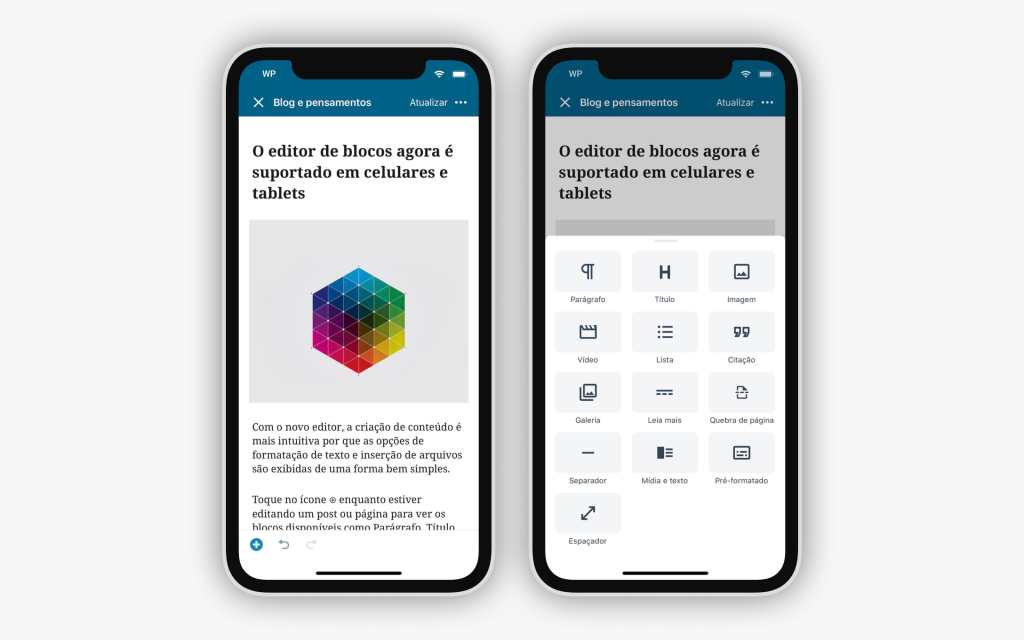
Com o novo editor, a criação de conteúdo é mais intuitiva por que as opções de formatação de texto e inserção de arquivos são exibidas de uma forma bem simples.

Toque no ícone ⊕ enquanto estiver editando um post ou página para ver os blocos disponíveis como Parágrafo, Título, Imagem, Vídeo, Lista, Galeria, Mídia e texto, Espaçador e muitos outros.

Translation

With the new editor, creating content is more intuitive because the options to format text and add media are displayed in a simple way. Tap on the ⊕ icon when editing whether a post or page to see all the available blocks like Paragraph, Heading, Image, Video, List, Gallery, Media & Text, Spacer and more.

Anitaa, Tamil

பயணங்களில் மிகவும் விருப்பமுள்ள எனக்கு, பயண குறிப்புகளை பயண நேரத்திலேயே எழுதுவது வழக்கம். இந்தப் புதிய கைபேசி செயலி என் வேலையே மிகவும் எளிதாக்குகிறது. எனக்குப் பிடித்த சில அம்சவ்கள்:  

கி போர்ட்டில் உள்ள நேக்ஸ்ட் பொத்தானை அழுத்துவதன் மூலமே புதிய பத்தியை தொடங்க முடிவது.பட்டியல் தொகுதியைப் பயன்படுத்தி எனது சொந்த பட்டியலை உருவாக்க முடியும்.

பட்டியலின் உள்ளெ பட்டியலை சரிபார்க்கும், அல்லது, துணை பட்டியலை உள்ளடக்கும் பட்டியல் பத்தியை ஆவலுடன் எதிர்பார்க்கிறேன். எனவே அடுத்த புதுப்பிப்பைப் பற்றி நான் மகிழ்ச்சியடைகிறேன்.

Translation

I love travelling and I spend a lot of time on my blog writing travel tips while on the go. My favorite features in the Block editor include:

Creating a new paragraph block by pressing the RETURN button on the keypad. Adding a List block to create my own lists.You can even add sub-lists!

I look forward to seeing what’s coming next!

Mario, Spanish

Cuando escribo, doy mil vueltas sobre qué palabras utilizar y me cuesta decidirme. Uso mi móvil porque me da la posibilidad de capturar mis ideas justo en el momento que se me ocurren. Es por eso que de las cosas que más me gustan del Editor es que puedo moverme de un bloque de texto a otro con facilidad y también cambiarlos de lugar. Además, se puede hacer/deshacer muy fácilmente, y siempre se mantiene el historial de edición lo que me da mayor seguridad a la hora de cambiar incluso sólo pequeñas partes del contenido que voy escribiendo.

Translation

When I write, I walk around in circles and can never decide which words to use. So I use my mobile phone, which lets me capture ideas right when they occur to me. That’s why the things I appreciate in the new Editor are the abilities to move from block to block with ease and to change their order and since you can undo/redo quite easily and can see your editing history, I have confidence when I change even small bits of the post I’m writing.

Jaclyn, Chinese

用過 Gutenberg 古騰堡後網誌效率高很多!因為寫旅行文章,很多時候是在旅途中或是平日空擋等候時間紀錄和寫下想法,行動 app 讓我隨時隨地都可以編輯文章。行動古騰堡簡化了移動文章段落重新排序的步驟,讓文章的架構變得很清楚,也更容易管理。

Translation

The new block editor truly makes a difference in my blogging efficiency and experience. Since my blog is about traveling, I often scribble notes and thoughts during my trips. The block editor on mobile simplifies the process of moving paragraphs around and organizing content, so the architecture of the post becomes clearer and easier to reorganize.

To start using the block editor on your app, make sure to update to the latest version, and then opt in to using it! To opt in, navigate to My Site → Settings and toggle on Use Block Editor.

We hope you give the latest release a try; tell us about your favorite part of the mobile block editor once you’ve had a chance to try it.

We’d also love to know your thoughts on the general writing flow and on some of the newer blocks like video, list, and quote blocks. For specific feedback, you can reach out to us from within the app by going to Me → Help and Support, then selecting Contact Us.
Quelle: RedHat Stack

Improved Offline Publishing

The best technology is invisible and reliable. You almost forget it’s there, because things just work. Bad technology never disappears into the background — it’s always visible, and worse, it gets in your way. We rarely stop to think “My, what good Wifi!” But we sure notice when the Wifi is iffy.

Good technology in an app requires solid offline support. A WordPress app should give you a seamless, reliable posting experience, and you shouldn’t have to worry whether you’re online or offline while using WordPress Mobile. And if we’ve done our jobs right, you won’t have to! 

We all need fewer worries in life, so if you haven’t already head to https://apps.wordpress.com/get/ to download the apps.

Offline Publishing

On the go and without a connection?  No worries! The apps will now remember your choices and once you’re back online, your content will be saved and published as requested.  But if you changed your mind about publishing a post while you’re still offline, you can still safely cancel it.

The new Offline Publishing flow.

This improved publishing flow comes together with a revamped UI for your post status.  You’ll be able to clearly see which posts are pending, saving or publishing.

Smoother Messaging

We removed several alerts that were being presented while you were offline.  These blocking alerts required you to take action but often provided no insights on either what the problem was, or how to resolve it.

They have been replaced with contextual non-blocking messages both within the UI, and in notices appearingright above the toolbar.

As a result, you’ll see less disruptive and uninformative alerts, and more inline and informative messages, such as the one shown above.

Safeguards

We also added some safeguards to ensure there are no surprises!

You can cancel offline publishing.

Modifying posts that are scheduled for publishing will cancel the publishing action. Don’t worry, though – you can always reschedule the post for publishing.

All queued save and publishing operations will be canceled if your device stays offline for more than 48 hours.  We want you to be in complete control of what gets published and when.
Quelle: RedHat Stack

A Crash Course in Remote Management

Remote work is a prominent topic lately, as people around the world are doing their best to live their lives and keep themselves and their families safe and prepared during the COVID-19 outbreak. The impact of this outbreak is felt across societies and cultures as well as in the workplace.  

Automattic, the company behind WordPress.com, is a primarily distributed company with more than 1,000 employees across 76 countries. I’m an engineering lead, currently working on the Developer Experience team. As Automattic has grown, we’ve learned a lot about working remotely and across time zones, and have shared insights on what we see as the future of work on the Distributed podcast, hosted by our CEO, Matt Mullenweg. 

This week, Nicole Sanchez, the founder of Vaya Consulting and an expert on workplace culture, and I had an opportunity to co-present a Crash Course in Remote Management, a free one-hour webinar hosted on Zoom. Nicole has previously held social impact and leadership roles at GitHub and the Kapor Center for Social Impact.

Nicole and I walked an engaged audience through proven practices and what they’ve learned about leading, communicating with, and measuring the success of remote teams. Participants offered insightful questions, leading to lively discussions around:

Collaboration and relationship-building.The cost, benefit, and ideal frequency of bringing teams together for face-to-face interaction (in general, if not as commonly right now).Communicating and prioritizing messages across a variety of channels. Encouraging people to go outside, exercise, spend time with family, or otherwise step away from the computer (also known as being “AFK,” or “Away From Keyboard”) without the fear of being judged or anxiety over being less productive.

Some companies are encouraging employees to experiment with working from home, which can feel very different from in-person and office work. If you’re interested in learning more, please check out the full video recording of the course:

Matt’s latest blog post, “Coronavirus and the Remote Work Experiment No One Asked For,” is also worth a read. For more information and advice on COVID-19, please visit resources from the CDC, World Health Organization, and other health authorities.
Quelle: RedHat Stack

Turning a Page with Page Layouts

Need to add a new page to your site but don’t know where to start? Making a brand new site on WordPress.com and want to design a homepage quickly? There’s a new addition to the WordPress experience that’ll help with exactly that.

Let’s take a look at Page Layouts! They’re pre-designed pages you can drop content into, without needing to decide what to put where.

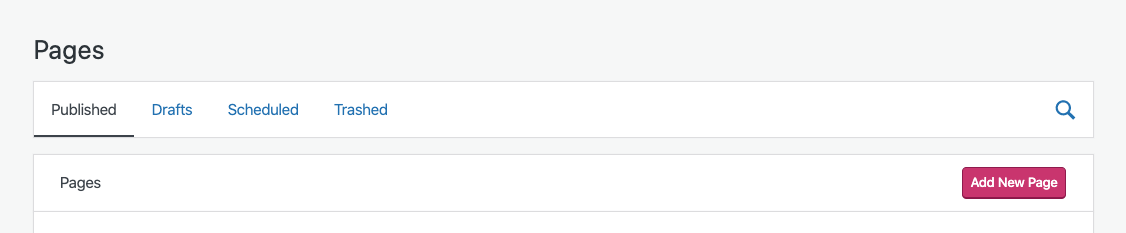
To add a Page Layout to your site, head to My Sites > Site > Pages and click the “Add New Page” button — it’s the pink one:

Next, we’ll show you a selection of layouts you can choose from — there are layouts available for

About pagesContact pagesServices pagesPortfolio pagesRestaurant Menu, Team, and Blog pagesand even starting points for Home pages

Here’s one of the available Portfolio Page Layouts, for example.

These layouts are all made using blocks in our block editor, which means you can edit the images, content, and layout all in one place. Start by replacing the default images and text, and you’ll be on your way!

You can use Page Layouts to make great-looking pages with only a few clicks. For inspiration, here are a selection of layouts using a variety of WordPress.com themes.

What other types of pages and designs would be useful for your site? Let us know what you’d like to see — we’d love to hear from you!
Quelle: RedHat Stack

Announcing a New Scholarship for LGBTQ+ WordPress Community Members

The Queeromattic Employee Resource Group, Automattic’s LGBTQ+ internal organization, is proud to announce a scholarship for LGBTQ+ WordPress Community members who need financial support to attend a WordCamp flagship event for the first time. 

For those unfamiliar with WordCamps, they are informal, community-organized events that are put together by WordPress users like you. Everyone from casual users to core developers participate, share ideas, and get to know each other. There are currently four flagship events each year: WordCamp Europe, WordCamp Asia, WordCamp US, and WordCamp Latin America. We’re going to sponsor one member of the LGBTQ+ community to attend each of these events!

Our hope in sponsoring folks to attend an initial WordCamp flagship event is that it will provide a career-enhancing opportunity for folks to connect more deeply with members of the WordPress community and level up their own WordPress skills to take back into their everyday life. Many of us at Automattic found our way here through the wider WordPress community and we’re really excited to share that chance with folks from the LGBTQ+ community who might not have the opportunity otherwise. 

Right now, we’re accepting applications to WordCamp US 2020. If you’re a member of the LGBTQ+ community and a WordPress user, we encourage you to apply: https://automattic.com/scholarships/queeromattic/  To be considered, please apply no later than Sunday, May 31, 2020 at 12 a.m. Pacific Time.

If you know someone who would be perfect for an opportunity like this, please share it with them! We want folks from all over the world to have the chance to benefit from this new scholarship.
Quelle: RedHat Stack

Digital Transformation in Italy, Powered by OpenShift

Recently in Milan, Red Hat presented an Italian edition of the OpenShift Commons gathering. The event brings together experts from all over the world to discuss open source projects that support the OpenShift and Kubernetes ecosystem as well as to explore best practice for native-cloud application development and getting business value from container technologies at scale. Presenting in Milan were three organizations leading the way: SIA, Poste Italiene and Amadaus.*
Amadeus’ OpenShift infrastructure
Amadeus Software Engineer Salvatore Dario Minonne spoke of the five-year relationship between Red Hat and Amadeus. “In the fall of 2014 we got to know the Red Hat engineering team in Raleigh in the United States. Our teams got their hands on the first versions of OpenShift and started a fruitful collaboration with Red Hat that has become a true engineering partnership. We continue to contribute our use cases to the community, to help drive open source innovation that meets our real-world needs,” said Minonne.
“Not all Amadeus applications are in the cloud,” added Minonne, underlining that their infrastructure is a hybrid of public and private cloud, and there is a careful consideration when migrating workloads to the cloud. 
“At Amadeus,” said Minonne, “We are looking closely into multicloud, not just to avoid vendor lock-in, but also to mitigate the risks of impact if something goes wrong with a provider, and to give us the ability to spin down a particular cluster if it is buggy or there is a security issue.” 
Minonne talked about the change in mindset required with a move to hybrid cloud. “Software development and management practices must also change, to mitigate compatibility issues that might occur with applications not originally designed for the cloud. In fact, many Kubernetes resources have been created precisely to reduce these incompatibilities.”
Poste Italiane
Pierluigi Sforza and Paolo Gigante, Senior Solutions Architects working in Poste Italiane’s IT Technological Architecture Group, spoke to the OpenShift Milan Commons audience about how Poste Italiane has accelerated its digital transformation efforts in the last year.
Sforza emphasised how they are embracing a DevOps philosophy along with their increased use of open source, which has involved building a closer relationship with Red Hat. Gigante added that the rise in open source at Poste Italiene “reflects the current technology landscape, where rapidly evolving competition, increased digitalization and changing customer expectations require faster time to market, which is one area where proprietary technologies from traditional vendors often fall short.” 
Sforza added that, “the need for agility and speed of delivery sometimes necessitates taking a risk in trying less mature technologies, starting by experimenting with the open source community and then relying on trusted vendors, such as Red Hat, to have the levels of security and stability needed to go into production.”
Poste Italiane has been adapting its legacy infrastructures and processes to the new world of DevOps and containerization. This laid the foundation for new projects, such as an adaptation it has made to its financial platform in line with the PSD2 directive. “With OpenShift, we were able to create a reliable, high performance platform perfectly adapted to our needs, in order to meet another of our major business goals: to be at the forefront of innovation,” said Sforza.
The organization’s infrastructure modernization implicates the migration of some workloads off the mainframe. Sforza explained: “Where it makes sense, we are aiming to move monolithic workloads to a containerized infrastructure using microservices, which is more cost effective and gives us greater scalability. This will help us manage applications more efficiently and provide a more slick end-user experience, especially given the rise in customers using our digital channels.”
SIA
SIA is headquartered in Milan and operates in 50 countries. SIA is a European leader in the design, construction and management of technology infrastructures and services for financial institutions, central banks, public companies and government entities, focusing on payments, e-money, network services and capital markets.
Nicola Nicolotti, a Senior System Administrator at SIA, explained how they are supporting customers with the move to containers: “the traditional waterfall approach is often not compatible with the adoption of new technologies, which require a deeper level of integration. However, many traditionally structured organizations face multiple difficulties when adopting new technologies and putting changes into practice, so we aim to help them understand what those challenges might be as well as the corresponding solutions that can help them meet their business objectives.”
Matteo Combi, SIA Solution Architect, emphasised the importance of collaboration when working with the open source community – not just via software development. “When we participated in Red Hat Summit in Boston, we recognised the value in sharing diverse experiences at an international level. Being able to compare different scenarios enables us to develop new ideas to improve our use of the technology itself as well as how it can be applied to meet our business goals.”
Learn more about our customer stories at Red Hat Summit Virtual Experience.
* Customer insights in this post originally appeared in Italian as part of a special feature in ImpresaCity magazine, issue #33, October 2019, available to read here. 
The post Digital Transformation in Italy, Powered by OpenShift appeared first on Red Hat OpenShift Blog.
Quelle: OpenShift