How Azure Lighthouse enables management at scale for service providers

Extending Azure Resource Manager with delegated resource management

Today, Erin Chapple, Corporate Vice President, Microsoft Azure, announced the general availability of Azure Lighthouse, a single control plane for service providers to view and manage Azure across all their customers. Inspired by Azure partners who continue to incorporate infrastructure-as-code and automation into their managed service practices, Azure Lighthouse introduces a new delegated resource concept that simplifies cross-tenant governance and operations.

Granular access, better automation, and simplified customer onboarding

Powering Azure Lighthouse is an Azure Resource Manager capability called delegated resource management. Delegated resource management lets customers delegate permissions to service providers over scopes, including subscriptions, resource groups, and individual resources, which enable service providers to perform management operations on their behalf. After customers delegate resources to a service provider, the provider can provide access to users or accounts in provider’s tenant within the constraints specified by the customer, using the standard role-based access control (RBAC) mechanisms. The standard RBAC mechanisms work as if customer resources were resources in provider’s own subscriptions. Finally, delegated resource management works consistently regardless of the licensing construct service providers and their customers might choose—enterprise agreement (EA), cloud solution provider (CSP), and pay-as-you-go.

“Azure delegated resource management enables Nordcloud customers to easily provide secure access. It simplifies onboarding new managed services customers, ensuring our high security and compliance standards are met.”

Ilja Summala, Group CTO, Nordcloud

Cross-tenant management at scale, with enhanced visibility and governance

Delegated management uniquely supports management-at-scale and automation patterns of service providers, whether those providers are managed services partners acting on behalf of customers or central IT teams of enterprises with multiple Azure tenants. Partners can now manage tens of thousands of resources from thousands of distinct customers from their own Azure portal or CLI context. Because customer resources are visible to service providers as Azure resources in their own tenant, service providers can easily automate status monitoring, and applying create, update, change, delete (CRUD) changes across the resources of many customers from a single location.

Everything relevant to Azure resource management, from the Azure portal to services such as Azure Policy, Resource Graph, Log Analytics feature of Azure Monitor, or Update Management, all honor delegated resource management. What’s more, both customers and service providers can see who took actions on the resources from the activity log, increasing accountability for both parties, with protection of the privacy of individual service provider identities. That’s because the newly built resource provider, Microsoft Managed Services, enables Azure services to determine if a call was made from a resource’s home tenant or from a service provider’s tenant.

Our partners have several options for how they use these new capabilities. Since the Azure Lighthouse portal experiences have corresponding APIs, PowerShell, Azure CLI, REST APIs, or client SDKs, it’s easy to integrate into other cloud management portals, ITSM tools, or monitoring tools.

How our partners use Azure Lighthouse

Examples from two of our expert partners, Rackspace and Sentia, highlight the power of Azure Lighthouse and delegated resource management:

Rackspace is enhancing security and response capabilities using Azure Lighthouse in three steps:

Utilizing Azure Resource Graph and cross-tenant queries to quickly detect which customers have impacted images or hosts deployed
Applying an in-guest audit policy across all customers’ managed estates to verify host settings relating to impact/vulnerability
Using update management to report on impacted systems and schedule targeted hot fixes

Sentia pivoted CI/CD pipeline to use declarative Azure Resource Manager templates for provisioning management artifacts across all customers who are under Azure CSP licensing construct. Sentia’s managed services offer is now 90 percent based on Resource Manager templates, which simplifies deployments dramatically, automating monitoring, governance, and management tasks at scale, across customers. 

Continued Azure Resource Manager investments for our partners

Azure Lighthouse and delegated resource management are just the latest of the platform investments we continue to make for our partners. Together with Azure managed applications and custom providers, they enable comprehensive management-at-scale capability for partners and customers. To hear more, watch my demo at Microsoft Build 2019. Some of the other management innovations we’ve made include the following:

Partners can build cross-tenant experiences into their solutions with minimal development, since Azure Resource Manager APIs and Azure Resource Graph queries are now enhanced with tenant context.
Service providers and ISVs can extend and serve-up their IP natively within Azure using custom providers. Imagine end-customers raising service requests to service providers from within Azure, thanks to the ability of custom provider to integrate ITSM tools’ capabilities natively to Azure.
Customers can purchase applications developed by partners from the Azure Marketplace that come with management out of the box provided by service providers. Underlying application resources are protected from the customer while they use the new managed application UI to interact with an application safely. Service providers are given full access to the application to maintain, update, and provide application support for the customer from managed application center.

“We are delighted to see the adoption of the new Azure Lighthouse capabilities into Veeam’s Backup-as-a-Service offerings, representing a natural extension of our cloud-based business offerings. This partnership is a great opportunity for our managed services providers to easily extend Backup-as-a-Service offerings by Veeam using Azure Lighthouse, in order to manage their Azure customers at scale.”

Tim FitzGerald, Vice President, North America Cloud, Ingram Micro Inc.

When Azure as a platform does more for our partners, our partners can focus more on providing differentiated services and higher value to our joint customers. That is how partners make more possible on Azure. We look forward to hearing your feedback on Azure Lighthouse and delegated resource management.
Quelle: Azure

Ensuring customer success: Introducing the Azure Migration Program

Last July, I shared our approach to helping customers migrate to Azure. Since then, we’ve seen tremendous customer response working with organizations such as Allscripts, Chevron, J.B. Hunt, and Carlsberg Beers, and we’ve gained valuable insights about customer needs along their journey. Today, we are bringing together a best practice-based, holistic experience for migrating existing applications and systems to Azure.  

Azure Migration Program   

Azure Migration Program includes prescriptive advice, resources, and tools customers need for a successful path to the cloud from start to finish. Using proven cloud adoption methodologies, tools, resources, and best practices, customers can ensure their move to Azure is successful. Through the program, customers will work hand in hand with Microsoft experts and specialized migration partners to receive:

Curated, step-by-step guidance from Microsoft experts and specialized migration partners based on proven Cloud Adoption Framework for Azure methodology.
Technical skill building with foundational and role-specific courses to develop new Azure skills and ensue long-term organizational readiness.
Free Azure migration tools including Azure Migrate to assess and migrate workloads. And free Azure Cost Management to optimize costs. 
Offers to reduce migration costs including Azure Hybrid Benefit, free Extended Security Updates for Windows Server 2008 and SQL Server 2008.

“The AMP program is going to help us get our customers through the initial stages of migration more rapidly – especially through the part where it takes us typically a more time, helping their people adjust to operating at cloud-speed, and with a set of automated processes that are quite different than a traditional on-premises operating model.”    

– Alex Brown, CEO, 10th Magnitude

To learn more about the program, watch this video to see how you can benefit. You can also register for the webinar on July 24, 2019 to learn more. If you’re ready to get started now, you can submit your request to participate beginning July 15, 2019.

Why run Windows Server and SQL Server anywhere else?

SQL Server 2008 end of support was July 9, 2019 and Windows Server 2008 end of support is January 14, 2020. Most customers are choosing Azure as the destination for Windows Server and SQL Server workloads for several reasons:

Unparalleled innovation. Azure delivers innovative, fully managed capabilities across apps, data, and infrastructure. Azure App Service supports popular app frameworks with advanced DevOps capabilities, delivering a highly productive app migration experience for customers. Azure SQL Database managed instance provides evergreen SQL, which never needs to be patched or upgraded along with comprehensive SQL Server Engine compatibility so customers can migrate SQL Server workloads without changing code. Finally, Azure IaaS can meet all the infrastructure needs for your migrated workloads with global coverage across 54 regions. 
Unmatched security. Azure enables a security posture that’s easier to implement and far more comprehensive than other environments, thereby enabling your migrated workloads to be secure and well managed. With Azure Security Center, customers get the built-in protections across hybrid environments. Azure Blueprints makes it easier for customers to define and apply security policies across their workloads speedily and at scale. Azure Sentinel enables advanced security threat hunting and mitigation from across the enterprise.
Unbeatable offers. AWS is 5X more expensive than Azure for Windows Server and SQL Server. Customers are realizing significant savings by taking advantage of unique offers like Azure Hybrid Benefit and free Extended Security Updates only in Azure. 

Azure Migrate – Your single destination for all migration needs 

Azure Migrate toolset delivers a unified, integrated experience across Azure and partner migration tools, so customers can identify the right tool for their migration scenario. Azure tools such as Server Assessment, Server Migration, Database Migration Service, and App Service Migration Assistant are now part of Azure Migrate. Azure partner tools such as Carbonite, Cloudamize, Corent, Device42, Turbonomic, and UnifyCloud are now integrated with Azure Migrate with additional integrations on the way. We have also enabled agentless migration and added support for Hyper-V assessments. Learn more and watch the new Azure Migrate video. 

Get started today

I couldn’t be more excited about the collective opportunity that lies ahead of us and look forward to helping customers confidently plan and migrate to Azure. 

Visit the Azure migration center to get started today.
Quelle: Azure

Announcing preview of Azure Data Share

In a world where data volume, variety, and type are exponentially growing, organizations need to collaborate with data of any size and shape. In many cases data is at its most powerful when it can be shared and combined with data that resides outside organizational boundaries with business partners and third parties. For customers, sharing this data in a simple and governed way is challenging. Common data sharing approaches using file transfer protocol (FTP) or web APIs tend to be bespoke development and require infrastructure to manage. These tools do not provide the security or governance required to meet enterprise standards, and they often are not suitable for sharing large datasets. To enable enterprise collaboration, we are excited to unveil Azure Data Share Preview, a new data service for sharing data across organizations.

Simple and safe data sharing

Data professionals in the enterprise can now use Azure Data Share to easily and safely share big data with external organizations in Azure Blob Storage and Azure Data Lake Storage. New services will continue to come online. As a fully managed Azure service, Azure Data Share does not require infrastructure to set up and it scales to meet big data sharing demands. The intuitive interface makes sharing easy and productive, directly from the Azure portal. With just a few clicks data professionals choose which data to share and who to share it with. They can schedule the service to automatically share new or changed data pertaining to specific datasets, as well as stop future updates from flowing through at any time. With Azure Data Share, data professionals have greater control over each data sharing relationship and can govern use by associating term of use with each data share created. To receive the data, recipients must agree to the terms of use specified.

Alongside governance, security is fundamental in Azure Data Share and leverages core Azure security measures to help protect the data.

Enabling data collaboration

Azure Data Share maximizes access to simple and safe data sharing for organizations in many industries. For example, retailers can leverage Azure Data Share to easily share sales inventory and demographic data for demand forecasting and price optimization with their suppliers.

In the finance industry, Microsoft collaborated with Finastra, a multi-billion dollar company and provider of the broadest portfolio of financial services software in the world today that spans retail banking, transaction banking, lending, and treasury and capital markets. Finastra is fully integrating Azure Data Share with their open platform, FusionFabric.cloud, to enable seamless distribution of premium datasets to a wider ecosystem of application developers across the FinTech value chain. These datasets have been curated by Finastra over several years, and by leveraging the data distribution capabilities of Azure Data Share, ingestion by app developers and other partners requires simple wrangling, significantly reducing the go to market timeframe and unlocking net new revenue potential for Finastra.

“Our decision to integrate Azure Data Share with Finastra’s FusionFabric.cloud platform is now a great way to further accelerate innovation via an expanded open ecosystem. Our partnership with Microsoft truly provides us with limitless opportunities to drive transformation in Financial Services.”

– Eli Rosner, Chief Product and Technology Officer, Finastra

Next steps

Industries of all types need a simple and safe way to share data. Azure Data Share opens up new opportunities for innovation and insights to drive greater business impact.

Watch the video about Azure Data Share.
Get started with documentation.
Start using Azure Data Share in the Azure portal.

Quelle: Azure

Enhancing Microsoft's commercial marketplace for partners

As we head into the global partner conference Microsoft Inspire on July 14-18, 2019, a big focus is on rethinking how we make it easier for customers to discover, try, and buy cloud-based software and services from our partners. Today, we're excited to announce new tools, commerce options, and a rewards program through the Microsoft commercial marketplace that help partners leverage this important distribution channel.

Today, we're excited to announce new tools, commerce options, and a rewards program through the Microsoft commercial marketplace that makes it easier than ever for our partners to grow their business through this important distribution channel.

Commercial marketplace as a new distribution channel

Many people think of a commercial marketplace as a simple catalog of offer listings which are often difficult to navigate.  For customers, they are often linked off to a different experience for trial and purchase. Publishers and partner selling solutions are challenged by how to differentiate their solutions to stand out in the volume of offers.

We are working with our partner community to ensure the commercial marketplace experiences deliver a new distribution channel to drive their business growth. For example, Microsoft AppSource targets business decision makers while Azure Marketplace targets IT and developers. This includes having the commerce capabilities and solution supply to capture the rising customer demand in online enterprise software purchases.

Microsoft’s commercial marketplace has at its core, one product catalog, which includes both Microsoft cloud software and services as well as software and services from our partners built on top of and to connect with one or more cloud services offered by Microsoft (Microsoft 365, Dynamics 365, Microsoft Power Platform, and Azure) publishing as transactable offers. This is not just for independent software vendors (ISVs) creating repeatable intellectual property (IP). The commercial marketplace experiences also support offers from managed service providers (MSPs) and consulting services from systems integrators (SIs) such as one-day assessments, migration offers, and more.

Customers can discover, try, and buy solutions from the marketplace in one of three ways:

Direct from the publishers
Through our field sales teams who retire quota for selling eligible partner solutions, or
Through our global distribution channel, where we now also pay the channel a 10 percent incentive to sell marketplace publisher solutions with a transactable SaaS offer, and who participate in the IP co-sell program. 

Customers are looking for quicker buying experiences where they can purchase Microsoft products AND solutions from our partners – together in one place, with one transaction, on a unified invoice, which the commercial marketplace provides.

Using the commercial marketplace as a strategic distribution channel will require partners to think about their business model in new and different ways, which can provide significant new revenue streams. For instance, any publisher can continue to list or trial their solution in Microsoft AppSource or Azure Marketplace, but the impact will likely be similar to what they face today, where the customer discovery experience is crowded due to volume of offers and the publisher struggles to differentiate their solution. However, when a publisher chooses to transact in Microsoft’s commercial marketplace, they get access to a whole new set of benefits and ways to sell:

Gain access to a global reseller channel with over 70,000 cloud solution providers (CSP) in over 140 countries who receive an incentive directly from Microsoft when they resell publisher solutions.
Provides simplified deal-making with custom contract amendments.
Centralized partnership experience via Partner Center for the commercial marketplace onboarding, lead sharing, deal registration, benefits, incentives, sales analytics, and investments.
New go-to-market (GTM) benefits via marketplace rewards that unlocks GTM benefits for publishers as they reach various transaction thresholds.

A single onboarding and management experience

Whether a customer buys direct through Microsoft field sellers or through CSP, each of these channels is accessible and managed by partners through a single ingestion point known as Partner Center. Within Partner Center, publishers can publish marketplace offers and manage their engagements, while resellers can bundle Microsoft software and services with publisher’s software and services. This simplifies customer, publisher, and reseller engagement with one transaction and one invoice.

New commerce options

To accompany this new publisher experience, we’ve released new commerce capabilities that partners of all sizes are already starting to benefit from such as ESRI with site-based SaaS, Barracuda, and Trend Micro who use custom business models for their SaaS-based applications. Approved Contact, Crossware, and MongoDB are also using the per-seat SaaS capabilities and managed services from long-time Microsoft partners like Ingram Micro.

These new commerce enhancements allow publishers to customize their offers to meet customer needs and scale through the global reach of Microsoft’s customer and channel communities.

Marketplace rewards

We’re also sharing marketplace rewards, which is a new benefits program which will enhance the success of publishers with transactable offers in the commercial marketplace. Through the program publishers can unlock sales, marketing, and technical benefits to help accelerate their success. As a publisher’s business grows they’ll continue to unlock more benefits designed to provide support at every stage of their growth. This comes with a new badging program for Microsoft AppSource and Azure Marketplace that will quickly direct customers to partner solutions they can trust, which will work with cloud services from Microsoft. We will be publishing additional details on the program next week during Microsoft Inspire.

With these capabilities, publishers will be able to create new revenue streams, reach new customers in new markets, and grow their business faster than ever before.

Next steps

Learn more about how to onboard and publish your offers at Partner Center, how to list them on Microsoft AppSource and Azure Marketplace, and how to take advantage of the new go-to-market services and onboarding resources.

Visit the Microsoft Inspire site, which will be updated with materials, photos, and keynote replays for more highlights from the event.
Quelle: Azure

Virtuelle Fische: Biotope simuliert ein Aquarium

Kein Bildschirmschoner, sondern die ernsthafte und detailgetreue Simulation eines Aquariums soll Biotope werden – der Nutzer kann sogar den Stresslevel jedes einzelnen Tieres verfolgen. Ende Juli 2019 beginnt über Steam der Early Access für Windows-PC und MacOS. (Simulationsspiel, Steam)
Quelle: Golem

How to integrate Dialogflow with Genesys PureCloud

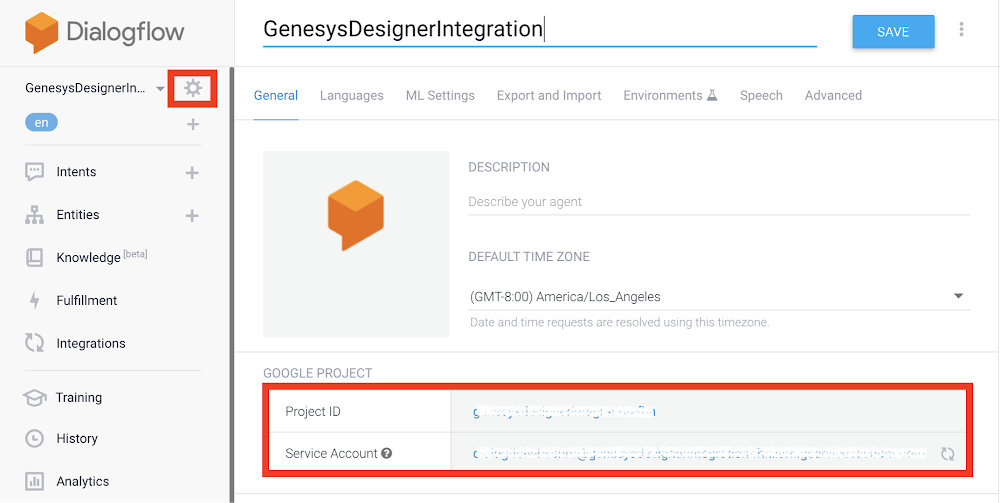
For many businesses, a contact center is their foundation for great customer experiences. Many businesses already use Genesys PureCloud, a suite of cloud services for enterprise-grade communications, collaboration, and contact center management for this purpose. We’ve also heard from businesses that they’d like to integrate natural language-powered virtual agents into their existing Genesys call flows, such as the kind offered by Contact Center AI, Google Cloud’s conversational AI technology designed specifically for contact centers.This article walks you step by step through how to integrate Dialogflow, a component of Contact Center AI and an end-to-end development suite for creating conversational interfaces, with Genesys PureCloud. With this integration, you can use Dialogflow to create virtual agents that can perform specific tasks, and which can be invoked within the Genesys call flow. This integration is an example that shows the power of AI to extend an existing telephony and contact center infrastructure.How to integrate Google Dialogflow with Genesys PureCloudIf you haven’t already, you’ll need to create a Google Cloud account here.In Dialogflow, navigate to Agent settings where you’ll find the Project ID and Service Account information. Click on the project ID to open the Google Cloud Console.Select IAM & admin, then IAM. Make sure the role assigned to the service account is “Dialogflow API Admin”. If it is set to “Dialogflow API Client”, change it to “Dialogflow API Admin”.In the pop-up, create the JSON key. It will download to your machine.From the JSON file, You will need the “private_key_id”, “private_key”, “client_email” and the “client_id” to enter in Genesys PureCloud. Here’s how the JSON key should look:Take “private_key_id”, “private_key”, “client_email” and the “client_id” and open Genesys PureCloud. Navigate to Integrations, then Google Dialogflow and open the Configuration tab to Configure Credentials obtained from the JSON file.That’s it! With this integration, you can now easily access the intents and entities from Dialogflow in the Genesys interface and use them to complement your contact center customer experiences. To learn more about Dialogflow, visit our website.
Quelle: Google Cloud Platform