CES: Smarter E-Roller zum Zusammenklappen
Das in Luxemburg ansässige Unternehmen Ujet hat auf der CES einen gleichnamigen Elektro-Roller mit smarten Funktionen vorgestellt.
Quelle: Heise Tech News

Das in Luxemburg ansässige Unternehmen Ujet hat auf der CES einen gleichnamigen Elektro-Roller mit smarten Funktionen vorgestellt.
Quelle: Heise Tech News

Sony demonstriert auf der CES, was "besonders helle Lichter" bedeuten kann: Das ausgestellte HDR-Display erzielt in Spitzen 10.000 cd/m2.
Quelle: Heise Tech News

Lenovo hat auf der CES zwei Smart Displays mit integriertem Google-Assistenten vorgestellt. Die Echo-Show-Konkurrenten kommen mit acht und zehn Zoll Display, Kamera, Mikro und stehen auch im Hochformat.
Quelle: Heise Tech News
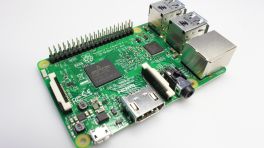
Die Raspberry Pi Foundation hat neue Details zu PiServer veröffentlicht. Das Programmm vereinfacht das Aufsetzen und Verwalten mehrerer der Einplatinenrechner. Insbesondere Schulen sollen damit ihren Administrationsaufwand verringern.
Quelle: Heise Tech News
If you’ve missed out on some of the great RDO Community content over the past few weeks while you were on holiday, not to worry. I’ve gathered the recent blogposts right here for you. Without further ado…
New TripleO quickstart cheatsheet by Carlos Camacho
I have created some cheatsheets for people starting to work on TripleO, mostly to help them to bootstrap a development environment as soon as possible.
Read more at http://anstack.github.io/blog/2018/01/05/tripleo-quickstart-cheatsheet.html
Using Ansible for Fernet Key Rotation on Red Hat OpenStack Platform 11 by Ken Savich, Senior OpenStack Solution Architect
In our first blog post on the topic of Fernet tokens, we explored what they are and why you should think about enabling them in your OpenStack cloud. In our second post, we looked at the method for enabling these.
Read more at https://redhatstackblog.redhat.com/2017/12/20/using-ansible-for-fernet-key-rotation-on-red-hat-openstack-platform-11/
Automating Undercloud backups and a Mistral introduction for creating workbooks, workflows and actions by Carlos Camacho
The goal of this developer documentation is to address the automated process of backing up a TripleO Undercloud and to give developers a complete description about how to integrate Mistral workbooks, workflows and actions to the Python TripleO client.
Read more at http://anstack.github.io/blog/2017/12/18/automating-the-undercloud-backup-and-mistral-workflows-intro.html
Know of other bloggers that we should be including in these round-ups? Point us to the articles on Twitter or IRC and we’ll get them added to our regular cadence.
Quelle: RDO

Joe Raedle / Getty Images
Steve Bannon left the White House in August of last year to a hero's return at Breitbart News, the far-right news site he helped turn into the leading voice of conservative politics in America.
Now, less than five months later, the former chief strategist for the president is gone from the job that made him.
Breitbart announced Tuesday that Bannon would step down from his post as executive chair of the site, a position he first held between 2012 and August 2016. The move follows a brutal week for Bannon, after President Trump — and Bannon's patrons, the Mercer family — disowned him. The split followed the release of a behind-the scenes book, Fire and Fury, in which Bannon strongly criticized members of the Trump family.
In a statement, Bannon wrote that he was “proud of what the Breitbart team has accomplished in so short a period of time in building out a world-class news platform.”
The announcement completes what has been a shockingly fast fall from power for Bannon, who had hoped to use Breitbart, in concert with a new political action committee, to fund insurgent conservative challengers to mainstream Republicans in 2018 congressional races.
Now, the man who took considerable credit for President Trump's shocking win in 2016 finds himself cast out — crucially, from the good graces of Robert and Rebekah Mercer, the billionaire GOP donors who fund Breitbart and a variety of other Bannon-linked ventures. Without the Mercers' support, and that of the rest of the Breitbart board, including CEO Larry Solov and Susie Breitbart — wife of the site's deceased founder, Andrew Breitbart — Bannon was forced to step down.
Bannon's departure leaves Breitbart — already in the midst of a traffic plunge —without its strongest editorial figure. In the months since leaving the White House, Bannon had become the site's public face, with Breitbart selling Bannon-themed merchandise and slavishly covering his public remarks. Without Bannon and former tech editor Milo Yiannopoulos, who left Breitbart after appearing to condone pedophilia in a video released in February 2017, the site will lack name recognition.
At the roaring height of its effectiveness, the news site Bannon referred to fondly as his “killing machine” was able to capture the resentment of a wide range of readers opposed to the liberal trajectory of American culture and turn it into ferociously partisan and highly shareable content. The targets of this resentment ranged from Black Lives Matter activists to liberal journalists to Silicon Valley executives. (And Bannon at least plotted to subvert multiple tech companies.) At times, as BuzzFeed News reported in October, that machine drew directly on the extremist fringe of the right wing — white supremacists and white nationalists — for ideas, guidance, and writing.
Still, it was this very connection to a base of cultural resentment against immigrants, coastal liberals, social justice activists, and others that President Trump seemed not to want to lose even after pushing Bannon from the White House last August. And for months, Trump seemed to waffle between supporting the far-right, identity politics–detesting candidates Bannon proposed for Congress and the more mainstream Republicans favored by the GOP establishment. The loss of an Alabama Senate seat — which Republicans had held for 25 years — by Bannon-backed Roy Moore seemed to settle the debate in favor of the latter.
Then came the stunning remarks attributed to Bannon in Michael Wolff's Fire and Fury. Though Bannon later apologized for the statements, Trump and his allies had already publicly turned on him. And when the Mercers followed shortly thereafter, Bannon's time at Breitbart was all but over.
Quelle: <a href="Steve Bannon Is Out At Breitbart“>BuzzFeed
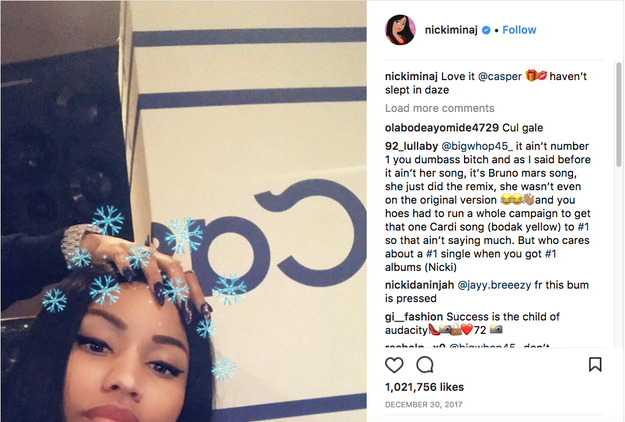
Nicki Minaj posted an Instagram of herself in front of the distinctive blue and white Casper mattress box on December 30 with the caption, “Love it @casper haven’t slept in daze.”
Casper is the mattress startup that makes flexible, reasonably priced mattresses that ship in a box (their standard model is $950 for a queen size). It’s a big business, and it's doing well!
This instagram was sort of confusing – was it a paid ad? Did she receive a free gift and liked it so much that she posted about it? BuzzFeed has reported on Casper gifting free mattresses to celebrities in the past, so that seems highly possible. Or does she truly just love this mattress?
And if it was a free gift, does using the gift box and kiss emojis meet the standards for the FTC’s guidelines for how social media influencers and celebrities should disclose ads on social media? (I’ll go ahead and answer that: almost certainly not).
The FTC’s guidelines are straightforward: Ads should be unambiguous – the ideal version says #ad at the beginning of a caption, rather than at the end of a long caption that gets cut off when viewed in the feed. The FTC also tells celebrities and influencers to avoid terms like #sp that aren’t totally clear to everyone.
The question of how to disclose a free gift turns out not to even be relevant here.
Casper confirmed to BuzzFeed News in an email on Monday that it compensated Nicki Minaj to post about the mattress. It wasn’t just a gift – she was paid $$$.
So shouldn’t have she disclosed it was an ad in the caption? Casper said, “we asked that she include the proper disclosure (#ad) in her caption. After she posted, we reached out – early last week – to ask that she update the copy to clarify.”
As of yesterday afternoon, Minaj had still not updated her post to say that it was an ad. Her record label did not reply to BuzzFeed News’ request for comment.
As of today, the caption is gone.

Still, deleting the caption that implied the mattress was a free gift doesn’t solve Minaj’s failure to disclose that her post is a paid ad. It wasn’t just the caption that mattered – what’s left is still a photo of her face in front of the distinctive Casper packaging. Even though she no longer tags the brand's name, someone seeing her post is still likely to think that Nicki Minaj loves Casper mattresses.
It seems that the case of Nicki Minaj and Casper is an interesting example at what happens when the negotiations between a celebrity and brand sponsor go awry. While a Casper mattress might give you a great night’s sleep, that’s probably not the case for whoever was in charge of dealing with their celebrity partners.
Quelle: <a href="Is Nicki Minaj Doing An Ad For Mattresses Here?“>BuzzFeed

Debugging might not be one of your favorite things to do, but when your automation fails it is good to know where to look to find information and troubleshoot. In this blog post, we investigate how to make sure Ansible Automation is correctly configured inside CloudForms, and how to troubleshoot issues that might occur when running Ansible Automation. Content for this blog post is based on the knowledge base article published on Red Hat Customer Portal.
Before you start, make sure Ansible Automation is correctly configured and running
First of all, before you start performing a deep debugging, make sure these steps are in place:
Embedded Ansible Role is enabled. Note that only one appliance per Region running Ansible Role is supported today.
Internet connectivity is available for the appliance with the Embedded Ansible Role before the role is enabled.
Ansible Worker is properly running (you can check its status under Configuration > Diagnostics).
You can restart the Embedded Ansible process by executing ansible-tower-service restart from the appliance command line.
If the role is not properly configured and running, you will not be able to add playbooks or credentials.
Ok, Ansible Automation is up and running, but our playbook launches are not successful
Well, in that case, you need to dig a bit more to figure out what is wrong:
Verify, under Services > Request that the playbook is executed. Every playbook is executed as a service and status can be tracked here.
If the playbook does not execute as expected, check that the version of the playbook is appropriate and that you do not have further dependencies (like ansible roles or modules requirements).
Re-sync the repository from the CloudForms UI under Automation > Ansible > Repositories. On the appliance, playbooks can be found under /var/lib/awx/projects/.
Check the standard output of the service to verify the execution of the playbook itself. This can be found under Services > My Services > Selected Services > Provisioning > Standard Output.
Make sure all required playbook variables are provided to the playbook for execution. CloudForms can automatically create service dialogs while defining a new service to provide these variables. The dialog element name must match the playbook variable.
The execution of the playbook in real time can be found in a file for each new run in the /var/lib/awx/job_status directory. Note that the name of the file is a hash and has nothing to do with the playbook name. This is currently the only way to track the status of a run when executing the playbook as a policy or alert action.
Where else can I find additional information?
If all the above steps are validated and you still have trouble, a good place to continue troubleshooting is to look at the CloudForms standard log files under /var/www/miq/vmdb on the appliance:
Production.log – Operations UI & Service UI
Automation.log – Service Ordering, Automation
Policy.log – Events, Policy
Evm.log – Everything else
Quelle: CloudForms

This blog post concludes our series on Ansible Automation inside Red Hat CloudForms. We hope that the content and demo videos were able to get you a grasp on how Ansible Automation, the leading simple, powerful, and agentless open source IT automation framework, adds value to Red Hat CloudForms and extends its capabilities.
Red Hat CloudForms natively supports Ansible Automation and eases the deployment of infrastructure and IT services across clouds. Users can automate multi-cloud management by defining a wide range of policies and processes with no coding or scripting required.
Using Ansible Automation, users have now access to a large number of available modules that facilitate performing operational actions on the data center elements such as monitoring, networking, storage, etc.
In our series, we explored how Ansible Automation included as part of Red Hat CloudForms can be used to create services and policies based on Ansible Playbooks to provision new environments (e.g. VMs and instances) and control their lifecycle over time by associating resources to CloudForms services. We also covered how to monitor and troubleshoot Ansible Automation inside CloudForms.
The following is a list of all articles published as part of the series:
My First Ansible Service (Video)
My First Ansible Control Action (Video)
Launch Ansible Playbooks from CloudForms REST API (Video)
My First Ansible Playbook Button (Video)
VMware Provisioning Example using Ansible (Video)
Debugging Ansible Automation inside Red Hat CloudForms
Each post contains a link to its associated Red Hat Knowledge Base article where you can find additional information.
The CloudForms team is currently working on the next release of the product which will include enhancements on the integration of Ansible Automation inside Red Hat CloudForms. Stay tuned for more details on the topic on the CloudForms Blog.
Quelle: CloudForms

You heard about it at DockerCon Europe and now it is here: we are proud to announce that Docker for Mac with beta Kubernetes support is now publicly available as part of the Edge release channel. We hope you are as excited as we are!
With this release you can now run a single node Kubernetes cluster right on your Mac and use both kubectl commands and docker commands to control your containers.
First, a few things to keep in mind:
Docker for Mac required
Kubernetes features are only accessible on macOS for now; Docker for Windows and Docker Enterprise Edition betas will follow at a later date. If you need to install a new copy of Docker for Mac you can download it from the Docker Store.
Edge channel required
Kubernetes support is still considered experimental with this release, so to enable the download and use of Kubernetes components you must be on the Edge channel. The Docker for Mac version should be 17.12.0-ce-mac45 or later after updating.
Already using other Kubernetes tools?
If you are already running a version of kubectl pointed at another environment, for example minikube, you will want to follow the activation instructions to change contexts to docker-for-desktop.
What You Can Do
Docker for Mac and Windows are the most popular way to configure a Docker dev environment and are used everyday by hundreds of thousands of developers to build, test and debug containerized apps. Developers building both docker-compose and Swarm-based apps, and apps destined for deployment on Kubernetes can now get a simple-to-use development system that takes optimal advantage of their laptop or workstation. All container tasks – build, run and push – will run on the same Docker instance with a shared set of images, volumes and containers. Docker for Mac is simple to install, so you can have Docker containers running on your Mac in just a few minutes. And Docker for Mac auto-updates so you continue getting the latest Docker product revisions.
With experimental Kubernetes support in Docker CE for Mac, Docker can provide users an end-to-end suite of container-management software and services that span from developer workstations running Docker for Mac or Windows, through test and CI/CD, through to production systems on-premises or in the cloud running Docker Enterprise Edition (EE).
The beauty of building with Docker for Mac or Windows is that you can deploy the exact same set of Docker container images on your desktop as you do with Docker Enterprise Edition (EE) on your production systems. Docker for Mac or Windows is a single node system for building, testing and preparing to ship applications; Docker EE provides the security, control, and scale needed to manage your production applications. You eliminate the “it worked on my machine” problem because you have the same Docker containers running on the same Docker engines, and the same Docker Swarm and Kubernetes orchestrators (coming soon to EE).
Things To Try
If you are new to Kubernetes and looking for some introductory exercises to try, here are a few resources:
The Docker for Mac Kubernetes page has instructions for getting an example app up and running
Follow along with Docker Developer Advocate Elton Stoneman during his short video, demonstrating activating Kubernetes and deploying an application using both Docker compose and a Kubernetes manifest.
Send Us Your Feedback
Send us your feedback, ideas for improvement, bugs, complaints and more so we can make Docker Desktop better. You can use the Docker community forums for general discussions and you can also directly file technical issues on Github.
Docker for Mac with Experimental Kubernetes support is here! #dockerformac #docker #kubernetesClick To Tweet
Call to Action
Get Docker for Mac
Activate experimental Kubernetes support in Docker for Mac
Watch our DockerCon Europe 2017 Kubernetes Announcement
The post Docker for Mac with Kubernetes appeared first on Docker Blog.
Quelle: https://blog.docker.com/feed/






