Sincrolab counts on IBM Bluemix to support cognitive therapy app

For parents of children with cognitive difficulties such as autism or ADHD, the time, travel and expense associated with cognitive therapy can be barriers to getting needed treatment.
Some families have incurred significant debt to secure treatment for their children. Some have even been forced to sell their homes to afford care or move to an area where needed services are available.
Developing and recovering cognitive abilities
Sincrolab, a Spanish provider of technology tools for neuropsychological rehabilitation, has developed a web platform and two mobile applications (one for children, the other for adults) that mental health professionals can bring to the patients to treat their cognitive disabilities.
The company’s training platform, consisting of a system of personalized cognitive stimulation, helps with the development and recovery of cognitive abilities for children with neurodevelopmental disorders and adults with learning disabilities or neurodegenerative disorders.
The application enables health professionals to remotely manage and supplement ongoing treatment for their patients.
Realizing success with IBM Bluemix
Because the application’s focus is personalized training, the infrastructure must be security-rich and enable around-the-clock availability so therapists can have anytime, anywhere access for their patients with cognitive disabilities. Sincrolab counts on IBM Bluemix bare metal servers to develop and support its cognitive therapy application.
Currently, there are more than 200 active patients, and Sincrolab has already worked with more than one thousand since the platform’s inception three years ago.
In a current project, teachers have been working for the past year with 20 children ages 7 to 11 who have autism and other cognitive diseases.
They are using the Sincrolab app to work on exercising memory functions using video games based on cognitive neurosigns. The app stimulates memory, attention, executive functions, language, and calculations.

The teachers found that the cognitive stimulation through Sincrolab increased the children’s cognitive performance as well as improved their moods and behavior. The children have been training every day for nine months. One of the children has even begun to speak a bit after the Sincrolab program intervention. Parents have reported that the children are more focused on tasks and instructions.
Thanks to the Sincrolab app, teachers are able to offer a new cognitive therapy program in school and continue the project for at least another two years.
Going forward, Sincrolab is investigating ways to implement IBM Watson technology into its solution. Currently, the therapy is available in Spanish for the local market in Spain.
Read the case study to learn more.
The post Sincrolab counts on IBM Bluemix to support cognitive therapy app appeared first on Cloud computing news.
Quelle: Thoughts on Cloud

Google's Brand New App Wants In On The Action Each Time Someone Makes A Payment In India

Google

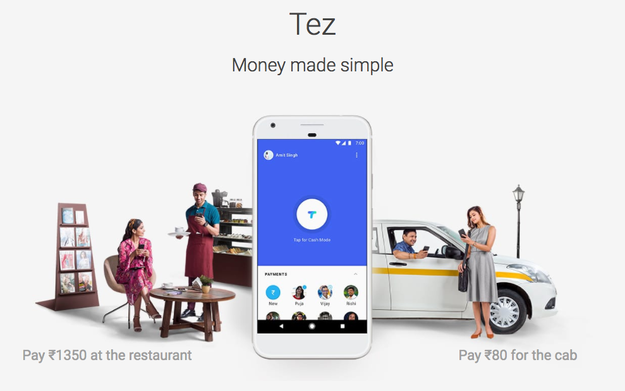
Google’s goal for the brand new payments app it launched in India on Monday is simple, yet ambitious: to get in on the action each time someone sends or receives money in its largest market outside the United States.

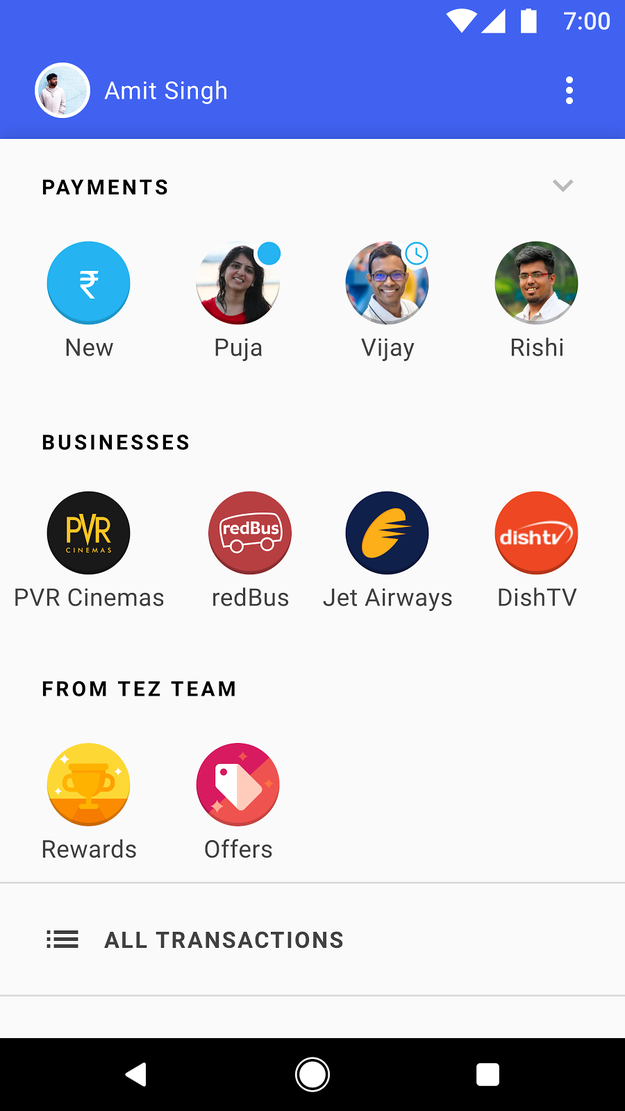
The app is called Tez — Hindi for “fast” — and it lets users do three things: send money to people in their phones' address books, make payments to businesses (both online as well as in real-world mom-and-pop stores), and zap cash to anyone around them — all without knowing bank account numbers or personal details.

“The West went from using cash to plastic and point-of-sale machines, and it’s kind of still there,” Caesar Sengupta, Vice President of Google’s Next Billion Users program, told BuzzFeed News. “But we think that in developing markets like India, people are going to leapfrog directly from cash to digital payments using their smartphones.”

Tez, which is now available on Android and iOS, is Google’s latest attempt to get more users from developing countries like India hooked on the company’s products. Google calls these users “The Next Billion,” and over the last two years has brought free Wi-Fi to 150 Indian railway stations, and built YouTube Go, a brand new YouTube app specifically meant for India that lets users download YouTube videos to their phones and share them with each other.

Tez is powered by UPI, short for Unified Payments Interface, a Indian government-backed payments standard that lets users transfer money directly into each other's bank accounts using just their mobile numbers, or a bank-issued payment ID that looks like an email address. It works a lot like Venmo does in the US, except that anyone can build their own payments app on top of UPI. Facebook-owned WhatsApp, for instance, is reportedly building UPI-enabled payments into its app, and Google already has competition from Indian e-commerce giant Flipkart, which created a UPI-based app called PhonePe, as well as BHIM, a UPI-based payments app promoted by the Reserve Bank of India, India's central bank.

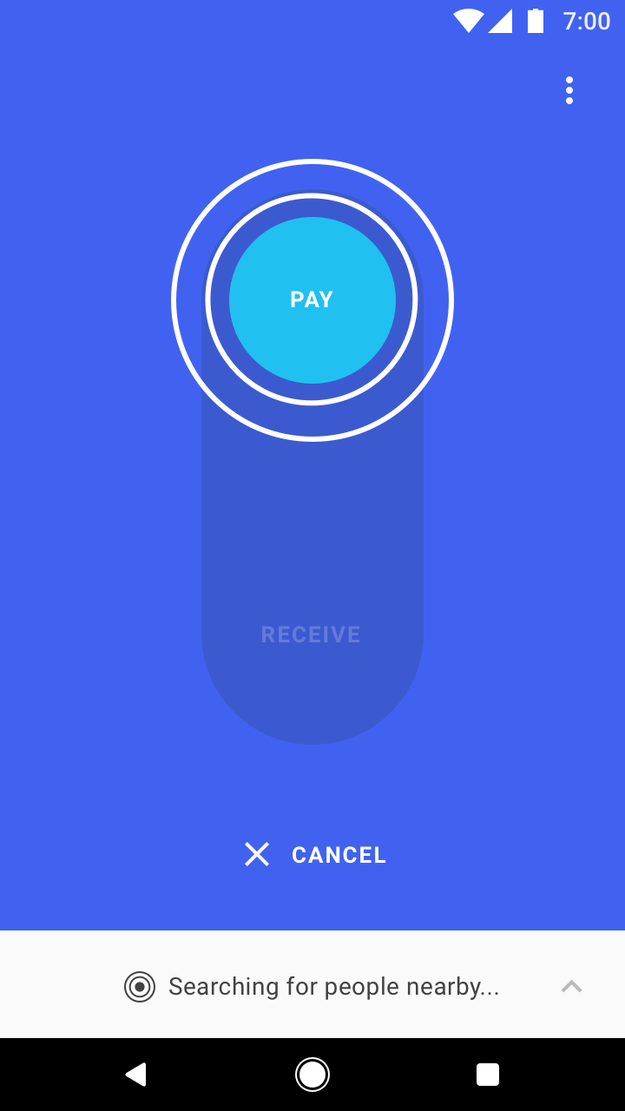
The interface for sending and receiving money from people around you in Tez is dead simple.

Google

Once you hit Pay or Receive, Tez detects other Tez users around you with a proprietary technology called Audio QR based on ultrasound, and pairs with their phones. Once a sender puts in the amount and authenticates with a pre-set PIN to confirm who they're sending money to, a transaction happens in seconds.

“The reason people use cash is because it’s simple and secure and you don’t have to give your phone number or other details to random people,” said Sengupta. “So imagine a scenario where your neighborhood shopkeeper can just switch this on on his phone and receive payments directly into his bank account.”

People and businesses that users transact with show up like bobble-heads in an instant-messaging app, and transactions are threaded like chats too. “Tez is not a chat app. But it is built like a chat app because people in developing markets like India are familiar with that paradigm thanks to the popularity of instant messengers like WhatsApp and Hike,” said Sengupta.

Google

Google is also pitching Tez as a way for Indian businesses to easily accept payments online — a potentially disruptive move in a market where cash-on-delivery is the preferred way to pay for something bought over the internet. With a few lines of code, businesses can add a Tez button to their mobile websites that will let users complete the transaction in the Tez app.

None of these transactions, however, are private. Google confirmed to BuzzFeed News that it will be able to see who paid whom and how much. “But that's not different from any other UPI-based payments app,” said Sengupta.

“The Next Billion Users program is about solving fundamental problems that users in countries like India, Indonesia and Brazil have,” said Sengupta. “Paying to get access to services and products is a fundamental part of everybody’s lives. And all we wanted to do was make sure people could do that well.”

Quelle: <a href="Google's Brand New App Wants In On The Action Each Time Someone Makes A Payment In India“>BuzzFeed

OpenJ9: IBM legt seine JVM offen

Als Alternative zu der üblicherweise genutzten Java-VM Hotspot hat IBM seine eigene Implementierung J9 als Open Source veröffentlicht. OpenJ9 läuft mit dem OpenJDK und ist künftig Teil der Eclipse Foundation. (Java, IBM)
Quelle: Golem