The New Fancy iPhone Will Have Edge-To-Edge Display, No Home Button, And Facial Recognition

Apple

The most highly anticipated reveal was that of the new iPhone X, presumably named after the device’s tenth anniversary.

Most importantly: This model proves that, yes, iPhones can be even more expensive than they already are. The new high-end phone *starts* at $999—and, to justify that price, includes some of the biggest updates to the iPhone since 2014.

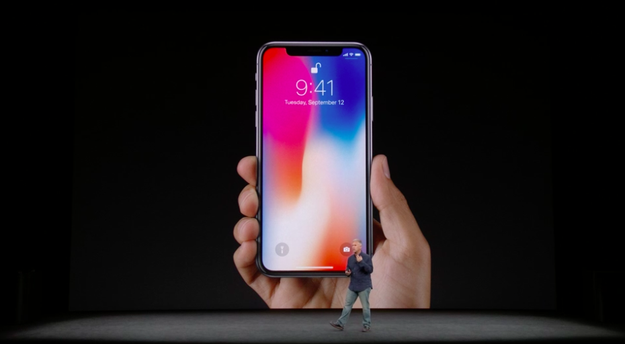
With its edge-to-edge display and buttonless face, the new iPhone looks remarkably different from iPhones past. At 5.8 inches diagonally, its screen is taller and larger than the 4.7-inch iPhone, but smaller than the larger 5.5-inch iPhone Plus. The Galaxy S8-esque screen has a hardly noticeable border around it, making all kinds of content—video, articles, apps—appear full-screen.

The display’s immersiveness is largely due to the fact that instead of a home button, there’s just more screen.

It’s an update that’s likely to be just as controversial as the removal of the headphone jack last year and the change from the 30-pin to Lightning connector in 2012.

Apple

No home button means that the way you interact with the phone will be different. Instead of tapping the button to see your homescreen, you’ll flick up from the bottom of the screen. To force restart the phone, you’ll now long press the power and volume up buttons, and to invoke Siri, you’ll double click the power button.

But the real change is the screen.

The iPhone X has an OLED screen, versus the LCD (liquid crystal display) in older models. OLED screens display darker blacks, brighter whites, and more vibrant colors, and Apple is including a number of new wallpapers to show off the display. These screens are also more power-efficient and thinner than LCD screens, because they don’t require an always-on backlight layer. Both Samsung and LG have implemented OLEDs in various devices. In fact, the new iPhone’s display is reportedly made by Samsung.

True Tone, a feature that makes the screen easier on the eyes and was originally announced for the iPad, will also be available on the iPhone X. It can detect the color temperature of the room. So, for example, if the room has warm, yellow lighting, the phone’s display will look warm, too (the same way a piece of white paper reflects the light around it).

The display has rounded screen corners (older iPhones have square corners) and completely covers the front of the device, except for a thin notch at the top, which houses the earpiece (for calls), plus a new array of cameras and sensors designed to detect your face. Your FACE. Which brings us to ….

Apple is the latest to add face-scanning tech to its phones with what it’s calling Face ID.
Apple

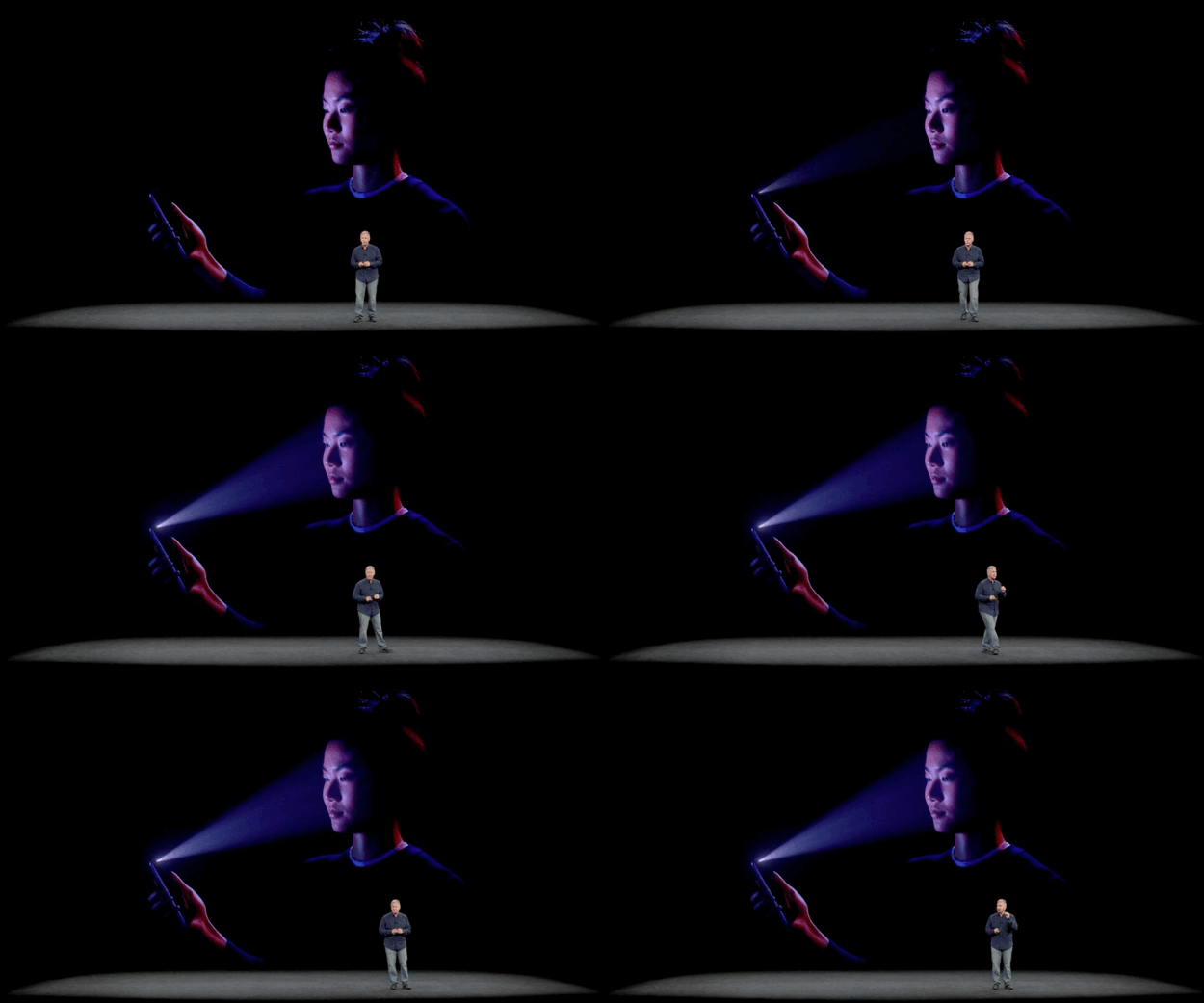
The new phone has a “true depth camera system” (flash and an infrared sensor for low-light detection) in the front of the device to first, validate that it is actually you who is using the phone and second, unlock your phone. Previously, the only form of biometric authentication (aka using your body’s data) on the iPhone was through Touch ID on the home button, which sensed your fingerprint.
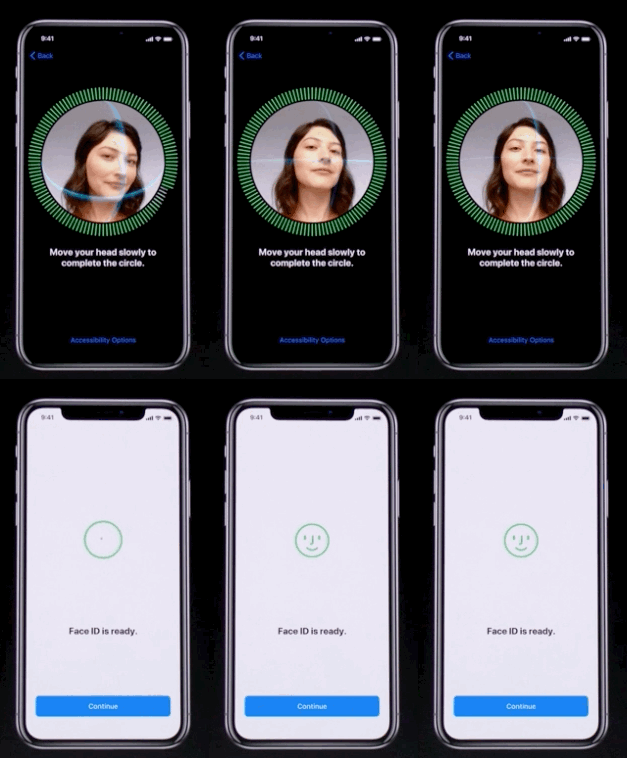
The A11 Bionic neural engine inside of the phone powers the machine learning algorithm processing for Face ID. It can perform 600 billion operations per second, allowing it to understand your face, with a different hairstyle, glasses, at night, and during the day. Apple claims that it can't be duped by high-res photograph.

Compared to Touch ID (which fails 1 in 50,000 times), Face ID fails 1 in 1,000,000. That's the chance that a random person can unlock your phone. It can work with Apple Pay, and all apps that work with Touch ID.

This same tech is also used to customize a new form of emoji, called Animoji, which projects your facial expressions and voice onto emojis.

Apple

There are dual 12MP cameras—just like iPhone 8 Plus—but oriented vertically, instead of horizontally. It also has dual optical image stabilization (for both wide angle and telephoto lenses) for more stable photos, especially in lower light. There's a quad-LED True Tone flash for 2x more uniformity of light.

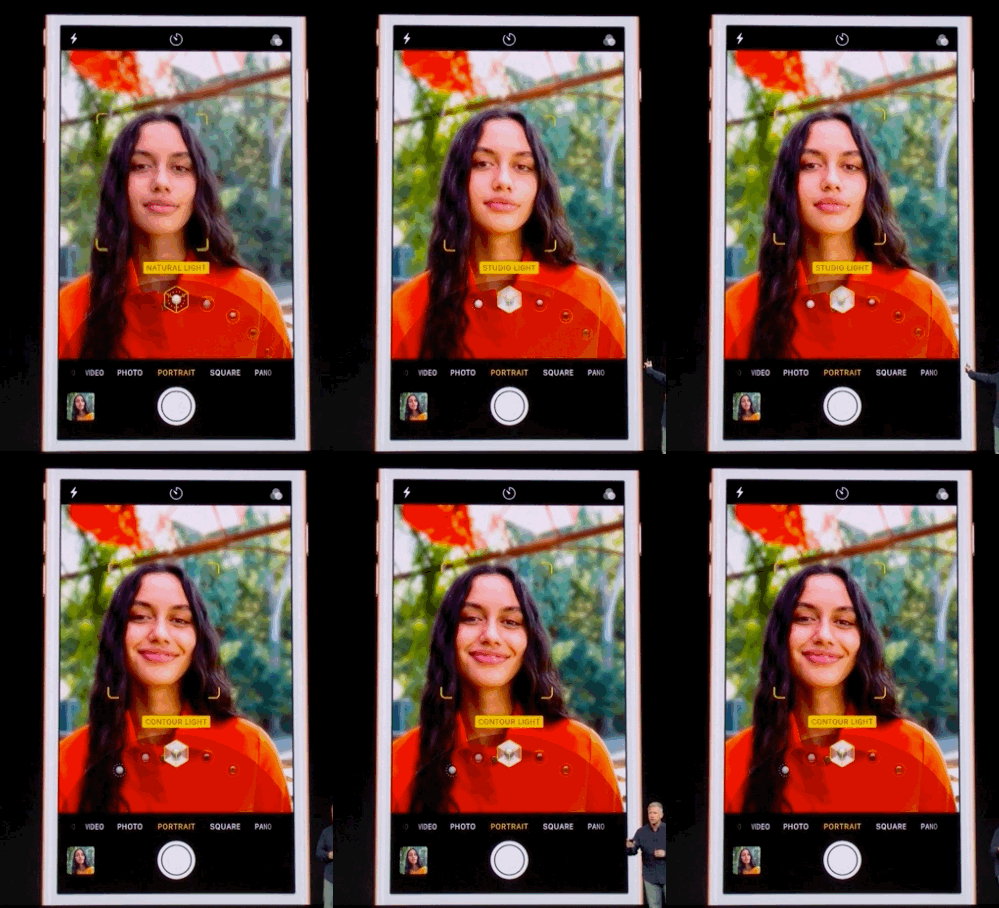
The selfie camera on the iPhone X can also take “Portrait Mode” (adds blurry background to photos) and “Portrait Lighting” which simulates different lighting effects, and is only capable on the rear camera of the 8 Plus.
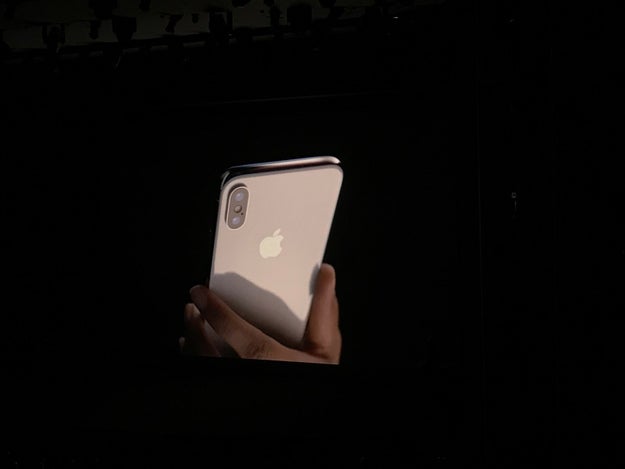
Apple

The battery life has been increased, too, to two more hours than the iPhone 7 (14 hours with LTE use).

Like the 8 and 8 Plus, the new iPhone supports wireless charging and is water- and dust- resistant. Apple is also releasing a charging pad that can charge the iPhone X, 8, 8 Plus, and new AirPods case.

The iPhone X comes in 64 and 256 GB sizes, and can be preordered starting on Oct. 27. It ships on Nov. 3.

Quelle: <a href="The New Fancy iPhone Will Have Edge-To-Edge Display, No Home Button, And Facial Recognition“>BuzzFeed

New Apple Watch Series 3 Supports Cellular LTE Connectivity

Apple

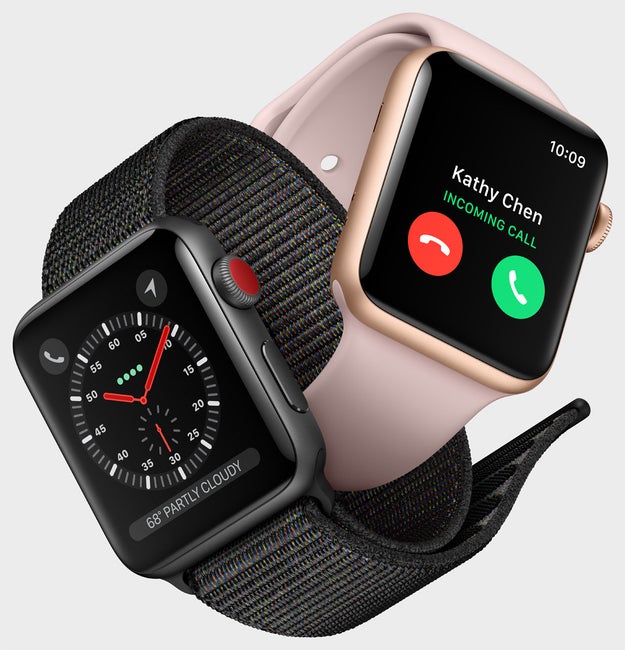
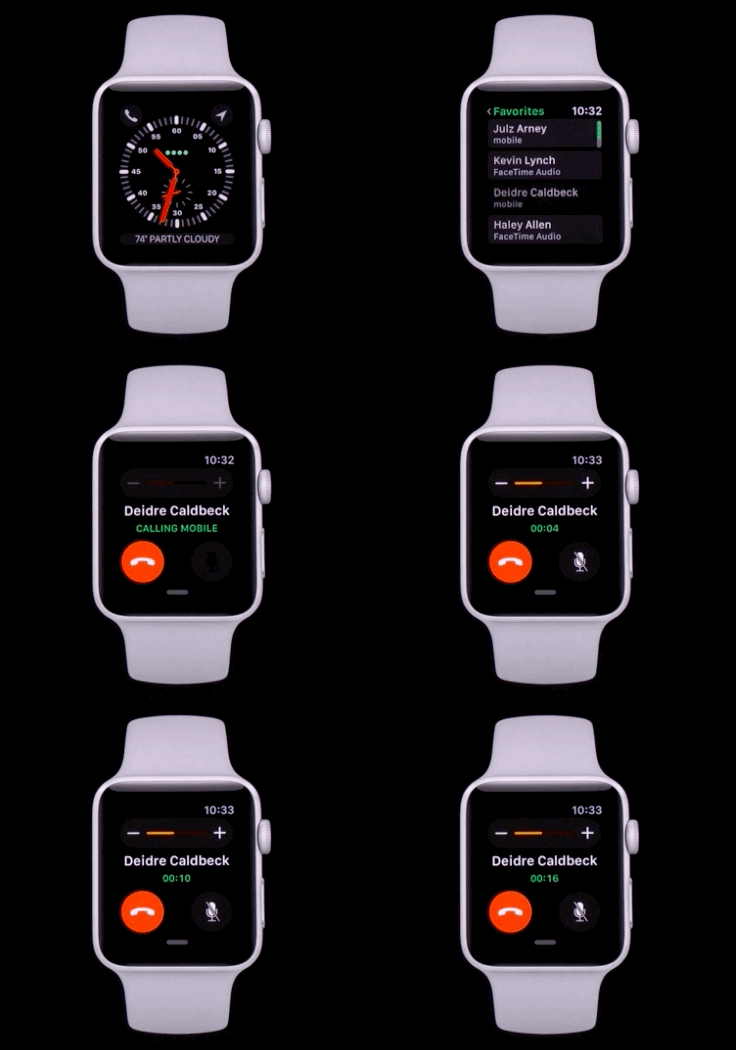
With the new third-generation Apple Watch, users won’t have to be near their phones to make calls, stream music from Apple Music, and find directions thank to the wearable’s new LTE connectivity.

The Apple Watch could previously only load data over a Bluetooth connection with an iPhone, and limited data (Siri, iMessages, and smart home control) over Wi-Fi.

Now, the Apple Watch Series 3 will be able to download data on its own, without being tethered to an iPhone or a Wi-Fi network — that is, if you sign up for an additional data plan with a cell provider (for now, AT&T, Verizon, or T-Mobile are the first US carriers at launch). The number on your watch will be the same number as your iPhone, and third party apps like WeChat will work as well.

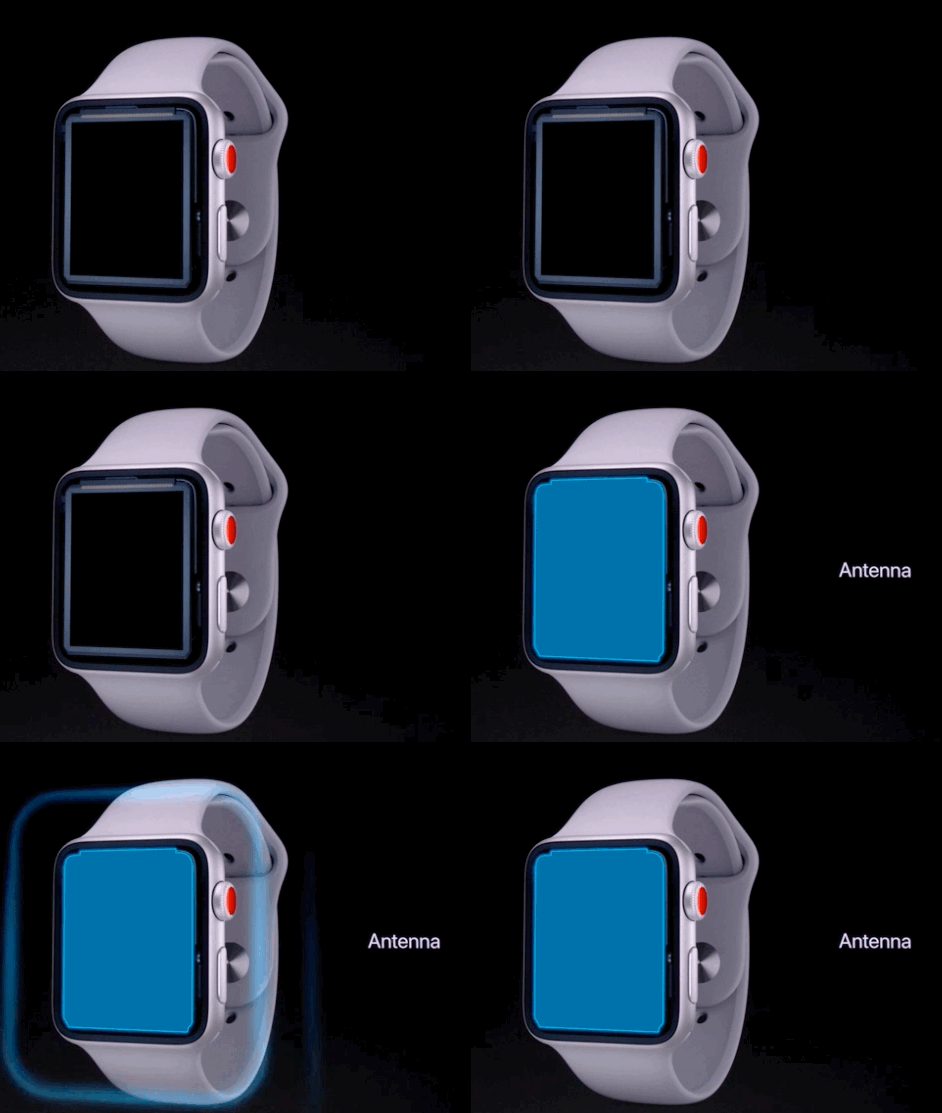
The display itself acts as the antenna — and there’s an embedded electronic SIM card in the device’s hardware. The watch’s form factor is largely the same, which means bands bought for previous Apple Watches will be compatible with the new device. Only the side dial (called the “digital crown”), which now has a red accent, looks different.

There’s an option to turn cellular connectivity on and off, as well as add cellular-related information (or “complications”), like connection strength and ability to make/receive calls, to your watch face.

Apple

Like Series 2, the watch features built-in GPS and waterproofness up to 50 meters deep, as well as an OLED Retina display.

WatchOS 4 is the new software shipping with the Apple Watch Series 3, though the update will also be available to older versions of the Apple Watch on September 19. It includes new watch faces, including a Siri-based version that proactively displays information it thinks you need (eg. traffic info, reminders, and airline tickets from Apple Wallet). The Workout app has a new high intensity interval training (HIIT) mode, enhanced pool swim tracking, and the ability to exchange information with certain gym equipment. When you start a new workout in watchOS 4, the watch will also turn on Do Not Disturb simultaneously, so it doesn’t buzz during your workout class.

There’s better Apple Music integration, too (personalized playlists like New Music Mix are auto-synced). Person-to-person Apple Pay (launching with iOS 11 for phones and tablets) is also available on the watch.

You can preorder the watch on Sept. 15, which starts at $329 for the non-cellular version and $399 for cellular in a variety of colors and finishes. Both ship Sept. 22.

Apple made progress towards a more independent smartwatch with last year’s fitness-focused and newly swim-proof Apple Watch Series 2, which added GPS, so runners, cyclists, and swimmers could track their routes. But the ability to connect to an LTE network may finally fulfill the smartwatch’s original promise: to be a computer on your wrist. The original Apple Watch was too reliant on the iPhone to add any additional benefit for many users. The second-generation watch was more palatable for those interested in health and fitness, but it still wasn’t the device for those who’d rather wear their phones than carry it.

Apple

The Apple Watch Series 3’s ability to temporarily replace your phone will be contingent, however, on how the data connection affects the watch’s battery life. Features like LTE data, built-in GPS, near-field communication for mobile payments, and heart rate sensing are notoriously energy draining. Using GPS on the Apple Watch Series 2, for example, reduces the battery from about 18 to 5 hours.

To compensate for power drain, many smartwatch-makers that have already implemented LTE data, including Samsung for the Gear S3 and LG for the Watch Sport, have simply increased the size of the battery, making the wearables incredibly bulky. Apple, on the other hand, has not had to increase the size of the watch and maintained its 18 hour battery life.

Only real-world testing will tell if the Apple Watch can meet these battery specs. If you were looking forward to a wearable-only future, stay tuned for our full Apple Watch Series 3 review.

Quelle: <a href="New Apple Watch Series 3 Supports Cellular LTE Connectivity“>BuzzFeed

Here’s Everything You Need To Know About The New iPhones

Apple

Today, for the first time, Apple announced new iPhones in its annual September product launch event in a new theater named after its late founder, Steve Jobs.

This keynote is no ordinary one: this year marks the tenth anniversary of the iPhone, which first shipped in June 2007. The device ushered in a wave of touchscreen smartphones—and now makes up 70% of the company’s revenue.

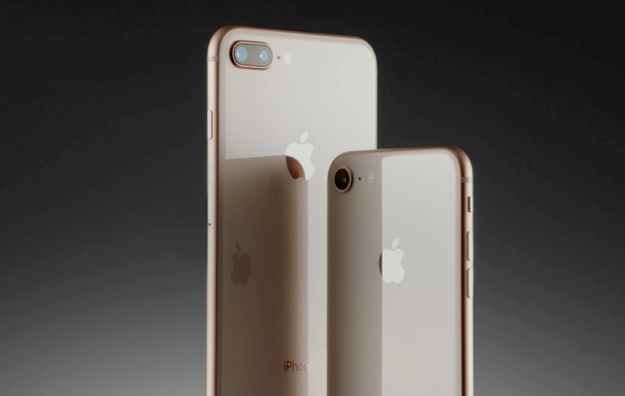
The phones are still 4.7 inches and 5.5 inches, respectively, and have Retina displays.

Like the previous models, they’re water-resistant (up to 30 minutes of submersion, 1 meter deep), too, and, sadly for headphone traditionalists, there’s still no headphone jack.

What really sets these new devices apart is their stainless steel borders, and glass front *and* backs, reinforced by steel. It’s the “most durable glass ever in a smartphone.” It comes in silver, space gray and new gold finish. This means they can be charged wirelessly, without a cable.

The new iPhone 8 and 8 Plus works with a round wireless charging pad accessory, as well as all chargers with the Qi wireless charging support. Third-party offerings from mophie and Belkin will also work.

The 12 MP camera has a new sensor, and a new color filter. The 8 Plus has two new sensors for its dual-lens camera. There’s also a second-generation True Tone flash with four LEDs with flicker sensor that detects overhead lights. Thanks to iOS 11, you can now also choose the cover image for Live Photos.

Apple

The Plus has a dual-, rather than single-, lens camera, with both a wide angle and telephoto lens (the non-Plus iPhone has just one wide angle lens). The dual-lens camera powers the Portrait Mode feature, which adds a professional camera-esque blur to the image’s background. Apple is now introducing Portrait Lighting, which simulates different lighting effects. The feature will launch in beta for the new 8 Plus and 7 Plus. There’s Contour Light, Natural Light, Stage Light, Stage Light Mono, and Studio Light.

Meanwhile, the iPhone 8 has the “highest quality video recorder ever in a smartphone,” according to Phil Schiller, VP of marketing at Apple. Slo-mo can now be shot at 1080p and 240 frames per second, double the frames of what was available previously.

The new chip inside is A11 Bionic (Six-core CPU, 64-bit design). Its performance cores are 25% faster than A10. The GPU is 30% faster, which is best seen in machine learning and gaming apps. You’ll also see faster low-light autofocus, pixel processing for sharpness, and noise reduction.

Both devices will ship with iOS 11, which includes a slew of new features for the iPhone, including a new GIF-esque Loop mode in pictures, person-to-person Apple Pay within iMessage, a new male voice for Siri, photos that take up less space on your device, a redesigned Control Center, and a Do Not Disturb While Driving mode. Best of all: you don’t need a new device to get the update. It will be free to download for those with the 5s, SE, 6, 6 Plus, 6s, 6s Plus, 7, and 7 Plus, too.

The iPhone 8 starts at $699 at 64GB. The 8 Plus starts at $799, and can be preordered on Sept. 15. Both ship on Sept. 22.

Quelle: <a href="Here’s Everything You Need To Know About The New iPhones“>BuzzFeed