Three Ex-Googlers Just Sued The Company For Allegedly Discriminating Against Women

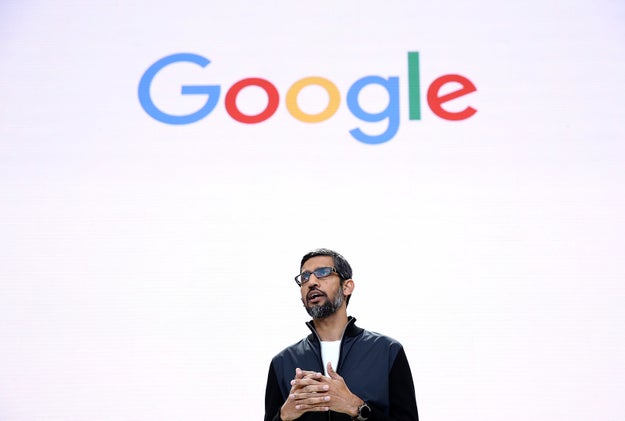
Google CEO Sundar Pichai.

Justin Sullivan / Getty Images

A class-action lawsuit filed today against Google in California Superior Court in San Francisco alleges that the company systematically discriminates against its female employees by paying them less than their male counterparts. In addition, the lawsuit claims that Google “assigns and keeps women in job ladders and levels with lower compensation ceilings and advancement opportunities than those to which men with similar skills, experience, and duties are assigned and kept.”

Filed on behalf of three ex-employees — Kelly Ellis, Holly Pease, and Kelli Wisuri — the lawsuit's class encompasses any woman who worked at Google in California in the last four years. Plaintiff lawyer Jim Finberg, in an interview with BuzzFeed News, estimated that class “could be in the tens of thousands.” Finberg added that filing the lawsuit in California, as opposed to filing a federal lawsuit, was strategic: “The California Equal Pay Act was amended twice in ways that make it somewhat more favorable than the Federal Equal Pay Act. On a technical level, the California statute says 'equal pay for substantially similar work,' and the federal statute says 'equal pay for equal work.'”

Google attracted increasing public scrutiny over the last few months. Last week, the New York Times reported that an internal Google spreadsheet of self-reported employee wages showed that women at five of Google's six job hierarchy levels are paid less than men. In August, Google engineer James Damore's memo against the company's diversity initiatives, which was circulated within the company, went viral; Damore was fired. Damore's memo and firing came against the backdrop of Google's ongoing refusal to comply with orders to release its pay data, going back two years. In January, the US Department of Labor sued the company for its compensation data; in April, a Labor Department representative testified that “we found systemic compensation disparities against women pretty much across the entire workforce,” and still Google declined to release its pay data. In July, a judge ruled that the Labor Department's request for data was overly broad. Now the Labor Department either has to appeal, or be satisfied with the more limited data set that the judge ruled Google must supply.

If the lawsuit survives a motion to dismiss and goes into discovery, Google will be forced to provide reams of documentation about its hiring and pay practices. One of the lawsuit's most damning allegations is that Google's failure to pay men and women equally is willful because the company knew or should have known about its pay disparities but failed to equalize salaries.

The three plaintiffs all worked on different teams at the company, but had similar stories of being paid less than their male counterparts, shunted into less prestigious (and therefore lower-paying) roles, and denied promotions. Ellis worked for Google from May 2010 to July 2014 as a software engineer, and her pay disparity, she alleges, started when she was asked what her base salary at her previous job had been, and was offered the same amount. (Several states and cities, including San Francisco, have since passed laws banning the practice of asking for job applicants' previous salaries.) Not only that, Ellis was put in Level 3 on Google's Software Engineering ladder — which the company typically assigns to recent college graduates. Ellis had graduated in 2006 and had four years of backend engineering experience.

Within a few weeks, the lawsuit alleges, Google hired a male engineer — who had also graduated in 2006 — onto Ellis's team, but placed him at Level 4, where he was eligible for “substantially higher salary and opportunities for bonuses, raises, and equity” than Ellis was as a Level 3 engineer. By the time Ellis was finally promoted to Level 4, her male counterparts had also been promoted, “ensuring she could never catch up on the gender pay gap.”

The complaint also alleges that women at Google were pushed into frontend engineering roles, which were perceived as less technically rigorous than backend engineering roles — even though the skills needed for both jobs were “substantially similar.” But frontend engineers were paid less, while backend engineers, according to the complaint, were fast-tracked for promotion. The suit says Ellis eventually resigned because of the sexist culture at Google.

The second plaintiff, Holly Pease, worked at Google for over 10 years in a variety of engineering management roles in the Mountain View and Sunnyvale offices, receiving excellent performance reviews during her time there. By the time she became a senior manager, most of the employees she managed were on the “technical” job ladder, as was the only other senior manager in her group — who also happened to be a man. But Pease was placed and kept on the non-technical Business Systems ladder, “with lower compensation and opportunities for upward mobility.” She was later denied the opportunity to transition to a role on the technical ladder.

After Pease returned from a medical leave (the lawsuit doesn't specify when or how long the leave was), the only position available to her was a non-engineering role in physical security. She accepted the job and continued to get high performance reviews, but claims she resigned in February 2016, “due to the lack of technical and engineering opportunities available to her and other women at Google, the denial of compensation commensurate with her skills relative to similar men, and the stalling out of her career at the company.”

The third plaintiff, Kelli Wisuri, started working in sales at Google's Mountain View office after her company was acquired in October 2012. Despite her 2.5 years of sales experience, Google put her at Level 2, the lowest level available for permanent full-time employees, while, the suit alleges, placing male employees with similar qualifications and experience into Level 3 or higher. In addition — like Pease, who was put on a less lucrative and prestigious ladder than her male counterparts — Wisuri was put into the Sales Enablement ladder, which was salaried, and not the Sales ladder, which was paid on commission. Enablement jobs, therefore, have “considerably less compensation potential than Sales jobs.” In addition, almost all of the Sales teams Wisuri worked with were men — but about 50% of the employees on the Sales Enablement ladder were women.

The lawsuit claims Wisuri resigned in January 2015 “due to the lack of opportunities for advancement for women at Google.”

By making the suit a class action, the plaintiffs have substantially increased Google's potential liability: The plaintiffs are asking for back wages, interest, and liquidated damages for everyone in the class.

In a statement provided to BuzzFeed News via email, Google spokesperson Gina Scigliano wrote: “We work really hard to create a great workplace for everyone, and to give everyone the chance to thrive here. In relation to this particular lawsuit, we’ll review it in detail, but we disagree with the central allegations. Job levels and promotions are determined through rigorous hiring and promotion committees, and must pass multiple levels of review, including checks to make sure there is no gender bias in these decisions. And we have extensive systems in place to ensure that we pay fairly.”

In response, plaintiff lawyer Finberg pointed to the Department of Labor investigation and the New York Times story, and added, “Certainly the information we have obtained from dozens and dozens of women at Google tells us that despite what might be Google's intentions, Google does not pay women as well as men who perform similar work.”

LINK: Ellis v. Google Complaint

Quelle: <a href="Three Ex-Googlers Just Sued The Company For Allegedly Discriminating Against Women“>BuzzFeed

21 Celebrities Just Got A Harsh Warning About Instagram Ads

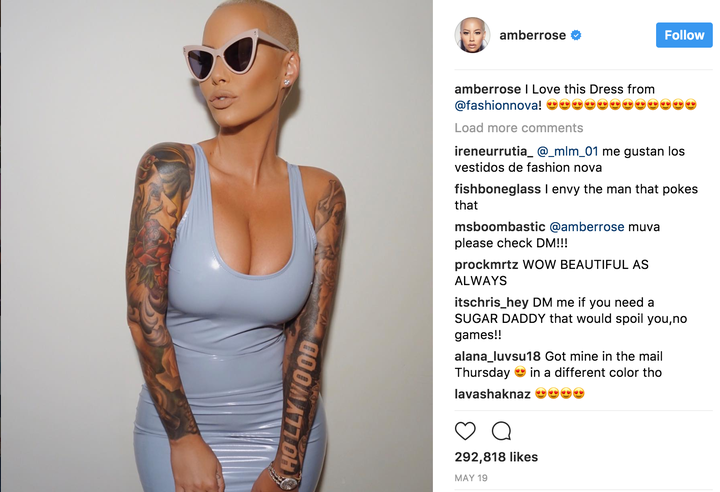
An Instagram from Amber Rose that appears to endorse the clothing shop Fashion Nova. The FTC included this example in its letter to her.

instagram.com

The FTC has taken a big step in cracking down on celebrities doing shady Instagram ads by sending a new set of warning letters to 21 celebrities that require them to respond.

Some celebrity Instagram ads are obvious and easy to identify, but there are many that are confusing or unclear. And a lot of celebrities and influencers don’t properly disclose their #sponsored posts. A report on the top 50 most popular celebrities showed that 93% of the ads they did were not properly disclosed.

According to the FTC’s guidelines, you’re supposed to disclose an ad if you have a “material connection” to a product or brand. That means you’re not only supposed to say #ad if it was a very straightforward thing where you were paid to post about a product, but also if you were given a free gift (like clothes or a free private jet ride), or if you have a big endorsement deal with a brand, like Rihanna and Puma, or Kendall Jenner being the “face” of Esteé Lauder. Nebulous hashtags like #partner or just tagging the sponsor aren’t considered proper disclosures.

In March, the FTC sent “educational” letters to a 43 celebrities/influencers as well as brands, reminding them of the rules that they have to disclose if their posts are ads.

In the past, the FTC has only gone after against brands, not celebrities, for undisclosed social media ads. The “educational” letters to celebs were a new tactic, but they were still a step away from a real enforcement action, and the FTC said in the March letter that they were not attempting to verify if posts in question were ads or not. These new warning letters sent on September 6 are a step further, and now the FTC wants the celebrities to officially respond to the letters.

The FTC did not have any additional comment on these letters.

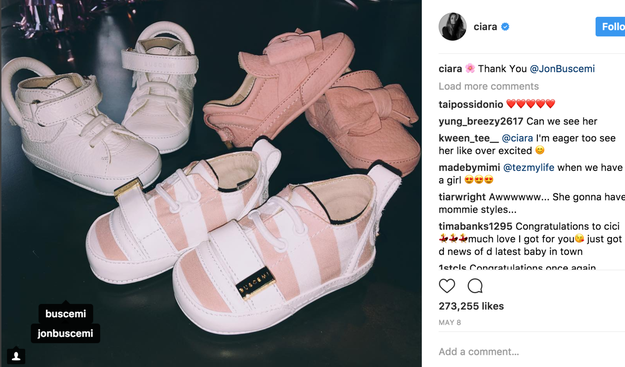
For example, the letter the FTC sent to Ciara about a photo of sneakers she posted on Instagram on May 8 reads [emphasis added]:

You posted a picture of three pairs of baby shoes and you wrote, “Thank You @JonBuscemi.” In the picture, you tagged the shoes ” buscemi” and “jonbuscemi.” As my earlier letter explained, a simple “thank you” is probably inadequate to inform consumers of a material connection because it does not sufficiently explain the nature of your relationship; consumers could understand “thank you” simply to mean that you are a satisfied customer. In addition, the FTC staff believes that simply tagging a brand is an endorsement of the brand. Your post does not disclose whether you have a material connection with the marketer of Buscemi shoes.

instagram.com

Public Citizen, a consumer advocacy group, brought these celebrities’ undisclosed ads to the FTC’s attention months ago, and has been monitoring these celebs since they received the letters back in March. Earlier this summer, they sent a letter to the FTC asking them to take further action, since they saw that many of celebs who received educational letters hadn’t clean up their act at all. Now, they are hoping the FTC will press even harder.

“While we are pleased that the FTC is taking deceptive social media marketing seriously,” Kristen Strader, a representative for the organization, told BuzzFeed News, “until enforcement action is taken against companies that facilitate influencer marketing, or influencers who post undisclosed ads, the culture around influencer marketing on social media will remain as it is – accepted consumer deception on behalf of profit-driven companies, without consequences.”

deleted Instagram

Here are the 21 celebrities who received letters:

Farrah Abraham (from Teen Mom)

Akon

Amber Rose

Ashley Benson

Naomi Campbell

Ciara

Scott Disick

Tiona Fernan (an Instagram model)

Lilly Ghalichi (Shahs of Sunset star and makeup artist)

Lucy Hale (Pretty Little Liars)

Chelsea Houska (Teen Mom 2 star)

Vanessa Hudgens

Jenni “JWoww” Farley

Vanessa Lachey

Lindsay Lohan

Shay Mitchell (Pretty Little Liars)

Rach Parcell (fashion blogger)

Nicole “Snooki” Polizzi

Lisa Rinna

Sofia Vergara

Dorothy Wang (from Rich Kids of Instagram)

Instagram: @letthelordbewithyou

Quelle: <a href="21 Celebrities Just Got A Harsh Warning About Instagram Ads“>BuzzFeed

A boost to advanced networking on IBM Cloud

In September, IBM acquired a high-performance team focused on advanced networking technology that moves the networking function from the server to the edge, increasing data center efficiency. The Cloudigo, Ltd. team brings talent and technology that closely aligns with IBM investments in advanced network processing, as part of its cloud platform. The team will work in the Cloud Innovation Lab, which is part of the IBM Cloud Infrastructure group.
The post A boost to advanced networking on IBM Cloud appeared first on Cloud computing news.
Quelle: Thoughts on Cloud

Keep credentials out of code: Introducing Azure AD Managed Service Identity

A common challenge in cloud development is managing the credentials used to authenticate to cloud services. Today, I am happy to announce the Azure Active Directory Managed Service Identity (MSI) preview. MSI gives your code an automatically managed identity for authenticating to Azure services, so that you can keep credentials out of your code. What is Managed Service Identity and how do I use it? Your code needs credentials to authenticate to cloud services, but you want to limit the visibility of those credentials as much as possible. Ideally, they never appear on a developer’s workstation or get checked-in to source control. Azure Key Vault can store credentials securely so they aren’t in your code, but to retrieve them you need to authenticate to Azure Key Vault. To authenticate to Key Vault, you need a credential! A classic bootstrap problem. Through the magic of Azure and Azure AD, MSI provides a “bootstrap identity” that makes it much simpler to get things started. Here’s how it works! When you enable MSI for an Azure service such as Virtual Machines, App Service, or Functions, Azure creates a Service Principal for the instance of the service in Azure AD, and injects the credentials (client ID and certificate) for the Service Principal into the instance of the service. Next, Your code calls a local MSI endpoint to get an access token MSI uses the locally injected credentials to get an access token from Azure AD Your code uses this access token to authenticate to an Azure service And that’s it! The access token can be used directly with a service that supports Azure AD authentication, such as Azure Resource Manager. If you need to authenticate to a service that doesn’t natively support Azure AD, you can use the token to authenticate to Key Vault and retrieve credentials from there. Azure and Azure AD take care of rolling the Service Principal’s credentials. Your code and your developers will never see or manage them. Try it Today we are announcing previews of Managed Service Identity for: Azure Virtual Machines (Windows) Azure Virtual Machines (Linux) Azure App Service Azure Functions Click the links to try a tutorial! Managed Service Identity is a feature of Azure AD Free, which comes with every Azure subscription. There is no additional charge for using Managed Service Identity. We would love to hear from you! You can ask how-to questions on Stack Overflow using the tag “azure-msi”, or post feature feedback or suggestions to the Azure AD developer feedback forum.
Quelle: Azure

Here’s Why It Doesn't Matter If People Trust Facebook’s Fake News Label In The News Feed

Reuters

When it comes to Facebook’s effort to stop the flow of misinformation on its platform, the labels can be misleading — and the project appears to be more about perfecting the company's algorithms than providing a “Good Housekeeping” stamp of approval for readers.

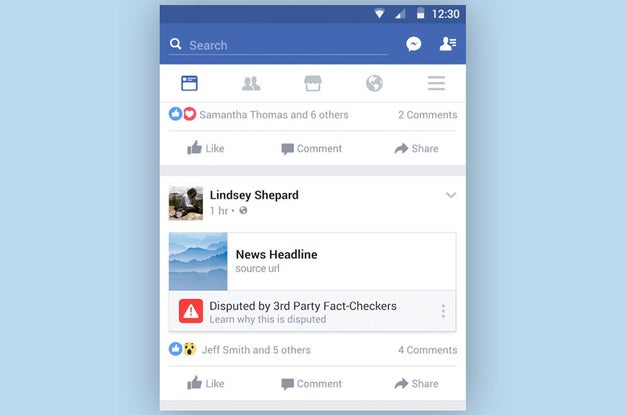
Almost exactly nine months ago, the company announced it would add a “disputed by third party fact-checkers” label to links in the News Feed that external fact checkers deemed completely false. Since then, the label has been a major focus of reporting and research. “Tagging fake news on Facebook doesn't work, study says,” read the headline on a Politico story about a draft research paper. (Facebook questioned the study’s methodology and the validity of its findings.)

But here’s the hidden truth people keep missing: the public’s reaction to the disputed label is largely irrelevant to stopping the spread of misinformation.

One reason is that any link rated false by third party checkers automatically has its reach reduced on Facebook. People can share it all they want but the platform prevents it from going viral as a result of an algorithmic push.

“The [disputed label] is almost more valuable in terms of reduced reach than in terms of consequences of users understanding of the individual item,” Alexios Mantzarlis, director of the International Fact-Checking Network (IFCN), told BuzzFeed News.

The second, less obvious reason why the label isn’t the most important piece of Facebook’s initiative is that these fact checked links are being added to what is fast becoming the world’s biggest and most up to date database of false stories. As with everything about Facebook, it’s the data and the algorithms that matter most.

With each new debunked story, the company gathers more data it can use to train its algorithms to make better decisions about which content to surface in the News Feed. This means the fact checkers are in effect working as content raters for Facebook in order to help train machines. Not surprisingly, this isn’t what motivates the fact checkers to do their work.

“I don't want to sound like a Neanderthal but I'm not really focusing on it,” Aaron Sharockman, the executive director of PolitiFact, told BuzzFeed News. “For us, our biggest priorities are to make the tools we use to spot and fact check fake news as efficient as possible so we can cover as much ground and have an impact.”

Facebook

As the checkers go about their important work, Facebook is now beginning to use their data to roll out new initiatives. Last month it announced that pages which repeatedly share false news stories will be blocked from using ad tools on the platform. Facebook is identifying these pages using the stories declared false by its fact checking partners. Thanks to that data, the company can now easily track if a page keeps sharing false stories, and automatically block that page from promoting itself with boosted posts or other types of ads. This is a powerful deterrent.

But unlike a disputed label in the News Feed, an ad product tweak based on a database of objectively false stories isn’t something that users see, and it’s not something a researcher can analyze. As with so much of Facebook’s data, it’s not accessible those outside the company. So yes, this is yet another example of data-rich Facebook getting even richer. (At least Facebook is now paying its fact checking partners for their work.)

This type of database is time-consuming and expensive to maintain. Normally, researchers have to secure grants and train people to evaluate and classify content. Facebook’s partnership with the likes of PolitiFact and Snopes means the company has some of the best fact checkers in the business identifying completely false stories, thereby providing a constant stream of high quality data.

I know from personal experience how hard it is to generate reliable data in this area. In 2014 I led a research project that tracked rumors being reported by news websites and logged whether they were true, false, or unverified. At the end of the project, a research assistant and I had gathered more than 100 rumors and over 1,500 news articles citing them into a database. It was an almost full time job for me for several months to get that data.

Similar projects also needed significant human effort to classify stories, tweets, images or other kinds of content. For example, an EU-funded project created a corpus of several hundred real and fake images shared on Twitter during Hurricane Sandy, the Boston Marathon bombings, and other news events. Another rumor-analysis project produced a set of over 300 manually-annotated Twitter conversations, as well as a dataset of 5,000 annotated tweets.

Quality datasets of this nature are hard to come by — and I’m not aware of any that are being maintained on an ongoing basis like the one Facebook is building. That’s why years later I still receive requests from academics to use my project’s data. (In addition to the fact checkers, Facebook also gets the data generated when users report a link as false.)

With the fact checkers, Facebook has found a way to create a reliable source of expertly-annotated data it can mine to create smarter artificial intelligence. Along with spotting completely false stories, the data may also prove useful in helping the platform identify common characteristics of low-quality websites. This is good news, and ultimately far more impactful than a label being shown to users. That’s not to suggest the label isn’t important — at the very least it reminds hoaxsters they will be publicly called out, in addition to having their reach killed and Facebook’s ad tools turned off. The label should exist, and it should work.

But the reality is that on a platform with over 2 billion monthly active users, human fact checkers and labels on links only go so far. Mantzarlis said the combination of humans and artificial intelligence is ultimately the only way to address the problem at the scale Facebook operates.

“I think Facebook understands that a combination of artificial intelligence and human fact checkers is probably a winning one,” he said.

He also said this means Facebook is likely to keep working with fact checkers over the long term.

“We’re not in a place where they’re just using the human [checkers as] experiments and will then cut them all off suddenly,” he said.

Mantzarlis was referring to Facebook’s decision last year to get rid of the human curators who worked on its Trending product in favor of using an algorithm-driven approach. The initial result of that decision was that the Trending product promoted several false stories to potentially millions of users.

It seems Facebook learned its lesson: keep the humans and display their work publicly, but most importantly make sure you’re feeding the machines.

Quelle: <a href="Here’s Why It Doesn't Matter If People Trust Facebook’s Fake News Label In The News Feed“>BuzzFeed