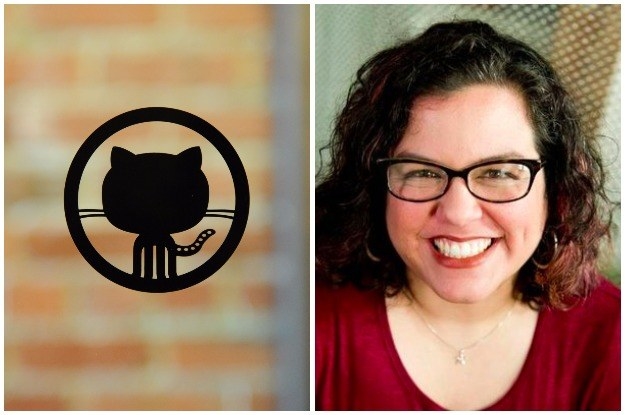
A top executive’s departure from Github has reignited an internal debate over company culture and contributed to mounting concerns about the startup’s commitment to improving diversity and inclusion.
Nicole Sanchez, the executive tapped to oversee GitHub's diversity and inclusion efforts in the aftermath of a 2014 sexual harassment scandal, resigned as GitHub's vice president of social impact earlier this month; today will be her last day.
“It's been a rewarding three years working with GitHub: I am proud of what we've been able to accomplish as a company, including key improvements in diversity metrics,” Sanchez said in an email statement. “I believe in the Social Impact team at GitHub and I'm excited for the work to continue.”
In a statement, a company spokesperson said, “We have worked very hard to make GitHub more diverse and inclusive internally, on our platform, and in our community.” But while GitHub says it remains “firmly committed” to the work of Sanchez’s social impact team, conversations with almost a dozen current and former GitHub employees, as well as a review of internal communications obtained by BuzzFeed News, suggests her departure has reignited an internal debate over company culture and cast some doubt on GitHub’s ability to repair what one former employee called an “entrenched culture” that favors white male employees and is resistant to change.
Following a 2014 sexual harassment scandal, then-CEO Tom Preston-Werner resigned, and GitHub has made a highly public renewed commitment to diversity and inclusion. In 2015, Sanchez left her private consultancy to join GitHub full-time, bringing with her two employees for her social impact team, which she would expand to a staff of 11. The team was tasked with improving diversity and inclusion practices and strengthening the company’s commitment to community. But some employees worry the company’s resolve has faltered in recent months, as financial pressure has escalated and the social impact team lost some of its initial support.
GitHub is a code repository widely used by engineers throughout the tech industry as a resource for sharing and learning. One current employee who spoke with BuzzFeed News anonymously explained his concern over Sanchez’s resignation. “I probably wouldn’t have applied for this job if [the social impact] team didn’t exist,” he said. “There are a lot of people who care deeply about the future of social impact as it affects us internally, and how GitHub impacts the world.”
Three years ago, former GitHub engineer Julie Ann Horvath went public with allegations of sexual harassment and discrimination at the company; these included being verbally attacked and threatened by then-CEO Tom Preston-Werner’s wife, insulted on anonymous social networking app Secret, and having her personal life discussed in company chat rooms. Ultimately, her allegations led to an internal investigation and, while Preston-Werner wasn't implicated in any harassment, he ultimately resigned. Since then, GitHub has worked to rehabilitate its image, prioritizing diversity hiring and introducing more traditional management that ended the company’s notorious bossless, flat management structure.
Sanchez joined GitHub full-time in 2015, just two months before GitHub raised $250 million in venture capital in a Series B round led by Sequoia, giving the company a $2 billion valuation. She ultimately hired 11 people, including technical director Danilo Campos, who joined the company with enthusiasm, despite being openly critical of how GitHub investor Marc Andreessen initially supported Preston-Werner during the 2014 scandal.
(Andreessen blocked Campos on Twitter shortly thereafter.)
The team hit the grounding running: In July 2015, the company proudly announced the beginning of the ConnectHome initiative, an effort to use technology to bring low-income families online for free. In December of that year, Campos was profiled by the San Francisco Chronicle for his work in public housing, which he described as an opportunity to diversify the talent pipeline for the entire tech industry.
But at the same time, tensions inside GitHub were mounting. In February 2016, Business Insider published a story on what it called the “full-blown culture war” at the company, which referenced both Sanchez's and Campos's strident approaches to diversity as a source of conflict among employees. Though Github said there was no fallout for the team over that article, internal communications reviewed by BuzzFeed News suggest that GitHub’s board of directors increased its scrutiny of GitHub’s social impact team following its publication.
Spending at GitHub, especially around headcount, drastically increased throughout 2016, Bloomberg reported. In October, the company brought on Tesla alum Mike Taylor as CFO to help rein in spending and generally get the house in order. That December, the social impact team learned its budget would not be increased for 2017, despite projected companywide growth.
The budgeting decision came around the same time that some employees started to notice a shift in focus inside the company. One GitHub employee said the social impact team was “going well in terms of progress,” but seemed to have “slammed into a wall” around the end of 2016. “Suddenly it really seems like the executive team, and particularly [CEO Chris Wanstrath] was a whole lot less into hearing … from Nicole in terms of strategy, and how to handle complicated situations,” this person told BuzzFeed News.
“They’ve hired so many activists in tech and participate in diversity theater, and yet I get calls from people suffering at the hands of management and poor company values.”
A second person who worked at the company echoed that statement. “In terms of companywide programs like diversity and inclusion training, it felt like there was lots of momentum at the beginning, and it sort of fizzled out,” said the former employee. “These initiatives, which were really top-notch, were broadcast less and less as time went on.”
Julie Ann Horvath said she, too, had a sense that things inside GitHub weren’t as rosy as they appeared externally. At least three GitHub employees reached out to Horvath privately to share their concerns about the company’s culture, she told BuzzFeed News. At least one of those interactions took place in spring of this year, BuzzFeed News confirmed. “They’ve hired so many activists in tech and participate in diversity theater, and yet I get calls from people suffering at the hands of management and poor company values,” Horvath said. “They’re obviously putting something out into the public that’s disconnected with what people there have been experiencing.”
In an email statement, a GitHub spokesperson said the company is “proud of the strong relationships our team has built with communities and organizations around the world” and remains “firmly committed to being the most inclusive company we can be and that our employees and community deserve.”
These mounting concerns about the social impact team’s waning influence at GitHub were kept mostly quiet until last month, when tensions hit a boiling point and put in motion a series of events that would end in Sanchez’s resignation.
At the end of June, a member of Github’s finance team posted a plan for a new equity grant program on GitHub’s internal message board. The plan, according to the announcement, was meant to “reward high-performing Hubbers with an increased stake in the company,” according to screenshots of the announcement reviewed by BuzzFeed News. Here’s an excerpt:
We plan for this to be an annual program tied to the year-end performance review process. Each year, the available pool of merit-based stock options will be determined based on company performance in the prior year. Generally speaking, not every Hubber will receive a merit-based grant. When the company’s performance is strong, we will likely be able to award more Hubbers with merit-based grants, but the reverse is true when company performance doesn’t hit target. For FY17, GitHub reached 88% of our revenue target. Each Hubber’s eligibility and/or number of options will depend on their role, scope of impact, and performance.
This news unsettled GitHub employees, more than 50 of whom left comments on the announcement about the new stock option program.
“I feel this is antithetical to the values we purport to have as a company,” said one female engineer. “When collaboration is one of our top listed values, yet we put a compensation system in place that actively encourages competition versus collaboration there seems to be a huge disconnect.” A second employee echoed her concerns, saying, “This system seems at odds with the growth that GitHub has achieved so far. … It feels like a step back.”
“I feel this is antithetical to the values we purport to have as a company.”
Multiple comments mentioned the folly of tying equity rewards to GitHub’s problematic performance review system. One manager in particular wrote, “in the most recent feedback cycle, I submitted performance ratings for my team only to find out later that one of them was lowered without my knowledge or consultation. How can I make the case to my reports that their opportunity for equity is fair when I can't guarantee that their performance ratings are reflective of my opinion as their manager?”
While the majority of employees who commented on the proposed equity plan appeared to oppose it, a few others were supportive. Such differences of opinion inspired some arguments between employees, something that seems to have fueled Wanstrath’s frustration the next day, when he said in a post on Github’s internal message board he was “deeply disturbed by the way that much of this discussion has been handled.”
For Wanstrath, the new plan would bring order to equity granting at Github, which he said had previously been distributed in an “ad hoc” and “chaotic” manner, and said that CFO Mike Taylor had been brought on in part to resolve that issue. While conversation and even disagreement is needed, Wanstrath wrote, “this is not how we will disagree at GitHub.”
“There's been a lot of thought, hard work, and years of experience put into this new system. It's not perfect and not everyone will agree with it. But I believe in it, I support it, I know we will improve on it, and I am not going to turn back,” he wrote.
Several GitHub employees who spoke with BuzzFeed News said Wanstrath’s unusually stern tone surprised them, as did his determination to roll out the equity grant program despite employee consternation. Wanstrath declined to be interviewed for this story, but in a statement, a spokesperson for GitHub said, “Performance-based equity compensation programs are standard and widely utilized to incentivize and reward employees. We're focused on designing and implementing our program in a way that is consistent with our company values.”
On the same day Wanstrath posted his response to employee comments, Sanchez shared a list of concerns about the situation in a public Slack channel, screenshots of which were reviewed by BuzzFeed News. She told employees she was worried the new equity program would “replicate the same systems of disparity that exist outside” Github, and afraid that she was “watching factions splinter this company in ways that may be irreparable.” On the following Monday, Sanchez tendered her resignation.
In a statement on her decision to leave GitHub, Sanchez said she is “looking forward to returning as CEO of my firm, Vaya Consulting, where I will work with companies and leaders like GitHub (and Chris) who are ready to take meaningful action on bringing their cultures to the next level.”
But employees who spoke with BuzzFeed News said the timing of her departure seemed significant. “She was our voice and that voice must have been losing influence,” said one anonymous employee. “I think she’s getting out before her hands are more tied than they already are and all the work social impact does takes a step backward.”
Wanstrath announced the news of Sanchez’s departure that Tuesday in GitHub’s internal message board, where over three dozen employees left comments. “Incredibly saddened to read this,” said one. Another asked whether Wanstrath planned to fill Sanchez’s vacancy. Wanstrath didn’t immediately reply. Meanwhile, nearly 150 employees joined a new, private Slack channel called “Save Social Impact.”
“All everyone in the channel really wants to know is if the social impact team will be disbanded with Nicole’s departure,” a GitHub employee who is a member of the channel told BuzzFeed News. “That’s pretty much our only demand: keep social impact as a high priority.”
Some of that message seems to have gotten through. Last week, GitHub announced that it’s putting the merit-based equity plan on temporary hold, and it started organizing roundtable conversations with employees to discuss details and concerns. On Thursday, the executive team reiterated its commitment to the social impact team internally, and announced an interim leader. GitHub declined to share who that would be.
“It was only after I started navigating the larger culture that I saw things hadn't changed.”
Sanchez’s departure from GitHub comes at a moment of crisis for a tech industry grappling with several high-profile sexual harassment and discrimination scandals. Earlier this year, ex-Uber engineer Susan Fowler wrote a blog post about her experience at the company, a move that sparked two investigations into patterns of harassment and discrimination at Uber, the termination of at least 20 employees, and the ultimate resignation of CEO Travis Kalanick. More recently, a number of prominent venture capitalists in Silicon Valley have been accused of sexually harassing female founders seeking funding for their startups; three — Justin Caldbeck of Binary Capital, Dave McClure of 500 Startups, and most recently Frank Artale of Ignition Partners — have since resigned.
As the tech industry embarks on an effort to change its ways, for some who worked at GitHub, Sanchez’s tenure will serve as an example of how hard it is to shift a company’s culture.
One former GitHub engineer who says she was let go from the company in October said the initial team she was hired to work on was “diverse and great,” but over time she realized that the “old guard” was still very present inside GitHub. “It was only after I started navigating the larger culture that I saw things hadn't changed,” she said. “There’s still a bro culture. Women are treated exceptionally differently.”
Earlier this month, former GitHub engineer and prominent diversity activist Coraline Ehmke published a blog post about her experience at GitHub, including her eventual termination. Multiple sources said her overarching assessment of GitHub rang true. “Even though the executives had been talking about changing things and had hired people nominally to change things … there was a lot of resistance at ground level, because most of the people who were there are cis gender white guys who don't see a problem,” Ehmke, who is a prominent trans activist, told BuzzFeed News. “They weren't actually interested in change, they are interested in attaching my name to their PR campaign to talk about how they were changing the culture.”
Horvath said she hopes the episode helps the executive team at GitHub focus on practical solutions. “Women and women of color deserve a lot better,” Horvath said. “GitHub needs to stop trying to innovate on everything, and put proven structures in place to prevent things like this. Focus more on your people than your image.”
Quelle: <a href="The Woman Hired To Fix GitHub’s Troubled Culture Is Leaving, And Employees Are Worried“>BuzzFeed








