“Not Our Software” Is No Excuse for Forklift Upgrades: CI/CD Using MCP DriveTrain — Q&A

The post “Not Our Software” Is No Excuse for Forklift Upgrades: CI/CD Using MCP DriveTrain — Q&A appeared first on Mirantis | Pure Play Open Cloud.
These days, technology moves much too quickly for “forklift upgrades”, where you go for months or even years between versions of a software package. Not only are you depriving your users of features they can be using and keeping developers from getting valuable user feedback, you’re also increasing the risk that when you DO upgrade, you’re going to have problems.
Last week we spoke to Ryan Day about using Continuous Integration/Continuous Deployment (CI/CD) to keep not just your own software, but also externally produced software, up to date. It’s a subject that’s close to our hearts; Mirantis Cloud Platform is more than just OpenStack, adding not just Kubernetes but also DriveTrain, a unified cloud deployment and Infrastructure as Code tool.
You can view the whole webinar, and Ryan’s answered the Q&As here in this blog.
Meanwhile, if you’re interested in seeing how DriveTrain can help you get a handle on your infrastructure, contact us, and we’ll be happy to show you how it’s done.
Q: Are OpenStack and Kubernetes are deployed in containers?
A: Containers provide a number of different advantages, and our goal is to eventually containerize all of the appropriate OpenStack services, but as they weren’t originally designed to be containerized, we want to make sure we proceed carefully to maintain the robustness Mirantis OpenStack is known for.  For this reason, in Mirantis Cloud Platform 1.0, some DriveTrain components are deployed in containers, but Kubernetes and OpenStack are installed with packages. Containerized OpenStack services are in Mirantis’ product roadmap.
Q: I’m currently having hardware difficulties deploying Fuel. Are there any specific hardware or network requirements for MCP?
If you’re having hardware difficulty with Fuel in Mirantis OpenStack 9.0 (MOS) or older, it could be related to the specific drivers packaged in the MOS ISO. However, with MCP, we rely primarily on Ubuntu’s hardware compatibility rather than packaged drivers. With regard to changing configuration options to suit various hardware choices, this is actually much easier with MCP because of the CI/CD nature of the software.
Q: Is it possible to download and test MCP without a support contract or managed services?
The best thing to do here is to contact us, so you can speak with an MCP expert, ask questions and see how MCP relates to your own use case.
Q: Does DriveTrain work with other OpenStack distributions?
Mirantis Cloud Platform is designed with a philosophy of “open cloud”, so theoretically, you can replace the “OpenStack” part of the deployment with another distribution. You would have to test/integrate to accommodate the differences in the distributions, but if you were really determined, you could do it. As you might expect, however, Mirantis has only tested DriveTrain with Mirantis OpenStack (MOS).
Q: Can I use salt to deploy to bare-metal?
You can use MaaS, Ironic, Foreman, and other tools to install an operating system on bare-metal, as long as they also install a salt minion agent. From this point on, Salt is responsible for all configuration, even on bare-metal. (I should note that at the moment, Salt automation of MaaS bare-metal provisioning is currently in tech-preview.)
Q: Does DriveTrain follow DevOps pipeline practices for open source projects?
Mirantis will continue to package and harden open-source cloud platforms such as OpenStack and Kubernetes, and we’ll continue to contribute back to the various communities whose tools we use. For example, in addition to OpenStack and Kubernetes, we leverage open source components for DriveTrain and StackLight, and any time we make improvements to those projects we will contribute those patches. That also goes for Salt formulas, which are also open source and are available at http://github.com/salt-formulas.
The post “Not Our Software” Is No Excuse for Forklift Upgrades: CI/CD Using MCP DriveTrain — Q&A appeared first on Mirantis | Pure Play Open Cloud.
Quelle: Mirantis

Uber Rape Survivor Sues The Company For Circulating Her Medical Records

The Indian woman who was raped by her Uber driver in India in 2014, and who had an out of court settlement in the United States District Court in the Northern District of California in 2015, is suing the company again.

The charges, this time, allege an intrusion into private affairs, public disclosure of private facts, and defamation. The suit follows a report published by Recode last week that revealed that a top Uber executive, Eric Alexander, obtained and circulated the woman's medical records internally, and, along with Uber CEO Travis Kalanick and former SVP Emil Michael, tried to paint the incident as a conspiracy by Uber’s Indian rival, Ola.

“Rape denial is just another form of the toxic gender discrimination that is endemic at Uber and ingrained in its culture,” said Douglas Wigdor, the New York-based attorney who is representing the woman in a statement. “It is shocking that Travis Kalanick could publicly say that Uber would do everything to support our client and her family in her recovery when he and other executives were reviewing illegally obtained medical records and engaging in offensive and spurious conspiracy theories about the brutal rape she so tragically suffered.”

Responding to a request for comment from BuzzFeed News, an Uber spokesperson said: “No one should have to go through a horrific experience like this, and we’re truly sorry that she’s had to relive it over the last few weeks.”

Quelle: <a href="Uber Rape Survivor Sues The Company For Circulating Her Medical Records“>BuzzFeed

Announcing large disk sizes of up to 4 TB for Azure IaaS VMs

Azure increases the maximum size and performance of Azure Disks

We are excited to announce an increase of maximum disk sizes for both Premium and Standard storage. This extends the maximum size of the disks from 1,024 GB to 4,095 GB and enables customers to add 4x more disk storage capacity per VM. Customers can now provision up to a total of 256 TB disks storage on a GS5 VM using 64 disks with 4 TB capacity. As a result, customers no longer need to scale up to multiple VMs or stripe multiple disks to provision larger disk capacity.

Large Disks are currently available in all Azure regions except sovereign clouds, which includes US Gov, US DOD, Germany, and China. We will have large disks available in sovereign clouds in a few weeks.

To provide flexibility for customers to provision an appropriate disk size which matches their workloads, we introduce two new disk sizes in P40 (2TB) and P50 (4TB) for both Managed and unmanaged Premium Disks; S40 (2TB) and S50 (4TB) for Standard Managed Disks. Customers can also provision the maximum disk size of 4,095 GB for Standard unmanaged disks.

 
Premium Disks
Standard Disks

Managed Disks
P40, P50
S40, S50

Unmanaged Disks
P40, P50
Max up to 4,095GB

Larger Premium Disks P40 and P50 will support your IO intensive workload, consequently, offers higher provisioned disk performance. The maximum Premium Disk IOPS and bandwidth is increased to 7,500 IOPS and 250 MBps respectively. Standard Disks, of all sizes, will offer up to 500 IOPS and 60 MBps.

 
P40
P50
S40
S50

Disk Size
2048 GB
4095 GB
2048 GB
4095 GB

Disk IOPS
7,500 IOPS
7,500 IOPS
Up to 500 IOPS
Up to 500 IOPS

Disk Bandwidth
250 MBps
250 MBps
Up to 60 MBps
Up to 60 MBps

You can create a larger disk or resize existing disks to larger disk sizes with your existing Azure tools through Azure Resource Manager (ARM). We will light up Azure Portal support for larger disks next week. To upload VHD file of more than 1TB as page blob or unmanaged disks, use the latest released toolsets. Azure Backup and Azure Site Recovery support for larger disks is coming soon.

Smaller Premium Managed Disks (32 GB and 64 GB) for cost efficiency

We will also offer two smaller disk sizes P4 (32GB) and P6 (64 GB) for Premium Managed Disks. You can use these new smaller sizes to optimize cost in scenarios in which you require consistent disk performance but with lower disk capacity, such as the OS disks for Linux VMs. We already offer smaller disk sizes for Standard Managed Disks.

 
P4
P6

Disk Size
32 GB
64 GB

Disk IOPS
120 IOPS
240 IOPS

Disk Bandwidth
25 MBps
50 MBps

New Premium Managed Disks created after June 15th, 2017 with disk size between 33GB and 64GB will be provisioned as P6 Premium Disks, and as P4 Premium Disks if the size is less than or equal to 32GB. The change of disk creation behavior will gradually take effect in all Azure regions in the coming week. Your existing Premium Managed Disks with disk size smaller and equal to 64GB deployed before June 15th, 2017 will stay at P10 disk performance and pricing tier. You can also resize your disks to more than 64GB to maintain your disk performance at P10 level.

Currently, the new P4 and P6 Premium Disk sizes are only available for Managed Disks. We will soon release the support of these smaller sizes for unmanaged Premium Disks. If you are not yet ready to migrate to Managed Disks, please stay tuned.

Pricing

You can visit the Managed Disk Pricing and unmanaged Disk Pricing pages for more details about large disks and smaller Premium Managed Disks pricing.

Getting started

Create new Managed Disks
Expand OS Disk
Expand Data Disk

Quelle: Azure

Microsoft-KI meistert Pac-Man

Mit Pac-Man taten sich KI-Verfahren bisher schwer: In dem Spiel gilt es, zu viele unterschiedliche Ziele abzuwägen. Einem Programm der Microsoft-Tochter Maluuba gelang es, mit einem Trick, nun trotzdem die Maximalpunktzahl zu erreichen.

Quelle: Heise Tech News

Thomas Insel’s New Mental Health Startup Is Competing With His Old Company, Verily

Ivannikulin / Getty Images

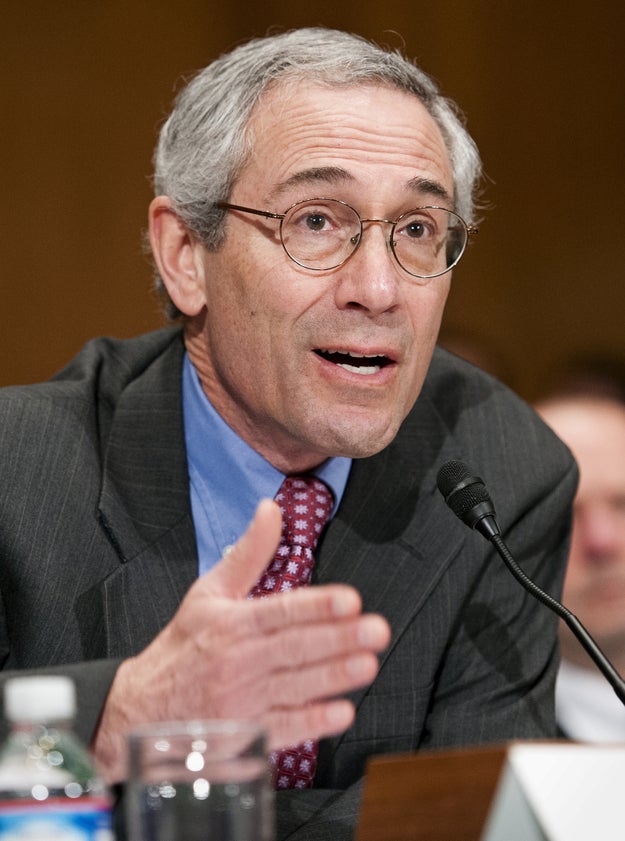
When star neuroscientist Thomas Insel left Verily, Alphabet’s life sciences division, last month, he joined a tiny startup called Mindstrong Health. Its mission overlaps with the project he’d led at Verily: Use the world’s smartphones to diagnose, track, and treat mental health disorders.

But while Mindstrong has just 14 employees, compared to Verily’s 500 employees and its hundreds of millions in funding, the startup’s executives say they aren’t worried about their competition. Over the last two-and-a-half years, they say, they’ve already quietly completed a handful of clinical trials that show promise in their patented technology. Last week, they teamed up with a pharmaceutical company that’s developing treatments for neurobehavioral disorders. And on Thursday, they announced that they’ve raised $14 million.

“I’m not worried” about Google, CEO and cofounder Paul Dagum told BuzzFeed News. “It takes time collecting this data, getting people enrolled. You can’t take a 2.5-year study and make it three months. It’s gotta be 2.5 years. We feel like we’re very much ahead of the game at this point.”

Based in Palo Alto, California, Mindstrong is building an app based on the emerging concept in psychiatry of “digital phenotyping.” Currently, the onus is largely on you, the patient, to seek out a therapist or doctor and self-report your feelings and moods. But smartphones, which patients are constantly interacting with, could be a more thorough, objective source of data about the state of their minds. Could be: There’s a lot of noise in all that data, and patients would have to give the company deep access to their phones.

Mindstrong hasn’t published results from its clinical trials yet, which have tested its technology in people with age-related neurodegeneration, depression, and anxiety. Other similar startups, such as Ginger.io, have previously tried using smartphone data to infer behavioral patterns and mental health problems, only to change course (in Ginger.io’s case, to a text- and video-chat therapy model).

Thomas Insel

Cliff Owen / AP

Mindstrong, founded in 2014, had been in stealth mode until Insel joined as president and cofounder. Prior to his 16-month tenure at Verily, the psychiatrist and neuroscientist had been director of the National Institute of Mental Health since 2002.

Publicly, Insel said that he was leaving Alphabet simply because “I got this terrible itch to do a startup.” In an interview with BuzzFeed News right after his departure, he said that he was happy with the leadership there. “It’s really easy to think … I left Verily because I just couldn’t take it anymore,” he said. “That’s not true. It’s a super good place to work and the CEO there, Andy Conrad, has gotten a lot of bad press but let me tell you, that was just never ever my experience. This guy was great to work with and part of the biggest reason why it was hard for me to make a decision about leaving was him.” Insel was referring to news stories about the CEO’s reportedly impulsive and divisive management style.

Insel also told BuzzFeed News that he was satisfied with the progress his team of designers, engineers, and scientists had made. “That team is now well on its way somewhere in the middle of all this,” he said. When he left, staff members wrote in a blog post that they remained dedicated to the mission.

But privately, Insel had grown frustrated with what he saw as the politics, bureaucracy, and slow pace of Verily, according to a person familiar with his thinking. Insel had been considering leaving for several months before his departure.

“Ultimately, Tom is at a point in his life that he wants to make a dramatic impact on mental health,” said the person familiar with Insel’s thinking, who spoke on condition of anonymity.

One potential issue could have been a shortage of dedicated staff: Insel had told BuzzFeed News that his team officially had between 10 and 15 people, but a definite count was “hard to say because a lot of people were there part of the time” and had full-time positions elsewhere within the company. Other Verily employees on other teams have reportedly left due to the workplace’s lack of focus and clear priorities.

A Verily spokesperson declined to comment. When BuzzFeed News tried to reach Insel through Mindstrong, a Mindstrong spokesperson said, “People leave jobs for lots of reasons and we’re not going to dissect Dr. Insel’s reasons further. We can assure you, however, that Tom has no ill-will towards his former colleagues at Verily or the work they’re doing — in fact he wishes them well. Dr. Insel is now focused on helping Mindstrong achieve its mission of transforming the way in which care providers diagnose and treat patients suffering from neuropsychiatric disorders.”

Blackzheep / Getty Images

Mindstrong’s focus is tracking your response times on your phone, down to the millisecond — like when you scroll through your contacts. The app, running quietly in the background, notices when you’re looking for something on a list, which way you’re scrolling, when you turn back, and when you found and clicked on what you were looking for. The app also tracks how quickly you type on the keyboard. “All these things are very predictive of attention, concentration,” said Dagum, a scientist and software engineer.

“From a privacy perspective,” Dagum added, “it’s not as invasive as you would think.” He says that the app doesn’t collect the names of the people you’re calling or your web browser history or the content of your texts, because the staff thinks that information isn’t really that useful to begin with. “We don’t really need to know what it says, we just need to know how well your process information and how well you react and variability in reaction,” he said.

Mindstrong has wrapped two studies: one with 100 50- to 75-year-olds with signs of age-related neurodegeneration; and another with 50 people between 18 and 35 with depression and anxiety. Each participant went through four hours of cognitive testing with a neuropsychologist, installed the app, went away for a year, and then came back and re-tested. The goal was to see if they could use people’s behavioral patterns on their phones to create an objective diagnostic test for their respective disorders. A third study with Stanford University researchers, funded by a National Institutes of Health grant, is ongoing in 100 adults with major depression, and aims to measure their ability to control their emotions. Dagum says Mindstrong plans to eventually publish its findings.

Last week, Mindstrong announced that it’d inked a deal with BlackThorn Therapeutics to further test its technology. The biotech firm has an experimental therapy that targets a certain protein linked to neurobehavioral disorders. And it wants to use Mindstrong’s app to passively monitor participants in a clinical study. Mindstrong ultimately hopes its customers will be health care systems that want to lower their mental health care costs; soon it’ll start pilots with a few undisclosed payers and providers.

“For the first time,” Dagum said, “[the app] gives us insight, visibility, in how the brain functions and how the brain responds to day-to-day stress, to organic and non-organic disorders, to your life.”

Got a tip about biotech or health-tech? Reach out to this reporter at stephanie.lee@buzzfeed.com or securely on Signal at 415-322-8701. Other secure contact methods can be found at tips.buzzfeed.com.

Quelle: <a href="Thomas Insel’s New Mental Health Startup Is Competing With His Old Company, Verily“>BuzzFeed