ASOS: How they migrated from local monolith to microservices in Azure

Today we are kicking of a new series on Microsoft Mechanics called "How we built it" to share the real-world architectural back stories and best practices as told by the technology architects in our customer organizations.

We kick off the series with lead architect, Dave Green, from British online fashion retailer ASOS, to take a closer look at their design goals and approach for moving from a locally-operated monolith to a fully architected built-for-Cloud online retail system.

Breaking down the monolith

Founded almost two decades ago, ASOS was ahead of its time establishing a fully-online retail presence. The company has a growing customer base of 14 million customers, spanning 230 countries worldwide. Their exponential growth resulted in the need to move beyond a single currency and support multiple languages.

This meant building in more agility, scale and efficiency into their tech architecture. Rather than perform a lift and shift migration, the team decided to adopt a cloud-native, microservices architecture from scratch for faster iteration and release of new features.

Then they set to work breaking down their monolithic retail app which comprised stateful, intertwined services into core microservices, swapping out functions from the monolith piece-by-piece.

As Dave Green explains, core to their approach was the decoupling of their presentation layer from their compute layer. This gave them more freedom to easily add or change features and scale their developer teams to work on multiple features at once. Further, as each service maintains its own state and data, this made it easier to scale the data layer and compute layer independently.

Multi-geo footprint and performance

Breaking down the monolith and moving core services to the Cloud also enabled them to architect for greater performance and resiliency for their global customer base. This included geo-redundancy across North and West EU regions, where most of their customers reside with a handful of core services sensitive to latency, running in Asian and North American regions.

The combined approach with Cloud microservices, paid off on some of their busiest shopping days. This includes Black Friday, where they saw an increase in peak order handling from 9 orders per second using their original monolith retail system to 33 orders per seconds with their Cloud microservices architected system.

To learn more, watch Dave Green's account on "How we built it." You can also join Dave and the ASOS team, on June 29th at 9am PDT for their AMA session on the Microsoft Tech Community at http://aka.ms/how-we-built-it-ASOS.
Quelle: Azure


Virtualization is changing how we need to do service assurance

Recently Jim Carey blogged about the ever-increasing pace of change that affects operations teams worldwide. This is particularly true of communication service providers (CSPs), who in this dynamic world face new challenges as they look to generate more revenue and improve operational efficiency.
Disruptive over-the-top service providers are now threatening traditional CSP revenue streams and margins. To stay competitive, CSPs need to tackle disruptive challenges with transformative strategies that continuously evolve network infrastructure. To be competitive, it is critical that they explore opportunities to support new and agile service offerings at significantly lower costs.
Two things are really changing how service providers need to manage their services and network infrastructure: virtualization and the automation enabled by virtualization.
The typical goals of network function virtualization (NFV) and software defined networks (SDN) are to:

Reduce the cost of infrastructure and speed operational agility
Get more and more niche services out the door

Companies need a new management and operational paradigm to improve operational efficiencies and the service lifecycle management of cloud-enabled services leveraging NFV and SDN. Services and applications are now increasingly deployed in virtualized environments, resulting in highly distributed and increasingly complex hybrid networks.
This new deployment model requires an agile and dynamic operations management solution. To leverage rapidly evolving technologies, real-time topology can be key to orchestration and service assurance in these hybrid networks. You must acquire data from sources that are constantly in a state of change before you can construct a model of the underlying network and resources.
A new IBM offering called Agile Service Manager (ASM) can help you maintain these dynamic changes to the resources and topology. ASM is a shared resource, supporting other functions in the assurance and orchestration domains. Operations teams can now uncover insights to help analyse the impact of a fault or detect whether customer experience is being correctly met. For example, Operations teams can see the details of what server a virtual machine is running on, which network function it is a part of and what service instance is its parent.
With ASM operations teams get complete up-to-date visibility and control over dynamic infrastructure and services. It is cloud-born and built on secure, robust and proven technologies.
ASM also lets you query a specific networked resource and then presents a configurable topology view of it within its ecosystem of relationships and states, both in real time and within a definable time window. You can visualize complex network topologies in real time, whether updated dynamically or on-demand. This allows you to further investigate events, incidents and performance. As a result, you can improve operational efficiency and detect and solve faster. You can reduce false alarms while improving automation and collaboration between operational teams.
Observers built into Agile Service Manager are responsible for obtaining data from a specific data source for a specified tenant. Observers are microservices which are used to read information from a data source and update the topology in the topology service. For example, the OpenStack Observer can render detailed OpenStack topologies, and delve further into their states, histories and relationships. You can see how effectively ASM is in keeping track of OpenStack environments here.
Agility and operational trust sometimes place opposing requirements on the systems that manage the lifecycle of services and virtual network functions. You need both to have a credible platform. ASM can help by extending the capabilities of the market-leading Netcool Operations Insight solution. Building on existing analytics and correlations to become truly cognitive, this new capability establishes a foundation for managing SDN and NFV environments by providing timely visibility of highly dynamic infrastructures and services.
Find out more about Netcool and IBM Operations management here.
The post Virtualization is changing how we need to do service assurance appeared first on Cloud computing news.
Quelle: Thoughts on Cloud

Announcing Microsoft Azure Government services in the Cloud Solution Provider program

We are excited to announce that Azure Government services are now available through the Cloud Solution Provider program (CSP). The CSP program enables partners to make Microsoft Cloud services part of their customer offerings, expanding U.S. government customer options in meeting their mission goals. With the CSP program, partners can now create high-value service offerings that combine use of Azure Government with solution management, customer support, and billing to U.S. government customers. The security, privacy, compliance and transparency of the Azure Government platform give U.S. government partners the right foundation for meeting regulatory requirements while delivering innovation to the U.S. public sector.

The CSP program is a great fit for the U.S. public sector where partners already build, deploy and manage solutions on behalf of federal, state and local government entities. Over the last 60 days, we piloted Azure Government in CSP with a variety of partners and their customers running production workloads. The feedback reinforces the expected demand from U.S. Government customers for secure, compliant cloud-based solutions through a broad ecosystem of partners. Reduced cost, cloud speed, and increased efficiency are all potential benefits of the managed services that U.S. government partners can enable through CSP. 

“Smartronix and Microsoft share a common commitment to deliver innovative and valuable services to our government customers. AzureGov on CSP makes it easier for us to deliver these solutions.”   – Robert Groat, Executive Vice President Smartronix 

"As compliance with regulation and public demand rapidly increase reliance on technology in the public sector, a consistent, reliable and accessible cloud platform is the backbone supporting that change, with Microsoft Azure, through the SYNNEX CLOUDSolv marketplace, we enable our partners to drive deployment and provide comprehensive solutions that help them compete and grow their business in the government vertical.” – Darren Harbaugh, Vice President, Cloud & Emerging Services, SYNNEX Corporation

“Our partnership with Microsoft enabled us to seize a tremendous opportunity as we were closing the year. Not only did the fast turnaround have us transacting on the Azure Cloud in less than a week, but now we can provide our services on Microsoft’s infrastructure which opens a wave of new possibilities for new government customers.” – Eric Van Heel, VP of Cloud Solutions Support Avtex Solutions

“In partnering with Microsoft through CSP and leveraging technologies such as the Azure Pricing Calculator, which is bleeding edge to provide a comprehensive and easy to use web-based user interface to select and dynamically price out all of Azure Cloud Services, Microsoft enabled us to turn around quotes and spin up resources based on our clients’ requirements within minutes not days.” – Sonoka Ho, VP of Business Operations @ TechTrend.us

The array of services available in Azure Government is rapidly increasing, and nearly all are available today through CSP.  From infrastructure services like virtual machines, storage, and networking to platform services like data, analytics, web and mobile services. Transacting Azure in the Government Cloud through CSP can be done in three steps:

Learn about CSP: the requirements for participation and the option to own the customer relationship end-to-end.
Decide on the model: direct or indirect.
Get started: sign up, get ready to sell, transact, and support.

Once you decide which model is right for you, follow the enrollment path in CSP for Azure Government.

Become an indirect reseller

As an indirect reseller in the CSP program, you’ll work with an indirect provider (also known as a distributor). Indirect providers can provide your customers with product support, provide you with technical assistance and marketing, and help you establish financing and credit terms.

Minimum requirements include having a Microsoft Partner Network (MPN) ID and the ability to sign legal agreements on behalf of your organization.

If you don’t have the infrastructure to provide customer support and billing, you can connect with an indirect provider. This gives you more time to spend with your customers building specialized service offers. Review the authorized indirect providers in your area, to get help with value added services, support and billing.  Here’s where you can learn more about the indirect reseller model and find a provider.

Become a direct partner

As a direct partner, you provide your customers with cloud services, cloud products, customer support, and you bill your customers directly. If you don’t have the infrastructure for doing this type of business, join as an indirect reseller.   Minimum requirements for direct partners include: A service business model, a customer support infrastructure, customer billing and invoicing capabilities, and the ability to scale.  There is a deeper commitment required to be a direct partner, and details on support requirement, billing and invoicing, managing customers, incentives and licensing can be found here.

Enroll in the CSP Program

After you understand the requirements and commitment, apply now and we’ll review your application.  Please note it can take several days to review and verify your information.

Have questions, please email azgovcsp@microsoft.com and join us on Yammer.
Quelle: Azure

We Get It Facebook, You Want Us To Post More

This is Facebook.

It only works if you share stuff inside it.

No sharing, no Facebook

Yes sharing, happy Facebook

So Facebook really wants us post stuff.

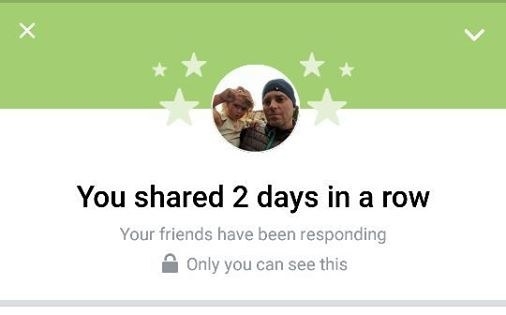
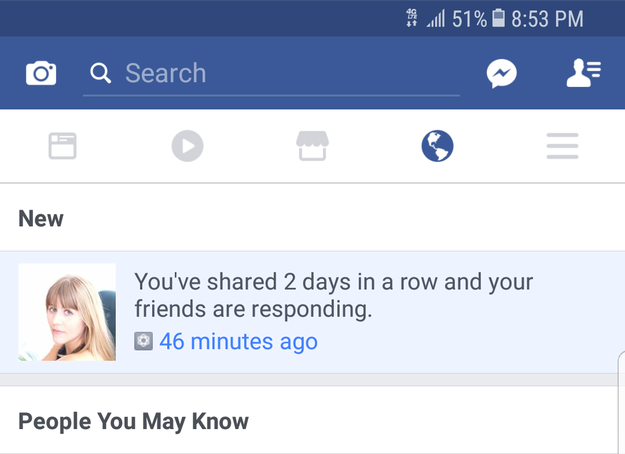
And it started doing this new thing where it tells you how many days in a row you've shared.

To encourage you to feed its feed

Okay, Facebook. We get it.

Okay, Facebook. We get it.

Thanks for the reminder, I guess?

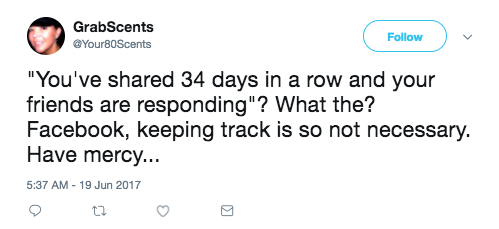
Lord. Have. Mercy.

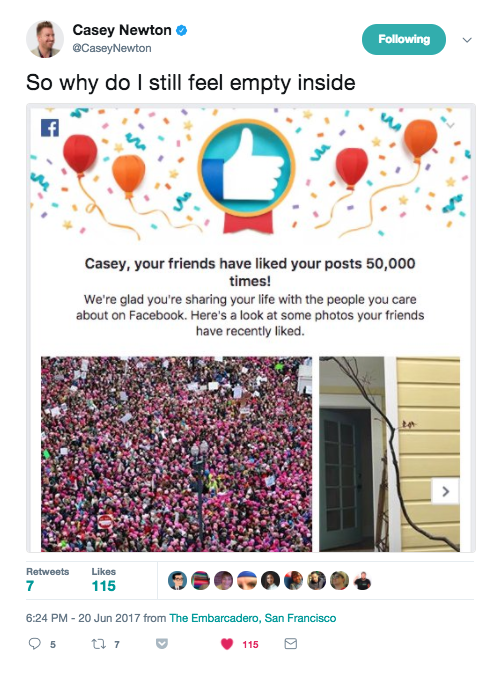
People are certainly, uhhh, responding.

Facebook is also letting our friends know when we post — probably so they engage and make us feel better about posting, so we post more.

Yeeeesh

Other Facebook products, like Messenger, use a similar approach.

Feels good, doesn't it?

“We’re always looking for ways to help people share and connect on Facebook. Notifications are one of the ways we do this,” a Facebook spokesperson told BuzzFeed News.

Giphy / Via giphy.com

Quelle: <a href="We Get It Facebook, You Want Us To Post More“>BuzzFeed

AWS Announces Rate-Based Rules for AWS WAF

Amazon Web Services (AWS) today announced Rate-based Rules for AWS WAF. This new rule type protects customer websites and APIs from threats such as web-layer DDoS attacks, brute force login attempts and bad bots. Rate Based Rules are automatically triggered when web requests from a client exceed a certain configurable threshold.
Quelle: aws.amazon.com

Amazon DynamoDB Accelerator (DAX) Now Generally Available

Amazon DynamoDB Accelerator (DAX) is a fully managed, highly available, in-memory cache for DynamoDB that delivers up to a 10x performance improvement – from milliseconds to microseconds – even at millions of requests per second. DAX does all the heavy lifting required to add in-memory acceleration to your DynamoDB tables, without requiring you to manage cache invalidation, data population, or cluster management. Now you can simply focus on building great applications for your customers without worrying about performance at scale.
Quelle: aws.amazon.com