The Sexual Harassment Allegations Against This Virtual Reality Startup Are Really Gross

UploadVR / Via uploadvr.com

Some of the biggest companies in the tech world have been marked by sexual harassment and gender discrimination allegations over the last few years: from engineer Susan Fowler exposing an allegedly “systemic problem” at Uber, to Ellen Pao suing the venture capital firm Kleiner Perkins for discrimination, to the female engineers at Facebook claiming gender bias. The latest allegations concern virtual reality startup UploadVR, which is being sued by Elizabeth Scott, its former Director of Digital and Social Media, for sexual harassment, discrimination, and wrongful termination. But even in a culture that’s almost become inured to the shock of yet another sexual harassment lawsuit, the allegations in this one seem particularly egregious.

The complaint paints a picture of a wild frat house culture where women were allegedly referred to as “mommies” who had to clean up the condoms and underwear left behind in the company's “kink room,” where male employees would regularly have sex. According to the complaint, women at the company were allegedly subjected to a daily barrage of insults, sexual comments, and general degradation that made working there a total hell.

Here, we've compiled a list of the most horrendous allegations against UploadVR, taken directly from the complaint, as reported by TechCrunch. (UploadVR has not responded to BuzzFeed News's request for comment on the allegations.)

1. “Male employees … discussed sex at the office on a daily basis. [They] would discuss their sexual exploits in graphic detail at the workplace in front of Plaintiff and other female employees.” The sex life of one employee, Greg Gopman, in particular “was a frequent topic of discussion. The other male employees would talk about how he 'refuses to wear a condom' and 'has had sex with over 1000 people.'”

2. “Male employees stated how they were sexually aroused by female employees and how it was hard to concentrate and be productive when all they could think about was having sex with them.”

3. One male employee, Avi Horowitz, “would frequently comment about how attractive one of the female employees was, in Plaintiff's presence. He would talk about now he 'had a boner' and had to go to the bathroom to 'rub one out' so he could focus, meaning that he was going to the bathroom to masturbate.”

4. Company founder Taylor Freeman “made it known that he did not find Plaintiff attractive and that she could not be used for marketing purposes because she was 'too big.'”

5. Before a trip to Asia, company executives sent around an email about how they were trying to get 'Samurai Girls' — “submissive, Asian women” — for the trip.

6. “Male employees engaged in explicit sexual conduct in the office in the presence of Plaintiff and other female employees.” Gopman “brought a female companion to the office and she proceeded to straddle him and kiss him while they were in the shared office space.”

7. There was a room at Upload referred to as the “kink room” that contained a bed. “Male employees used that room to have sexual intercourse… often, underwear and condom wrappers would be found in the room.”

8. At a party at a rented house in Los Angeles that Scott was required to attend, a male employee invited prostitutes and strippers.

9. At a party at a conference in San Jose, Freeman forced Scott out of her room so he could have sex with a woman he brought to the event.

10. Men at the company separated themselves from the women and sat together in a separate room and refused to allow Scott to sit with them. They also refused to let her come to lunch with them and didn't include her on important emails or meetings.

11. Women at the company had to perform “womanly tasks,” including cleaning the kitchen, organizing the refrigerator, and tidying up the workspace. They also had to clean up after parties, including on their days off.

12. The women in the office were referred to as “mommies” who were there to “help the men with whatever they needed.”

Scott alleges she was fired in retaliation for complaining about the work environment. According to her suit, Upload’s executives are now “slandering her in the VR community, making her search for new employment very difficult.”

Quelle: <a href="The Sexual Harassment Allegations Against This Virtual Reality Startup Are Really Gross“>BuzzFeed

This Guy Skydived Using A Mega-Drone And It's Harrowing

This Guy Skydived Using A Mega-Drone And It's Harrowing

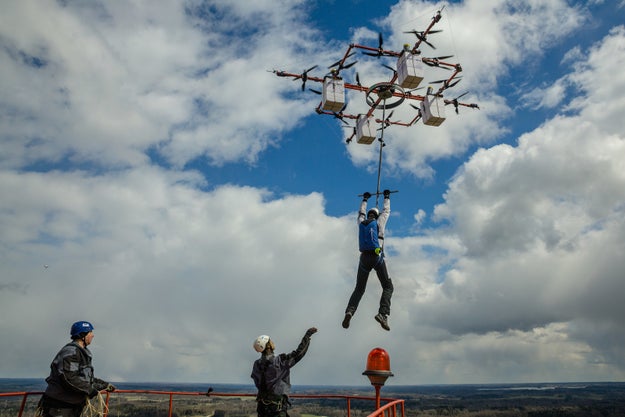
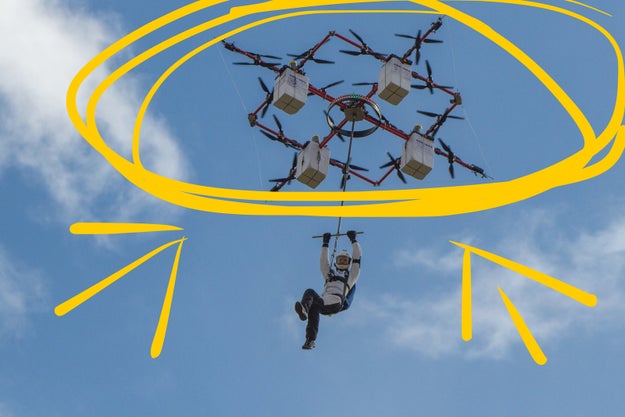
This is Ingus Augstkalns, a Latvian professional skydiver.

Roman Koksarov,tel.+37129429666

Here he is lifting off.

Go, Ingus, go!

Go, Ingus, go!

You may notice there's something different about Ingus' skydive.

Maybe he's using a different kind of helmet?

Or maybe it's a new type of jacket…?

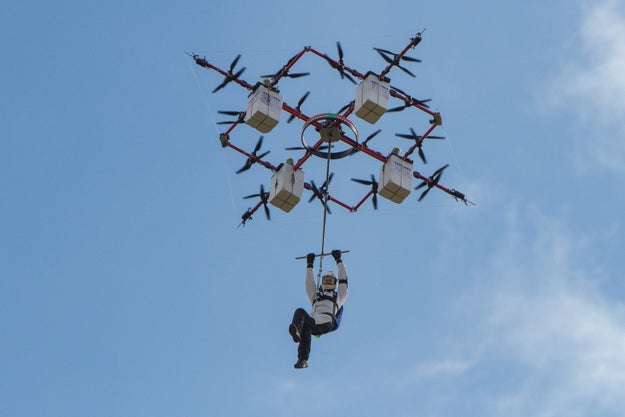
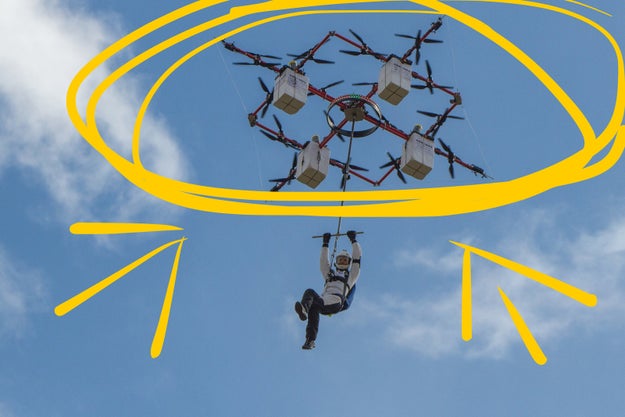
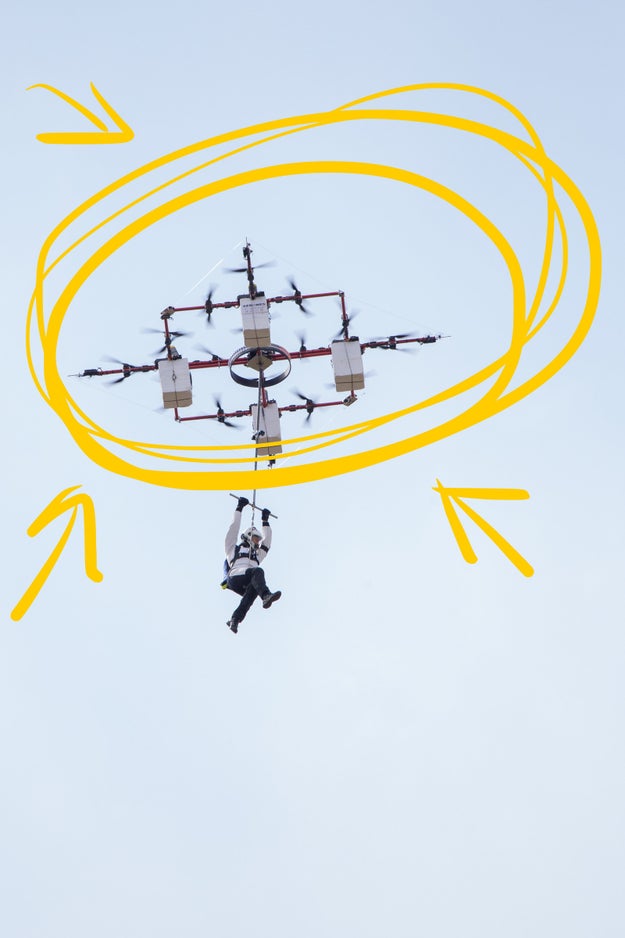
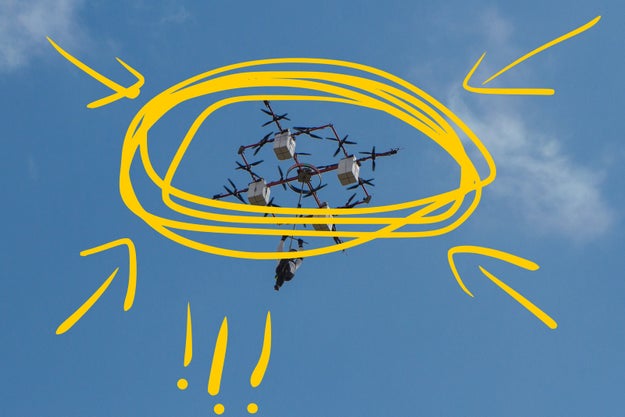
Or it could be the 28-propeller drone that's carrying him into the skies like an falcon that's caught a mouse.

The mega-drone, made by a company called Aerones, lifted Augstkalns to a height of 330 meters (~1082 feet) before he let go and opened his parachute.

The company specializes in making drones that carry heavy payloads, and it previously recorded towing a snowboarder with one. The company has also posted videos of drones used for firefighting and emergency rescue.

Augstkalns said he took part in the test because he believes that in the next four years, drones will be much more widely used, and he wanted to be part of that future. He also said, “it's always fun to do something new to challenge engineers and myself” and that he'd like to have a similar drone to use recreationally. Augstkalns' definition of “fun” is up for debate.

Here's a video of Augstkalns' ascent and jump:

youtube.com

Augstkalns said Aerones conducted several tests using 90kg (~198 lb.) bags to approximate his weight, and the company also used the drone to carry him over water at low altitude.

Skydivers often go much higher than Augstkalns did — a typical dive starts between 12,000 and 18,000 feet above the ground. There are also often several seconds of free fall in a normal dive before the diver must open the parachute, whereas Augstkalns needed to open his immediately.

Aerones said that its skydiving drone won't be commercially available any time soon because the company is focusing on producing its firefighting drone.

Quelle: <a href="This Guy Skydived Using A Mega-Drone And It's Harrowing“>BuzzFeed

Announcing the availability of the new Amazon S3 console

Today we are announcing the general availability of the new Amazon S3 console to all users in all regions. The new Amazon S3 console provides a new user interface, a streamlined user experience, and introduces user interface support for two new S3 features – object-level tagging and storage analytics. Many S3 users having been experiencing the new Amazon S3 console by opting-in as part of our original launch of the new Amazon S3 console at re:invent 2016. Now all S3 users get this experience without any additional work. 
Quelle: aws.amazon.com

Migrating to Azure Data Sync 2.0

We’ve made improvements to SQL Data Sync including PowerShell programmability, better security and resilience, enhanced monitoring and troubleshooting, and availability in more regions. As part of these changes, SQL Data Sync will only be available in the Azure portal beginning July 1, 2017. This blog post will cover the steps current active users will use to migrate to the new service. This only applies to customers that have used their Sync Groups after March 1, 2017.

For details on the improvements, please see our Data Sync Update blog post. If you are a new user that would like to try Data Sync, look at this blog post on Getting Started with Data Sync. 

Overview

Starting June 1, 2017, existing Sync Groups will begin migrating. Existing Sync Groups will continue to work until the migration is completed. Please see the section below that fits your case for details.

A Sync Database will be created for each region where you have a Sync Group to store metadata and logs. You will own this database. This will be created in the same server as your Hub Database.

On July 1, 2017, SQL Data Sync will be retired from the Azure classic portal. After July 1, 2017, the original service will continue to run, but you won’t be able to make any changes or have portal access until you complete your migration. 

On September 1, 2017, the original SQL Data Sync service will be retired. If you haven’t migrated your sync groups by September 1, 2017, your Sync Group will be deleted.

What you need to do

Plan and prepare for your migration. You will receive emails in the coming weeks with your migration date and instructions.
Do not make topologies in the old portal after your migration date. This date will be sent to the subscription email of each Sync Group being migrated.
If you have any on-premises member databases install and configure the local agent. You need one on each machine or VM hosting a member database. Detailed steps are included below.
Test for successful migration. Do this by clicking “Sync Now” in the Azure Data Sync portal.
After verifying migration, disable scheduled sync in the old service. You must do this before making any topology changes or this could cause errors with Data Sync.

After completing these steps you can use Data Sync in the new portal.

Installing and configuring local agent

Your local agent from the original service can remain running and installed while you do the following steps.

You will need to:
1. Download and install the local agent. Install the local agent in the default location on every machine which hosts a member database.

2. Get the agent key. You can find this in the new Azure Data Sync portal after your migration date. We have also emailed this key to the subscription email of each Sync Group being migrated.

3. Click the "Submit Agent Key" button and connect to the Sync Group and Sync Database. You'll need to enter credentials for your Sync Database. This is the same as your credentials for the server on which the Sync Database is located.

4. Update your credentials.

a. Click the edit credentials button and update the information.

b. Copy the configuration file from the original service.

Copy the “AgentConfigData.xml” from the original service. The path will be as follows: Microsoft SQL Data SyncdataAgentConfigData.xml 
Put the copy of that file in the new Data Sync folder. The path will be as follows: Microsoft SQL Data Sync Agent 2.0dataAgentConfigData.xml

Related Links

Getting Started with Data Sync
Data Sync Refresh Blog

If you have any feedback on Azure Data Sync service, we’d love to hear from you! To get the latest update of Azure Data Sync, please join the SQL Advisor Yammer Group or follow us @AzureSQLDB on Twitter.
Quelle: Azure

Introducing Auto Scaling Resource-Level Permissions

You can now define AWS Identify and Access Management (IAM) policies to provide control over which Auto Scaling resources users can access, and the actions that they are permitted to perform on these resources. Auto Scaling helps you maintain application availability and allows you to scale your Amazon EC2 capacity up or down automatically according to conditions you define. You can use Auto Scaling to help ensure that you are running your desired number of Amazon EC2 instances. With resource-level permissions, you can enable different users within an organization, such as application developers and IT specialists, to access and modify Launch Configurations and Auto Scaling groups with appropriately configured permissions. 
Quelle: aws.amazon.com

Uber And Google Are Fighting Over Very Old “Lidar” Technology. Here’s Why.

Uber And Google Are Fighting Over Very Old “Lidar” Technology. Here’s Why.

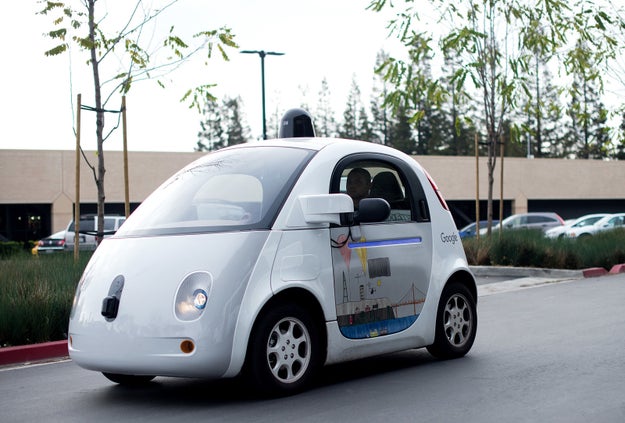
A self-driving car at Google's headquarters.

Noah Berger / AFP / Getty Images

The most high-stakes lawsuit in Silicon Valley, a nasty battle for the first commercial self-driving car, centers on a 54-year-old technology called Lidar.

Alphabet (Google’s parent company) claims that Uber stole Lidar-related intellectual property from its self-driving car company, Waymo, by hiring one of Waymo’s leading engineers, Anthony Levandowski. On Monday, Waymo got a court win when the judge ordered Uber to return any allegedly stolen documents and barred Levandowski from working on part of Uber's self-driving program.

The future of an industry, the safety of all its passengers, and a whole lot of money (not even counting the lawsuit) rest on Lidar, which allows self-driving cars to see and navigate the world around them. Waymo, Uber, and the world's biggest car companies are all racing to make Lidar systems that are safer than human drivers and only cost a few hundred dollars per car.

“Whoever cracks the nut, to make Lidar work with a safe self-driving car, will own the market,” roboticist Edwin Olson of the University of Michigan told BuzzFeed News.

For something suddenly so important to the future of the auto industry, and at the heart of a stunning titan vs. titan lawsuit, Lidar is quite old in terms of technology. Pioneered soon after the 1958 invention of lasers, Lidar (or LiDAR, LIDAR, or LADAR, which we’ll get to) works by bouncing light off far-away things to reckon their distance and shape. Since light travels at an unvarying speed of 671 million miles per hour, the time it takes for projected light to bounce off remote objects and return tells you the distance to whatever is around the Lidar system, typically down to a centimeter.
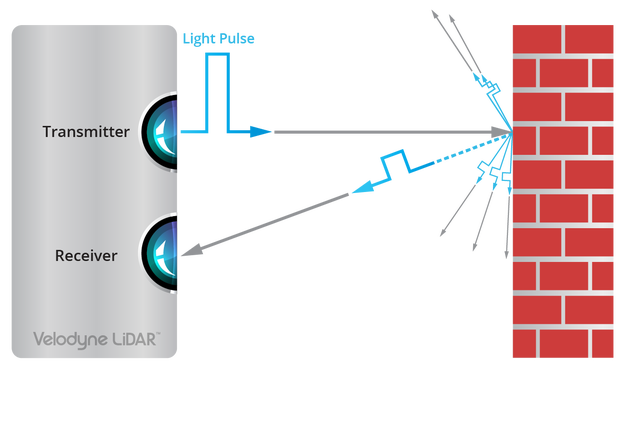
Velodyne

Unlike oncoming headlights, automotive Lidar lasers typically operate in the near-infrared spectrum, invisible to the human eye, which means they don’t blind anyone.

“That’s pretty useful for a self-driving car,” roboticist Chistoph Mertz of Carnegie Mellon University in Pittsburgh told BuzzFeed News. (Carnegie Mellon has been a hotbed for self-driving car research: In 2015, Uber poached an entire CM robotics lab to try and beat Waymo, one of the backstories of the Levandowski lawsuit.)

On top of distances, changes in the reflectivity of returning Lidar pulses can provide information about whatever the laser hit, whether it’s hard or soft, light or dark (beer foam is 88% reflective, for example, while pavement is only 17%), and which way it’s facing, with a precision of around one-tenth of a degree.

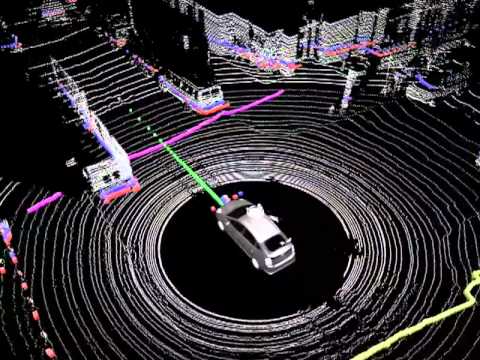
Some Lidar systems take millions of measurements every second. By building up a mosaic of these measurements in 360 degrees, Lidar can paint a three-dimensional picture of the world around it. Voila: a car that “sees,” at least out to a football field’s distance.

At least six of the main commercial self-driving car efforts use Lidar.

At least six of the main commercial self-driving car efforts — Ford, Toyota, Volvo, and Honda, plus Uber and Waymo — use Lidar. Although the basic technology behind Lidar is old, engineers at each of these companies are still trying to figure out how to cheaply take millions of Lidar readings and mold them into a car’s map of the world. It’s hard.

Each Lidar system includes lasers, sensors, lenses, a clock, and a lot of computer circuitry and programming to work out all the calculations. Waymo buys some components from the best-known Lidar company, Velodyne. But Waymo’s lasers and sensors are controlled by its own electronics, ones at the center of the lawsuit, according to court documents. For now, Uber's self-driving cars use Lidar units developed by Velodyne.

Lidar systems are expensive: Velodyne’s 64 laser and sensor system costs $8,000 — far too high to add on to the price of a car meant for typical buyers. Lidar systems also tend to be bulky, spinning like an oversized police siren atop cars to get an all-around view. The laser pulses might come every 5 nanoseconds and require high-speed clocks to accurately measure their return time. The laser light has to be tightly focused by a carefully engineered lens (and how this is done is one point of dispute in the lawsuit). Expensive sensors are required to characterize the returning light.

youtube.com

And it takes a lot of computer power to process those millions of measurements into something that computer algorithms can use to hit the brakes when a deer jumps onto a road.

“The challenge is making something work better than the human eyeball, which is hard,” Olson said. “We aren’t really there yet.”

So far, only one notable self-driving car doesn’t use Lidar. Elon Musk’s Tesla instead relies on radar and a camera system, which can see to greater distances and is much cheaper, around $200. But cameras don’t work so well at night, and they can’t calculate distances off flat surfaces (like say, the side of a truck) very well. Lidar actually works better at night, because there isn’t any other light interfering with the laser reflections. (Black cars, which don’t reflect light well, can be a problem, though.)

The inside of a Tesla.

Spencer Platt / Getty Images

Lidar manufacturers, broadly speaking, have two avenues for improving their performance — amping up the power of the laser and the sensors, which is costly, or improving their capabilities so that they use tighter laser beams and less power. For the latter (also costly) approach, solid- state lidar systems are coming, which park the lasers and sensor on a silicon chip. If and when solid-state systems arrive, they’d replace the mechanical spinning gumball machines now seen on most experimental self-driving cars.

“That’s why we built a mega-factory,” Mike Jellen of Velodyne told BuzzFeed News, after a $150 million investment from Ford and Baidu, a Chinese automaker. (Velodyne’s competitors have also promised solid-state systems). Velodyne has promised a $50 price tag for the solid-state Lidar computer chip within the next three years, despite some skepticism.

Given advances, getting Lidar systems down to the hundreds of dollars in cost, rather than thousands of dollars, looks achievable, Mertz said. And this is exactly what all companies in the self-driving sector are racing to do.

Today’s self-driving cars most commonly fuse together signals not only from Lidar, but from cameras, radars, and other sensors as they interpret the world. They also rely on GPS signals and internal maps, and sometimes identifying signals transmitted from car to car.

“Every kind of sensor is making progress, which is a good thing,” Mertz said. “We are going to need robust, redundant systems,” he said, for self-driving cars, with Lidar as a keystone technology. He gives it a few years, while Olson is more pessimistic, giving it a decade.

Many Lidar systems don’t perform exactly as well as advertised, Olson said, and academic self-driving car labs spend a lot of time checking out limitations of new systems and sharing the results with each other. Some Lidar systems rely on clever ideas, optimized to pick out car tail lights to save power, for example, but with limited range for detecting anything else. Bad weather reduces Lidar’s range as well, and it doesn’t always perform well on wet surfaces.

“We’re going to have to add something to the paint on cars, maybe, to help Lidar,” Olson said. Anyone wanting to see more chrome on cars, he added, might be disappointed as well: “It can acts like a mirror and sends the [light] away instead of reflecting it back.”

There’s enough uncertainty about Lidar that at an April 12 tutorial on the technology for the Waymo v. Uber lawsuit, Judge William Alsup asked for a clarification on whether to call it LiDAR, an acronym for Light Detection And Ranging, or LADAR, the acronym for LAser Detection And Ranging.

The word “LIDAR” originated not as an acronym, but a mash-up of the word “light” and “radar.”

“I notice that sometimes it is spelled with a small ‘I’, and sometimes with everything else capitalized, and sometimes it is just the ‘L’ capitalized,” the judge complained.

It’s all the same thing, he was told.

(For word nerds, a three-paragraph Wikipedia history of the etymology of Lidar concludes that the word originated not as an acronym at all, but a mash-up of the word “light” and “radar,” first published in a 1963 astronomy report in New Scientist magazine.)

While most major innovations rely on a series of small improvements, Lidar “may be somewhat different,” economist David Mowery of the University of California, Berkeley, told BuzzFeed News. Whichever firm develops that cheap, reliable, Lidar for self-driving cars might effectively establish it as the dominant technology, regardless of its inherent flaws or strengths, as the rest of the auto industry immediately builds its cars around the technology it has waited so long for. In other words: The winner of this lawsuit might be the next Henry Ford.

Ultimate success in the self-driving car industry awaits more than just a cheap Lidar system but the computer brain to run it flawlessly, cautioned Olson, who is also a founder of self-driving car startup, May Mobility. Despite that, he jokes that he is the “most pessimistic person in the autonomous car startup industry.” Beyond Lidar that beats the human eye, he said, the industry still needs a computer that drives better than the human brain.

“What keeps me up at night are the totally unpredictable situations — the cop directing traffic at a broken stoplight,” he said, or the deer in the road. “Our visual cortex is really good at understanding these situations right away.” Computers aren’t.

Despite the 30,000 US traffic deaths every year, people are surprisingly good drivers overall, he said. “Matching human performance is really hard.”

Priya Anand contributed reporting to this story.

LINK: The Self-Driving Lawsuit Against Uber Could Land Executives In Prison

LINK: Judge Asks Federal Prosecutors to Investigate Uber’s Self-Driving Car Program

LINK: Uber Says It Didn’t Steal Waymo’s Self-Driving Tech

Quelle: <a href="Uber And Google Are Fighting Over Very Old “Lidar” Technology. Here’s Why.“>BuzzFeed

April 2017 Leaderboard of Database Systems contributors on MSDN

Many congratulations to last month's top-10 contributors! Hilary Cotter and Alberto Morillo continue to top the Overall and Cloud database for the third successive month.


This Leaderboard initiative was started in October 2016 to recognize the top Database Systems contributors on MSDN forums. The following continues to be the points hierarchy (in decreasing order of points):


For questions related to this leaderboard, please write to leaderboard-sql@microsoft.com
Quelle: Azure