AWS X-Ray Available in Europe (London) and Canada (Central) Regions
AWS X-Ray is now available in the Europe (London) and Canada (Central) regions.
Quelle: aws.amazon.com
AWS X-Ray is now available in the Europe (London) and Canada (Central) regions.
Quelle: aws.amazon.com

Das erste Quartal 2017 lief für Nvidia hervorragend: Der Gesamtumsatz stieg um fast 50 Prozent, was neben dem Datacenter-Segment den Gaming-Grafikkarten und den Tegra-Chips in Nintendos Switch zu verdanken ist. (Nvidia, Supercomputer)
Quelle: Golem

The post OpenStack Summit – Mirantis Activities for May 10 appeared first on Mirantis | Pure Play Open Cloud.
What’s new in OpenStack? Hear from our resident PTLs at OpenStack Summit. See what we’re up to for OpenStack Summit Day 3
Booth Activities
10:30am-11:00am
Meet the Training Expert: Chad Miller, Senior Technical Instructor
10:30am-11:00am
Demo: MCP’s Service Orchestration: (More Than) Infrastructure-as-Code
4:00pm-4:30pm
Book Giveaway*: Understanding OPNFV (*while supplies last)
Didn’t make it to Boston? Download the OPNFV e-book for free.
Presentations
Wednesday, 9:50am-10:30am
Level: Intermediate
Project Update – Neutron
(Kevin Benton, Mirantis)
Wednesday, 11:00am-11:40am
Level: Intermediate
Project Update – Nova
(Jay Pipes, Mirantis)
Wednesday, 1:50pm-2:30pm
Level: Intermediate
Kuryr-Kubernetes: The seamless path to adding Pods to your datacenter networking
(Ilya Chukhnakov, Mirantis)
Wednesday, 1:50pm-2:30pm
Level: Intermediate
OpenStack: pushing to 5000 nodes and beyond
(Dina Belova and Georgy Okrokvertskhov, Mirantis)
Wednesday, 4:30pm-5:10pm
Level: Intermediate
Project Update – Rally
(Andrey Kurilin, Mirantis)
The post OpenStack Summit – Mirantis Activities for May 10 appeared first on Mirantis | Pure Play Open Cloud.
Quelle: Mirantis
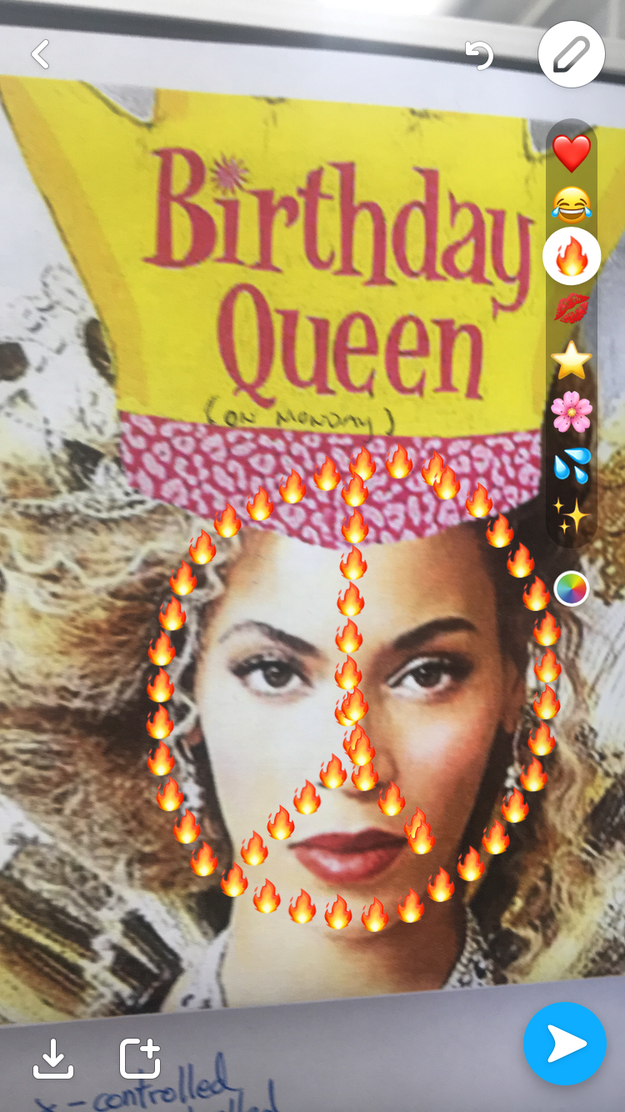
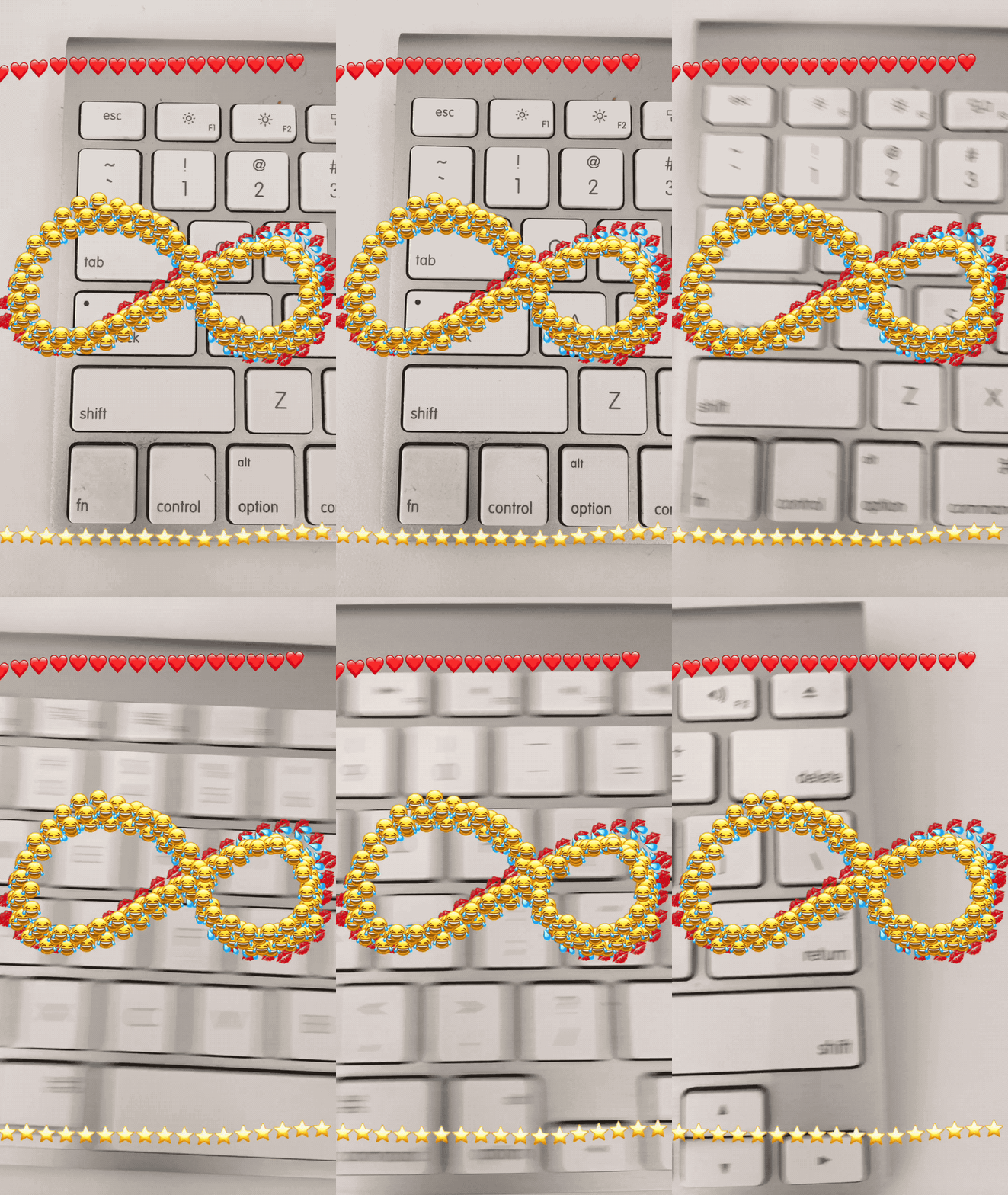
The emoji drawings feature works a lot like the drawing tool — but with emojis! You trace a path with your fingers, and the emojis you've selected will appear. The drawings look like this:
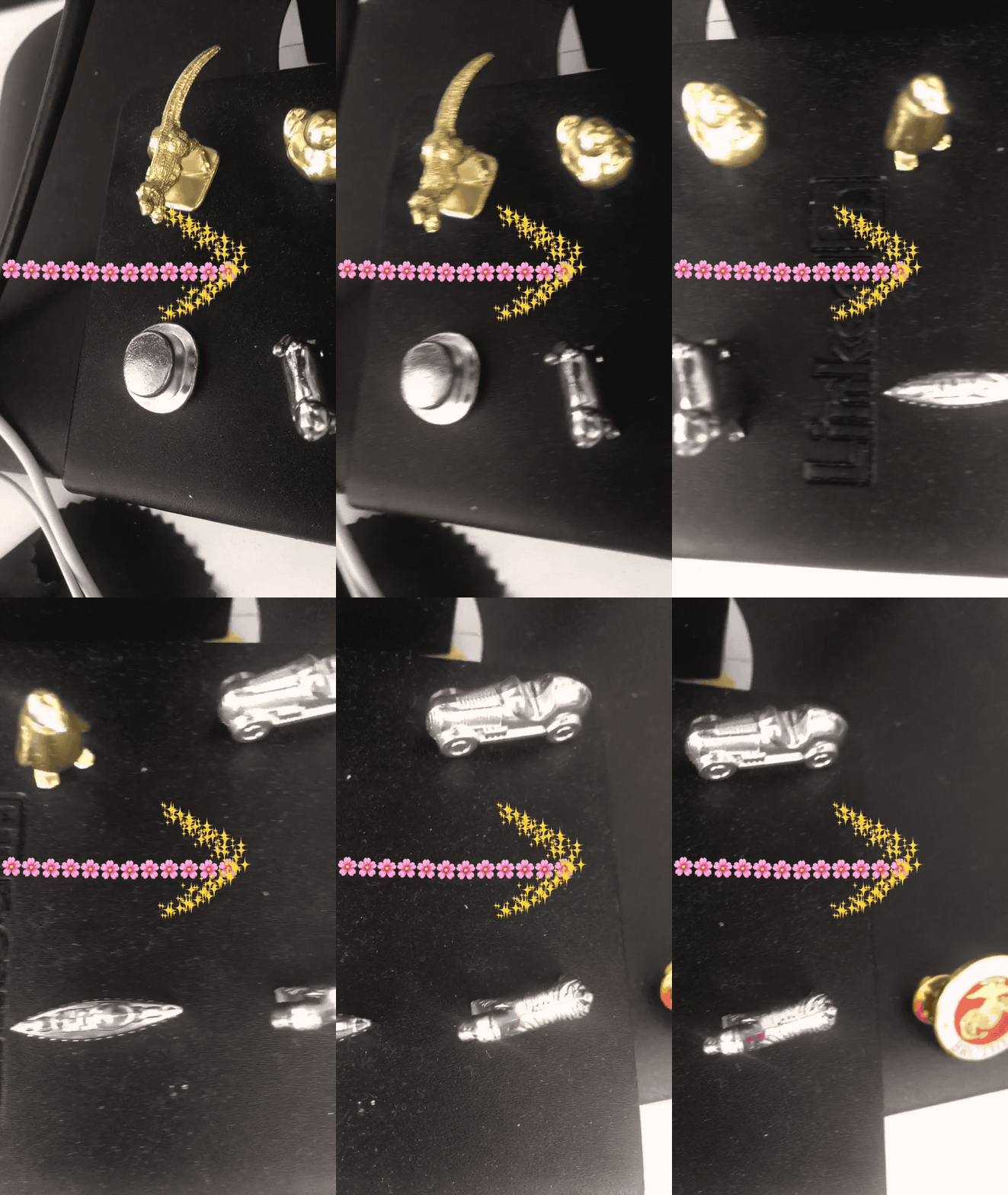
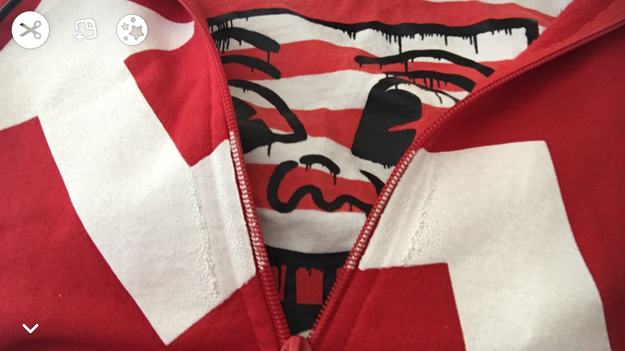

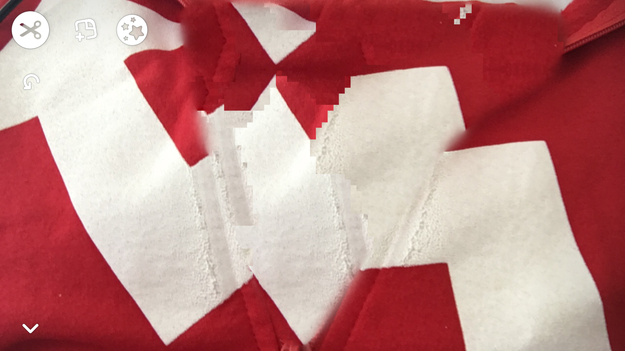
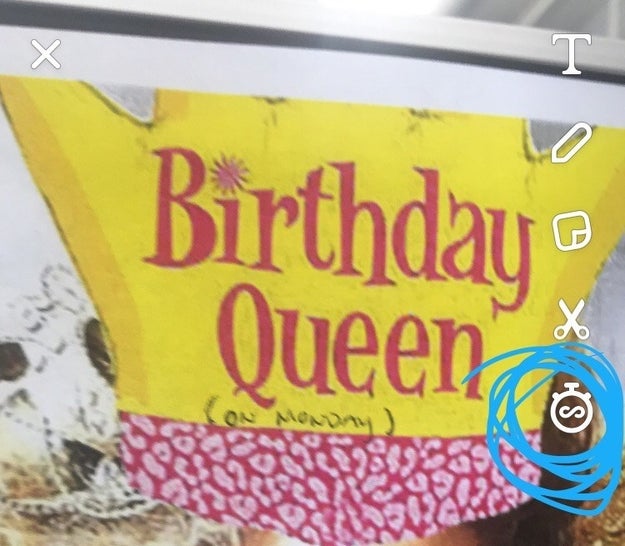
Infinity lets people look at your photos for as long as they want. It's a big change from regular snaps, which are meant to be ephemeral.
The company said in a statement, “We’ve all felt the frustration of not being able to fully enjoy a Snap – even after replaying it – and we wanted to give you the option of allowing the recipient to enjoy your Snap as long as they’d like.”
They'll stay on the screen until you tap to close them.
Quelle: <a href="Now You Can Send Snaps That Last Forever“>BuzzFeed

170 Teraflops Rechenleistung in einem 2U-Server: Inspur stellt den Deep-Learning-Server AGX-2 mit acht Nvidia Tesla P100 vor.
Quelle: Heise Tech News
AWS CloudTrail now enables you to send S3 data events recorded by CloudTrail to Amazon CloudWatch Logs for search, alerting, or additional analysis. CloudTrail data events allow you to record detailed S3 object-level API activity, such as the AWS account of the caller, IP address of the API call, and time of the API call. Previously, only management events could be delivered to CloudWatch Logs. Now, both management events and object-level Amazon S3 data events can be delivered to CloudWatch Logs. For example, you can now create alarms and receive notifications when you create, modify, or delete a file in your S3 bucket.
Quelle: aws.amazon.com
AWS Elastic Beanstalk is now available in the AWS GovCloud (US) region.
Quelle: aws.amazon.com

SK Hynix zufolge wird GDDR6-Videospeicher ab Anfang kommenden Jahres in großer Stückzahl produzieren. Der Start hängt allerdings von Kunden wie Nvidia und deren GPUs ab. (Hynix, GTC 2017)
Quelle: Golem
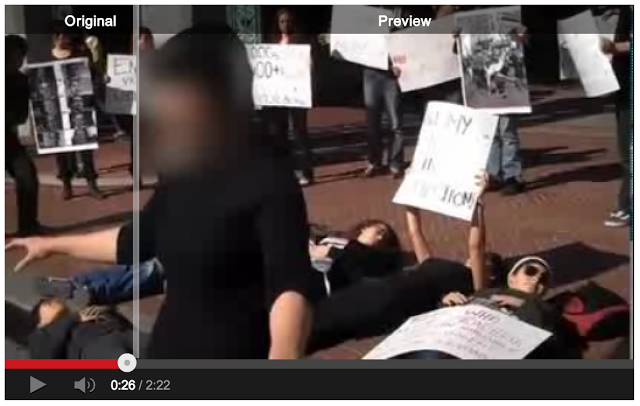
SAN FRANCISCO — It was the early days of clashes in Aleppo, Syria, and Karim, a local activist, wanted to upload a video to YouTube showing armed Syrian forces opening fire into a protest in the spring of 2011. His worry was exposing the faces of dozens of students who had taken part in the protest and could be hunted down afterwards.
Luckily for him, someone at Google’s headquarters, roughly 11,500 miles away, was thinking about his problem.
“During the Arab Spring, we saw activists that were jeopardizing their safety on social media to share things. No one was offering a solution to keep them safe, and so we moved quickly to try and make a change,” said Amanda Conway, a Privacy Program Manager at Google. “By creating face blurring tools, and quickly pushing them out, we were trying to introduce something to respond to their new safety concerns on the ground.”
It was exactly, she said, the sort of thing that her team was created to handle.
The NightWatch team at Google is unique not just at the internet giant, but for Silicon Valley overall, where an emphasis on being quick to market and capturing audience attention often comes at the expense of creating a product that takes into account the diverse range of people using it. Made up of engineers, lawyers, activists, and others who take a special interest in advocating for communities that might otherwise be overlooked, the NightWatch team doesn’t look like the average group of people you’d find on a tech campus.
“No, unfortunately, this is not what most of Silicon Valley looks like,” Lea Kissner, a Google engineer and leader of the NightWatch team, said as she looked around the Google conference room at the six women and six men, from a variety of backgrounds and countries, gathered in the room.
Amber Yust, a Software Engineer, and trans member of the team said the diversity in the team is intentional.
“It’s not impossible to come to the right decision with an under-representative team but it’s certainly easier to reach that decision if you know it’s coming from a broad base of knowledge because your team is more representative of the world as a whole,” said Yust.
The idea for Nightwatch came about roughly four years ago, when Kissner approached Gerhard Eschelbeck, Google’s Vice President, for Security and Privacy Engineering. The name Nightwatch came about because they wanted to “stand between users and the dark places of the internet” said Kissner, who laughs off the suggestion that the name could also be a reference to “Game of Thrones,” or the Russian supernatural cult film of the same name. The team looks at nearly every product to come out of Google, whether it is software or hardware, and weigh how it will affect and be used by people across the world who will possible use the product.
“We wanted to take into account the different life circumstances people are in. More than any other thing this requires an understanding of the different kinds of threats and fears people face,” said Kissner. “We wanted to make products that work well for a variety of people and give people choices on how to handle their information.”
Jeff Chiu / AP
Take, for example, the face-blurring tool for YouTube videos. When first introduced, it allowed users to edit original videos and blur out faces they didn’t want made public. The Nightwatch team asked themselves however, if Google was storing the original versions of videos somewhere and could be compelled to hand them over to law enforcement. So they tweaked the product to make sure it was clear to users that they could delete the original content permanently off of YouTube, and only keep the version they intended to be made public. Then then translated those instructions into a number of languages — including Arabic.
“We don’t know how the tool is going to be used by each individual user. Some might want to keep various versions of their videos, others don’t,” said Conway, who worked on YouTube products before joining the NightWatch Team.
Kissner explained that the group can’t be mind readers, but they want to give users all the information so that they can use tools according to their own security and privacy concerns. The questions of how to best to do that, however, aren’t easily answered.
“I used to be a tech blogger, and was highly critical of companies like Google,” said Rosa Golijan, a privacy engineer and member of NightWatch. “Once I stepped inside and expected to find some deep dark secrets, but instead found a lot of processes that are complicated and nuanced.”
The group considered, for instance, features that could be turned off and on depending on where a person was travelling to. For instance, should an political activist in Egypt be travelling to the US, they might feel comfortable revealing more user information than they would in Egypt, where activists are currently coming under arrest for political dissent. The Nightwatch Team soon realized, however, that any feature that was location-specific would also require users to reveal their locations – which presented a host of new problems.
“We have to find the right balance between a lot of different issues, and problems users face,” said Yust. She said another issue recently tackled by the group has been hate speech and free speech online. “There is a balance we are constantly searching for between free speech and moderation. We are trying to find that balance on a global scale, and for expectations for what should be moderated on a global level.”
For Karim, the Syrian activist who spoke to BuzzFeed News years ago, when the war in Syria was still in its infancy, it’s heartening to know that somone at the tech giant is thinking about his online security — he just wonders why it takes a special team.
“I wish you told me that all over Google, there were men, women, Syrians, who were thinking about how my mother in Syria will use Google,” said Karim, who asked that BuzzFeed News only identify him by his first name, as he is currently seeking refugee status in a Western European nation. “But most of these companies don’t have people who think about Syria, or anyone outside of America, right? When will this change?”
Quelle: <a href="You've Never Heard Of This Team At Google — But They're Thinking About You“>BuzzFeed
Jeff Chiu / AP
Some Uber drivers now have the option to buy insurance that protects them from the unexpected cost of getting injured on the job.
Uber will be charging customers in eight states an extra 5 cents per mile to cover the fees for personal injury insurance as part of an eight-state pilot program. The cost to drivers will be 3.75 cents per mile.
The move follows the creation of a similar program in the UK, where Uber and other gig economy companies have been under fire of late for their treatment of workers.
In the United States, the cost of a workplace injury is typically covered by an individual's employer via worker's compensation and disability insurance. Because Uber drivers are independent contractors, not employees, the ride-hail company isn't required to offer these types of insurance coverage. Instead, with this new plan, Uber is shifting the cost of coverage to consumers, and allowing drivers to choose whether they pocket the extra cash or use it to pay for insurance.
The optional pilot program will operate via insurance companies Aon and OneBeacon in Illinois, Massachusetts, South Carolina, West Virginia, Arizona, Oklahoma, Pennsylvania, and Delaware, and will pay out up to $1 million for medical expenses, up to half of a driver's average weekly earnings, and a maximum of $150,000 in survivor benefits.
Though stories like the one about an Uber driver who lost his legs in a car accident and was unable to continue working have been used to galvanize anti-Uber driver strikes in the past, it's unclear how many drivers would actually sign up for insurance rather than take the extra money.
The failure of companies like Uber to provide workers with the same benefits and protections that traditional employees receive has for years been one of the chief criticisms of the gig economy. More recently, companies like cleaner-on-demand startup Handy have worked with legislators to propose a portable benefits system, through which individual workers and the various platforms they work for would jointly pay into a single fund that could be used to cover the cost of things like health insurance or time off work due to injury.
But traditional labor groups see these efforts as an attempt by the industry to continue side-stepping the full cost of protecting and insuring the on-demand workforce.
National Employment Law Project director Rebecca Smith called Uber's personal injury insurance pilot program an “attempt to shore up its faltering image” in an email statement circulated Tuesday.
“Instead of paying workers’ compensation premiums to cover all of its workers, as responsible businesses do, Uber will charge drivers for the medical care and time-loss benefits that the rest of us get by virtue of working at a job,” the statement reads. “What will it take for Uber to stop the end-runs and other shenanigans and finally act like a responsible employer? If Uber valued its workers, it would simply pay its workers’ compensation premiums and cover all of them.”
LINK: Here’s How Gig Workers Are Feeling About Trumpcare
Quelle: <a href="Some Uber Customers Will Pay More So Drivers Can Buy Injury Insurance“>BuzzFeed






