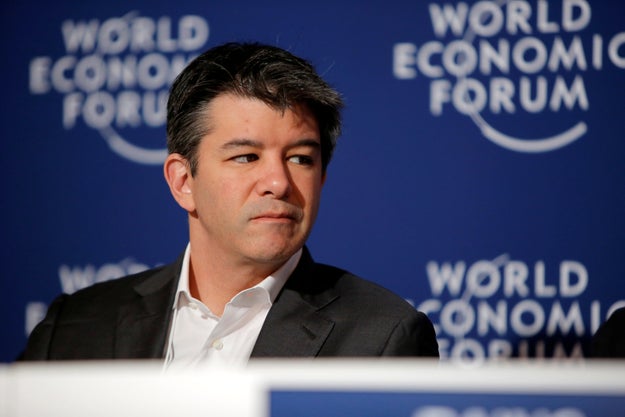
Uber CEO Travis Kalanick
Staff / Reuters
The judge presiding over Waymo's high-profile lawsuit against Uber has asked federal prosecutors to investigate the ride-hailing company and one of its top autonomous vehicle executives for potential theft of trade secrets from the Alphabet-owned autonomous car company.
The referral of the lawsuit to the United States Attorney means that Uber is now facing two Justice Department Investigations. Waymo had also requested US District Judge William Alsup grant an injunction to halt Uber's self-driving program pending a trial. Alsup issued an order “granting in part and denying in part” that request, but the court order is still under seal. Alsup also denied a bid by Uber to force the case into arbitration.
Alsup's decision deal a significant blow to Uber, which is also under criminal investigation by the Justice Department over its use of an internal tool used to circumvent regulators. Waymo filed the lawsuit against Uber in February, alleging that Anthony Levandowski, its former employee, downloaded 14,000 files before leaving the company and joining the ride-hail giant – and then using Waymo’s trade secrets to help Uber build its own self-driving technology.
An Uber spokesperson said in a statement that “It is unfortunate that Waymo will be permitted to avoid abiding by the arbitration promise it requires its employees to make. We remain confident in our case and welcome the chance to talk about our independently developed technology in any forum.”
Uber declined comment on Alsup's referral of the case to the U.S. Attorney’s office.
In referring the case to the Justice Department, Alsup – who has thus far told Waymo it has one of the strongest cases he has seen in his career – said he takes “takes no position on whether a prosecution is or is not warranted, a decision entirely up to the United States Attorney.”
The lawsuit centers around LiDAR technology, which uses lasers to help self-driving cars see and navigate the world. Waymo’s lawyers have argued that the situation is so damaging to its own business that the court should halt Uber’s use of the technology it allegedly created using stolen trade secrets, essentially putting the brakes on the ride-hail giant’s self-driving program. Uber’s lawyers said exhaustive searches of the company’s systems have not turned up the files Waymo alleges were stolen. Whether Alsup has granted Waymo's request for an injunction – and how extensively – will become clear when the court order becomes public.
On April 27, Levandowski stepped down from his leadership position in Uber’s self-driving program and into a lesser role. Uber’s lawyers cited the move as evidence he is not working on the technology at hand pending a trial. Waymo's injunction request, however, had asked the judge to stop Levandowski from working on Uber's self-driving program entirely.
This is a developing story.
Quelle: <a href="Judge Asks Federal Prosecutors to Investigate Uber's Self-Driving Car Program“>BuzzFeed








