Nintendo Has Discontinued The NES Classic Reboot And People Are So Mad

Nintendo will stop shipping the reboot of its Nintendo Entertainment System console in North America this month.

The company wouldn&;t say what the cancellation meant for shipments of the console outside North America. The reboot, dubbed the NES Classic Edition, launched on November 10, 2016, and even though stores were plagued by severe shortages, Nintendo sold 1.5 million individual units by January 2017. News of the discontinuation was first reported by IGN.

Nintendo of America said in a statement to BuzzFeed News, “Throughout April, NOA territories will receive the last shipments of Nintendo Entertainment System: NES Classic Edition systems for this year. We encourage anyone interested in obtaining this system to check with retail outlets regarding availability. We understand that it has been difficult for many consumers to find a system, and for that we apologize. We have paid close attention to consumer feedback, and we greatly appreciate the incredible level of consumer interest and support for this product.”

The company elaborated, “At this time, we have no plans to produce more NES Classic Edition systems for NOA regions.”

People were confused and angry.

And they wondered what the decision was really about.

Some people on Twitter speculated that the move was meant to protect Nintendo&039;s other consoles like the Switch and its virtual console, where you can buy digital versions of the same classic cartridge games that were available on the NES classic.

But mostly they were crushed.

Goodbye for now, NES. You will be missed.

But you still could get one, maybe&; They&039;re shipping till the end of April&033;

Quelle: <a href="Nintendo Has Discontinued The NES Classic Reboot And People Are So Mad“>BuzzFeed

Google Will Oppose A Shareholder Push To Publish Its Gender Pay Data

Beck Diefenbach / Reuters

For the second year in a row, Google&;s parent company Alphabet will oppose a shareholder plan that would commit the business to evaluate and disclose whether it has a pay gap between female and male employees.

Arjuna Capital, the investment firm advancing the proposal on behalf of stockholders, told BuzzFeed News that Alphabet sent them a statement of opposition ahead of the company&039;s annual shareholders meeting this summer. Google declined to comment on the plan.

Last week, as part of an ongoing investigation against Google, an official with the Department of Labor said the agency “found systemic compensation disparities pretty much across the entire workforce.”

Natasha Lamb, Arjuna&039;s director of shareholder engagement, said there is a difference between paying lip service to gender pay equity and actually being transparent about it.

“They have been unwilling to do that,” Lamb said. “That&039;s unsettling given how proactive their tech peers have been, and also given what we just saw with the Department of Labor accusing them of extreme gender pay disparity. It makes one question what&039;s really going on here, when there isn&039;t full transparency and accountability.”

On Monday, Google&039;s vice president of people operations, Eileen Naughton, said in a blog post that “we were quite surprised” by the Labor Department&039;s accusations. “We were taken aback by this assertion, which came without any supporting data or methodology,” Naughton said. She went on to explain Google&039;s pay equity auditing policies, which she described as scientific and rigorous. The company claims that “there is no gender pay gap at Google.”

But Arjuna Capital says the gender pay gap and employee compensation data in the US have been unfairly hidden from public view for decades, and wants companies to do more to increase their accountability. “This is not only the right thing to do from a social justice standpoint and a broad economic standpoint, it&039;s simply good business for companies to be paying women a fair wage and to attract and retain top talent,” Lamb said.

Like several other big tech companies, Google releases annual diversity reports, sketching the ethnic and gender breakdown of their workforce. In 2015, detailed in Google&039;s most recent report, Google&039;s overall staff was 31% women and 69% men. 59% of Googlers were white, 3% were Hispanic, and 2% were black. “We’re still not where we want to be when it comes to diversity, but last year, we made progress in our efforts to build a more diverse Google,” the company said.

Google&039;s diversity reports, however, do not include gender pay data; the company shares how many women work there, but not how they are paid relative to men working in similar roles.

Last year, Arjuna led a campaign to pressure nine big tech companies— including Apple, Amazon, Intel, and Microsoft — to release their gender pay data. Of the nine targeted companies, only two have not disclosed their data: Alphabet and Facebook, although both companies claim to maintain gender pay equity.

Apple&039;s study, for example, found that women there made 99.6 cents for every $1 men earned; Microsoft said its female employees earned 99.8 cents for every dollar men took in; and Amazon found women&039;s compensation to be 99.9% of men&039;s, in equivalent roles. But even with these seemingly slight compensation discrepancies, annual diversity reports for many of tech&039;s biggest companies continue to reveal lopsided workforces, with higher-paying and leadership positions dominated by men.

Facebook did not respond to a request for comment.

According to Alphabet&039;s 2016 proxy statement, the board of directors told stockholders that they did not believe a proposal to disclose a possible gender pay gap “would enhance Alphabet’s existing commitment to fostering a fair and inclusive culture.” The board cited Google&039;s existing diversity reports and Google&039;s pay equity audits as safeguards against discrimination.

The Department of Labor&039;s lawsuit against Google, announced in January, stemmed from the company&039;s alleged failure to provide the government with employee compensation data. But Google maintains that the government&039;s records requests are overbroad and would reveal sensitive information about their employees.

Quelle: <a href="Google Will Oppose A Shareholder Push To Publish Its Gender Pay Data“>BuzzFeed

Over 550 Amazon Employees Are Pressuring Leadership To Cut Advertising Ties With Breitbart

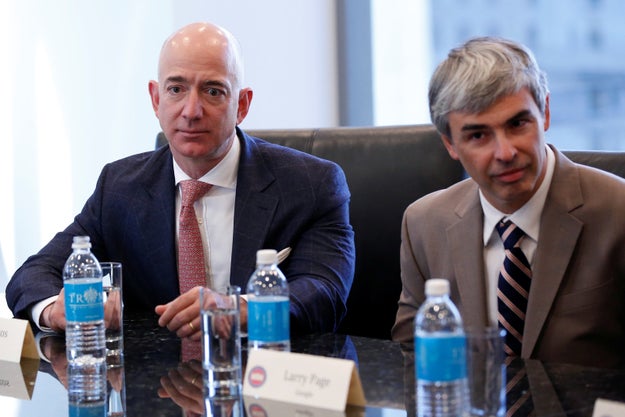
(L-R) Amazon CEO Jeff Bezos and Larry Page, CEO and Co-founder of Alphabet, sit during a meeting with U.S. President-elect Donald Trump and technology leaders at Trump Tower in New York, U.S., December 14, 2016. REUTERS/Shannon Stapleton

Shannon Stapleton / Reuters

Inside Amazon, tensions are mounting as employees push management to stop running ads for Amazon products on Breitbart News.

On March 22nd, a group of Amazon employees took issue with the company&;s ads on Breitbart in an email to CEO Jeff Bezos and SVP Jeff Blackburn. Entitled “Amazon Must Stop Advertising On Breitbart News,” the email included a petition opposing Amazon&039;s continued advertising on Breitbart, with some 564 signatures.

According to the email, an Amazon employee confronted Senior VP Jeff Blackburn at the company’s March all-hands meeting about advertising on a site that the employee said “regularly publishes hateful and bigoted content.”

“What is it going to take for us to stop advertising on Breitbart News,” the employee asked to applause from coworkers.

Blackburn&039;s response, according to the email, was met with “utter silence.” He suggested that Amazon&039;s advertising relationship with Breitbart was complicated. “… It&039;s making those decisions for us through a third party, industry standard filter that we use,” he told the employees. “And that&039;s what you&039;re seeing. Some of the pages on the site that you mentioned are passing through those filters.”

An internal Amazon email obtained by BuzzFeed News. This email was redacted by the Amazon employee.

While Amazon doesn’t have a direct relationship with Breitbart, the company does select the exchanges through which it buys ads, and presumably has some say in how they are targeted. According to the internal email, ongoing employee outcry may have caused the company to review it&039;s decision to allow ads to run on the site. “… I want you to know that it is something we are looking … at very regularly,” Blackburn said. “We have our eyes on it.”

Blackburn&039;s remarks did little to quell unrest among Amazon employees disappointed by the company&039;s ads on Breitbart. In their email to Bezos and Blackburn, the employees attached a PDF of personal comments from “52 additional Amazonians.” A few excerpts:

  • “I am a woman, immigrant, person of color. My employer needs to stand up to this site which is nothing but full of hate.”
  • “When people find out I work at Amazon, the first question they ask is -“How can you justify working for Amazon when they advertise on a hate site?”
  • “As a transgender woman, I find it deeply troubling that my employer has not yet pulled advertising from this site.”
  • “&039;There&039;s no hiring bias against women in tech, they just suck at interviews&039; – the fact that the company&039;s dollars pay for headlines like this make it very difficult for those of us putting in efforts to recruit and retain more women in technical roles.”

Since last year&039;s election, Amazon&039;s leadership has faced consistent pressure from customers and employees to cut its ad ties to Breitbart. A petition on the website SumOfUs.org urging Amazon to “stop investing in hate” now has more than 550,000 signatures. Meanwhile, an anonymous collective of marketers called Sleeping Giants has called out over1,600 advertisers who have since moved their ad dollars away from Breitbart.

When BuzzFeed News first reported on Amazon employee unrest over Breitbart ads in February, 34 employees had filed individual complaints to management. With a petition now in circulation with nearly 600 signatories — many of whom are women, persons of color, or LGBTQ — momentum is clearly growing. Amazon has over 340,000 employees world wide.

Amazon employees told BuzzFeed News that the company had previously been largely unresponsive to their complaints. “They&039;d been brushing us off,” one told BuzzFeed News. But recently there appears to be a movement to address the issue. Sources said Amazon leadership met with an employee representative of the group behind the petition on Tuesday morning.

“They are now taking it very seriously,” an Amazon employee familiar with discussions told BuzzFeed News. “It&039;s not a finalized decision, but it&039;s at least moving in the right direction.”

Amazon did not return multiple requests for comment on the internal email obtained by BuzzFeed News.

Quelle: <a href="Over 550 Amazon Employees Are Pressuring Leadership To Cut Advertising Ties With Breitbart“>BuzzFeed

The network is a living organism

Organism, from Greek word Organismos, depicts a complex structure of living elements. But, what does a network have in common with organisms?

At Microsoft, we build and manage a hyper-scale global network that’s constantly growing and evolving. Supporting workloads such as Microsoft Azure, Bing, Dynamics, Office 365, OneDrive, Skype, Xbox, and soon LinkedIn, has stringent needs of reliability, security, and performance. Such needs make it imperative to continually monitor the pulse of the network, to detect anomalies, faults, and drive recovery at the millisecond level, much akin to monitoring a living organism.

Monitoring a large network that connects 38 regions, as of April 2017, hundreds of datacenters, thousands of servers with several thousand devices, and millions of components requires constant innovation and invention.

Figure 1. Microsoft global network

Figure 2. Illustration of a physical network in a datacenter

Four core principles drive the design and innovation of our monitoring services:

Speed and accuracy: It’s imperative to detect failures at the sub-second level and drive recovery of the same.
Coverage: From bit errors to bytes, to packets, to protocols, to components, to devices that make up the end-to-end network, our monitoring services must cover them all.
Scale: The services must process petabytes of logs, millions of events, and thousands of correlations that are spread over several thousand miles of connectivity across the face of the planet.
Optimize based on real user metrics: Our monitoring services must use metrics from a network topology level—within a rack, to a cluster, to a datacenter, to a region, to the WAN and the edge—and they must have the capability to zoom in and out.

We built innovations to proactively detect and localize a network issue, including PingMesh and NetBouncer. These services are always on and monitor the pulse of our network for latency and packet drops.

PingMesh uses lightweight TCP probes (consuming negligible bandwidth) for probing thousands of peers for latency measurement (RTT, or round trip time) and detects whether the issue is related to the physical network. RTT measurement is a good tool for detecting network reachability and packet-level latency issues.

After a latency deviation or packet drop is discovered, Netbouncer’s machine learning algorithms are then used to filter out transient issues, such as top-of-rack reboots for an upgrade. After completing temporal analysis in which we look at historical data and performance, we can confidently classify the incident as a network issue and accurately localize the faulty component. After the issue is localized, we can auto-mitigate it by rerouting the impacted traffic, and then either rebooting or removing the faulty component. In the following figure, green, yellow, or red visualize network latency ranges at the 99th percentile between a source-destination rack-pair.

Figure 3. Examples of network latency patterns for known failure modes

In some customer incidents, the incident might need deeper investigation by an on-call engineer to localize and find the root cause. We needed a troubleshooting tool to efficiently capture and analyze the life of a packet through every network hop in its path. This is a difficult problem because of the necessary specificity and scale for packet-level analysis in our datacenters, where traffic can reach hundreds of terabits per second. This motivated us to develop a service called Everflow—it’s used to troubleshoot network faults using packet-level analysis. Everflow can inject traffic patterns, mirror specific packet headers, and mimic the customer’s network packet. Without Everflow, it would be hard to recreate the specific path taken by a customer’s packet; therefore, it would be difficult to accurately localize the problem. The following figure illustrates the high-level architecture of Everflow.

Figure 4. Packet-level telemetry collection and analytics using Everflow

Everflow is one of the tools used to monitor every cable for frame check sequence (FCS) errors. The optical cables can get dirty from human errors like bending or bad placement, or simply aging of the cable. The following figure shows examples of cable bending and cable placed near fans that can cause an FCS error on this link.

Figure 5. Examples of cable bending, and cable placed near the fans that can cause an FCS error on this link

We currently monitor every cable and allow only one error for every billion packets sent, and we plan to further reduce this threshold to ensure link quality for loss-sensitive traffic across millions of physical cables in each datacenter. If the cable has a higher error rate, we automatically shut down any links with these errors. After the cable is cleaned or replaced, Everflow is used to send guided probes to ensure that the link quality is acceptable.

Beyond the datacenter, supporting critical customer scenarios on the most reliable cloud requires observing network performance end-to-end from Internet endpoints. The Azure WAN evolved to build a service called the Map of the Internet that monitors Internet performance and customer experience in real time. This system can disambiguate between expected client performance across wired and wireless connections, separates sustained issues from transient ones, and provides visibility into any customer perspective on demand. For example, it helps us to answer questions like, “Are customers in Los Angeles seeing high RTT on AT&T?”, “Is Taipei seeing increased packet loss through HiNet to Hong Kong?”, and “Is Bucharest seeing reliability issues to Amsterdam?” We use this service to proactively and reactively intervene on impact or risks to customer experiences and quickly correlate them to the scenario, network, and location at fault. This data also triggers automated response and traffic engineering to really minimize impact or mitigate ahead of time whenever possible.

Figure 6. Example of latency degradation alert with a peering partner

The innovation built to monitor our datacenters, and its connectivity is also leveraged to provide insights to our customers.

Typically, customers use our network services via software abstractions. Such abstractions, including virtual networks, virtual network interface cards, and network access control lists, hide the complexity and intricacies of the datacenter network. We recently launched Azure Network Watcher, a service to provide visibility and diagnostic capability of the virtual/logical network and related network resources.

Using Network Watcher, you can visualize the topology of your network, understand performance metrics of the resources deployed in the topology, create packet captures to diagnose connectivity issues, and validate the security perimeter of your network to detect vulnerabilities and for compliance/audit needs.

Figure 7. Topology view of a customer network

The following figure shows how a remote packet capture operation can be performed on a virtual machine.

Figure 8. Variable packet capture in a virtual machine

Building and operating the world’s most reliable and hyper-scale cloud is underpinned by the need to proactively monitor and detect network anomalies and take corrective action—much akin to monitoring a living organism. As the pace, scale, and complexity of the datacenters evolve, new challenges and opportunities emerge, paving the way for continuous innovation. We’ll continue to invest in networking monitoring and automatic recovery, while also sharing our innovations with customers to also help them manage their virtual networks.

References

PingMesh: Guo, Chuanxiong, Lihua Yuan, Dong Xiang, Yingnong Dang, Ray Huang, Dave Maltz, Zhaoyi Liu, et al. "Pingmesh: A large-scale system for data center network latency measurement and analysis." ACM SIGCOMM Computer Communication Review 45, no. 4 (2015): 139-152.

Everflow: Zhu, Yibo, Nanxi Kang, Jiaxin Cao, Albert Greenberg, Guohan Lu, Ratul Mahajan, Dave Maltz, et al. "Packet-level telemetry in large datacenter networks." In ACM SIGCOMM Computer Communication Review, vol. 45, no. 4, pp. 479-491. ACM, 2015.

Read more

To read more posts from this series please visit:

Networking innovations that drive the cloud disruption
SONiC: The networking switch software that powers the Microsoft Global Cloud
How Microsoft builds its fast and reliable global network
Lighting up network innovation
Azure Network Security
Microsoft&;s open approach to networking

Quelle: Azure

Announcing Azure CLI Shell (Preview); more Azure CLI 2.0 commands now generally Available

Following up on the generally available release of VM, ACS, Storage and Network commands in the new Azure CLI 2.0, we are today announcing a new Azure CLI interactive Shell preview mode release, in addition to the generally available release of following command modules: ACR, Batch, KeyVault, and SQL.

Interactive Shell

Azure CLI 2.0 provides an idiomatic command line interface that integrates natively with Bash and POSIX tools. It is easy to install, use and learn. You can use it to run one command at a time, as well as to run automation scripts composed of multiple commands, including other BASH commands. To support this, commands are not interactive and will error out when provided with incomplete or incorrect input.

However, there are circumstances when you might prefer an interactive experience, such as when learning the Azure CLI’s capabilities, command structures and output formats. Azure CLI Shell (az-shell) provides an interactive mode in which to run Azure CLI 2.0 commands. It provides autocomplete dropdowns, auto-cached suggestions combined with on the fly documentation, including examples of how each command is used. Azure CLI Shell provides an experience that makes it easier to learn and use Azure CLI commands.

We invite you to install and use the new interactive shell for Azure CLI 2.0. You can use it in a Docker image we created, or install it locally on your Mac or Windows machine. It works with your existing Azure CLI installations, and you can use the commands side-by-side in az-shell or another command shell of your choice (BASH on MAC/linux and cmd.exe on Windows).

New commands now generally available

Continuing with the momentum of our GA release of the first Azure CLI 2.0 command modules on Feb 27th, today we are also announcing that following command modules are now Generally Available: Azure Container Registry, Batch, KeyVault, and SQL. With this GA release, you can use these commands in production with full support from Microsoft through our Azure support channels or on GitHub. We don’t expect any breaking changes for these commands in future releases of Azure CLI 2.0.

Azure Container Registry enables developers to create and maintain Azure container registries to store and manage private Docker container images. Using the acr commands in Azure CLI 2.0, you can create and manage these registries right from the command line. After you create a registry, you can use other CLI commands to assign a service principal to it, manage admin credentials, and list the repositories within it.

Azure Batch service provides an environment developers can use to manage their compute resources, and to schedule jobs to run with specific resources and dependencies. Using the batch commands in Azure CLI 2.0, you can create Azure Batch accounts, applications, and application packages in that account. You can also create jobs, tasks and job schedules to run at specific times, and manage (create, update, delete) them directly from the command line.

Azure Key Vault helps safeguard cryptographic keys and secrets used by cloud applications and services. Developers and security administrators can generate keys, store and access them, set policies, and monitor their usage using this service. Using the keyvault commands in Azure CLI 2.0, you can create/delete a key vault, manage certificates, policies, import and create new keys, and set secrets to key vaults.

Azure SQL Database is a relational database-as-a-service using the Microsoft SQL Server engine. Using the SQL commands in Azure CLI 2.0, you can manage all aspects of this service from the command line: create/delete/update SQL server, create/delete/update databases and data warehouses and scale them individually by creating elastic pools and moving databases in and out of shared pools, etc.

In addition to the above commands being generally available, the new release also contains command modules for dev/test labs (lab) and monitoring (monitor) services that are now available in preview mode.

New features in Azure CLI 2.0

This release also contains some new features that will make working with the Azure CLI easier and more productive.

“Az find” is a new command for searching Azure CLI 2.0 commands based on simple text. As the number of commands and coverage of Azure services grows in Azure CLI 2.0, we recognize that it may become hard for developers to find the commands they need for specific tasks.

For example, the following command finds all Azure CLI 2.0 commands that contains the text “arm,” “template,” or “deploy.”

az find -q arm template deploy

`az monitor autoscale-settings get-parameters-template`
Scaffold fully formed autoscale-settings&; parameters as json
template

`az group export`
Captures a resource group as a template.

`az group`
Manage resource groups and template deployments.

`az group deployment export`
Export the template used for the specified deployment.

`az group deployment create`
Start a deployment.

`az group deployment validate`
Validate whether the specified template is syntactically correct
and will be accepted by Azure Resource Manager.

`az vm capture`
Captures the VM by copying virtual hard disks of the VM and
outputs a template that can be used to create similar VMs.
For an end-to-end tutorial, see https://docs.microsoft.com/azure
/virtual-machines/virtual-machines-linux-capture-image.

`az keyvault certificate get-default-policy`
Get a default policy for a self-signed certificate
This default policy can be used in conjunction with `az keyvault
create` to create a self-signed certificate. The default policy
can also be used as a starting point to create derivative
policies. Also see: https://docs.microsoft.com/en-
us/rest/api/keyvault/certificates-and-policies

`az keyvault certificate create`
Creates a new certificate version. If this is the first version,
the certificate resource is created.
Create a Key Vault certificate. Certificates can also be used as a
secrets in provisioned virtual machines.

`az vm format-secret`
Format secrets to be used in `az vm create –secrets`
Transform secrets into a form consumed by VMs and VMSS create via
–secrets.

You can now set global defaults and scope for specific variables and resources that you need to use repeatedly within a command line session. You can set these defaults using the “az configure” command:

az configure –defaults group=MyResourceGroup

This sets the resource group to “MyResourceGroup” so that you don’t need to supply it as a parameter in subsequent commands that require this parameter. For example, you could then run the “vm show” command without explicitly specifying the resource group parameter:

az vm show -n MyLinuxVM

Name ResourceGroup Location
——— ————— ———-
MyLinuxVM MyResourceGroup westus2

You can also specify multiple defaults by listing them in <resource name=value> pairs in the “az configure” command, and you can reset them by simply setting an empty value in the configure command.

Start using Azure CLI 2.0 today!

Whether you are an existing CLI user, or you are starting a new Azure project, it’s easy to get started with the CLI directly, or use the interactive mode to master the command line with our updated docs and samples.

Azure CLI 2.0 is open source and on GitHub.

In the next few months, we’ll provide more updates. As ever, we want your ongoing feedback! Customers using the commands, that are now in GA release, in production can contact Azure Support for any issues, reach out via StackOverflow using the azure-cli tag, or email us directly at azfeedback@microsoft.com. You can also use the "az feedback" command directly from within the CLI to send us your feedback.
Quelle: Azure

A Nonprofit Trolled Breitbart And InfoWars With A Stealth Pro-Refugee Ad Campaign

Even by the standards of Breitbart News, an outlet known for its obsessive coverage of crimes committed by immigrants, the ad was alarming: Black text on a white background, reading, simply, “They&;re all terrorists.”

But clicking on the ad reveals a site, The Real Story, which seeks to to quell alarm, not raise it. Here, a similarly stark black and white background implores visitors to “Fight Fake News. Spread the Truth” and informs them of the plight of Syrian refugees through videos, images, and statistics.

It&039;s a bait and switch, conservative media bubble style.

And in a moment when activists and concerned employees are organizing campaigns to pressure companies to pull advertising from conservatives sites — Breitbart in particular — it&039;s a fascinating strategy: Paying the very outlets that buttress the anti-immigrant, anti-refugee narrative in order to try to tear it down.

The Real Story is a project of the American chapter of Doctors of the World, a Doctors Without Borders offshoot that, according to its website, “provides emergency and long-term medical care to vulnerable populations while fighting for equal access to healthcare worldwide.” It differs from the latter organization mainly in its goal of “bearing witness to suffering” in addition to providing care.

It&039;s in this spirit that the organization&039;s head of communications, Tamera Gugelmeyer, and her team conceived The Real Story. After a December trip to the Turkish-Syrian border, during which Gugelmeyer and her staff recorded interviews with dozens of Syrian refugees, they returned to the States determined to find a new way to spread what Gugelmeyer said was “compelling, emotional content.”

Past videos about refugees the group had promoted on Facebook, Gugelmeyer said, tended to draw strong negative reactions from some conservatives, but also “moderatering voices, countervailing forces [who] know we live in a world that is shades of grey.”

With the intention of reaching those more moderate conservatives, Doctors of the World purchased ad space not just on Breitbart, but also before InfoWars segments on YouTube. The group also bought pre-roll space based on conservative search behavior on YouTube and text ads based on Google searches for terms like “Radical Islamic Terrorism” and “crimes committed by refugees in america.” Since the campaign began in the beginning of March, Gugelmeyer said, it has generated more than 1 million impressions across Google and YouTube.

“It was a programmatic ad buy, not a direct ad buy,” said Chad Wilkinson, a spokesperson for Breitbart, distinguishing display ads selected by a third party ad network from those selected by someone from Breitbart itself.

“That said, we&039;ve got no problem with it,” Wilkinson added. “The more voices, the better.”

To put its ad in front of its desired audiences, Doctors of the World had to pay the outlets whose message it opposes. It&039;s far different strategy than the one used by organizations like Sleeping Giants, an anonymous group of digital marketers who pressure companies through social media into dropping ads from outlets like Breitbart.

In an email to BuzzFeed News, one of the organizers of Sleeping Giants wrote that they were ambivalent about the tactic.

“On one hand, we can see value in trying to speak to a readership that has been fed articles that are extreme in their anti-refugee views. It will definitely get them some much-needed attention for their cause as well. On the other hand, we&039;re not in favor of giving Breitbart (or Infowars) any extra ad money even if it&039;s for a good cause. They are funded to the hilt by The Mercer Family, who is pushing their extreme ideology to an audience that is clearly buying it. They don&039;t need the extra money and the chances of swaying opinion is likely very slim.”

Indeed, the implications of paying outlets that helped build and sustain the anti-refugee fervor in parts of the American electorate aren&039;t lost on Doctors of the World.

“We gave – and continue to give – it considerable thought,” Gugelmeyer wrote in an email to BuzzFeed News. “We have had some lively discussion as to what is more important: maintaining a sense of our own moral/political purity, or engaging with the other side. We decided that the life and death realities of this massive humanitarian crisis demanded that we try to give a voice to the refugees, challenge current assumptions about Syrians, and extend a hand across the divide. Because, in the end, change is rarely made by talking just to those with whom you agree.”

But measuring that change is difficult. Gugelmeyer said that the organization hasn&039;t experienced any major blowback from the campaign yet, but that donations are up. (Though, she added, that could be attributable to the dissemination of The Real Story campaign through more sympathetic outlets.)

Ultimately, Gugelemeyer said, the campaign was about “offering alternative narratives” and finding a way into the news bubbles that have come to define media consumption in 2017.

Said Gugelemeyer, “If we surface five people who are willing to have a conversation. Then I feel like we’ve done our job.”

Quelle: <a href="A Nonprofit Trolled Breitbart And InfoWars With A Stealth Pro-Refugee Ad Campaign“>BuzzFeed

These Takeout Robots Won't Wipe Out Delivery Jobs Just Yet

These Takeout Robots Won't Wipe Out Delivery Jobs Just Yet

Marble

Yelp is getting into food delivery, and it&;s using robots to do it.

It&039;s long been possible to order takeout through Eat24, which is owned by Yelp, but until recently, restaurants that accepted orders through Eat24 mostly did the deliveries themselves.

Now, Eat24 wants to handle some deliveries itself — only with robots instead of people.

Starting in San Francisco on Wednesday, some hungry customers ordering from specific restaurants on Eat24 will be asked if they&039;re okay with getting their food delivered by robot. If they say yes, the robot will head to the restaurant from either its home base in a garage, or a convenient nearby spot where it&039;s been inconspicuously waiting for instructions. Then an employee will come outside, open the robot with a four-digit code, and insert the order into a warming bag inside. When the robot is on its way, the customer will receive a text message from Marble with a four-digit code, which they can use the retrieve their order curbside when the robot arrives. No tip necessary.

Hiring people to deliver food in their cars can be inefficient, said Matt Delaney, CEO of Marble, the company that builds the robots Yelp is using. Eventually, he says, using robots to get food from a restaurant to your doorstep could be cheaper than paying a person in a car to do it. He think that someday, it might even save you money on takeout.

Of course, that&039;s not great news for the people who currently rely on income from doing deliveries. But the upside is, Marble&039;s robots probably won&039;t be turning the restaurant takeout industry on its head any time soon.

First of all, during this pilot project, Marble&039;s robots are only doing deliveries from four restaurants, all in the same neighborhood, and only during dinner time.

The robot uses mapping technology and a suite of sensors to navigate the city, but it still needs a human chaperone to walk beside it. That means it can&039;t move very fast, so realistically it can only deliver to people ordering food from within a relatively small radius of just two neighborhoods, the Mission and Potrero Hill.

It also can&039;t be used in the rain, and requires someone back at headquarters to monitor its progress via video live stream and a suite of sensors — which means instead of one human needed per delivery, Eat24&039;s system in its current form requires at least two.

But just because Marble&039;s robotic restaurant delivery won&039;t be widespread doesn&039;t mean it won&039;t attract attention — and not all of it will be positive.

Marble&039;s delivery robot is very big and takes up a lot of room the sidewalk. It&039;s kind of a rolling reminder of the tech industry&039;s encroachment on jobs, and on culture in general in San Francisco.

And that&039;s not something people necessarily want a giant, autonomous, rolling reminder about. In fact, when BuzzFeed News visited Marble&039;s San Francisco headquarters to watch the robot at work, we encountered a passerby who clearly had some feelings about the whole thing. “Fuck you&;” he shouted, maybe at us, but mostly at the robot. “This is what&039;s ruining the city&033;”

Luckily, Marble&039;s CEO said, not only can Marble employees use video game controllers to navigate the robots to safety if they run into trouble, but they can also speak through the robot, and tell would-be adversaries to back off.

View Video ›

Facebook: video.php

Quelle: <a href="These Takeout Robots Won&039;t Wipe Out Delivery Jobs Just Yet“>BuzzFeed

Burger King Defeated Google's Block And Successfully Hijacked People's Speakers

Burger King Defeated Google's Block And Successfully Hijacked People's Speakers

Burger King

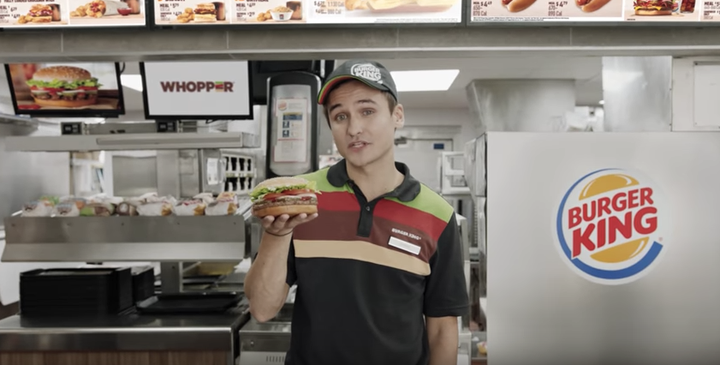
Burger King&;s successfully hijacked people&039;s Google Home speakers on Wednesday night, and ad industry experts say it&039;s just an early warning for the advertising invasion headed for our voice-activated devices.

“It&039;s an idea whose time had come,” said Allen Adamson, an industry veteran and the founder of BrandSimple Consulting.

In case you missed the beef that unfolded yesterday, in short: Burger King announced an upcoming 15-second TV ad designed to trigger voice-activated Google Home devices to read out Wikipedia&039;s description of its Whopper burger. The internet wasn&039;t impressed — people first began editing the Whopper&039;s Wikipedia entry to say it contains cyanide and a “medium-sized child.” Within hours, Google, which was not consulted by Burger King for the campaign, appeared to shut down the ad, with Google Home devices no longer responding to its audio cue.

Then Burger King figured out a way to work around Google&039;s block. When the ad aired on Jimmy Kimmel Live on Wednesday night, it successfully set off Google Home devices.

“Burger King deployed another very similar commercial that could trigger the smart speaker technology last night on Jimmy Kimmel and Jimmy Fallon,” a spokesperson for Burger King told BuzzFeed News in an email Thursday.

Google did not respond to a request for comment.

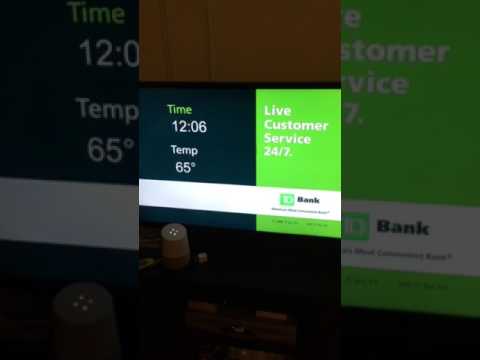
It’s hard to hear it all, but this how I experienced the Burger King commercial in my living room last night.

youtube.com

The actual experience did not exactly register as a tidy burger ad. While the commercial did trigger Google Home to start reading out a description of the Whopper, between the time and weather announcement sponsored by TD Bank, and the clip from Armie Hammer&039;s new movie, all I caught was some mumbling about a quarter pound beef patty and a sesame seed bun.

The recital may not have done much for Whopper sales — and the Google Home is not a particularly popular device to begin with — but the ad certainly garnered a lot of interest. The original clip on YouTube has been viewed almost a million times since it went online yesterday.

But the stunt is likely to be just the beginning. As voice-activation is added to more gadgets, marketers will be looking for ways to use it to their benefit.

While some consumers will find this kind of advertising novel, “for most, it will be annoying. These are personal devices,” said Adamson. “They last thing they want is advertisers on it.”

Burger King&039;s New Ad Will Hijack Your Voice-Activated Speaker

It Looks Like Google Has Shut Down Burger King&039;s Ad

Quelle: <a href="Burger King Defeated Google&039;s Block And Successfully Hijacked People&039;s Speakers“>BuzzFeed