Facebook’s New Camera Could Make It Even Harder To Tell What’s Real

Stephen Lam / Reuters

Onstage this morning at Facebook’s annual developer conference, Mark Zuckerberg used the image of an ordinary coffee cup — displayed on the gigantic screen above him — to demonstrate Facebook’s new in-app camera, which uses superior artificial intelligence to recognize objects and then seamlessly manipulate them. Facebook’s software will know it’s a mug — just tap on the coffee and a toolbar will pop-up with relevant effects like a cloud of steam. Or, said Zuckerberg, “you can add a second coffee mug, so it looks like you’re not having breakfast alone.”

Without naming his muse — Snapchat — Zuckerberg told the crowd of thousands that Facebook is ready to take augmented reality mainstream, to make it accessible to anyone with a smartphone. On stage, Zuckerberg ran through the primary use cases for Facebook’s camera, including adding digital objects, a la Pokemon Go, or the ability to “enhance digital objects like your home or your face.” Facebook CTO Mike Schroepfer, chief technology officer, offered a more seasonal example: “Let’s say I took a wonderful vacation photo and a windsurfer rudely interrupted my view.” With Facebook’s camera, the offending surfer could be easily edited out, Schroepfer explained, using a slide screen to show just how easy it was rewrite vacation history.

The examples sounded as innocuous as could be, until you considered how they might play out in the real world. In the keynote, Facebook floated right past questions like: Can Facebook’s camera erase a man on dry land from a photograph as easily as it can a windsurfer? Are there realistic-looking items can Facebook instantly insert into a photo? In other words, just how much will people be able to doctor the photos that appear in their feeds? And will the people who see them know they’ve been manipulated?

Facebook didn’t demonstrate this trick on stage, but during an earlier interview, the company showed BuzzFeed News how its radical camera could take an ordinary photo of a person and manipulate their facial expression to make the person smile, or frown, or display whatever other emotion the smartphone-holder desired. Back in December, the Verge warned that artificial intelligence was already making it easy to make fake images and fake videos, pointing to a startup called SmileVector that can make any celebrity smile.

To be clear, many of the effects available now — like breakfast sharks flying around Zuckerberg’s cereal bowl — are clearly cartoons. Facebook declined to comment on the record, but the company&;s Camera Effects Platform is still in closed beta: effects have to be submitted and reviewed by Facebook before being shared. Each effect also has to adhere to Facebook’s policies and terms governing what’s offensive or illegal. The company monitors how effects are being used and will update accordingly.

But soon enough, these tools will soon be distributed to nearly two billion users, with frictionless ease. And, as Zuckerberg said many times on stage, they’re still primitive. That&039;s an interesting posture for a company with a major fact-checking problem that has seen time and again the way its products can be used to foster hate speech, violence, and division. It&039;s worth noting that a recent report about Silicon Valley reengineering journalism, traced fake news opportunists back to Zuckerberg’s (seemingly benign-sounding) goal from 2014 to build a personalized paper.

We don’t know how Facebook Camera and the products built on it will be used in the real world until they&039;re, well, out in the real world, in the pockets of a billion-plus people — some of whom are assholes (or Macedonian teens). The people who use technology are, all too often, more creative than those who make it: They find new and ingenious ways to hack the algorithm, evade the censors, further their agendas, and make certain topics go viral. Facebook’s new camera effects could very well end up being an innocuous way to make breakfast fun and fix your vacation pictures — or it could mean we’ll soon be a nation divided over fake photos instead of fake news. In the meantime, that steam sure is cool.

Quelle: <a href="Facebook’s New Camera Could Make It Even Harder To Tell What’s Real“>BuzzFeed

We Tried Out Facebook's New Social VR App At F8

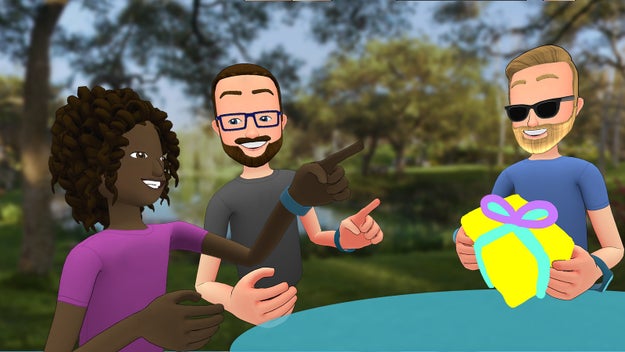
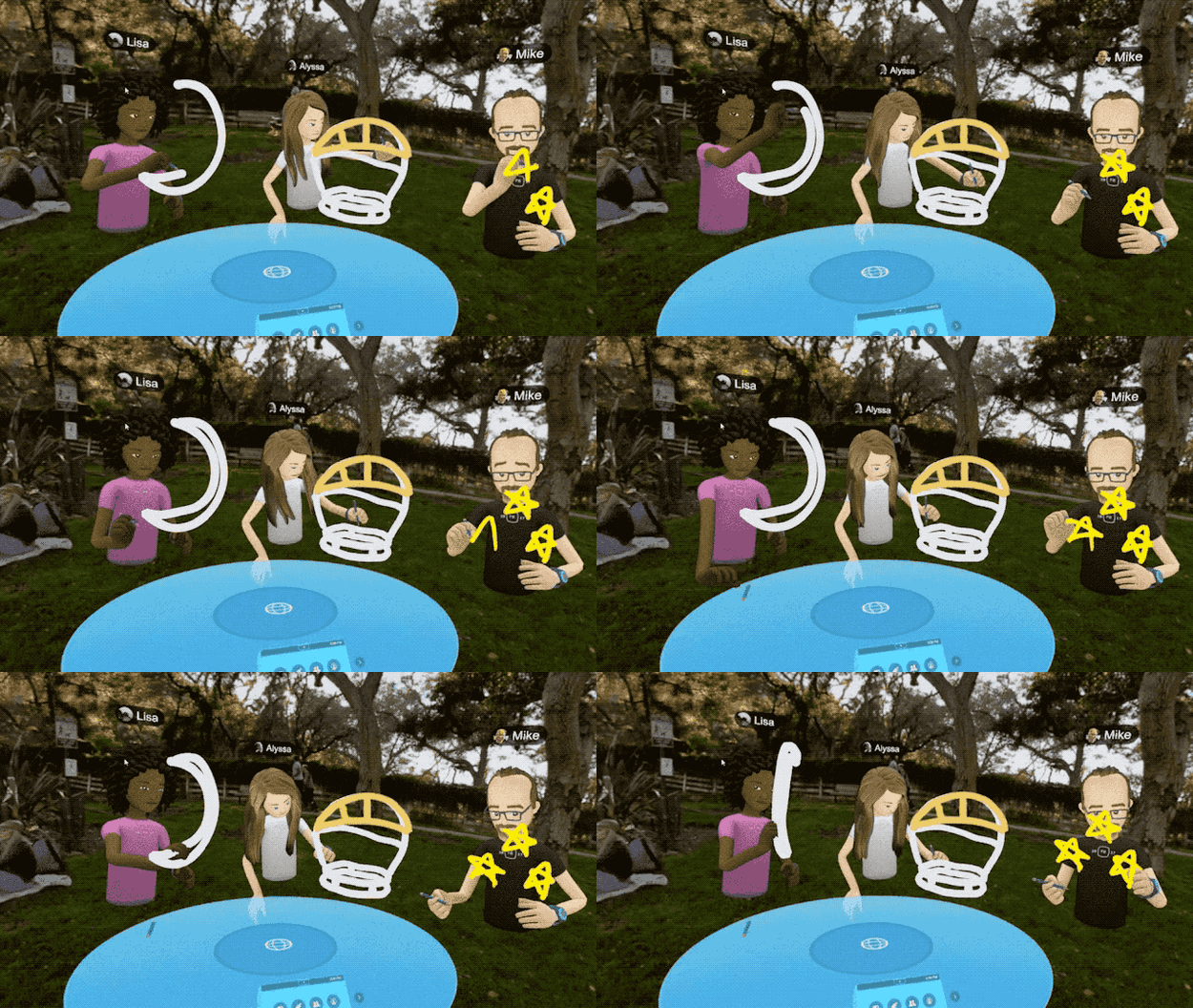
SAN JOSE — Facebook announced a new social virtual reality app for its Oculus Rift headset today at F8, the company&;s annual conference for software developers. It&039;s called Facebook Spaces, and you can download the beta version from the Oculus Store now.

In her keynote address, Rachel Rubin Franklin, Facebook&039;s head of social VR, said that Spaces signaled “the very beginnings of social VR.” People on Twitter said it looked a lot like Second Life and The Sims. Perhaps not coincidentally, Franklin previously worked as vice president at Electronic Arts managingThe Sims game.

Oculus Rift already supports the social game Altspace VR, made by an independent game publisher of the same name, where people can gather in virtual rooms via human or robot avatars and host events, play games, make art, watch 2D videos, or socialize.

Here&039;s how Spaces works:

First, you connect your Facebook account to Spaces in the “Devices Requests” tab of the Facebook mobile app. Then you&039;ll strap on your Rift headset and navigate to the Spaces app, which will appear in your library. You&039;ll need the Rift Touch controllers, which retail at $100 a pair, to use Facebook Spaces.

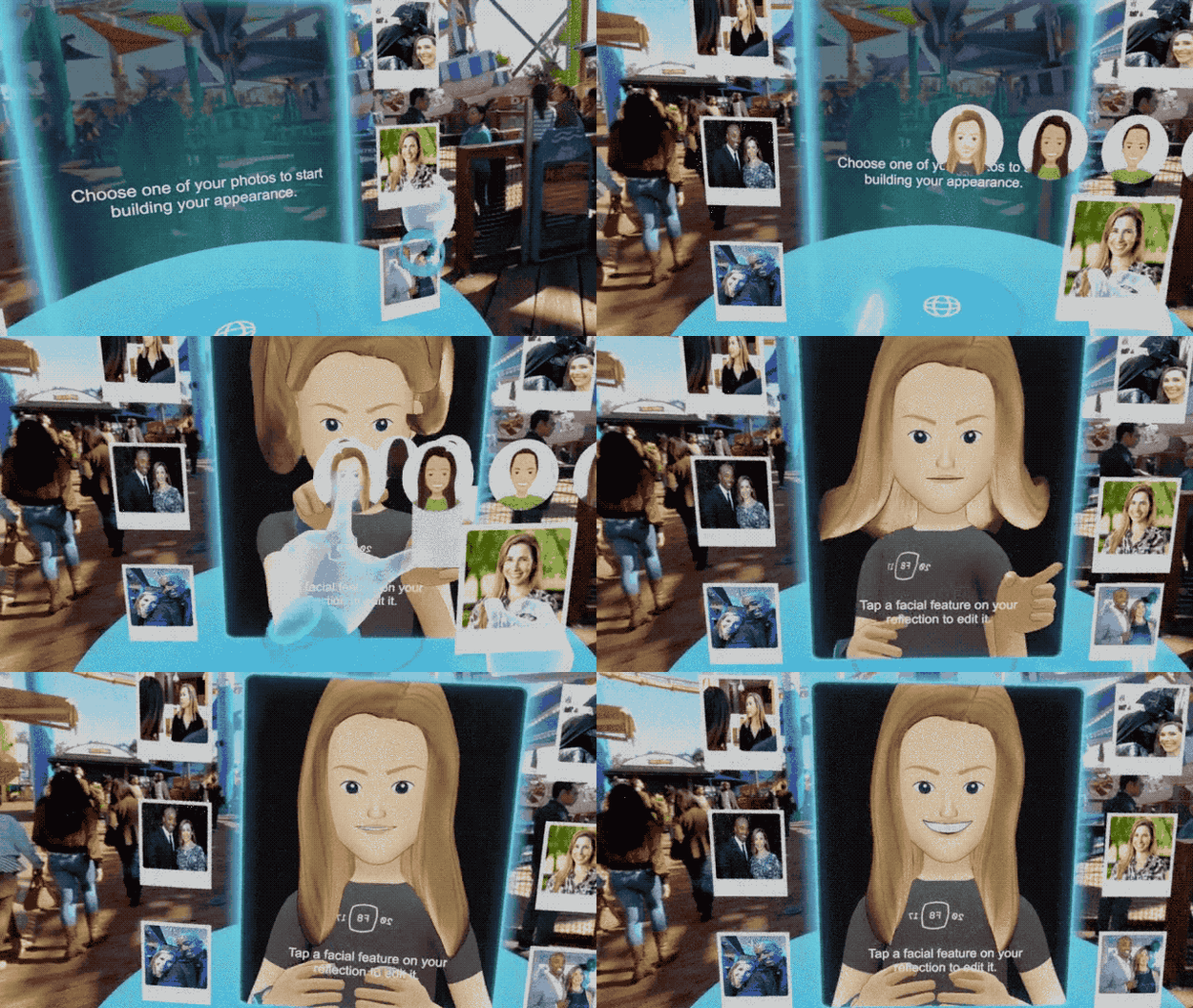
To create your virtual self, you choose from several versions of an avatar whose features are drawn from scans of your Facebook photos. You can customize some features, like hair, eye color, and glasses. The majority of the avatars seem to have large foreheads.

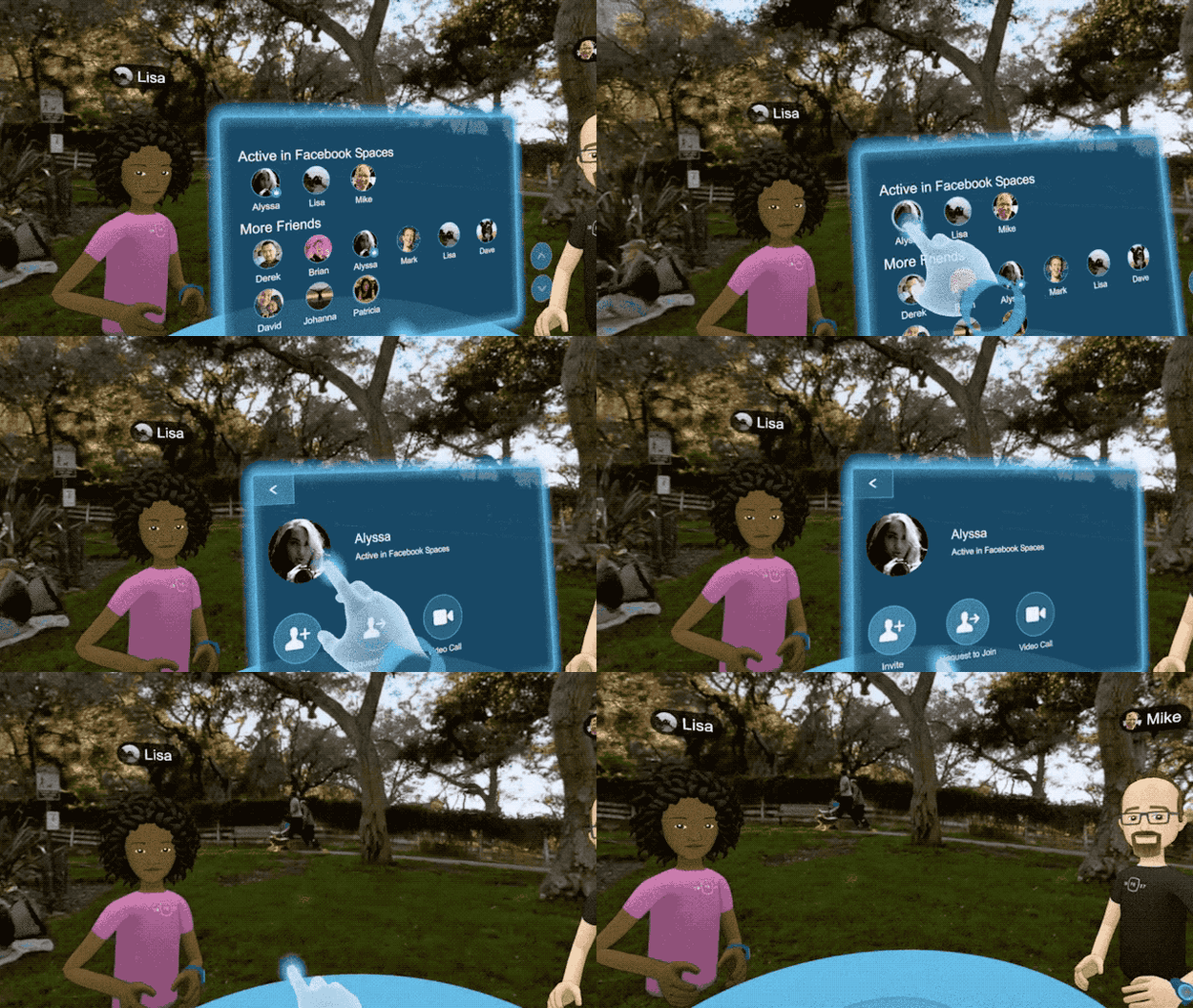
You can invite up to three friends to your space.

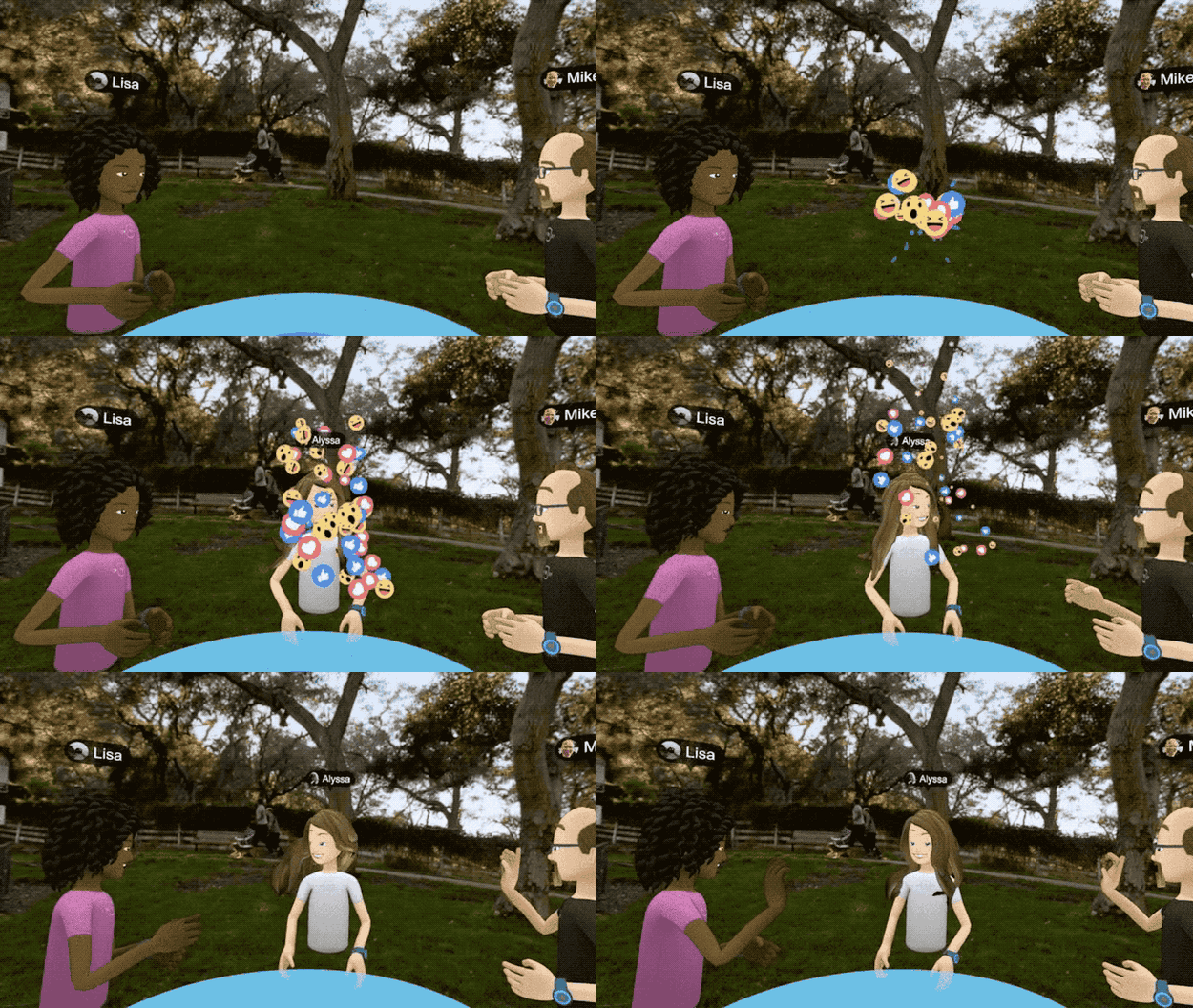
If they accept, you&039;ll find yourselves sitting around a virtual table. They&039;ll see your virtual avatar and the backdrop behind it. (You can choose from default backgrounds or use your own 360 pictures.) Your avatar can also video call friends via Messenger, which you can pull up as a flat menu in the virtual space. The video will appear as a 2D screen that you&039;ll be able to grab and move around. If they&039;re not in Facebook Spaces when you call, you&039;ll see their IRL face and surroundings, and they&039;ll see your avatar and your virtual setting.

If you get tired of your friends, Facebook included the ability to mute them or wholesale remove them from your virtual space. Gurl, bye.

Here&039;s a friend appearing&;

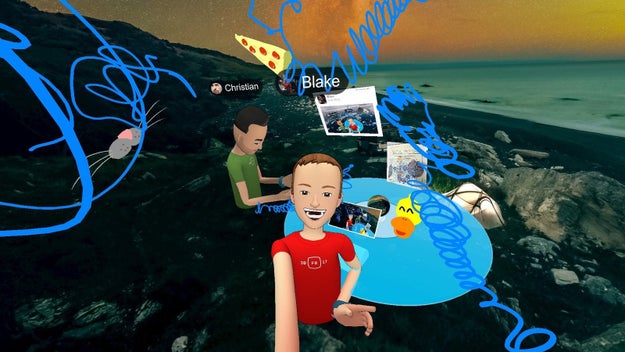
To entertain yourselves, you can draw in 3D and take selfies.

Here&039;s my virtual selfie with Christian, who works at Facebook.

I was really into the 3D marker. He was unamused.

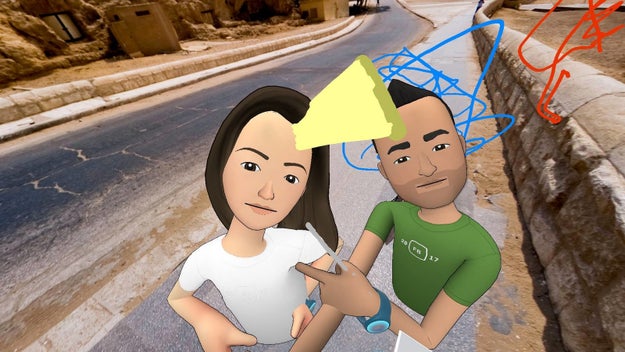
And here&039;s BuzzFeed video producer Allyson Laquian&039;s selfie, where she has a piece of pizza in her head.

The background is a 360 video of the Pyramids of Giza in Egypt.

360 videos can totally change your environment

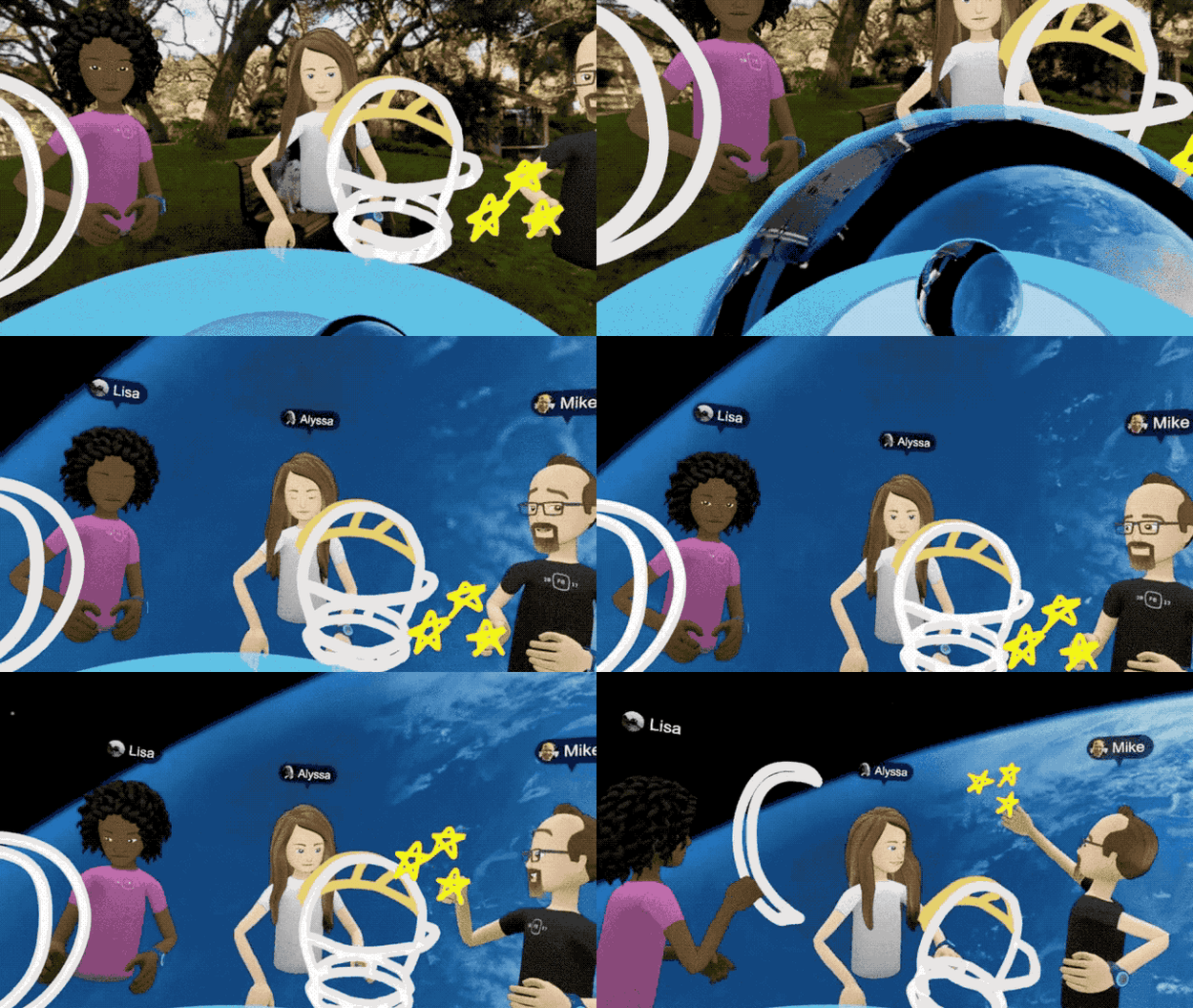
To play a 360 video, you&039;ll open a menu of options using the virtual control interface, and you select from content Facebook publishers have made or that you&039;ve recorded. When you grab a video from that menu, it&039;ll appear as a small orb in your virtual hand. To play it you can either put it in your avatar&039;s mouth or in the center of the communal table.

The videos will play all around you, turning your virtual environment into the video. You&039;ll also be able to view two-dimensional videos and pictures from Facebook publishers and your own timeline within Spaces as movable flat screens.

Facebook said in a statement that it&039;s hoping to bring the app to more platforms in the future but didn&039;t specify which ones.

Quelle: <a href="We Tried Out Facebook&039;s New Social VR App At F8“>BuzzFeed

Climbing Out Of Facebook's Reality Hole

Getty Images

SAN JOSE — It is spring in California and the rains have finally returned after years of absence. The grass is green, the hillsides are coated in yellow and orange and blue flowers, and the reservoirs are full again, hallelujah. Yet while the Spring rains may have washed away the drought, they have done nothing to alleviate the sense of existential dread — especially pervasive here in the techno-utopia of California —that the world we built has perhaps gone badly awry.

The proliferation of fake news and filter bubbles across the platforms meant to connect us have instead divided us into tribes, skilled in the arts of abuse and harassment. Tools meant for showing the world as it happens have been harnessed to broadcast murders, rapes, suicides and even torture. Even physics have betrayed us&; For the first time in a generation, there is talk that the United States could descend into a nuclear war. And in Silicon Valley, the zeitgeist is one of melancholy frustration and even regret — except for Mark Zuckerberg, who appears to be in an absolutely great mood.

The Facebook CEO took the stage at the company&;s annual F8 developers conference a little more than an hour after news broke that the so-called “Facebook Killer” had killed himself. But if you were expecting a somber mood, it wasn&039;t happening. Instead, he kicked off his keynote with a series of jokes.

It was a stark disconnect with the reality outside, where the story of the hour concerned a man who had used Facebook to publicize a murder, and threaten many more. People used to talk about Steve Jobs and Apple’s reality distortion field. But Facebook, it sometimes feels, exists in a reality hole. The company doesn’t distort reality — but it often seems to lack the ability to recognize it.

You have to build for the reality we live in, not the one we hope to create.

The problem with connecting everyone on the planet is that a lot of people are assholes. The issue with giving just anyone the ability to live broadcast to a billion people is that someone will use it to shoot up a school. You have to plan for these things. You have to build for the reality we live in, not the one we hope to create.

While Zuckerberg has charted a statesmanlike evolution over the years, he and the company he helms too often have a blind spot for the way the world will react to products it unleashes on them. Certainly, that seemed the case at F8 today where a slightly rain-soaked audience groaned through Zuckerberg’s dad jokes and listened in anticipation as he teased what was to come. Then, abruptly, he shifted gears.

“Our hearts go out to the family and friends of Robert Godwin Sr.,” Zuckerberg said, referring to the 74 year-old victim. “We have a lot of work and we will keep doing all we can to prevent tragedies like this from happening.” Then, as quickly as he hit the somber tone, Zuckerberg returned to platform optimism.

Todays news was largely about the company’s push into AR – augmented reality. Think: digital layers we can place atop the real world. Facebook says there will be three main ways this will play out: The ability to display information on top of the world in front of you, the ability to add digital objects, and the ability to enhance or alter existing objects.

Executive after executive took the F8 stage to show off how these effects will manifest themselves in the real world. Deborah Liu, who runs Facebook’s monetization efforts, encouraged the audience to “imagine all the possibilities” as she ran through demos of a cafe where people could leave yelp style ratings tacked up in the air and discoverable with a phone, or a birthday message she generated on top of an image of her daughter, while noting that with digital effects “I can make her birthday even more meaningful.”

And yet the dark human history of forever makes it certain that people will also use these same tools to attack and abuse and harass and lie. They will leave bogus reviews of restaurants to which they’ve never been, attacking pizzerias for pedophilia. If anyone can create a mask, some people will inevitably create ones that are hateful.

“With augmented reality,” Zuckerberg said, “you’re going to be able to create and discover all sorts of new art around your city.” Yes, someone can create a virtual painting, meant to beautify the city, or a leave virtual note to a loved one that reaches them at just the right moment, in just the right place. But someone else will probably leave a swastika. Because if there is anything to be learned about the modern internet, it is that if you build it, the Nazis will come.

But Facebook made no nods to this during its keynote — and realistically maybe it’s naive to expect the company to do so. But it would be reassuring to know that Facebook is at least thinking about the world as it is, that it is planning for humans to be humans in all their brutish ways. A simple “we’re already considering ways people can and will abuse these tools and you can trust us to stay on top of that” would go a long way.

Instead Facebook went into the reality hole. It touted Facebook Spaces, a new social virtual reality thing that helps you escape the world while experiencing it, too. As Rachel Rubin Franklin, who used to be executive producer of Electronic Arts’ “The Sims” game and now runs Facebook’s Social VR efforts, said of Spaces: “When your friends and family join your space, it’s just like really being together.”

But it is not. Your avatar is not human, no matter how real it looks. The digital world is not flesh or blood, but it can have a tremendous effect on things that are.

When Facebook announced live video almost exactly one year ago, Zuckerberg touted its ability to tap into the raw and visceral moments of life. But it didn’t take long for those moments to become too raw, and too visceral. When Zuckerberg released a 6,000 word open letter in February, and sought to overtly inject values into the company’s mission, he said he had been moved by a suicide broadcast on Facebook Live. But of course, the suicides keep happening. Facebook can’t stop this, of course, any more than it can stop murder or mayhem or death.

But the company can acknowledge that these things will happen, and it can do a far better job of planning for them. It can make it harder to use its platforms to harass others, or to spread disinformation, or to glorify acts of violence and destruction. As it rolls out this slew of new tools to augment reality, here’s hoping that Facebook will also climb out of its reality hole and face the world we actually live in.

Quelle: <a href="Climbing Out Of Facebook&039;s Reality Hole“>BuzzFeed

DevNation Federal – Washington, DC June 8, 2017

t’s hard to believe that spring of 2017 is upon us, and with it, the preparation for our second DevNation Federal. Last year has seen a surge of innovation in open source communities, and now more than ever it’s imperative that government agencies equip themselves for the change that lies ahead. This year, digital transformation, microservices, containers and Kubernetes are hotter than ever. Function as a Service (FaaS), hyper-converged, and serverless architecture are on the horizon, and it is open source communities that are driving these technologies at an amazing pace.
Quelle: OpenShift