You Can Now Search Snap Stories For Stuff Like Basketball Games And Puppies

You can now search for Snap Stories by place and topic.

The options are endless: “Puppies,” “Atlanta Falcons,” your favorite bar, “spring break,” “election day,” etc. The feature launches today in Miami and will roll out later in other cities, though Snap declined to specify exactly when and where.

youtube.com

In a blog post released Friday, Snap said that its curation team had become “overwhelmed” by the number of Stories people had produced and submitted to the collective, localized Our Story feature, so the company decided to allow users to search for them on their own.

We’ve built a new way to understand what’s happening in Snaps that are submitted to Our Story, and to create new Stories using advanced machine learning. The results have been amazing: you can search over one million unique Stories on Snapchat&;

According to a Snap spokesperson, the Stories you can search for cast a much wider net for Stories than the professionally curated Our Stories, Publisher Stories, and Shows that you’ll still see in “Discover” and “Featured” sections throughout the app. Snaps shown in Our Stories typically focus on big events, like The Grammys, Super Bowl, or a presidential debate.

In 2016, Snap acquired the search engine Vurb for $114.5 million. The company said it developed its new Search feature in-house. Snap said the new feature works by algorithmically identifying what’s happening in submitted Stories based on things like caption text, time, and visual elements.

Snap made its Initial Public Offering one month ago at a valuation of $34 billion. It&;s stock price has since fallen.

The change comes as Facebook is creating a Stories-esque feature in all of its flagship apps: Messenger, Whatsapp, Instagram, and, most recently, Facebook.

Quelle: <a href="You Can Now Search Snap Stories For Stuff Like Basketball Games And Puppies“>BuzzFeed

Google Cloud Platform expands to Mars

By Google Cloud Storage and Google Geo teams

Google Cloud Platform (GCP) is committed to meeting our customers needs—no matter where they are. Amidst our growing list of new regions, today we’re pleased to announce our expansion to Mars. In addition to supporting some of the most demanding disaster recovery and data sovereignty needs of our Earth-based customers, we’re looking to the future cloud infrastructure needed for the exploration and ultimate colonization of the Red Planet.

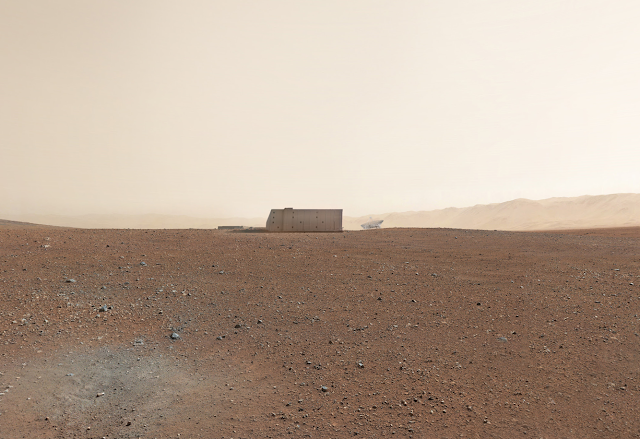
Visit Mars with Google Street View
Mars has long captured the imagination as the most hospitable planet for future colonization, and expanding to Mars has been a top priority for Google. By opening a dedicated extraterrestrial cloud region, we’re bringing the power of Google’s compute, network, and storage to the rest of the solar system, unlocking a plethora of possibilities for astronomy research, exploration of Martian natural resources and interplanetary life sciences. This region will also serve as an important node in an extensive network throughout the solar system.

Our first interplanetary data center—affectionately nicknamed “Ziggy Stardust”—will open in 2018. Our Mars exploration started as a 20% project with the Google Planets team, which mapped Mars and other bodies in space and found a suitable location in Gale Crater, near the landing site of NASA’s Curiosity rover.

Explore more of Mars in Google Maps
In order to ease the transition for our Earthling customers, Google Cloud Storage (GCS) is launching a new Earth-Mars Multi-Regional location. Users can store planet-redundant data across Earth and Mars, which means even if Earth experiences another asteroid strike like the one that wiped out the dinosaurs, your cat videos, selfies and other data will still be safe. Of course, we’ll also store all public domain scientific data, history and arts free of charge so that the next global catastrophe doesn’t send humanity back into the dark ages.

Customers can choose to store data exclusively in the new Mars region, outside of any controlled jurisdictions on Earth, ensuring that they’re both compliant with and benefit from the terms of the Outer Space Treaty. The ability to store and process data on Mars enables low-latency data analysis pipelines and consumer apps to serve the expected influx of Mars explorers and colonists. How exciting would it be to stream movies of potatoes growing right from the craters and dunes of our new frontier?

One of our early access customers says “This will be a game changer for us. With GCS, we can store all the data collected from our rovers right on Mars and run big data analytics to query exabyte-scale datasets all in a matter of seconds. Our dream of colonizing Mars by 2020 can now become a reality.”

Walk inside our new data center in Google Street View
The Martian data center will become Google’s greenest facility yet by taking full advantage of its new location. The cold weather enables natural, unpowered cooling throughout the year, while the thin atmosphere and high winds allow the entire facility to be redundantly powered by entirely renewable sources.

But why stop at Mars? We’re taking a moonshot at N+42 redundancy with galaxy-scale computing. While GCP is optimized for faster-than-light data coordination for databases, the Google Planets team is already hard at work mapping the rest of our solar system for future data center locations. Stay tuned and join our journey! We can’t wait to see the problems you solve and the breakthroughs you achieve.

P.S. Check out Curiosity’s journey across the Red Planet on Mars Street View.

Quelle: Google Cloud Platform

The Music Industry Kind Of Likes Streaming Now, But It's Still Nervous

51% of the music industry&;s revenue comes from streaming, according to a report published Thursday by the Recording Industry Association of America (RIAA).

Paid streaming services like Spotify and Apple Music accounted for just 9% of the industry&039;s revenue in 2011, grew to 34% in 2015, and jumped to 51% in 2016 with 22.6 million people paying for them.

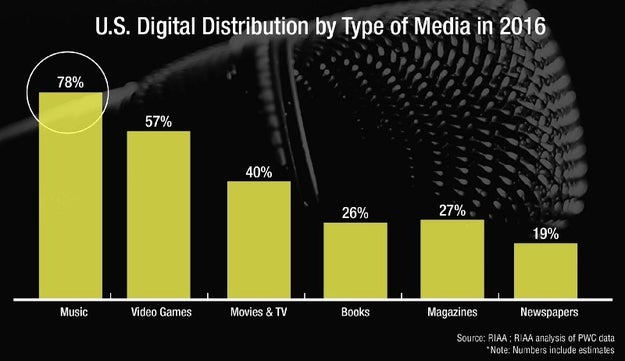
According to an accompanying blog post, “2016: A Year of Progress For Music,” 78% of all US music is distributed through digital channels. Digital distribution overtook physical music sales — mostly made up of CDs — globally in 2015.

RIAA

These are truly strange times. The music industry used to hate streaming. Now it&039;s in love with it.

Giphy

The precursors to online music streaming were free services like Kazaa and Napster that let you download pirated music. Limewire viruses, anyone? Spotify, too, though, tbh.

Streaming is here to stay. But it&039;s still unclear if the music business will ever make as much money as it did during the heyday of CDs.

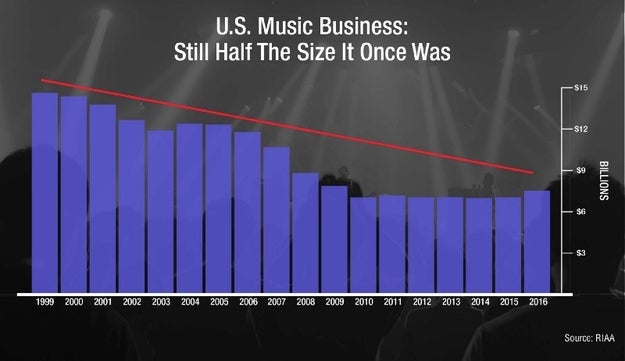
Overall industry revenue rose by 11.4% in 2016, which was the biggest increase in over a decade.

But it’s still just a fraction of what it used to be.

But it's still just a fraction of what it used to be.

RIAA

Spotify, the world&039;s biggest streaming music service, is and always has been unprofitable. Maybe that&039;ll change in 2017? The RIAA cautioned people that the industry&039;s recovery from it steep losses in the mid-aughts “is fragile and fraught with risk.” Sales of CDs and song downloads are declining fast, especially as Apple more heavily favors its streaming service over iTunes. Digital music is hard.

Pandora, one of the first services to offer streaming radio and formerly the music industry&039;s archenemy, just released an on-demand streaming service that faces stiff competition from Spotify and Apple Music. Investors are pressuring Pandora to sell itself, just as the company started to be on better terms with the recording industry.

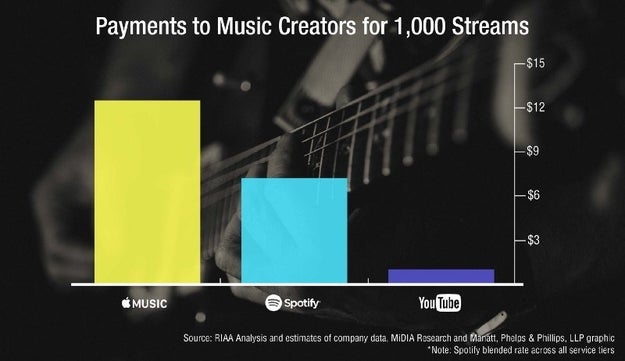
Some things don&039;t change, though. The music industry is still mad at YouTube for how little it pays artists:

The RIAA wrote, “a platform like YouTube wrongly exploits legal loopholes to pay creators at rates well below the true value of music.” The RIAA launched Value The Music today in conjunction with other industry groups to lobby for policy change that would monetarily favor artists and record labels.

RIAA

Quelle: <a href="The Music Industry Kind Of Likes Streaming Now, But It&039;s Still Nervous“>BuzzFeed