UNESCO will DRM im Web verhindern
In den seit Jahren anhaltenden Streit um den angehenden W3C-Standard Encrypted Media Extensions, der DRM im Browser ermöglicht, mischt sich nun auch die UNESCO ein.
Quelle: Heise Tech News

In den seit Jahren anhaltenden Streit um den angehenden W3C-Standard Encrypted Media Extensions, der DRM im Browser ermöglicht, mischt sich nun auch die UNESCO ein.
Quelle: Heise Tech News

In Köln findet derzeit die FIBO 2017 statt. heise online hat sich auf der internationalen Leitmesse für Fitness, Wellness und Gesundheit umgeschaut.
Quelle: Heise Tech News

Anlässlich des Fanfests in Reykjavik hat CCP ein neues Forschungsprojekt vorgestellt, bei dem Spieler von Eve Online Wissenschaftlern bei der Fahndung nach Exoplaneten helfen.
Quelle: Heise Tech News

Die Regierung ist fleißig und droht den Hatern, die Telekom bleibt womöglich nicht neutral und die AIX-Messe hebt ab. Sieben Tage und viele Meldungen im Überblick. (Golem-Wochenrückblick, Netzneutralität)
Quelle: Golem

Man könnte meinen, das "I" in IT steht für Irrsinn – zumindest wenn man die drei Topmeldungen der vergangenen Woche als Maßstab nimmt: Ein Kameradildo mit Sicherheitslücken, der Wildwuchs bei Steckern und Kabeln sowie versteckte Mikrofone im Smart Home.
Quelle: Heise Tech News

In der aktuellen Episode von c't uplink erfahrt ihr, was sich durch das Windows 10 Creators Update ändert, womit Business-Notebooks punkten und was es mit WLAN-fähigen Kamera-Dildos auf sich hat. Viel Spaß!
Quelle: Heise Tech News
AWS CodePipeline will now enable customers to experiment at a lower cost. Customers can create new pipelines without incurring any charges on that pipeline for the first thirty calendar days. After that period, the new pipelines will be charged at the existing rate of $1 per active pipeline per month. The new pricing is available in all regions in which CodePipeline is available.
Quelle: aws.amazon.com
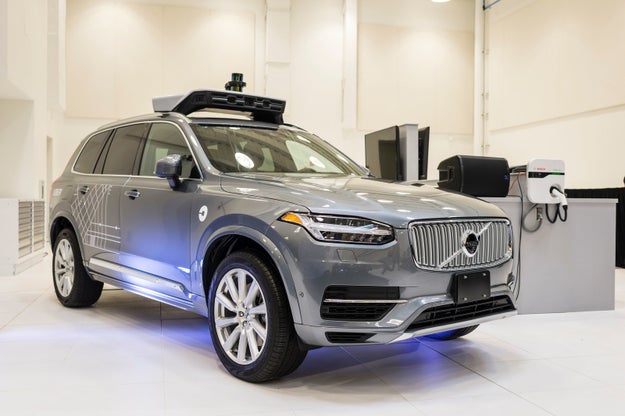
A pilot model of the Uber self-driving car is displayed at the Uber Advanced Technologies Center on September 13, 2016 in Pittsburgh, Pennsylvania.
Afp / AFP / Getty Images
Uber denied Waymo’s allegations that it is using technology stolen from the Alphabet company by an ex-employee before he joined Uber, saying in a court filing that it is “unambiguously developing its own technology independent of Waymo.”
The court filing on Friday comes in response to Waymo’s request last month for a federal judge to halt Uber’s self-driving car efforts. Waymo filed a lawsuit in February against Uber, alleging that former employee Anthony Levandowski downloaded 14,000 company files before leaving and starting his own self-driving truck company, Otto. Uber purchased Otto last year and installed Levandowski as the leader of its self-driving car program.
The lawsuit centers around laser technology called LiDAR (Light Detection And Ranging), which helps self-driving cars see and navigate. Uber says its own technology is “fundamentally different” from Waymo’s – Uber’s design uses four lenses, while Waymo’s uses a single lens – and called the request to pause its self-driving program a “misfire.”
“A cursory inspection of Uber’s LiDAR and Waymo’s allegations fall like a house of cards,” Uber said.
Uber said its own forensic analysis concluded that no Waymo documents crossed over into Uber’s systems, and that halting its program “would impede Uber’s efforts to remain a viable business.” (Uber CEO Travis Kalanick has called self-driving cars an existential threat to the ride-hail giant’s business.) The company also said the fact that Waymo waited for five months after learning Levandowski downloaded files to seek an injunction against Uber shows a lack of urgency. And it provided testimony from Scott Boehmke, who began developing the company’s own LiDAR systems in 2015.
Uber also provided testimony from another employee who joined Otto after leaving Waymo, Sameer Kshirsagar, who’s also named in Waymo’s suit. Waymo alleges he also downloaded files before leaving the company for Otto. The testimony says that he downloaded specific documents cited in Waymo’s allegations while creating a transition memo for his team before departing, but did not take them with him. In the case of another document, a checklist, Kshirsagar said he may have forwarded them to a personal device for review while working at Waymo, but has not accessed them since he left the company.
“I did not take any confidential Google/Waymo documents with me upon my departure from Google/Waymo for use at Uber and/or Otto. I have not used any confidential Google/Waymo documents or information in my work for Uber and/or Otto,” Kshirsagar’s statement says. “I was never directed by anyone, at Uber or Otto, or otherwise, to take confidential documents or information from Google or Waymo.”
The ride-hail giant also filed three additional documents with its response. Two were from LiDAR experts: one from Paul McManamon, a scientist at the University of Dayton, and the other from a laser and optoelectronic design consultant named Michael Lebby. Both declarations support Uber’s claim that some parts of the design of Waymo’s LiDAR technology are not trade secrets and are publicly known within the field. The third declaration was from the head of a New York-based digital forensics lab.
Uber may have searched its own servers, but Levandowski, the leader of its self-driving car program, has asserted a Fifth Amendment right to avoid self-incrimination. That means he isn’t cooperating in the search.
On Wednesday, Judge William Alsup warned that “I’ve never seen a record this strong in 42 years,” referring to Waymo’s body of evidence against Uber, according to Reuters.
In response to Uber’s court reply on Friday, a Waymo spokesperson said the company based its request for the judge to halt Uber’s self-driving car program “based on clear evidence.”
“Uber’s assertion that they’ve never touched the 14,000 stolen files is disingenuous at best, given their refusal to look in the most obvious place: the computers and devices owned by the head of their self-driving program,” Waymo said.
Quelle: <a href="Uber Says It Didn&039;t Steal Waymo&039;s Self-Driving Tech“>BuzzFeed

Twitter hat erfolgreich die Identität eines regierungskritischen Users geschützt. Nach einer Klage gegen die US-Regierung hat diese ihren Offenlegungsbefehl zurückgezogen.
Quelle: Heise Tech News

This post was authored by the Microsoft and Docker teams.
Did you know when you combine Docker’s cross platform support of Linux and Windows containers and Microsoft cloud technologies, you get a comprehensive offering that can support virtually every enterprise workload?
One platform, one journey for all applications
Microsoft and Docker aim to provide a modern platform for developers and IT pros to build, ship, and run any application on-premises, in the cloud, or through service providers across both Windows and Linux operating systems. Together we are bringing container applications across platforms, integrating across our developer tools, the operating system, and cloud infrastructure to provide a seamless experience across the application environment from development to test and production.
Whether you host your workloads in private datacenters, public cloud, or hybrid, Microsoft and Docker offer great end-to-end solutions or individual components from the developer’s keyboard to cloud. Azure Container Service provides the simplest way to deploy your container orchestration environment, such as Docker Swarm, so your app teams can deploy their apps more quickly. Windows Server Containers are powered by the same Docker toolchain, so you use the same Docker tooling to build and run those containers as you do your Linux containers and with the tooling you choose including Eclipse, Visual Studio, Jenkins, and Visual Studio Team Service. Windows Server Containers help secure and modernize existing enterprise .NET and line-of-business server applications with little or no code changes. Package existing apps in containers to realize the benefit of a more agile DevOps model, then deploy on-premises, to any cloud, or in a hybrid model. Reduce infrastructure and management costs for those applications, as well.
See it in action @ DockerCon 2017
Come visit Docker + Microsoft sessions @ DockerCon, taking place in Austin, TX from April 17th –20th. Learn how to modernize traditional applications as well as learn new technologies to help you build your next great application. You’ll learn about customer success stories on how they were able to achieve ROI targets and up to 80% cost savings through infrastructure consolidation and operational efficiencies with Docker Enterprise Edition (EE) and Azure.
Check out our sessions
Docker + Microsoft – Investing in the future of your applications on Tuesday, April 18th from 11:45am-12:25pm
Beyond – the path to Windows and Linux parity in Docker on Tuesday, April 18th from 2:00pm-2:40pm
There will also be hands-on labs for you to experience Docker on Windows. We’ll provision a Docker environment for you in Azure, and provide self-paced learning guides. You can learn more by reading Elton Stoneman’s blog on Docker + Microsoft sessions at DockerCon, from modernizing traditional apps like .NET to building new Windows Server Container apps.
Quelle: Azure






