Amazon ElastiCache now supports Memcached version 1.4.34

We are pleased to announce that Amazon ElastiCache now supports Memcached version 1.4.34. You can now launch new clusters with Memcached 1.4.34, as well as upgrade existing ones to the new version. Compared to version 1.4.33 (previous version supported by ElastiCache for Memcached), this version includes bug fixes for improved metadata dump, logging and LRU crawler and miscellaneous enhancements. 
Quelle: aws.amazon.com

The New AWS Organizations UI Makes Organizing Your AWS Accounts Easier

Today, we made it easier for you to organize your AWS accounts in AWS Organizations by using a new tree view and additional UI improvements. The new tree view enables you to browse the accounts and organizational units (OUs) in your organization and apply service control policies (SCPs) from the Organizations console. For example, you can use the tree view to see the hierarchy of OUs in your organization. You can then select a specific OU to see all its AWS accounts and then apply an SCP to those accounts. 
Quelle: aws.amazon.com

Tech Companies Reject A Proposal For Voluntary Net Neutrality

Eric Gaillard / Reuters

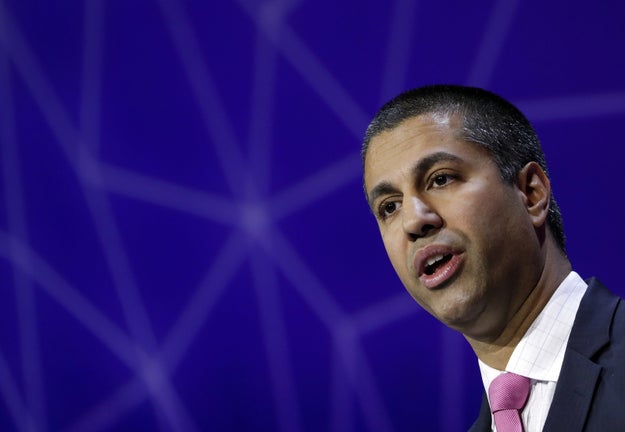
Proponents of strong net neutrality rules in Silicon Valley and beyond are bracing for a big fight in the coming months. Ajit Pai, the new Chair of the Federal Communications Commission appointed by President Trump, is pushing to undo widely celebrated Obama-era rules designed to maintain a free and open internet. Instead, Pai plans to propose that internet service providers would only have to volunteer not to engage in unfair practices. Predictably, net neutrality advocates are already rebelling against the idea.

Pai advanced his proposal, which is still in a preliminary stage, in a meeting with telecom trade groups last week, sources familiar with the matter told BuzzFeed News. The plan would roll back the open internet order passed by the FCC in 2015, which prohibits ISPs from favoring or discriminating against certain types of web traffic, and would replace the net neutrality regulations with pledges by internet providers to avoid anti-competitive behavior like blocking or throttling.

But government officials and tech companies who support open internet rules say the proposal is net neutrality in name only. They warn the proposal is watered down and would strip internet users of crucial protections, while giving internet gatekeepers like Comcast and AT&T more power to influence what people see and do online.

“Chairman Pai’s proposal would put the future of an open and free internet in the hands of big corporations.”

“If recent press reports are true, we are gearing up for a battle that could eviscerate the widely supported open Internet protections adopted by the FCC,” Mignon Clyburn, the sole Democratic commissioner on the FCC, told BuzzFeed news in a statement. “Rolling back these basic consumer and competition protections should be highly alarming to anyone who cares about the free and open internet.”

For consumer advocates, Democratic lawmakers, and much of the tech industry, network neutrality is a vital protection against internet companies manipulating online activity. Without strictly enforced rules, ISPs will have more power to unfairly promote their own content, or dissuade users from using competing services, advocates say. And not only does net neutrality protect online businesses like video streaming services and media outlets, it also promotes the free speech rights of Americans who rely on the free flow of information and expression online.

“The only way to protect a free and open internet is with strong net neutrality rules of the road – not voluntary guidelines – that ensure businesses, innovators and families can use the world’s greatest platform for commerce and communications,” Democratic Sen. Ed Markey of Massachusetts, told BuzzFeed News in a statement. “Chairman Pai’s proposal would put the future of an open and free internet in the hands of big corporations and the powerful few at the expense of consumers.

A spokesperson for the FCC declined to comment.

ISPs maintain that net neutrality regulations are overly burdensome and discourage the telecom industry from investing in infrastructure, since broadband providers must shoulder the costs of surging web traffic — without the ability to charge businesses that use massive amounts of data.

“The FCC decided to apply last-century, utility-style regulation to today&;s broadband networks,” Chair Pai said during a speech at Mobile World Congress in Spain earlier this year.

In a major victory for net neutrality advocates last year, however, a federal appeals court upheld the open internet rules that require internet providers to treat all web traffic equally. Further appeals are still pending.

According to the sources familiar with Pai&039;s meeting, the Federal Trade Commission, which can hold companies accountable for their marketing statements and terms of service, would enforce ISPs&039; promises.

“The framework is voluntary. I think we all know what voluntary commitments are worth.”

But some in Silicon Valley view the proposal as a non-starter. “Getting commitments from ISPs that have campaigned vociferously against net neutrality seems like a recipe for disaster for meaningful net neutrality protections,” Evan Engstrom, the executive director of Engine, a policy and advocacy group for startups, told BuzzFeed News.

Chris Riley, the director of policy for Mozilla, described the proposal as “misguided,” and criticized the lack of clear enforcement mechanisms.

“This isn&039;t real net neutrality,” said Michael Cheah, Vimeo&039;s general counsel. “Even if these were great rules, which they are not, this is not a framework that helps the industry. This is a framework that is meant to help the incumbent ISPs,” he told BuzzFeed News.

Even with commitments to not block people from accessing certain websites and services, net neutrality is more than just adhering to strict rules, Cheah said; it&039;s a broader concept that ISPs shouldn&039;t mess with traffic, at all. If the FCC repeals the rules, ISPs could more easily create internet fast lanes, privilege the content of partner media companies, discount data used for select services, and place caps on web data, Cheah said.

“The framework is voluntary. I think we all know what voluntary commitments are worth. It is every industry&039;s dream to be voluntarily regulated,” Cheah said.

For video streaming companies like Vimeo and the broader community of startups, weaker net neutrality rules could mean higher costs and impaired growth. Data-hungry businesses might need to broker deals with ISPs to quickly deliver their services over the web. Cheah said that without the money or right business connections, this could stifle innovation for a multitude of services.

While streaming TV company Roku declined to comment on reports of Chair Pai&039;s proposal, a spokesperson told BuzzFeed News, “[I]n general we believe that clear rules should be in place to ensure that the Internet remains open for content and services to be distributed to consumers without interference or other discriminatory practices.”

Netflix also declined to comment on the proposed net neutrality roll back. But a spokesperson referred BuzzFeed News to the company&039;s January shareholder letter. In it, Netflix said that a weakening of net neutrality rules is unlikely to affect its business because of its popularity and existing relationships with ISPs. But Netflix went on to say that internet providers should not be the ones to decide which services can grow and succeed on the internet.

This week, the Internet Association, a major web trade group representing Netflix, Google, Facebook, and Amazon will meet with Chair Pai to discuss a range of tech policy issues, including net neutrality, a source familiar with the meeting told BuzzFeed News.

A spokesperson for the Internet Association declined to comment on the meeting, but told BuzzFeed news: “People expect access to the entire internet when they pay for their connection, which is why it is so important for strong, enforceable net neutrality rules to be in place.”

Quelle: <a href="Tech Companies Reject A Proposal For Voluntary Net Neutrality“>BuzzFeed

Use Azure Media Services with PowerApps

You can now build PowerApps with media hosted on Azure Media Services. In this walkthrough, Contoso Corp. wants to build an online learning app for its employees with videos of their products and services.

Create a new Azure Media Services account, if you don’t have one already

From your Azure Media Services account, locate and publish your video assets from Settings > Assets.

Encode your videos. After the videos are published, copy the manifest URLs. Start the streaming endpoint of your service, if not already.

If you haven’t tried PowerApps, you can always sign-up for a trial using your work or school account. Download PowerApps Studio from the Windows Store. Alternatively, login to the PowerApps portal and choose New app.
Choose the Blank app > Tablet layout.

We want to build a gallery of all the available AMS videos and have the user pick a video to play. An Excel spreadsheet is a quick way to load the data to the app. Here is the Excel Table we will use with the links to the AMS video URLs:

From PowerApps, choose Content > Data sources. From the right panel, choose Add data source and Add static data to your app. Browse and load the Excel file.
From PowerApps, add a Horizontal Gallery control from Insert > Gallery > Custom gallery. Choose Add an item from Insert tab and add the Video control from Media.
Bind the Gallery to the Excel table by setting the Items property of the gallery to the name of the table.

Set the Media property of the first video control in the gallery to ThisItem.VideoURL. You should see the list of the AMS videos load in the gallery. Set the Disabled property for the video control to true.

Add a Video control from Insert > Media for the main video. Bind its Media property to Gallery1.Selected.VideoURL

You can also add text fields for the Title and description from the Excel file and show them in the app. The complete app is shown in the picture below:

You can learn more about building apps from the PowerApps documentation. For feedback and questions on AMS videos in PowerApps, please post them on our forums.


Happy app building!
Quelle: Azure

Google Cloud Storage introduces Cloud Pub/Sub notifications

By Brandon Yarbrough, Software Engineer, Google Cloud Storage

Google Cloud Storage has always been a high-performance and cost-effective place to store data objects. Now it’s also easy to build workflows around those objects that are triggered by creating or deleting them, or changing their metadata.

Suppose you want to take some action every time a change occurs in one of your Cloud Storage buckets. You might want to automatically update sales projections every day when sales uploads its new daily totals. You might need to remove a resource from a search index when an object is deleted. Or perhaps you want to update the thumbnail when someone makes a change to an image. The ability to respond to changes in a Cloud Storage bucket gives you increased responsiveness, control and flexibility.

Cloud Pub/Sub Support

We’re pleased to announce that Cloud Storage can now register changes by sending change notifications to a Google Cloud Pub/Sub topic. Cloud Pub/Sub is a powerful messaging platform that allows you to build fast, reliable and more secure messaging solutions. Cloud Pub/Sub support introduces many new capabilities to Cloud Storage notifications, such as pulling from subscriptions instead of requiring users to configure webhooks, multiplexing copies of each message to many subscribers and filtering messages by event type or prefix.

You can get started sending Cloud Storage notifications to Cloud Pub/Sub by reading our getting started guide. Once you’ve enabled the Cloud Pub/Sub API and downloaded the latest version of the gcloud SDK, you can set up notification triggers from your Cloud Storage bucket to your Cloud Pub/Sub topic with the following command:

$> gsutil notification create -f json -t your-topic gs://your-bucket

From that point on, any changes to the contents of your Cloud Storage bucket trigger a message to your Cloud Pub/Sub topic. You can then create Cloud Pub/Sub subscriptions on that topic and pull messages from those subscriptions in your programs, like in this example Python app.

Cloud Functions

Cloud Pub/Sub is a powerful and flexible way to respond to changes in a bucket. However, for some tasks you may prefer the simplicity of deploying a small, serverless function that just describes the action you want to take in response to a change. For that, Google Cloud Functions supports Cloud Storage triggers.

Cloud Functions is a quick way to deploy cloud-based scripts in response to a wide variety of events, for example an HTTP request to a certain URL, or a new object in a Cloud Storage bucket.

Once you get started with Google Cloud Functions, you can learn about setting up a Cloud Storage Trigger for your function. It’s as simple as adding a “–trigger-bucket” parameter to your deploy function:

$> gcloud beta functions deploy helloWorld –stage-bucket cloud-functions –trigger-bucket your-bucket

It’s fun to think about what’s possible when Cloud Storage objects aren’t just static entities, but can trigger a wide variety of tasks. We hope you’re as excited as we are!
Quelle: Google Cloud Platform

AWS OpsWorks Stacks Supports Amazon CloudWatch Logs

AWS OpsWorks Stacks now supports integration with Amazon CloudWatch Logs. With CloudWatch Logs, you can monitor your logs, in near real-time, for specific phrases, values or metrics. Previously, you had to manually install and configure the CloudWatch Logs agents directly on your Amazon EC2 instances. Now, you can leverage the built-in integration with CloudWatch Logs to simplify multi-instance log monitoring. For example, you can now monitor your Rails logs for exceptions across your instances. After you enable CloudWatch Logs in OpsWorks Stacks, the logs will be automatically sent to CloudWatch Logs where you can set up filters to extract metrics, and generate alarms based on those metrics. To learn more about this feature, visit our documentation.
For more information on AWS OpsWorks Stacks:

Product Page
Documentation

Quelle: aws.amazon.com

Amazon's Largest Rival In India Just Raised $1.4 Billion From Microsoft, eBay, And Tencent

Abhishek Chinnappa / Reuters

Amazon’s largest rival in India, Flipkart, announced Monday that it is raising $1.4 billion from Microsoft, eBay, and China’s Tencent. The funding, which is the largest round ever raised by a private Indian technology company, values Flipkart at $11.6 billion.

As a part of this deal, eBay is selling its Indian operations to Flipkart for a $500 million cash investment and an equity stake in the company, although eBay India will continue to operate in India as an independent entity. According to an eBay press release, the company has also signed an exclusive agreement with Flipkart to cross-promote products between the services.

“We are delighted that Tencent, eBay and Microsoft — all innovation powerhouses — have chosen to partner with us on their India journey,” Flipkart’s founders, Sachin and Binny Bansal, said in a statement. “We have chosen these partners based on their long histories of pioneering industries, and the unique expertise and insights each of them bring to Flipkart.”

Flipkart’s other investors include Tiger Global Management, Naspers Group, Accel Partners and DST Global.

This latest round of funding gives Flipkart some much-needed ammunition as it battles Amazon in India, one of the world’s fastest growing internet markets. According to recent report co-authored by the Internet and Mobile Association of India, the country’s internet users could reach 450 million by June 2017 — a large and tempting market that both Silicon Valley technology companies and their Indian rivals are racing to capture.

Amazon, which entered India in 2013, has invested $5 billion so far. Amazon CEO Jeff Bezos has reportedly told the company’s executives to “do what it takes to succeed” in India and to “not worry about the cost.” A recent report published in The New York Times claimed that Amazon is looking at opening brick-and-mortar grocery stores in the country where traditional street bazaars still dominate.

Analysts say that new round of funding will help Flipkart defend its market share in the price-sensitive Indian market against Amazon, which has quickly become the second-largest online shopping destination behind Flipkart in less than four years.

“This investment could give Flipkart just enough scale and momentum to take on Amazon again,” Pavel Naiya, senior analyst at Counterpoint Research told BuzzFeed News. “It’s likely that we’ll see Amazon focusing on smaller Indian towns in the future to expand its market share in India.”

Quelle: <a href="Amazon&039;s Largest Rival In India Just Raised .4 Billion From Microsoft, eBay, And Tencent“>BuzzFeed