Adding offerings and UK Region: Azure rolls deep with PCI DSS v3.2

Check out our AoC

Go here to download Azure’s Payment Card Industry Data Security Standard (PCI DSS) v3.2  Attestation of Compliance (AoC)! When it comes to enabling customers who want or need to operate in a cloud environment AND also need to adhere to the global standards designed to prevent credit card fraud, they need look no further than Azure. 

Why put off until 2018 what you can do today?

When it comes to security and compliance, we are always ready to act. The DSS v3.2 contains several requirements that don’t take effect until January 2018, and while it is possible to get a v3.2 certification without meeting these future requirements, Azure has already adopted them and is currently compliant with all new requirements!

UK, too!

Azure has also added the UK region to our list of PCI-certified datacenters, while expanding coverage within previously certified regions around the world. A new version of our PCI Responsibility Matrix will be released shortly, keep an eye out for that announcement coming soon.

More services = More options for customers

Azure has again increased the coverage of our attestation to keep up with customer needs and we continue to be unmatched amongst Cloud Service Providers in the depth and breadth of offerings with PCI DSS v3.2. A sample of the services added in this attestation include:

Note: Refer to the latest AoC for the full list of services and regions covered. 

DocumentDB
Data Catalog
Machine Learning
Functions
Virtual Machine Scale Sets

AoC FAQs and Highlights

Why does the AoC say “April 2016”?

The front page and footer of the AoC says “April 2016”.  This is the date that the template was published by the PCI SSC, it is not the date of our AoC.  Many customers get confused by this, but we are not able to modify the AoC template. Refer to page 76 of the AoC for the date it was actually signed and issued. 

How should I interpret the service listing in the AoC?

We have received feedback in the past that it was difficult to understand what services were covered in the AoC. This was mainly because the services were listed under the groupings and internal names our Qualified Security Assessor (QSA) used for the assessment, along with the fact that many services got re-branded shortly after our 2015 AoC was released.

We incorporated that feedback in the release of our 2016 AoC, and have again updated the service listing in the 2017 AoC to reflect the current set of Azure offerings. Please be aware that if an Azure service is re-branded we are not able to retroactively update the AoC.  If you have questions about the status of an Azure service, please contact Azure support or your TAM. 

Why isn’t Azure assessed as a “Shared Hosting Provider”?

The shared hosting provider designation in PCI DSS is for situations where multiple customers are being hosted on a single server, but doesn’t take into account hosting of isolated virtualized environments.  An example of shared hosting is if a service provider was hosting multiple customer websites on a single physical web server. In that situation, there is no segregation between the customer environments. Azure is not considered a shared hosting provider for PCI because customer VMs and environments are segregated and isolated from each other. So changes made to “Customer X’s” VM does not affect “Customer Y’s” VM, even under the scenario that both VMs are hosted on the same physical host.  
Quelle: Azure

Azure Data Factory’s Data Movement is now available in the UK

Data Movement is a feature of Azure Data Factory that enables cloud-based data integration, which orchestrates and automates the movement and transformation of data. You can now create data integration solutions using Azure Data Factory that can ingest data from various data stores, transform/process data, and publish results to the data stores. 

Moreover, you can now utilize Azure Data Factory for both your cloud and hybrid data movement needs with the UK data store. For instance, when copying data from a cloud data source to an Azure store located in the UK, Data Movement service in UK South will perform the copy and ensure compliance with data residency.

Note: Azure Data Factory itself does not store any data, but instead lets you create data-driven flows to orchestrate movement of data between supported data stores and the processing of data using compute services in other regions or in an on-premises environment.

To learn more about using Azure Data Factory for data movement, view the Move data by using Copy Activity article. 

You can also go to Azure.com learn more about Azure Data Factory or view more in depth Azure Data Factory information documentation.
Quelle: Azure

Samsung Reverses Plans To Throw Away 4.3 Million Explosive Galaxy Note7s

Jung Yeon-je / AFP / Getty Images

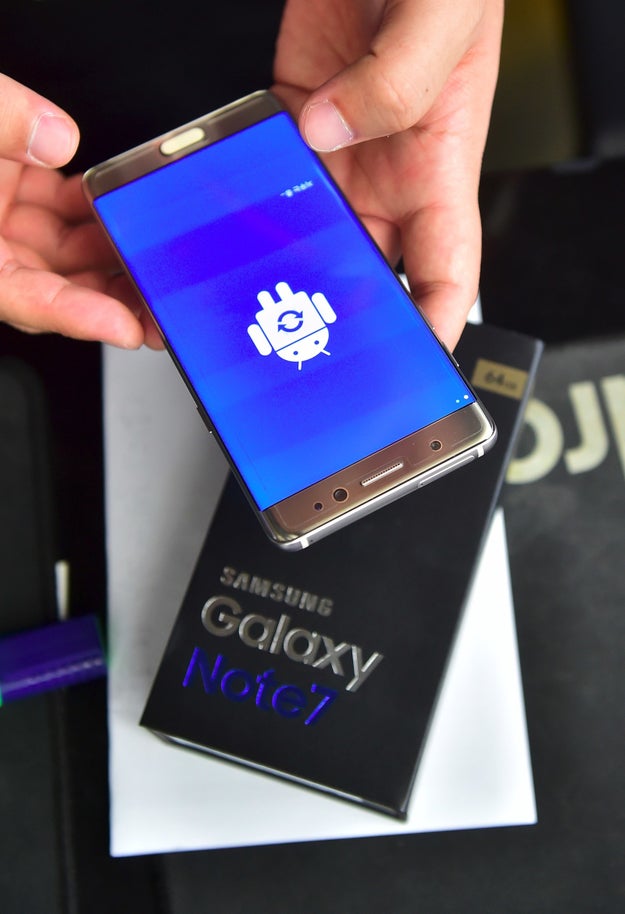
Samsung has announced that it will refurbish and sell some Galaxy Note7 phones, which is a reversal of its previous plans to dispose all 4.3 million of the recalled phones outright. The Note7 was recalled in the US in September 2016 and later in China for fire hazards after people reported that their phones were exploding.

A Samsung spokesperson told BuzzFeed News that it will not sell or rent refurbished Note7 phones in the US. In a statement, the company outlined three commandments that will govern how the phone is recycled:

“First, devices shall be considered to be used as refurbished phones or rental phones where applicable.

Second, salvageable components shall be detached for reuse.

Third, processes such as metals extraction shall be performed using environmentally friendly methods.”

Samsung didn&;t say how it would determine which phones would be recycled and which ones would be refurbished for future sale or rental.

Greenpeace protesters interrupted Samsung&039;s Mobile World Congress just a month ago with demands for the company to recycle the devices in an environmentally friendly way. A Samsung spokesperson told BuzzFeed News, “the objective of introducing refurbished devices is solely to reduce and minimize any environmental impact.” Greenpeace published a jubilant blog post about the refurbishment effort titled “You did it&; Samsung will finally recycle millions of Galaxy Note 7s.” Samsung declined to comment on whether the protest influenced its decision.

Refurbished Note7s could change significantly, even in name: a Samsung spokesperson said, “the name, technical specification and price range will be announced when the device is available.”

Samsung said it&039;s working with local regulators to determine the required condition of phones before reselling them. Beyond saying it won&039;t sell the phones in the US, it did not specify where the company plans to resell them. For phones it recycles, Samsung is hoping to harvest semiconductors, cameras, copper, nickel, gold, and silver.

People on Twitter had mixed reactions to the announcement:

Some were skeptical and made jokes:

Or angry:

But some were…excited?

Samsung plans to announce another flagship phone, the Galaxy S8, on March 29.

Quelle: <a href="Samsung Reverses Plans To Throw Away 4.3 Million Explosive Galaxy Note7s“>BuzzFeed

Azure Relay Hybrid Connections is generally available

The Azure Relay service was one of the first core Azure services. Today’s announcement shows that it has grown up nicely with the times. For those familiar with the WCF Relay feature of Azure Relay rest assured it will continue to function, but its dependency on Windows Communication Foundation is not for everyone. The Hybrid Connections feature of Azure Relay sheds this dependency by utilizing open standards based protocols.

Hybrid Connections contains a lot of the same functionality as WCF Relay including:

Secure connectivity of on-premises assets and the cloud
Firewall friendliness as it utilizes common outbound ports
Network management friendliness that won&;t require a major reconfiguration of your network

The differences between the two are even better!

Open standards based protocol and not proprietary! WebSockets vs. WCF
Hybrid Connections is cross platform, using Windows, Linux or any platform that supports WebSockets
Hybrid Connections supports .NET Core, JavaScript/Node.js, and multiple RPC programming models to achieve your objectives

Getting started with Azure Relay Hybrid Connections is simple and easy with steps here for .NET and Node.js.

If you want to try it and we hope you do, you can find out more about Hybrid Connections pricing and the Azure Relay offering.
Quelle: Azure

Uber’s Self-Driving Cars Are Back On The Road After A Crash In Arizona

Uber’s Self-Driving Cars Are Back On The Road After A Crash In Arizona

Fresco News / Mark Beach

Uber’s self-driving vehicles are running again in San Francisco, after a brief hiatus. The company had halted testing its autonomous vehicles in three states after a crash in Arizona caused one of its cars to flip onto its side.

Uber’s self-driving cars are still off the roads in Pittsburgh and Arizona, but the company said it expects them to return soon.

On Friday, a car in Tempe, Arizona failed to yield for a self-driving Uber and hit it, causing the Uber car to roll to its side, according to ABC 15 News. Uber said it was investigating the crash and had stopped running its self-driving cars in Arizona, Pittsburgh, and San Francisco.

Uber sent its self-driving vehicles to Arizona in December after state regulators shut down testing in San Francisco because the company did not obtain a permit from the California Department of Motor Vehicles. (Those cars returned in January.) According to internal metrics obtained by BuzzFeed News, Uber’s self-driving test vehicles in Arizona require intervention from a human driver about once per mile. How far a self-driving car can travel without needing help from a human driver is considered a metric of progress toward achieving a fully autonomous vehicle.

The disruption to testing comes at a time when Uber’s autonomous vehicle program is navigating tension. In December, when the company briefly tested in San Francisco, one of its vehicles was caught running a red light. Uber said that the traffic violation resulted from human error, but the New York Times reported in February that “the self-driving car was, in fact, driving itself when it barreled through the red light.”

youtube.com

The ride-hail giant is also facing a lawsuit from Alphabet’s Waymo over allegations that its self-driving program’s leader, Anthony Levandowski, stole key technology before leaving to join Uber.

Outside of its self-driving car program, Uber is also grappling with systemic sexism allegations, high executive turnover, and scrutiny of its chief executive Travis Kalanick, who admitted he needs “leadership help” after a video surfaced of him yelling at an Uber driver. Despite the unrelenting PR crises, the company claims its business is doing just fine.

Quelle: <a href="Uber’s Self-Driving Cars Are Back On The Road After A Crash In Arizona“>BuzzFeed

You Can Now Use Siri To Control Apple Watch Apps

Nicole Nguyen / BuzzFeed News

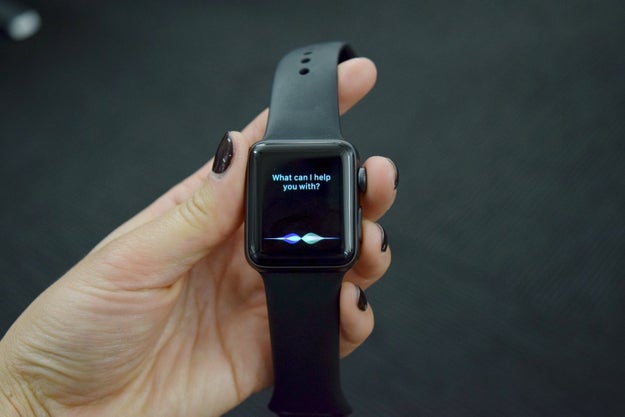
Apple is finally opening up its intelligent personal assistant on the Apple Watch to developers. Tucked away in the latest software update for Apple Watch, watchOS 3.2, are new third-party capabilities for Siri, which brings even more functionality to Apple’s smallest screen. The update is available now.

Google Now on Android phones, Cortana on the Windows Phone, and Alexa on Amazon Echo allowed third-party services long before Siri. Apple’s “intelligent personal assistant” did not support app integrations until last September, with the release of iOS 10 for iPhone, iPad, and iPod – but Siri on watchOS remained limited to opening apps or performing tasks for the smartwatch’s built-in apps, like Clock, Workout, Phone, and Messages.

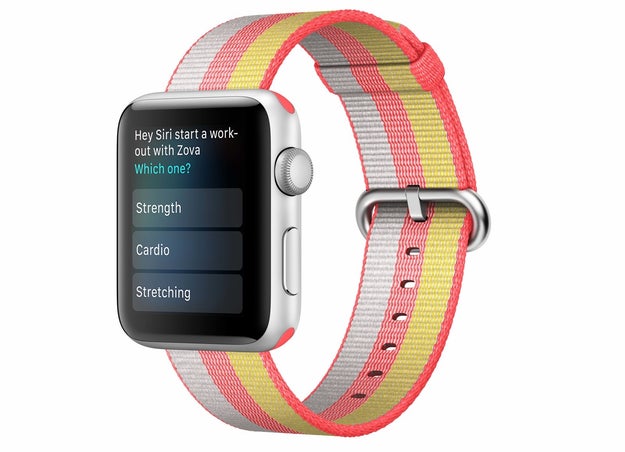
Before the update, you could say “Siri, send a message to Bae,” but you couldn’t say “Siri, send a WhatsApp message to Bae,” in which case Siri would simply offer to launch WhatsApp on your iPhone for you. With the new update, third party app developers will be able to integrate Siri on the watch, but only for fitness, payments, ride-hailing, and messaging.

Since launching third-party “extensions” in iOS 8, Apple’s mobile platforms have been increasingly open to developers. But Siri remains significantly more restricted than its Android, Microsoft, and Amazon counterparts, despite its headstart.

Siri launched in October 2011 and was followed by Google Now in July 2012, and, finally, Alexa and Cortana in 2014. Google’s artificial intelligence software, renamed to “Google Assistant,” can be found on iPhones in the cross-platform Allo app, in the company’s new smart speaker Google Home, in Android Wear smartwatches, and, now, just about any device running the latest version of the Android software. Amazon’s Alexa, on the other hand, was found in nearly every gadget under the Las Vegas sun at this year’s CES. It’s clear that Apple’s Siri needs to work with more services in more places if it hopes to keep up with its competition in the space.

Apple

Here are some developers updating their apps to support Siri once watchOS 3.2 is available:

Lyft is Uber’s main ride-hailing rival in the US. You can say, “Hey Siri, order me a Lyft,” in their app update, coming soon.

Ace Tennis is a new app that helps improve players&; serves. Before training, you&039;ll be able to say, “Hey Siri, start serving with Ace Tennis,” or “Measure my serves with Ace Tennis.”

Fitso is a mobile coach that offers workouts and meal plans based on your fitness goals. You will soon be able to pause and resume Fitso workouts with Siri.

MySwim Pro provides analytics, tracking, and workouts, and you can now ask Siri to start recording a swim without having to fiddle with the screen.

RunGo creates running routes and offers GPS voice navigation. You’ll be able to ask Siri to “pause RunGo” or “start running with RunGo.”

Seven includes a variety of seven-minute workouts. Say, “Hey Siri, start today’s weight loss workout with Seven” to start exercising.

Slopes tracks and records speed, vertical, distance, and lift versus trail time while you ski or snowboard. Siri can now stop, pause, and resume recording while you’re on the mountain.

Streaks Workout helps you establish habits and stay on track. No you can begin and resume workouts you want to record in the app.

Zones helps visualize your exercise intensity, so you know whether or not you’re pushing yourself. Siri lets you start and stop a Zones workout, hands-free.

Zova is an app that provides full-body workouts and coaches you through runs. You can control the workout with Siri.

Quelle: <a href="You Can Now Use Siri To Control Apple Watch Apps“>BuzzFeed