Lyft Is Launching A Commuter Shuttle Service

Lyft, your “woke” ride-hailing option, has started testing a shuttle service in San Francisco and Chicago.

Available only during commute hours (6:30 to 10 a.m. and 4 to 8 p.m. on weekdays), Lyft says its shuttles will cost a fixed price that won&;t be subject to surge pricing during high-demand commuting hours. Lyft says the cost of a Shuttle ride will vary depending on the length of the trip; a screenshot the company shared with BuzzFeed News suggests a benchmark price for a Shuttle ride is $3.50.

Lyft says Shuttle is an extension of its Line service, a cheap and popular carpool feature that is competitive with Uber Pool. “Lyft Line is the future of rideshare, and we often test new features that we believe will have positive impact on our passengers&039; transportation options,” the company statement reads.

A Lyft spokesperson said drivers will earn the same amount driving Shuttle as they do driving Lyft Line.

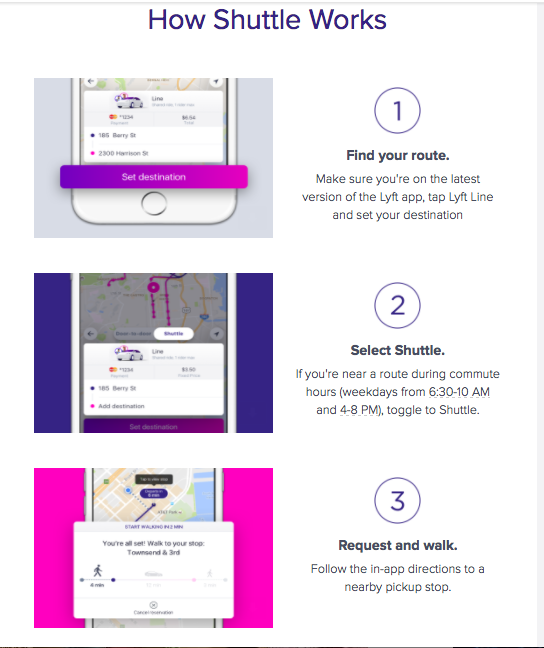
To book a shuttle ride, passengers type in their destination, get matched with a Lyft shuttle route, and walk to the pick up spot. Commuters trying to make the morning meeting can expect Shuttle to estimate how long it will take to walk to the pickup spot, how long the drive will be, and how long it will take to walk from the drop off point to the final destination.

Here’s how the system will work, based on an email Lyft sent to customers.

Here's how the system will work, based on an email Lyft sent to customers.

Lyft Line is a door-to-door ride hail service with extra stops to pick up and drop off fellow carpoolers along the way, but Shuttle has fixed routes, and passengers will need to walk to central points on both ends of the trip.

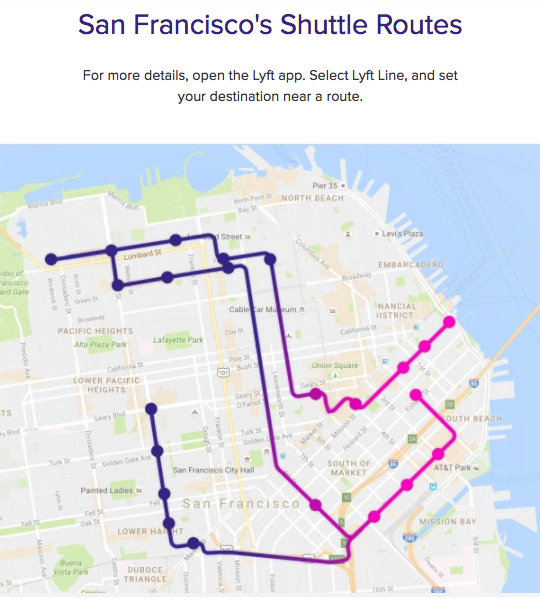
Based on the email, it looks the shuttle routes in San Francisco will primarily serve passengers who live and work in the city&039;s posher neighborhoods (like the Marina and Russian Hill) and the South of Market neighborhood where lots of tech companies have their offices. Lyft says Shuttle will only appear as an option when you launch the app if you&039;re near one of these routes.

If the idea of multiple people sharing a ride from a mutually convenient origin point to mutually convenient destinations along a fixed route sounds a lot like a bus to you, you&039;re right. Ride-hailing services have been working with public transit authorities in various cities, and they&039;ve had aspirations to replace or at least augment mass transit for a while now.

The use of private shuttle buses instead of public transit options is a historically contentious issue in San Francisco, where busloads of tech employees use private, company-funded shuttles to get to and from work in Silicon Valley everyday. But there&039;s also opportunity, and therefore competition, in the commuter transit space; last fall, Ford acquired Chariot, a San Francisco-based shuttle company that is also meant to supplement public transportation.

Quelle: <a href="Lyft Is Launching A Commuter Shuttle Service“>BuzzFeed

Tesla's Valuation Could Overtake Ford Any Day Now

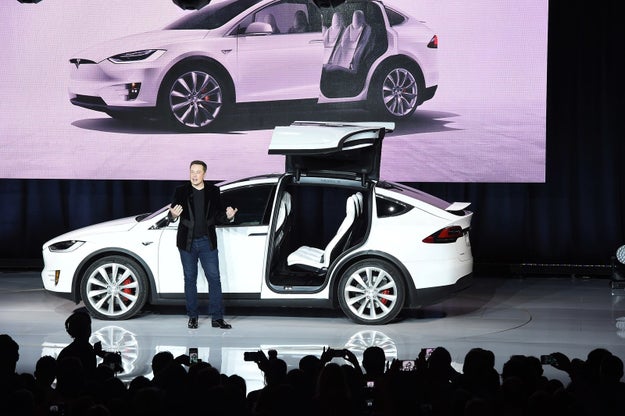
Susana Bates / AFP / Getty Images

Tesla, the loss-making electric car company that sold about 84,000 vehicles last year, is now worth about as much as Ford, which sold 6.7 million cars in 2016 and turned a $4.6 billion profit.

Valuations for the two companies converged in recent months, as Ford slid and Tesla surged. By Wednesday afternoon, Tesla was worth $45.2 billion and Ford&;s was valued at $46.6 billion, according to Bloomberg data. Tesla could overtake Ford any day now, and become America&039;s second most valuable car company. GM, the current number one, is worth about $54 billion.

How wildly optimistic are investors about electric cars? Based on its current market price, Tesla is worth about $600,000 per vehicle sold in 2016, while Ford is worth about $7,000, according to calculations by Barclays analyst Brian Johnson.

Here’s the market valuation of Ford, in light blue, and Tesla, in black, over the last 12 months, up to the close of trading Tuesday

The stock market, of course, is supposed to reflect how investors rate the future of a company, not its past. On that front, Tesla, founded in 2003, has plenty of reasons for optimism. The company is right at the front of the two biggest trends in the industry: electric engines and self-driving cars.

And its revenues are heading up, fast: in 2016 it brought in $7 billion, up 73% on the year prior and up almost 1600% compared to four years ago. Ford&039;s revenue barely moved in 2016 and is up about 14% since 2012.

Analysts expect Tesla&039;s revenues to keep surging as it releases more affordable models — their best guess is the company could sell $19 billion worth of cars in 2018, according to data collected by S&P Global Market Intelligence. Ford, on the other hand, is expected by analysts to see its revenues fall slightly in the same period.

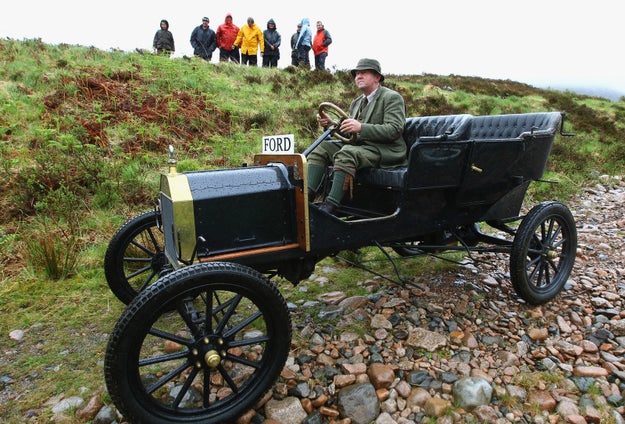
A man driving a 1911 Model T Ford in Scotland.

Jeff J Mitchell / Getty Images

Ford, like other major carmakers, is making sizable investments in self-driving technology and electric vehicles, but none have captured the imagination like Tesla. Imagination or not, Ford is in good shape to benefit from lower gas prices, as buyers move away from sedans and towards Ford&039;s more profitable SUVs and trucks.

But it&039;s easy to see why investors have a crush on Tesla. If the future of of transport involves a network of self-driving electric cars, powered by batteries that charge with solar power, Tesla has set itself up to benefit from it. The company is rushing to build a giant battery factory, and now owns a major solar power business as well.

Tesla stock has risen 22% in the last year, and 714% in the last five years. Ford shares, on the other hand, have fallen by 11% and 5% in the last 1 and 5 years respectively.

Tesla also earned the endorsement of another massive technology company on Tuesday, when Tencent, the Chinese internet conglomerate that runs the social network WeChat, bought 5% of the company. Tencent is a “new adherent” of the “Tesla cult,” Johnson wrote.

Some still have their doubts. Hedge fund manager Jim Chanos has long questioned Tesla&039;s business prospects, and those of its recently acquired solar energy business, Solar City, saying that the loss-making car company would constantly have to take new money from shareholders to fund its losses.

Johnson said in February that the jump in Tesla stock (the shares fell after the election and started rising again in December) had “less to do…with anything around the near-term financials, and more to do with the nearly superhero status of Elon Musk.”

Quelle: <a href="Tesla&039;s Valuation Could Overtake Ford Any Day Now“>BuzzFeed

Here Are The 15 Most Batshit Things People Have Lost In Ubers

Here Are The 15 Most Batshit Things People Have Lost In Ubers

Uber released a series of ~fascinating~ lists today about what people lose in Ubers and when they lose it.

Giphy

The top five most commonly lost items are what you&;d expect.

William Andrew / Getty Images

  1. Phone
  2. Ring
  3. Keys
  4. Wallet
  5. Glasses

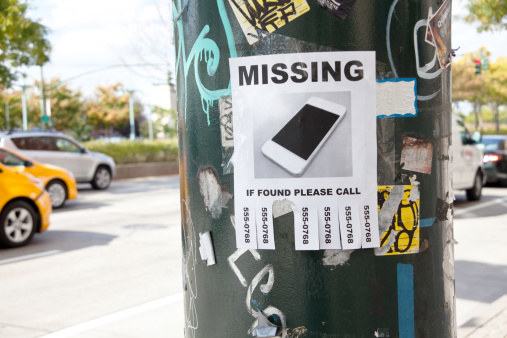
Getting back your phone seems tricky, given that Uber is an app. But it&039;s possible.

There are certain cities where people are more prone to losing their stuff:

Giphy

  1. Los Angeles
  2. New York City
  3. San Francisco

Tbh, though, these just seem like the cities where people take the most Ubers.

In 2016, a lot of people left something behind in their Uber on Halloween weekend:

Giphy

More people were absent-minded on October 30 and December 11 than any other days of the year. Saturday and Sunday are the days when people lose the most stuff — again, these are the days when it seems people take Uber most frequently. Uber did say that it sees an increase in lost plane tickets on Saturdays and lost wedding dresses on Sundays.

The real treasure, though, is the company&039;s roundup of the “most unique” items abandoned in Ubers:

&; We have some questions.

Vera Storman / Getty Images

  1. Lobster (was it still alive when you got it back?)
  2. Potted plant (same question as the lobster)
  3. “Valuable Nordic walking poles” (how much $$ we talkin&039;?)
  4. Lottery ticket (same question)
  5. “Sweet potato care package” (“who&039;s my little sweet potato?” —your mom, probably)
  6. Rubber mallet (who are you, the Joker?)
  7. Laser (What kind? For tag, for science, or for annoying people in a movie theater?)
  8. Hot Cheetos (honestly girl they&039;re like $1 plz chill?)
  9. Smoke machine (it&039;s lit?)
  10. Bullet proof vest (…um, what were going to use that for?)
  11. “Meat packet” (…what?)
  12. “Expensive slipper” (hope Cinderella wasn&039;t mad?)
  13. Diary (did the driver read it?)
  14. Arm sling (you took it off and forgot your arm was broken?)
  15. “Money bag” (you used an Uber as a getaway car for a bank robbery?)

Uber wouldn&039;t tell us what happened when people asked for the items back.

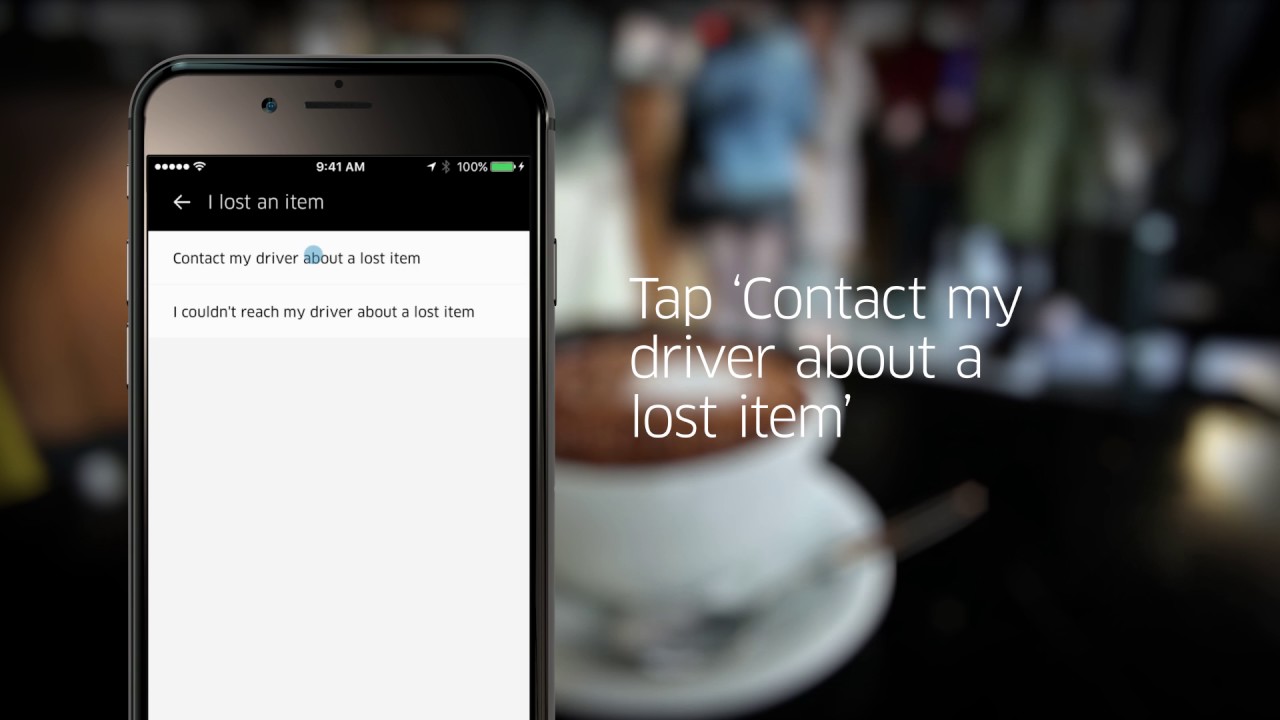
Just FYI, here&039;s how you can get your lobster back if you leave it in an Uber, ya klutz:

youtube.com

Quelle: <a href="Here Are The 15 Most Batshit Things People Have Lost In Ubers“>BuzzFeed

CloudWatch Alarms releases two new alarm configuration settings

Today, Amazon CloudWatch is excited to announce that CloudWatch Alarms now has two new settings to configure alarms on metrics with sparse data or with low sample counts. With the first setting, you have the option to treat missing metric data as good (alarm threshold not breached), bad (alarm threshold breached), maintain the alarm state or use the current default treatment. For example, you can use the treat missing data as good setting for alarms on HTTPCode_ELB_5XX_Count metric. This will ensure that you get alerted only when there are consecutive ELB server errors and not when the errors are sporadic.
Quelle: aws.amazon.com

Use BigDL on HDInsight Spark for Distributed Deep Learning

Deep learning is impacting everything from healthcare, transportation, manufacturing, and more. Companies are turning to deep learning to solve hard problems like image classification, speech recognition, object recognition, and machine translation. In this blog post, Intel’s BigDL team and Azure HDInsight team collaborate to provide the basic steps to use BigDL on Azure HDInsight.  

What is Intel’s BigDL library?

In 2016, Intel released its BigDL distributed Deep Learning project into the open-source community, BigDL Github. It natively integrates into Spark, supports popular neural net topologies, and achieves feature parity with other open-source deep learning frameworks. BigDL also provides 100+ basic neural networks building blocks allowing users to create novel topologies to suit their unique applications. Thus, with Intel’s BigDL, the users are able to leverage their existing Spark infrastructure to enable Deep Learning applications without having to invest into bringing up separate frameworks to take advantage of neural networks capabilities.

Since BigDL is an integral part of Spark, a user does not need to explicitly manage distributed computations. While providing a high-level control “knobs” such as number of compute nodes, cores, and batch size, a BigDL application leverages stable Spark infrastructure for node communications and resource management during its execution. BigDL applications can be written in either Python or Scala and achieve high performance through both algorithm optimization and taking advantage of intimate integration with Intel’s Math Kernel Library (MKL). Check out Intel’s BigDL portal for more details.  

Azure HDInsight

Azure HDInsight is the only fully-managed cloud Hadoop offering that provides optimized open source analytic clusters for Spark, Hive, MapReduce, HBase, Storm, Kafka, and R Server backed by a 99.9% SLA. Other than that, HDInsight is an open platform for 3rd party big data applications such as ISVs, as well as custom applications such as BigDL.  

Through this blog post, BigDL team and Azure HDInsight team will give a high-level view on how to use BigDL with Apache Spark for Azure HDInsight. You can find a more detailed step to use BigDL to analyze MNIST dataset in the engineering blog post.  

Getting BigDL to work on Apache Spark for Azure HDInsight

BigDL is very easy to build and integrate. There are two major steps:

Get BigDL source code and build it to get the required jar file
Use Jupyter Notebook to write your first BigDL application in Scala 

Step 1: Build BigDL libraries

The first step is to build the BigDL libraries and get the required jar file. You can simply ssh into the cluster head node, and follow the build instructions in BigDL Documentation. Please be noted that you need to install maven in headnode to build BigDL, and put the jar file (dist/lib/bigdl-0.1.0-SNAPSHOT-jar-with-dependencies.jar) to the default storage account of your HDInsight cluster. Please refer to the engineering blog for more details.  

Step 2: Use Jupyter Notebook to write your first application

HDInsight cluster comes with Jupyter Notebook, which provides a nice notebook-like experience to author Spark jobs. Here is a snapshot of a Jupyter Notebook running BigDL on Azure Spark for Apache HDInsight. For detailed step-by-step example of implementing a popular MNIST dataset training using LeNet model, please refer to this Microsoft’s engineering blog post. For more details on how to use Jupyter Notebooks on HDInsight, please refer to the documentation.

BigDL workflow and major components

Below is a general workflow of how BigDL trains a deep learning model on Apache Spark: As shown in the figure, BigDL jobs are standard Spark jobs. In a distributed training process, BigDL will launch spark tasks in executor (each task leverages Intel MKL to speed up training process).

A BigDL program starts with import com.intel.analytics.bigdl._ and then initializes the Engine, including the number of executor nodes and the number of physical cores on each executor.

If the program runs on Spark, Engine.init() will return a SparkConf with proper configurations populated, which can then be used to create the SparkContext. For this particular case, the Jupyter Notebook will automatically set up a default spark context so you don’t need to do the above configuration, but you do need to configure a few other Spark related configuration which will be explained in the sample Jupyter Notebook.  

Conclusion

In this blog post, we have demonstrated the basic steps to set up a BigDL environment on Apache Spark for Azure HDInsight, and you can find a more detailed step to use BigDL to analyze MNIST dataset in the engineering blog post “How to use BigDL on Apache Spark for Azure HDInsight.” Leveraging BigDL Spark library, a user can easily write scalable distributed Deep Learning applications within familiar Spark infrastructure without an intimate knowledge of the configuration of the underlying compute cluster. BigDL and Azure HDInsight team have been collaborating closely to enable BigDL in Apache Spark for Azure HDInsight environment.

If you have any feedback for HDInsight, feel free to drop an email to hdifeedback@microsoft.com. If you have any questions for BigDL, you can raise your questions in BigDL Google Group.

Resources

Learn more about Azure HDInsight
Aritificial Intelligence Software and Hardware at Intel
BigDL introductory video

Quelle: Azure