When The Senate Silenced Elizabeth Warren Last Night It Gave Her A Massive Day On Social

When The Senate Silenced Elizabeth Warren Last Night It Gave Her A Massive Day On Social

Sen. Elizabeth Warren was forced to stop talking in the Senate yesterday, but her voice is now booming on social media.

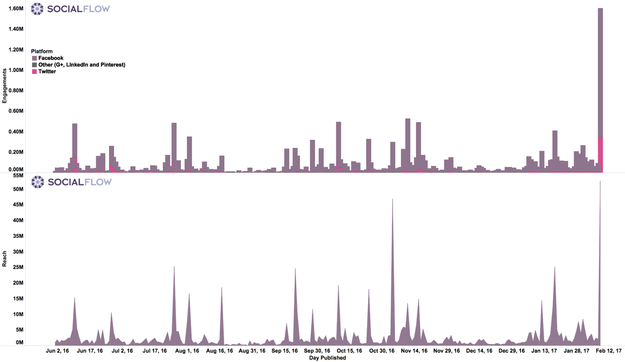
Over the past 24 hours, the Senator has been discussed more on social media than she had been in any single day since at least June 16 2015, according to the social analytics firm SocialFlow.

The data shows that Senate Majority Leader Mitch McConnell&;s use of a rule to silence Warren instead sent her words booming across the internet. McConnell invoked the rule, against assailing the “conduct or motive” of a senator, as Warren argued against Sen. Jeff Sessions in his nomination to be attorney general.

“When you look at a typical day in the social media life of Elizabeth Warren and look at what happened over the past 24 hours, she went through the roof,” SocialFlow spokesperson Mark White said in an interview. “It made her a superstar.”

Discussion of Elizabeth Warren spikes following her Senate showdown with Mitch McConnell

SocialFlow

SocialFlow, software that many publishers use to manage their social media presence, said 1,124 articles about Warren were posted to the social platforms it tracks on Wednesday.

Still, Warren has a long way to go to catch up to President Trump. In January, SocialFlow registered more than 2 million posts to social media platforms, and Trump, White said, is regularly the subject of many thousands of them each day.

Warren also went live on Facebook after walking out of the Senate chamber, reading the anti-Sessions letter penned by Coretta Scott King decades ago that she was prevented from reading on the Senate floor. That video has been viewed nearly 9 million times.

View Video ›

Facebook: video.php

LINK: Why Mitch McConnell Used A Senate Rule To Silence Elizabeth Warren

Quelle: <a href="When The Senate Silenced Elizabeth Warren Last Night It Gave Her A Massive Day On Social“>BuzzFeed

Oracle Employees Are Asking The Company To Oppose Trump’s Immigration Order

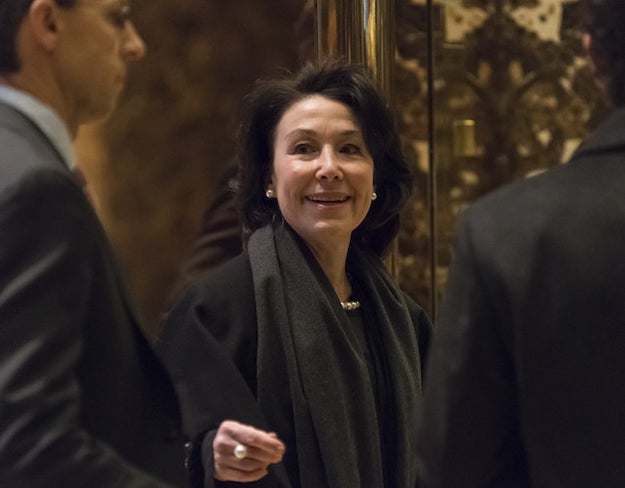
Oracle CEO Safra Catz is seen in the lobby of Trump Tower in New York, NY, USA on December 14, 2016. Credit: Albin Lohr-Jones / Pool via CNP /MediaPunch/IPX

Albin Lohr-jones / Albin Lohr-Jones/MediaPunch/IPx

Oracle employees concerned about the company&;s silence on President Trump’s executive order on immigration are circulating a petition on the issue. So far, 366 individuals have signed the letter, asking Oracle — whose CEO, Safra Catz, served as an advisor on Trump’s transition team — to add its name to an amicus brief in support of a lawsuit against the order by Washington state Attorney General Bob Ferguson.

“We want them to stand with the other leaders in tech that have taken a firm stance on this,” said Oracle employee Irene Scher, who posted the petition to Coworker.org. “Oracle has been built on the backs of many immigrants. The company is incredibly diverse. That’s one of my favorite things about it, and I think it makes sense for them to get involved as others have.”

Neither Oracle nor IBM — whose CEO serves on Trump’s economic advisory council — has signed on with a coalition of 130 tech companies opposing President Trump’s immigration order, which is currently on hold as its legality is debated in appellate court.

Employees at both IBM and Oracle have resigned over ties between their CEOs and Trump.

Created by Oracle employees Rachel Kane, Irene Scher and Lara Beers, the petition currently has just 377 signatures — small compared to the over 1,800 that have amassed beneath the IBM petition, and minuscule compared to Oracle’s global staff of 140,000. But the three are hopeful that it will gather momentum and carry concerns about Trump’s immigration order to management’s ears.

The Oracle petition, which is being circulated internally and on Coworker.org, is gaining momentum among employees who&039;ve been trying to send a similar message of concern to the company’s leadership. “What I&039;ve heard from other employees is, because we have people in leadership who are immigrants themselves, it’s an opportunity for Oracle to be a leader to stand up and talk about this executive order being so far reaching and broad,” Beers said.

The petition’s authors cited Tesla and SpaceX founder Elon Musk as an example of a tech leader who agreed to advise Trump, but has nonetheless added Tesla and SpaceX to the list of tech companies that oppose the immigration order. “It was inspiring to see that Elon Musk, despite being on the transition team, signed on behalf his companies. So we’re hopeful Oracle will take a similar stance,” Scher said.

Even if the company doesn’t take a stance, Beers hopes the petition will at least elicit greater transparency between management and employees. “I think it would be great to know why they aren’t joining our peers,” she said, “why Oracle feels we shouldn’t be joining them and standing against the executive order.”

Oracle did not respond to a request for comment.

Quelle: <a href="Oracle Employees Are Asking The Company To Oppose Trump’s Immigration Order“>BuzzFeed

Pittsburgh Mayor Says He Is In A “Cooling Off” Period With Uber

A self-driving Uber test car in Pittsburgh.

Afp / AFP / Getty Images

Pittsburgh Mayor Bill Peduto – whose city was the first to host Uber’s self-driving car pilot program – says he is in a “cooling off” period with the ride-hail giant and is “opening up” to other autonomous vehicle companies.

Peduto told BuzzFeed News that in the last year and a half of working with Uber, the city has catered to the company’s requests and welcomed its self-driving pilot. Now, Peduto says, the city is looking for something in return.

Peduto doesn’t have a list of specific demands, but says he expects the company to be a better partner with the city. “Our vision for Pittsburgh needs to be your vision for Pittsburgh as well,” he told the company.

“You’ve already given your asks and we delivered,” Peduto told BuzzFeed News during the NewShift Co Forum in San Francisco on Wednesday, referencing Uber. “Now these are our asks. Every time we ask, you’re saying no.”

Peduto, who spoke on Wednesday in San Francisco at the NewShift Co Forum, an event that brought tech leaders and policy wonks together to discuss both business and the current political climate, said he was not planning to visit Uber’s headquarters while in the city.

In a statement to BuzzFeed News, Uber said it is “incredibly proud of our work in Pittsburgh.”

“Since we set up shop in 2015, we’ve brought hundreds of high tech jobs to the city and invested millions of dollars in the local economy,” the statement said.

Pittsburgh isn’t satisfied with what Peduto has called a “one-way” relationship with Uber, the mayor told the Pittsburgh Post-Gazette last week. “I need to see more interest from them in our communities, both locally and internationally,” he said. Peduto said he does not plan to ask Uber to leave Pittsburgh. (The company employs at least 700 people at its Advanced Technologies Center there, after poaching researchers away from Carnegie Mellon University.) But Pittsburgh is “opening up” to other autonomous vehicle companies.

“We’ve had conversations with several other industry leaders,” Peduto said. Pittsburgh is, after all, home to Carnegie Mellon’s robotics research centers, and has served as a testing ground for autonomous vehicles for more than a decade. “We can bring other companies in, and we will.”

For example, Peduto told BuzzFeed the city turned to Uber for financial support for an autonomous road project it planned to propose to help win a federal grant contest. “They balked at it and came back with a proposal simply to benefit them, which was ridiculous,” Peduto said. (Emails obtained by PennLive show Pittsburgh asked Uber to pay $25 million to help fund the project, and in exchange offered five years of exclusive rights to operate along a proposed busway.)

Uber could also demonstrate its involvement in the community by creating a coding academy in Pittsburgh, Peduto said. “Create models in the cities you’re partnering with to provide opportunity to all,” he said.

About three months after Uber began putting passengers in self-driving cars in Pittsburgh, it expanded the pilot program to San Francisco. But on the same day it launched in San Francisco, a state regulator threatened legal action against the company for failing to obtain the proper permits, and then revoked Uber’s car registrations, halting the program. Uber then shipped its cars to Arizona.

Peduto said he last spoke with Uber on Monday.

“I’m hoping, and the conversation we had with them, is that 2017 will be much better than 2016,” he said.

Quelle: <a href="Pittsburgh Mayor Says He Is In A “Cooling Off” Period With Uber“>BuzzFeed

Alongside Trump, Intel Reannounces Arizona Factory It Promised To Create During Obama Years

Intel CEO Brian Krzanich visited President Trump at the White House Wednesday and announced a $7 billion investment in a semiconductor factor in Chandler, Arizona that he claims will employ 3,000 high-wage workers at the height of production.

Dubbed Fab 42, Intel&;s Chandler factory will build some of “the most advanced 7-nanometer semiconductor chips on the planet,” Krzanich said, adding that the company&039;s investment in the factory is also an investment in American manufacturing. Intel — which announced layoffs of some 12,000 employees in 2016said the facility will create “approximately 3,000 high-tech, high-wage jobs” and “more than 10,000 total long-term jobs in Arizona.”

“We&039;re very happy and I can tell you the people of Arizona are very happy,” President Trump said of Intel&039;s factory announcement.

Today marks the second time Intel has announced Fab 42 alongside a sitting US President. In February of 2011, the company announced Fab 42 during a visit to an Intel facility by President Obama. At that time it said the facility would “create thousands of construction and permanent manufacturing jobs,” with a scheduled completion date in 2013.

Asked about the timing of Intel&039;s investment at the White House Wednesday, Krzanich said that Intel held back on “doing this investment until now.” Asked why Intel chose to make the announcement at the White House, he said, “It&039;s really in support of the tax and regulatory policies that we see the administration pushing forward,” according to the pool report.

In an email to Intel employees, Krzanich explained the company&039;s rationale for the Chandler factory investment. “We’ve maintained this U.S.-based manufacturing even
though approximately 80 percent of our product is sold outside the United States —we’re one of the top 5 exporters and top 2 R&D spenders in the U.S. — and despite the fact that from a tax and regulatory position we have been disadvantaged relative to the rest of the world where we compete,” Krzanich wrote.

Last summer, Krzanich scheduled a political event in the bay area with then-candidate Donald Trump, but claims he cancelled it once it became a campaign fundraiser. Krzanich is also one of the few tech industry leaders who advises the president. Along with Elon Musk and Michael Dell, Krzanich is a member of the president&039;s manufacturing council.

And while Intel&039;s chief appears to be an ally in promoting Trump&039;s job-centric agenda, Intel is one of 130 technology companies who have joined a friend-of-the-court brief opposing the president&039;s refugee and travel ban.

Intel has not yet responded to a request for comment.

Quelle: <a href="Alongside Trump, Intel Reannounces Arizona Factory It Promised To Create During Obama Years“>BuzzFeed

Announcing general availability of Managed Disks and larger Scale Sets

I love it that so many of you enjoy both our Infrastructure-as-a-service (IaaS) and Platform-as-a-service (PaaS) services. In fact, over 55% of our IaaS customers also benefit from PaaS services. With this deep experience in both PaaS and IaaS, we can take insights from our PaaS services, like the agile benefit of automated management and scale, and apply it to improve our infrastructure services. Today, I am excited to announce one such insight with the general availability of Managed Disks. With this PaaS-like support, you no longer need to be concerned with the complexity of storage management nor worry about storage as you scale. Yet, you still have the full power and control you expect and love with Azure VMs – a "PaaS bridge" on our IaaS VMs.

This not only simplifies the management of every VM created, it is exponentially helpful when deploying at cloud-scale with VM Scale Sets. Azure VM scale sets (VMSS) are a powerful way to reliably deploy massive cloud infrastructure without the overhead of coordinating multiple resources. With Scale sets, you can simplify the management of your applications with automated application scale and load-balancer integration. Today’s announcement extends these platform features to include automated disk management, enabling simpler storage management and even larger scale. With Managed Disks, you can now attach data disks to every instance and create a VM scale set of up to 1,000 VMs, a 10X increase.

These capabilities are just the beginning to bring the agility of PaaS to the comfort of IaaS. I look forward to announcing additional capabilities coming later this year, including OS patching support, application lifecycle integration, application health monitoring, and load-balancer app health integration.

The sections below elaborate on the key benefits of Managed Disks and VM Scale Sets.

Management

Managed Disks free you from storage account scale management.  Managed Disks are Azure Resource Manager (ARM) resources, can be fully templatized, and support both Standard and Premium Disk types. You only need to specify the size and type of the disk you want. You can create thousands of Managed Disks without worrying about the storage account and without having to specify any disk details. You can create a blank disk, create one from a VHD in a storage account, or create one from an image as part of VM creation. You can even migrate an existing Azure Resource Manager VM to a VM with managed disks with just a single reboot. You don’t have to worry about reconfiguring your networking or your security rules to start using the powerful new capability.

In addition to the new Managed Disk resource, we also have added Snapshots and Images as Azure Resource Managed resources.

Snapshot and Backup

With today’s launch, you can also take a Disk Snapshot and maintain it as an Azure Resource Manager resource. With snapshots, you can back up your Managed Disks at any point-in-time. These Snapshots exist independent of the source disk and can be used to create new Managed Disks. You can also use the Azure Backup service with Managed Disks to create a backup job with time-based backups, easy VM restoration, and backup retention policies.

Image

Managed Disks also support creating a managed custom Image. You can create an Image from your custom VHD in a storage account or directly from a running VM. This captures in a single Image, all Managed Disks associated with a running Virtual Machine, including both the OS and Data Disks. This even enables deploying a large VM Scale Set with hundreds of VMs using your custom Image, without the need to copy to or manage any storage accounts.

“The new Managed Disks significantly reduces code complexity and simplifies the management of disks. Managed Disks will enable us to expand upon our current database-as-a-service offering on Azure with new MongoDB plan types to help meet the demanding workloads of our users.” – Sean Hyrich, mLab

Creating a VM

Using the Azure PowerShell or AZ CLI, you can easily create a VM with Managed Disks. Below is an example of a CLI command to create a VM with a managed OS disk and a 128 GB managed data disk. You no longer specify a Storage account for either the OS disk or data disk.

$ az vm create -g myResourceGroup -n myLinuxVM –image RHEL –size Standard_DS3_v2 –data-disk-sizes-gb 128

You can also easily create a VM with Managed Disks in the portal by selecting, “Use managed disks:”

Here is an example of creating a Windows VM with Managed OS disk using Azure PowerShell. You will notice that now you don’t specify a Storage account. You can also programmatically create a virtual machine with Managed Disks using Azure Management Libraries for Java and .NET.

Scale

Today, you can now deploy up to 1,000 VMs in a Scale Set based on platform images, a 10x scale improvement. This enables you to deploy and manage a single cluster, like a large-scale Hadoop, DataSynapse, Cassandra, or IIS deployment. Additionally, if you need load balancing at this scale, you can deploy with an Azure Application Gateway for layer-7 load-balancing.

“Elasticsearch, the leading open source data search solution, allows companies to explore anywhere from gigabytes to petabytes of data in real-time. Managed Disks and expanded VM Scale Sets will help Azure users deploy Elasticsearch clusters at very large scale” – Martijn Laarman, Elastic Software Developer

Here is how you can easily create a 1,000 VM scale set:

$ az vmss create -g myResourceGroup -n myVMSSName –image ubuntuLTS –instance-count 1000

Application support for scale sets

VM scale sets now support attached data disks. When you define a scale set you can create as many attached disks as the VM size supports. This allows more data-intensive analytics and search applications to take advantage of the management and scalability benefits of scale sets.

Security

Because Managed Disks, Snapshots, and Images are Azure Resource Manager resources, you can now apply granular access control using Azure RBAC on each. Managed Disks expose a variety of operations such as read, write (create/update), delete, and export. You can now grant access to only the operations that a person needs to perform his/her job. You can even create custom roles and only grant the permissions to best suit your requirements.

You can also encrypt Managed Disks using Azure Disk Encryption with Customer-managed or Microsoft-managed keys.

"Through providing disk as a managed logical resource, Managed Disk brings our customers an enhanced, easy to use and more secure experience. We can now define role-based access controls for the Disks." – Jesper Jensen, Solvo IT

Migration

Managed Disks comes with easy migration capability from existing unmanaged Azure Resource Manager VMs to Managed Disks VMs without the need to recreate the VM, preserving the configuration and security of that VM. After initiating migration, the VM become available immediately after rebooting. You have full control of the migration and can choose to migrate one VM at a time or plan the migration to be scripted on all of your VMs at once.

You can now also migrate your Managed Disks from Standard to Premium in an easy way. With Managed Disks, if you stop your VM, you can change the account type of your disks without deleting or reconfiguring the VM. The changed disks become available immediately to restart your VM. Here are more details on how to execute the above migration options.

“Performance limits and proper naming to distribute accounts in different stamps need to be considered for a proper design. With Managed Disks, we’ve seen the light, they put to rest all these concerns and let us and our customers concentrate on our business. That’s not all, Managed Disks come with the migration capability, where I can migrate my Virtual Machines to Managed Disks with a single reboot.” –Daniele Grandini, Progel

Pricing

You can visit the Azure Storage Pricing page for more details for Managed Disks. The pricing of Premium Managed Disks is the same as Premium Unmanaged Disks. Standard Managed Disks offer a slightly different pricing model as Standard Unmanaged Disks with pricing based upon the provisioned disk size. Given the change, we are offering a 50% promotional discount on Standard Managed Disks for the first six months.

Availability Regions

As of today, Managed Disks are available in all the global regions. Sovereign clouds will have this support in the coming weeks. Discover the Availability of Managed Disks by regions.

Getting Started

I hope you enjoyed this post and really enjoy this new service offering bringing the agility and ease of PaaS management and scale to your IaaS VMs. Give the service a try! We would love to hear your feedback and comments. Deploying infrastructure has never been so much fun.

See ya around,

Corey


Learn more about Managed Disks:

Getting started
Azure Management Libraries for Java
Azure Management Libraries for .NET
Azure CLI V2
Premium Managed Disks
Standard Managed Disks
Managed Disks FAQ
VM Scale Set overview
Migrate to Managed Disks
Azure VM scale sets and attached data disks

Quelle: Azure

Azure CLI: Managed Disks

Today, we announce Azure CLI support for Azure Managed Disks!

Microsoft announced the general availability of Azure Managed Disks – it simplifies the management and scaling of Virtual Machines.  The Managed Disks experience in Azure CLI is idomatic to the CLI experience in other cross-platform tools, and we know you will love it!

You can use the Azure CLI to administer Managed Disks: check out the install guide for information on how to install or update the Azure CLI.

Standalone Managed Disks

You can easily create standalone Managed Disks in a variety of ways.

Create an empty Managed Disk.

az disk create
-n myDisk
-g myResourceGroup
–size-gb 20

Create a Managed Disk from Blob Storage.

az disk create
  -g myResourceGroup
  -n myDisk
  –source https://bg09.blob.core.windows.net/vm-images/non-existent.vhd

Create a Managed Disk from an existing image.

az disk create
-n myDisk
-g myResourceGroup
​ –source <…id…>/Microsoft.Compute/disks/mdvm1_OsDisk_1_<guid>

It&;s as easy as that, and each of these disks can be subsequently attached to a Virtual Machine (see below).

Virtual Machine with Managed Disks

You can create a Virtual Machine with an implicit Managed Disk for a specific disk image.  Creation is simplified with implicit creation of managed disks without specifying all the disk details. You do not have to worry about creating and managing Storage Accounts.

A Managed Disk is created implicitly when creating VM from an OS image in Azure.

az vm create
  -n myVm
  -g myResourceGroup
  –generate-ssh-keys
  –image UbuntuLTS

This Managed Disk is created by default, and you can easily verify its ID by using the –query feature of Azure CLI.

az vm list
  –query "[].{ name:name, os:storageProfile.osDisk.managedDisk.id }"
  -o tsv

As mentioned previously, you can easily attach a previously provisioned Managed Disk.

az vm disk attach
  –vm-name myVm
  -g myResourceGroup
  –disk <…id…>/Microsoft.Compute/disks/testmd

Create a new VM Scale Set with new resources (Virtual Machines and Managed Disks) from an image.

az vmss create
  -n myVmScaleSet
  -g myResourceGroup
  –admin-username <user>
  –admin-password <password>
  –instance-count 4
  –image Win2012R2Datacenter

Other Operations with Managed Disks

Resizing a managed disk from the Azure CLI is easy and straightforward.

az disk update
  -n myDisk
  -g myResourceGroup
  -z 25

You can also update the Storage Account type of the Managed Disks.

az disk update
  -n myDisk
  -g myResourceGroup
  –sku Standard_LRS

Create an image from Blob Storage.

az image create
  -g myResourceGroup
  -n myImage
  –os-type Linux
  –source <…id…>/Microsoft.Compute/disks/osdisk_<guid>

Create a snapshot of a Managed Disk that is currently attached to a Virtual Machine.

az snapshot create
  -g myResourceGroup
  -n mySnapshot
  –source <…id…>/Microsoft.Compute/disks/mdvm1_OsDisk_1_<guid>

Try It

You can run the examples above as they appear (with the proper values, of course). Give it a try and let us know what do you think (in the comments below).  Azure CLI has more exciting services on the way, and we are excited to hear your thoughts on how the idiomatic experience integrates with the shell tools you know and love.
Quelle: Azure

.NET: Manage Azure Managed Disks

We are announcing beta 5 of the Azure Management Libraries for .NET. Beta 5 adds support for Azure Managed Disks.

Today, Microsoft announced the general availability of Azure Managed Disks – it simplifies the management and scaling of Virtual Machines. Specify the size and disk you want to use for Virtual Machines. You do not have to worry about creating and managing Storage Accounts.

You can use the Azure Management Libraries for .NET to manage Managed Disks.

https://github.com/Azure/azure-sdk-for-net/tree/Fluent

You can download beta 5 from:

Create a Virtual Machine with Managed Disks

You can create a Virtual Machine with an implicit Managed Disk for the operating system and explicit Managed Disks for data using a define() … create() method chain. Creation is simplified with implicit creation of managed disks without specifying all the disk details. You do not have to worry about creating and managing Storage Accounts.

var linuxVM1 = azure.VirtualMachines
.Define(linuxVM1Name)
.WithRegion(Region.USEast)
.WithNewResourceGroup(rgName)
.WithNewPrimaryNetwork("10.0.0.0/28")
.WithPrimaryPrivateIpAddressDynamic()
.WithNewPrimaryPublicIpAddress(linuxVM1Pip)
.WithPopularLinuxImage(KnownLinuxVirtualMachineImage.UbuntuServer16_04_Lts)
.WithRootUsername(“tirekicker”)
.WithSsh(sshkey)
.WithNewDataDisk(100)
.WithSize(VirtualMachineSizeTypes.StandardD3V2)
.Create();

You can download the full, ready-to-run sample code.

Create a Virtual Machine Scale Set with Managed Disks

You can create a Virtual Machine Scale Set with implicit Managed Disks for operating systems and explicit Managed Disks for data using a define() … create() method chain.

var vmScaleSet = azure.VirtualMachineScaleSets
.Define(vmScaleSetName)
.WithRegion(Region.USEast)
.WithExistingResourceGroup(rgName)
.WithSku(VirtualMachineScaleSetSkuTypes.StandardD5v2)
.WithExistingPrimaryNetworkSubnet(network, "subnet1")
.WithExistingPrimaryInternetFacingLoadBalancer(publicLoadBalancer)
.WithoutPrimaryInternalLoadBalancer()
.WithPopularLinuxImage(KnownLinuxVirtualMachineImage.UbuntuServer16_04_Lts)
.WithRootUsername("tirekicker")
.WithSsh(sshkey)
.WithNewDataDisk(100)
.WithNewDataDisk(100, 1, CachingTypes.ReadWrite)
.WithNewDataDisk(100, 2, CachingTypes.ReadOnly)
.WithCapacity(3)
.Create();

You can download the full, ready-to-run sample code.

Create an Empty Managed Disk and Attach It to a Virtual Machine

You can create an empty Managed Disk using a define() … create() method chain.

var dataDisk = azure.Disks.Define(diskName)
.WithRegion(Region.USEast)
.WithExistingResourceGroup(rgName)
.WithData()
.WithSizeInGB(50)
.Create();

You can attach the empty Managed Disk to a Virtual Machine using another define() … create() method chain.

var linuxVM2 = azure.VirtualMachines.Define(linuxVM2Name)
.WithRegion(Region.USEast)
.WithExistingResourceGroup(rgName)
.WithNewPrimaryNetwork("10.0.0.0/28")
.WithPrimaryPrivateIpAddressDynamic()
.WithNewPrimaryPublicIpAddress(linuxVM2Pip)
.WithPopularLinuxImage(KnownLinuxVirtualMachineImage.UbuntuServer16_04_Lts)
.WithRootUsername("tirekicker")
.WithSsh(sshkey)
.WithNewDataDisk(100)
.WithNewDataDisk(100, 1, CachingTypes.ReadWrite)
.WithExistingDataDisk(dataDisk)
.WithSize(VirtualMachineSizeTypes.StandardD3V2)
.Create();

You can download the full, ready-to-run sample code.

Update a Virtual Machine

You can detach Managed Disks and attach new Managed Disks using an update() … apply() method chain.

linuxVM2.Update()
.WithoutDataDisk(2)
.WithNewDataDisk(200)
.Apply();

You can download the full, ready-to-run sample code.

Create a Virtual Machine From a Specialized VHD

You can create a Virtual Machine from a Specialized VHD using a define() … create() method chain.

var linuxVM4 = azure.VirtualMachines.Define(linuxVmName3)
.WithRegion(Region.USEast)
.WithExistingResourceGroup(rgName)
.WithNewPrimaryNetwork("10.0.0.0/28")
.WithPrimaryPrivateIpAddressDynamic()
.WithoutPrimaryPublicIpAddress()
.WithSpecializedOsUnmanagedDisk(specializedVhd, OperatingSystemTypes.Linux)
.WithSize(VirtualMachineSizeTypes.StandardD3V2)
.Create();

You can download the full, ready-to-run sample code.

Create a Virtual Machine Using a Custom Image

You can create a custom image from a de-allocated and generalized Virtual Machine using a define() … create() method chain.

var virtualMachineCustomImage = azure.VirtualMachineCustomImages
.Define(customImageName)
.WithRegion(Region.USEast)
.WithExistingResourceGroup(rgName)
.FromVirtualMachine(linuxVM) // from a de-allocated and generalized Virtual Machine
.Create();

You can create a Virtual Machine from the custom image using another define() … create() method chain.

var linuxVM4 = azure.VirtualMachines.Define(linuxVM4Name)
.WithRegion(Region.USEast)
.WithExistingResourceGroup(rgName)
.WithNewPrimaryNetwork("10.0.0.0/28")
.WithPrimaryPrivateIpAddressDynamic()
.WithoutPrimaryPublicIpAddress()
.WithLinuxCustomImage(virtualMachineCustomImage.Id)
.WithRootUsername(userName)
.WithSsh(sshkey)
.WithSize(VirtualMachineSizeTypes.StandardD3V2)
.Create();

You can download the full, ready-to-run sample code.

Create a Virtual Machine Using Specialized Disks From Snapshots

You can create a Managed Disk Snapshot for an operating system disk.


// Create a Snapshot for an operating system disk
var osDisk = azure.Disks.GetById(linuxVM.OsDiskId);
var osSnapshot = azure.Snapshots.Define(managedOSSnapshotName)
.WithRegion(Region.USEast)
.WithExistingResourceGroup(rgName)
.WithLinuxFromDisk(osDisk)
.Create();

// Create a Managed Disk from the Snapshot for the operating system disk
var newOSDisk = azure.Disks.Define(managedNewOSDiskName)
.WithRegion(Region.USEast)
.WithExistingResourceGroup(rgName)
.WithLinuxFromSnapshot(osSnapshot)
.WithSizeInGB(100)
.Create();

You can create a Managed Disk Snapshot for a data disk.

// Create a Snapshot for a data disk
var dataSnapshot = azure.Snapshots.Define(managedDataDiskSnapshotName)
.WithRegion(Region.USEast)
.WithExistingResourceGroup(rgName)
.WithDataFromDisk(dataDisk)
.WithSku(DiskSkuTypes.StandardLRS)
.Create();

// Create a Managed Disk from the Snapshot for the data disk
var newDataDisk = azure.Disks.Define(managedNewDataDiskName)
.WithRegion(Region.USEast)
.WithExistingResourceGroup(rgName)
.WithData()
.FromSnapshot(dataSnapshot)
.Create();

You can create a Virtual Machine from these specialized disks using a define() … create() method chain.

var linuxVM5 = azure.VirtualMachines.Define(linuxVm5Name)
.WithRegion(Region.USEast)
.WithExistingResourceGroup(rgName)
.WithNewPrimaryNetwork("10.0.0.0/28")
.WithPrimaryPrivateIpAddressDynamic()
.WithoutPrimaryPublicIpAddress()
.WithSpecializedOsDisk(newOSDisk, OperatingSystemTypes.Linux)
.WithExistingDataDisk(newDataDisk)
.WithSize(VirtualMachineSizeTypes.StandardD3V2)
.Create();

You can download the full, ready-to-run sample code.

Convert a Virtual Machine to Use Managed Disks With a Single Reboot

You can convert a Virtual Machine with unmanaged disks (Storage Account based) to Managed Disks with a single reboot.

var linuxVM6 = azure.VirtualMachines.Define(linuxVM6Name)
.WithRegion(Region.USEast)
.WithNewResourceGroup(rgName)
.WithNewPrimaryNetwork("10.0.0.0/28")
.WithPrimaryPrivateIpAddressDynamic()
.WithNewPrimaryPublicIpAddress(linuxVM6Pip)
.WithPopularLinuxImage(KnownLinuxVirtualMachineImage.UbuntuServer16_04_Lts)
.WithRootUsername("tirekicker")
.WithSsh(sshkey)
.WithUnmanagedDisks() // uses Storage Account
.WithNewUnmanagedDataDisk(100) // uses Storage Account
.WithSize(VirtualMachineSizeTypes.StandardD3V2)
.Create();

linuxVM7.Deallocate();
linuxVM7.ConvertToManaged();

You can download the full, ready-to-run sample code.

Try It

You can run the samples above or go straight to our GitHub repo. Give it a try and let us know what do you think (via e-mail or comments below). Over the next few weeks, we will be adding support for more Azure services and applying finishing touches to the API.
Quelle: Azure

Java: Manage Azure Managed Disks

We are announcing beta 5 of the Azure Management Libraries for Java. Beta 5 adds support for Azure Managed Disks.

Today, Microsoft announced the general availability of Azure Managed Disks – it simplifies the management and scaling of Virtual Machines. Specify the size and disk you want to use for Virtual Machines. You do not have to worry about creating and managing Storage Accounts.

You can use the Azure Management Libraries for Java to manage Managed Disks.

https://github.com/azure/azure-sdk-for-java

Add the following to your Maven POM file to use beta 5:

<dependency>
<groupId>com.microsoft.azure</groupId>
<artifactId>azure</artifactId>
<version>1.0.0-beta5</version>
</dependency>

Create a Virtual Machine with Managed Disks

You can create a Virtual Machine with an implicit Managed Disk for the operating system and explicit Managed Disks for data using a define() … create() method chain. Creation is simplified with implicit creation of managed disks without specifying all the disk details. You do not have to worry about creating and managing Storage Accounts.

VirtualMachine linuxVM1 = azure.virtualMachines()
.define(linuxVM1Name)
.withRegion(Region.US_EAST)
.withNewResourceGroup(rgName)
.withNewPrimaryNetwork("10.0.0.0/28")
.withPrimaryPrivateIpAddressDynamic()
.withNewPrimaryPublicIpAddress(linuxVM1Pip)
.withPopularLinuxImage(KnownLinuxVirtualMachineImage.UBUNTU_SERVER_16_04_LTS)
.withRootUsername(“tirekicker”)
.withSsh(sshkey)
.withNewDataDisk(100)
.withSize(VirtualMachineSizeTypes.STANDARD_D3_V2)
.create();

You can download the full, ready-to-run sample code.

Create a Virtual Machine Scale Set with Managed Disks

You can create a Virtual Machine Scale Set with implicit Managed Disks for operating systems and explicit Managed Disks for data using a define() … create() method chain.

VirtualMachineScaleSet vmScaleSet = azure.virtualMachineScaleSets()
.define(vmssName)
.withRegion(Region.US_EAST)
.withExistingResourceGroup(rgName)
.withSku(VirtualMachineScaleSetSkuTypes.STANDARD_D5_V2)
.withExistingPrimaryNetworkSubnet(network, "subnet1")
.withExistingPrimaryInternetFacingLoadBalancer(publicLoadBalancer)
.withoutPrimaryInternalLoadBalancer()
.withPopularLinuxImage(KnownLinuxVirtualMachineImage.UBUNTU_SERVER_16_04_LTS)
.withRootUsername("tirekicker")
.withSsh(sshkey)
.withNewDataDisk(100)
.withNewDataDisk(100, 1, CachingTypes.READ_WRITE)
.withNewDataDisk(100, 2, CachingTypes.READ_ONLY)
.withCapacity(10)
.create();

You can download the full, ready-to-run sample code.

Create an Empty Managed Disk and Attach It to a Virtual Machine

You can create an empty Managed Disk using a define() … create() method chain.

Disk dataDisk = azure.disks().define(dataDiskName)
.withRegion(Region.US_EAST)
.withExistingResourceGroup(rgName)
.withData()
.withSizeInGB(50)
.create();

You can attach the empty Managed Disk to a Virtual Machine using another define() … create() method chain.

VirtualMachine linuxVM2 = azure.virtualMachines().define(linuxVmName2)
.withRegion(Region.US_EAST)
.withExistingResourceGroup(rgName)
.withNewPrimaryNetwork("10.0.0.0/28")
.withPrimaryPrivateIpAddressDynamic()
.withNewPrimaryPublicIpAddress(publicIpDnsLabel2)
.withPopularLinuxImage(KnownLinuxVirtualMachineImage.UBUNTU_SERVER_16_04_LTS)
.withRootUsername("tirekicker")
.withSsh(sshkey)
.withNewDataDisk(100)
.withNewDataDisk(100, 1, CachingTypes.READ_WRITE)
.withExistingDataDisk(dataDisk)
.withSize(VirtualMachineSizeTypes.STANDARD_D3_V2)
.create();

You can download the full, ready-to-run sample code.

Update a Virtual Machine

You can detach Managed Disks and attach new Managed Disks using an update() … apply() method chain.

linuxVM2.update()
.withoutDataDisk(2)
.withNewDataDisk(200)
.apply();

You can download the full, ready-to-run sample code.

Create a Virtual Machine From a Specialized VHD

You can create a Virtual Machine from a Specialized VHD using a define() … create() method chain.

VirtualMachine linuxVM3 = azure.virtualMachines().define(linuxVmName3)
.withRegion(Region.US_EAST)
.withExistingResourceGroup(rgName)
.withNewPrimaryNetwork("10.0.0.0/28")
.withPrimaryPrivateIpAddressDynamic()
.withoutPrimaryPublicIpAddress()
.withSpecializedOsUnmanagedDisk(specializedVhd, OperatingSystemTypes.LINUX)
.withSize(VirtualMachineSizeTypes.STANDARD_D3_V2)
.create();

You can download the full, ready-to-run sample code.

Create a Virtual Machine Using a Custom Image

You can create a custom image from a de-allocated and generalized Virtual Machine using a define() … create() method chain.

VirtualMachineCustomImage virtualMachineCustomImage = azure.virtualMachineCustomImages()
.define(customImageName)
.withRegion(Region.US_EAST)
.withExistingResourceGroup(rgName)
.fromVirtualMachine(linuxVM) // from a de-allocated and generalized Virtual Machine
.create();

You can create a Virtual Machine from the custom image using another define() … create() method chain.

VirtualMachine linuxVM4 = azure.virtualMachines().define(linuxVmName4)
.withRegion(Region.US_EAST)
.withExistingResourceGroup(rgName)
.withNewPrimaryNetwork("10.0.0.0/28")
.withPrimaryPrivateIpAddressDynamic()
.withoutPrimaryPublicIpAddress()
.withLinuxCustomImage(virtualMachineCustomImage.id())
.withRootUsername("tirekicker")
.withSsh(sshKey)
.withSize(VirtualMachineSizeTypes.STANDARD_D3_V2)
.create();

You can download the full, ready-to-run sample code.

Create a Virtual Machine Using Specialized Disks From Snapshots

You can create a Managed Disk Snapshot for an operating system disk.


// Create a Snapshot for an operating system disk
Disk osDisk = azure.disks().getById(linuxVM.osDiskId());
Snapshot osSnapshot = azure.snapshots().define(managedOSSnapshotName)
.withRegion(Region.US_EAST)
.withExistingResourceGroup(rgName)
.withLinuxFromDisk(osDisk)
.create();

// Create a Managed Disk from the Snapshot for the operating system disk
Disk newOSDisk = azure.disks().define(managedNewOSDiskName)
.withRegion(Region.US_EAST)
.withExistingResourceGroup(rgName)
.withLinuxFromSnapshot(osSnapshot)
.withSizeInGB(100)
.create();

You can create a Managed Disk Snapshot for a data disk.

// Create a Snapshot for a data disk
Snapshot dataSnapshot = azure.snapshots().define(managedDataDiskSnapshotName)
.withRegion(Region.US_EAST)
.withExistingResourceGroup(rgName)
.withDataFromDisk(dataDisk)
.withSku(DiskSkuTypes.STANDARD_LRS)
.create();

// Create a Managed Disk from the Snapshot for the data disk
Disk newDataDisk = azure.disks().define(managedNewDataDiskName)
.withRegion(Region.US_EAST)
.withExistingResourceGroup(rgName)
.withData()
.fromSnapshot(dataSnapshot)
.create();

You can create a Virtual Machine from these specialized disks using a define() … create() method chain.

VirtualMachine linuxVM5 = azure.virtualMachines().define(linuxVmName5)
.withRegion(region)
.withExistingResourceGroup(rgName)
.withNewPrimaryNetwork("10.0.0.0/28")
.withPrimaryPrivateIpAddressDynamic()
.withoutPrimaryPublicIpAddress()
.withSpecializedOsDisk(newOSDisk, OperatingSystemTypes.LINUX)
.withExistingDataDisk(newDataDisk)
.withSize(VirtualMachineSizeTypes.STANDARD_D3_V2)
.create();

You can download the full, ready-to-run sample code.

Convert a Virtual Machine to Use Managed Disks With a Single Reboot

You can convert a Virtual Machine with unmanaged disks (Storage Account based) to Managed Disks with a single reboot.

VirtualMachine linuxVM6 = azure.virtualMachines().define(linuxVmName6)
.withRegion(Region.US_EAST)
.withNewResourceGroup(rgName)
.withNewPrimaryNetwork("10.0.0.0/28")
.withPrimaryPrivateIpAddressDynamic()
.withNewPrimaryPublicIpAddress(publicIpDnsLabel6)
.withPopularLinuxImage(KnownLinuxVirtualMachineImage.UBUNTU_SERVER_16_04_LTS)
.withRootUsername("tirekicker")
.withSsh(sshKey)
.withUnmanagedDisks() // uses storage accounts
.withNewUnmanagedDataDisk(100)
.withSize(VirtualMachineSizeTypes.STANDARD_D3_V2)
.create();

linuxVM6.deallocate();
linuxVM6.convertToManaged();

You can download the full, ready-to-run sample code.

Try It

You can run the samples above or go straight to our GitHub repo. Give it a try and let us know what do you think (via e-mail or comments below). Over the next few weeks, we will be adding support for more Azure services and applying finishing touches to the API.

You can find plenty of additional info about Java on Azure at http://azure.com/java.
Quelle: Azure