Soylent Recalls Its Bars After Reports They Made People Violently Ill

Soylent, a Silicon Valley startup that makes powdered and liquid meal replacement supplements like Soylent 1.6 and 2.0, has temporarily stopped selling and shipping its Soylent Bars after reports that the bars made people violently ill.

Soylent said customers can receive a full refund by contacting the company; if you have any remaining bars, you should discard them. The company is investigating the bars&; safety but told BuzzFeed News it had not determined a cause yet.

In a prepared statement, Soylent wrote, “We are deeply sorry if any customer had any negative experiences after eating a Soylent Bar.” The company called the recall a “precautionary measure.” Soylent previously told BuzzFeed News that it was “very confident in the safety of the bars.”

The bar, introduced in August 2016 (coincidentally, the same month as Samsung&039;s recalled, exploding Galaxy Note7 phone), provides 12.5% of a person&039;s recommended daily nutrients, according to Soylent. It may also provide nausea, vomiting, and diarrhea, according to complaints from people who have eaten it.
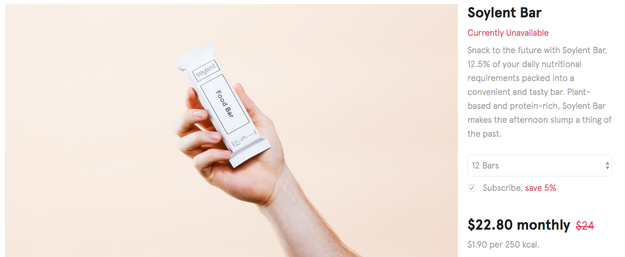
The bars are currently unavailable on Soylent&039;s website

Image from Soylent

Soylent has faced quality control issues before. As recently as October 2016, it delayed shipments of Soylent 2.0 because of mold. The facility that produces Soylent Bars, Betty Lou’s in McMinnville, Oregon, has not undergone a Foodborne Biological Hazards inspection since 2014, two years before the Bar was launched, according to the FDA’s online inspection database. This facility is separate from the ones that manufacture Soylent 1.6 and 2.0. Back in 2014, the FDA for the first time classified the Oregon facility as VAI, Voluntary Action Indicated — meaning an inspection found “objectionable conditions or practices,” but not ones serious enough to require mandated action. (The FDA&039;s database covers inspections from October 1, 2008 to March 31, 2016.) But Soylent says the facility&039;s last FDA inspection was as recent as March 2016. BuzzFeed News has reached out to the FDA and Betty Lou&039;s for comment on this discrepancy.

FDA

Sources close to Soylent&039;s manufacturing process previously told BuzzFeed News that the complaints about the bars might be due to a sensitivity to sucralose, an artificial non-caloric sweetener commonly found in products like Quest Nutrition Protein Bars and Powerbar Reduced Sugar Bars. There is three times as much Sucralose in Soylent’s bar (about 30 milligrams) compared to the Soylent 1.6 drink powder. At this time, Soylent has no plans to dial back the amount of sucralose in the bar, but it may re-formulate in the future.

Philip Neustrom, who experienced two bouts of nausea and vomiting after eating the bars, told BuzzFeed News that he regularly eats Quest Protein Bars, which also contain sucralose, with no negative effects.

In a previous statement, Soylent told BuzzFeed News, “After these reports, we have retrieved remaining bars from our consumers and have personally consumed many of the remaining bars without adverse effects. We have also sent them for further microbiological testing and all tests have come back negative.”

Reports of illness first emerged on Soylent&039;s own community discussion board on September 7, 2016, when user Raylingh started the thread “Nausea and vomiting several times after eating food bars.” Soylent consumers piled in on the thread, including two who had reportedly needed trips to the emergency room after eating the bars. All told, 57 people reported troubling experiences with the food bars. Soylent users on the Soylent subreddit also complained of the same symptoms.

Raylingh told BuzzFeed News he consumes Soylent 2.0 every day and has never had an adverse reaction to it. He also said that daily reports of Soylent-Bar-induced illness started appearing on Soylent&039;s forums in late September. He said he had to “chase down” Soylent customer support for three weeks after his initial complaint for Soylent to start investigating the bars. He&039;s kept a spreadsheet of the complaints.

Quelle: <a href="Soylent Recalls Its Bars After Reports They Made People Violently Ill“>BuzzFeed

Amazon ElastiCache for Redis Adds Sharding Support with Redis Cluster

We are excited to announce that Amazon ElastiCache now supports Redis Cluster with Redis 3.2.4. Redis Cluster allows customers to run Redis workloads with up to 3.5TiB of in-memory capacity, supporting up to 20M reads per second and up to 4.5M writes per second. It also delivers up to 4x faster failover times, and includes Amazon’s enhancements to the Redis engine running on ElastiCache for improved stability and robustness, while maintaining compatibility with open-source Redis. Amazon’s fully managed Redis service is bolstered with updated AWS CloudFormation support, an easier-to-use console experience, and Redis Cluster level backup and restore.
Quelle: aws.amazon.com

Amazon’s New Alexa-Integrated Music Service Makes The Echo A Better DJ

Amazon has launched Amazon Music Unlimited, a premium version of Amazon Prime Music, and it&;s betting that its Alexa voice control technology will convince listeners to ditch their Spotify or Apple music subscriptions.

Here&039;s how it works

Unlimited gives users access to a library of tens of millions of songs. The current version of Amazon Prime Music, which comes free with a Prime subscription, has a library of a few million. Unlimited is available to Amazon Prime subscribers for $7.99 a month and to non-Prime members for $9.99 per month. Echo owners have access to a specific subscription plan: They can get a “just for Echo” subscription to Amazon Music Unlimited for $3.99 per month. It&039;s the same library, but it only works for Echo and any connected speakers. A more wide-reaching Unlimited plan works for smartphones and computers.

Here&039;s what&039;s cool about it

Via Giphy / Via giphy.com

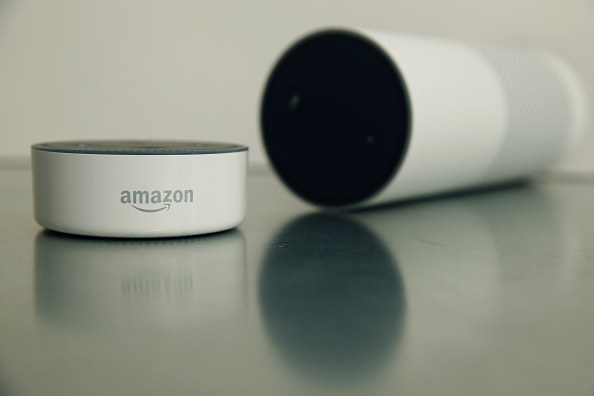
The real difference between Amazon Music Unlimited and other streaming services, including Spotify and Apple Music, is its integration with the Echo, Amazon&039;s signature speaker, and Alexa, the voice-controlled assistant that goes with it. You can say things like “Alexa, play the latest single from Adele” to listen to “Send My Love to Your New Lover,” or “Play U2 from the &039;80s” to listen to the band&039;s music from a specific era. You can look up songs by lyrics: “Play that song that goes &039;One, two three; one, two three, drink,&039;” to look up Sia&039;s “Chandelier.” And you can combine genre and mood when you request, “Play sad country music from the &039;90s” to listen to some Shania Twain when you&039;re down.

Alexa&039;s also listening to you and learning your habits, so if you say “play dinner party music,” it&039;ll play low-key R&B if that&039;s your thing, or Bach if you&039;re more the type to host your boss. You can even ask Alexa to get you a free trial of Amazon Music Unlimited.

The Echo&039;s default music player is Amazon, but the speaker and its Alexa voice control will also play tunes from other streaming services. But if you&039;re asking Alexa to turn on Spotify, it won&039;t respond to your detailed requests; playing from a non-Amazon streaming service will be more like searching and playing from your phone. Amazon is hoping the difference in experience will attract customers who haven&039;t tried streaming services before, or that it will attract people who already subscribe to other services.

“We&039;ve done our best to mimic the way people talk to one another about music, rather than the way they search for it on their computers or smartphones,” Steve Boom, Amazon&039;s VP of Digital Music, told BuzzFeed News. “We believe the streaming industry is poised for a new phase of growth outside smartphones.”

Amazon&039;s Echo and Echo Dot

Bloomberg / Getty Images

Amazon&039;s also created its own content to accompany the release. You can listen to “side-by-sides” with artists, where they talk about the creative processes behind their songs, or the Amazon Song of the Day, a track picked and described by an Amazon DJ.

Amazon faces stiff competition. Spotify, arguably the biggest player in streaming, is famously unprofitable. Apple is developing a smart speaker, which will likely integrate with Apple Music. Google Home, which offers Google&039;s search advantages, already integrates with Google Play. Boom said that Amazon is “definitely still in the investment phase” with Unlimited, but he said the company has a plan to make the service profitable within a few years.

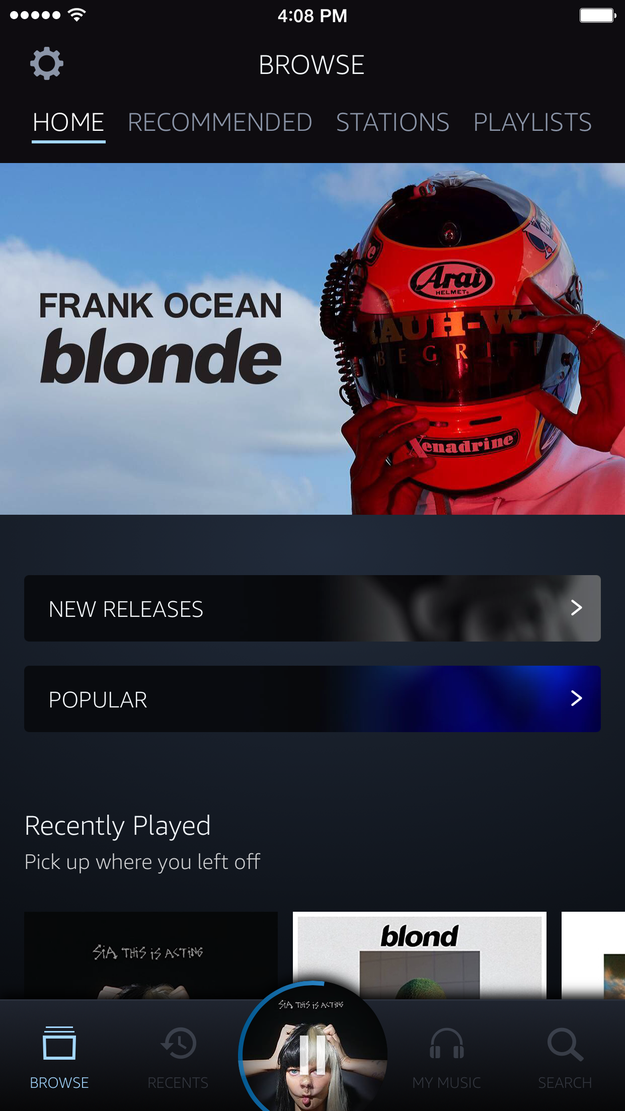
Image courtesy of Amazon

Quelle: <a href="Amazon’s New Alexa-Integrated Music Service Makes The Echo A Better DJ“>BuzzFeed