27 Of The Funniest Reactions To Apple's New Stuff
“Can’t wait to still not buy the Apple Watch.”
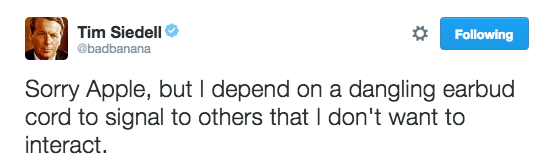


Quelle: <a href="27 Of The Funniest Reactions To Apple&039;s New Stuff“>BuzzFeed
“Can’t wait to still not buy the Apple Watch.”
Quelle: <a href="27 Of The Funniest Reactions To Apple&039;s New Stuff“>BuzzFeed
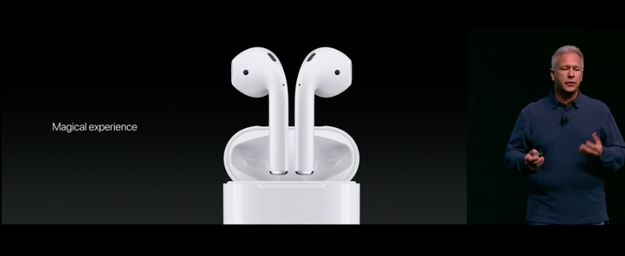
Via Apple
You probably want to talk about the headphones. You’re pissed about having to buy a new pair of headphones, or haul around an easily lost dongle adapter, or to have to use the word “dongle” in public. You’re frustrated that you need to pay $150 for wireless danglers that might fall out of your weirdly shaped ears. You’re angry that this company invented a brand-new category of thing for you to buy, and you’re angry that you think you might kinda want it, this product you didn’t even know existed when you woke up this morning.
But that’s a distraction. To focus on the missing 3.5mm hole in the top of your next hunk of metal and glass and plastic is — unless you’re an audio engineer — to miss the point. You’ll use the dongle, or you’ll buy some new headphones, and in a couple of months this entire conversation will feel so incredibly beside the point. This is what Apple does best: It spends untold hours and countless dollars tinkering and perfecting until it can make a seemingly user-hostile decision in order to scrap what it deems to be a piece of vestigial technology. There might be a little turbulence along the way but today is arguably the day that bluetooth and wireless audio becomes the new standard for consumer headphones. Airport vending machines will be lousy with them by Christmas.
But that’s not enough for Apple. It doesn’t just push people into unfamiliar product spaces, it also works hard to make sure those spaces are firmly within territory it controls. It isn’t pushing Bluetooth headphones, it’s pushing AirPods (and, of course, wireless headphones from its subsidiary Beats that use the same technology). And AirPods are all about lock in.

Via Apple
The way the company envisions it, AirPods will make your other Apple products, like iPhone and Mac, even more essential. They will connect (via Bluetooth and Apple’s own proprietary technology) instantly to your devices. Because the case connects with iCloud, you’ll be able to seamlessly switch between different iOS devices. No need to take off your headphones when you walk into work from your commute — just hit one button and you’re now streaming from your computer.
This — these masterful incremental tweaks that add up to a different way of living with your devices — is Apple in 2016. It’s evolutionary and not always flashy, but it’s often just enough to pull you deeper into the Apple universe of products and services. It’s what CEO Tim Cook meant when, about 56 minutes into today’s keynote, in one of his throwaway victory laps about iPhone sales (over one billion sold!), he boasted that the newest iPhone will “enrich your daily experiences.”
All the painstaking engineering inside the AirPods (the Accelerometers, optical sensors, microphones, and antennas that makes them so damn expensive) is all geared toward drawing you deeper into Apple’s ecosystem. The quick double-tap that triggers Siri is not just meant to, well, help you access Siri: it’s a ramp to get more people into the habit of using Apple’s personal assistant, which is slowly evolving into the connective tissue between Apple’s product suite as well as the primary way the company would have you navigate its operating systems. And even though they’re costly, the AirPods are new and fancy and maybe even a little bit cool. They’re not for everyone, but for Apple’s core users — the ones who’ve been through nine years and three or more iPhone upgrades — the earphones give you yet another reason to upgrade your iPhone and also maybe not jump ship from your Macbook to a $200 Chromebook.
Same can be said of the newest edition of the Apple Watch. While the watch now comes in something called ceramic and has a new series of customizable bands and faces, its main selling points are almost all small-but-important evolutionary tweaks. There’s built-in GPS, water resistance, and a partnership with Nike that creates a social workout experience that seems to be centered around guilting you to get off your ass and move around.
These improvements are meaningful but still subtle enough that you might not really notice them unless you’ve been paying attention. The Series 2 is less of an attempt to introduce a New Computing Device™ than it is a sensible fitness product. Like the earphones, the watch is a portal for Siri. It’s also a gateway into Apple’s growing collection of health apps and it’s all part of the continuity push across devices. Sure, you could just get a FitBit for cheaper but this watch is arguably better AND let’s you shoot off an emoji iMessage or check your email by yelling into your wrist. Basically: Here's this awesome thing for working out that’s especially great if you already have other Apple products. And that kind of continuity just might make you less likely to swap your iPhone for a Samsung when it’s time to re-up.
And then there’s the phone. The new iPhones are perhaps the most direct embodiment of Apple’s philosophy: Innovation by a thousand tweaks. Despite two (two&033;) new black finishes and the extra camera in the Plus, and the water resistance, and that missing headphone jack, the phone looks and behaves much the same as it did before.

Near the end of the keynote, in a slick video wrapping up the new iPhone features, Apple VP Greg Joswiak summed it up: “iPhone 7 makes the thing you do most even better.” The video — not much longer than a minute — is full of superlatives: “better,” “more powerful,” “brighter,” “faster,” more. Last year Apple’s approach toward this methodical innovation was a bit ham-handed — the company suggested that “the only thing that’s changed” with the new iPhone “is everything,” which some (including myself) dismissed as marketing jargon.
This year Apple seems more confident in its evolutionary stance.
Every keynote is a state of the union — an opportunity to get a glimpse into how Apple sees itself. And the lesson from this year’s seems to be that it’s time to stop thinking of Apple in the classic Jobsian sense. That every product introduction is a paradigm shifting game-changer. Today, we saw a company — which is setting its sights on non-tech related initiatives like making TV shows and investing in moonshots like cars — stand on stage and own what it is: a hardware company that&039;s making smart little evolutionary changes at just the right time.
Quelle: <a href="Apple&039;s Strategy Is Innovation By A Thousand Tweaks“>BuzzFeed
We are pleased to announce that you can now enable HTTP/2 for your Amazon CloudFront distributions to improve the performance of your web content delivered to clients that support the new HTTP/2 protocol.
Quelle: aws.amazon.com
Apple VP Greg Joswiak is grinning as he holds up what is easily the smallest iPhone adapter I have ever seen. iPod white and about the length of a matchstick, it’s designed to connect audio headphones with an industry standard 3.5-millimeter analog plug to the Lightning port on Apple’s newest iPhone, which no longer bears the industry standard jack they require to work.
“This time, we’re putting an adapter in every box,” Joswiak quips, a wry nod to the backlash evoked in 2012 the last time Apple killed a widely used iPhone port — a move that rendered thousands of peripherals designed to interact with it incompatible without a $29 adapter, and pissed off legions of people in the process.
Apple is no stranger to killing things people use all the time — and even love. But the headphone jack? It’s on a whole other level than disc drives or ports named after their number of pins. The headphone jack predates not only Apple, but computers themselves. And it is ubiquitous. So, when you’re killing a century-old standard around which the entire audio industry developed, it’s wise to take precautions.
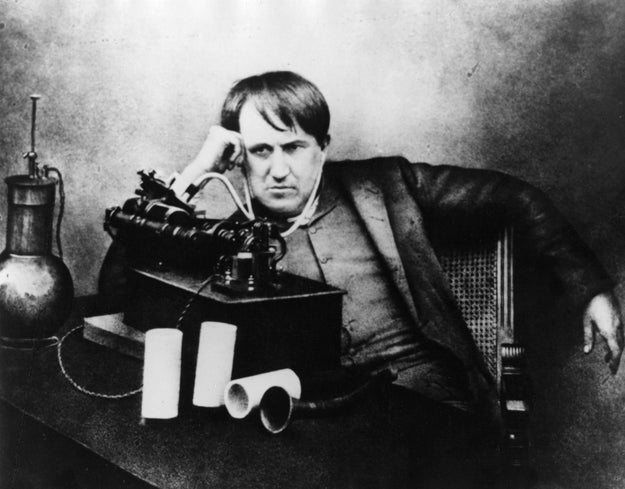
Thomas Edison listening to a phonograph through primitive headphones.
Getty Images
Invented for use with telephone switchboards in the late 1800s, the audio jack is among the oldest existing electrical standards. Originally 6.35-millimeter in width, it was reduced to 3.5-millimeter in the '60s, a transformation that made it pervasive across most every piece of electronic audio equipment you can think of — home stereos, car stereos, camcorders, guitar amps, laptops, airplane entertainment systems, cochlear implants, smartphones, and — until today — the iPhone.
Apple is arguing that the future of audio is wireless, that the world’s current assumptions about mobile audio are not only antiquated, but worthy of immediate abandonment. In a world of Spotify and Sonos, it’s tough to disagree. But right now that future comes with a price: You’ve got to leave behind the perfectly good headphones you own and you’ve got to purchase the new wireless ones as an iPhone accessory. It’s up to Apple to make the case that this is a worthwhile exchange.
“It’s a dinosaur. It’s time to move on.”
“The audio connector is more than 100 years old,” Joswiak says. “It had its last big innovation about 50 years ago. You know what that was? They made it smaller. It hasn’t been touched since then. It’s a dinosaur. It’s time to move on.”
Perhaps, but “if not now, when” is hardly a good argument when there are two pairs of reasonably high-end headphones in my desk that require that connector and every audio device I own has a 3.5-millimeter port. So does my car. And my laptop. The last plane I flew on. The alarm clock in my hotel. Microphones. Speakers. Baby monitors. Audio equipment and accessories purchased in every stage of my life. Everything. That little jack is in everything.
Historically, Apple has been pretty savvy about moving away from legacy standards and adopting new technology. Historically, this has been because whatever new tech Apple has adopted has delivered value orders of magnitude greater than whatever it replaced. Many have pointed to the floppy drive as a previous example of Apple’s willingness to kill off a widely used standard to make way for the future. But the thing is, when Apple scrapped the iMac’s floppy drive, the floppy disc was ferociously inadequate as a storage solution and in obvious need of replacement.
The 3.5-millimeter audio jack, however, is neither inadequate nor in obvious need of replacement. Sure, it is certainly dusty. But it is widely used and unencumbered by patents. You don’t have to pay anyone to use it. The signal it transmits doesn’t need to be decoded. And because it is an analog and not a digital standard, it cannot be locked down with digital rights management (DRM). Like the AC power socket adorning the walls of our homes, the headphone jack is a dumb interface. In Apple parlance, “it just works.” Buy a pair of headphones — from an audiophile store or an airport vending machine — and plug them into a headphone jack and you’ll likely hear whatever it is you were planning on listening to. So why send it off for a dirt nap?
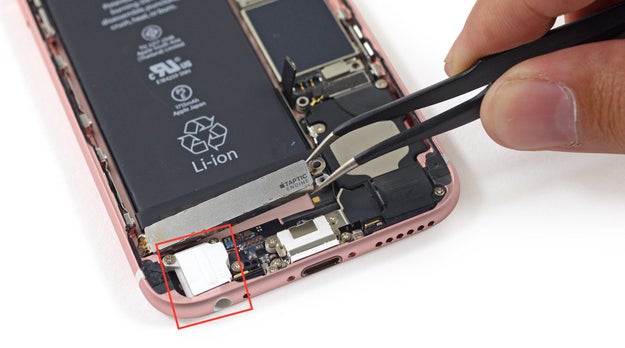
The iPhone&039;s 3.5-millimeter headphone jack.
iFixit / Via ifixit.com
For Dan Riccio, Apple’s senior vice president of hardware engineering, the iPhone’s 3.5-millimeter audio jack has felt something like the last months of an ill-fated if amicable relationship: familiar and comfortable, but ultimately an impediment to a better life ahead. “We’ve got this 50-year-old connector — just a hole filled with air — and it’s just sitting there taking up space, really valuable space,” he says.
Riccio has been at Apple since 1998, and he has had a hand in most all of the company’s marquee hardware. He’s fully on board with the company’s wireless narrative, as well: “In a world of mobile and cellular connectivity, the one wired vestige out there is this cable hanging from people’s ears to their phones — why?” he asks. But he’s far more interested in the ripple effect of advancements the removal of the audio jack set off in the iPhone.
“It was holding us back from a number of things we wanted to put into the iPhone,” Riccio says. “It was fighting for space with camera technologies and processors and battery life. And frankly, when there’s a better, modern solution available, it’s crazy to keep it around.”
It’s hard to imagine Apple’s hardware design team hamstrung by a diminutive legacy port. But when you’re dealing with a computing device with extraordinarily tight dimensional tolerances, there are bound to be challenges. Riccio spends a good 15 minutes explaining them. I’ll try to do it in two.
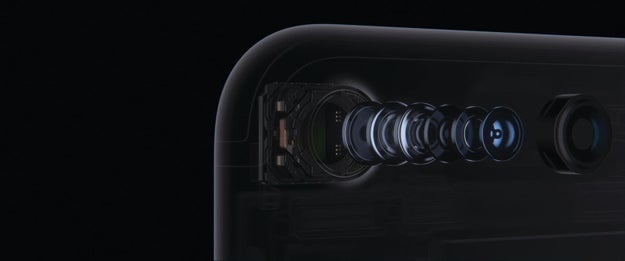
A tentpole feature of the new iPhones are improved camera systems that are larger than the cameras in the devices that preceded them. The iPhone 7 now has the optical image stabilization feature previously reserved for its larger Plus siblings. And the iPhone 7 Plus has two complete camera systems side by side — one with a fixed wide-angle lens, the other with a 2x zoom telephoto lens. At the top of both devices is something called the “driver ledge” — a small printed circuit board that drives the iPhone’s display and its backlight. Historically, Apple placed it there to accommodate improvements in battery capacity, where it was out of the way. But according to Riccio, the driver ledge interfered with the iPhone 7 line’s new larger camera systems, so Apple moved the ledge lower in both devices. But there, it interfered with other components, particularly the audio jack.
So the company’s engineers tried removing the jack.
In doing so, they discovered a few things. First, it was easier to install the “Taptic Engine” that drives the iPhone 7’s new pressure-sensitive home button, which, like the trackpads on Apple’s latest MacBook, uses vibrating haptic sensations to simulate the feeling of a click — without actually clicking. (Did we mention that Apple killed the physical home button too?) Taptic Engine vibrations will also be used to deliver feeling specific notifications — hitting the end of a scrolled page, for example. And because Apple has given developers an API for it, an awful lot of other stuff as well — particularly in games.
“You can’t make it feel like there’s an earthquake happening, but the range of customization lets you do an awful lot,” Apple SVP Phil Schiller explains. “With every project there are things that surprise you with the meaning they take on as you start to use them. The Taptic Engine API is one of them. It turned into a much bigger thing than we ever thought it would be. It really does transform the experience for a lot of software. You’ll see.”
Second, there was an unforeseen opportunity to increase battery life. So the battery in the iPhone 7 is 14% bigger than the one in its predecessor, and in the iPhone 7 Plus, it’s 5% bigger. In terms of real-world performance gains, that’s about an additional two hours and one hour, respectively. Not bad.
Even better, removing the audio jack also eliminated a key point of ingress that Riccio says helped the new iPhone finally meet the IP7 water resistance spec Apple has been after for years (resistant when immersed under 1 meter of water for 30 minutes).
The 3.5-millimeter audio jack has been headed to its inevitable fate for some time now. If it wasn’t the iPhone 7, it might have been the iPhone 8 (or, for that matter, the iPhone 6). In the end, it was simple math that did the audio jack in, a cost-benefit analysis that sorely disfavored a single-purpose Very Old Port against a wireless audio future, some slick new cameras, and the kind of water resistance that anyone who has ever dropped an iPhone in the toilet has long wished for.
Apple
When you think about the iPhone, you probably think of it as a single gadget. So it’s helpful to step back and realize that it contains an array of formerly distinct devices sandwiched together. When Steve Jobs introduced the original iPhone in 2007, he said that it wasn’t one device, but three: “a widescreen iPod with touch controls, a revolutionary mobile phone, and a breakthrough internet communications device.”
And as it turns out, among the features people most care about in a high-end smartphone — enough so that Apple is willing to spend millions of advertising dollars to remind you of its dominance, and upend a decades-old standard — is the camera.
“End-to-end these camera systems are a massive jump in capability over the ones in the 6s,” Schiller says when I observe that the iPhone 7 and 7 Plus have the same 12-megapixel cameras as their predecessors. He rattles off a list of camera geek specs to prove his point. They are faster, gather more light, have custom low-energy, high-performance chipsets and a bunch of near-future, gee-whiz stuff. Much of this is impenetrable: A slide in Apple’s Wednesday keynote presentation proudly touts a new image signal processor’s ability to calculate 100 billion operations in 25 milliseconds, for example. But it all comes together for me when I see a stunning un-retouched aerial shot of Coney Island that was, incredibly, shot on a phone.
“The new iPhones are crazy powerful,” says Neill Barham, founder and CEO of Filmic, a highly regarded mobile video app for iOS. He’s effusive in his praise, saying Apple’s new A10 chip has brought a “seismic” improvement in video processing to the iPhone. He jokes that Stanley Kubrick probably would have loved the 7 Plus, though he concedes he probably wouldn’t have shot Barry Lyndon with it.
“In layman’s terms, the prior 6S/+ is like a sprinter: it can do a lot of work in a short amount of time,” Barham offers. “The 7, on the other hand, is more like a marathon runner, or better yet, a triathlete that can perform multiple processor intensive loads all day long.”

Shot on iPhone 7 Plus at 2x optical zoom
Courtesy of Apple.
At a small vineyard in the Santa Cruz Mountains far above Silicon Valley, a brief camera demo. Panoramas, portraits, Live Photos, close-ups, video of the vineyard dog that wanders into our group with a well-chewed tennis ball. To my nonprofessional photographer’s eye, everything looks really good. The images are sharp, vibrant. The new wide color capture support Apple has built into the iPhone makes the orange of a California poppy appear psychedelic. On the iPhone 7 Plus, switching between the two side-by-side cameras is pretty much seamless; the changes between the wide and tele lens occur so quickly and smoothly you don’t notice them. It feels like a single camera. With the zoom, I can just barely see pick-stitched lines of glue affixing a wine label to its bottle.
A few months from now, Apple will roll out a software update that adds a new camera feature to the iPhone 7 Plus. It’s called “Portrait,” and it basically creates a bokeh effect — a sharply detailed subject in the foreground set against a soft, out-of-focus background. Because both cameras in the 7 Plus can be run simultaneously, it can capture nine layers of depth from foreground to background. And it can display them in real time. So when you’re in Portrait, you’ll be able to see that bokeh effect and, crucially, whether it’s worth using or not.
“Is it a better bokeh effect than the one you’d get with a Leica M and a 50-millimeter lens?” Schiller said earlier. “Of course not. But have you ever seen anything like it in a smartphone before?”
Nope.
But a “coming soon” camera advancement isn’t exactly the sort of tectonic smartphone innovation we’ve come to expect from Apple — though Apple CEO Tim Cook thinks the changes in this year&039;s iPhone are pretty big. When I ask him if — after a run of tectonic innovations like FaceTime, Siri, and Touch ID — we&039;ve reached the point where we’re starting to exhaust the innovation possible in the smartphone, he disagrees — diplomatically — with the premise of my question.
“Innovation is making things better,” Cook says. “If you step back and look at the things that are most important to iPhone users, it&039;s the photos they take and the other stuff they use to build the diaries of their lives. So the camera updates, the software optimization that we&039;ve done, the increases in battery life, and then all the features in iOS 10? These things collectively are a huge advance forward.”
Earlier this year, Apple’s rumored plan to remove the headphone jack from the next iPhone was met with predictable outrage and apology, delivered from equally predictable soapboxes. (Nevermind that two other smartphone manufacturers had already released phones without the port.)
The headphone jack is great for delivering audio, widely used, and unencumbered by patents and digital rights management, critics argued. Why remove it, leaving only an Apple-proprietary digital port that might in some dystopian future be locked down with the very DRM schemes that Steve Jobs bemoaned in his 2007 essay “Thoughts on Music”? Why provide a diminutive headphone jack adapter that will cost me $9 to replace when I inevitably lose it? Why allow even for the possibility of a scenario in which I cannot play a song that I own, whether it be because of copy protection lockdown or a “This accessory has not been certified by Apple” error? How does Apple respond to critics who’ve described removing the headphone jack from the iPhone as “user-hostile”?
“That’s pure, paranoid conspiracy theory.”
Schiller thinks it’s a silly argument. “The idea that there’s some ulterior motive behind this move, or that it will usher in some new form of content management, it simply isn’t true,” he says. “We are removing the audio jack because we have developed a better way to deliver audio. It has nothing to do with content management or DRM — that’s pure, paranoid conspiracy theory.”
For what it’s worth, USB audio has allowed for copy protection since the mid-2000s, and according to Abdul Ismail, USB-IF CTO and principal engineer at Intel, the recording industry guys don’t really use it. “Audio content owners are a lot more comfortable with not requiring copy protection,” he says. “It has been almost a decade since iTunes started selling DRM-free music, and illegal file sharing hasn’t been rampant.”
Beyond that, Lightning is a good portable high-fidelity audio solution. It’s a powered connection, so it can support things like noise cancellation in headphones that typically require batteries, and because it’s digital, it can provide a lot of granular control over the frequency response and whatnot (Audeze makes a pair of Lightning headphones with a 10-band EQ of -10 to +10 decibels for each band).
But that’s not the argument Apple is making. Remember, the future of audio is wireless. And while the company might be giving every iPhone 7 owner a pair of Lightning EarPods (and an adapter!), what it really wants is for them to buy a pair of wireless AirPods.
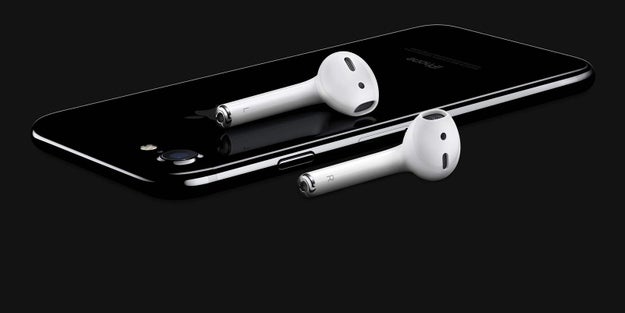
Apple&039;s new wireless AirPods
Apple
Quelle: <a href="Inside iPhone 7: Why Apple Killed The Headphone Jack“>BuzzFeed

In less than 30 days, Atlanta, Georgia will be the center of gravity for Microsoft’s enterprise solutions and technologies when our Ignite conference kicks off on September 26. The agenda is fully stacked with sessions, demos, hands-on experiences, panels and more and Azure Stack will be fully represented in that, um, stack.
As we look forward to Day 1, the Azure Stack team will engage with you over the next weeks and days via a series of blogs that will provide both an overview and a navigation guide into all things Azure Stack at Ignite. More importantly, we anticipate and welcome your feedback on anything and everything Azure Stack as you plan for Ignite – your expectations from the sessions we have planned, which sessions you are most excited about, your technical preview experiences thus far, questions or concerns you have, your favorite ice cream flavor to pair with Azure Stack – anything, everything Azure Stack.
My name is Wale Martins and I work as a program manager on the Azure Stack team – specifically in the infrastructure area and ensuring every piece of software component that stands up Azure Stack in your datacenter is justified and makes optimal use of resources to leave more resource capacity for your workloads. My focus in this initial blog though is to tell you what we have planned for you at Ignite – give you the lay of the land (see figure below) and from which subsequent blogs by session owners will take the baton and provide more details to whet your appetites. Let’s get started.
Referencing the figure below, the first thing I want to call out is that none of the sessions we’ve planned are overlapping so you can attend each one without scheduling conflicts.
Azure Stack overview sessions
We have planned four overview sessions that cover different aspects of Azure Stack presented at a 200 and above level and targeted to equip attendees with a 360-degree view on what Azure Stack is, where we are with Azure Stack today and what to expect on the rest of the journey to the General Availability release next year. Whatever your role – IT Pro, developer, business or technical decision maker – you will find these sessions useful and informative. I have listed them below with links to their sign up pages.
Natalia Mackevicius and Vijay Tewari will “provide you with an overview of everything you need to know about Azure Stack, from the value proposition to the business model to the technical capabilities” at Explore Azure Stack “State of the Union” – Foundation 1.
Join Charles Joy and Bradley Bartz to Learn about Azure Stack Agile Service Delivery that is exactly the same delivery model as Azure’s.
At the Learn about Azure Stack Infrastructure Operations and Management session, Vijay Tewari will comprehensively cover the infrastructure components and the scenarios they enable, including hardware that Azure Stack will run on.
And Spencer Shepler will round out our overview sessions with an in-depth Dive into Microsoft Azure Stack Architecture. This is a 400 level deeply technical session targeted at IT influencers and implementers.
Azure Stack Technical Sessions
Our next set of sessions will be technical sessions that do a 300 level+ double click into most of the topics and areas you would have learned about in the overviews.
Mallikarjun Chadalapaka and Scott Napolitan will dive into the foundational resource providers for core IaaS in their Dive deep in the Microsoft Azure Stack IaaS session.
Charlie Satterfield and Thomas Roettinger show you the Azure Stack admin experience we are developing and how you can start your journey to Becoming a Microsoft Azure Stack infrastructure rockstar.
In Learn about the community of templates for Azure Stack, Ricardo Mendes and Marc van Eijk cover the authoring, versatility and universality of Azure Stack templates including across Azure.
In a very complicated act requiring deft onstage collaboration and communication, our trio of Matthew McGlynn, Anjay Ajodha and Shriram Natarajan will Discuss Microsoft DevOps on Azure Stack.
And Igor Sedukhin rounds out this set with a session for you to Learn about hybrid applications with Azure and Azure Stack and how to build these applications.
What’s up with CPS?
So what about CPS – what’s the latest with Microsoft’s Cloud Platform System? If you have invested, are investing or will invest in CPS, we have a session to show you how we carry this first member of our on-premises cloud solutions into the Azure Stack era. Join Cheng Wei and John Haskin to Explore Microsoft Cloud Platform System – delivering Azure experiences in an integrated system. This session will also discuss the WAP/CPS Connector for Azure Stack we are developing.
Those are our planned sessions at a summary level. I have added another figure of the sessions pivoted by date and you will observe again that we have ensured there are no overlapping sessions so it’s an all-you-can-eat offering. Expect more details in subsequent blogs. Also, there are other activities besides sessions and we will talk about those too. Stay plugged. Did I mention that we really want to hear from you? Give us your feedback, tell us your expectations and ask us questions. You may do so in one or more ways below:
In the comments section below
Collaborate and chat with the Azure Stack engineering team to shape Azure Stack. Sign up to participate.
Reach out on Twitter using the #AzureStackIgnite hashtag
Whichever you choose, the Azure Stack team is listening.
Quelle: Azure

Aus Neo wird Pro: Sony hat die leistungsstärkere Version der PS4 vorgestellt. Sie soll am 10. November 2016 erscheinen und rund 400 Euro kosten. Bereits in der kommenden Woche soll die “alte” Playstation 4 per Update auch HDR-Grafik unterstützen. (Playstation 4, Sony)
Quelle: Golem

Also doch: Nintendo bringt seinen legendären Klempner Mario auf Smartphones. Das Spiel sieht aus wie ein klassisches Jump-and-Run – aber es gibt einen kleinen spielerischen Unterschied. (Super Mario, Apple)
Quelle: Golem

Apple held its big iPhone event today in San Francisco, where it announced two new phones, a new Apple Watch, and its much-anticipated wireless headphones, called AirPods. Below, some videos and demos that Apple aired during the event. Enjoy!
Quelle: <a href="Watch Apple CEO Tim Cook Do Karaoke (Oh And Check Out The New Wireless AirPods)“>BuzzFeed
In this blog post, we will show you how you can set up a local system that will support MongoDB, MongoDB Ops Manager, and OpenShift.
Quelle: OpenShift

Optimiert für Läufer und Schwimmer: Apple hat mehrere Apple Watches angekündigt, darunter spezielle Modelle in Zusammenarbeit mit Nike. Chip und Display sollen besser sein, obendrein gibt es Neuigkeiten für Pokémon-Fans und zum Preis der Vorgänger. (Apple Watch, Apple)
Quelle: Golem






